We present the second part of the article “Sectology Professor or Serial Killer?“
Read the full report.
Reconstructing the genesis of a serial killer’s motive. Motive plays a critically important role in solving crimes, especially in profiling serial killers. The motive of a crime is a stable internal drive that reflects a conscious or unconscious goal for which the offender commits an unlawful act. Analyzing motive makes it possible to answer the key question of behavioral analysis: “For what purpose was the crime committed?” (for example, to establish dominance over the victim, to obtain a sense of omnipotence, to gratify a fantasy, or to compensate for experienced trauma). Unlike single (impulsive) killings, serial murders are always driven by deep psychological needs of the offender, such as the pursuit of power, control, sexual arousal, revenge, or the resolution of an internal affective conflict. These needs are reinforced by maladaptive cognitive schemas formed under the influence of early traumatic experience. The motive of a serial killer forms the basis for understanding why the offender will commit crimes again and again.
Reconstructing the genesis of motive in serial murders is a psychobiographical analysis that includes the study of the offender’s behavioral aspects and is aimed at identifying:
- early traumatic events,
- formed cognitive distortions,
- the evolution of pathological fantasies,
- and behavioral markers that precede the first act of violence.
This approach makes it possible to understand why the offender does not simply kill but repeats the killing. Therefore, understanding motive is critically important not only for solving a specific crime but also for forecasting the risk of recidivism. Motive reflects stable personality determinants of behavior. It reveals the deep causes of criminal conduct associated with unmet needs, negative attitudes, and a distorted perception of reality.
As John Douglas and Mark Olshaker note, when developing methods for analyzing the personality profile of killers, it is necessary to understand the killer’s model of thinking. Characteristic features of the victim, physical evidence, and other details can reveal a great deal about the planning, the killer’s preparation for the crime, and his subsequent actions.
“From these observations, the agents begin to uncover the murderer’s motivation, recognizing how dependent motivation is to the killer’s dominant thinking patterns. In many instances, a hidden, sexual motive emerges, a motive that has its origins in fantasy.” (John Douglas, Mark Olshaker, “Journey Into Darkness”). 1
The motivational drive of a serial offender stems from a range of cognitive-affective processes that develop on the basis of a chronic sense of social rejection. It influences an obsessive search for attention, positive reinforcement, and gratification, as the individual perceives the social environment as hostile or indifferent. The motive shapes the desire to possess and control the social environment that the individual perceives as “evil,” in order to balance all of his frustrations through a single, annihilating act.
Psychopathology Of The “Rebellion Against God.” The “Godlikeness” Complex
Among the many motivational categories – power, revenge, sexual arousal, and financial gain – a distinct group of serial criminals stands out, whose destructive behavior stems from religiously tinged or anti-religious aggression, often coupled with narcissistic dynamics and an illusion of personal godlikeness, driven by a metaphysical rejection of the existing world order. In criminological practice, this phenomenon is classified as the highest form of existential aggression, in which the act of taking someone’s life becomes a form of “judgment” against existence. In this paradigm, murder for the criminal acts as the final argument in his dispute with the Creator (or nature).
It is important to note that anti-religious aggression among such killers does not constitute atheism in the philosophical sense. Instead, it represents a pathological reaction to traumatic religious experience. These offenders do not reject God; they compete with Him. Their violence is a desperate attempt to usurp divine authority and to erase the “moral mirror” reflecting their own negative thoughts and actions.
“Rebellion against God” in the criminological context is not so much a religious act as a pathopsychological orientation of the personality aimed at overthrowing higher moral and ontological laws. Such individuals do not merely deny religious norms. They enter into a metaphysical struggle with the symbol of a higher order, perceiving God as a competing authority that limits their absolute will, and the existing order of things as a hostile system that must be destroyed.
Specialized literature describes this position as the “god complex” (a syndrome of omnipotence), pathological narcissism (the desire to be the center of everything), and “rebellion against God.” That is a form of existential confrontation in which, driven by pride, a desire for self-aggrandizement, and an unwillingness to acknowledge personal imperfection, the offender seeks not only to destroy the victim but also to demonstrate omnipotence, to parody the divine act of creation and destruction, and to assert total permissiveness.
He forms a conviction in the exclusivity of his own “I,” placing his desires “above the will of God,” refusing to accept that there is any higher power surpassing himself. This pattern frequently appears among serial offenders with narcissistic disorder. Psychopathological aspect: “rebellion against God” manifests as the subject’s drive to “self-deify” through the claimed right to dispose of another person’s life, to act as an alleged “supreme arbiter” of life and death. For such pathological personalities, murder becomes an act of asserting a form of “absolute power that substitutes for the divine.”
“Virtually all sexual homicide perpetrators evidence narcissistic and psychopathic personality traits. The pathological narcissism… is usually seen in the perpetrator’s sense of entitlement, grandiosity, and emotional detachment… I propose that the structuring of such sexual fantasy, in turn, provides the sexual homicide perpetrator with certain positive reinforcements… (c) it stimulates grandiosity, since all fantasies are perfect… (d) it stimulates omnipotence, since the fantasy of omnipotent control of the victim is likely imaged.” Reid Meloy (2000), “The Nature and Dynamics of Sexual Homicide”, Aggression and Violent Behavior, Vol. 5, No. 1, pp. 1–22. 2
The concept of rebellion against God was first theoretically substantiated in the psychoanalytic tradition (Fromm, 1950s). In criminology, it received empirical development in the works of Reid Meloy and Roy Hazelwood. Among serial killers, this complex often emerges against a background of early religious trauma. As a rule, these offenders experienced hypermoralization, religious abuse, or public humiliation in childhood or adolescence, carried out under the guise of moral and spiritual upbringing. As a result, a split forms in consciousness around the religious object. On one side stands the image of a merciful God. Opposing this is the image of a punishing, hostile God who demands sacrifice. Subsequently, the offender does not simply reject God. He becomes immersed in a pathological fantasy in which he sees only himself as the true arbiter of justice, while the “external God” becomes for him a symbol of hypocrisy and repression.
“Power killers can be said to have a sort of god complex. They seek control over life and death.” 3
Victims
A killer with this profile does not consider himself a “servant of God” (as a visionary) or a “cleaner of the world” (as a missionary). He secretly believes that he is competing with God. In his pathological fantasy, even the murder of a child becomes a way to supposedly prove that God is powerless to protect the innocent. From this, he concludes that the only real power belongs to him. Victims are perceived by this type of serial killer not as human beings but as “objects of correction,” and violence against them becomes a “ritual of purification.” Identifying himself with the “true” God, the offender believes he is destroying those he considers “sinners” (often a victim associated with moral purity), “unclean,” or “apostates,” reproducing rituals of purification or punishment. In this way, the offender parodies divine judgment in his pathological imagination, deciding who deserves to live and who does not. Such killers often lack a sense of guilt:
The formation of readiness to commit unlawful acts in such offenders unfolds against the development of pathological vectors in consciousness, the main ones being:
— Pathological narcissism, which forms a conviction in the exclusivity of one’s own “self,” while any external limitation (law, morality, divine providence) is perceived as an unbearable narcissistic injury.
— Anti-theistic motivation. The denial of a higher power, or active struggle against it, serves as an ideological justification for their violence.
The mechanism by which fantasy turns into action unfolds as follows. Chronic alienation flows into the dehumanization of others. The accumulation of metaphysical hatred develops into the formation of a latent homicide structure. An existential trigger culminates in an act of murder as a way of temporarily “healing” a narcissistic injury through the pathological fantasy of “divine” domination over the victim.
Latent homicide as a form of concealed murder
“Latent homicide” is the hidden, systematic elimination of “representatives of the moral law,” who function as substitutes for God or as the “conscience of society.” The term “latent homicide” is used in forensic psychology to describe nonviolent yet lethally dangerous forms of elimination disguised as accidents, suicides, or natural death. In the context of rebellion against God, victims of latent homicide often include:
- “ideal” victims (children, virgins, activists, virtuous people);
- moral authorities (teachers, parents, psychotherapists);
- clergy.
These individuals function as “moral mirrors.” They reflect the conscience that the offender has rejected. Their elimination temporarily neutralizes cognitive dissonance for the offender and confirms the illusion of control over the moral order.
If the first act of violence (the first murder) goes unpunished, this serves, for the killer’s pathological imagination, as confirmation of the illusion of “divine chosenness.” It lowers the threshold of inhibitors and activates a mechanism of repeated elimination of “moral mirrors.” Impunity becomes a form of “sacred approval” for the offender, reinforcing the belief: “God is silent, therefore I am right.”
The psychopathology of “rebellion against God” is psychotic narcissism in which violence replaces theology. Latent homicide in this context functions as a concealed form of blasphemy, aimed at eliminating those who embody an external moral law. This behavior requires special attention in profiling, as it is often disguised as unrelated deaths and intensifies on holidays or religious dates.
Thus, the genesis of motive in this category of serial killers lies in an existential-narcissistic conflict, in which violence becomes a means of affirming their pathological fantasies of “personal divinity” and denying an external moral law. This motive is persistent, deeply structured, and virtually impervious to rational persuasion, which makes such offenders particularly dangerous and resistant to rehabilitation.
The key to the genesis of the motive can be found in early cognitive-affective conflicts formed in childhood, in stable internal symbolic representations that may later be activated in criminal behavior. Experiences, images, and conflicts formed at an early age are preserved in long-term memory. They influence motivation, behavior, and self-identification in adulthood and become core beliefs. These are deep cognitive schemas about the self, others, and the world that are formed in childhood. They operate automatically and often unconsciously. 4
Thus, a detailed analysis of the offender’s biography reveals the key factors shaping motivation.
Reconstruction Of The Psychobiography Of Alexander Dvorkin
Relying on the methodology of behavioral analysis, we will conduct a reconstruction of the psychobiography of Alexander Dvorkin in order to identify:
— signs of an existential-narcissistic conflict manifested in the clash between an atheistic worldview and emotionally charged religious images internalized in childhood;
— the specific features of his fantasy structure, including the presence of pathological scenarios oriented toward humiliation, dehumanization, and the symbolic elimination of a “moral mirror”;
— persistent behavioral patterns that constitute a typical offender signature, that is, actions that satisfy deep psychological needs;
— the presence of motivational structures characteristic of established typologies of serial killers, in particular the drive for power, control, revenge, or sexualized violence.
Such an analysis will make it possible to assess whether the life trajectory of Alexander Dvorkin corresponds to a dynamic typical of serial offenders with motivations rooted in a “narcissistic rebellion against God” and a propensity for latent forms of violent elimination.
Episodes from Dvorkin’s childhood
In the book “My America,” Alexander Dvorkin describes several childhood episodes that reflect contradictions in his understanding of the theme of God and cognitive difficulties in assimilating religious concepts. In one such episode, little Sasha (Alexander) Dvorkin asks his mother a question: “Who is God?” Based on her answer, the child forms a simplified dichotomous model: in the past, people were foolish and believed that God created everything, but now they have become smarter and know that, in fact, everything was “created by the Communist Party.” This cognitive schema becomes fixed as a belief: believers are associated with intellectual naivety, and nonbelievers with rational maturity (“foolish people are those who believe in God, smart ones are those who do not believe in Him”). At the level of subconscious attitudes, a hierarchy takes shape in which “intellect dominates over God (religious faith).”

“When I grew up, my mother reminded me of an episode from my early childhood. I was about four years old. When I came home from kindergarten, I asked, “Mom, who is God?”
“You see, son,” my then disbelieving mother began, “in ancient times, science was still undeveloped. People were not as educated as they are now. They did not know where everything was coming from: forests, fields, trees, mountains, the sky, the Earth, the Sun, and the stars. So they thought that God had created it all.”
“People used to be stupid,” I interrupted her. “So they thought that God created everything. They’re smarter now, and they know that, in fact, everything — forests, fields, trees, mountains, the sky, the Earth, the Sun, and the stars — was created by the Communist Party!”
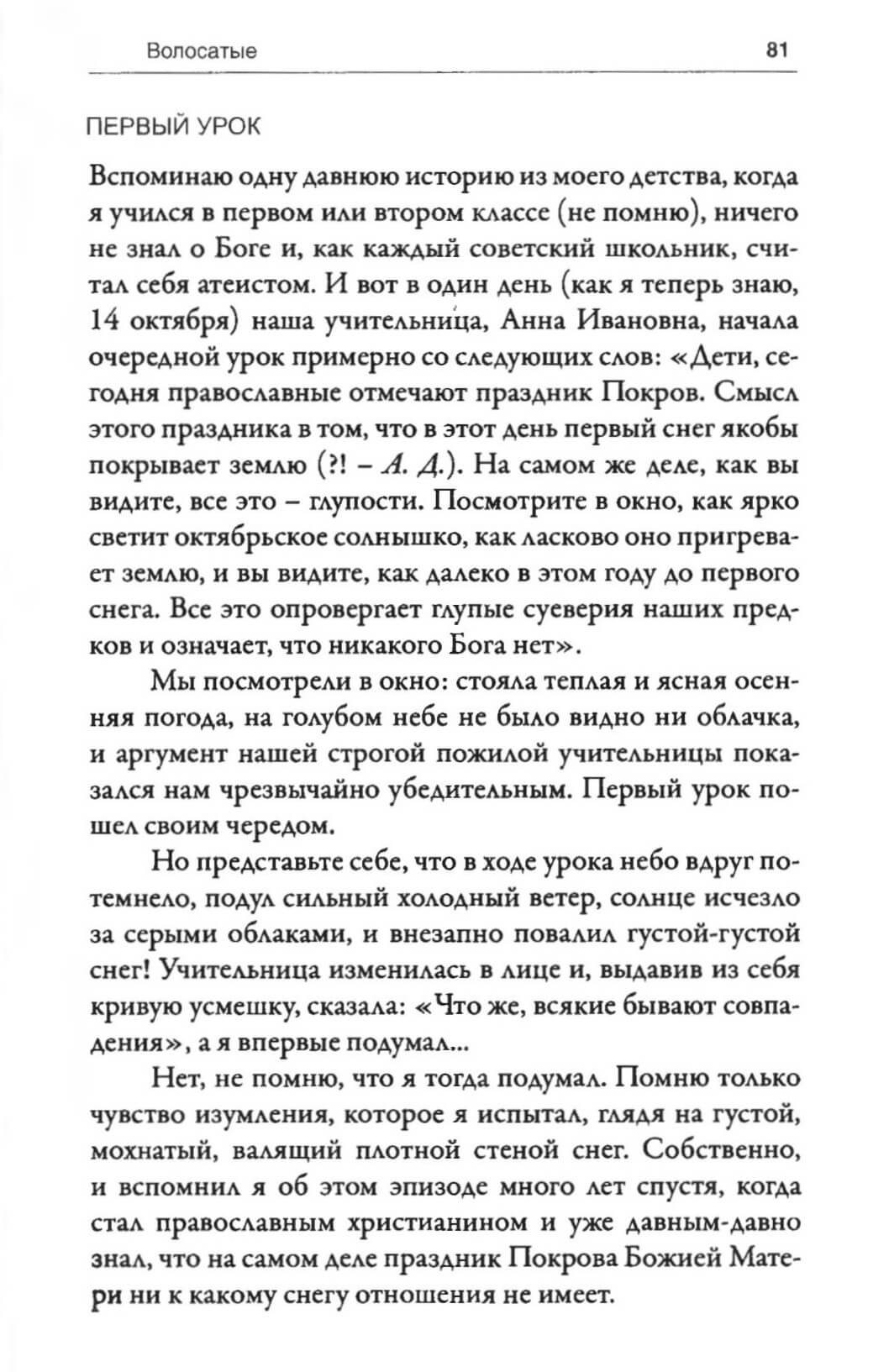
The second episode, dating to his early school years, relates to an atheistic narrative typical of Soviet pedagogical practice. An elderly teacher, explaining the Orthodox feast of Protection of the Mother of God, said: “The meaning of this holiday is that on this day the first snow supposedly covers and protects the land. In reality, as you can see, all of this is nonsense.” She pointed to the clear weather outside the window: “All of this refutes the foolish superstitions of our ancestors and means that there is no God whatsoever.” However, during the class, the weather deteriorated, and a thick first snow began to fall.
The event made a deep emotional impression on little Alexander Dvorkin, accompanied by a sense of amazement and cognitive dissonance. In the psychobiographical context, this episode registers as a moment of fixation of a symbolic image – snow as an empirical “sign” of divine presence, opposing rationalist denial. This image can reasonably be viewed as an early marker of a forming narrative in which God is perceived as a force capable of demonstratively “refuting” “human superiority” and human confidence, including intellectual confidence, and thereby provoking internal resistance that may later transform into a narcissistic rebellion.
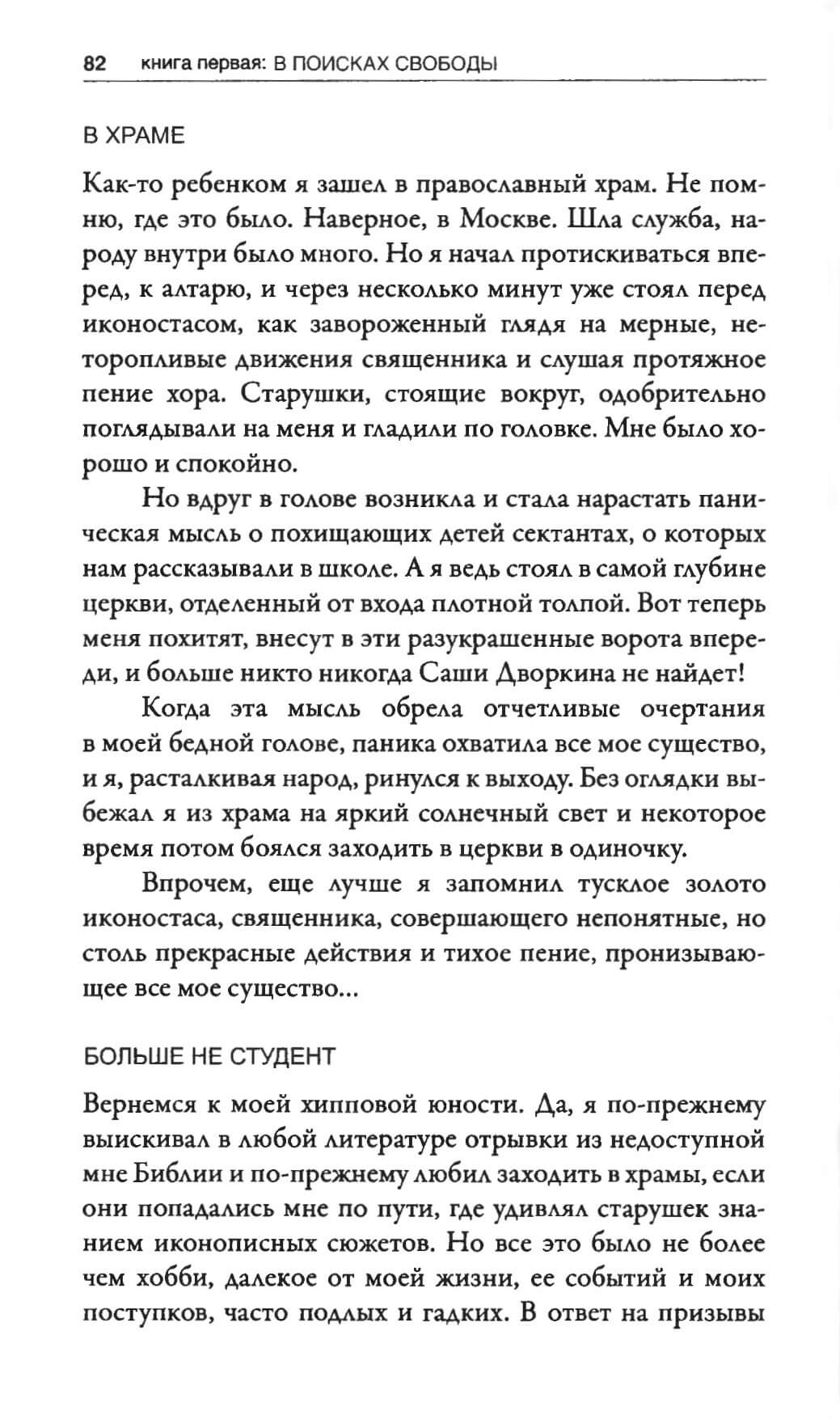
The third episode relates to Dvorkin’s recollection of a fear that arose when he visited a church alone in childhood, which led to the formation of a strong affective reaction to religious space. Still a child, he entered an Orthodox church where there were many people. Dvorkin writes: “Suddenly, a panicky thought popped into my head and began to grow about the sectarians who abduct children, as we had been told at school. And I was standing in the very depths of the church, separated from the entrance by a dense crowd. Now they would abduct me, carry me through those decorated gates in front, and no one would ever find Alex Dvorkin again!
When this thought took on precise contours in my poor head, panic seized my entire being, and, pushing people aside, I rushed toward the exit. Without looking back, I ran out of the church into the bright sunlight, and for some time afterward I was afraid to enter churches alone.” 5
The fixed image is a church (as a trap), the abduction of children by sectarians (cultists), and religious space as a zone of potential abduction and irreversible disappearance. Within the framework of theories of criminal motivation 6, such childhood emotional schemas – especially those associated with fear, shame, or a sense of helplessness – can be retransmitted in adulthood in the form of specific trigger reactions to symbols of vulnerability (for example, mentions of God, church, and so on). In other words, a grown adult who had experienced this may unconsciously perceive references to God, the church, and related symbols as a threat to his control and respond with aggression, detachment, or mockery in order to suppress an internal sense of vulnerability.
It is noteworthy that Dvorkin’s fear of abduction was systemic and existed beyond a religious context. In the book “My America”, he recalls the courtyard where he spent his childhood: “All kids played in the courtyard, and someone’s grandmother who had come out to sit on a bench kept a watchful eye on them. Any stranger who entered the courtyard was immediately noticed, so parents could safely let the children play on their own — nothing threatened them. Only one thing was strictly forbidden: leaving the yard alone and going out into the street.” 5
Classmate Yasha
A literary source titled “Kalalatsy” (a story under the heading “The System. Memoirs of Kostya Lopukhov”) 7, which represents a reconstruction of the oral recollections of the young Alexander Dvorkin (referred to in the text as “Kostya Lopukhov”), mentions that from first grade, he had a classmate, a boy named Yasha. Since the figure of the classmate is identified exclusively by this name (Yasha) in this source, for the sake of consistency and identification in the analysis that follows, we will conditionally refer to him as Yasha. Below are relevant excerpts from the book “Kalalatsy” that describe episodes connected with Yasha. These fragments are treated as part of the psychobiographical material necessary to reconstruct early interpersonal patterns and the formation of cognitive-affective schemas of the subject under investigation.
“It was easy for me when I was with Yasha, probably because he blushed, stuttered, and felt guilty even more than I did. He would cough and often get sick — we studied together from first grade — and his grandmother who he lived with would take him to Yelokhovskaya Church.” 7
According to the data presented in the source, Yasha made a deep impression on his friend during a conversation devoted to religious ideas, specifically the image of God:
“‘God lives in the mountains and from there sends lightning and thunder. You can’t see Him, but He can stretch out His hand and reach anyone He wants,’ Yasha told me during botany class, while we were drawing poppy petals and pistils in our notebooks, and the teacher by the window, in a golden beehive of light, lost in thought, rubbed the bridge of his nose with fingers smeared with chalk. Yasha’s flower came out large and beautiful, with a confident line of petals and a lively, juicy calyx; mine was puny and lopsided.
‘Here in the classroom, can He do it too?’ I asked, frightened, and I saw it: a huge golden hand made of sunlight descended through the window and, embracing the teacher, carefully lifted him into the air, while he, noticing nothing, kept rubbing the bridge of his nose.
‘That’s a mystery. Once He already came, but they caught Him and threw Him into a pit.’” 7
Symbolic images: “God” as an invisible hand; “the pit” as punishment
According to the cited fragment, it is evident that a conversation with his classmate Yasha during a botany lesson became a memorable episode in Alexander Dvorkin’s early biography. During the conversation, Yasha presented God as an invisible but active force – a “descending hand” – but immediately added that “they caught him and threw him into a pit.” This narrative contains ambivalent symbolic images: “God as a punishing yet inaccessible force,” and at the same time as a “defeated, punished object.”
Such a split in religious representation, intensified by the context of an atheistic school environment, could have become a source of deep cognitive dissonance. In psychoanalytic and Jungian traditions, such images (the hand of God, the pit, snow as a “sign”) are viewed as archetypal or personal symbols that carry emotional and moral weight. Subsequently, they may function as triggers of moral cognitive dissonance. These and similar images could well have become the foundation of an existential conflict for Alexander Dvorkin, in which faith became associated with threat, vulnerability, and, in his understanding, inevitable punishment – both for the higher power and for the believer.
In his autobiographical books written in adulthood, Alexander Dvorkin recounts his youth, mentioning his negative stance toward God. He did not believe in God and condemned negatively everything connected with this sphere, consistently demonstrating an extreme negative attitude toward religious discourse.
If in childhood his atheism relied on the authority of adults (in particular, his mother and school teachers), then in adolescence and young adulthood it transformed into an aggressive position of denial. Dvorkin began arguing even with people close to him – reproaching his mother, grandmother, and grandfather – in response to their reproaches about his “vile and disgusting actions.” Alexander Dvorkin told them: “What’s the problem? God doesn’t exist, therefore everything is permitted” (Alexander Dvorkin’s book “My America,” p. 83). This formulation, like other evidence found in Dvorkin’s autobiography, reflects a narcissistic restructuring of the moral system, in which the absence of “divine oversight” legitimizes any actions, including aggression and the removal of “obstacles,” especially those who embody a moral alternative.
9th grade. Death of a classmate
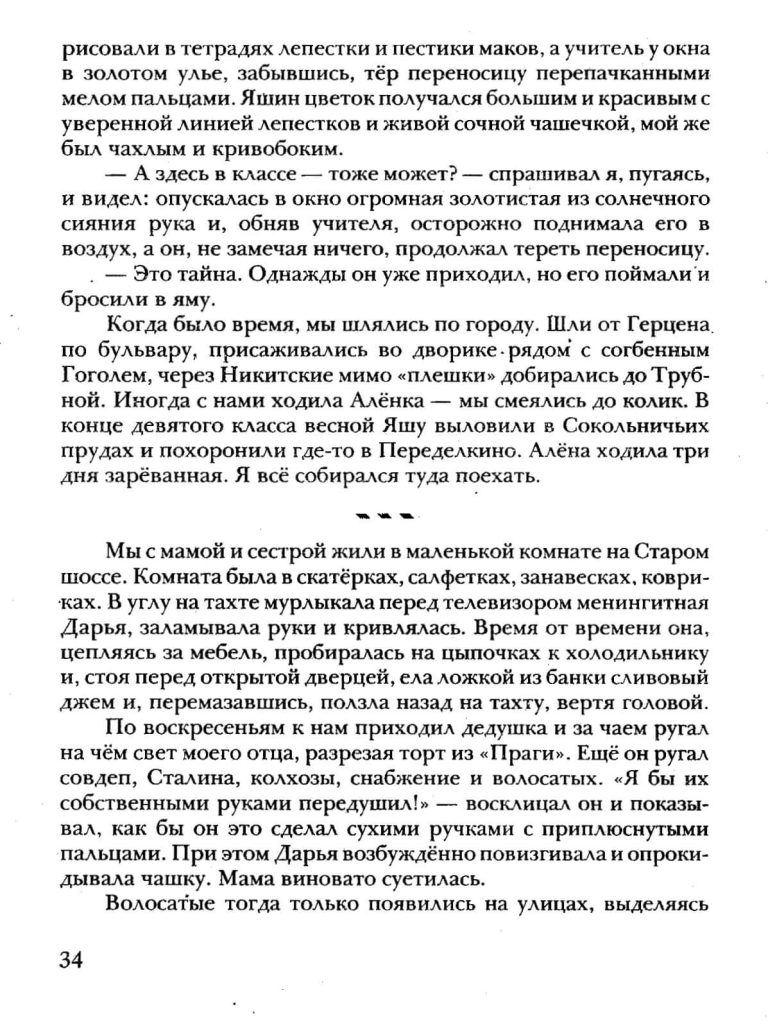
One of the key episodes in the formation of this system was an event that occurred in 9th grade: the death of Yasha, a classmate with whom Alexander Dvorkin had been friends since first grade. From the book “Kalalatsy”: “When we had time, we wandered around the city. We walked from Herzen Street, along the boulevard, sat down in a little courtyard next to the stooped Gogol monument, through Nikitskie gate past the ‘pleshka’ (Trans. Note: slang word for ‘square’) we made our way to Trubnaya street. Sometimes Alena came with us, and we laughed until we had cramps. At the end of 9th grade, in the spring, they pulled Yasha out of the Sokolniki ponds and buried him somewhere in Peredelkino. Alena walked around in tears for three days. I kept planning to go there.” 7

Information about the fact of the drowning of Dvorkin’s friend appears in two sources separated in time: in Arkady Rovner’s book “Kalalatsy” (1980), when Dvorkin was 25 years old at the time of the book’s publication, and in Alexander Dvorkin’s autobiographical book “My America” (2013), when Dvorkin was 58 at the time his book was published:
1). In the first source (“Kalalatsy”), the event is presented as follows: “At the end of 9th grade, in the spring, they pulled Yasha out of the Sokolniki ponds and buried him somewhere in Peredelkino. Alena walked around in tears for three days. I kept planning to go there.” 7
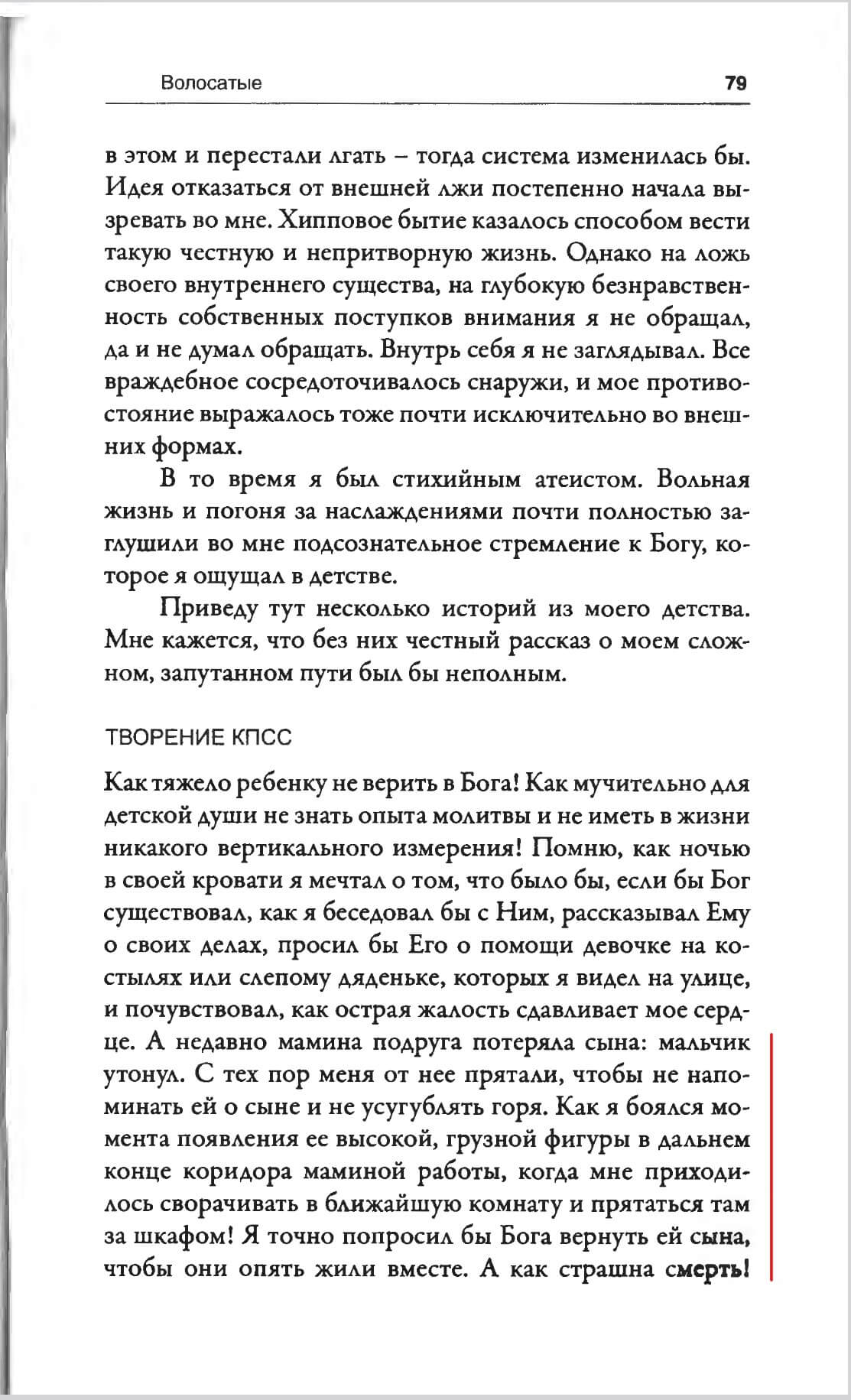
2). In the second source, it takes the form of a recollection of a traumatic reaction in the social environment: “And recently, my mother’s friend lost her son: the boy drowned. Since then, they have kept me away from her so as not to remind her of her son and aggravate her grief. How I dreaded the moment when her tall, heavy figure appeared at the far end of the corridor at my mother’s workplace, when I had to turn into the nearest room and hide behind the wardrobe!” 5
A comparative analysis indicates that this is clearly the same event: the sudden death of Yasha (his drowning) in ninth grade, a classmate of Alexander, with whom he had maintained a long-standing relationship since first grade. The coincidence of certain details confirms this hypothesis. Among them are a recurring narrative structure and stylistic features of the storytelling, as well as additional details, such as the mention that Dvorkin used to spend evenings at the Institute of the Russian Language, where his mother worked late (Alexander Dvorkin, “Teachers and Lessons,” p. 10). 8
Both episodes, separated in time, share the same approach to narration: first, the topic of God appears, followed by the sudden death of Dvorkin’s friend. An important detail is that the event of Yasha’s death is presented with deliberate detachment, almost as a background element. The minimization of the tragedy and the emphasis on everyday details while simultaneously mentioning death create an effect of affective detachment. Within the framework of psychobiographical analysis, such a narrative pattern can be interpreted as a defense mechanism aimed at suppressing trauma, as well as a marker of a weakened capacity for empathy. In criminal psychology, similar patterns of dissociation and moral disintegration often appear in profiles of serial offenders of the “power/control” type.
In the episode from Alexander Dvorkin’s autobiographical book “My America,” one can observe an attempt to rationalize and mask guilt. It is evident that Dvorkin did not merely suffer through it; he was involved in the event. In his reflections on his youth, Dvorkin emphasizes themes of lies, fear of death, confrontation with God, and a panicked fear of punishment by law enforcement agencies. Subsequently, while touching on the topic of God, he moves on to recollect the sudden death of his friend Yasha, who drowned.
From Alexander Dvorkin’s book “My America”: “The idea to get rid of external lies gradually began to take shape in my mind. The hippie lifestyle seemed like a way to live an honest and sincere life. However, I paid no attention to the falsehood of my inner being, to the deep immorality of my own actions, and I did not even think of paying attention. I did not look inside myself. Everything hostile concentrated outside, and my confrontation also found expression almost exclusively in external forms.
At that time, I was a spontaneous atheist. A free life and the pursuit of pleasures almost completely silenced in me the subconscious striving for God that I had felt in childhood” (Alexander Dvorkin, “My America,” p. 79). 5
“I will recount here several stories from my childhood… How hard it is for a child not to believe in God! How painful it is for a child’s soul not to know the experience of prayer and to have no vertical dimension in life at all! I remember how, at night in my bed, I dreamed about what it would be like if God existed, how I would converse with Him, tell Him about my affairs, ask Him for help for a girl on crutches or a blind man whom I saw on the street, and I felt how sharp pity squeezed my heart. And recently, my mother’s friend lost her son: the boy drowned. Since then, they have kept me away from her so as not to remind her of her son and aggravate her grief. How I dreaded the moment when her tall, heavy figure appeared at the far end of the corridor at my mother’s workplace, when I had to turn into the nearest room and hide behind the wardrobe! I would definitely ask God to bring her son back so that they could live together again. And how frightening death is!
It is impossible to come to terms with the thought of this horror: you exist, you live, you think, you move, you love, you emote, and then – suddenly – you are no more. Gone completely. And everything was futile and unnecessary. If only God existed, then after death one could meet everyone who lived before you, communicate with them, rejoice, thank God…
But God does not exist, and none of this will happen. There will be no life, no joy, nothing. Absolutely nothing. There is only an utterly empty sky overhead. This is proven. After all, astronauts didn’t see God.” (Alexander Dvorkin, “My America,” pp. 79, 80). 5

Yet, what was the true cause of Alexander Dvorkin’s fear and strange behavior? What did Yasha’s mother suspect, and why did her appearance in the institute’s corridors provoke such fear in Dvorkin that he had to avoid her by all means and hide whenever he was at his mother’s workplace? The panicked avoidance of a friend’s mother, sharply contrasting with his declared “acute compassion” for those who suffer, reveals a deep dissociation between the narrative “self” (kind, compassionate) and the behavioral “self” (avoidant, guilt-ridden). In criminological literature, such a pattern is typical of latent homicidal personalities whose criminal activity is accompanied by a developed system of psychological defenses aimed at preserving a positive self-image while simultaneously suppressing guilt through dissociation and projection.
In this episode, Dvorkin’s panicked avoidance of his friend’s mother functions as a specific behavioral marker typical of a person concealing involvement in a victim’s death. Typically, a natural reaction to the death of a close friend includes grief (strong emotions, the pain of loss), sympathy, condolences, and a desire to help or support the family. With Dvorkin, by contrast, we see phobic avoidance of the friend’s mother: he hides behind a wardrobe, fears her “tall, heavy figure,” and was deliberately “hidden” from her, which implies that others (possibly his mother) were aware of his involvement in the friend’s death. In behavioral analysis, such avoidance of a key witness (for example, the victim’s mother) is considered a strong indicator of concealed involvement in the death.
Analysis of the symbolic narrative of the “injured hand.”
In Arkady Rovner’s book “Kalalatsy,” written from Alexander Dvorkin’s oral account, there is a third episode connected to Yasha’s death. It represents a symbolic reconstruction of a traumatic experience, expressed through a conversation between drug-addicted friends, Butov and Kostya Lopukhov, in which Kostya Lopukhov recounts:
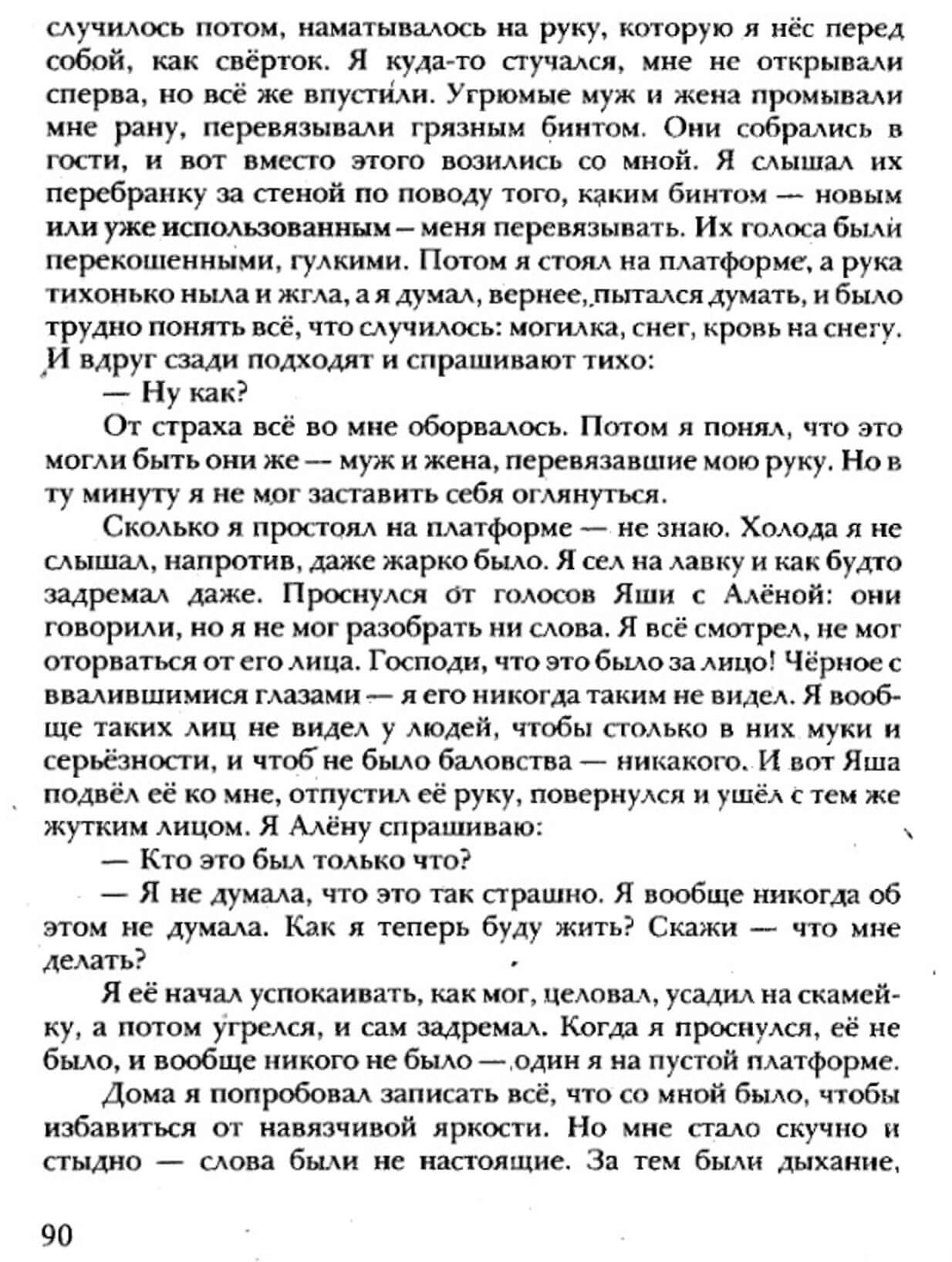
“I had a friend, Yasha. He killed himself in ninth grade. His grave is in Peredelkino. He was such a timid boy, stuttered, and was always apologizing. I had never visited his grave before, but then I found myself there. I stood by his grave and tried, but I couldn’t get a foothold. I was trembling with terror. And there was that dazzling snow, and everything was so sharp and clear. On the way back I stumbled and injured my hand. The blood on the snow frightened me terribly. But then I felt light and loose, as if something dark, thick, and tormenting had left me. Everything that happened after wrapped itself around the hand I was carrying in front of me like a bundle. I knocked somewhere, they didn’t open at first, but eventually they let me in. A gloomy husband and wife washed my wound and bandaged it with a dirty bandage. They were getting ready to go visit someone, and instead they fussed over me. I heard them arguing behind the wall about which bandage to use – a new one or one already used. Their voices were distorted and hollow. Then I stood on the platform, and my hand was quietly aching and burning, and I was thinking, or rather trying to think, and it was hard to make sense of everything that had happened: the grave, the snow, the blood on the snow. And suddenly someone comes up from behind and asks quietly, ‘So how was it?’
From fear, everything inside me collapsed. Then I realized it could have been the same people – the husband and wife who had bandaged my hand. But at that moment I could not force myself to turn around.
I don’t know how long I stood on the platform. I didn’t feel cold; on the contrary, I even felt hot. I sat down on a bench and seemed to doze off. I woke up to the voices of Yasha and Alena: they were talking, but I couldn’t make out a word. I kept looking, unable to tear my eyes away from his face. My God, what a face it was! Black with sunken eyes—I had never seen him like that before. I had never seen such a face in anyone before, so full of torment and seriousness, without a trace of playfulness. And then Yasha brought her over to me, let go of her hand, turned around, and walked away with the same terrifying expression on his face. I asked Alena,
‘Who was that just now?’
‘I didn’t think it would be so scary. I never thought about it at all. How am I going to live now? Tell me, what should I do?’
I began to calm her down as best I could, kissed her, sat her down on a bench, and then felt warm and dozed off myself. When I woke up, she was gone, and there was no one else there—just me alone on an empty platform.
At home, I tried to write down everything that had happened to me to get rid of the obsessive intensity. But I got bored and ashamed: the words weren’t honest. Behind that there was breath and life, whereas behind the sheet of paper—only impunity and evil will. And do you know what I realized? Everything is nothing, a puff of air. The only thing that is serious is what gets wound around pain, around a wound. And through pain, through wounds, you come to yourself, to your deepest depths.
Yasha often said, ‘Come on, Kostya, stop rushing around. He already came and suffered. Everything has already been said, what more do you need?’ But I don’t want to, you hear me, Buptov, I don’t want to masochistically endure someone else’s pain. And I refuse to play other people’s games, to run around in circles like a hound. I stop. I’m done. Enough.” 7


Symbolic images: the grave, snow, an injured hand, blood on the snow
The symbolism of the “injured hand.” The description of the hand injury sustained by the subject in the context of visiting Yasha’s grave is particularly noteworthy. For Dvorkin, visiting the grave is not an act of mourning but represents a ritual of psychological release (“But then I felt light and loose, as if something dark, thick, and tormenting had left me”), during which bodily injury substitutes for the impossibility of moral atonement.
The hand usually functions as a symbol of responsibility. In religious and moral traditions, “hands” are often associated with guilt (“blood on one’s hands,” “hands stained with blood ”). The hand can also function as a symbol of a criminal act (it is with the hands that murder is committed, for example, in the case of drowning, through holding, suppression, and control). Consequently, the injury to the hand in this case may function as a psychosomatic “punishment” for the act committed, a form of self-punishment, a psychosomatic marker of guilt: “Everything that happened after wrapped itself around the hand I was carrying in front of me like a bundle.” The image of the hand corresponds to the phenomenon of bodily incorporation (emotions and trauma manifest in bodily constrictions) described in psychoanalytic literature.
Moreover, this image functions as a symbolic localization of guilt, shifting attention to the source of the existential: “The only thing that is serious is what gets wound around pain, around a wound. And through pain, through wounds, you come to yourself, to your deepest depths.” This strategy is typical of pathological narcissism with elements of moral disintegration.
Visual fixation on the face of the dead Yasha: “I kept looking, unable to tear my eyes away from his face. My God, what a face it was! Black with sunken eyes… so full of torment and seriousness…” Fixation on the face of the dead man is an indicator of post-traumatic symptoms combined with mechanisms of projective identification and deindividuation of the victim. The subject “sees” in the dead man’s face what he represses in himself – torment, hopelessness, and accusation.
These and other narratives contained in this text point to a projective reconstruction of the subject’s internal conflict, involving an individual implicated in Yasha’s death, possibly as a direct participant.
Dissociative state
The book “Kalalatsy” contains a fourth episode related to Yasha’s death, which contains a reference to a dissociative state experienced by the subject. This fragment describes the classic phenomenon of depersonalization – a form of dissociation in which an individual feels alienated from their own body, thoughts, or actions, perceiving themselves as an outside observer. This is a psychological defense mechanism in which a person wholly or partially loses touch with reality, their thoughts, feelings, memory, or body, feeling detachment and unreality of what is happening, or as if observing themselves from the outside (depersonalization): “I woke up for the first time in ninth grade when Yasha died, and since then I’m as if looking at myself from the outside.” 7 This is a reaction to severe stress or trauma that helps the psyche cope with unbearable emotions.
Such dissociative reactions are especially characteristic of adolescence, when the ego structure has not yet developed sufficient stability to integrate traumatic experience. Chronic depersonalization, as in the cited case (“since then I’m as if looking at myself from the outside”), may indicate structural disorganization of the personality and increase the risk of developing dissociative disorders, including dissociative identity disorder (formerly — “split personality”).
“When I was little, I often thought: ‘Whatever happens to me, it will all be the same, and there is no hope of waking up.’ My entire childhood was an anxious sleep with flights, falls, and nightmares, and when I grew up, nothing changed. When this sleep began, I do not remember. It seems to me that I am always slowly flying by: one thing replaces another. I woke up for the first time in ninth grade when Yasha died, and since then I’m as if looking at myself from the outside.
Nothing can be trusted, neither joy nor sorrow, nor even pain; everything comes and goes, and I watch and cannot look away. And nothing really interests me. Even death does not seem frightening to me. I know that when I die, the same thing will happen.
At seventeen, I figured it out: getting high was the way out. I’m under hypnosis, and not even death can wake me up. But there are moments of partial awakening—from music, from conversation, from junk. It is like an alarm clock in the morning—jump up and run.
The goal of the system is to pump the high. The high is otherworldly labor. Systems raise masters of the high.” 7

In the context of criminal profiling, persistent dissociation is treated as a behavioral marker of concealed homicide. It allows the subject to psychologically distance himself from his own violent act, minimize guilt, and preserve social adaptation. As FBI profiling veteran Robert K. Ressler notes about a killer’s experiences after a murder:“Belief that they do not have a memory of the moment of killing is common among multiple murderers, although often the opposite is true — they cannot forget the moment of murder, get gratification from the act, and want to repeat it. Conventional psychiatric explanations… [say] a dissociative state is induced at the moment of greatest tension, [causing] a blackout.” 9
Details: “the boat, memory, and the oar.”
Other details also draw attention. They are seemingly secondary at first glance, but their significance becomes apparent through a specialized analysis. For example, Arkady Rovner’s novel “Kalalatsy” (p. 96) contains a phrase that the narrator interprets as a kind of “formula” for good luck, mentioned in the context of a drug addict successfully avoiding detention by law enforcement: “Universal God, hello — here I stand, a bit covered in grease; the boat, the memory, and the oar drifted away, praised be heaven for this.” 7 At first glance, this appears to be a chaotic utterance within the flow of conversation. However, in the context of a psychobiographical analysis of Alexander Dvorkin, whose memories, views, and behavioral patterns formed the basis of this book and are projected onto its characters, such details take on diagnostic significance.

Details. “Sky. Water. Boat.”
Within the framework of psychobiographical analysis, the symbolic content of the covers of the author’s books “Teachers and Lessons. Memories, Stories, Reflections” and “My America” merits attention. These covers feature photographs that Alexander Dvorkin selected for the public presentation of his identity. This is especially important in the case of autobiographical works, where the selection of photographs, covers, and key images represents an act of conscious and unconscious self-definition by the author. The covers of Alexander Dvorkin’s two autobiographical books feature a recurring motif: an image of the author standing alone against a backdrop of sky, water, and a boat.
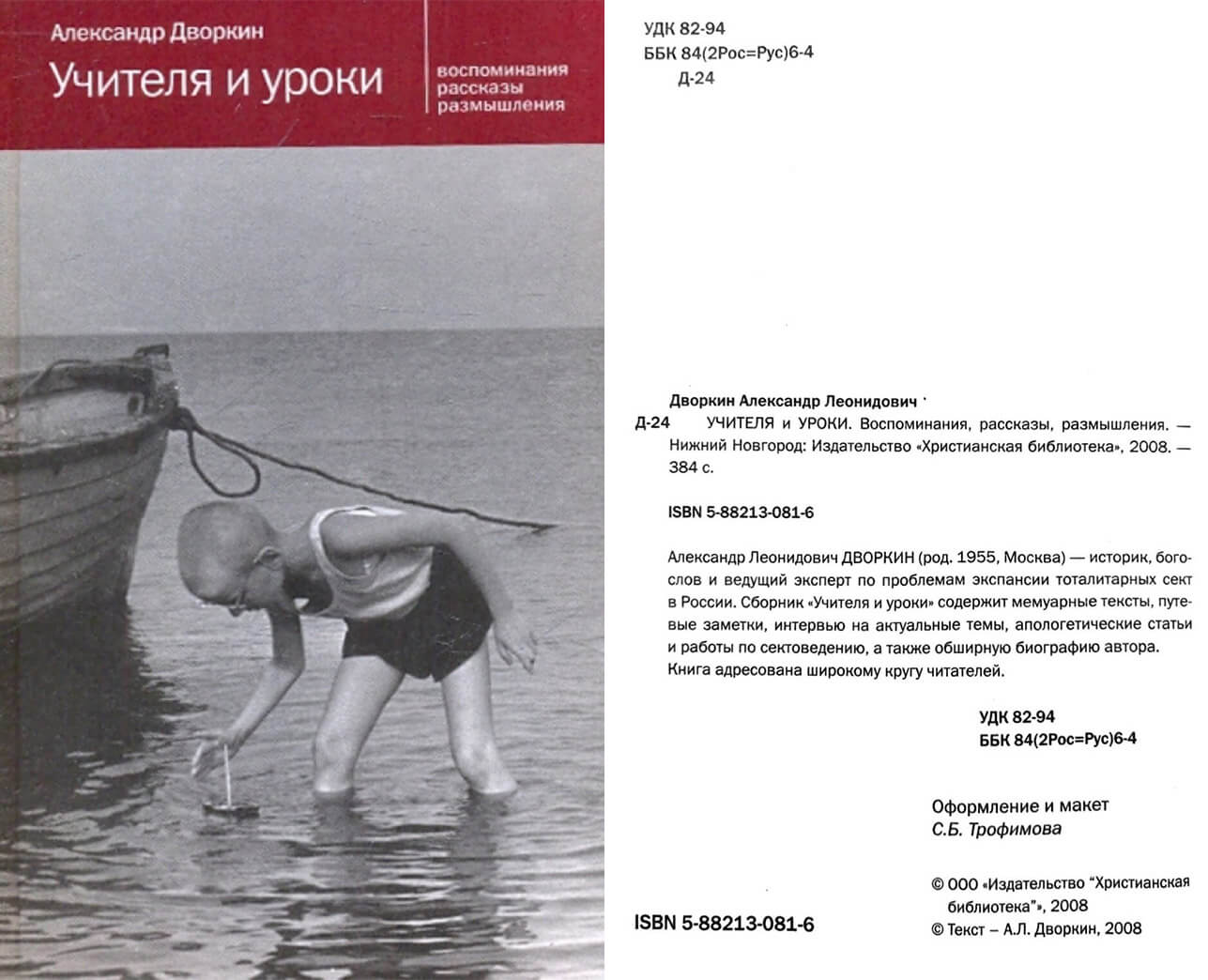

When preparing autobiographical publications, especially by well-known figures, the selection of materials for the book, including the author’s personal photographs (including those placed on the cover), is typically made by the author and coordinated with the publisher. Authors, particularly those who have reached maturity and possess an established social status, when selecting images and personal photographs for public self-presentation, generally seek to demonstrate the most representative (status-oriented) image of the “self,” or to choose a visual narrative that symbolically reflects a key stage, central theme, or the most significant (traumatic or transformative) experience of their life path.
On the cover of Alexander Dvorkin’s autobiographical book “Teachers and Lessons. Memories, Stories, Reflections” (2008), the emphasis is placed on a photograph from 1963, when Alexander Dvorkin was 8 years old. The image shows a boy wearing glasses, a white sleeveless undershirt, and dark briefs, standing in a leaning posture in the water next to a moored wooden boat. The child’s right hand hangs over a toy boat floating on the water. The background of the composition is formed by the water surface and the sky, lacking any visual details (“empty sky”). The same image is reproduced on the publication’s frontispiece, where images of the water surface and the “empty sky” predominate.


On page 8, immediately before the start of the chapter “Biography of Alexander Dvorkin,” the book has a photograph of 8-year-old Sasha Dvorkin with a frown on his face. In the image, he is sitting in an empty boat against the backdrop of the water’s surface and the sky. The caption reads: “1963. Curonian Spit . Schoolboy Sasha Dvorkin on vacation.” 8
The key visual and narrative elements in these photographs that warrant attention are: the “empty sky,” water, the boat, the right-hand gesture (hovering over the toy boat), the subject’s age (8 years), and his affective state (frowning).
From the perspective of the psychology of symbolism, this set of images may contain significant information about the structure of the personality and experienced traumas. The key element requiring attention is the composition in which the subject’s hand hovers over the boat. In the psychoanalytic tradition, the hand, especially in a context of dominance over an object, is interpreted as a symbol of power and may also symbolize control over another subject’s fate or life. This and other symbols, visual and narrative elements in the photograph placed on the cover of the autobiographical book, acquire particular significance in light of the psychobiographical information about Alexander Dvorkin outlined above:
- The symbol of the “outstretched hand.” An episode from the subject’s childhood, connected with stories told in first grade by his classmate Yasha, who described God as an invisible force capable of “stretching out a hand and reaching anyone” (“You can’t see Him, but He can stretch out His hand and reach anyone He wants.”)
- The symbol of water. An episode connected with Yasha’s death in ninth grade: “At the end of 9th grade, in the spring, they pulled Yasha out of the Sokolniki ponds.” This introduces the symbol of water as a space of death and loss into the narrative.
- The symbol of the “empty sky.” An episode connected with reflections after Yasha’s death. In response to the loss of Yasha, the subject formulates his existential experience through the image of an “empty sky”: “But God does not exist, and none of this will happen. There will be no life, no joy, nothing. Absolutely nothing. There is only an utterly empty sky overhead.”
- The symbol of the “boat.” An episode involving the “formula” for good luck mentioned in the context of successfully avoiding detention by law enforcement: “Universal God, hello—here I stand, a bit covered in grease; the boat, the memory, the oar drifted away, praised be heaven for this.” One more fact is worth noting: in 1970, when Alexander Dvorkin was in 9th grade, and Yasha died, Sokolniki Park (a park located in the Sokolniki District in eastern Moscow) and its ponds at that time offered rentals of traditional wooden rowboats.
Separately, one must consider a critical incident at age 8 involving Sasha Dvorkin’s stay at a summer camp. He described the experience as “extremely negative” and so traumatic that it prompted an otherwise obedient child to run away from the camp. Subsequently, the subject of our research states that he developed a persistent antipathy toward collectivism and everything associated with it, indicating the early formation of a pattern of social isolation and distrust toward institutional structures.
Taken together, the choice of these specific and recurring images — loneliness, water as a symbol associated in memory with death, a boat as an isolated vessel (in another photograph, where the “I” is alone in the boat), a hand gesture as a manifestation of power and control over someone’s “fate” (the boat) — goes beyond a random aesthetic preference. Such a configuration can be interpreted as a narrative indicator reflecting the deep structure of the personality and, possibly, a fundamental traumatic experience connected to themes of power, guilt, existential loneliness, and loss. In psychotraumatology, such recurring symbols in images (including photographs), subconsciously chosen by the author, can serve as a way of unconsciously representing non-integrated traumatic experience.
Such patterns, while not evidence of involvement in a crime, correspond to themes identified in the narratives of individuals concealing latent violent episodes in their past, as described in research on behavioral analysis and forensic psychiatry.
Testing this hypothesis requires a comprehensive retrospective analysis, including correlating these symbolic indicators with other behavioral, psychological, and factual data from Alexander Dvorkin’s biography.
Criminological and behavioral research indicates that serial offenders often display a persistent tendency to reproduce the symbolism, spatial characteristics, or affective components of their first crime in their fantasies, creative output, or behavior. This reproduction can manifest both at the level of conscious behavior and in unconscious forms (through fantasies, verbal narratives, literary creativity, as well as recurring behavioral patterns) as an expression of compulsive reenactment, control, and processing of traumatic experience associated with the first act of killing. According to conceptual works by leading specialists in serial killer profiling, including Robert Ressler and John Douglas, the scene of the first murder often becomes the “core” of the offender’s future fantasy life and behavioral patterns.
Analysis of the psychobiographical data of the research subject (including verbal and behavioral markers, features of the narrative structure of his statements, selectivity of memories, as well as the presence of dissociative or rationalizing strategies) makes it possible to identify indicators typical of individuals concealing involvement in the violent deaths of other people. These indicators may include an abnormal fixation on certain themes, avoidance of specific temporal or spatial references, the use of passive constructions when describing traumatic events, and the projection of responsibility onto external circumstances.
Nevertheless, such observations are preliminary and require systematic verification through retrospective analysis of available data and the totality of existing facts, including chronological reconstruction of the life course, cross-checking of testimonies, and comparison with established behavioral profiles.
In the context of this article, a selective retrospective reconstruction of the psychobiography of the research subject, including the period of his youth, will be presented below. Before that, however, it is methodologically appropriate to outline the concept of the “first murder” based on international research data — specifically, the significance of this turning point for serial killers and the dynamics of its influence on subsequent behavioral and fantasy-narrative changes.
Read the full report.
Source:
1. John Douglas, Mark Olshaker, “Journey Into Darkness”
2. Reid Meloy (2000), “The Nature and Dynamics of Sexual Homicide”, Aggression and Violent Behavior, Vol. 5, No. 1, pp. 1–22: https://drreidmeloy.com/wp-content/uploads/2015/12/2000_TheNatureAndDyn.pdf
3. Simon, G. [2018]. The Portrayal and the Attributes of Serial Killers and Some of the Most Notorious Ones. National University of Public Service (Hungary) https://real.mtak.hu/107807/
4. Beck, A. T. (1995). Cognitive Therapy: Basics and Beyond. Guilford Press). https://psycnet.apa.org/record/1995-98312-000
5. Alexander Dvorkin’s book “My America” (2013) https://fb2.top/moya-amerika-813075
6. Meloy, 1988; FBI BAU, Crime Classification Manual
7. Book “Kalalatsy” by Arkady Rovner — Moscow: “New Time” International Association of People of Culture, PSK Timan, 1990.
8. Alexander Dvorkin, “Teachers and Lessons. Memories, Stories, Reflections” (2008) https://www.labirint.ru/books/240384/
9. https://www.thetedkarchive.com/library/john-h-campbell-profilers-leading-investigators-take-you-inside-the-criminal-mind-book