Read the previous part of the article.
Read the full report.
Editorial Appeal to Witnesses and Sources.
If you have information that may supplement, clarify, or corroborate the factual basis of this article, the ActFiles editorial team invites you to contact us. Source confidentiality will be respected.
An analysis of the phenomenon of serial killings identifies a number of persistent characteristics associated with a propensity for violent behavior. Most people possess an instinctive aversion to death. In serial killers, however, this reaction is diminished or entirely absent. They are drawn to death and to everything associated with it.
Upon arrest, some serial killers are capable of reconstructing the dynamics of their crimes with exceptional precision and highly developed visual recall. This trait is particularly pronounced in individuals driven by sadistic motives: they display a specific fixation on controlling the dying process and enhanced visual memory for the details of their crimes. This is linked to the emotional arousal experienced during the crime commission, which enhances neurocognitive encoding of memory. This explains the extraordinary accuracy and detail of their subsequent accounts, in some cases even years later.
Individuals with pronounced psychopathic traits and grandiose narcissism who have committed violent crimes often exhibit a need to “boast” in some manner about their offenses, to “demonstrate” the outcome of their criminal acts in one form or another. This tendency may manifest in direct confessions, veiled insinuations in conversation, recollections, or other forms of self-referential narrative. Such individuals construct a distorted belief system along with persistent patterns of behavioral and emotional responses associated with death. They demonstrate extraordinary detail and emotional involvement when describing their crimes, indicating the profound cognitive and affective salience of the subject of death. In their narratives, death is, above all, a concealed display of their power and control over the victim, a position as arbiter of life and death, and confirmation of their own omnipotence.
The study has already noted that some serial killers describe their actions as “playing with the victim.” For them, the victim’s conscious participation in the act of dying is of fundamental importance, as it confirms their total control. Such offenders often seek to ensure that the victim understands what is happening, recognizes their helplessness and inevitable fate. This behavior is driven by the intense gratification derived from observing the victim’s fear, suffering, and loss of control. They transform the act of killing into a “spectacle” of their own power.
A psychobiographical analysis of the autobiographical text by Alexander Dvorkin, “My America,” 1 revealed a persistent tendency to recount episodes involving fatal outcomes (suicides, deaths from natural causes, and other cases). Some involved individuals Dvorkin knew personally; others concerned people he had only recently met and with whom he had direct contact shortly before their deaths. In addition, the text describes fatal incidents that left such a deep mark on Alexander Dvorkin’s subjective experience that he felt it necessary to include them in his public narrative. Here are some examples of such descriptions.
Episode 1. Suicide of a “neighbor upstairs”
After four months of wandering, Alexander Dvorkin returned to Moscow. Soon afterwards, he received another summons to the police. For several more months, he and his friends were forced to hide from the authorities. Ultimately, the police located and detained them, but soon released them. One of the factors that prompted his emigration was a worsening drug dependency:
“In addition, there was yet another extremely important problem: drugs. Gradually they seeped into our environment and, like poison, contaminated it.” (Alexander Dvorkin. “My America,” p. 121) 1
“Then we started seeing the first people among us dying from overdoses and other drug-related causes.” (Alexander Dvorkin. “My America,” p. 121) 1
In mid-February 1977, Alexander Dvorkin was granted permission to leave the USSR. On March 6, 1977, he departed the Soviet Union for Europe and, several months later, made his way to the United States. Upon arriving in New York City, an organization assisting immigrants placed Dvorkin at the Hotel Lucerne. His room was on its penultimate, 10th floor. On his second day in the United States, Dvorkin recounts the following incident:
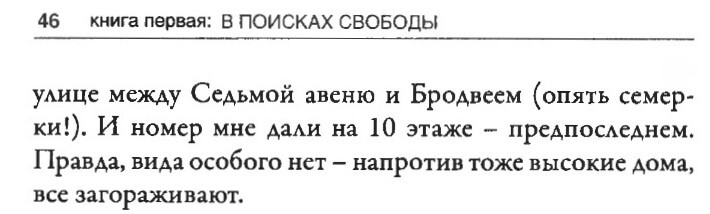
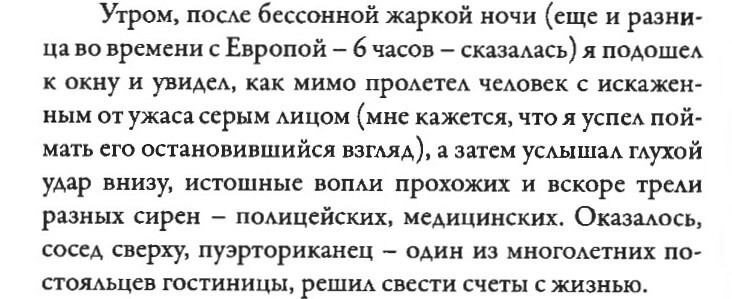
“They gave me a room on the tenth floor, the second from the top. There wasn’t much of a view — high buildings opposite blocked everything. In the morning, after a sleepless, stifling night (the six-hour time difference with Europe also made itself felt), I went to the window and saw a man fly past with a gray face contorted in terror (it seems to me I caught his fixed gaze), and then I heard a dull thud below, piercing screams from passersby, and soon the wail of various sirens — police and medical. It turned out that a neighbor upstairs, a Puerto Rican, one of the hotel’s longtime residents, had decided to end his life.”
Episode 2. Sudden death of an editor-in-chief
The sudden death of an editor-in-chief, Professor Carl Proffer (USA), occurred shortly after the young immigrant Dvorkin submitted his first “linguistic work” to Proffer’s publishing house Ardis in Ann Arbor, Michigan, and, according to Dvorkin, the publishing house “accepted it for publication.”
“I even decided to immortalize our movement by compiling a dictionary of Soviet hippie slang. In speaking with everyone, I constantly wrote down new words on index cards. Later, I managed to have the index transported to the United States, and Ardis Publishing in Ann Arbor accepted it for publication. However, soon afterward, the editor-in-chief, Professor Carl Proffer, died suddenly, and his widow had more pressing concerns than the publishing house. Thus, my first (and only) linguistic work wasn’t published. Now, I am rather glad of that.”
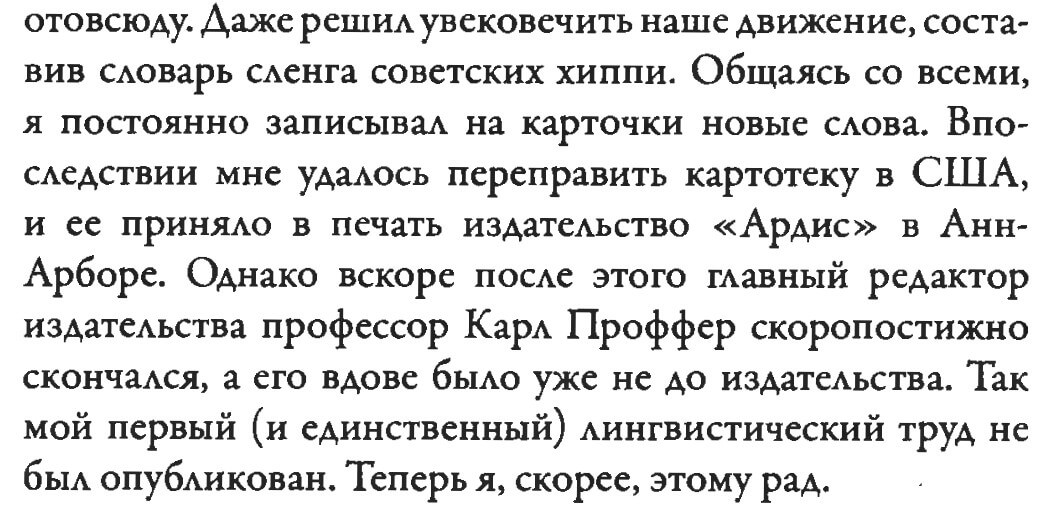
It should be clarified that accepting an author’s work for publication in publishing practice means moving on to the book production. This implies that a publisher has approved an author’s work and has already invested funds in printing the book at a printing house, thereby scheduling the book for commercial release. If, for whatever reason, a publisher isn’t interested in an author’s work from the start, they’ll turn it down, which happens before they even start planning to release the book. So, the claim that the work was “accepted for publication,” but didn’t come out because the editor died is a bit iffy. A more likely version is that the editor-in-chief of the publishing house, the well-known professor Carl Proffer, refused to publish the young Dvorkin’s “work.”
Joseph Brodsky who personally knew Proffer described him as follows: “…in his presence, you felt he had seen through you completely and harbored no illusions about you — and yet he was kind to you.” 2
Brief biographical note: Carl Ray Proffer 3 was a prominent American Slavicist, literary scholar, translator, publisher, and professor of Russian literature at the University of Michigan. Carl and his wife, Ellendea Proffer, were the founders (1969) and editors of Ardis Publishing 4 and the journal Russian Literature Triquarterly. Over the course of Ardis’s existence, the Proffers published approximately 400 titles. In addition to issuing new translations of Russian classics (Bulgakov, Mandelstam, Tsvetaeva) and academic reference works, they published authors such as Nabokov, Sokolov, Brodsky, Bitov, Iskander, Aksenov, Dovlatov, and others. Ardis publications form the foundation of major reference works, textbooks, and instructional materials used by contemporary American and Western Slavic scholars.
From the correspondence 5 of writer and journalist Sergei Dovlatov who personally knew Proffer, with his longtime friend Igor Yefimov who worked at Ardis under Professor Carl Proffer in Ann Arbor, Michigan, where Dovlatov’s books were first published:
“From YEFIMOV to DOVLATOV, July 27, 1982: ‘July 27, 1982. Yesterday, we received some distressing news. Carl has been diagnosed with cancer. It is very severe. Inoperable. However, they say that people with rectal cancer sometimes live for a long time.’”
According to the official version, Carl Proffer died of cancer on September 24, 1984 (in Ann Arbor, Michigan) at the age of 46. His wife, Ellendea, continued to publish.
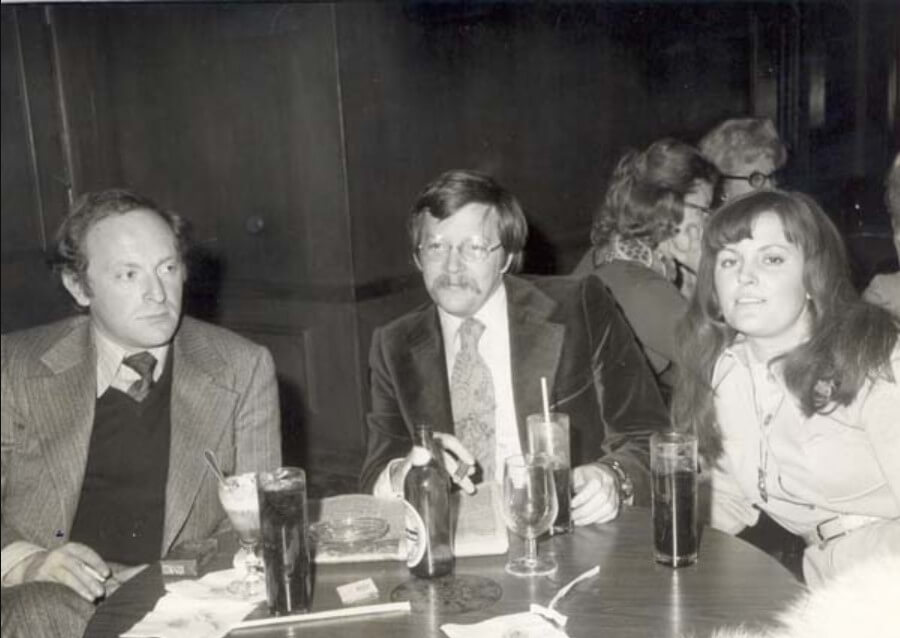
A few words about Alexander Dvorkin’s “effort” on compiling his “first work” and the significance he attached to it. In a 1979 interview for the project “Recent Soviet Immigrants in America,” 7 he stated:
“Q. Well, when your dictionary comes out, it should be a very valuable scholarly contribution to American knowledge of the Russian hippie movement. How long did you work on compiling that dictionary?
A. In the Soviet Union, about a couple of years and then here, it took me about a half a year to organize it, to put the stuff together.
Q. And what particular group does this slang reflect? Which groups used these kinds of words that are in your dictionary?
A. Hippie first. Well, that’s the slang of hippies, but since that time it became very very popular among students. A lot of the words were used by the students because they like, you know, that were playing hippie during the evening and then changed their clothes, and they go during the day, was pretty big. It was just in fashion sometimes, so everybody wanted to look like hippie, so the slang spread and now it’s used. Besides the drug terms, it’s used by most of the students.”

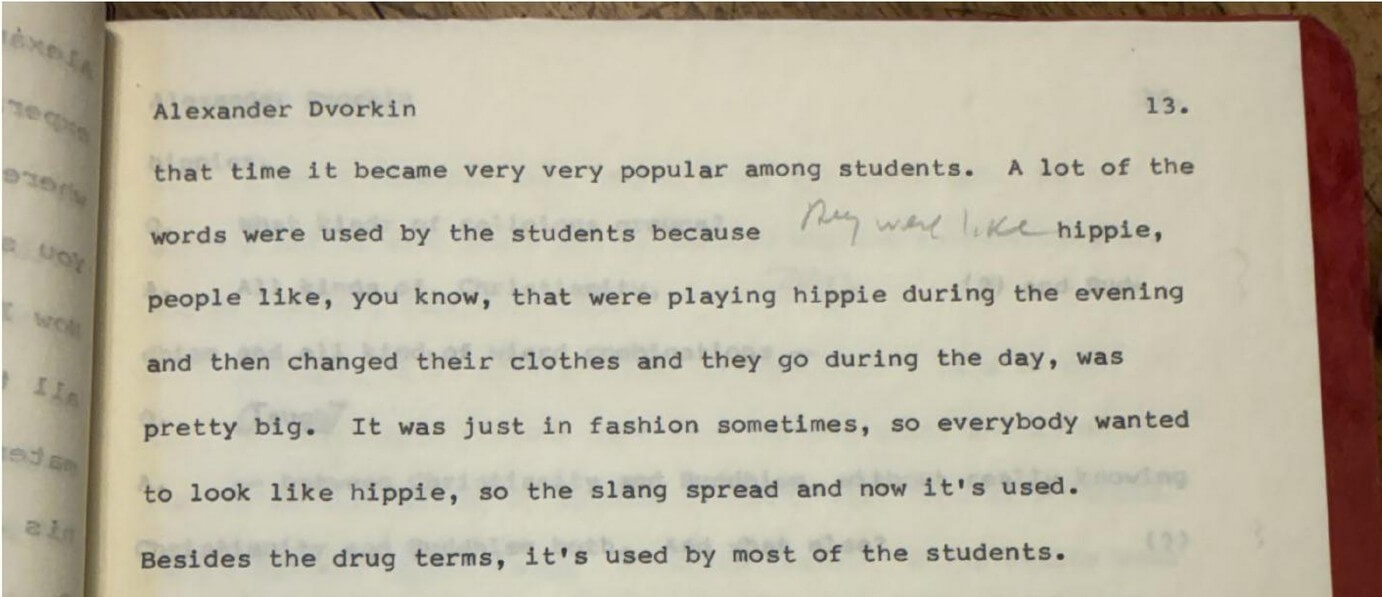
Episode 3. A patient’s death in a hospital following a visit by Alexander Dvorkin
Alexander Dvorkin describes an incident that occurred in the intensive care unit after he visited the hospital as a chaplain during his third year at St. Vladimir’s Orthodox Theological Seminary in the United States.
Gus the fire victim and others
“In addition to the demanding academic course load, the program included practical training. In our third year, we were required to complete pastoral practice in one primary area and three secondary ones. The options included ministry in a hospital, a prison, a nursing home, a military academy, a parochial school, and so forth. For each — the primary and the secondary assignments — a specified number of hours was required. I began with hospital ministry. Once a week I traveled into the city where I spent half a day at a large hospital that had an agreement with the academy. At the registration desk, I was given a list of patients. Upon admission, patients (if they wished) indicated their religious affiliation and whether they wanted a chaplain to visit them. I then went to see my assigned patients (usually five or six). I spoke with each one, offered to pray together, and asked whether they wished to confess and receive Communion. I passed their names the same day to the priest responsible for our ministry, and the next morning he would come to the hospital with the Holy Gifts.
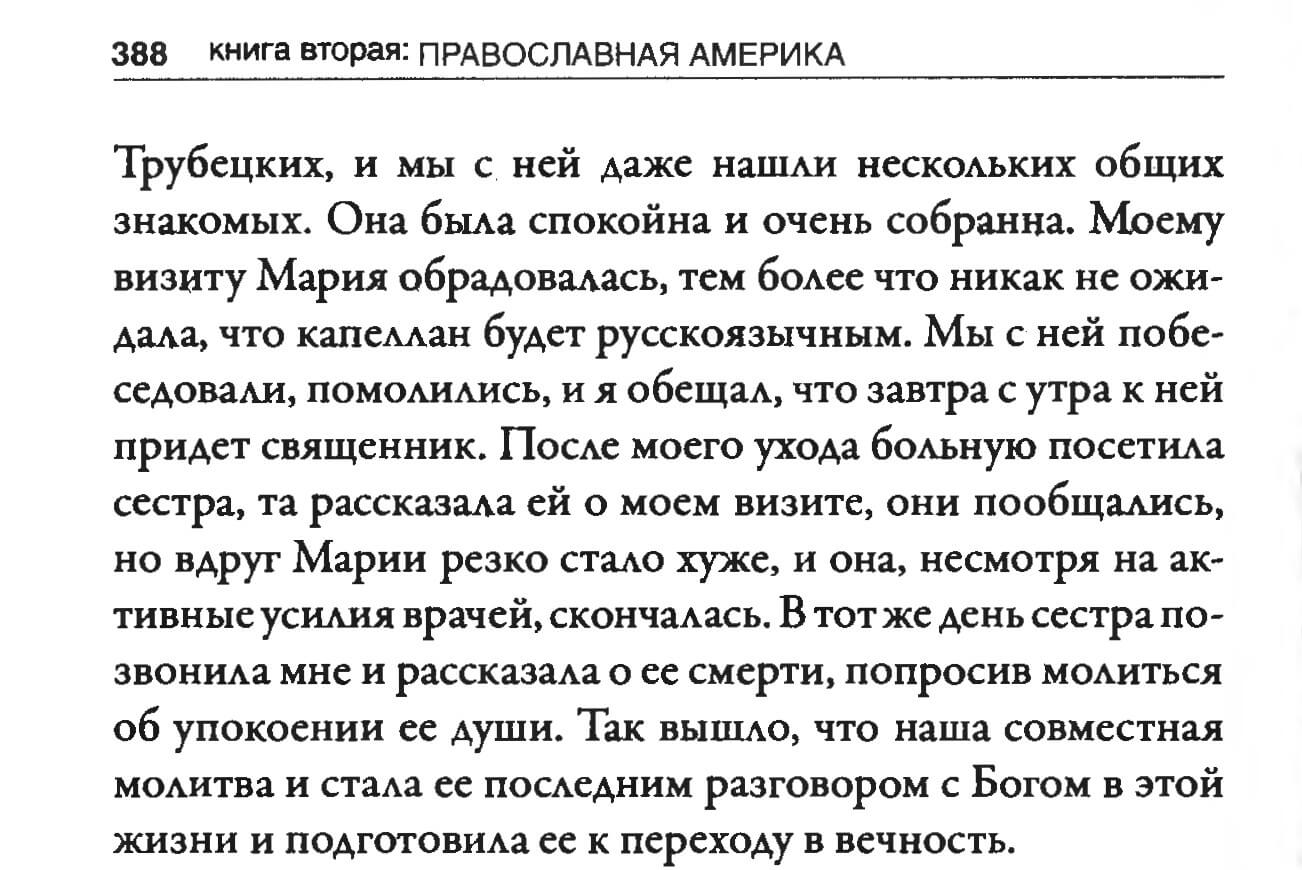
I still remember several of my patients. One elderly woman (let’s call her Maria), who was in intensive care after heart surgery, came from the well-known Russian noble Trubetskoy family, and we even discovered a few mutual acquaintances. She was calm and very composed. Maria was pleased by my visit, especially since she hadn’t expected the chaplain to be Russian-speaking. We spoke, prayed, and I promised that a priest would come to her the next morning. After I left, her sister visited and told her about my visit; they spoke, but suddenly Maria’s condition sharply deteriorated, and despite active efforts by the doctors, she died. That same day the sister called me to inform of her death and asked me to pray for the repose of her soul. It turned out that our shared prayer became her final conversation with God in this life and prepared her for her passage into eternity.”
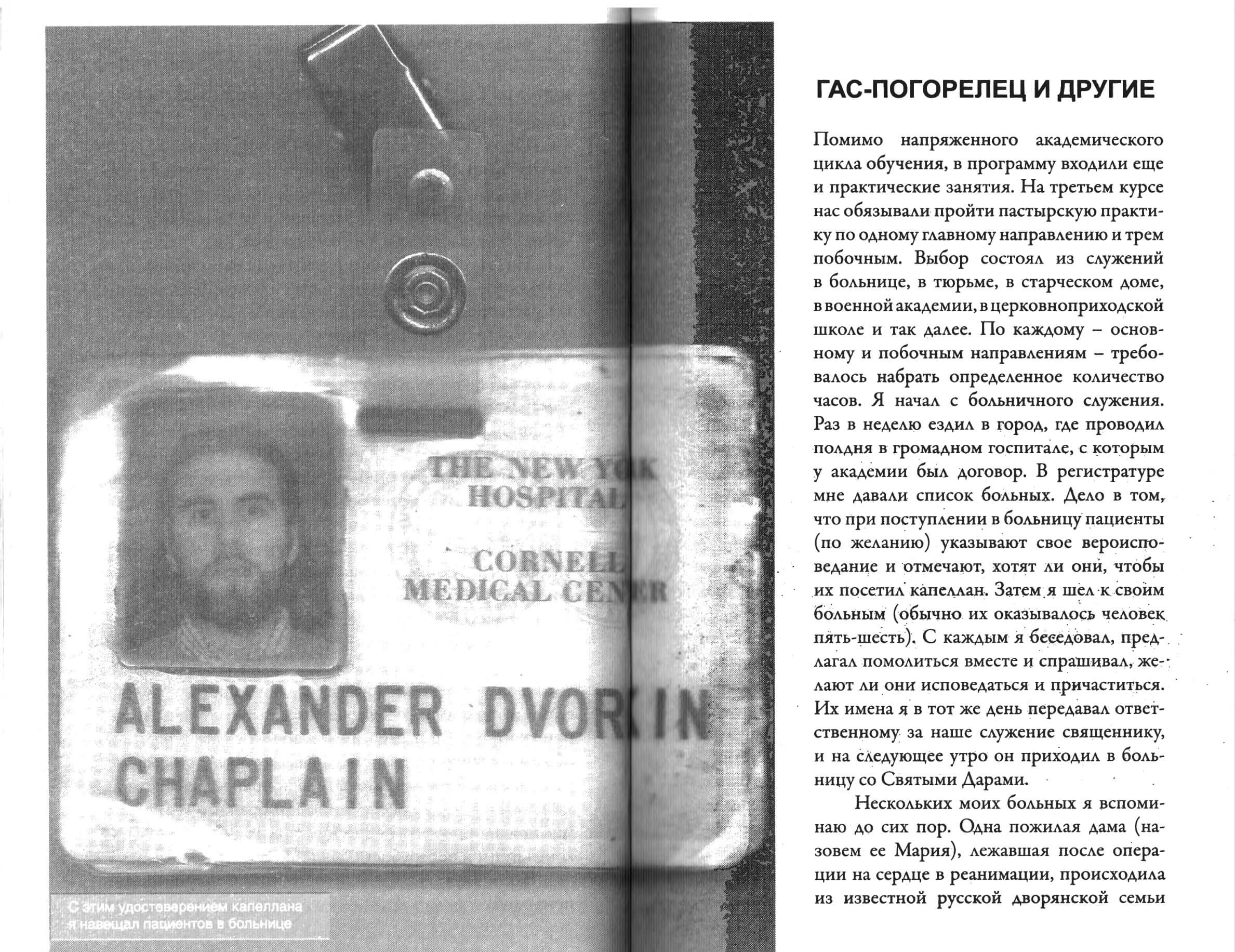
Episode 4. Death of dean Alexander Schmemann
The death of Alexander Dvorkin’s instructor and spiritual mentor, Protopresbyter Alexander Schmemann, dean of St. Vladimir’s Orthodox Theological Seminary, warrants separate analysis. In his autobiographical book “My America,” 1 Dvorkin devoted a detailed chapter to Schmemann, describing both his personality and the circumstances of his sudden death at age 62. Notably, Dvorkin addresses not only biographical details, but also deeper motivational patterns connected to his own relationship with authoritative figures.
In his autobiographical texts, Alexander Dvorkin regularly references encounters with well-known or authoritative individuals possessing social status, public recognition, and professional standing. However, those references are often accompanied by implicit criticism, irony, or disparaging remarks, even when outward respect is expressed. This duality may indicate underlying insecurity and competition for status, characteristic of individuals with grandiose narcissism who seek to compensate for feelings of inadequacy through the symbolic diminishment of authority figures.
Biographical note: Alexander Schmemann (8) (September 13, 1921 — December 13, 1983) was an influential Orthodox priest in the USA, Doctor of Theology, professor, dean of St. Vladimir’s Seminary in New York City, and author of numerous works on Orthodox theology and history. He spent most of his career in the United States.
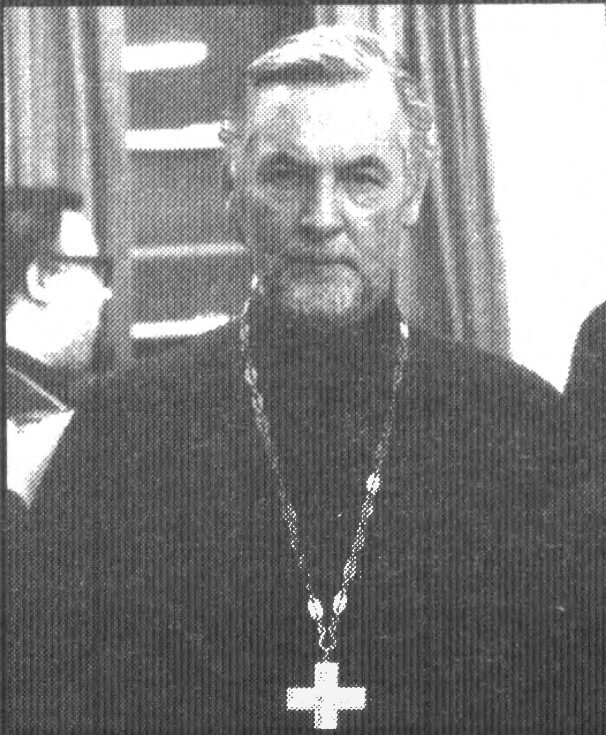
Alexander Schmemann was Born in Estonia to a family of St. Petersburg immigrants who left Russia after the 1917 revolution. He was one of the twins: his brother was Andrei Schmemann (1921–2008). Schmemanns came from a noble family. Their grandfather, Nikolai Schmemann (1850–1928), was a Lutheran of Baltic German origin who held high government positions in the Russian Empire: he was a privy councilor, senator, and member of the State Council in St. Petersburg. Alexander Schmemann spent most of his childhood and youth in France. After studying at Russian and French secondary schools and universities, he taught in Paris from 1946 to 1951. In 1951, he and his family immigrated to New York City where he started teaching at St. Vladimir’s Orthodox Theological Seminary.
In 1954, Alexander Schmemann lectured at the Russian Center at Fordham University. In subsequent years, he served as a visiting professor at a number of leading educational institutions in New York, including Columbia University, New York University, the United Theological Seminary, and the General Theological Seminary. In 1962, he was elected dean of St. Vladimir’s Seminary and held this position until his death in 1983.
Alexander Schmemann 9 was one of leaders in the formation of the Orthodox Church in America as an autocephalous institution — a status it received from the Russian Orthodox Church in 1970. As one of the main initiators of autocephaly, Schmemann represented the Orthodox Church in America in negotiations with Moscow and Constantinople. From 1963 to 1979, Schmemann served as vice-chairman of the Russian Student Christian Movement (RSCM) in America, and from 1979 to 1983 as chairman of the RSCM. For thirty years, he hosted a religious program on Radio Liberty. His contemporaries noted his leadership qualities, wit, intelligence, and openness.
Alexander Schmemann was awarded honorary doctorates from a number of American educational institutions including the General Theological Seminary and the Holy Cross Greek Orthodox School of Theology. His works had a significant influence on the development of liturgical theology in the Orthodox tradition. Schmemann published numerous books and articles. His book “For the Life of the World,” devoted to Christian faith in the liturgy, has been translated into eleven languages. According to the official version, Schmemann died of lung cancer in 1983 in Crestwood, Westchester County, New York.
Duality of narrative
An analysis of the chapter on Alexander Schmemann reveals Dvorkin’s ambivalent posture toward an authority figure: on the one hand, he demonstratively expresses respect for Schmemann’s authority; on the other, he introduces elements of implicit criticism, sarcasm, references to physical debilitation caused by illness, and the fact of Schmemann’s sudden death. At the same time, Dvorkin underscores his own exceptional position within the context of their relationship during the rector’s lifetime. Such duality is characteristic of narratives associated with grandiose narcissism where the teacher’s figure is simultaneously idealized and symbolically diminished, not through overt aggression, but through insinuation, irony (“he was great, but…” — a classic technique of undermining authority), or by emphasizing one’s own “deeper understanding.” This allows the author to maintain outward loyalty while positioning himself as a successor who surpasses the teacher.
For example:
“His inner strength was expressed, among other things, in his independence: he did everything himself and greatly valued and guarded his personal space, the space of his private life and personal inviolability. And then he was struck by a fatal illness and an exhausting treatment that brought severe physical suffering and a sharp decline in strength. Without assistance — even basic physical support from others — he could no longer manage.” (Alexander Dvorkin. “My America,” p. 455) 1
An important biographical detail is that Alexander Dvorkin was in direct physical and social proximity to Alexander Schmemann during his illness and the final year of his life:
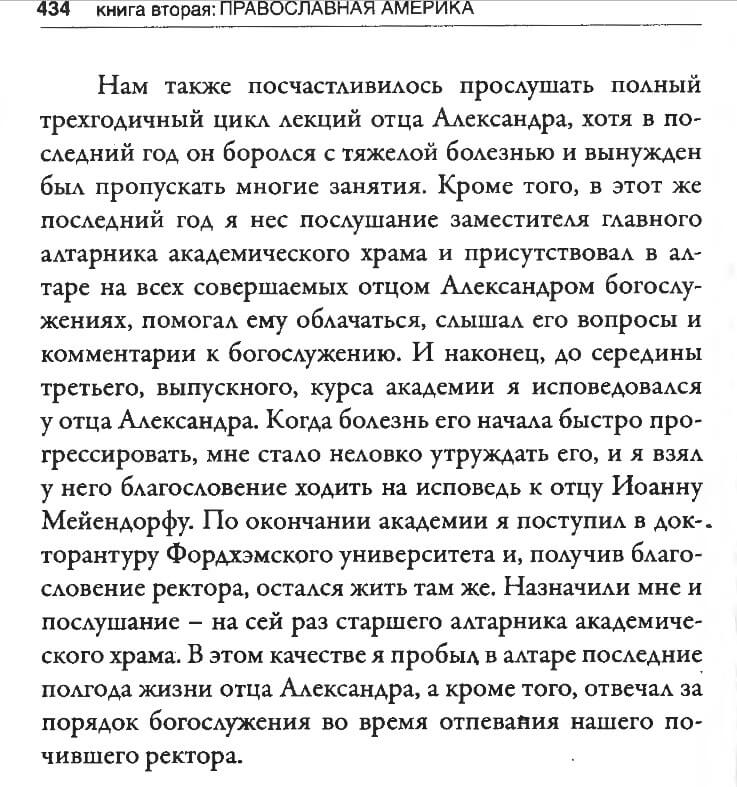
“We were also fortunate to attend the full three-year cycle of lectures by Father Alexander, although in his final year he was battling a serious illness and was forced to miss many classes. In addition, during that same final year I served as deputy head altar server of the academy church and was present in the altar during all the services celebrated by Father Alexander, helping him vest and hearing his questions and comments on the liturgy. Finally, until the middle of my third, graduating year at the academy, I made my confession to Father Alexander. When his illness began to progress rapidly, I felt it improper to burden him and received his blessing to go to Father John Meyendorff for confession. After graduating from the academy, I entered the doctoral program at Fordham University and, having received the rector’s blessing, remained living there. I was also assigned an obedience, this time as senior altar server of the academy church. In that capacity, I remained in the altar during the last six months of Father Alexander’s life and was responsible for the order of worship during the funeral service for our departed rector.”
Destructive envy. What’s striking is Alexander Dvorkin’s attitude toward people who came from noble lineages, families, or celebrities who were famous, had high social status or position, and especially striking is his emphasis on their premature deaths. Here’s an example of his own description of his relationship with Protopresbyter Alexander Schmemann, dean of St. Vladimir’s Seminary:
“Understanding this, I cannot speak of any special relationship with Father Alexander. I was fully aware of the difference in our positions — student and rector: his enormous workload was compounded by the illness that was gnawing at him from within, which undoubtedly began long before it was diagnosed. I was in his home only once, and even then very briefly.” 1
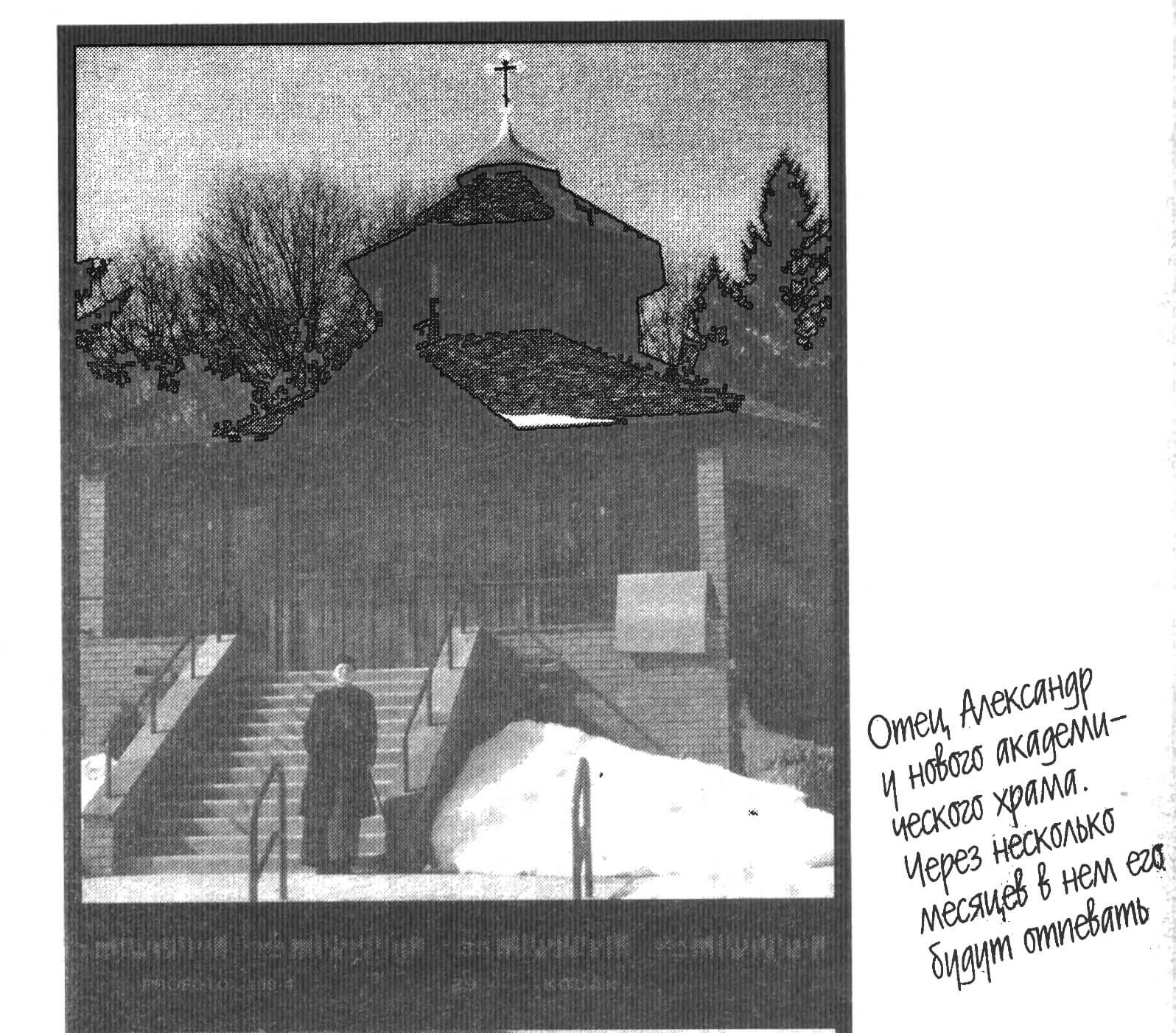
Caption to a photo included by Dvorkin in his autobiography “My America”: “Father Alexander at the new academic church. In a few months, his funeral service will be held there.”
Quotes by Alexander Dvorkin regarding the aristocratic origins of his spiritual mentors and instructors — Alexander Schmemann and Alexander Meyendorff:
“The Schmemanns were a service nobility family of Baltic German origin. On his mother’s side, Father Alexander belonged to the Shishkov family — that very Admiral Shishkov who in Pushkin’s time founded a literary society ‘Gathering of Lovers of the Russian Word’.”
“When I wrote my memoirs about Father John Meyendorff, I noted he is often compared to Father Alexander Schmemann, and their names are constantly listed together, in the same breath (sarcastic students of St. Vladimir’s Academy coined a term for such listings: ‘Schmemendorff’). Perhaps in these recollections, too, it is impossible to begin writing about one without mentioning the other. Indeed, both priests were like-minded colleagues and friends; both came from Russian aristocratic families; both bore German surnames; both grew up in emigration in Paris and had known each other since childhood, although Father John was several years younger. As boys, both served in the altar at the Alexander Nevsky Cathedral in Paris (Father Alexander noted that he himself taught the young Ivan Meyendorff to serve at the altar), and both studied at the St. Sergius Metochion. They remembered their rector, Archpriest Sergei Bulgakov, and Professor Kartashev, and Berdyaev who would come there from time to time, although he himself was a parishioner of the Moscow Patriarchate. They were taught by Archimandrite Cyprian (Kern), Archpriest Vasily Zenkovsky, Archpriest Nikolai Afanasyev, Bishop Kassian (Bezobrazov) — indeed, by all the great figures of that Paris emigration.”
“Father John came from a very ancient lineage. When I first visited Germany in 1982, I made a point of stopping in the city of Bamberg, famed among other things for its magnificent Romanesque cathedral. In the altar of that cathedral is buried Pope Clement II von Meyendorff. He was the second German in the history of the papacy; his brief pontificate lasted from 1046 to 1047.”
As previously noted in this study, Alexander Dvorkin did not come from a socially privileged or stable family. His grandfather served a lengthy prison sentence. His father left the family during Alexander’s early childhood. During adolescence and youth, Dvorkin experienced educational difficulties, episodes of vagrancy, and prolonged use of psychoactive substances. He repeatedly entered into conflicts with teachers and other authority figures, at times escalating into open scandals and premature termination of studies or employment. This pattern aligns with behavioral models associated with difficulty accepting social norms, resistance to authority, oppositional tendencies, and a disposition to attribute personal setbacks to external circumstances.
Such a narrative, including one that assumes duality in narration with regard to other people, implies that the subject has a desire for destruction — malicious envy 10 — a psychological phenomenon in which the perception of another’s advantage in a domain significant to the subject (social status, intellectual recognition, aristocratic origin, power, spiritual authority, and so forth) generates a desire and motivation to humiliate, eliminate, or belittle the object of comparison.
In Alexander Dvorkin’s autobiographical texts, this mindset is manifested in a special attitude towards people who possessed what he himself was deprived of. His descriptions of authority figures often combine outward respect with implicit criticism, sarcasm, and an emphasis on their vulnerability or death. Perhaps, for him, this “equalizes” their statuses and eliminates the threat of superiority. This kind of ambivalence of Dvorkin may be interpreted as a manifestation of his individual envy that functions as a compensatory mechanism: it allows him to restore inner balance in the face of acute sense of his own marginality and “biographical inferiority.”
According to modern research, such a destructive form of individual envy is often rooted in early childhood traumas, including experiences of rejection, instability, attachment, or comparisons with others. In public discourse, it is manifested through sarcasm, passive aggression, negative comparisons, and in narratives, through undermining an authority figure under the guise of an “honest portrait.” The key feature of individual envy is its focus on depriving another person of advantage rather than achieving it; on eliminating another person’s superiority. In extreme cases, this may include a desire to completely eliminate the object of envy, symbolically or physically.
“I won’t tolerate the academy becoming a den for drug addicts and homosexuals!”
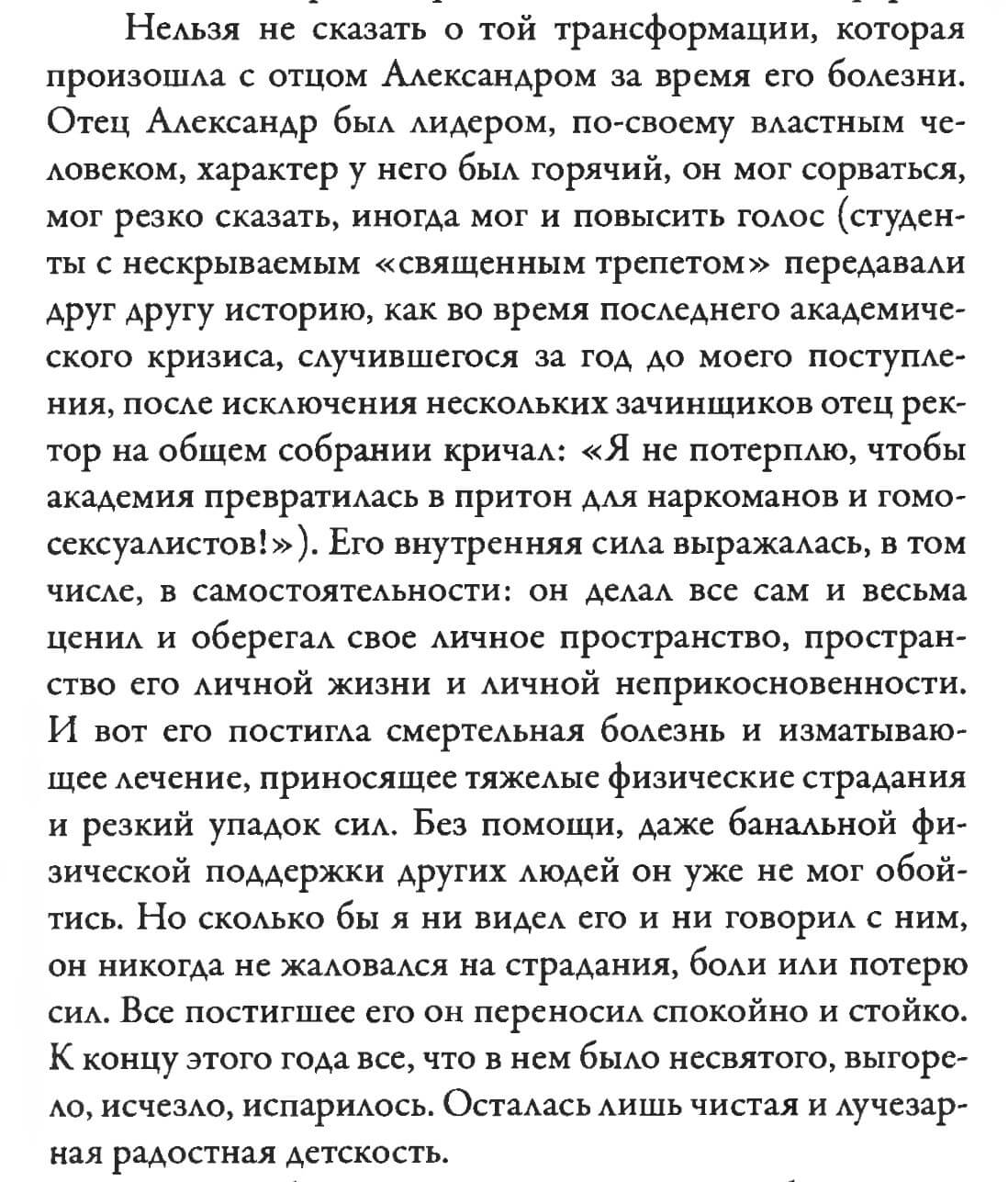
In his autobiography “My America,” Alexander Dvorkin cites an episode that, according to him, occurred a year before his admission to St. Vladimir’s Seminary. In particular, after expelling several instigators, at a general meeting dean Alexander Schmeman declared: “I won’t tolerate the academy becoming a den for drug addicts and homosexuals!”
“It’s impossible not to mention the transformation that took place with Father Alexander during his illness. Father Alexander was a leader, an authoritative man in his own way. He had a hot temper, could snap and speak sharply. Sometimes he could even raise his voice. With undisguised ‘holy awe,’ students passed on a story to each other, as during the last academic crisis that happened a year before my admission, after the expulsion of several instigators, the father rector shouted at the general meeting: ‘I won’t tolerate the academy becoming a den for drug addicts and homosexuals!’
His inner strength was expressed, among other things, in his independence: he did everything himself and greatly valued and guarded his personal space, the space of his private life and personal inviolability. And then he was struck by a fatal illness and an exhausting treatment that brought severe physical suffering and a sharp decline in strength. Without assistance — even basic physical support from others — he could no longer manage. Yet, whenever I saw him and talked to him, he never complained about suffering, pain, or loss of strength. He endured everything that befell him calmly and steadfastly. By the end of the year, everything that was unholy in him had burned out, vanished, and disappeared. Only pure and radiant joyful childishness remained.”
Taking into account that by the time of admission, Dvorkin already had a long experience of using psychoactive substances, as well as vagrancy experience, addiction to homosexuality, and ambiguous experience working in a children’s camp, possibly involving sexual exploitation of minors, it can be assumed that this story about dean Alexander Schmeman’s statement caused him a mighty personal reaction. It could even have generated a sense of internal conflict and hatred, including disgust, fear, anger, and hostility, and acted as a mechanism for perceiving Schmemann as a personal threat.
This is indicated by Dvorkin’s phrases that clearly emphasize the symbolic lowering of Schmemann’s authority as a way to eliminate real authority. In particular, a confirmation of that is the contrast in his description of Schmemann: on the one hand, Dvorkin describes him as an “authoritative” leader who could “snap,” “speak sharply,” and “raise his voice,” while on the other hand, as a man stricken with a “fatal illness,” experiencing a “sharp decline in strength,” and completely dependent on the help of others. This kind of duality corresponds to a well-known mechanism of posthumous neutralization of threat: as long as an authority figure is alive, they are perceived as a source of danger, whereas after death, they are idealized or, conversely, portrayed as vulnerable, allowing the author to symbolically eliminate their power.
Alexander Schmemann was Dvorkin’s confessor. In the context of the above, the following episode adds to understanding of the relationship between Alexander Dvorkin and Alexander Schmemann. During Dvorkin’s studies at St. Vladimir’s Seminary, he had to come to Schmemann for confession and disclose his “terrible” deeds: “at least once a month, according to academic rules, I had to confess, and my father rector was my confessor.” Thus, Dvorkin did it not on his own initiative, but under duress, which emphasizes his dependence on the authority figure.
As an intelligent and perceptive person having extensive experience in pedagogical work, Alexander Schmeman was obviously well able to recognize complex inner states of his students and understand who he dealt with. Dvorkin writes: “Sometimes, I would tell him what seemed to be most terrible and stand there waiting for a verdict…” Probably, Schmeman could have known specific information about his students including Dvorkin, and about their past as well.
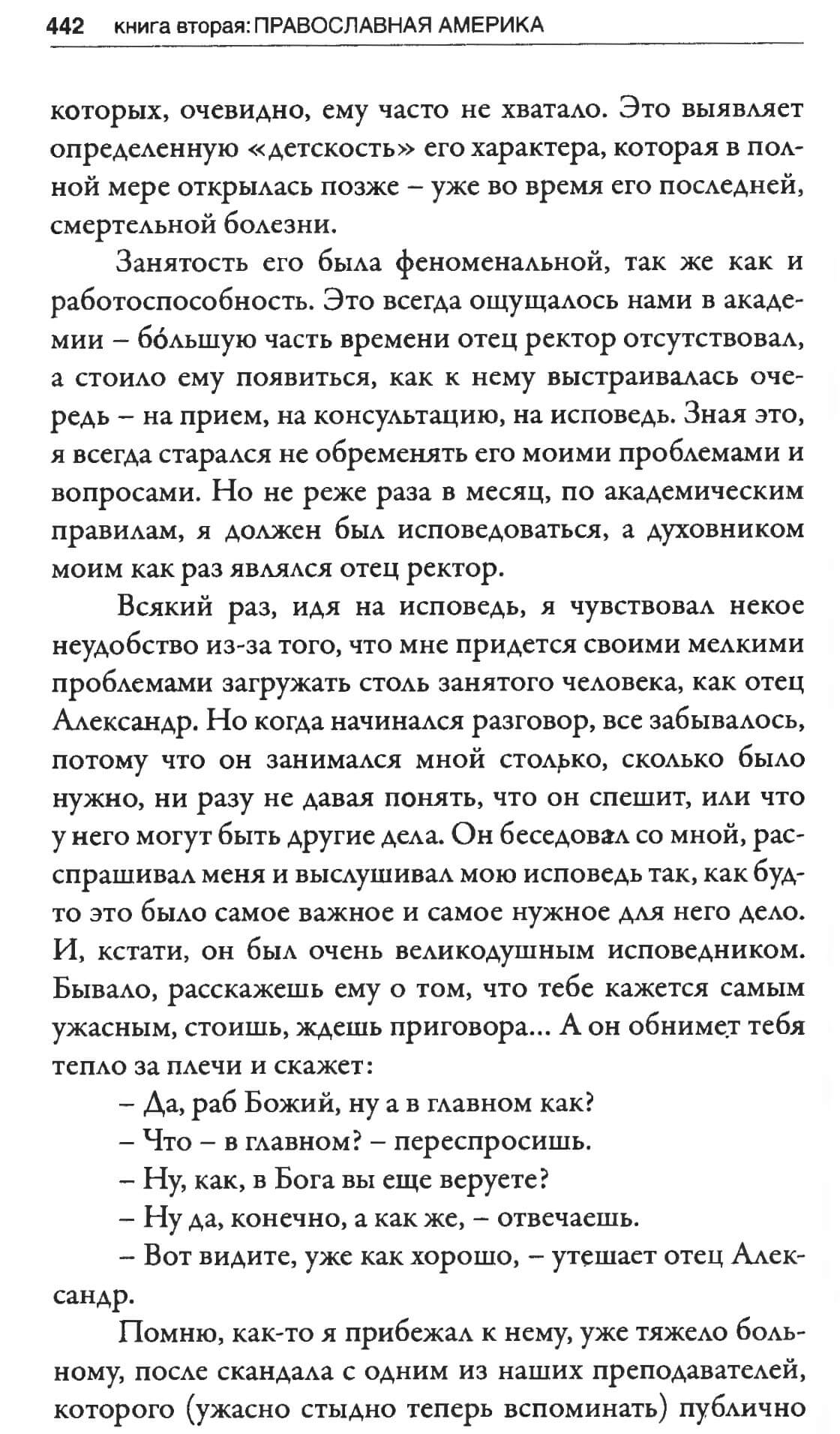
“His workload was phenomenal, as was his capacity for work. We always felt this at the academy. Most of the time, the rector was absent, but as soon as he appeared, a line would form to see him — for an appointment, advice, or confession. Knowing this, I always tried not to burden him with my problems and questions. Yet, at least once a month, according to academic rules, I had to confess, and my father rector was my confessor.
Every time I went to confession, I felt somewhat uncomfortable because I would have to burden such a busy person as Father Alexander with my minor problems. But when the conversation began, everything was forgotten because he devoted as much time to me as was necessary, never giving an impression that he was in a hurry or that he might have other things to do. He talked to me, asked me questions, and listened to my confession as if it were the most important and necessary thing for him to do. And, by the way, he was a very benevolent confessor. Sometimes, I would tell him what seemed to be most terrible and stand there waiting for a verdict… Yet, he would hug me cordially by the shoulders and say, ‘Yes, God’s servant, but what about the main thing?’ — ‘What do you mean the main thing?’ I would ask. — ‘I mean, do you still believe in God?’ — ‘Well, of course, sure,’ I would answer. — ‘You see, it’s already so good,’ Father Alexander comforted.
I remember, once I ran up to him when he was already severely ill, after a scandal with one of our teachers whom (I’m terribly ashamed to recall it now) I publicly denounced as ignorant during a lecture, and he snapped at me.”

“How I Fell Out with Dovlatov”
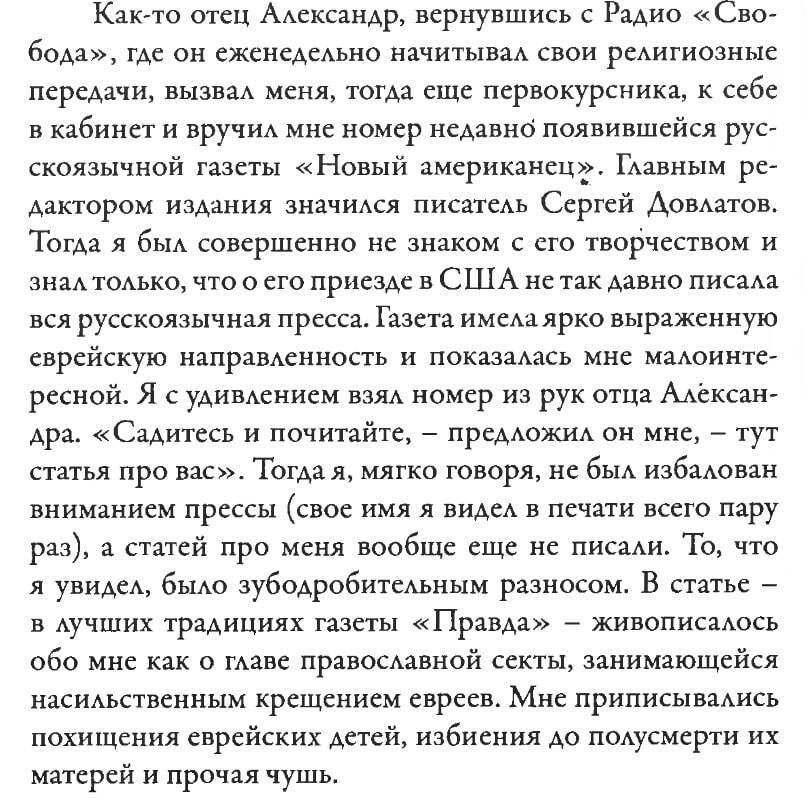
In Dvorkin’s autobiographical book “My America,” there is a chapter titled “How I Fell Out with Dovlatov.” It describes an episode that occurred during Dvorkin’s first year of studies (1980–1981) at St. Vladimir’s Seminary. According to Alexander Dvorkin, dean Alexander Schmemann summoned him to his office and handed him a copy of the immigrant newspaper “New American.” It was a Russian-language newspaper published in a circulation of 11,000 copies. The editor-in-chief was a well-known writer and journalist Sergei Dovlatov. Earlier in this article, we’ve noted that Dovlatov published his books with the then still-living professor Carl Proffer, the head of Ardis Publishing, and knew him personally.
According to Dvorkin, the newspaper “New American” published an article about him, describing him as “the head of an Orthodox sect engaged in forcible baptism of Jews.” He was accused of kidnapping Jewish children and beating their mothers half to death. The article also referred to a minor whose mother had attempted to take him away from Dvorkin’s apartment.
“As it happened, Father Alexander returned from Radio Liberty where he recorded his weekly religious broadcasts, summoned me — then still a first-year student — to his office and handed me a copy of the recently launched Russian-language newspaper ‘New American.’ The editor-in-chief listed was writer Sergei Dovlatov. At that time, I was completely unfamiliar with his work and knew only that the entire Russian-language press had recently reported on his arrival in the United States. The newspaper had a distinctly Jewish orientation and seemed uninteresting to me. I took the issue from Father Alexander’s hands with surprise. ‘Sit down and read it,’ he suggested. ‘There’s an article about you in here.’ At that time, I wasn’t showered with media attention, to say the least (I had seen my name in print only a couple of times), and no articles had been written about me yet. What I saw was a jaw-dropping smear campaign. In the best traditions of the newspaper Pravda, the article vividly described me as the head of an Orthodox sect engaged in forcible baptism of Jews. I was accused of kidnapping Jewish children, beating their mothers half to death, and other nonsense.
In particular, it recounted that an unfortunate mother named Taisiya had come to the editorial office and said that missionaries living in her building had kidnapped her only son, a talented woodcarver. Pavel had started spending time in Dvorkin’s apartment, and one day the mother went downstairs to get him, and what did she see? Candles burned in the half-darkness, crosses and icons hung everywhere, and photographs of a ritual of baptizing Jews were pasted on the walls (interestingly, how do Jews differ from other people when they are baptized?). Taisiya supposedly became horrified and demanded that her son be returned. In response to the mother’s legitimate request, the newly minted Christian brothers allegedly attacked her, beat her until she was bleeding, and threw her out onto the street where an ambulance took her away. After that, Pasha was taken to Vermont where he is being held captive and not allowed to reunite with his mother who’s begging for her son to be returned to her. The newspaper reported that a decision is being made on whether to initiate criminal proceedings so that the perpetrators could be brought to account.
The article ended with a call to ‘strike hard at the bloody hands of the paid emissaries of the anti-Semitic clique in their centuries-long struggle against the Jewish people’.”
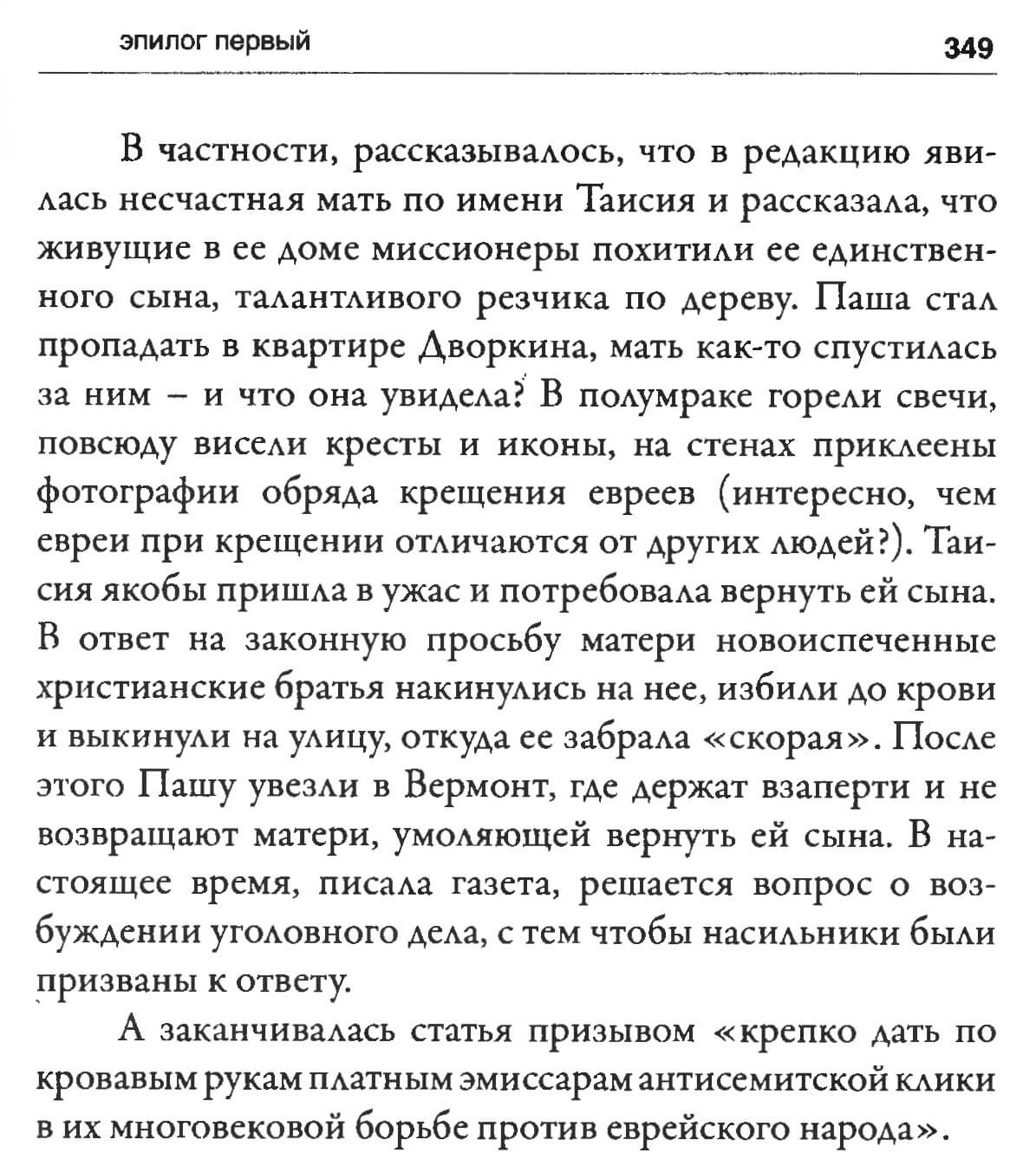
It should be noted that Dvorkin does not deny that Pavel lived in his apartment; he denies only the use of violence. This is typical of individuals who engage in the grooming of children and adolescents. They create conditions of dependency and often act as manipulators and liars when justifying their seductions.
The incident occurred during the period of Dvorkin’s studies under dean Alexander Schmemann, i.e. at a time when Alexander Dvorkin was under his moral supervision. Such accusations in the public sphere could have threatened his position at the seminary.
Further on in his autobiography, Alexander Dvorkin provides a detailed refutation of the accusations made in the article in “New American,” claiming that the events were misrepresented. However, analysis of this rebuttal must take into account persistent behavioral patterns identified in Dvorkin’s psychobiography:
- tendency toward manipulation and distortion of facts in his own narratives;
- presence of homosexual contacts described in his texts;
- conflictual interaction with authority figures;
- long-term experience with the use of psychoactive substances.
These factors enable us to consider a possibility that the original accusations are credible as a hypothesis worthy of attention in the context of behavioural analysis.
It is especially interesting to note how Alexander Dvorkin uses the figure of Alexander Schmemann in his refutation. He refers to a private conversation with the dean, the content of which cannot be verified because Schmemann died and left no written testimony regarding this episode. It is also known that Schmemann openly stated he wouldn’t tolerate “a den for drug addicts and homosexuals” within the seminary walls. Under these circumstances, Dvorkin’s claim that the dean allegedly supported him or softened his stance appears unlikely and may be interpreted as an attempt of legitimation through an appeal to the authority of the deceased.
In addition, it should be taken into account that Sergei Dovlatov 11 and Alexander Schmemann worked simultaneously at Radio Liberty in New York City (at the New York bureau of the station whose office was located at 1775 Broadway):
- Schmemann hosted regular religious broadcasts;
- Dovlatov hosted his own program “Broadway 1775” on culture and politics.12
This points to a real possibility that the two men were personally acquainted and interacted professionally, including discussions of incidents connected with the Russian-speaking diaspora. Consequently, the information Dovlatov obtained for publication may have come not only from third parties, but also from individuals in direct contact with the seminary, including Schmemann himself.
“I began to explain to my rector and spiritual mentor that none of it was true, but he firmly cut me off. ‘I can see for myself that all of this is blatant and malicious nonsense,’ he said, ‘but I think you should rejoice. This is the first high reward in your service record. And, it seems to me, far from the last.’ When today more and more defamatory materials about me appear in the media, I often recall the words of Father Alexander, which turned out to be prophetic.”
Presented by Alexander Dvorkin as a kind of “prophecy” by Alexander Schmemann about his future, this episode functions as a narrative device that legitimizes Dvorkin’s later conflicts with mass media and the public. As such, this kind of support from the dean appears unlikely and may be viewed as a projection of Dvorkin’s own attitudes onto Schmemann’s authoritative figure.
Even more revealing is the fact that Alexander Dvorkin preserved a newspaper clipping despite its negative character:
“After this incident, I refused to read Dovlatov’s works for a long time out of principle. I first encountered his books after returning to Russia and regretted not having read them earlier. Thus, I forgave him for that disgraceful incident with the indecent newspaper ‘New American’ which, incidentally, did not exist for long. I still have a clipping from that very issue somewhere in my posession.”
In behavioral psychology, keeping materials related to accusations, humiliations, or conflicts, especially in the absence of legal or practical necessity, may indicate:
- fixation on resentment;
- tendency to rumination (obsessive thinking);
- potential motivation for revenge.
As noted in studies 13, people with grandiose narcissism often perceive criticism as a personal insult and keep “evidence” of injustice as part of their internal narrative about themselves as “victims of the system.”
Dvorkin emphasizes: “I still have a clipping from that very issue somewhere in my posession.” This statement isn’t a mere observation, but a demonstration of his readiness to “recall at the first request,” which reinforces the impression of a long-term emotional attachment to the conflict.
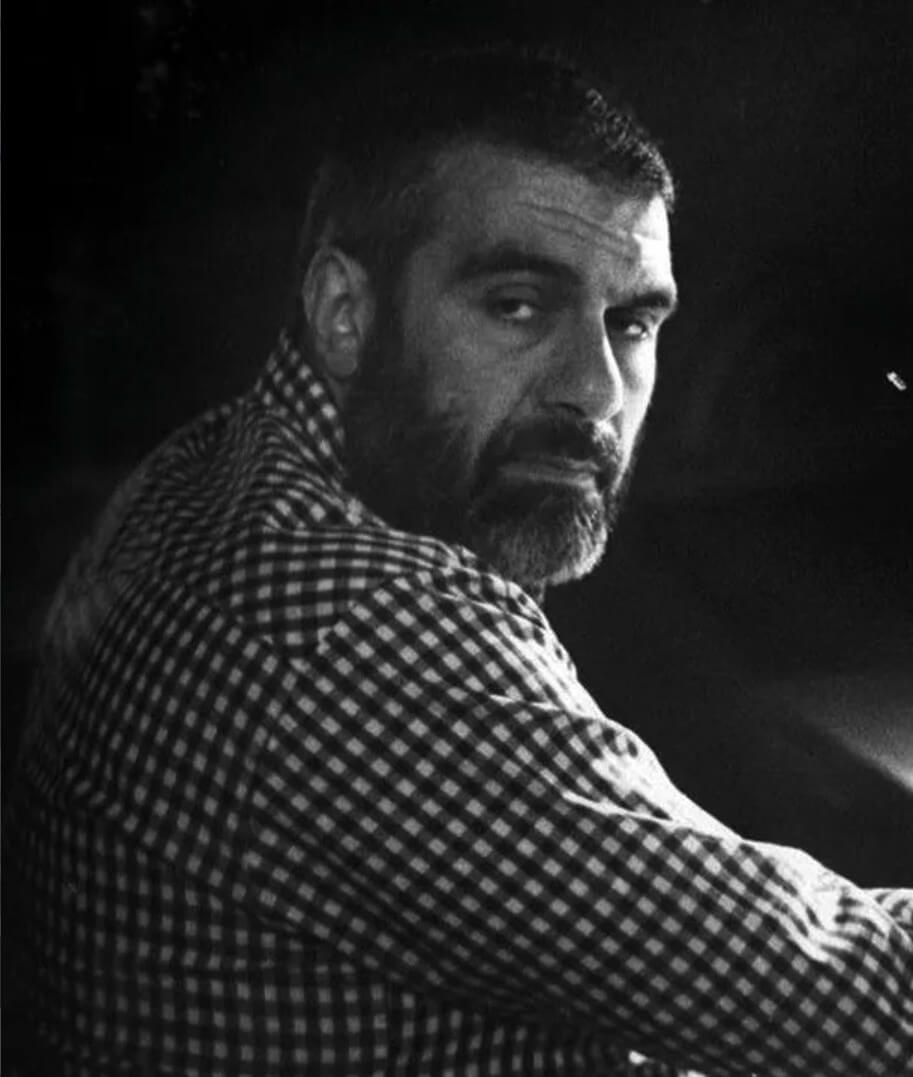
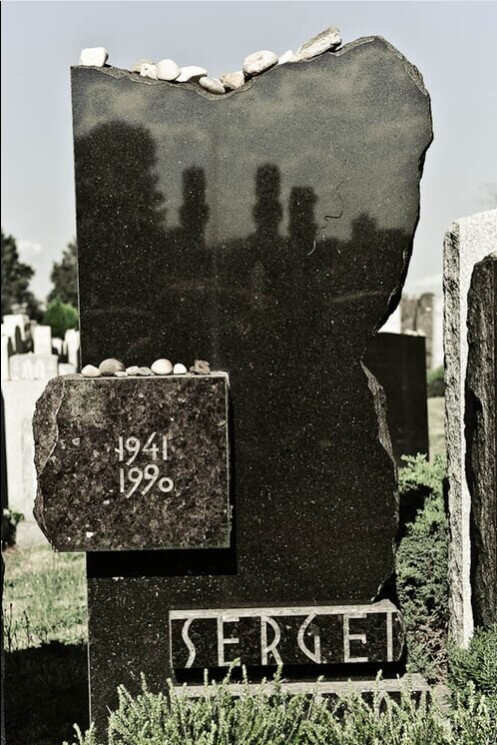
Sergei Donatovich Dovlatov 14 died suddenly at the age of 48 from heart failure on August 24, 1990, in New York City.
The proximity of two dates deserves special attention: Alexander Dvorkin’s birthday and Dovlatov’s death:
— Sergei Dovlatov died on August 24, 1990, of heart failure at the age of 48;
— This date falls on the fourth day after Alexander Dvorkin’s 35th birthday.
Focus on the death of priest Alexander Schmemann
Within the framework of the hypothesis regarding the possible involvement of Alexander Dvorkin in latent homicide, the following passage from his autobiography “My America” 1 may be considered a high-risk behavioral marker. The conduct described below corresponds to known patterns observed among serial offenders and associated with latent forms of killing, particularly among those suffering from the psychopathology described as a “rebellion against God” and a godlike-complex syndrome.
It should be recalled that, within behavioral analysis, “latent homicide” is defined as a covert, systematic elimination of individuals perceived by the offender as carriers of the “moral law” and functioning as substitutes for God or as the “conscience of society.” Such lethal forms of elimination typically do not display signs of overt violence. Instead, the offender disguises them as natural death, an accident, or suicide, which complicates both detection and investigation. Within the context of the psychopathology of “rebellion against God,” victims of latent homicide most often include:
— “perfect” victims (children, virgins, activists, righteous individuals);
— moral authorities (teachers, parents, psychotherapists);
— clergy.
In the offender’s narrative, these victims function as “moral mirrors.” They embody the conscience the offender himself has rejected and remind him of his own “fallen” condition. Eliminating them temporarily reduces the offender’s level of cognitive dissonance and reinforces an illusion of control over the moral order.
Below are excerpts from Alexander Dvorkin’s autobiographical writings followed by an analytical justification of the hypothesis within contemporary models of behavioral analysis, allowing the described cases to be considered as potentially corresponding to the pattern of latent homicide.
“Yet, perhaps the most important lesson that professor and priest Alexander Schmemann taught us was the example of the last year of his life when he taught less than ever and also served less frequently than usual. It was the year marked by his illness and ending with his death. The main lesson he gave us was the lesson of his own death.
During my second year at the academy, the final year when Father Alexander still felt more or less okay, although I am certain the illness was already gnawing at him from within, he delivered an elective course called ‘Liturgy of Death.’ He had long been preparing those lectures and had long wanted to share this knowledge with us, and at last the time had come. The course was devoted to the Christian attitude toward death, its evolution over time in the West and in the East, and how this process was reflected in the Church’s liturgical life. All of this, refracted through Father Alexander, through his exposition and his vision, proved astonishingly interesting. Many things from those lectures remained with me for the rest of my life. Yet, at the end of the semester, concluding the course, Father Alexander spoke about the kind of death he himself would like to have.”
“Father Alexander emphasized that death is the most important moment, the final outcome of life, for which we prepare throughout all the years we live, and which it is very important to meet in full consciousness, fully aware of what is happening. He himself wished to die fully conscious, not in a hospital, but at home, among his loved ones who would understand the importance of what was happening to him and help him with prayer, love, and compassion. Death is a sacrament, Father Alexander emphasized, in which all people close to a departing person are called to participate.”
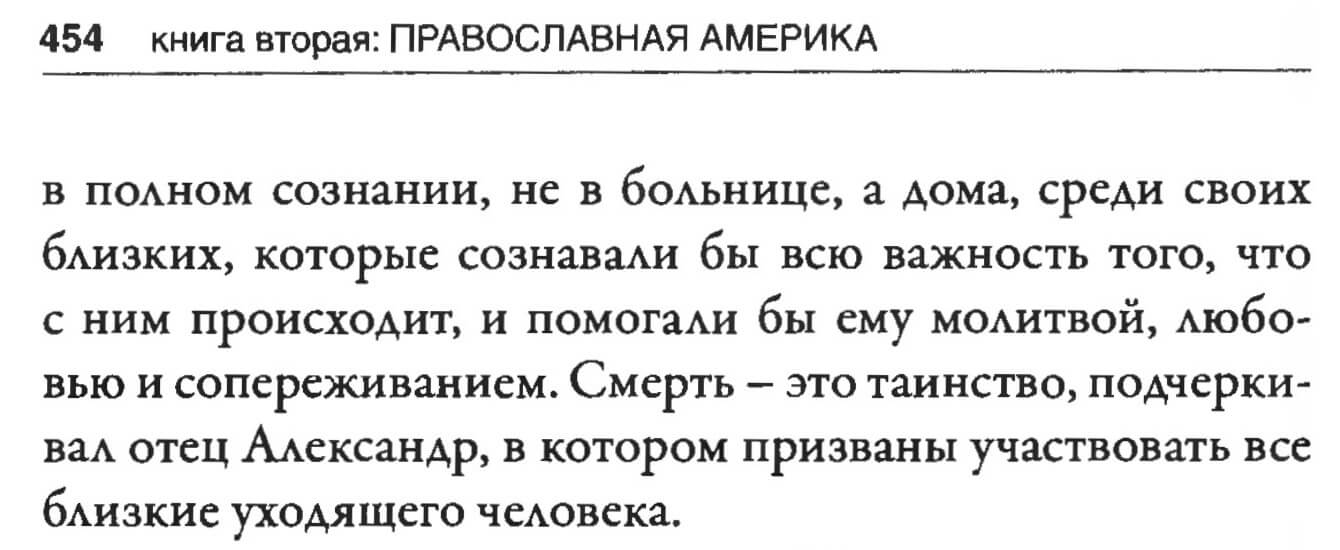
“That’s exactly what happened. The merciful Lord fulfilled Father Alexander’s wish, though everything occurred far earlier than any of us could have imagined. The beginning of the following academic year was marked by Father Alexander’s illness. A merciless diagnosis was delivered: cancer, metastases throughout the body; it was too late for surgery. Chemotherapy and radiation therapy began, both of which were extremely difficult to endure. Externally, Father Alexander changed very quickly: an energetic, strong, youthful man turned into a frail old man within a matter of weeks. He had very little strength left. Nevertheless, he continued working until the very last moment: he was finishing his book on the Eucharist — the principal book of his life, on which he had been working for many years, if not decades. Many sections of it we, students, had heard at his lectures, watching his creative process and contributing to it as best as we could.
From his diaries it is clear how much effort and suffering the book cost him. I remember Father Alexander in that final year coming into the altar of the academy church where I helped him vest, and he would say: ‘If only the Lord would grant me time to finish Eucharist. If only I could manage it…’ The Lord granted him that time. Two weeks before his death Father Alexander came to the all-night vigil and, vesting in the sacristy, said to me, “Thank God, I finished the book and put the final period.’
He succeeded. The book was written and published. Of course, it wasn’t entirely brought to its final form; of course, the text could still have been worked on. Still, the final period had been placed, and the work of his life was complete. Perhaps, this slight imperfection and slight inconsistency in the text has its own meaning: these are the direct words of a great priest and pastor, not distanced from the reader by authorial revisions and the smoothing of form.”
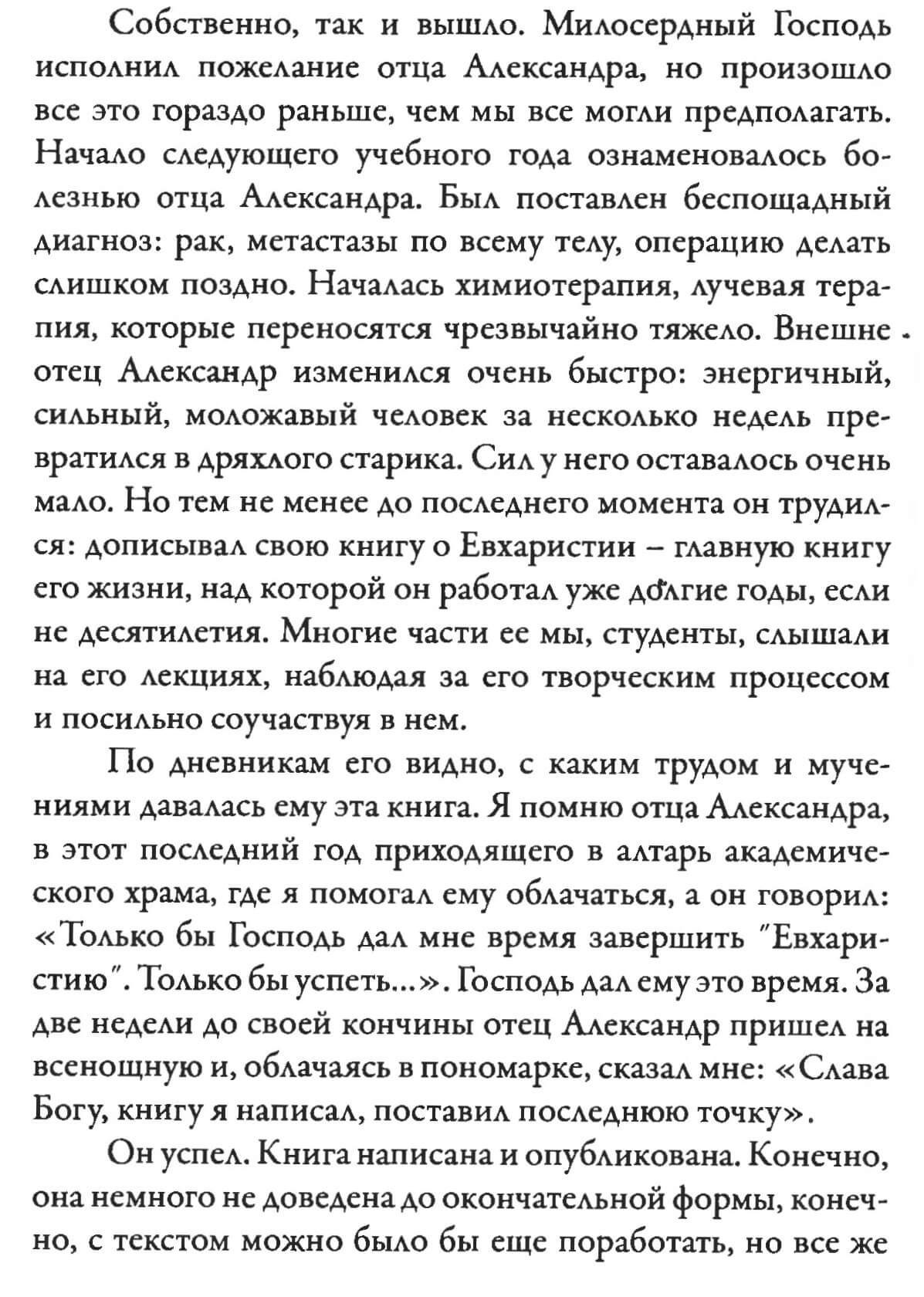
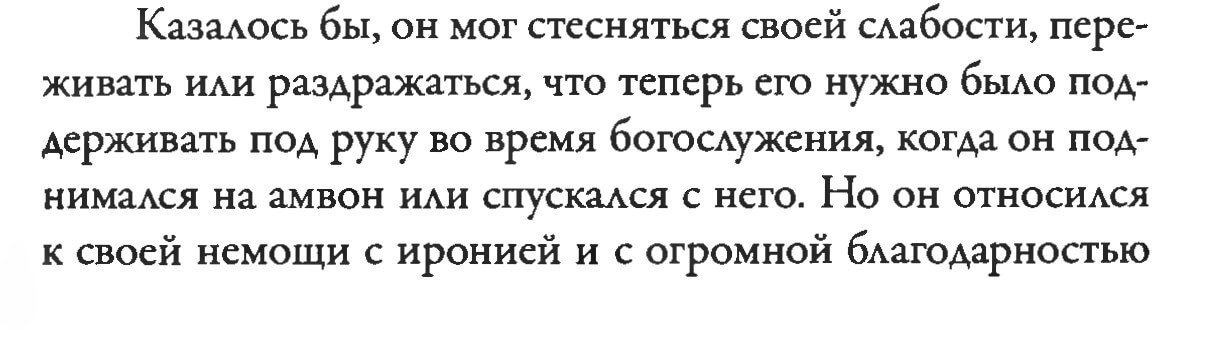
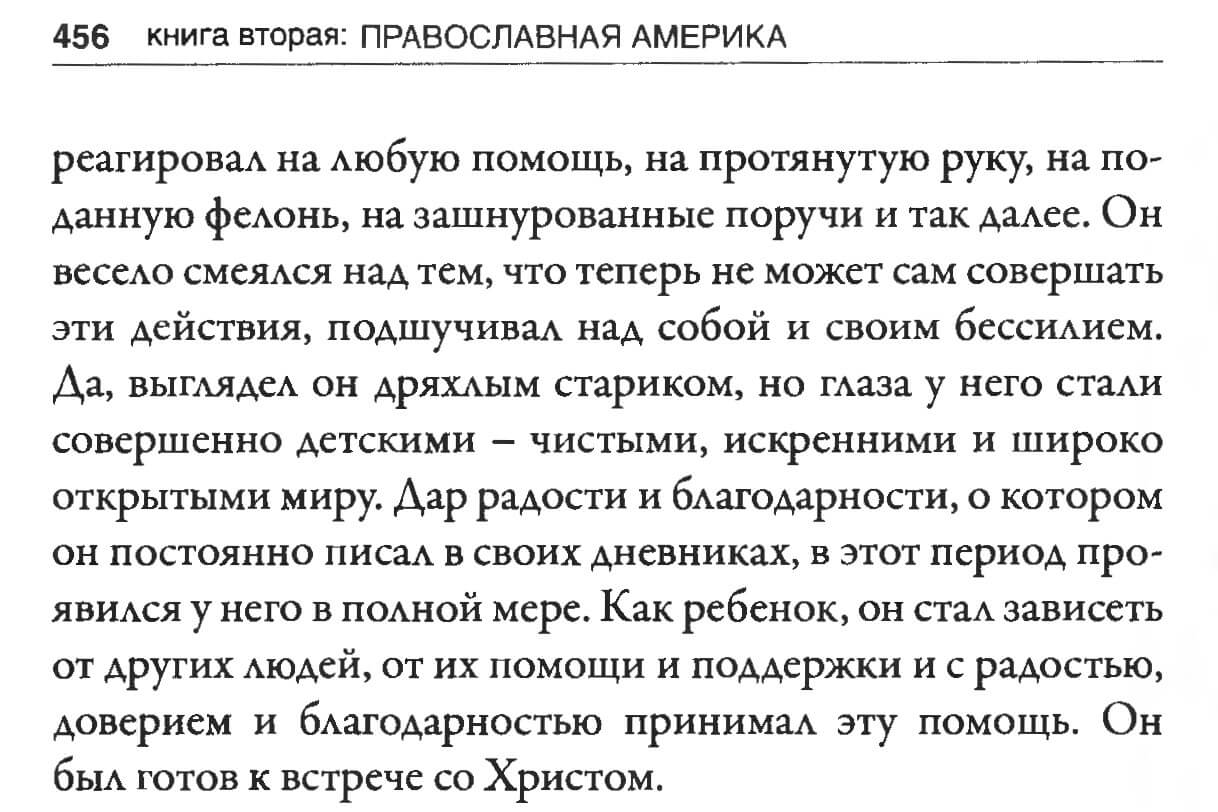
“Seemingly, he might have been embarrassed by his weakness, troubled or irritated that he now had to be supported by the arm during services when he ascended the ambo or descended from it. But he treated his frailty with irony and responded with enormous gratitude to any assistance, to an outstretched hand, to the phelonion handed to him, to the epimanikia laced for him, and so on. He laughed cheerfully at the fact that he could no longer perform these actions himself, joking about himself and his powerlessness. He did look like a frail old man, but his eyes had become entirely childlike — pure, sincere, and wide open to the world. The gift of joy and gratitude, about which he wrote constantly in his diaries, manifested in him fully during that period of time. Like a child, he had come to depend on other people, on their assistance and support, and he accepted that help with joy, trust, and gratitude. He was ready to meet Christ.”
“A person who visited Father Alexander’s home a day before his death described in detail what he had seen. Father Alexander was already very weak and no longer left his room. Before that, he had spent several days in the hospital, but had asked to return home. All of his close relatives gathered: his wife, children, and grandchildren. All of them realized the time had come. Father Alexander was sitting on a chair in his bedroom, wearing a white inner cassock. He was sitting absolutely upright, preserving his regal bearing to the end. His wife was sitting beside him and holding his left hand. From time to time, he raised his right hand to cross himself and, to the extent his strength allowed, made the cross sign.
A tense yet calm and sober atmosphere prevailed in the house. Everyone was praying and waiting for this important event — the transition of their husband, father, and grandfather to the other world, from temporary life into life eternal. An hour or two later, Father Alexander lost consciousness. He remained in a coma for less than a day and passed away peacefully. His heart proved to be very strong, continuing to beat even when the body had completely exhausted its resources.”
“On the night of his passing, a terrible storm broke out. We felt something was about to happen. However, in the morning, when we woke up and learned the sad news, despite the late autumn, a bright sun was shining in the cloudless sky.
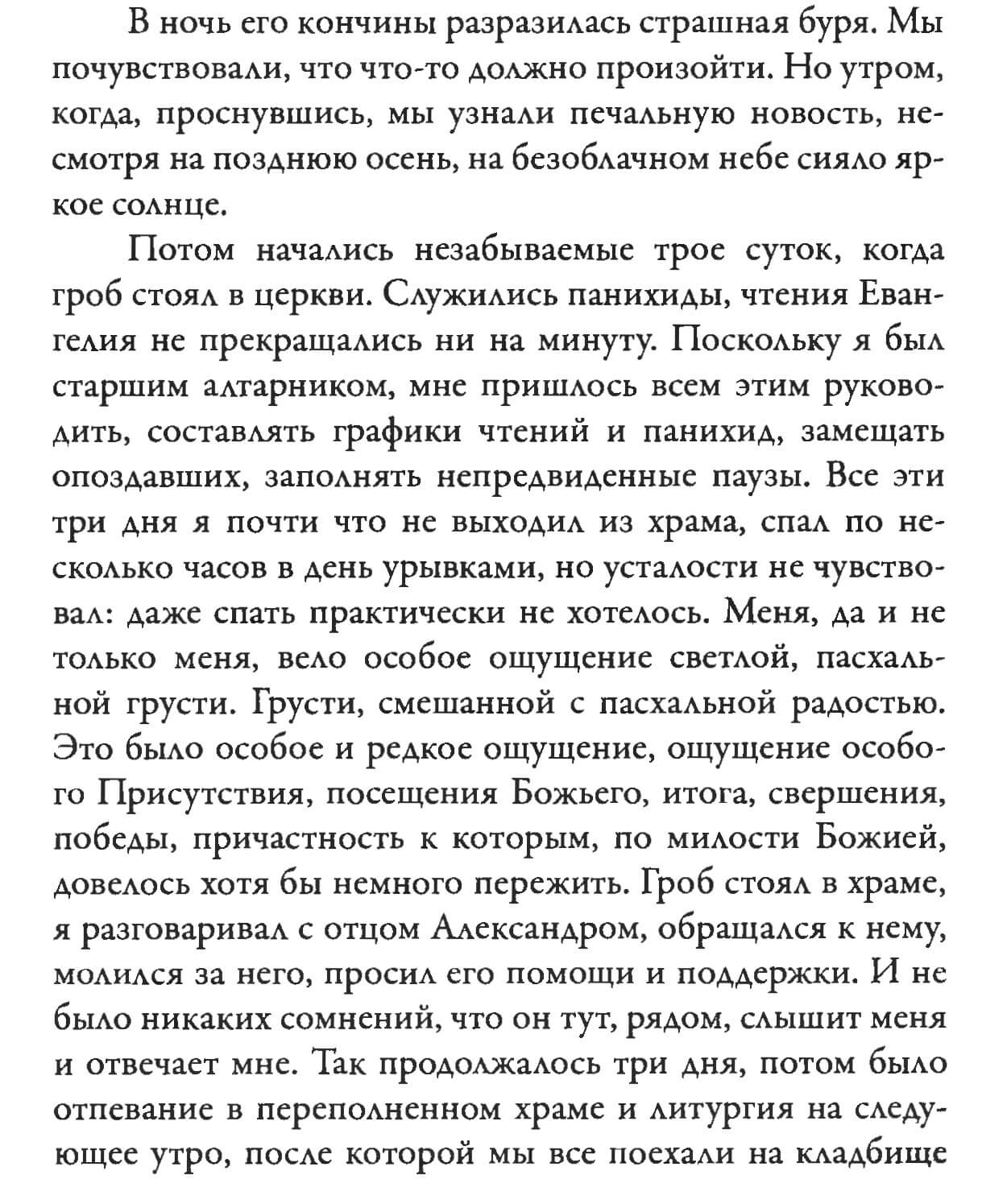
Then began three unforgettable days when the coffin stood in the church. Memorial services were held, and the Gospel reading did not cease for a single minute. Since I was the senior altar server, I had to oversee all of that: draw up schedules for readings and memorial services, replace those who were late, and fill unforeseen pauses. For those three days, I scarcely left the church, sleeping a few hours a day in brief intervals, yet I didn’t feel tired. In fact, I hardly wanted to sleep at all.
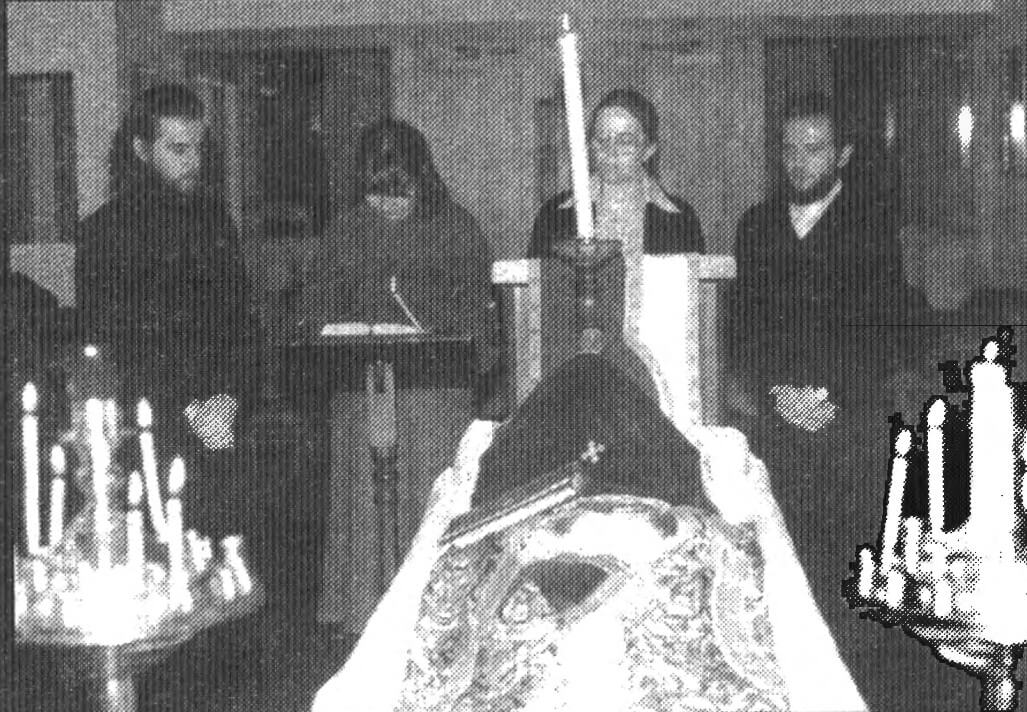
I, just like others, was carried along by a special feeling of bright Easter sorrow. Sorrow mixed with Easter joy. It was a special and rare sensation: a sense of a particular presence, a visitation by God, culmination, fulfillment, and victory, participation in which, by God’s mercy, we were granted to experience at least a little. The coffin stood in the church. I spoke with Father Alexander, addressed him, prayed for him, and asked for his help and support. I had no doubt he was there, nearby, hearing me and responding to me. This continued for three days. Then came the funeral service in an overflowing church and the liturgy the following morning, after which we all traveled to the cemetery at St. Tikhon’s Monastery in Pennsylvania where Father Alexander was buried.”

According to the testimony of Alexander Schmemann’s wife Juliana Schmemann, published in her memoir “My Journey with Father Alexander,” 15, 16 her husband’s unusual illness began after “a few weeks of strange dizziness, continuous headaches, and overall weakness,” which several physicians “initially attributed to stress”:
“After a few weeks of strange dizziness, continuous headaches, and overall weakness, Alexander and I visited several doctors who first explained it all as ‘stress’(!). Eventually, examinations revealed several tumors in the brain. It turned out that Alexander had lung cancer that had already metastasized to the brain. Alexander, our daughter Anna Hopko, and I were together when the doctor announced the test results. We returned home, and Alexander immediately summoned Thomas Hopko, David Drillock, and Paul Lazor and told them about his illness. Then he called Metropolitan Theodosius Lazor, and two days later he was admitted to the hospital for a full examination and a series of radiation and chemotherapy treatments. I remember those days as a time of complete calm, seriousness, and sobriety; we somehow immediately found ourselves on a completely different level of life. From the very beginning, Alexander and I did not need to speak about what was happening.
Alexander’s brother Andrei Schmemann arrived, and Alexander showed him how construction of the new church was progressing. He was energetic and seemed so healthy! He looked very well, despite the fact that after chemotherapy and radiation all of his hair had fallen out.”
“Father Alexander’s strength was gradually leaving him. Chemotherapy sessions caused nausea, and he felt worse and worse. After a year of treatment, in mid-November 1983, Alexander wrote a text for Radio Liberty that was to be broadcast on the Feast of the Meeting of the Lord.”
“The last time Alexander served the liturgy was on Thanksgiving Day, November 24, 1983, literally two weeks before his death. He thanked everyone for their prayers for him and said he was healthy. Some people doubted he realized the truth about his condition, but I knew that he simply meant his true health.”
“After that he quickly began to weaken and was admitted to the hospital where I was allowed to remain constantly at his bedside. Literally a few days later, he told me clearly, ‘Liana, I want to go home.’ So I took him home. The family gathered. Sergei arrived from Moscow with his wife and children; his twin brother Andrei flew in from Paris; Masha came from Canada with her husband. Anna and Father Tom lived and worked at the seminary and were constantly nearby.
While Alexander was dying, Metropolitan Theodosius Lazor, David Drillock, and the entire seminary were preparing for the funeral. All classes and examinations were postponed to a later time. Everyone was preoccupied with organizing the services, printing reproductions of icons and letters, and everything turned out very beautifully.”
“On December 13, 1983, Alexander died quietly, surrounded by his large family. The funeral service for Alexander was conducted by eleven bishops, ninety priests, and a huge number of people. The church was filled to capacity. Those who could not enter went to the lower hall where loudspeakers and a screen had been installed broadcasting the service and allowing everyone to participate. Memorial services were conducted by Archbishop Iakovos of the Greek Church and Metropolitan Philip Saliba of the Antiochian Church. Professor Veselin Kesic was appointed acting rector. The memorial liturgy was served by Metropolitan Theodosius Lazor together with many priests. The choir sang magnificently, and everything was beautiful. It was truly a celebration of life!”
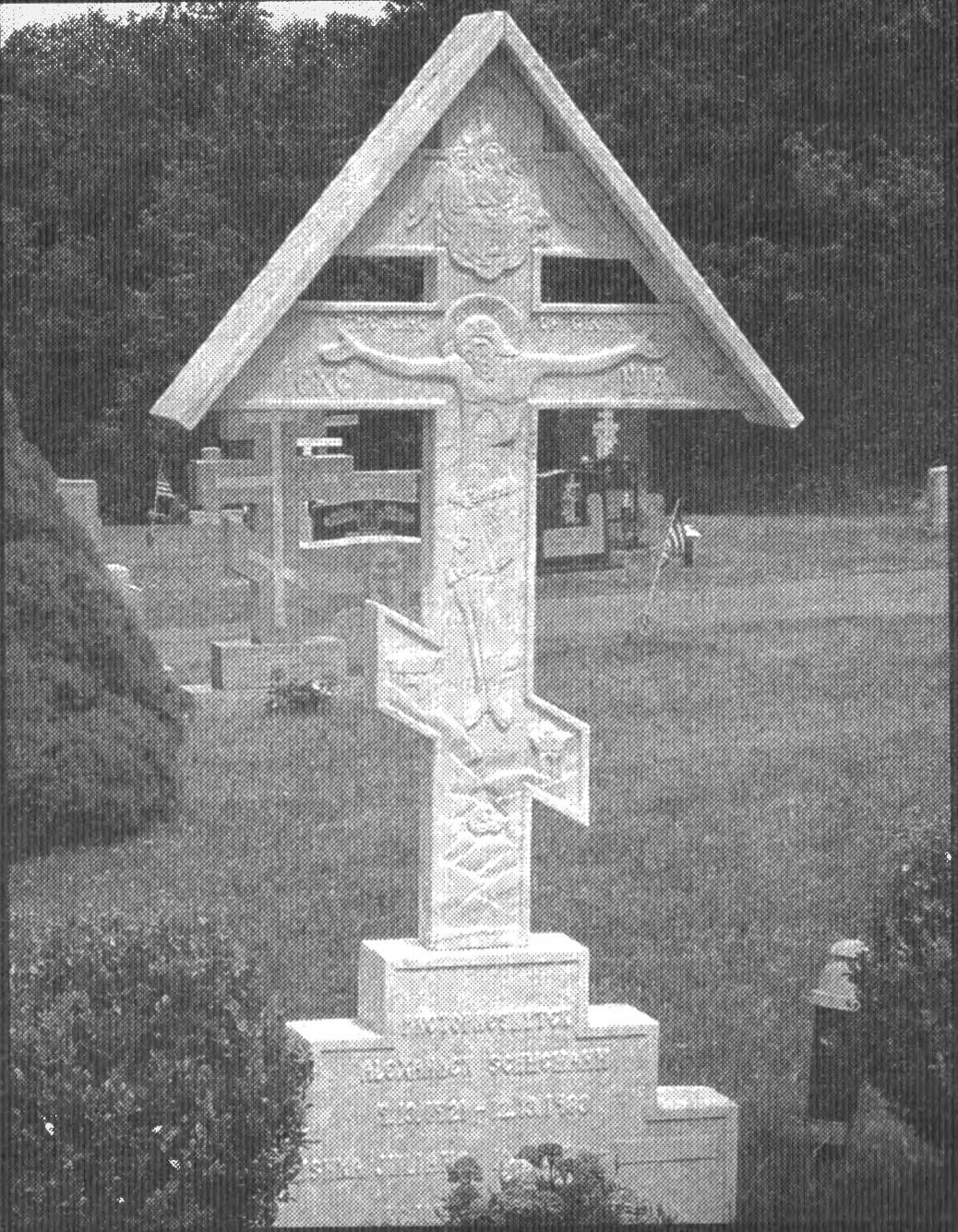
Clinical picture of the final year of Alexander Schmemann’s life (1982–1983)
Based on autobiographical recollections of Alexander Dvorkin and memoirs of Juliana Schmemann, the following chronology of events can be reconstructed:
— Academic year (1982–1983): the onset of Father Alexander’s illness; the disease lasted for a year;
— “After a few weeks of strange dizziness, continuous headaches, and overall weakness, Alexander and I visited several doctors who first explained it all as ‘stress’” (Juliana Schmemann);
— “Eventually, examinations revealed several tumors in the brain. It turned out that Alexander had lung cancer that had already metastasized to the brain”; “two days later he was admitted to the hospital for a full examination and a series of radiation and chemotherapy treatments” (Juliana Schmemann).
— “Father Alexander’s strength gradually left him. Chemotherapy sessions caused nausea, and he felt worse and worse. After a year of treatment, in mid-November 1983…” (Juliana Schmemann).
— “Externally, Father Alexander changed very quickly: an energetic, strong, youthful man turned into a frail old man within a few weeks. He had very little strength left.”
— “Seemingly, he might have been embarrassed by his weakness, troubled or irritated that he now had to be supported by the arm during services when he ascended the ambo or descended from it. But he treated his frailty with irony and responded with enormous gratitude to any assistance—to an outstretched hand, to the phelonion handed to him, to the epimanikia laced for him, and so on.”
— “He laughed cheerfully at the fact that he could no longer perform these actions himself, joking about himself and his powerlessness. Yes, he looked like a frail old man, but his eyes had become entirely childlike—pure, sincere, and wide open to the world.”
— “Like a child, he had come to depend on other people, on their help and support, and he accepted this help with joy, trust, and gratitude. He was ready to meet Christ.”
— Death occurred in November 1983. As Alexander Dvorkin notes: “His heart proved to be very strong, continuing to beat even when the body had completely exhausted its resources.”
Access to resources and proximity to the victim.
During the period of Alexander Schmemann’s illness and death (1982–1983), Alexander Dvorkin was in immediate physical and social proximity to Schmemann. By Dvorkin’s own account, he:
— participated in liturgical services as the senior altar server and assisted him in vesting;
— witnessed his physical decline;
— received personal confidences from Schmemann, including his final words about completing his book on the Eucharist.
In addition, during his third (final) year at St. Vladimir’s Seminary, Alexander Dvorkin completed mandatory pastoral training, including service at a city hospital with which the academy had an agreement. Once a week he spent half a day at the institution visiting patients, including those in the intensive care unit. This role potentially provided him access to medical drugs, knowledge of pharmacology, and familiarity with the clinical presentation of severe illnesses.
Earlier in the study, these episodes were noted, in which Alexander Dvorkin described this period as follows:
“In our third year, we were required to complete pastoral practice in one primary area and three secondary ones. The options included ministry in a hospital, a prison, a nursing home, a military academy, a parochial school, and so forth. For each — the primary and the secondary assignments — a specified number of hours was required. I began with hospital ministry. Once a week I traveled into the city where I spent half a day at a large hospital that had an agreement with the academy. At the registration desk, I was given a list of patients. Upon admission, patients (if they wished) indicated their religious affiliation and whether they wanted a chaplain to visit them. I then went to see my assigned patients (usually five or six). (Alexander Dvorkin, “My America,” p. 387) 1
“I still remember several of my patients. One elderly woman (let’s call her Maria), who was in intensive care after heart surgery, came from the well-known Russian noble Trubetskoy family, and we even discovered a few mutual acquaintances. (Alexander Dvorkin, “My America,” pp. 387, 388) 1
“Finally, until the middle of my third, graduating year at the academy, I made my confession to Father Alexander. When his illness began to progress rapidly, I felt it improper to burden him and received his blessing to go to Father John Meyendorff for confession. After graduating from the academy, I entered the doctoral program at Fordham University and, having received the rector’s blessing, remained living there. I was also assigned an obedience, this time as senior altar server of the academy church. In that capacity, I remained in the altar during the last six months of Father Alexander’s life and was responsible for the order of worship during the funeral service for our departed rector.” (Alexander Dvorkin, “My America,” p. 434) 1
Thus, during the critical period — from the diagnosis to Schmemann’s death — Alexander Dvorkin possessed:
— the trust of the victim;
— regular physical access;
— potential access to medications and medical information;
— motivation associated with moral pressure, confession, and public condemnation by Dean Schmemann of “drug addicts and homosexuals.”
These factors make this episode relevant for behavioral profiling within the framework of the latent homicide hypothesis, particularly in view of the persistent pattern of “natural” deaths of prominent figures in the biography of Alexander Dvorkin.
What factors might have contributed to the death of Alexander Schmemann within a single year, taking into account: the clinical dynamics of his condition; the immediate proximity of Alexander Dvorkin; Dvorkin’s potential access to the medical environment during that period; and his knowledge of the pharmacology of psychoactive substances — their combinations, mechanisms of action, overdose risks, and potentially lethal effects?
The official cause of death of Protopresbyter Alexander Schmemann in November 1983 was metastatic lung cancer diagnosed at a late, inoperable stage. The question of possible exogenous triggers for this disease remains open, particularly in the context of behavioral profiling of individuals in his immediate circle. What might have caused the high level of toxicity in Schmemann’s body? Could lung cancer have been provoked by chemical substances (carcinogens) or their compounds?
Analysis within the framework of the latent homicide hypothesis.
In the context of the latent homicide hypothesis with hatred as a motive, coupled with narcissistic dynamics and the illusion of godlikeness (rivalry with God), the description of Alexander Schmemann’s death:
— corresponds to the victim profile (moral authority, clergyman);
— aligns with the motive (concealed hatred toward moral control);
— allows for the method (toxic exposure concealed as a natural illness);
— follows a narrative strategy (idealization after elimination).
Correspondence to the victim profile. Alexander Shmemann — the ideal object for latent homicide within the framework of Alexander Dvorkin’s psychopathology: a clergyman (a supreme spiritual authority); a “moral mirror” embodying what the young Dvorkin allegedly rejected — repentance, humility, submission to moral law. Schmemann fits the profile of a “moral mirror,” the elimination of which would, in this interpretation, have been psychologically necessary for Dvorkin to restore a sense of “omnipotence.”
Motive: concealed hatred as a response to moral condemnation and fear of exposure. As described earlier in the study, the young Alexander Dvorkin had experience with psychoactive substances, allegedly engaged in homosexual contacts, was under direct moral pressure from Schmemann (including the dean’s words, “I will not tolerate a den of drug addicts and homosexuals”), and was required to confess to him regularly. For a person with latent aggression and a god complex, such pressure is perceived as humiliation and a threat. Hatred emerges toward the one who reminds the offender of sin—particularly if the offender considers himself “above morality.” In this interpretation, the motive for eliminating Schmemann would be envy, concealed hatred, and the desire to destroy the source of moral control in order to restore personal “omnipotence.”
Fear of exposure. According to Alexander Dvorkin’s autobiography, during his early years of study, he regularly confessed to Alexander Schmemann, which formally complied with the seminary’s statutory requirements. However, the description of these meetings — particularly the emphasis on their confidential tone, personal conversations, and the spiritual father’s “benevolenсe” — suggests that Alexander Dvorkin may have used the sacrament of confession as an instrument of rapprochement, a means of establishing emotional closeness and gaining access to the personality of an authoritative figure.
In the context of Alexander Dvorkin’s behavioral profile (a tendency toward manipulation, secrecy, and a fixation on control), it appears possible that during these conversations he disclosed personal or confidential information to Schmemann that he later may have perceived as a potential threat — for example, if it concerned his own past, sexual contacts, the use of psychoactive substances, or other aspects incompatible with the moral standards of the seminary.
For an individual characterized by grandiose narcissism and a tendency toward moral dissociation, the presence of a “moral mirror” possessing compromising information may be perceived as an existential threat. Under such conditions, the impulse to eliminate the source of that threat — even symbolically — becomes a logical behavioral consequence.
Method: latent homicide through toxicity.
Another relevant hypothesis is that Alexander Dvorkin may have used his knowledge of pharmacology to provoke an oncological process in the human body:
- the young Dvorkin demonstrated extensive knowledge of the properties of plants, pharmacological substances capable of causing toxicity, narcotic dependence, opioids, combinations of substances, and carcinogens;
- knowledge of a “poison that would take effect a year later”;
- he worked in resuscitation care, where he had access to medications and an understanding of human physiology;
- he maintained an interest in toxicology;
- Dvorkin was the grandson of a man who, according to information in the book Kalalatsy, had served a lengthy prison sentence and possibly possessed knowledge of poisons, dangerous chemical substances, and their compounds. In the book Kalalatsy (p. 35), it is clarified: “Grandpa was a principled man. He served his term for chemыistry. (Stalin said we didn’t need chemistry, while grandpa held a different view). He was released under Khrushchev.”
Oncological diseases and the role of carcinogens.
Oncological diseases (including cancer) are a group of conditions characterized by uncontrolled cell growth and the ability to metastasize and destroy surrounding tissues. These processes are caused by changes in the cell’s DNA — its genetic “blueprint.”
Some of these genetic changes may be caused by external factors, often referred to as exogenous carcinogens. These include: chemical substances (for example, aflatoxins, arsenic, and benzene); ionizing and ultraviolet radiation; certain viruses and bacteria; medications, including hormonal agents and drugs that suppress the immune system, and others.
Carcinogenicity 17 is a specific type of toxic effect in which a substance or exposure contributes to the development of cancer. Some carcinogens cause cancer by altering the DNA of cells. Others do not directly affect DNA but lead to cancer in other ways. For example, they may cause cells to divide more rapidly than usual, which can increase the likelihood that changes in DNA will occur.
Many factors influence the development of cancer in a person exposed to a carcinogen, including the amount and duration of exposure, as well as the person’s genetic characteristics. Substances classified as carcinogens can differ in their level of carcinogenic potential. Some may increase the risk of cancer even after brief exposure, while others may cause cancer only after prolonged exposure to high concentrations.
The mechanism of silent influence of certain pharmacological substances.
Earlier in the study, it was mentioned that Alexander Dvorkin’s medical records, as well as the book Kalalatsy 18 written based on his oral accounts, contain references to a list of various psychoactive substances and their combinations that were used in poly-drug addiction, including benzodiazepines such as diazepam (also marketed under the commercial name “Seduxen”). This list also included more dangerous substances that can cause death upon overdose.
However, to illustrate the mechanism of silent influence and deferred death, let us consider diazepam, which was often used in the 1970s and 1980s in the United States to treat anxiety disorders, insomnia, and similar conditions. Let’s look at how this drug affects the body when used for a long time, what side effects can occur with an overdose, and the risk of death when combined with other drugs. Does the use of benzodiazepines increase the risk of cancer?
Example. Diazepam is a central nervous system depressant that works by enhancing the effect of GABA (gamma-aminobutyric acid) in the brain. It is used to treat anxiety disorders, panic attacks, insomnia, epileptic seizures, alcohol withdrawal, and as premedication before surgical procedures.
With prolonged use, diazepam may cause:
- dependence and physical addiction;
- cognitive impairment;
- depression of the respiratory center (especially when combined with opioids, alcohol, or other CNS depressants);
- withdrawal syndrome, including seizures and delirium.
Diazepam belongs to the class of benzodiazepines. Diazepam-based drugs were among the most commonly prescribed drugs in the United States between 1969 and 1982. The scientific study Benzodiazepine Use and Misuse Among Adults in the United States (Donovan T. Maust, Lewei A. Lin, Frederic C. Blow). 19
“The most common reason for misuse overall was to relax or relieve tension, followed by to help with sleep. Older adults were significantly more likely to endorse misuse to help with sleep, while they were much less likely to report misuse to get high.”
“The most common source of misuse for both age groups was from a friend or relative. When combining all benzodiazepines — free, bought, or stolen — a friend or relative was the source for nearly 70% of respondents reporting misuse.”
The authors also note an absolute growth in benzodiazepine-related poisonings and benzodiazepine-related overdose mortality.
Physical dependence and withdrawal syndrome
Physical dependence on diazepam 20 can develop even under therapeutic use, especially with prolonged consumption, exceeding dosages, or combining with other psychoactive substances — CNS depressants. With abrupt discontinuation, severe withdrawal syndrome is possible, including such symptoms as
- tremors, sweating, headache;
- irritability, agitation,
- rebound anxiety and dysphoria,
- perceptual disturbances, confusion,
- myalgias, abdominal pain, and vomiting.
- In long-term use and abrupt cessation, there is potential for hallucinations and epileptic seizures to occur.
Side effects
Like other benzodiazepines, diazepam causes dose-dependent depression of the central nervous system. The most common side effects include:
- headache, nausea, constipation;
- fatigue, sedation, ataxia;
- irritability, disinhibition;
- dystonia, depression, tremor.
Serious, potentially life-threatening consequences of diazepam include:
- respiratory depression (especially when combined with opioids or alcohol);
- arterial hypotension, bradycardia, syncope;
- paradoxical stimulation of the central nervous system (aggression, agitation — more common in the elderly);
- suicidal behavior;
- development of dependence and abuse.
Combination of the drug with other substances. In some cases, diazepam is abused in combination with other substances that depress the central nervous system (CNS), primarily alcohol or opioids. This phenomenon is called poly-drug abuse. When diazepam is used with these substances, the depressive and sedative effects of both drugs increase exponentially, dramatically increasing the risk of overdose.
FDA warns about serious risks and death when combining opioid pain or cough medicines with benzodiazepines
A U.S. Food and Drug Administration (FDA) 21 review has found that the growing combined use of opioid medicines with benzodiazepines or other drugs that depress the central nervous system (CNS) has resulted in serious side effects, including slowed or difficult breathing and deaths.
The scientific study “Benzodiazepine drug use and cancer risk: a dose–response meta analysis of prospective cohort studies” by Tao Zhang et al. 22 presents a systematic review and meta-analysis examining the possible link between long-term use of benzodiazepines and the development of various types of cancer. Subgroup analysis showed that benzodiazepine use was associated with a significantly higher risk of cancer (including brain cancer, lung cancer, pancreatic cancer, stomach cancer, colon cancer, and other types of cancer).
Toxicity of benzodiazepines
Chronic benzodiazepine intoxication has a detrimental effect on the central nervous system and is associated with the risk of developing a variety of somatic diseases. The combination of diazepam and opioids causes dangerous side effects, including impaired thinking and judgment, slowed breathing, coma, and death.
Jaberpreet S. Dhaliwal et al. note in their article “Diazepam” 20: “… the potential of overdose from diverted diazepam always exists when combined with opioids, alcohol, or other centrally acting agents. Overdose in adults frequently involves the co-ingestion of other CNS depressants, which work synergistically to increase toxicity. In the case of single-agent diazepam overdose, symptoms manifest as CNS depression and are very rarely fatal.”
Diazepam is not the only drug that can cause such side effects with long-term use or abuse and lead to death when combined with other chemicals. Many toxic substances do not have carcinogenic properties. However, some chemical compounds, such as polycyclic aromatic hydrocarbons, aflatoxins, and inorganic arsenic, are recognized as carcinogens and can significantly increase the risk of developing cancers, including lung, liver, urinary bladder, and other cancers.
Alexander Dvorkin’s autobiographical book “My America” 1 reveals his clear interest in poisons. Another example follows. Dvorkin notes that in 1982 he visited Germany for the first time (1982 also marked the beginning of the unusual illness of Alexander Schmemann, which began a year before his death).
“When in 1982 I visited Germany for the first time, I made a special trip to the city of Bamberg, known, among other attractions, for its majestic cathedral of Romanesque architecture.”
In another episode, Dvorkin describes his life in Germany eight years later, shortly before returning to Russia. Among other things, he recounts the following incident involving boric acid.
“I threw on my jacket and ran to the store. There were, of course, no insect remedies there. After thinking it over for a moment, I decided to go to a pharmacy and asked the pharmacist to sell me some boric acid.
‘What do you need it for?’ the German asked politely.
‘Oh, just something useful to have around the house,’ I replied.
‘Then I can’t sell it to you,’ the vigilant pharmacist said. ‘Boric acid is a strong poison, and since I cannot be sure what you intend to use it for, I cannot take responsibility for dispensing it to you.’
Empty-handed, I trudged off to another pharmacy where, when asked the same question, I admitted that I needed it to get rid of insects. After that, I received the coveted white powder.”
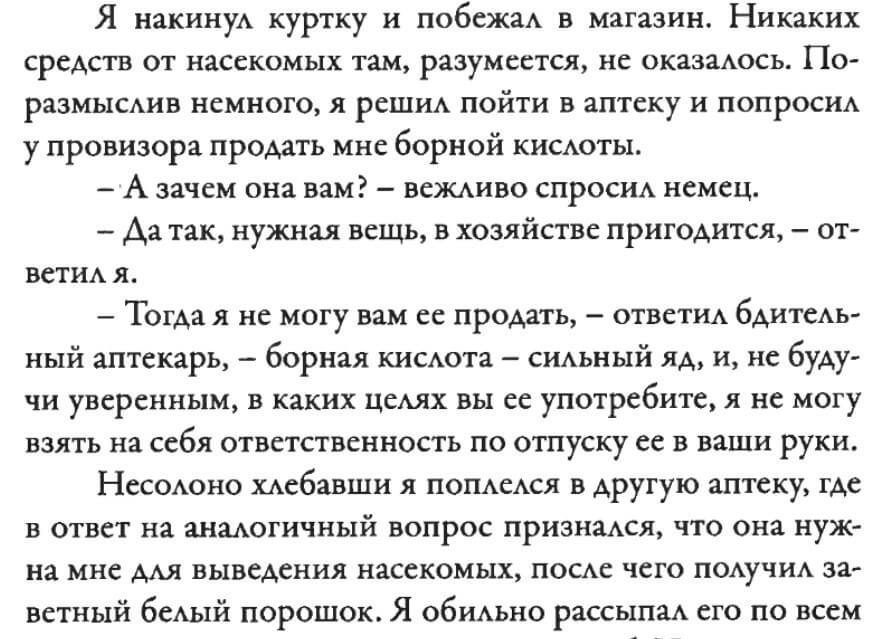
This episode appears atypical for autobiographical narration. It raises the question of the intended audience of this passage in a contemporary context, given its retrospective nature. Who is it intended for at present? For what purposes does the author provide such “instructions” for acquiring poison?
Boric acid is a fine crystalline powder that has no odor or distinct taste and is highly soluble in warm water. When ingested, boric acid is toxic to the body’s cells, as it is a general cell poison. In addition, it can accumulate in the body.
An article by Clement Brooke MD and Thomas Boggs MD, “Boric Acid Poisoning,” 23 published in JAMA Pediatrics, states: “BORIC acid and sodium borate are sufficiently poisonous to cause severe symptoms and death when used in amounts commonly considered to be perfectly harmless. Boric acid is readily absorbed by a number of different routes and is particularly insidious in that symptoms may be minimal until a lethal or near lethal dose has been absorbed”. [JAMA Pediatrics, Vol. 82, No. 4, Oct. 1, 1951.]
Mukta Rani and Mahesh Meena in their article “Multiple Organ Damage Due to Boric Acid Toxicity”, published in Asia Pacific Journal of Medical Toxicology (Dec 2013) 24 note: “Boric acid is a moderately toxic compound that is a mucosal corrosive agent affecting upper respiratory and gastrointestinal tracts. It can also act as a generalized cellular poison, and thus all end organs including liver, kidneys, brain and gastrointestinal tract are prone to its toxicity.”
We can’t completely rule out the hypothesis that boric acid could have been one of the components in a mix with other chemicals that also don’t have any taste or smell. From the history of toxicology, we know that certain combinations of chemicals can create toxic compounds with a specific effect. Plus, these compounds can have a delayed effect, damaging the body’s cells. In a forensic context, mixtures or combinations with such characteristics can be interpreted as increasing the latency of application. The question of whether Alexander Dvorkin, as the grandson of a man who, according to the book Kalalatsy, was imprisoned for an extended period and possibly possessed knowledge of poisons and dangerous chemical substances, could himself have had an understanding of the properties and combinations of such substances remains open.
The question arises: who will suspect a non-natural cause of death and initiate toxicological studies of the body of a patient who died of cancer so as to detect chemical or toxic substances, including potential carcinogens, in concentrations capable of affecting the course of the pathological process? In forensic medical practice, death caused by cancer is rarely accompanied by toxicological screening, especially if the disease progressed typically.
Even if toxic substances are detected, establishing their exact origin (exogenous or therapeutic/endogenous) is extremely difficult. All of this together makes it difficult to detect intentional exposure disguised as the natural course of the disease, creating conditions for latent homicide — a slow, inconspicuous murder disguised as natural death.
Thus, the above-mentioned example of the hidden mechanism of action of certain pharmacological drugs and chemicals shows that it is quite possible that a person with the knowledge of pharmacology and chemistry could, in theory, use such means, especially in conditions of trust (for example, under the guise of “pills to improve sleep,” “medicinal infusions,” etc.). This hypothesis corresponds to the behavioral profile of individuals who commit latent murders disguised as natural deaths.
Narrative as a cover: idealization after elimination
Alexander Dvorkin describes the death of Schmemann in detail; emphasizes that he died “on time,” “as he wanted,” emphasizes the “perfection” of his departure; he goes into great detail about the physiology of dying (“strong heart,” and so on); he positions himself as the only credible witness.
This narrative serves a dual purpose: legitimizing his own authority — “I was there in his greatest hour”; and masking — “death was natural.” This corresponds to the model of “posthumous idealization” characteristic of serial killers who have committed latent murder: “I didn’t kill him — I helped him pass away beautifully.”
In the absence of direct evidence of Dvorkin’s involvement in the death of Alexander Shmemann, the combination of behavioral, narrative, and motivational markers demonstrates a potential high-risk indicator and requires serious attention in the context of behavioral profiling. Such cases often remain unsolved because the death appears natural and the perpetrator remains unsuspected.
Source:
1. Alexander Dvorkin. “My America”, 2013. https://fb2.top/moya-amerika-813075
2. Joseph Brodsky Museum. n.d. “Carl Ray Proffer.” Brodsky Online. Accessed March 18, 2026. https://brodsky.online/brodsky_circle/proffer-karl-rey/
3. Carl Ray Proffer https://en.wikipedia.org/wiki/Carl_Proffer
4. Ardis Publishing https://en.wikipedia.org/wiki/Ardis_Publishing
5. Zakharov, Igor. 2000. “Excuse My Thoughts… Sergei Dovlatov’s Correspondence with Igor Efimov.” Ogonyok, no. 43 (November): 17. https://www.kommersant.ru/doc/2288037
6. https://bookhaven.stanford.edu/2013/04/carl-proffer-honored-in-ann-arbor-so-far-no-statue-in-russia/
7. A 1979 interview with Alexander Dvorkin for the project “Recent Soviet Immigrants in America.” Interviewer: Lynn Visson (June 19–20, 1979). William E. Wiener Oral History Library of the American Jewish Committee. New York Public Library (NYPL) Research Libraries. https://archive.org/details/alexander-dvorkin-interview-june-19-1979/page/n5/mode/2up
8. Alexander Schmemann https://en.wikipedia.org/wiki/Alexander_Schmemann
9. By Russell Haitch «Alexander Schmemann» https://www.biola.edu/talbot/ce20/database/alexander-schmemann
10. W. Gerrod Parrott «Distinguishing the Experiences of Envy and Jealousy». American Psychological Association Journal of Personality and Social Psychology. July 1993. https://www.researchgate.net/publication/14871772_Distinguishing_the_Experiences_of_Envy_and_Jealousy
11. «Sergei Dovlatov» https://www.culture.ru/persons/8262/sergei-dovlatov
12. Dovlatov, Sergei. n.d. “Sergei Dovlatov on Radio Liberty.” Audio Archives. Accessed March 18, 2026. https://www.sergeidovlatov.com/svoboda.html
13. Gordon Atlas «Narcissism and Sensitivity to Criticism: A Preliminary Investigation». Current Psychology. March 2008
14. Sergei Dovlatov https://en.wikipedia.org/wiki/Sergei_Dovlatov
15. Matushka Juliana Schmemann «My Journey With Father Alexander», 2007 https://www.abebooks.com/Journey-Father-Alexander-Matushka-Juliana-Schmemann/31445634712/bd
16. Juliana Schmemann “My Journey with Father Alexander”, М., 2008. https://azbyka.ru/otechnik/Aleksandr_Shmeman/moja-zhizn-s-ottsom-aleksandrom
17. «Determining if Something Is a Carcinogen». American Cancer Society. https://www.cancer.org/cancer/risk-prevention/understanding-cancer-risk/determining-if-something-is-a-carcinogen.html?utm_
18. Book “Kalalatsy” by Arkady Rovner — Moscow: “New Time” International Association of People of Culture, PSK Timan, 1990.
19. Donovan T. Maust Lewei A., Frederic C. Blow «Benzodiazepine Use and Misuse Among Adults in the United States», 2018. https://pmc.ncbi.nlm.nih.gov/articles/PMC6358464/?utm_
20. Jaberpreet S. Dhaliwal; Alan Rosani; Abdolreza Saadabadi «Diazepam». 2023. https://www.ncbi.nlm.nih.gov/books/NBK537022/?utm_
21. “FDA Drug Safety Communication: FDA warns about serious risks and death when combining opioid pain or cough medicines with benzodiazepines; requires its strongest warning», 2017.
https://www.fda.gov/drugs/drug-safety-and-availability/fda-drug-safety-communication-fda-warns-about-serious-risks-and-death-when-combining-opioid-pain-or?utm_
22. 9. Tao Zhang, Xiaowen Yang, Jianrui Zhou, Pei Liu, Hui Wang, Anrong Li, Yi Zhou «Benzodiazepine drug use and cancer risk: a dose–response meta analysis of prospective cohort studies», 2017, https://pmc.ncbi.nlm.nih.gov/articles/PMC5731963/
23. Clement Brooke, Thomas Boggs «BORIC-ACID POISONING. Report of a Case and Review of the Literature». https://jamanetwork.com/journals/jamapediatrics/article-abstract/495370
24. Rani M, Meena MC. Multiple Organ Damage Due to Boric Acid Toxicity. Asia Pac J Med Toxicol 2013. https://doaj.org/article/06bde39c0d7f427db2fe3788f2e19a56?utm_