Read the previous part of the article.
Read the full report.
Editorial Appeal to Witnesses and Sources.
If you have information that may supplement, clarify, or corroborate the factual basis of this article, the ActFiles editorial team invites you to contact us. Source confidentiality will be respected.
Episode 5. The Death of Professor John Meyendorff
After Alexander Schmemann died, the dean position at St. Vladimir’s Seminary passed to John Meyendorff, his close friend and colleague. Meyendorff served as dean for the next nine years. According to the autobiographical book My America 1, when Schmemann’s illness rapidly progressed, Alexander Dvorkin asked Meyendorff to become his spiritual father.
From that point forward, Alexander Dvorkin’s academic and professional trajectory became closely tied to Meyendorff’s support and recommendations. In essence, Alexander Dvorkin built his career by leveraging the authority of John Meyendorff.
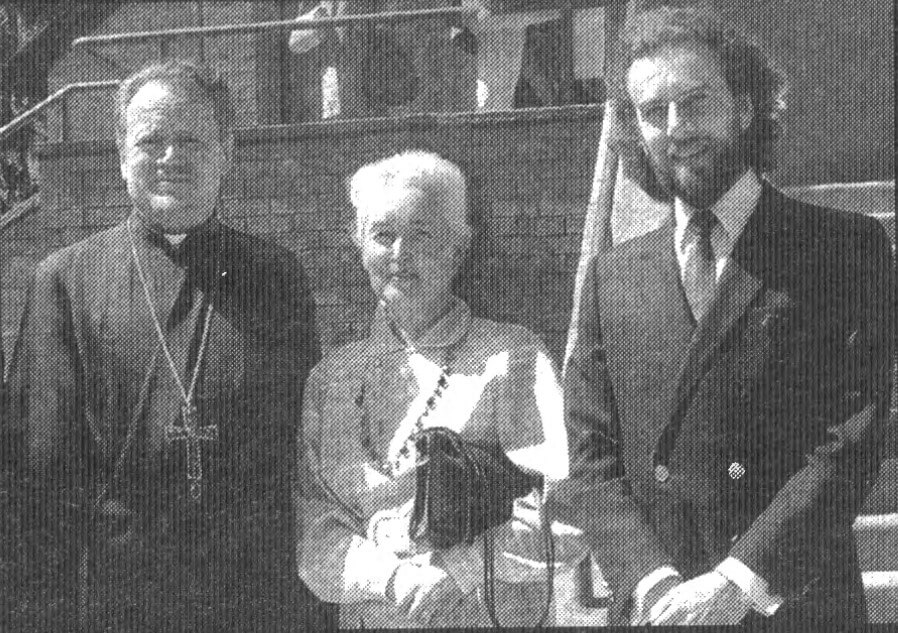
On Meyendorff’s recommendation, Dvorkin was admitted to the doctoral program at Fordham University, where Meyendorff taught and served as his academic advisor. Eight years later, again on Meyendorff’s recommendation, Alexander Dvorkin was hired in Moscow by the Department of Religious Education and Catechesis of the Moscow Patriarchate. This position opened broad prospects for Dvorkin, strengthening his personal authority and granting him access to the elite ranks of the Russian Orthodox clergy and other high-ranking figures. It is not inconceivable that these circumstances may have been among the factors behind the premature death of John Meyendorff.
The death of Meyendorff. In Alexander Dvorkin’s autobiographical narrative My America, the chapter on John Meyendorff follows the chapter devoted to Alexander Schmemann. Notably, when presenting information about Meyendorff, the author begins by recounting a legend allegedly connected to the ancient Meyendorff family, about the poisoning of Pope Clement II during a journey, supposedly by means of poison slipped into the Eucharistic Chalice. Such a compositional detail appears far from accidental in the context of behavioral and narrative analysis of Alexander Dvorkin’s psychobiography.
The very choice of this narrative emphasis at the beginning of John Meyendorff’s account merits analytical attention, as it creates an associative link between the theme of a possible violent death of a historical figure and the Sacrament of the Eucharist, the central element of Orthodox worship (the Liturgy). Considering that Schmemann and Meyendorff themselves served as clergy, while Alexander Dvorkin participated in the liturgical process as an altar server and their close assistant, this associative construction acquires additional significance in the context of behavioral and narrative analysis.
On July 1, 1992, John Meyendorff stepped down as dean of St. Vladimir’s Seminary. He planned to collaborate with the Moscow Patriarchate of the Russian Orthodox Church in academic and educational work, and, as noted, “dreamed of traveling to Russia frequently.” By that time, Dvorkin had already moved to Russia and spent six months working in the Department of Religious Education and Catechesis of the Moscow Patriarchate. He had been appointed to the position on Meyendorff’s recommendation.
When Meyendorff retired, Alexander Dvorkin flew to the United States, met with him, and served the liturgy together with him in the seminary church. It should be noted that in Orthodox liturgical practice, the central moment of the service is the celebration of the Sacrament of the Eucharist (Holy Communion, symbolizing unity with Christ and salvation), during which the Eucharistic Chalice (the chalice containing wine) is used, from which both clergy and laity receive Communion. This element carries not only theological meaning but also pronounced symbolic significance, providing the events described with additional context from a narrative perspective.
Afterward, Dvorkin attended a reception marking Meyendorff’s retirement as rector of the seminary. That evening, Dvorkin visited him at home. The next day, Father John flew to Moscow. Dvorkin, by his own account, stayed in the United States “to finish up his affairs in America,” as he writes in his book My America. Upon arriving in Russia, Meyendorff began to feel unwell. When he returned to the United States, he was diagnosed with pancreatic cancer. John Meyendorff died on July 22, 1992, at age 66.
Brief biographical note: John Meyendorff 2 (secular name Ivan Feofilovich Meyendorff; 1926–1992) was a protopresbyter of the Orthodox Church in America, an Orthodox theologian, patrologist, Byzantinist, church historian, and writer. He belonged to the aristocratic Meyendorff family and held the title of baron.
He was born in France into a family of Russian noble émigrés. He was the grandson of the Russian military commander General Baron Feofil Egorovich Meyendorff. Ivan Meyendorff graduated from the St. Sergius Orthodox Theological Institute in Paris (1949), as well as from the Faculty of History and Philology at the Sorbonne and the School for Advanced Studies in the Social Sciences. He earned a doctorate in theology. In 1977, he was elected a corresponding fellow of the British Academy. He was awarded honorary doctorates from the University of Notre Dame (Indiana, USA), the Episcopal Theological Seminary in New York, and the St. Petersburg Theological Academy.
From 1950 to 1959, he taught Greek and Church history at the St. Sergius Orthodox Theological Institute. In 1953, he became one of the founders of the World Fellowship of Orthodox Youth “Syndesmos,” later serving as its secretary and president. In 1959, Meyendorff and his family moved to the United States, where he joined the faculty of St. Vladimir’s Seminary. From 1959 to 1992, he served as professor of Church history and patristics. After the death of Alexander Schmemann in March 1984, he was appointed dean of St. Vladimir’s Orthodox Theological Seminary in the suburb of Crestwood, Yonkers, New York. He also taught at Columbia University, Fordham University, and Union Theological Seminary, and served as a lecturer on Byzantine theology at Harvard University’s Dumbarton Oaks.
Together with Father Alexander Schmemann, he played an active role in obtaining autocephaly for the North American Metropolia. This led to the establishment of the Orthodox Church in America. Within its structure, Father John served as chairman of the Department of External Relations and as a member of the Metropolitan Council. He also edited a newspaper, The Orthodox Church.
He was an active supporter of the ecumenical movement. He served on the central committee of the World Council of Churches (WCC). From 1968 to 1976, he served as moderator of the WCC Commission on Faith and Order. He served as president of the Orthodox Theological Society of America and the American Patristics Association. He was a member of the U.S. National Committee for Byzantine Studies. From 1976 to 1984, he was rector of the Church of Christ the Savior in New York.
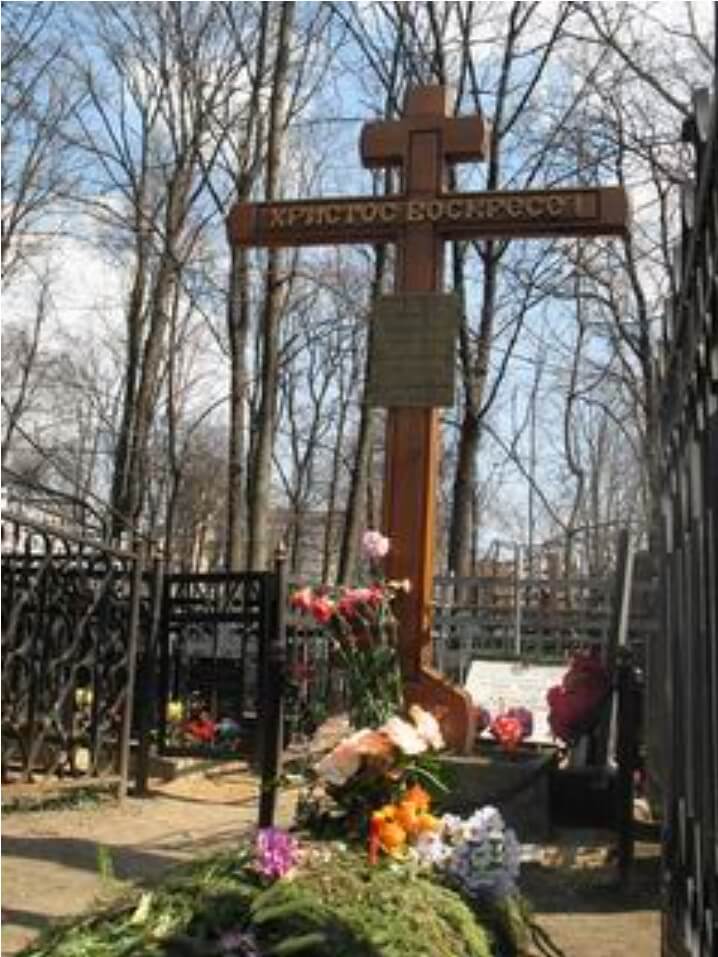
On July 1, 1992, he stepped down as dean of St. Vladimir’s Seminary, intending to devote himself exclusively to scholarly and teaching work. Afterward, he traveled to Russia. However, upon arriving there, he began to feel unwell. After returning to the United States, he was diagnosed with cancer. He died on July 22, 1992, and was buried at a cemetery in Crestwood (USA), not far from St. Vladimir’s Orthodox Theological Seminary.
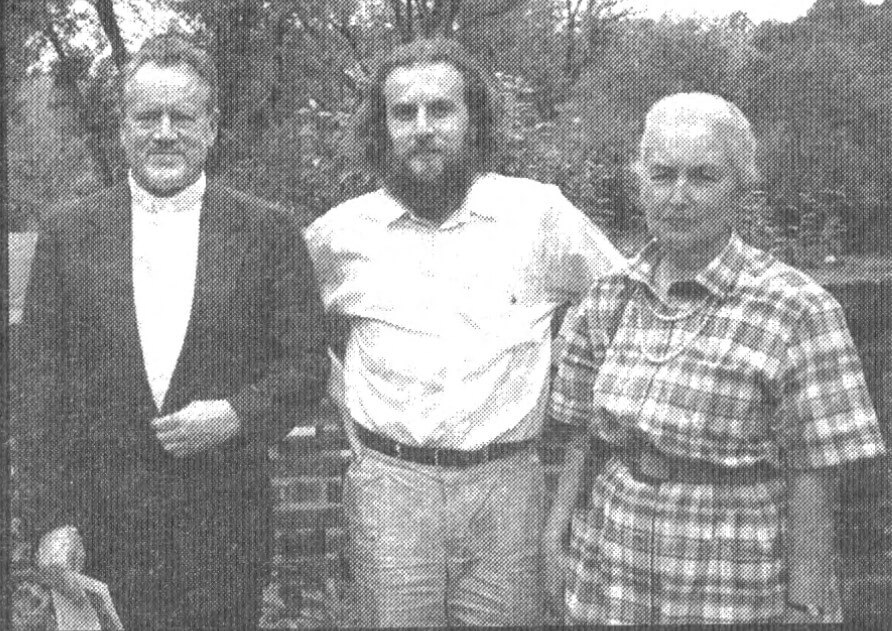
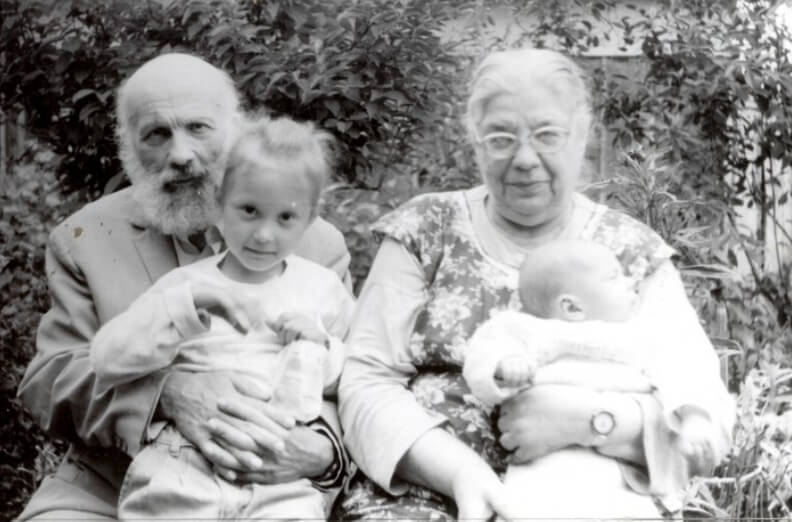
Photo: John Meyendorff, Alexander Dvorkin, Maria Alekseevna Meyendorff. Alexander Dvorkin, My America 1
From the perspective of psychobiographical analysis, it appears logically justified to examine not only the events described but also their contextual interconnections, with particular attention to the author’s narrative emphases and the motivational meanings constructed within the structure of the autobiographical text.
Below are excerpts about John Meyendorff from Alexander Dvorkin’s book My America. In these passages, particular attention is drawn to the following:
— narrative duality, the combination of pronounced idealization with elements of latent diminution or critical deconstruction of the image; beneath the outward admiration runs a layer of concealed criticism;
— a symbolic parallel, the poisoning of Pope Clement II and the death of Meyendorff;
— an emphasis on personal characteristics that partially correlate with Dvorkin’s own traits;
— the indication that Dvorkin enjoyed the trust of the family and had free access to Meyendorff’s home;
— an interest in the details of death: including descriptions of the final days of Meyendorff’s life and the circumstances of his death and funeral;
— rationalization of guilt, with dreams presented as a mechanism for processing the loss and possibly for cognitively neutralizing associated emotional experiences.
“FATHER JOHN MEYENDORFF
I knew Father John for just over eleven years, and by now we have lived much longer without him. It seemed he would remain with us for a very long time, and that we could always rely on his wisdom, knowledge, and authority, and always turn to him for pastoral guidance. But things turned out quite differently: he departed at the very moment when his talent, experience, and authority would seemingly have been needed most. He left, passing the baton to those who labor for his homeland, which he loved deeply yet never truly had the chance to live in. In this, too, there is a profound symbolism to his fate.”
“Perhaps his lectures lacked a certain outward brilliance. He spoke in a professorial manner, sometimes even mumbling a little, occasionally overusing interjections, leaving sentences unfinished. Yet his lectures were always extraordinarily interesting, remarkably deep, and rich in substance. And at the same time, everything was perfectly clear.”
“Father John came from a very ancient family. When I first visited Germany in 1982, I made a point of stopping in the city of Bamberg, which, among its many attractions, is famous for its majestic Romanesque cathedral. In the altar of this cathedral lies the tomb of Pope Clement II von Meyendorff. He was the second German in the history of the papacy, whose brief pontificate lasted from 1046 to 1047. Pope Clement II was originally from Bamberg, but after his election, he was, of course, obliged to move to Rome. However, he did not like Italy at all, and so he decided to return home to Bamberg and transfer the papacy there. As Father John recounted, the cardinals, highly displeased with such a prospect, poisoned him along the way (Father John did not rule out that the poison might have been slipped into the unfortunate man’s Eucharistic Chalice). Barely making it back to Bamberg, he died. To this day, the people of Bamberg take pride in the fact that a native of their city once served as the Roman pontiff.”
“According to accounts, Ivan Meyendorff, as a child, was a quiet, scholarly boy, very thoughtful and level-headed. Everyone who knew him noted his exceptional abilities. The family was religious, and from an early age Father John served in the Cathedral of St. Alexander Nevsky on Rue Daru, later becoming a reader and a subdeacon.”
“In January 1950, after graduating from the St. Sergius Theological Institute, Ivan Meyendorff married Maria Mozhaiskaya, the great-grandniece of the designer of the first airplane. The newlyweds traveled to Rome for their honeymoon.”

“But Father John was not only one of the leading patrologists of the twentieth century, a scholar of international renown. He was also an exceptional and rare pastor, one who laid down his life for his flock. For me, he was in a certain sense a model of Orthodoxy. He always adhered to what he himself called the ‘golden middle path’, that is, he never drifted into vague ecumenical theology, sectarianism, thoughtless conservatism, or unrestrained liberalism, but always called for sobriety of mind and discernment.”
“In this regard, his definition of sectarianism, which he once shared with me, is characteristic: ‘A sect is a relatively small, closed group of people who believe that only they themselves will be saved while everyone else will perish, and who derive deep satisfaction from this realization.’”
“I first met Father John when, while still a student at New York University, I came to St. Vladimir’s Academy to make a final decision about whether to enroll there. Father John received me, and that was also the first time I visited his home. Despite my great respect for the famous theologian and a certain initial awkwardness in his presence, I immediately found it very easy and pleasant to communicate with this tall, stately, slightly stout man with a neatly trimmed beard and the attentive, kind gaze of eyes framed by wrinkles.
When I began studying at the academy six months later, my New York spiritual father blessed me to go to confession to Father Alexander Schmemann (the academy had a rule that all students, during their studies, had to choose a spiritual father from among the faculty). That year, Father John was hardly present at the academy; he was on sabbatical (editor’s note: a creative year-long leave granted to professors at American universities every seventh year), which he spent at Dumbarton Oaks, and even his lectures were delivered by other instructors. Therefore, our acquaintance resumed only a year later: I began attending his lectures, writing term papers, and speaking with him about history. Father John invited me to his home, and I became well acquainted with his family. Several times during his trips, he asked me to spend the night in his house, to keep an eye on things and walk the dog.”
“I have already mentioned that during the last several months of his life, Father Alexander Schmemann was seriously ill, and it had become difficult for him to hear the confessions of his many spiritual children. I did not want to burden him, and after asking his blessing, I began confessing to Father John. From that time on, he became my spiritual father. I will say more: since my parents divorced when I was very young, I essentially grew up without a father. In my relationship with Father John, I learned, for the first time, what real fatherhood meant. I could turn to him with any matter, and his home largely became my own, for I was a homeless student living in a dormitory with nowhere to go during vacations. I remember the annual Maslenitsa blini at Father John’s house, the Easter meals, the gatherings by candlelight around the Christmas tree, and simply the quiet evenings in his home. Both Father John and Maria Alekseevna constantly helped me, not only with advice but also in practical ways. Maria Alekseevna, for example, taught me French when I was preparing for my doctoral qualifying exams. Whenever I left New York or the United States, I wrote letters to Father John and always received prompt replies from him, concise yet comprehensive, written in his characteristic small but very clear handwriting.”
“I remember that in old émigré journals I came across articles written by Father John even before he was ordained. Those articles were signed ‘Baron Ivan Meyendorff.’ But after ordination, all titles are set aside. In the same way, all the numerous academic titles and distinctions held by Father John were secondary to the principal ministry of his life.”
“When, with Father John’s blessing and recommendation, I entered the doctoral program at Fordham University, he became my academic advisor. In fact, I enrolled at Fordham solely in order to work with Father John, who was a full professor there.”
“Father John was probably the best teacher I ever knew. He taught patrology, Church history, and the history of Byzantium. I attended several of his courses, both at the academy and at Fordham University, thus covering the cycles of his theological and historical courses that he delivered in both a theological and a secular academic setting.”

“However, very rarely, though it did happen, emotions did prevail. I remember the remarkable, inspired sermon that Father John delivered over the coffin of Father Alexander Schmemann. His voice broke several times, and he had to pause to regain his composure. Everyone present was in tears. When he went into the altar, deeply shaken by his words and by his tears, and hardly realizing what I was saying, I told him that even the angels had wept during his sermon. Father John threw up his hands in horror: ‘What are you saying! You must never say such a thing! Please, never say that again!’
What always struck me was Father John’s profound humility. I never saw him brush off even the most idiotic questions (at least from my point of view) that people asked him. Even now, I recall with embarrassment some of the things I myself asked him, proud of some freshly acquired piece of knowledge. He was ready to explain and clarify endlessly, without the slightest irritation, without losing patience. It is remarkable when a scholar of international renown is so humble and gentle, willing to spend time with any student who may not be the brightest or the most capable.”

“As is traditionally said of professors, Father John was somewhat absent-minded, something that had become a running joke among all the students. People told anecdotes about how he had mixed something up or gone somewhere he wasn’t supposed to. Everyone loved him for this absent-mindedness. I remember how he once came to our exam and began writing on the board the topics for the examination essays, topics completely unfamiliar to us. We asked him what he was writing, and he asked in return which course he had come to. It turned out he had come to the wrong class and was writing the wrong topics. ‘Give me a minute to think,’ he said, and a minute later he wrote the correct topics corresponding to our course.”
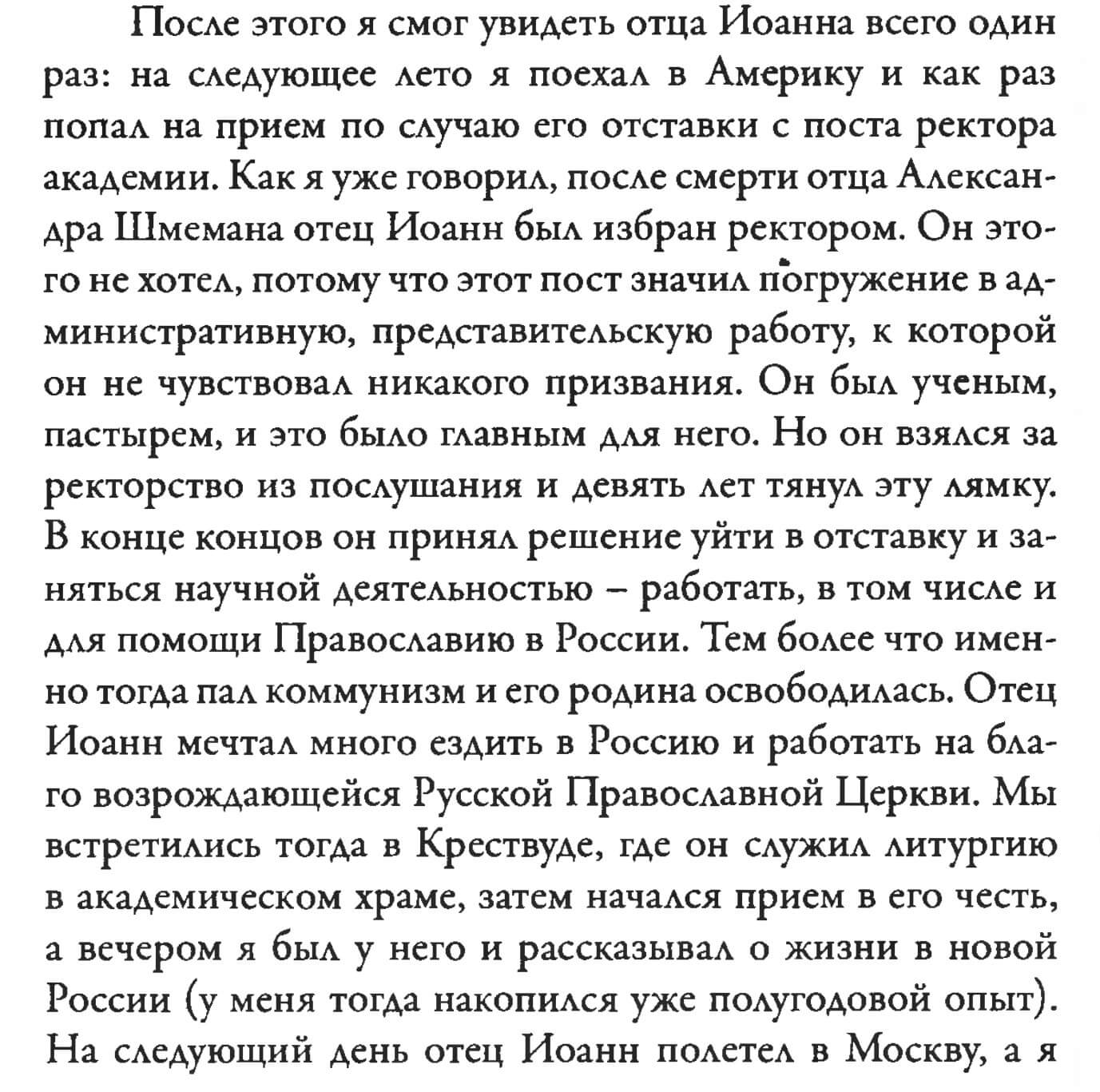
“‘You see, this is life itself,’ Father John would say. ‘This is not a theater where the curtain rises and the performance begins, and then falls and it is over. In real life, nothing happens abruptly, neatly, and on command.’
His dislike of theatricality was also reflected in how he wished to be buried. Once, we were discussing the lavish funeral of a certain priest. Father John said that he would like to be buried very modestly, in the simplest light-colored vestment, one that had already worn out with age and could no longer be used for liturgical services.”
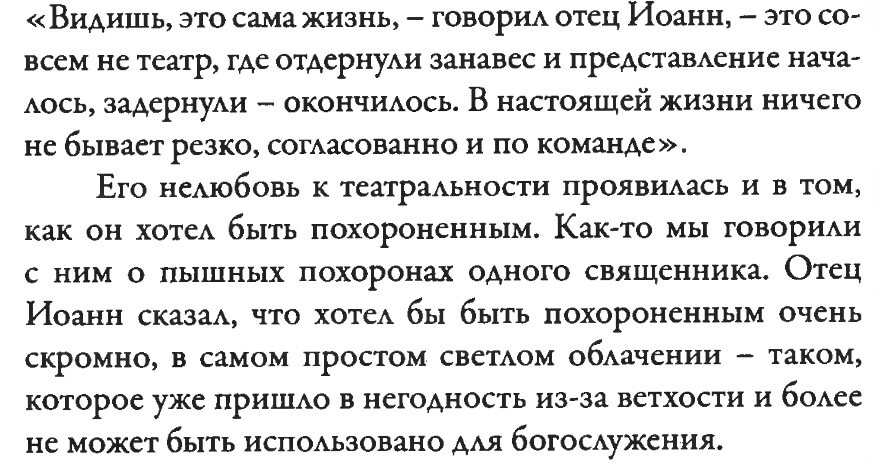
“When people asked him questions and he needed to give advice, he always emphasized that he was not a spiritual elder (a starets) and had no special insight or prophetic vision. ‘The only thing I can say is that, judging by common sense, and most likely after praying about it, it would probably be best to act in such and such a way and do this or that, but you must decide for yourselves, because the decision is yours.’ He was categorical only when he needed to warn someone against sin or against some improper or dishonest action. In all other cases he gave advice cautiously, first taking time to find out what the person himself wanted and what he thought about the matter. I was always amazed at how accurate and fair his advice turned out to be, regardless of whether I followed it or not. Unfortunately, I did not always follow it.”
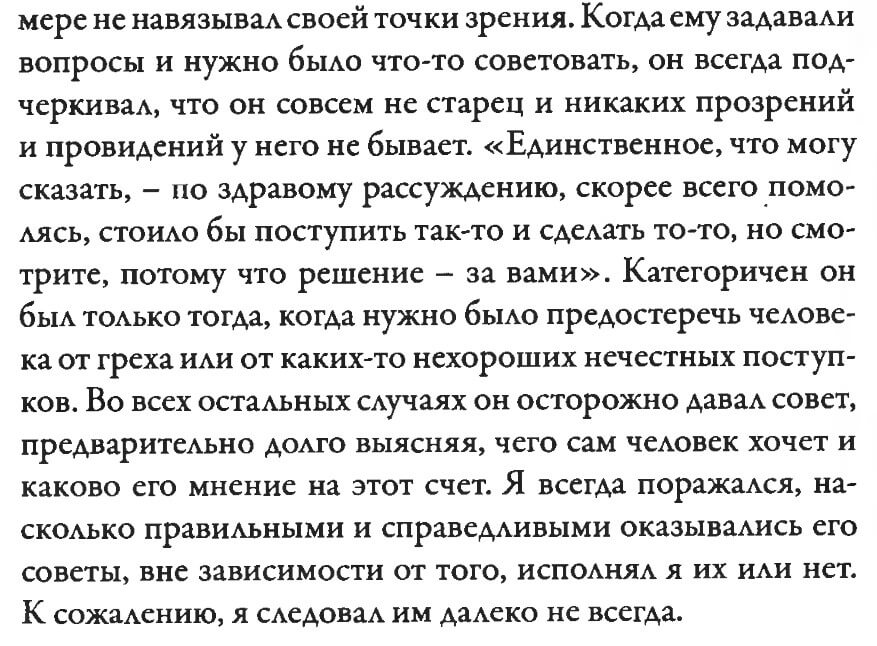
“When I was already living in Germany and began thinking about returning to Russia, I called Father John. After listening to me, he blessed my decision to return, saying that he believed I was right, that the time had come. Of course, he added, significant material difficulties awaited me after life in the West. But he knew this was not the most important thing for me: I would overcome everything, and my life would undoubtedly become far more interesting and meaningful. And that is exactly how it turned out.”
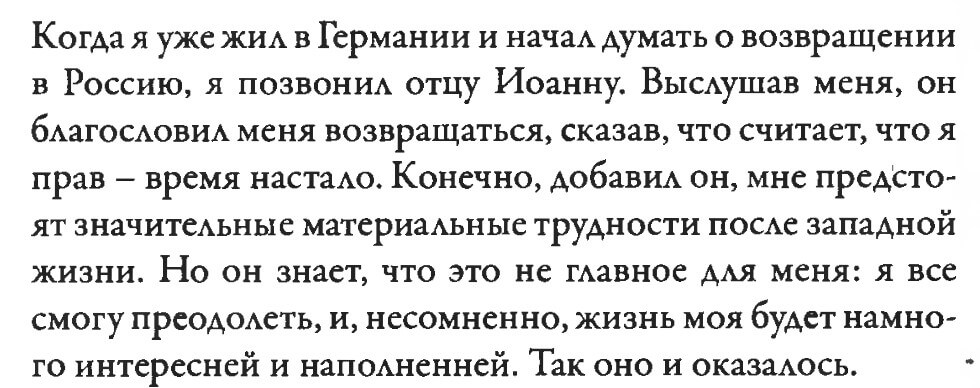
“After that, I was able to see Father John only once more. The following summer, I traveled to America and happened to attend the reception in honor of his retirement as rector of the academy. As I mentioned earlier, after Father Alexander Schmemann’s death, Father John was elected rector. He did not want the position, because it meant immersion in administrative and representative duties for which he felt no calling. He was a scholar and a pastor, and that was what mattered most to him. But he accepted the rectorship out of obedience and carried that burden for nine years. In the end, he decided to step down and devote himself to scholarly work, including work to assist Orthodoxy in Russia. This was especially significant because communism had just collapsed and his homeland had been freed. Father John dreamed of traveling frequently to Russia and working for the benefit of the reborn Russian Orthodox Church.
We met then in Crestwood, where he served the liturgy in the seminary church. Afterward, there was a reception in his honor, and that evening I visited him at home and told him about life in the new Russia; by then, I had already had about 6 months of experience there. The next day, Father John flew to Moscow, while I stayed behind to finish up my affairs in America. By the time I arrived in Russia, Father John had already returned to America. I never saw him alive again.
While already in Moscow, Father John began to feel unwell. When he returned, his condition worsened further, and he went to see a doctor. In general, he had never particularly complained about his health. Even at an advanced age, he had not suffered from any serious illnesses. After a short series of examinations, it turned out that he had pancreatic cancer, already at an advanced stage.”
“I learned about it a few days later. Very little time remained to say goodbye to Father John. I could not leave immediately because I had been assigned a work trip to Greece with Father Gleb Kaleda. I was then working in the Department of Religious Education and Catechesis of the Moscow Patriarchate. I decided that when we returned from Greece ten days later, I would immediately fly to America; at that time the plan fit well within those two or three months. But in Greece, I experienced something unusual, something I had never experienced before or since: I had two remarkable and strange dreams.
The first dream came when Father Gleb and I were sailing on a ferry from Athens to Crete. In the dream, I arrived at the academy to visit the sick Father John. I look for a car to go to the nearby hospital where he is staying, although in reality he was in a hospital in Canada, but in the dream it was different. I search and search but cannot find one. One car is broken, another has already left, and a third they simply will not give me, or something else goes wrong. And everyone keeps saying, ‘Why did you come so late?’ This phrase kept repeating in my dream. At that point I woke up with a very heavy feeling.
Three days later I had another dream. I am standing at the altar, and Father John is celebrating the liturgy, joyful, radiant, shining. He sees me, embraces me, kisses me, and says, ‘Why are you so sad? What has happened to you?’ I say, ‘But you are ill…’ He replies, ‘What are you talking about, what nonsense! Just look at the joy, here I am in the house of God, the Eucharist… Such happiness! One must not be sad!’ And I woke up with a wonderful, bright feeling.
That same day I called my future wife in Moscow. She told me that Father John had died three days earlier, that is, precisely at the time when I had the first dream.
…According to eyewitnesses, in the hospital, when the sacrament of anointing had ended, Father John looked toward the corner and said, ‘The icon of the Eucharist.’ The iconographic image of Christ giving Communion to the apostles had always been one of his favorites. Evidently, at that moment, some higher reality behind that image had already been revealed to him. Soon after the anointing, he died. I do not know in which phelonion they buried him…”
“Only in May 2001 did I find myself in America again, after a long break. It was then that I visited Father John’s grave for the first time, in the shaded cemetery of the small town of Yonkers, in the northern suburbs of New York, very close to the academy. I asked Maria Alekseevna to take me there. Before his death, Father John told her that he wished to be buried in Yonkers among the other Russian graves; there is a Russian section in that cemetery, adjoining an Orthodox church. Father John had been there many times, conducting funeral services and memorial prayers at the graves. The place had remained in his heart.
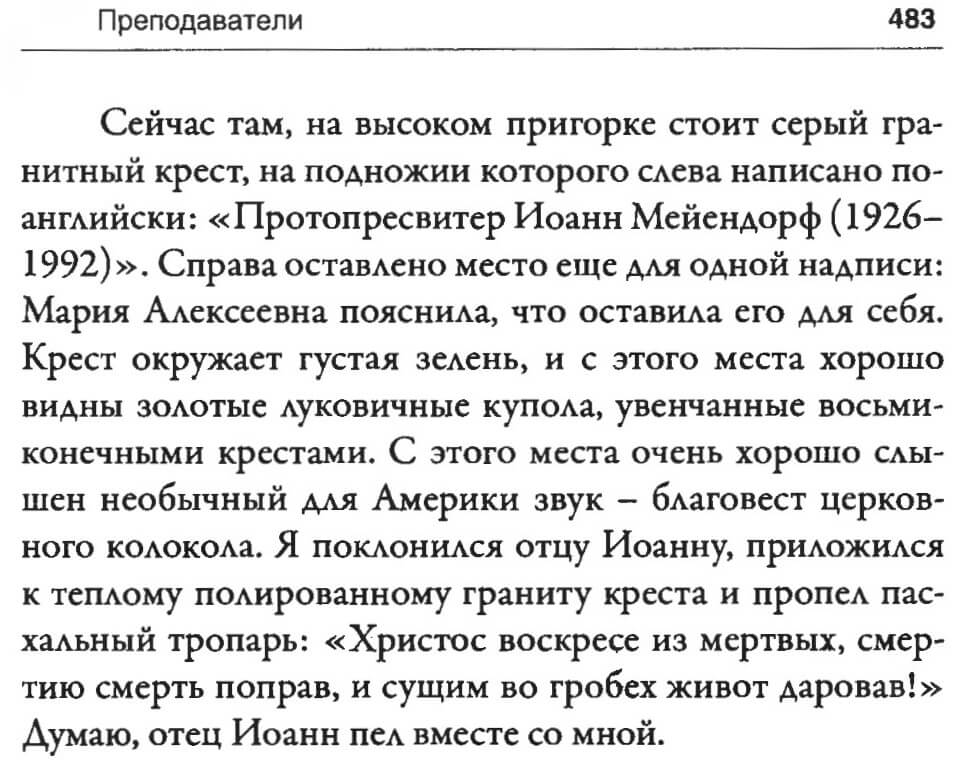
Now, there on a high rise, stands a gray granite cross. On its base, on the left, is written in English: ‘Protopresbyter John Meyendorff (1926–1992).’ On the right-hand side, space has been left for another inscription; Maria Alekseevna explained that she had reserved it for herself.
From that spot, one can clearly hear a sound unusual for America, the peal of a church bell. I bowed before Father John, pressed my lips to the warm, polished granite of the cross, and sang the Paschal troparion: ‘Christ is risen from the dead, trampling down death by death, and upon those in the tombs bestowing life!’ I think Father John was singing together with me.”
Behavioral and Narrative Analysis of the Text. The text reveals several stable behaviorally significant patterns:
1. Ambivalent idealization.
2. Symbolic overlay: “Eucharist — poison — death.”
3. Centering of the narrative around the “I.”
4. Elements of prophetic-mystical self-representation.
5. Ritualization of the event.
6. Control over the posthumous image of the figure.
From a behavioral analysis perspective, the above text demonstrates high symbolic saturation of the theme of death, narrative duality, the centering of the narrative around the author, and elements of sacralization and aestheticization of death. In criminal-psychological profiling, narrative duality may correspond to a mechanism of controlled idealization, a demonstration of one’s own superiority, and a latent diminishing of authority. For individuals with a pronounced narcissistic personality organization, such appropriation of another person’s image, legitimizing oneself as the only worthy successor, the symbolic “capital” of a significant figure, and the simultaneous reduction of that figure’s distant superiority are characteristic. This may indicate the subject’s need to control the image of an authoritative person. Such a strategy is typical of individuals with grandiose narcissism who seek symbolic inheritance of status through posthumous reinterpretation.
According to psychological analysis, the text exhibits narrative centering and a mechanism of narrative identity, in which another person’s biography is incorporated into the “developmental script of the self.” This may indicate a high degree of egocentric processing of events and a need to remain the central subject even within someone else’s story of death. One can also observe an effort to control the posthumous narrative and to construct an image of special spiritual chosenness.
In the profiling of serial killings, cases have been documented in which an offender ritualizes the criminal event, symbolically reinterprets the act through a mythological narrative, and integrates the act of violence into a sacred or philosophical context. In the text under examination, one finds the symbolic overlay “Eucharist — poison — death,” where the sacred act becomes the central narrative node. The text references this several times: the legend of poisoning through the Eucharistic Chalice; Dvorkin’s joint liturgy with Meyendorff before the latter’s final trip; Meyendorff’s last words about the “icon of the Eucharist” shortly before his death; and Dvorkin’s own dream in which Meyendorff joyfully celebrates the liturgy. From a criminological perspective, this can be interpreted as a projection of a fantasy of control, which in criminal profiling is characteristic of the cognitive patterns observed in ritualized serial killers with high IQs.
Attention is also drawn to the focus on the “correct” timing of John Meyendorff’s death. Alexander Dvorkin emphasizes that Meyendorff departed precisely at the moment when his talent “would have been most needed”; that he passed the baton to someone “working for the homeland” (that is, to Alexander Dvorkin); and that Meyendorff’s death occurred immediately after his resignation and just before the beginning of a new and promising mission in Russia.
In criminological profiling, there are documented cases in which a serial killer with a god-complex does not simply kill, but stages fate itself, presenting death as “inevitable” and “meaningful.” Such individuals construct for themselves the illusion of “divine providence,” while in reality exploiting a convenient moment for elimination. In such cases, a heightened interest in the details of death and burial may indicate the offender’s fixation on the ritual of closure, characteristic of someone who participated in orchestrating the death.
Episode 6. The Death of Gleb Kaleda
Gleb Kaleda served as head of the Department of Religious Education and Catechesis of the Russian Orthodox Church, Moscow Patriarchate, in Russia. In 1992, Alexander Dvorkin was hired by this department on the recommendation of Protopresbyter John Meyendorff. After two and a half years of working with Alexander Dvorkin, Gleb Kaleda died of cancer on November 1, 1994, at the age of 72.
From Alexander Dvorkin’s book My America 1: “On the recommendation of Father John Meyendorff, I began working in the newly established Department of Religious Education and Catechesis under the direct supervision of the ever-memorable Father Gleb Kaleda. It was there that the new field I began working in took shape, countering totalitarian sects.”
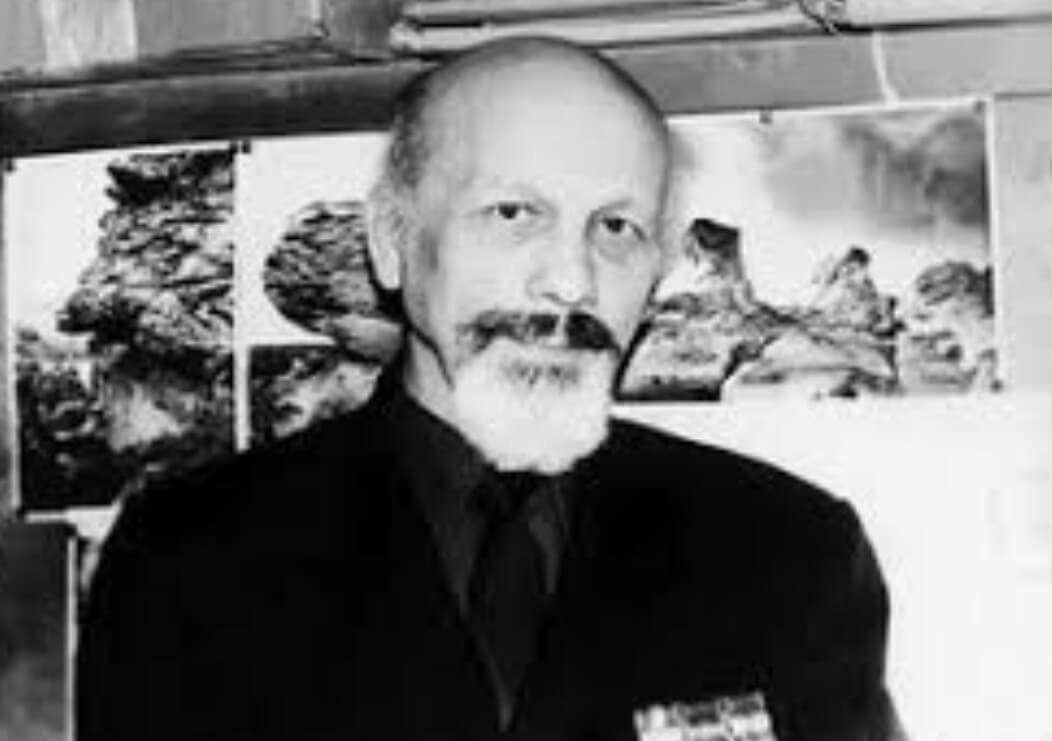
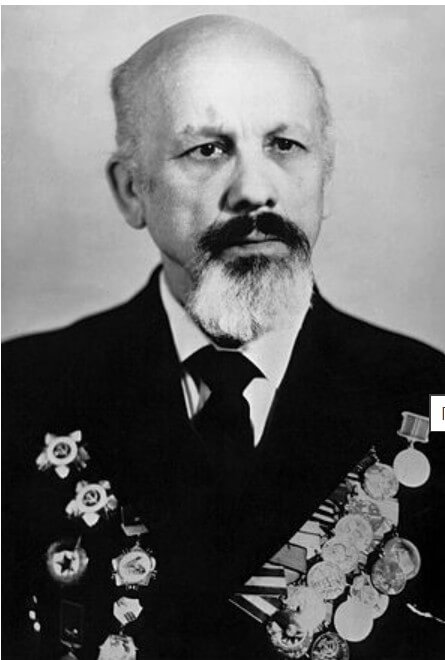
Brief biographical note: Gleb Aleksandrovich Kaleda (1921–1994) was a Soviet and Russian geologist, Doctor of Geological and Mineralogical Sciences, professor, as well as a priest of the Russian Orthodox Church, an archpriest, writer, and educator.
He was born into a family with noble roots. In 1941, he graduated from high school and in August of the same year was drafted into military service. After completing signal corps training in the Urals, from December 1941 until the end of World War II, he served in the active army as a radio operator. For his combat service he was awarded the Order of the Red Banner, the Order of the Patriotic War, and several medals.
He completed correspondence courses at the Mining Institute and planned to study at Moscow University. In 1945 he enrolled in the Moscow Geological Prospecting Institute, graduating with honors in 1951. During his senior years he served as the head of a geological expedition team. In 1954 he defended his Candidate of Sciences dissertation, and in 1980 he defended his doctoral dissertation for the degree of Doctor of Geological and Mineralogical Sciences. His list of scientific publications includes more than 170 titles. Gleb Aleksandrovich was known not only among geologists in the USSR but also abroad. He worked in research and academic institutions, participated in large-scale scientific projects, and spent considerable time on geological expeditions in Central Asia.
As Archpriest Kirill Kaleda (son of Gleb Kaleda) notes: “Father Gleb had experience in teaching, since during the first ten years of his secular career he worked in an educational institution, the Moscow Geological Prospecting University. He had extensive experience organizing scientific work, as he at one time directed many scientific projects in which institutes and research organizations from across the former Soviet Union participated.” 5
In 1972, Metropolitan John (Wendland) of Yaroslavl and Rostov secretly ordained Gleb Kaleda first as a deacon and then as a priest. From that time on, he regularly celebrated church services, including the Eucharist, in the house church in his apartment. Only in 1990 did he begin open pastoral ministry and was accepted into the clergy of the Moscow diocese.
In the same year, 1990, Gleb Kaleda became one of the initiators of the creation of the Theological and Catechetical Courses in Moscow (which in 1992 were transformed into the Orthodox St. Tikhon’s Theological Institute), serving as their first rector. At the outset, Gleb Kaleda recruited instructors for the courses, primarily from among the Moscow clergy. Classes began in February 1991.
In the spring of 1991, Archpriest Gleb Kaleda was appointed head of a sector within the Department of Religious Education and Catechesis of the Moscow Patriarchate. He gave lectures in Moscow and in many cities across Russia. Together with Father John (Ekonomtsev), he initiated and organized the first “Christmas Readings,” a church-public forum in Russia. He was a gifted speaker and preacher.
He was the first Moscow priest to serve in prisons. On October 23, 1993, by decree of Patriarch Alexy II, he was appointed rector of the Church of the Protection of the Most Holy Theotokos at Butyrka Prison, where he provided pastoral care to inmates, including those on death row.
He died of cancer on November 1, 1994. 6, 7, 8
In the autobiographical book My America 1, Alexander Dvorkin devoted only a few lines to mentioning Gleb Kaleda. However, he described him in greater detail in the article “About Father Gleb Kaleda,” published in the journal Pravmir (originally published in the almanac Alpha and Omega, No. 4, 1995) 9:
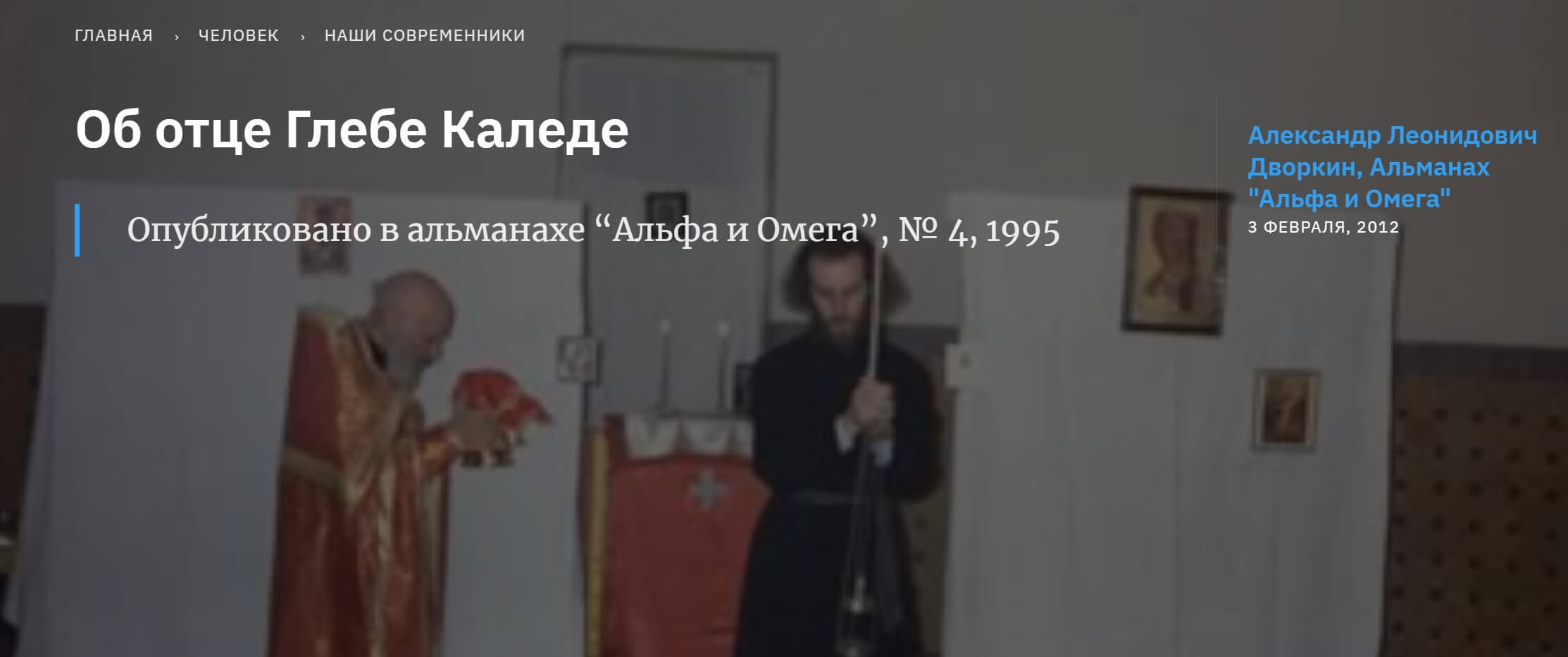
“After the death of Father Gleb Kaleda, memoirs about him began appearing regularly in print. They were written by people who had known Father Gleb for a long time, many for several decades. I, by contrast, knew the priest for a relatively short time, only about two and a half years. Why, then, did I nevertheless decide to write about him?
The reason is that during those last two and a half years of his life, I was not only his parishioner and spiritual son, but also worked with him in his sector of the Department of Catechesis and Religious Education of the Moscow Patriarchate. I saw him almost every day, traveled with him on business trips, and was by his side at the beginning of his prison ministry. He blessed me to establish the Information and Consultation Center of the Hieromartyr Irenaeus, Bishop of Lyon, and even when he was already seriously ill and confined to bed, he actively followed the work of the Center and helped us with advice, insightful criticism, and prayers.”
“I saw Father Gleb in many different circumstances, in prison and at official receptions, in the mountains and by the sea, in the centers of large cities and in forests, on the sea, on land, and in the air. I saw him with very different people, with the Patriarch and with a hardened atheist and Stalinist, with the Prime Minister of Greece and with prisoners, with prominent scholars and taxi drivers, with men and women, adults and children.”
“And of course I saw Father Gleb at prayer, in magnificent cathedrals and in churches being restored, in a home setting and in nature, in monasteries, in prisons, and in hospitals.”
“Soon after that, I received the blessing of my spiritual father, Protopresbyter John Meyendorff, to submit an application for a position in the newly established Department of Catechesis and Religious Education. I brought a letter of recommendation to the Department’s chairman, Hegumen John (Ekonomtsev). After reading it, he asked that Father Gleb be called in. The gray-bearded priest whom I already knew entered.
‘Here, Father Gleb,’ said Father John, ‘please speak with A. L. (Alexander Leonidovich). He is recommended by Father John Meyendorff. See whether you can make use of him in your sector.’
Father Gleb was not wearing a skufia and appeared much older than when I had first seen him. The absence of hair aged him, but it also emphasized the ideal shape of his head, the head of a scholar and a thinker. His gaze, from beneath thick eyebrows, seemed somewhat stern and even severe, yet his smile completely transformed his face, making it literally radiate kindness and joy. They were so tangible that one almost wanted to reach out and touch him, to feel them physically.
Father Gleb knew how to question people. Within just a few minutes he had, on the one hand, learned all the main facts of my biography, and on the other, sensed the essence of my personality.”
“Father Gleb sought in everything and in everyone to see a good foundation and to appeal to it. It was no coincidence that one of the biblical examples he most loved to return to was the sermon of the Apostle Paul in Athens. Father Gleb regarded it as a model of Christian preaching because the Apostle Paul did not begin by denouncing the Athenians for their idolatry but by praising them for the ‘special piety’ they demonstrated. ‘If I had been an Athenian of that time,’ Father Gleb would say, ‘I would immediately have pricked up my ears: what is this Jew who has just praised my piety going to teach me?’ He himself once heard this message, accepted it within himself, and throughout his long and very complicated life never once betrayed it.
When we were together in Athens, I took him to the Areopagus, from where the Apostle Paul had preached, and photographed him there. Father Gleb is sitting in thought; around him are the Athenian hills covered with dark greenery, below lie the roofs of the great city and the tiled domes of its churches, and above him stretches a deep blue sky.”
“I think that this ‘Pauline’ approach was the main factor behind the success that accompanied the final major mission of his life, his prison ministry.”
“I was with him when we were shown the desecrated prison church, and I served as an altar assistant at the first liturgy that Father Gleb celebrated there, the first liturgy after seventy years of neglect.”
“He possessed a photographic memory and remembered almost everything he had ever read or seen. But this rare gift was not a matter of pride or self-exaltation for him; he regarded it as a common ability shared by all people. I remember once he referred to the wind blowing from the sea as a trade wind. I asked how he knew that and what the difference was between a trade wind and a monsoon. ‘What do you mean?’ Father Gleb said in surprise. ‘They teach that in the fifth grade of secondary school. How did you pass your geography exam for that grade?’”
“When I visited him in the hospital, he was very weak and suffering greatly from pain, yet he still took a lively interest in everything happening in the life of the Church and the Department. He continued working literally until his final day, dictating his observations on Orthodox education for the Bishops’ Council materials. He very much hoped to recover quickly so that he could participate in its work, the work of the first council in the history of the Russian Orthodox Church devoted to the problems of mission and education.
But the Lord judged otherwise. Father Gleb’s earthly ministry ended two weeks before the council. The priest’s death was an ideal Christian passing, painless, blameless, and peaceful, precisely the kind for which we pray. Father Gleb’s last words were: ‘Do not worry, I feel very, very well.’
We do not know what, hidden from our eyes, was revealed to him in those final moments.”
From the text it follows that Alexander Dvorkin did not merely know Gleb Kaleda but was constantly in close proximity to him.
From the perspective of the hypothesis of serial latent homicide, the following key markers can be identified in this text from the perspective of behavioral analysis:
— Detailing of presence at critical moments: “I was beside him in the hospital,” “I served at the first liturgy,” Kaleda “dictated his observations” until the final day. This emphasizes access to the victim during vulnerable periods (illness, hospitalization).
— Emphasis on exceptional closeness: “I saw him almost daily… was present at the beginning of his prison ministry,” “I photographed him,” “I served with him,” “I was with him.” This creates the image of the sole reliable witness to the final months of Kaleda’s life, a position typical of individuals seeking to control the narrative after a victim’s death. This reflects a pattern of narrative positioning, strengthening one’s status through association with an authoritative figure at key moments of that person’s life.
— Focus on the “final period”: business trips, joint travels, work in the hospital, in the prison, attendance at official receptions, visits to his home, and so forth. This corresponds to the pattern of “intensification of contact shortly before death,” frequently observed in cases of latent homicide.
— Narrative duality (idealization combined with latent criticism): “Father Gleb was not wearing a skufia and seemed much older than when I had first seen him. The absence of hair aged him, yet it also emphasized the ideal shape of his head, the head of a scholar and thinker. His gaze from beneath thick eyebrows seemed somewhat stern and severe, yet his smile…”
— Symbolic connection with Athens and Paul: references to the Areopagus, the photograph against the background of the “empty sky” (“above him a deep blue sky”), and the quotation about “praising piety.” The key moment is that Alexander Dvorkin himself brings Kaleda to the Areopagus and takes the photograph. He appears not merely as a witness but as the director of events.
— Focus on the “ideal Christian death”: the death is described as “painless,” “peaceful,” with “last words: ‘I feel very, very well.’” This is not mourning but canonization under narrative control. Particularly indicative is the phrase: “We do not know what was revealed to him in those final moments.” There is an absence of expressed grief, no description of personal loss, only a focus on the “goodness” of the death. This pattern is characteristic of individuals with selective impairment of empathy, who preserve formal respect while lacking an emotional bond.
— Temporal precision: the death occurs two weeks before the Bishops’ Council in which Kaleda was expected to play a key role. Alexander Dvorkin emphasizes: “He very much wanted to recover in order to take part… But the Lord judged otherwise.” This reflects a classic mechanism: attributing an outcome to divine will when it serves the narrator’s interests.
The pattern “closeness + idealization + detailed description of death” has been observed, among other contexts, in cases involving serial medical killers, where there may be a distorted perception of “release,” as well as in individuals with grandiose narcissism who use the death of an authority figure to reinforce their own status.
From the recollections of Gleb Kaleda’s wife. Also of interest are the recollections of Gleb Kaleda’s wife, Lidia Vladimirovna Kaleda, regarding her husband’s health during the final two years before his death. She recounts, among other things, the onset of his illness.
Article by Lidia Kaleda, “The Open Ministry of Father Gleb Kaleda,” in the journal Pravmir, July 21, 2010 8.
Gleb Kaleda was one of the organizers of educational seminars to which directors of research institutes, department heads, and clergy who served as instructors were invited. Sometimes, particularly in the summer, these seminars were held on tourist riverboats. Such events also took place in 1992 and 1993. During these trips she noted the following:
On the riverboat: “Father Gleb felt well, but sometimes, suddenly and for no apparent reason, he would have problems with his stomach.”
“At the beginning of 1994, Father Gleb was sent by the Patriarch to Tula and Yaroslavl to inspect Sunday schools and assist them… Father Gleb returns from Tula and says that he had stomach trouble there.”
“And then on March 9, 1994, Father Gleb suddenly felt unwell… He was taken to Botkin Hospital. Vasily arrived there. In the surgical intake department, an X-ray revealed that surgery was necessary. He was taken to the ward and operated on. It turned out to be intestinal cancer. After the operation, Father Gleb remained in the hospital and was placed on IV drips. When he was transferred from intensive care to a regular ward, his sons began taking turns staying with him at night, and during the day our friends did so (we allowed only men to visit him). In April he was discharged.”
“Father Gleb was elevated to the rank of archpriest in 1994, after the first operation.”
“Meanwhile, Father Gleb was preparing for a second operation. He was also working on catechetical materials for the Patriarchate. He was very anxious but continued preparing materials for his department and did not forget the prison ministry. He seemed to be feeling relatively well; tests were done and apparently everything looked normal. After the Dormition, Father Gleb was hospitalized again. His final service at the Vysokopetrovsky Monastery was on August 29, the Feast of the Translation of the Image Not Made by Hands, and on September 1, he was admitted to the hospital.”
“He died on the feast day of St. John of Kronstadt, November 1, 1994.”
Thus, Kaleda’s death may represent another link in a chain of latent homicides, allegedly committed by the same method, covert toxic exposure disguised as a natural oncological disease. Based on the material presented above, the following conclusions can be formulated in the perspective of behavioral analysis, particularly in the context of the hypothesis of Alexander Dvorkin’s possible involvement in latent homicide:
Chronology of events: Alexander Dvorkin’s career — Kaleda’s illness:
● On December 31, 1991, Alexander Dvorkin returned to Russia and was hired by the Department of Religious Education and Catechesis of the Moscow Patriarchate (early 1992) under the direct supervision of Gleb Kaleda. Six months later, John Meyendorff died (July 22, 1992).
● Already in 1992–1993, Gleb Kaleda experienced episodic but recurring “stomach problems”, nonspecific but progressively worsening symptoms.
● In 1992, Dvorkin received a professorial appointment at the Faculty of Journalism of Lomonosov Moscow State University. A group of church journalists was organized there, where he delivered lectures on church history. However, in the spring of 1994 he was dismissed due to the absence of the “required level of education.”
● In the spring of 1993, Professor Johannes Aagaard visited Moscow. He headed the international “Dialogue Center,” headquartered in the Danish city of Aarhus, a Christian organization that had worked on issues related to sects for about twenty years. Aagaard met Dvorkin, and in August of the same year Dvorkin paid a return visit to Aagaard in Denmark. Aagaard became a key figure who later helped propel Dvorkin to the next stage of his career and international recognition (see further details below).
● On September 5, 1993, the Information and Consultation Center of St. Irenaeus of Lyon was established, headed by Alexander Dvorkin (in 2006 the Center became the nucleus of Dvorkin’s new organization, the Russian Association of Centers for the Study of Religions and Sects, RACIRS). The evidence indicates that Aagaard played a role in facilitating the establishment of this Center in Russia.
● In March 1994, Gleb Kaleda was diagnosed with intestinal cancer at an operable stage; after surgery, a temporary remission followed.
● However, only a few months later (September 1994), there was a relapse, hospitalization, and death (November 1, 1994).
This progression corresponds to the pattern of “latent homicide with delayed action,” in which the victim is not eliminated immediately but through a slowly progressing illness that coincides with the period of the perpetrator’s greatest dependence on the victim’s authority.
Symptomatology as a Marker of Chronic Intoxication
The symptoms described in Gleb Kaleda (sudden abdominal pain, digestive disturbances, and the rapid development of an aggressive form of intestinal cancer) may be compatible with chronic exposure to toxic substances, including:
- carcinogenic compounds (for example, arsenic, aflatoxins);
- substances that disrupt the intestinal microbiome and immune surveillance;
- combinations of pharmacological agents with cumulative effects.
Although there is no direct evidence of poisoning, the very pattern of the disease’s course, rapid progression following a period of nonspecific complaints, may occur in cases of concealed toxic exposure, particularly when the perpetrator possesses knowledge of pharmacology and access through a relationship of trust.
Absence of a Natural Explanation for the Speed of Disease Progression
Colon cancer, even in advanced stages, rarely leads to death within eight months after the first surgery under the following conditions:
- absence of pronounced metastases at the time of surgery (according to recollections, “everything appeared normal” in July–August 1994);
- high social status and access to quality medical care (Gleb Kaleda served as a spiritual advisor within the Patriarchate);
- regular medical monitoring.
Such aggressive, recurrent dynamics require an oncological explanation, but also do not exclude an exogenous factor that could accelerate tumor progression.
Behavioral Pattern of Alexander Dvorkin: the analysis of the text reveals a consistent pattern, access + dependence + disappearance of the threat:
• Access: Alexander Dvorkin worked in close proximity to Gleb Kaleda, participated in trips and events with him, and had opportunities to influence his diet, medications, and daily routine.
• Dependence: Alexander Dvorkin’s career directly depended on the support of Gleb Kaleda, his immediate superior.
• Elimination: immediately after Kaleda’s death, Alexander Dvorkin remained without formal oversight but effectively inherited his mission. A subsequent career rise is observed. Dvorkin later became head of the “sect studies” department at St. Tikhon’s Orthodox University, established close cooperation with Johannes Aagaard, and so forth.
This corresponds to the model of “functional elimination,” in which the victim dies at the moment when his social function becomes simultaneously maximally useful and potentially dangerous for the perpetrator.
Source:
1. Alexander Dvorkin. “My America”, 2013 https://fb2.top/moya-amerika-813075
2. «John Meyendorff» https://en.wikipedia.org/wiki/John_Meyendorff
3. Zhurinskaya, Marina. 2012. “Archpriest Gleb Kaleda as a Church Writer.” Alpha and Omega, no. 38 (2003). Published by Pravmir, October 30, 2012. https://www.pravmir.ru/protoierey-gleb-kaleda-kak-tserkovnyiy-pisatel/
4. Elvira Mezhennaya “A Secret Priest, a True Christian. Part 1. In memory of Archpriest Gleb Kaleda (1921–1994)»
5. Kaleda, Kirill. n.d. “Archpriest Gleb Kaleda.” St. Tikhon’s Orthodox University (PSTGU). Accessed March 18, 2026. https://pstgu.ru/30let/stranitsy-pamyati/osnovateli/protoierey-gleb-kaleda/vospominaniya/0/
6. Wikipedia. 2024. “Kaleda, Gleb Aleksandrovich.” Last modified February 20, 2024. https://ru.wikipedia.org/wiki/%D0%9A%D0%B0%D0%BB%D0%B5%D0%B4%D0%B0,_%D0%93%D0%BB%D0%B5%D0%B1_%D0%90%D0%BB%D0%B5%D0%BA%D1%81%D0%B0%D0%BD%D0%B4%D1%80%D0%BE%D0%B2%D0%B8%D1%87#cite_note-butyrka-6
7. Pravmir. 2014. “Archpriest Gleb Kaleda Entered the Cells of Death Row Inmates and Taught Prayer: An Evening of Remembrance.” Pravmir, October 31, 2014.
https://www.pravmir.ru/hristos-voskrese-vecher-pamyati-protoiereya-gleba-kaledyi/
8. Kaleda, Lydia. 2010. “The Open Ministry of Father Gleb Kaleda.” Pravmir, July 21, 2010.
https://www.pravmir.ru/ogleb-pasxa/
9. Dvorkin, Alexander. 2012. “On Father Gleb Kaleda.” Alpha and Omega, no. 4 (1995). Published by Pravmir, October 31, 2012. https://www.pravmir.ru/ob-otce-glebe-kalede-3/