Retrospective analysis is an essential part of reconstructing a biography. It allows for a deep dive into the past of a person to examine facts and events, and identify patterns and causal relationships in order to understand the origins of present-day behavior and to see the person’s life as a coherent whole, with its key stages and transformations. In criminal profiling, there is a principle that a person’s thinking determines their behavior. This means that the inner world, motivation, and personality characteristics of a criminal are inevitably reflected in external manifestations, especially in stressful situations or when committing violent acts. Therefore, analyzing a subject’s psychobiography helps to understand the logic behind their behavior.
In this article, we present a retrospective reconstruction of the psychobiography of a fifteen-year fragment of Alexander Dvorkin’s life, focusing on the period beginning in the ninth grade of school. The goal of the analysis is to identify potential psychological, behavioral, and narrative shifts that could indicate the formation of maladaptive or criminogenic patterns in subsequent stages of life (high school, college, and immigration to the United States). Particular attention is paid to the dynamics of these changes and how they influenced the further trajectory of behavioral development. Such analysis is necessary to determine whether the identified psychological, behavioral, and narrative markers correspond to already known established patterns characteristic of serial killers.
A detection of significant changes in the subject’s psychobiography requires additional verification to determine the extent to which the identified indicators are consistent with the established behavioral patterns and existing models of behavioral dynamics of serial offenders described in studies, which will allow determining their diagnostic significance.
Fact No. 1. Ninth grade. Predisposing event. Behavioral change, alcohol, drugs, and subcultural influences
Based on analysis of the sources listed above, including autobiographical accounts, we may conclude that Alexander Dvorkin began consuming alcohol and “experimenting” with psychoactive substances (drugs) during his ninth-grade year. Subsequent stages of his life path, as described in the sources, contain a significant number of episodes related to drug use and interaction with a social environment immersed in drug culture, both as consumers and as participants in their distribution.
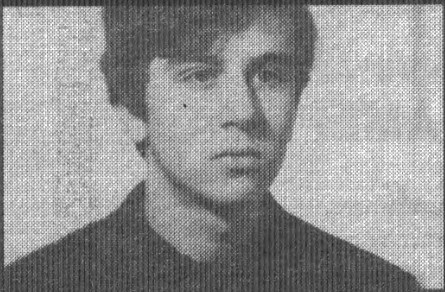
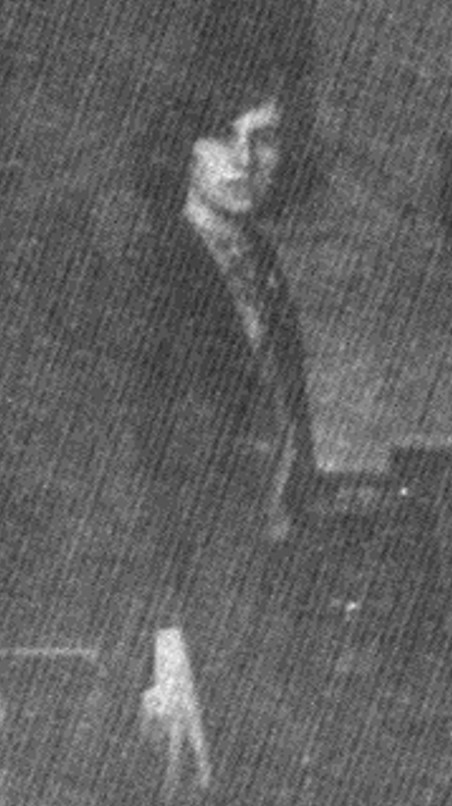
Ninth grade. Alexander Dvorkin’s involvement in a drug environment
A key predisposing event noted in several sources (the books “Kalalatsy” and “My America”) was Alexander Dvorkin’s acquaintance in ninth grade with a new classmate who had a substantial influence on the formation of his deviant mindsets. In the book “Kalalatsy,” this individual appears under the name Pavel; in the book “My America,” under the name Tolya Weinberg. The new classmate introduced Alexander Dvorkin to hippie subculture. At the time, alcohol and drug use was widespread in informal youth groups in Moscow that identified with this subculture. In his autobiography, Alexander Dvorkin notes that before his new acquaintance was expelled from school, a friendship developed between them. Alexander Dvorkin also “visited him at home,” which facilitated further socialization within a deviant environment.
An excerpt from Arkady Rovner’s book “Kalalatsy” 2: “Pavel transferred to our school in ninth grade and brought with him the trappings of the system: clothes, hair, and drugs… Pavel spoke slowly, with a nasal twang, as if he were begging. He talked trash and showed off the holes in his veins. Once he brought a little bag to school: heroin, he said, to sell to Georgians for a hundred bucks. He talked about how to fuck. I kept hoping he’d take me to where the fucking was happening. Various characters visited him, took him out into the courtyard to talk, and then disappeared. Then he disappeared from home for two weeks, and his mother (also wobbly and with a distinctive profile) appeared at the school, rushing into the principal’s office with her bag pressed against her stomach. There, she was already awaited by the precinct officer Kuzyakin and the historian who was also the secretary of the party committee, Vas’ Vasich Koshechkin. They started digging and learned a few things — a trail had followed Pavel from his old school. As soon as he showed up, he was immediately kicked out of school.
“That’s when it clicked for Pavel that I was the one who snitched on him. He cornered me in an alley and said, ‘I’m going to cut you up.’ He pinned me in a corner — he had his crew with him — and started messing with me: ‘Don’t be scared, unbutton your coat, it won’t hurt a bit.’ Ophelia took pity on me and said to him, ‘Let him go.’ But he wouldn’t budge for a long time. He said, nodding toward Ophelia, ‘If you say she’s the most beautiful, then maybe I’ll let you go.’ I said it, and he let me go.
“I ran home, locked myself in with all the locks and bolts, and started writing a note. I wrote it, my hands were shaking, the letters wobbling — what Pavel wanted… In the morning my mother found the note in the kitchen, ran to the principal, they called the precinct officer, shoved me into the office, and there I told Kuzyakin and Vas’ Vasich everything I knew: about the holes, about the heroin, about everything. I knew I was ratting him out, that I would suffer for it all my life afterward, and still I told them.
“I thought that was the end of me after that, but it turned out differently. He saw me in the little park, came up, and offered to smoke a joint. We smoked and sorted it out. A day later Pavel brought me to Ophelia.” 2


According to the data presented in the book “Kalalatsy” and in Dvorkin’s autobiography “My America,” it can be concluded that Ophelia’s apartment functioned as a gathering place for people using psychoactive substances, and that Alexander Dvorkin also visited this space. Ophelia is mentioned among Alexander Dvorkin’s acquaintances from his youth:
“One of the most famous among the hippie groups was a band that called itself simply: ‘The Hair.’ I often met with them, but I was held back from forming closer relationships because of their organization and obedience to their leader, a rather unattractive girl nicknamed Ophelia, something that was unacceptable to me and atypical for hippies.” 1

“In the hallway there was a buzz, doors slamming, and stomping — a crew of long-haired guys tumbled into the room: the Black Shirt, Lyosha, Boston, and the elated Ophelia zipping around them like Nike, the goddess of victory. The Hostage, having put down Vonnegut, was fussing with the record player. Then Alena came in and brought some grub, I didn’t know she was tagging along with Ophelia. They passed a joint around.” 2


It is noteworthy that the book “Kalalatsy,” based on the oral memoirs of a young Alexander Dvorkin, contains numerous episodes reflecting his involvement in a drug-using subculture, including descriptions of psychoactive substance use, methods of their preparation, as well as polypharmacological combining of pharmaceutical drugs to achieve specific mental states. These aspects will be examined in greater detail in the following sections of this study.
Another episode from Alexander Dvorkin’s autobiographical book “My America” reflects the same event — the meeting between Dvorkin and his new classmate in the ninth grade. It’s important to take into account that at the time the book was published, the author was about 58 years old. As with many retrospective autobiographies, the presentation of early stages of life may be subject to later reinterpretation aimed at aligning the past with the author’s current status. This implies the possibility of selective presentation of events, in particular omitting, reducing, or softening details and interpreting them differently, whereas thirty years earlier, when Alexander Dvorkin was a little-known young immigrant from the USSR, they could have been recounted with greater candor.
“I did, in fact, know one of the members of the System quite well. When we moved up to the ninth grade, a new student was introduced to us, Tolya Weinberg. His black, straight, shiny hair, almost covering his ears (which was seen as an unheard-of length), and his dark complexion made him look like an Indian as portrayed by the popular Yugoslav actor Gojko Mitic. His slightly flared jeans, which cost a fabulous amount of money at that time, immediately elevated him to an unprecedented height among my classmates. Tolya spoke little, preferring proud silence broken by fragmentary, laconic phrases that he dropped only in cases of the most acute necessity. He clearly did not wish to socialize with us, but he did so with such dignity that everyone took it for granted.
“What followed was a long story: teachers tried to force him to get his hair cut and change his clothes — he did not do so; they barred him from classes, summoned his mother to the school, she cried that her son had completely gotten out of hand, and so on. In the end, they expelled him from our exemplary model school, and his mother placed him in working youth school. But during that time I managed to befriend him. He was the first person to tell me about hippies and, in a confidential conversation, revealed that he was one of them. I used to go to his place and listen to cassettes of then-popular rock bands on his Smena tape recorder: first and foremost, of course, the Beatles and the Rolling Stones, but also Led Zeppelin, Deep Purple, Black Sabbath, and Uriah Heep. All these names sounded like music to my ears, and I eagerly absorbed new rhythms and new sounds.” 1

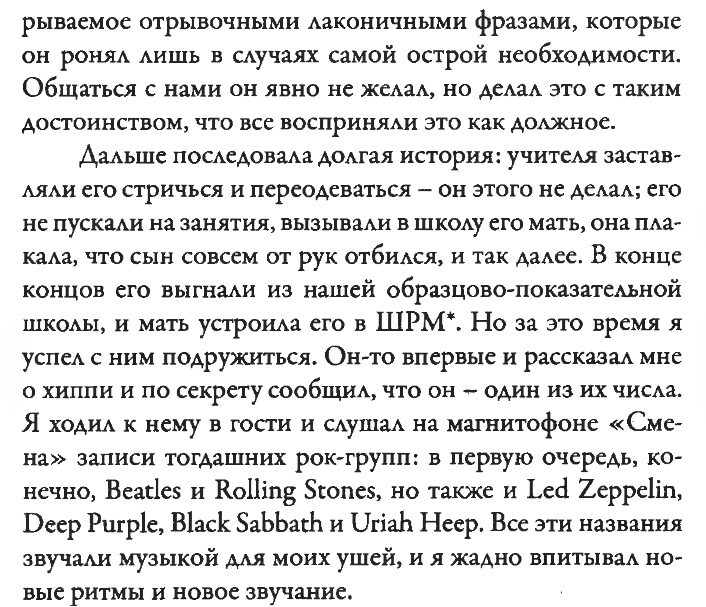
Tolya (Tolik) Weinberg
A few words about Tolya Weinberg who in the ninth grade first introduced Alexander Dvorkin to the hippie subculture. Subsequently, he played a significant role in Dvorkin’s biography, including participation in events directly connected with Dvorkin’s immigration to the United States (the city of New York). While in New York, Tolya Weinberg made a strong impression on the atheist Dvorkin by being baptized and becoming Orthodox. Soon afterwards, Dvorkin followed his example. Dvorkin’s autobiographical book “My America” 1 contains several episodes connected with Tolya Weinberg (among hippie friends he was called “Tolik-Winnetou”):
– “When we moved up to the ninth grade, a new student was introduced to us, Tolya Weinberg,” “…during that time I managed to befriend him. He was the first person to tell me about hippies and, in a confidential conversation, revealed that he was one of them. I used to go to his place…” (p. 66) 1
– Moscow period. “After Tolik was expelled from school, I lost sight of him, but now I began running into him again on the Street. He usually walked among Solnyshko’s entourage.” “Everyone called him Winnetou now. Tolik introduced me to the Sun, and I was honored with a limp handshake from the great man.” (p. 67) 1 Note: ‘Solnyshko’ was a local hippie (‘from the System’) and authority figure of the early 1970s, nicknamed ‘Solnyshko (Sun)’ (Yury Popov).
– 1977. “Then I met Tolik-Winnetou who had long since disappeared from my horizon. He told me that he was leaving for America on an Israeli visa and asked whether he should send me an invitation. Without even thinking, I agreed.” (p. 100) 1 Note: two months later, the invitation arrived.
– “Even earlier, I had found Tolik-Winnetou in New York. As it turned out, the very first hippie in my life had finished computer courses, gotten a job, and become a full-fledged member of society. He lived in a cramped and stuffy apartment (but in the prestigious Upper East Side, which he was very proud of) with his wife Venera (she was Tatar) and their three-year-old son.” “Tolik introduced me to his friend, a Kyiv hippie named Marik, with whom they constantly spent time together. Marik, who lived in Greenwich Village…” (pp. 182, 183). 1
– “…Tolik had long since stopped being a hippie. But he did tell me that he had been baptized and became Orthodox Christian. He gave no details, despite all my persistent questioning. Tolik didn’t attend church, and I saw no manifestations of religiosity in his life. Yet, the very fact that a person I had known since school and who had first introduced me to the System identified himself with Christianity and the Church made a strong though not very conscious impression on me.” (p. 184) 1
“Spring came. One day Tolik told me that it was Easter night, and that he was going to go to a church service. I volunteered to go with him.” (p. 189) 1
Alcohol
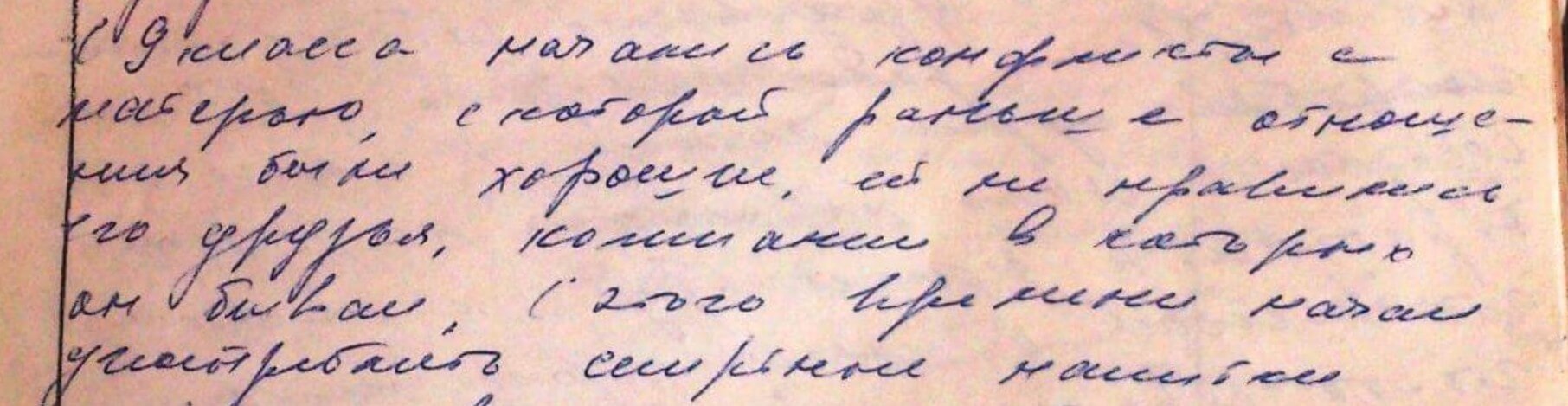
Change in behavior. According to medical documentation, beginning in the ninth grade, Alexander Dvorkin experienced conflicts with his mother whom he had previously maintained good relations with. As noted in the records, the cause of disagreements was his mother’s disapproval of his new social environment and circle of acquaintances. During the same period, Dvorkin began consuming alcoholic beverages.
Quote from his medical records: “From the ninth grade onwards, he began to have conflicts with his mother whom he had previously had a good relationship with. She did not like his friends or the circles he hung out in. From that time, he began to drink alcohol…”
Taken together, this indicates that Alexander Dvorkin experienced noticeable behavioral changes in the ninth grade, which were noted by close relatives (in particular, his mother): he started drinking alcohol and became involved in a drug-using subculture, joining one of the informal groups associated with the hippie movement.
Correlation with the social-ecological factor, subfactors “Predisposing, facilitating and triggering events.” and “Subcultural influences” in the SIR model:
– SF3: Predisposing, facilitating and triggering events. In every life story of a serial killer, you can find predisposing, facilitating and triggering events that may occur at any time, triggering the homicidal chain reaction; these events, which for another person may seem completely harmless, instead, for a serial murderer have a disruptive emotional energy, which is able to shatter a fragile identity.
– SF4: Sub-cultural influences. This factor assumes considerable importance in those cases in which the serial killer… is inserted, especially during adolescence, in a group of criminal peers who exercise a significant influence over him. Several serial killers start a criminal career early because they are included in a context that facilitates and supports the shift to an aggressive action.
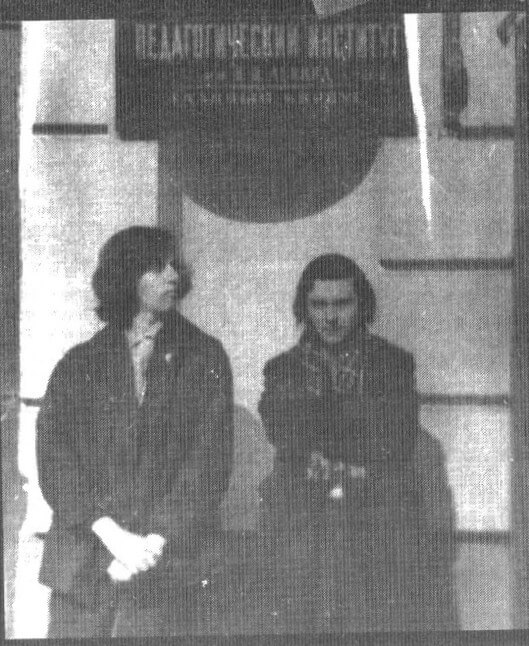
Fact No. 2. Involvement in society. Changes in the social sphere
Chronology of social and behavioral changes of Alexander Dvorkin during the period 1972–1975. Based on biographical and medical sources, it is possible to reconstruct the key stages of Alexander Dvorkin’s social maladjustment after finishing school:
● 1972: enrollment at the Moscow State Pedagogical Institute (MSPI), Faculty of Russian Language and Literature.
● Soon after enrollment, Alexander Dvorkin started frequently attending various informal youth groups associated with the “hippie” subculture.
● 1973. From the second year of studies, a sharp decline in academic engagement was noted: Alexander Dvorkin systematically skipped classes, criticized the educational process as “primitive,” and conflicted with lecturers.
● Social ties with fellow students at the institute were severed: in his own words, “they irritated him.”
● His main social circle formed from individuals who used psychoactive substances together with him (cannabis, stain remover as an inhalant, seduxen, etc.) in order “to disconnect from reality,” “to distract.”
● From 1973 to 1977, he was registered at Moscow Psychoneurological Dispensary No. 3.
● His lifestyle becomes marginal: vagrancy, refusal to work or study, which in Soviet terminology was classified as a “parasitic lifestyle.”
● Alexander Dvorkin’s behavior repeatedly became the focus of attention of law enforcement agencies.
● In 1975, the faculty received a letter from official authorities containing a negative assessment of Alexander Dvorkin.
● Autumn 1975: Alexander Dvorkin was expelled from his third year at MSPI “for beliefs incompatible with those that a future Soviet teacher should have.”
● At the same time, Alexander Dvorkin repeatedly caused scandals in his family environment. Medical records document an episode of hyperemotional breakdown with hysterics, sobbing, and attempted suicide against the backdrop of family conflict — signs of deep emotional instability and inability to constructively cope with stress.
Further on in the study, there are supporting quotes from Alexander Dvorkin’s medical records and autobiographical materials. Some of them will be examined and analyzed in detail in separate sections of the study.
Individual outpatient medical record: Dvorkin, Alexander Leonidovich…
“August 20, 1955, student at the Lenin Moscow State Pedagogical Institute.
Mother: Bronislava Bukchina.
Father does not live with the family… Complaints: since spring 1973, he became apathetic, lethargic, and lost friends. His relationship with parents changed. He developed a feeling of ‘hatred’ towards them. On September 11, 1973 he left home. There were conflicts at home over his long hair. He had a beard, and after shaving, he experienced a sensation of bleeding. In the summer, he felt anguish and attempted suicide (cut his veins on his forearm). He lost interest in studying.
Medical history unknown.
Status: untidy appearance, long hair down to his shoulders.”
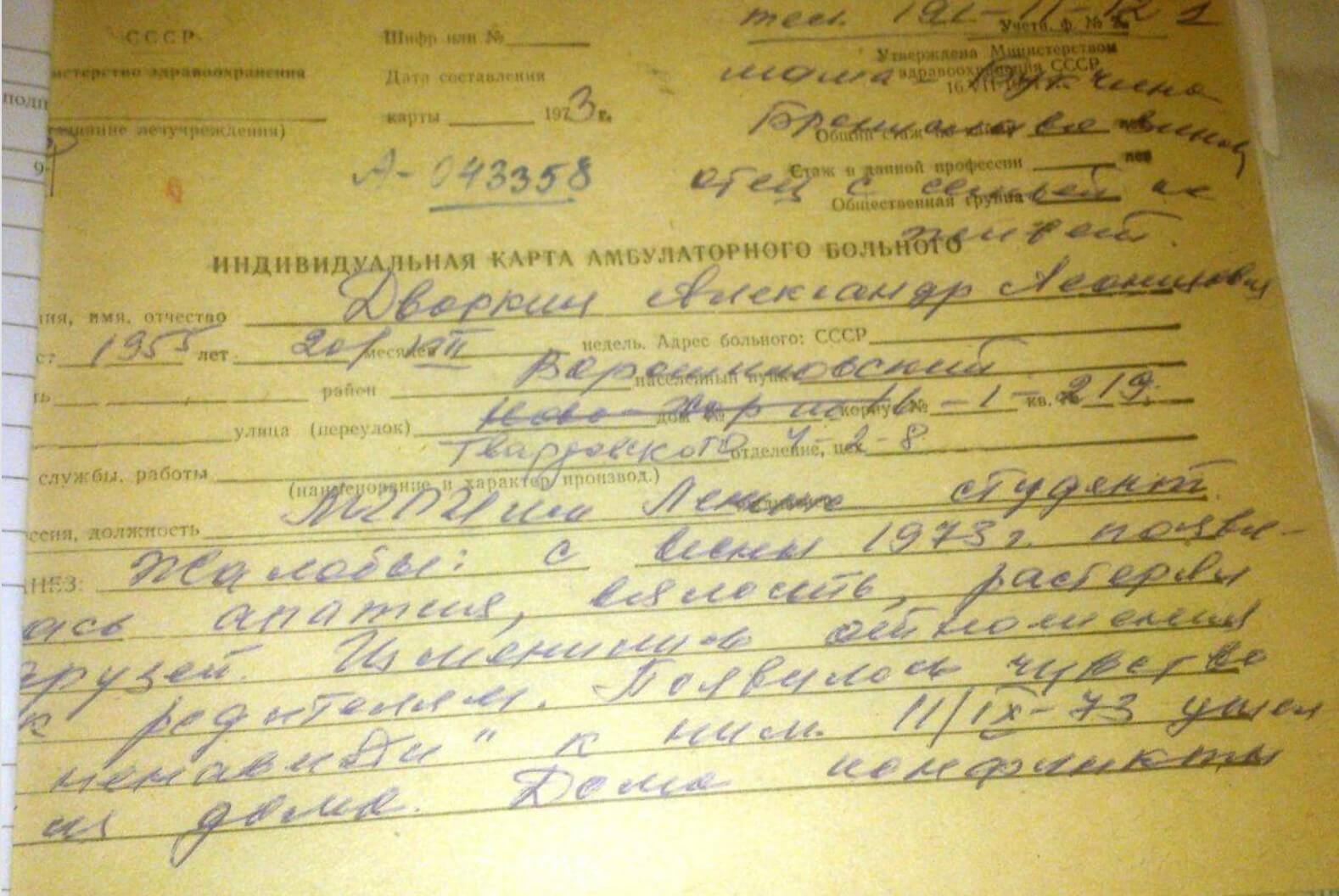
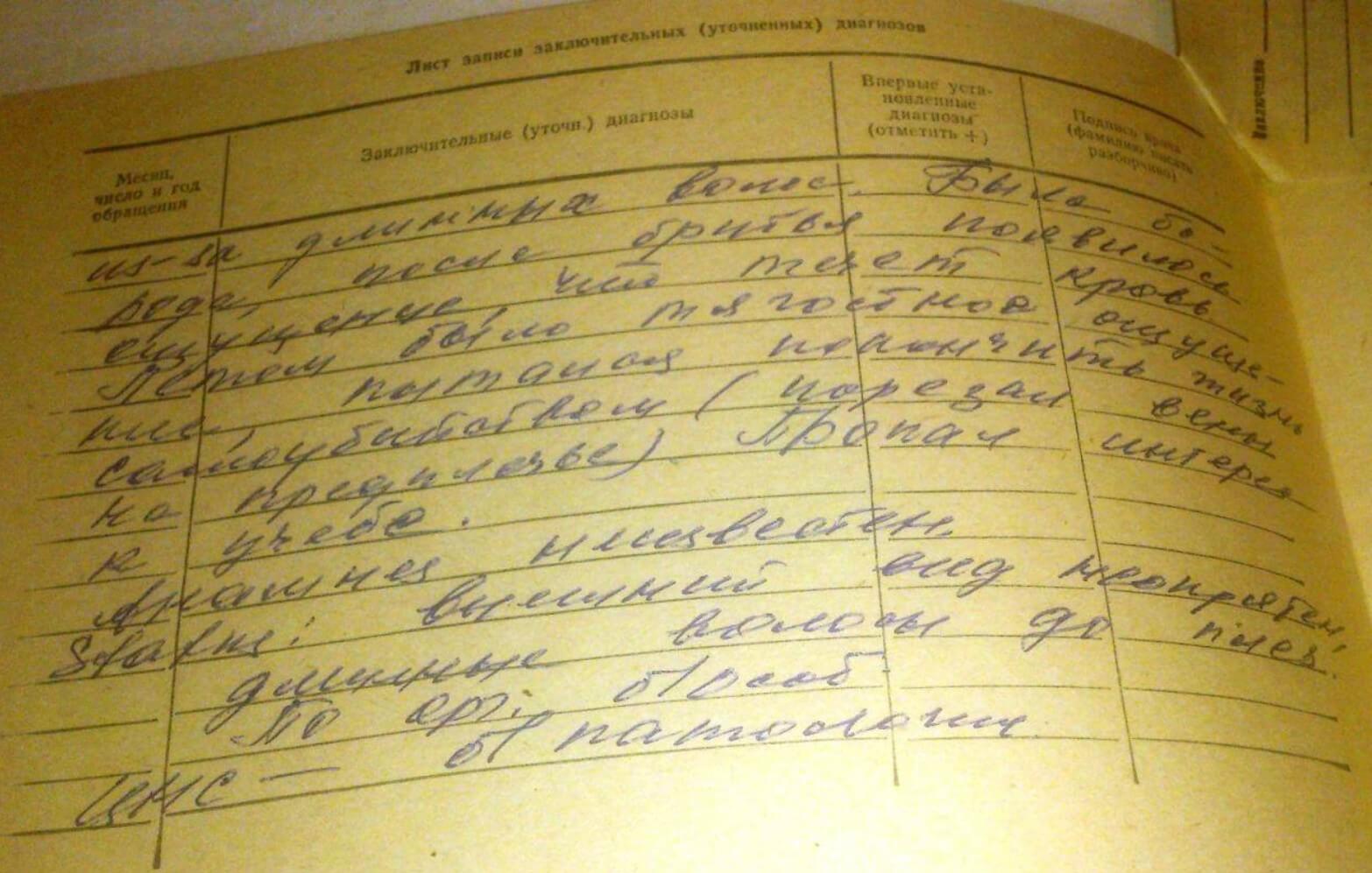
Source: https://actfiles.org/alexander-dvorkins-medical-files-full-archive/
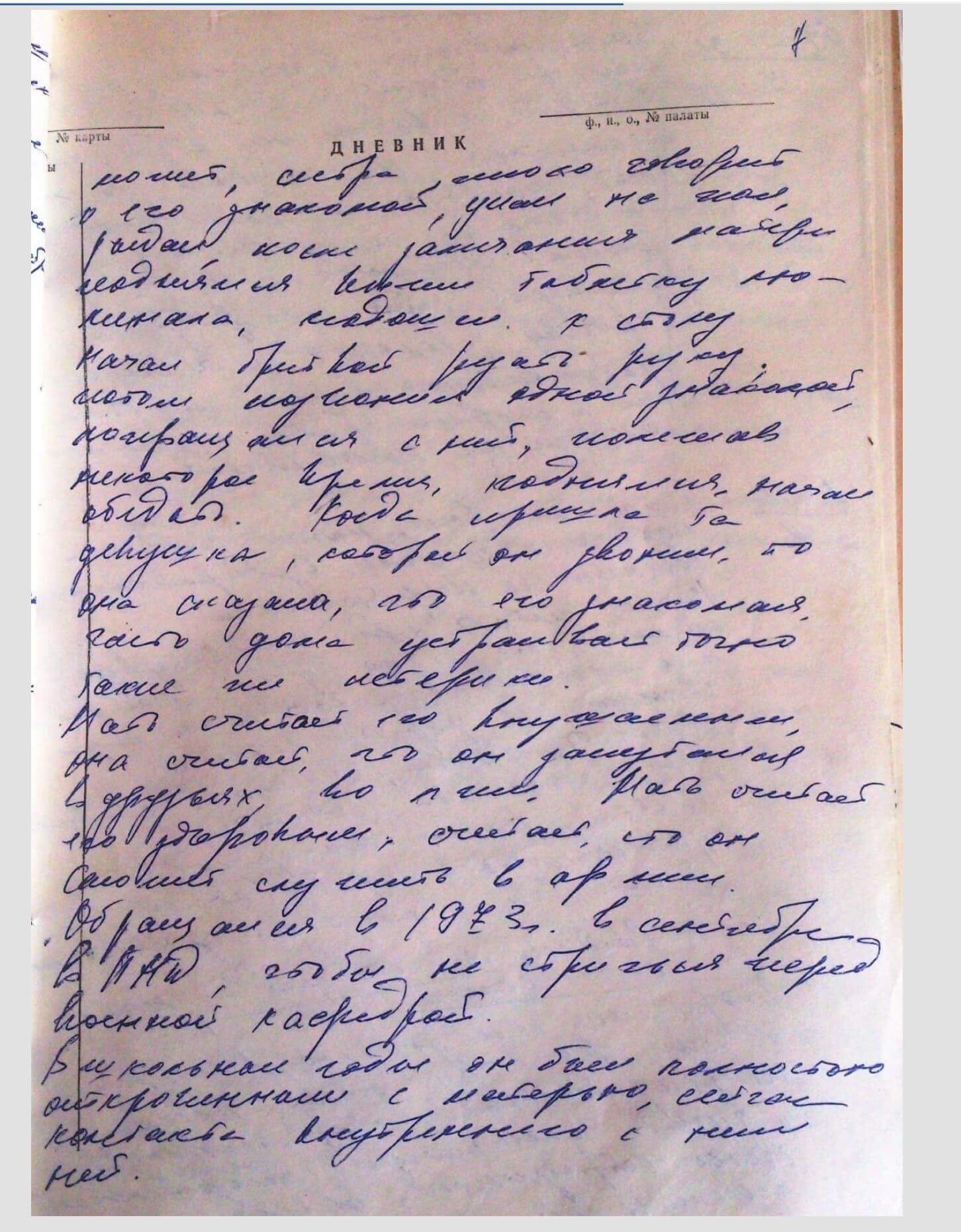
Medical details based on the account of Alexander Dvorkin’s mother: “In seventh grade, the mother transferred him to another school where he found contact with peers, but he still didn’t have close friends there. He was friends with boys involved in an archeology club. Teachers complained about his lack of focus and poor organization.
After completing the tenth grade, he immediately enrolled in the pedagogical institute. From that time on, his mother began to notice that he now had new friends, “hippies with long hair,” who were loose and unrestrained, and one of whom was being treated in a PH (psychiatric hospital). It is believed that the patient succumbed to unhealthy influences. He became deceitful with his mother, very lazy, and sometimes spent 10-11 hours doing nothing. He listened to pop music all day long. He began to grow his hair long, explaining that it was more flattering to him. In the summer of 1973, he voluntarily went to work at Mosfilm to earn some extra money.
Starting in the autumn of 1973, he began hanging out with various groups of people, sometimes coming home drunk. Once he told his mother that he had taken several seduxen pills to achieve a ‘pleasant blackout.’ During the winter session, after the first exam, he was very upset. One day, he started shouting, saying that he couldn’t take it anymore, and that his sister was saying bad things about his girlfriend. He fell to the floor and cried. After his mother’s remark, he got up, took a pill of luminal, and went to the table. He began to cut his arm with a razor, then called one of his female friends, said goodbye to her, lay down for a while, got up, and began to eat lunch. When the girl he called arrived, she said that his girlfriend often had the same hysterics at home. His mother considers him malleable; she believes he became confused by his friends and lies. At that, his mother considers him healthy and believes he can serve in the army.
In September 1973, he went to a psychoneurological clinic so that he wouldn’t have to get a haircut before joining the military program at the institute.
During his school years, he was totally open with his mother, but now he doesn’t really connect with her on a personal level.”
Alexander Dvorkin’s behavior repeatedly attracted the attention of law enforcement and educators:
“The hippie lifestyle seemed to him to be the most radical embodiment of this idea. It’s understandable why the authorities began to take a growing interest in Dvorkin, and while ordinary ‘longhairs’ were dispersed by citizen patrols, Alexander and his few like-minded friends were given special attention by KGB agents.
‘We would be walking around downtown, and suddenly the police would appear: “Come with us!”’ Dvorkin recalls. Security agencies themselves never made an appearance during the arrests. But after filling out the paperwork at the police station, the most prominent members of the group were taken one by one to a room where ‘men in plain clothes’ were waiting. Apparently, after the arrests, they were notified by phone: ‘The birds are in the cage, you can come.’ These people scolded the arrestees for their wrong way of thinking, tried to force them to reveal ‘addresses, passwords, and meeting places’ from them, and constantly offered to cooperate with the authorities. Everyone, of course, refused. After that, they kept us at the police station for a while longer to scare us, sometimes even beating us, and then let us go home.” 3

“An article appeared in the institute’s newspaper about the immoral behavior of a student named Dvorkin who had been summoned for questioning on numerous occasions, but had no intention of reforming himself. ‘What he is thinking is unknown,’ the article concluded. ‘If only they knew what I was really thinking,’ I said with a sly smile, showing the newspaper to my friends.”

“I wasn’t involved in anti-Soviet propaganda, but my open disregard for the established way of life could not fail to be noticed. This was also an ideological position. Of course, my studies at the institute were going from bad to worse. No one was going to tolerate my demonstratively provocative behavior indefinitely, especially since I had no intention of changing my ways.”
“A new round of persecution began: letters flying in from various authorities to the places of work and study of the ‘hippies,’ claiming that those people were ‘disgracing our order.’ Such a letter also arrived at the faculty where Alexander was studying. Thus, ‘for beliefs incompatible with those that a future Soviet teacher should have,’ he was expelled from the institute in the fall of 1975, in his third year of studies.”
Correlation with the socio-environmental factor — “insertion in society” subfactor — in the SIR model:
SF2: Insertion in society. During adolescence, and, later, as an adult, a serial murderer has, in principle, a low level of inclusion in society; in fact, very often, he does not have a rewarding job and has few friends, and is a person with few cultural interests.
The behavioral trajectory of Alexander Dvorkin in 1972–1975, marked by a sharp transformation of personality and social functioning, corresponds to a structure of post-offense adaptation typical of serial violent offenders after committing a first murder. Given the hypothesis that an extreme violent act was committed by the subject of this study at the age of 15 (in ninth grade), the subsequent changes, including avoidance of institutional control (systematic evasion of social oversight), involvement in deviant subcultures, use of psychoactive substances, and social isolation, point to a deliberate strategy of psychological stabilization and concealment.
Such behavior functioned as a compensatory mechanism. A fringe lifestyle and affiliation with a deviant group created an illusion of autonomy and control amid a sense of inferiority. At the same time, growing isolation from mainstream society contributed to intensification of an internal fantasy world, in which violence and domination became the only available means of asserting his “I.”
As a result, Dvorkin developed a stable behavioral trajectory that included patterns of antisocial behavior, social disintegration, cognitive distortions linked to the rationalization of aggression and a deficit of empathy, as well as pronounced difficulties with emotional regulation. Taken together, these characteristics correspond to a behavioral profile typical of individuals who committed serial violent crimes with an early onset of criminal activity. The observed chronic social disintegration serves simultaneously as a masking factor and as a condition facilitating the preservation and development of a criminal career.
Fact No. 3. Communication between the individual and society. Protest behavior. Antisocial attribution
Analysis of Alexander Dvorkin’s autobiographical materials reveals a stable pattern of antisocial attribution and demonstration of marginality as a form of power. Particularly revealing is Dvorkin’s description of his internal worldview, formed during his “hippie youth”:
“Let’s return to my hippie youth. Yes, I still picked out passages from the Bible, inaccessible to me, in any literature, and I still loved to visit churches if I came across them on my way, where I surprised old women with my knowledge of the scenes depicted in the icons. However, all of this was nothing more than a hobby, far removed from my life, its events, and my actions, which were often despicable and nasty. In response to the pleas of my mother, grandfather, and grandmother who pointed this out to me, I would logically remark, ‘What’s the problem? God doesn’t exist, therefore everything is permitted. Where did you get the idea that this or that is forbidden?’ Perhaps, the only thing I admitted, to my current surprise, was that betrayal was forbidden. Although, of course, this was illogical on my part. Why is it forbidden if there’s no God? After all, when everyone dies, there will be nothing at all. And in the post-mortem non-existence, what is the difference between a traitor and a hero? Although, at the time, I failed to see this illogicality. Moreover, I understood betrayal only as something political, shall we say. For example, not betraying friends to the police. Betrayal in personal relationships, which I committed left and right at the time, seemed completely natural to me. But everything else, apart from this very specific understanding of betrayal (well, and causing physical harm to another person — I called myself a pacifist, after all), I considered it completely normal and acceptable.
“My atheist relatives couldn’t convince me why I shouldn’t do certain things. My answers baffled them. Immoral, unethical? Then where do morality and ethics come from, and what are they anyway? If a completely different model of behavior is natural for me, what makes it more immoral than the model they prefer? At the same time, I didn’t even think about the fact that my ‘model of behavior,’ i.e. my way of life, caused great suffering to my family and loved ones. On the contrary, I resented them and got into arguments with them, accusing them of interfering in my life because they wouldn’t let me do everything I wanted. At the same time, I wasn’t ashamed to take money from them and considered it normal.
“I persisted in this harsh and shameful blindness more and more, sinking deeper and deeper into it. I blamed my inexorable inner dissatisfaction with myself, which I couldn’t help but feel, on my outside environment, on the disgusting Soviet system, and on all of Soviet society.” 1


Such a narrative demonstrates a cognitive structure typical of serial violent offenders: a complete rejection of objective morality, relativization of ethics (an assertion that norms such as good and evil do not exist, leading to the idea that “everything is permitted”), and a complete absence of empathy toward those close to him. At the same time, the subject maintains a selective morality typical of individuals with psychopathic traits. Morality functions not as an inner regulator, but as a tool of social maneuvering and self-perception.
It is noteworthy that this kind of belief system takes shape in the subject immediately after the period which, according to the current hypothesis, coincides with his first murder at the age of 15. This allows it to be interpreted as a psychological mechanism for rationalizing a violent act. The denial of morality and the shifting of blame onto the “Soviet system” and the surrounding “external environment” function as protection against cognitive dissonance. Similar behavior — a denial of morality and laws and a displacement of one’s own guilt onto the external environment — is also characteristic of people who have committed murder, but are forced to continue living within society.
Another autobiographical episode from Alexander Dvorkin reflects the grandiose yet fragmented self-identity characteristic of individuals who engage in criminal activity at an early age:
“I returned to Moscow as an experienced traveler. The Moscow System was beginning to accept me as one of their own. In my worn-out flared trousers and with my hair falling over my shoulders, I looked like a true hippie, which allowed me to enjoy well-deserved attention: enthusiastic from the student youth and sharply hostile from the Soviet mainstream. In the subway car or on a trolleybus, I inevitably became the subject of loud and lively discussion among passengers around me. People yelled at me, threatened me, the police checked my documents, street hooligans kicked me, slapped me in the face, and dragged me by my hair. But thanks to that, I felt like a lone hero, bravely resisting the soulless machine of oppression. Narcissism and pride completely took hold of me. At school, I felt like an ugly duckling. Now I have become… no, not a swan, of course, but probably a peacock. A stupid, vain, self-loving peacock. I delighted in myself and my newfound popularity.” 1
Alexander Dvorkin’s behavior and self-representation demonstrate signs of pathological narcissism with a pronounced disturbance of identity, which is one of the key markers in profiling serial killers, especially those whose criminal careers begin in adolescence. This is not mere “self-love.” It’s a deep deficit in personality structure, compensated for by grandiose fantasies and violent control over reality.
Grandiose narcissists tend to present an inflated view of their abilities and shift blame onto others, even when confronted with criticism. In this context, the attention of others, including negative attention, is interpreted as confirmation of one’s own exceptionalism. It fuels an illusion of control and power that compensates for the absence of real achievements. In the subject’s perception, social marginalization transforms into an image of “heroic resistance,” allowing him to justify inner emptiness and a sense of inferiority.
The following episode further confirms the above, deepening the understanding of motivational dynamics. Dvorkin constantly oscillates between grandiosity and a sense of inner emptiness (a dead end), which makes him especially vulnerable to a transition to violent behavior as a “solution” to internal conflict:
“Anyway, our initial festivity soon turned into a painful routine. Now I understand that, despite our proud sense of being chosen loners, an ‘elite’ who dared to challenge the ‘hegemons’ and start a new life, separate from everyone else, in a kind of ‘internal emigration,’ there was a latent desire to belong to something bigger, united, and right. There is nothing more tiring and disappointing for a person who is not yet completely corrupted and not entirely stupid than the role of a proud loner in the company of equally proud loners. We pretended that everything was the same as before, but we couldn’t help but see that we had wandered into an even worse dead end.” 1
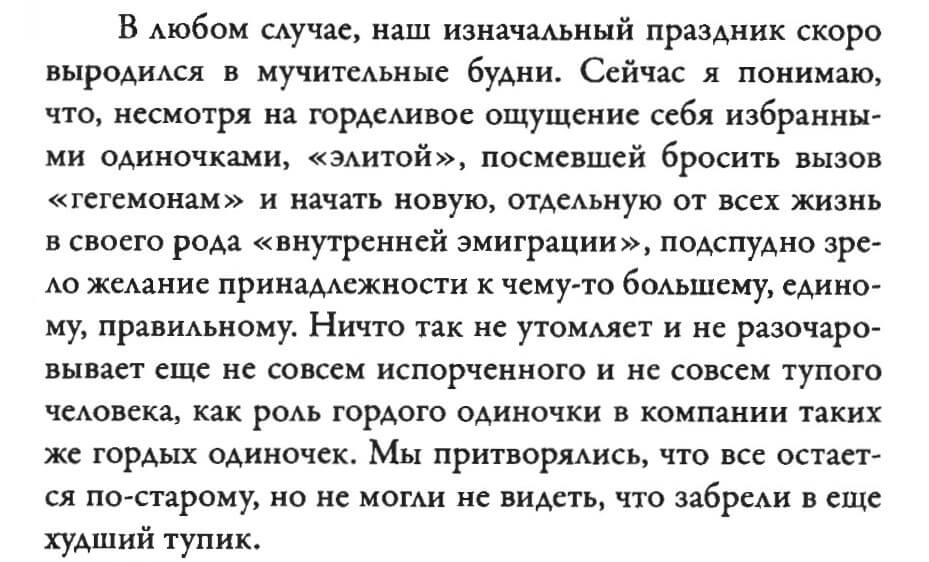
The described episode reveals the internal contradiction of Alexander Dvorkin’s narcissistic identity. Behind the pose of a “chosen loner” and the declared “elitism” lies a deep need for affiliation and legitimation, which points to a fundamental instability of his own self. The ambivalence between striving for absolute autonomy and unconscious longing for a stable identity within “something greater,” combined with the already described conditions of life, is typical of individuals with an early onset of criminal activity, whose identity forms under conditions of chronic disintegration. The inability to satisfy this need through legitimate means intensifies frustration and cognitive dissonance, which in turn feed a fantasy narrative of personal omnipotence and justify the transition from symbolic “resistance” to real violence as the only available form of asserting one’s own self.
Correlation with the relational factor — subfactor 4: Communication of the individual-society in the SIR model:
SF4: Communication of the individual-society. Some serial killers manage to camouflage themselves behind a mask of normality by opening very superficial relationships with other social subjects, but, in fact, continue to treat people as mere “objects” and do not believe that it is possible to establish a positive relationship.
This type of behavior is characteristic of individuals in whom pathological fantasies develop and empathy is absent. Based on biographical data, it can be assumed that Alexander Dvorkin’s behavior at this stage of his life corresponds to a pattern of early social disintegration typical of individuals predisposed to serial violent criminality. His antisocial attribution, manifested in the rejection of authority, contempt for social norms, and shifting responsibility onto a “hostile system,” wasn’t merely a form of protest behavior. Such behavior is interpreted as a defensive reaction aimed at shifting blame and justifying one’s own actions through a system that the individual now perceives as hostile.
The subject of this study establishes superficial, utilitarian relationships with those around them, perceiving them either as an audience (students, passengers), a source of money (relatives who provide money), or enemies (the “Soviet mainstream”). Genuine empathy, the capacity for reciprocity, and recognition of others as subjects are absent. His antisocial attribution, narcissistic identity, selective morality, and use of the social environment as a stage for self-assertion, all point to signs of formation of a stable serial killer profile with an early onset of violent activity.
The key mechanism is the shifting of responsibility onto the external social system, which allows the subject to maintain cognitive coherence and a positive self-image against the background of systematic violations of basic social and moral norms. In this context, his narrative of “heroic resistance” performs primarily a psychological rather than a political function. It gives meaning to violence and transforms the subject from a social failure into a mythological figure — an archetypal image of a “lone fighter” whose power manifests in the ability to evoke fear, disgust, and admiration simultaneously. Thus, the described period of Alexander Dvorkin’s life may be interpreted not as a stage of “searching for himself,” but as a process of consolidating a criminal identity which, according to existing models of behavioral criminology, creates psychological prerequisites for subsequent serial acts of violence.
Fact No. 4. Psychological and psychopathological characteristics. Alexander Dvorkin’s diagnosis: cyclothymia, pathological personality development, psychophysical infantilism
According to archival records from the Moscow Psychoneurological Dispensary (1973–1977), Alexander Dvorkin was registered with a clinical diagnosis of cyclothymia (under the modern International Classification of Diseases, 11th Revision (ICD-11) — cyclothymic disorder (code: 6A62)), as well as conclusions of “pathological personality development” and “psychophysical infantilism” — terms used in Soviet psychiatric practice to denote persistent impairments of emotional regulation, social adaptation, and psychosocial maturity. In contemporary terminology, these characteristics may interpreted as manifestations of a personality disorder with elements of emotional immaturity and affective instability.
Dvorkin’s initial visits to a psychiatrist were prompted by the following symptoms: persistent anxiety and apathy, affective outbursts (including hatred toward close relatives), hysterical reactions, obsessive states, a demonstrative suicide attempt, somatic complaints (“something tightens in his chest”), perceptual disturbances (he “hears the same melody in his head and feels someone’s presence behind his back”), and an ambivalent attitude toward social contacts — disgust toward peers combined with suffering from loneliness. Clinicians noted distortions in a number of mental processes and operations. Subsequently, Alexander Dvorkin was hospitalized at Psychiatric Hospital No. 14 where he underwent inpatient treatment for one month. Psychiatric observation ended due to his departure from the USSR and subsequent immigration to the United States.
In Russian and international psychiatric practice, a complete cure for these disorders is impossible; only temporary remission is achievable. With bipolar-spectrum disorders (which include cyclothymic disorder), a patient should remain under psychiatric supervision, attend regular appointments, and receive the necessary maintenance treatment. Cyclothymic disorder and personality disorder significantly reduce the capacity for reflection and for an adequate assessment of the consequences of one’s actions. Such conditions render a patient unfit for any kind of scholarly, public, or political activities because of extreme subjectivity of perception, the inability to adequately assess the consequences of one’s own actions, and the inability to bear responsibility for them.
Excerpts from Alexander Dvorkin’s interview (1979) 4:
Q. Did you yourself have any experiences with mental hospitals?
A. Yes.
Q. On what grounds were you put into one of these?
A. First I went there myself because I didn’t want to go into the army, and I knew that… I was still at the university then, but I knew that my university career soon will be over, and I went there to save myself from the army. And after, twice I was taken there with the police.
Q. By the police?
A. With the police, with a police escort and then by the police. Well, actually they just called it an emergency, they even had an ambulance.
Q. What provoked them to do this, or what was the reason for their doing that?
A. First time I was just taken to the police because I didn’t work, and they wanted to know why. Then they started to beat me, and I had a razorblade, so I cut my wrist, and they took me to the emergency room inside the mental hospital they got there as if I was committing suicide. So [laughs] that was enough reason.
Q. Yes. Sounds like a pretty horrible situation. When you… Yes, go ahead.
A. And the second time I was just taken there. I had to visit my dispenser… a few times per year, and once I was taken there from there, they just didn’t let me out.
Q. How did you finally get out?
A. As everyone else, for the Israeli reason.
Q. With what?
A. Israeli reason.
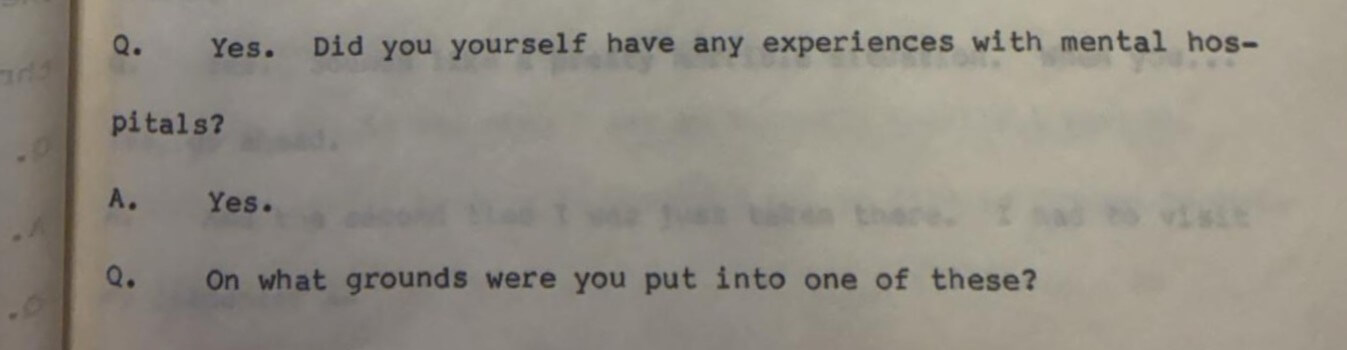
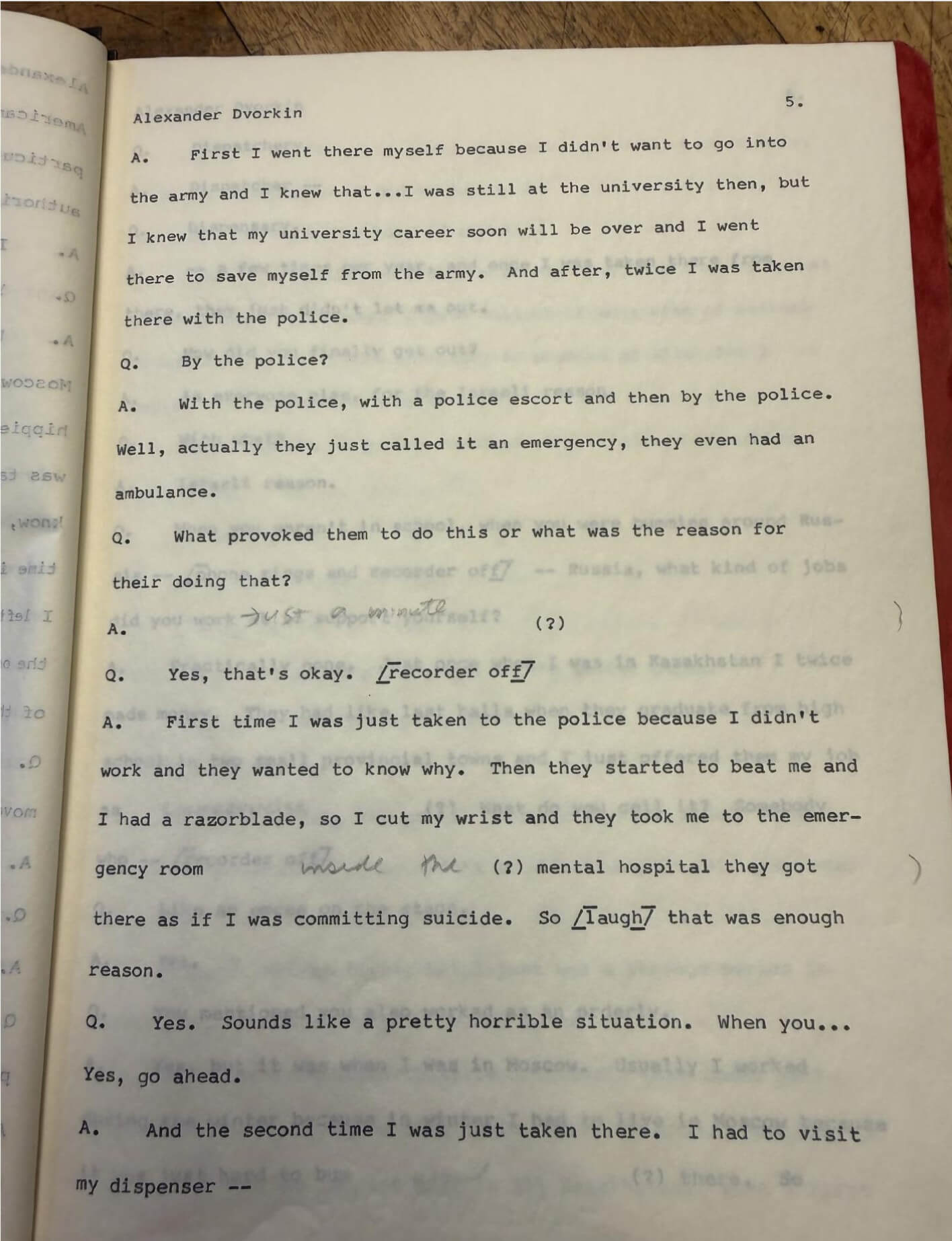
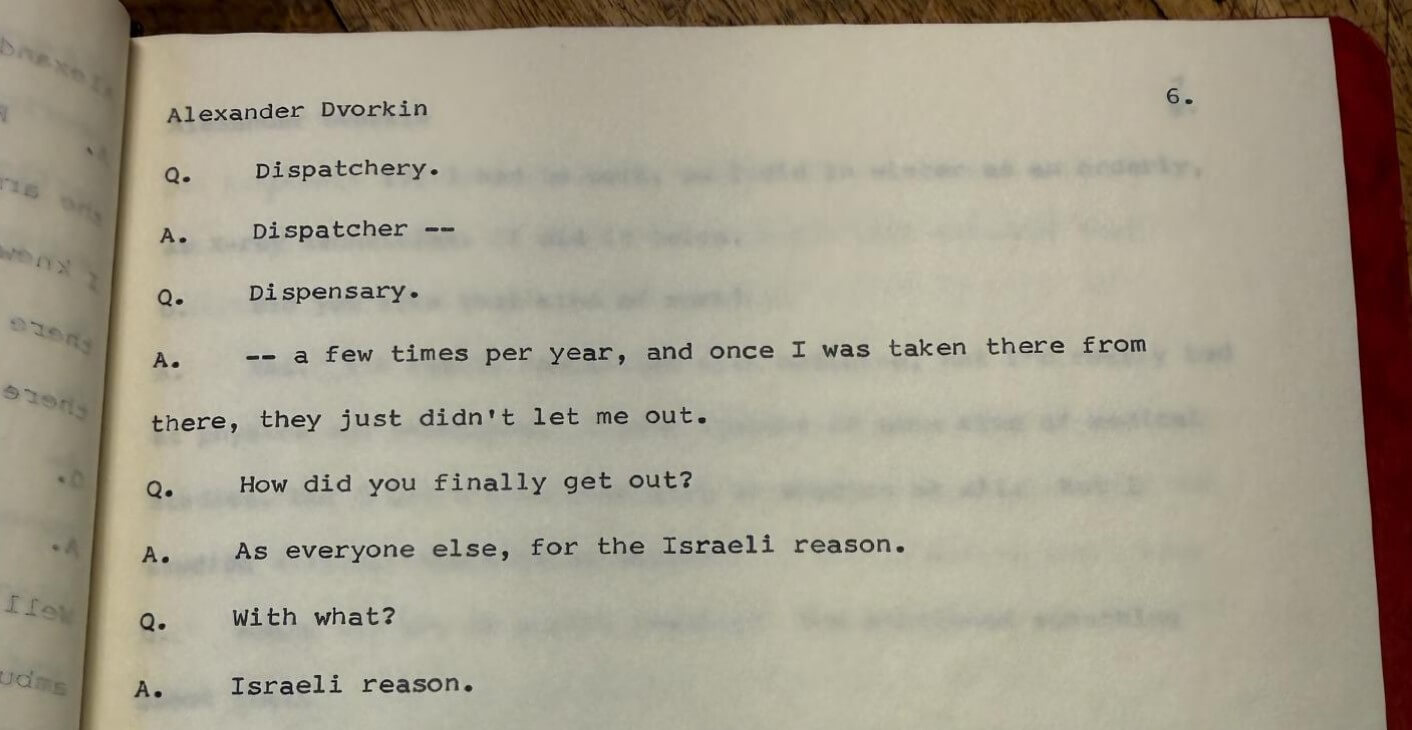
Information about Alexander Dvorkin from medical archives
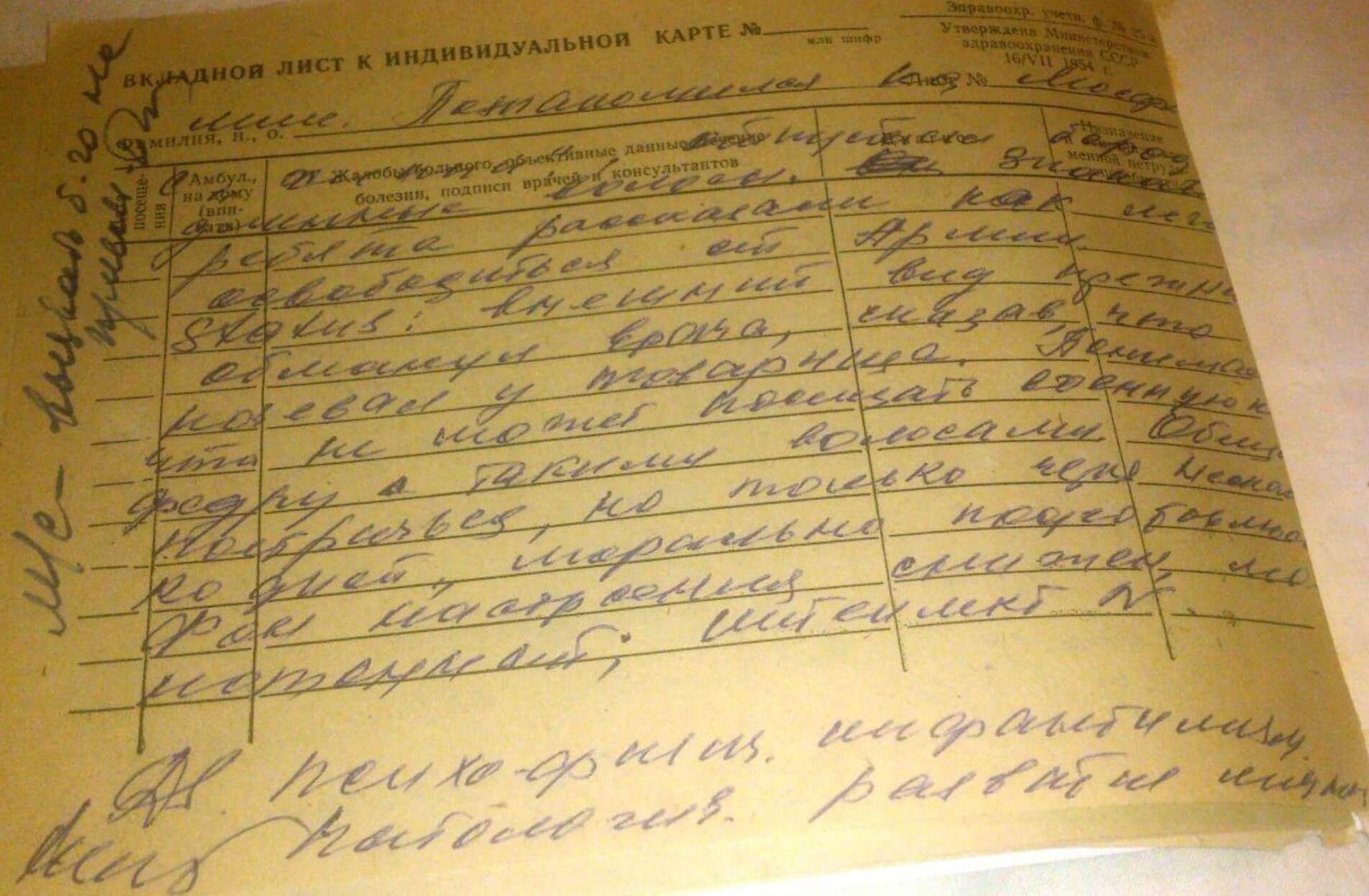
“While with the hippies, he grew a beard and long hair. Friends told him how easy it was to avoid military service.
Status: appearance unchanged; deceived the doctor by saying he spent the night at a friend’s place. He understands that he cannot attend the military department with hair like this. Promised to get a haircut, but only after several days, once morally prepared. Mood background reduced, monotonous; intellect N (normal).
Diagnosis: Psychophysical infantilism. Pathological personality development.”
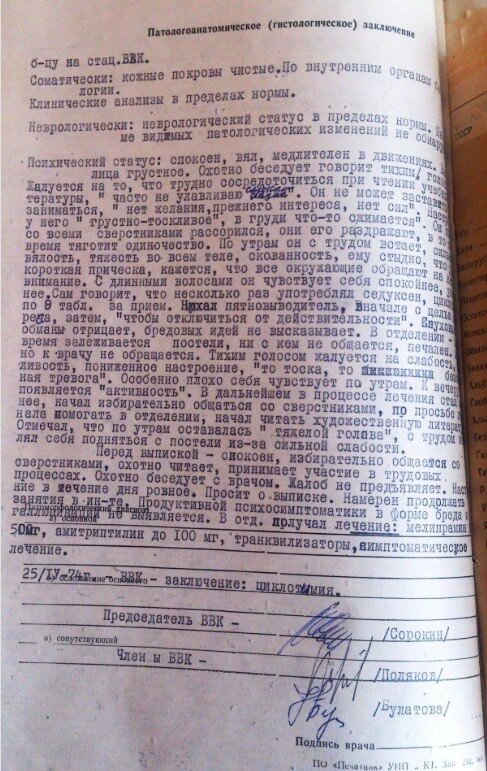
“Pathoanatomical (histological) report.
Somatic condition: no abnormalities in the skin. No abnormalities detected in internal organs.
Clinical tests: within normal limits.
Nervous system: no abnormality detected in neurological status… no visible pathological changes detected.
Mental status: calm, sluggish, slow in movements. Facial expressions are sad. He willingly engages in conversation, speaking in a quiet voice. He complains that it is difficult to concentrate when reading academic literature, ‘I often can’t grasp the meaning.’ He cannot force himself to study; ‘there is no desire, no former interest, no strength.’ His mood is ‘sad and melancholic,’ ‘something tightens in the chest.’ He has quarreled with almost all his peers; they irritate him, yet he is oppressed by loneliness at the same time. In the mornings, he has difficulty getting up; marked lethargy, heaviness throughout the body, stiffness. He feels ashamed of having a short haircut, thinks everyone around him is paying attention to him. With long hair he feels calmer and more confident. He himself says that several times he took Seduxen and Cyclodol, 8 tablets at a time. He inhaled stain remover — at first for the purpose of ‘distraction, out of curiosity,’ and later ‘to disconnect from reality.’ He denies auditory hallucinations and does not express delusional ideas.
In the ward, he’s lying in bed all the time, does not communicate with anyone; he is sad, but doesn’t approach the doctor. In a quiet voice he complains of weakness, drowsiness, low mood, ‘sometimes melancholy, sometimes groundless anxiety.’ He feels especially bad in the mornings. By evening, he becomes ‘active.’ Later, during treatment, he became more active, began selectively communicating with peers, at the staff’s request began helping in the ward, and started reading fiction. He noted that in the mornings a ‘heavy head’ remained; he had difficulty forcing himself to get out of bed because of severe weakness.
Before discharge he was calm, selectively communicated with peers, enjoyed reading, and participated in labour activities. He willingly conversed with the doctor, made no complaints. His mood was stable throughout the day. He requested to be discharged. He intended to continue his studies at the institute. No productive psychosymptomatics in the form of delusions or hallucinations were identified. In the ward, he received treatment with melipramine 500 g, amitriptyline up to 100 mg, tranquilizers, and symptomatic treatment.
25 April 1974 — Military Medical Board conclusion: Cyclothymia.
MMB Chair — Sorokin
MMB Members — Polyakov, Bulatova”
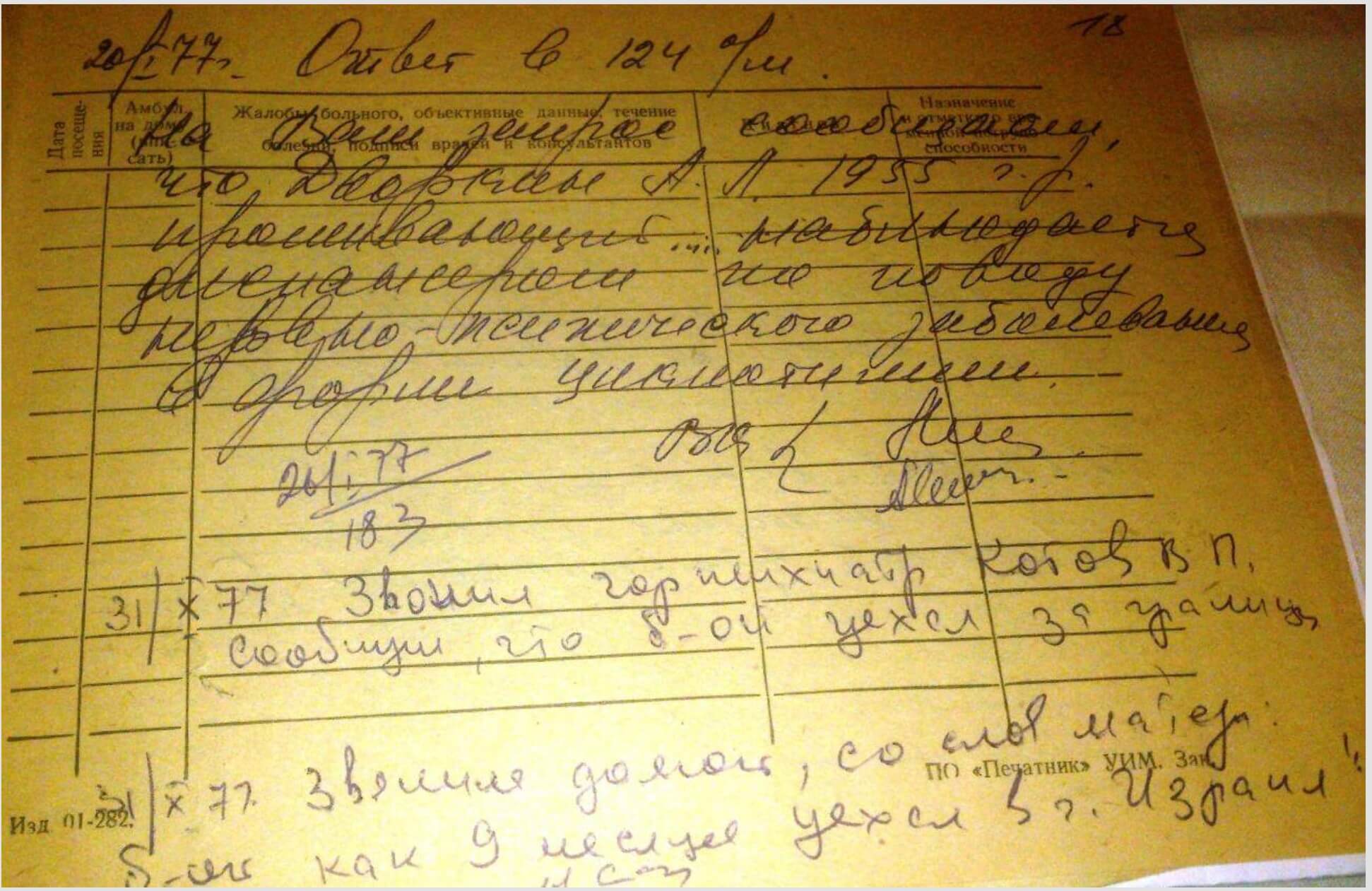
“January 20, 1977. In response to your inquiry, we inform you that A. L. Dvorkin, born in 1955, residing at… has been under observation at the dispensary for a neuropsychiatric disorder in the form of cyclothymia.
31 October 1977. The city psychiatrist, V. P. Kotov, called. He reported that the patient had left the country.
31 October 1977. Called the patient’s home; according to his mother, the patient left for Israel 9 months ago.”
Source: https://actfiles.org/alexander-dvorkins-medical-files-full-archive/
Alexander Dvorkin’s diagnosis — cyclothymia combined with pathological personality development — constitutes a key individual factor that determined an increased vulnerability of his psyche to the formation of a pathological identity. This includes not only different “selves” within one person, pronounced emotional fluctuations, and distrust of others, but also an obsessive desire to act in opposition to everyone (negativism). Cyclothymic disorder, characterized by oscillations between hypomanic states (e.g., irritability, expansiveness, inflated self-esteem) and depressive phases (e.g., apathy, a sense of decline, reduced interest in activities, fatigue), creates conditions favorable for manifestation or intensification of traits of pathological narcissism.
The presence of these disorders, documented in adolescence, can be regarded as a significant risk factor that contributed to the formation of an aggressive identity prone to compensatory fantasies and difficulty establishing empathic connections. Under conditions of extreme stress or experiencing violence, such mental instability likely intensified, manifesting in a progressive disorganization of personality functioning.
Along with previously described traits, including narcissistic features, identity instability, a tendency toward hostile attribution, and dependence on compensatory fantasies, the above data point to correspondence with the behavioral profile described in studies of serial violent offenders with early onset of criminal activity, whose subsequent criminal trajectory developed against a background of chronic emotional and behavioral instability.
Correlation with the individual factor, subfactor “Psychological and psychopathological traits,” in the SIR model:
SF1: Psychological and psychopathological traits. A serial killer has peculiar psychological characteristics that, in many cases, are related to psychopathological traits and can take different forms (mental illness, neurological deficits) and orientate his behavior. In some subjects, a “predisposition to evil” seems to exist with very early criminal behavior, even in families where there is no presence of trauma.
Correlation with the relational factor, subfactor “Communication with himself,” in the SIR model:
SF1: Communication with himself. Serial murderers have difficulty establishing and maintaining genuinely empathic relationships with others and prefer to live in a dimension of loneliness, accompanied only by their imaginations. The quality of these fantasies and the internal dialogue that every serial killer has with himself, are of fundamental importance and influence his future action.
Narcissistic traits. Fixation on long hair
Of particular note is an episode from Alexander Dvorkin’s autobiography associated with his fixation on his long hair — an element of his appearance that he endowed with deep symbolic meaning and was very proud of. According to medical records, he developed a persistent fear that the “police would arrest him for long hair, where they would cut it off.”
Quote from medical records: “He began growing long hair; at first he liked it, then he felt that he ‘felt more confident,’ liked being the center of attention among peers. In the spring of 1973, a fear appeared that the police would arrest him for long hair, where they would cut it off.”

In one episode, Dvorkin recounts how he ultimately had to cut his hair after visiting the “military department,” when he was still enrolled at a pedagogical institute in Moscow:
“My father, contrary to the lieutenant colonel’s confidence, was not a ‘commander in chief,’ so I had to get a haircut. As my locks fell to the floor under the barber’s hand, I felt strength draining out of me. I left the barbershop demoted from general to private. Now I again merged with the crowd and stood out in no way. No one stared at me anymore or turned to look. Even acquaintances on the Street stopped recognizing me. I took out my photograph with hair lying on my shoulders, showed it to everyone, and said it was a forced measure. Acquaintances politely sympathized and moved on. It was me who cast myself out of the hippie brotherhood!
I fussed, made excuses, and in completely insane vanity went so far as to pin to my chest a homemade badge with my own hairy, bearded image, so that everyone could see what I had been like. However, this didn’t help. Without having truly become a hippie, I lost this title that was so high for me. Something had to be decided.” 1
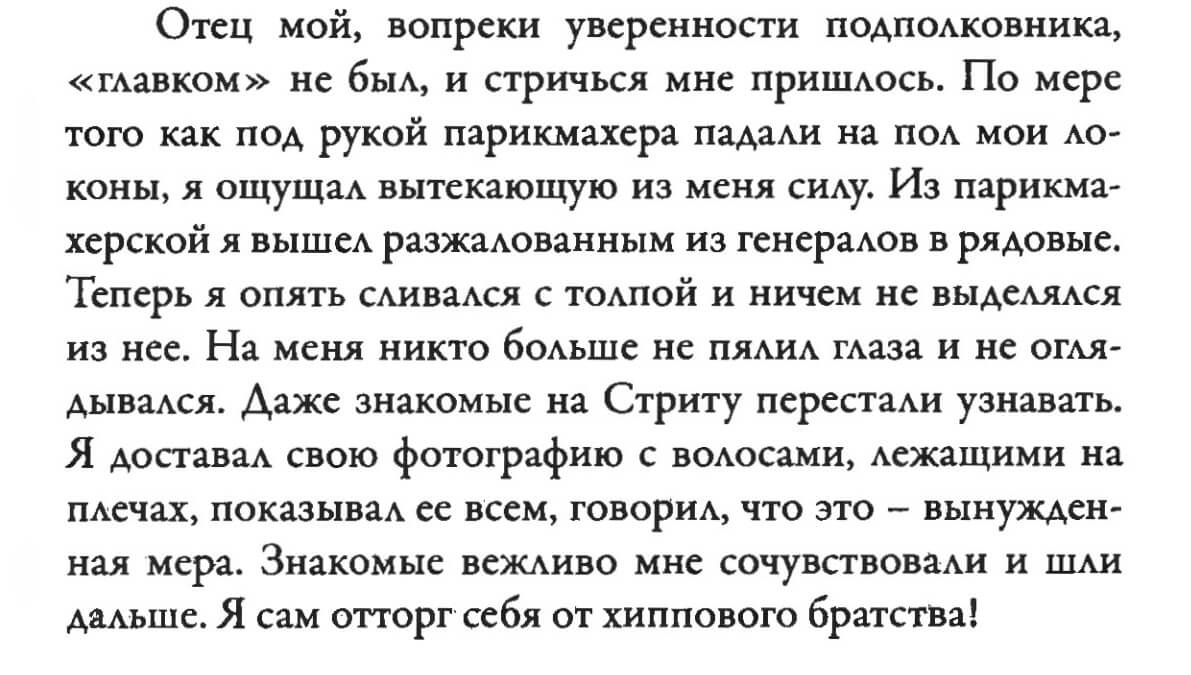

Dvorkin describes the cutting of his hair as a traumatic loss: “As my locks fell to the floor under the barber’s hand, I felt strength draining out of me… I left the barbershop demoted from general to private.” This metaphor of “strength” draining out, “rank,” and “recognizability” points not simply to egocentrism or ostentation, but to the narrative construction of himself as an exceptional figure whose external form serves as a visible sign of inner power.
For Alexander Dvorkin, long hair (and later a grown beard) apparently carried meaning not only as an external symbol of belonging to the “elite” of the hippie subculture or as a means of attracting social attention, but also functioned as a bearer of deep symbolic significance. At the same time, in his inner world this symbol likely touched on an even deeper image in his subconscious. It was familiar to him from childhood — the image of Jesus Christ with whom Dvorkin, as he grew older, evidently began to identify himself.
Given Alexander Dvorkin’s narcissistic traits, his tendency toward grandiose fantasies, and the peculiarities of his thinking, this image most likely functioned in his cognitive-affective system not as a symbol of compassion or sacrifice, but as an archetype of absolute power. For Dvorkin, taking into account his atheistic worldview, mental illnesses, narcissistic traits, and striving for absolute power, identification with a divine image likely transformed into a conviction of his own exclusivity and a personal usurpation of the right to dispose of the lives and deaths of others, that is, into an internal belief in a right to violence. Thus, outward appearance became for Dvorkin a sacral attribute of “divine chosenness,” a marker of transcendental significance, unaccountability, and secret power.
The loss of this symbol was perceived by Dvorkin as an act of desacralization, humiliation, and an existential crisis accompanied by a sense of losing uniqueness and “godlikeness”: “Now I again merged with the crowd and stood out in no way.” The attempt to compensate for this loss by creating a homemade badge with his own image can be interpreted as an acute anxiety-driven reaction to a perceived threat to his identity, aimed at preserving a connection with the idealized self.
Such dynamics correspond to the behavioral pattern described in studies of narcissistic personality 5: fixation on external symbols of exclusivity, extreme vulnerability of self-esteem, and an identity crisis when those symbols are lost. These traits are often observed in individuals prone to extreme forms of compensating for their inner emptiness and sense of inferiority, including violent behavior aimed at restoring a sense of control and uniqueness.
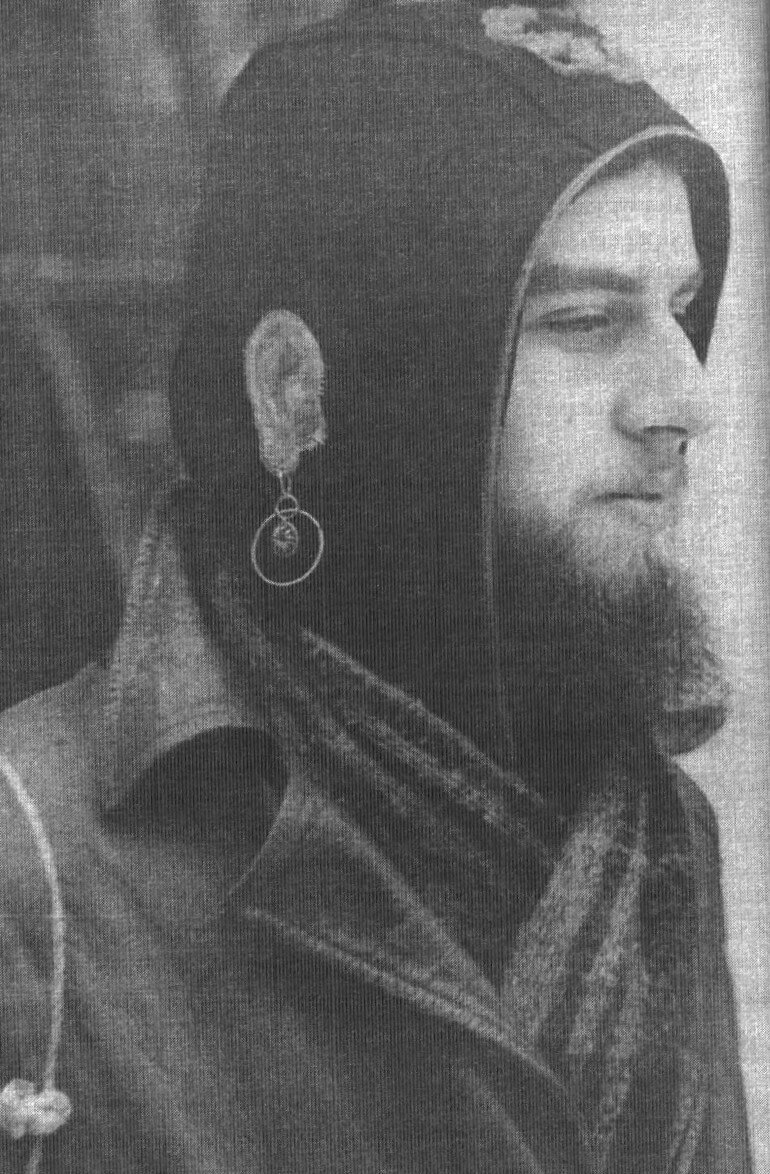
Comparison with Jesus Christ. Additional confirmation of Alexander Dvorkin’s tendency to identify himself with a divine archetype is provided by an episode he describes in his autobiographical novel “My America.” After Dvorkin was expelled from a pedagogical institute for failing to meet the “moral standards of a teacher,” he temporarily took a job as an X-ray technician (radiology lab assistant) in the intensive care unit of a cardiology institute. Dvorkin didn’t work there long.
At the beginning of summer, he happened to run into the director of the cardiology institute, Academician Petrovsky, in a corridor. Petrovsky made a brief ironic remark about Dvorkin’s unkempt appearance and long hair: “Hey, you, Jesus Christ, march to the barbershop immediately!” Dvorkin not only remembered this incident, but also incorporated it into his autobiographical narrative, presenting himself to readers in a favorable light — as someone morally superior to the local authority figure. In the context of the previously described motif of “godlikeness,” this allusion takes on particular significance: what is at issue here is not Alexander Dvorkin’s religious identity (at that time he identified himself as a fervent atheist), but the projection of divine status onto his own self.
“…One time, it was already early summer, he happened to run into me in the corridor. I had finished my shift and was walking down the hallway, with my medical headcap pulled off. My long hair hung down in artistic disarray. Seeing me, the academician flushed crimson and asked his entourage where someone like me had come from. They reported. Then the luminary of science addressed me directly, saying literally the following: ‘Hey, you, Jesus Christ, march to the barbershop immediately!’ I calmly replied that we were not buddies and that he had no right to address me casually. The academician blushed even more and said I was young enough to be his grandson, so he could address me however he wanted. I quietly objected that I wasn’t his grandson, that adults and responsible people address each other formally, and since, I hope, we are both adults, I have the right to expect him to address me formally. The minister barked, ‘Get out!’ and left with his entourage. I immediately went to the personnel department and wrote a letter of resignation for personal reasons.” 1


Taken together, the presented data may be regarded as an early indicator of the formation of a criminal identity whose central motive is the striving for absolute power, projected through “divine rivalry” (the archetype of divinity). Public comparison with Jesus Christ, humiliation that followed it, and the threat of losing a symbolic attribute (long hair) likely intensified in Alexander Dvorkin not only a sense of his own chosenness, but also resentment toward a social environment perceived by him as hostile and denying his exclusivity.
Such dynamics correspond to the behavioral pattern described in studies of serial killers whose violence often serves as an attempt to imitate or appropriate a divine function (functions of transcendental power) and to erase or redefine the moral order in which they feel humiliated, unrecognized, or rejected. Thus, Dvorkin’s pathological fixation on long hair can be interpreted as a narrative marker of an emerging claim to absolute power (omnipotence) — one of the key characteristics of the behavioral profile of individuals who have committed serial violent crimes based on grandiose, “godlike” fantasies (with the motif of “godlikeness”).
Fear of arrest, punishment, and the police. As John Douglas notes in his books, serial offenders have a genuine fear of being found and punished. In his autobiographical texts, Alexander Dvorkin repeatedly recounts situations demonstrating his persistent fear of law enforcement, fear of arrest and punishment. Those fears appear both in episodes describing events that occurred in Dvorkin’s life and in episodes where he describes his nightmares, including frequently recurring dreams.
According to psychoanalytic tradition, dreams may reflect unconscious conflicts, fears, traumatic experiences, and feelings inaccessible to awareness in waking life. Freud called dreams “the royal road to the unconscious” and emphasized that dreams are disguised fulfillments of repressed wishes. Dreams mask their true meaning through censorship, where decoding the “manifest” content leads to the latent (hidden) meaning, which is revealed through analysis of symbolism and defense mechanisms, uncovering deep, including traumatic, experiences and secret desires. Fear of the police manifested in dreams may be a projection of one’s own guilt and anxiety.
Particularly revealing in this context is a dream that Alexander Dvorkin describes in his autobiographical book “My America.” In the plot of this dream, he is pursued by a law enforcement officer, and then Dvorkin attempts to kill him. Notably, the same dream plot appears in Arkady Rovner’s book “Kalalatsy” that was written based on Alexander Dvorkin’s oral account when he was about 25 years old.
Interestingly, the book “Kalalatsy” mentions that this dream was experienced by a character named Boston. Given that this story was written from Dvorkin’s oral account, we take this to be an accurate representation of the information. Freud’s psychoanalysis describes a phenomenon where a person attributes their best qualities to themselves and shifts their shortcomings onto others. This is a classic manifestation of the defense mechanism of projection, especially characteristic of individuals with neurotic or narcissistic behavioral patterns. Projection is an unconscious psychological defense mechanism in which a person attributes to another person their own unacceptable, repressed thoughts, emotions, motives, or qualities, as well as their own anxieties and insecurities, in order to avoid the discomfort of acknowledging those in themselves.
An analysis of Alexander Dvorkin’s autobiographical books indicates that they contain a substantial number of episodes where Dvorkin idealizes himself, attributing to himself the best qualities and actions, while devaluing or “demonizing” others, including authoritative or well-known figures, in order to preserve his “ideal self.” Such behavior is highly characteristic of narcissistic personality disorder or borderline disorder, where there is a strong need to maintain an idealized self-image. Recall that narcissistic personality disorder (NPD) 6 is a complex psychological condition characterized by a persistent pattern of grandiosity, a need for admiration, and a lack of empathy. NPD can cause significant social and professional problems and is often accompanied by comorbid mental disorders and substance use disorders.
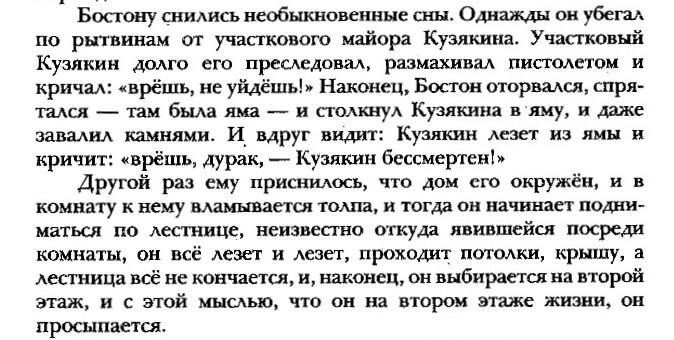
An excerpt from the book “Kalalatsy”: “Boston had extraordinary dreams. Once he was running across a rutted field away from the local precinct officer major Kuzyakin. Major Kuzyakin chased him for a long time, waving a gun and shouting, ‘No way, you won’t escape!’ Finally, Boston broke away, hid near a pit, pushed Kuzyakin into it, and even piled stones on top of him. Then, suddenly, he saw Kuzyakin climbing out of the pit and shouting: ‘No way, you fool — Kuzyakin is immortal!’
Another time he dreamed that his house was surrounded, and a crowd burst into his room. He began to climb a ladder that appeared out of nowhere in the middle of the room. He kept climbing and climbing, passing through ceilings and the roof, and the ladder never ended. Finally, he made it to the second floor, and with the thought that he was on the second floor of life, he woke up.”2
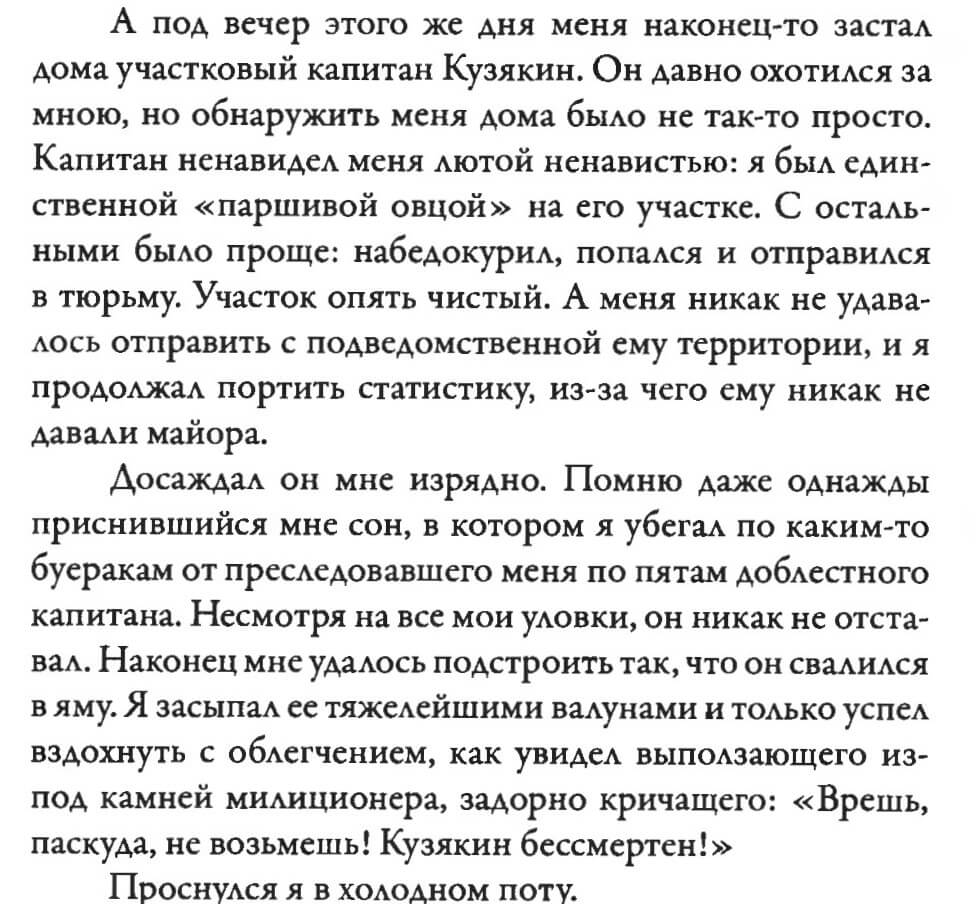
An excerpt from Alexander Dvorkin’s book “My America”: “In the evening of that same day, the local precinct officer captain Kuzyakin finally caught me at home. He had been hunting me down for a long time, but finding me at home wasn’t that easy. The captain hated me vehemently: I was the only ‘black sheep’ on his territory. The rest were an easy case: they messed up, got caught, and went to jail. The district was clean again. However, in my case, he couldn’t manage to get me out of his jurisdiction, while I kept messing up his stats, which is why he never got promoted to major.
“He harassed me quite a lot. I even remember a dream I had once, where I was running away through some ravines from the valiant captain who was hot on my heels. Despite all my tricks, he wouldn’t fall behind. Finally, I managed to trip him up so he fell into a pit. I covered it with the heaviest boulders and had only breathed a sigh of relief when I saw the policeman crawling out from under the rocks, shouting excitedly: ‘No way, you bastard, you won’t get me! Kuzyakin is immortal!’ I woke up in cold sweat.” 1
Contemporary neuropsychological research notes that traumatic experiences a person underwent in the past leave deep marks on their psychological structure and can resurface in the form of traumatic dreams. Traumatic or recurring dreams are often associated with unresolved inner conflicts and the ongoing processing of trauma. The overt plot of Alexander Dvorkin’s dream masks a latent meaning reflecting repressed desires and fears. Uncovering its content requires analysis of symbolism and defense mechanisms. Considering that the subject remembers his dream 30 years later, this further points to a marker of fixation on a traumatic conflict related to the desire for absolute power, preservation of anonymity, and inevitable punishment.
Paranoid anxiety and latent guilt
So what is behind Alexander Dvorkin’s real inner fears? An analysis of open-source data reveals Dvorkin’s dissonant reaction to interactions with law enforcement, which may indicate the presence of latent guilt and accompanying paranoid anxiety.
On the one hand, in his 1979 interview, the young Alexander Dvorkin ironically mentions that when he was a vagrant (in his autobiography, he would later call this vagrancy a hitchhiking trip), he was detained by law enforcement many times, almost every day.
Excerpts from Alexander Dvorkin’s interview (1979) 4
Q. … I remember you talked also about run-ins with the militia. When and where did that happen to you that I think you said you had some trouble with the militia?
A. Every other day /both laugh/ in every city and town. I just looked suspicious.
Q. /laugh/ /recorder off/
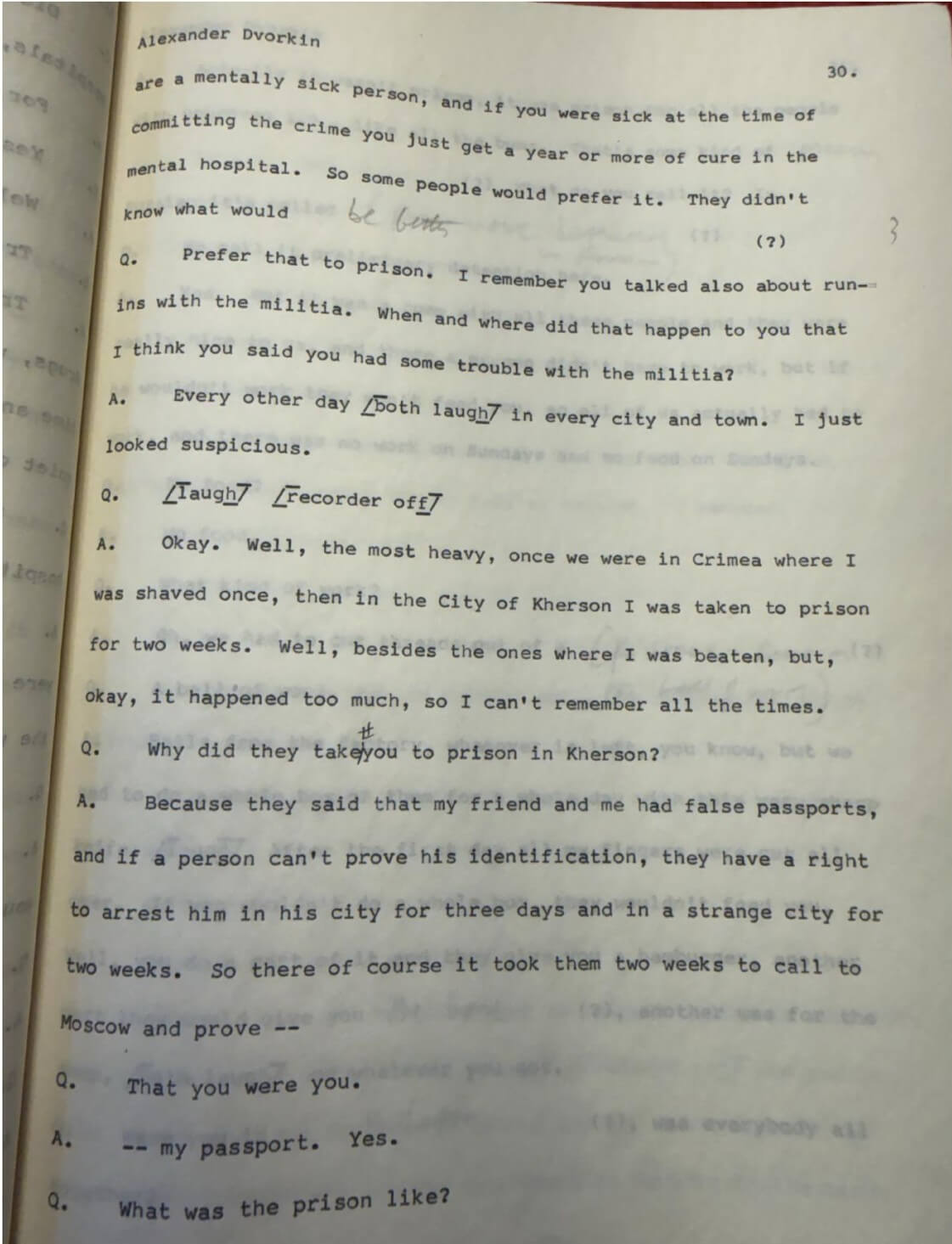
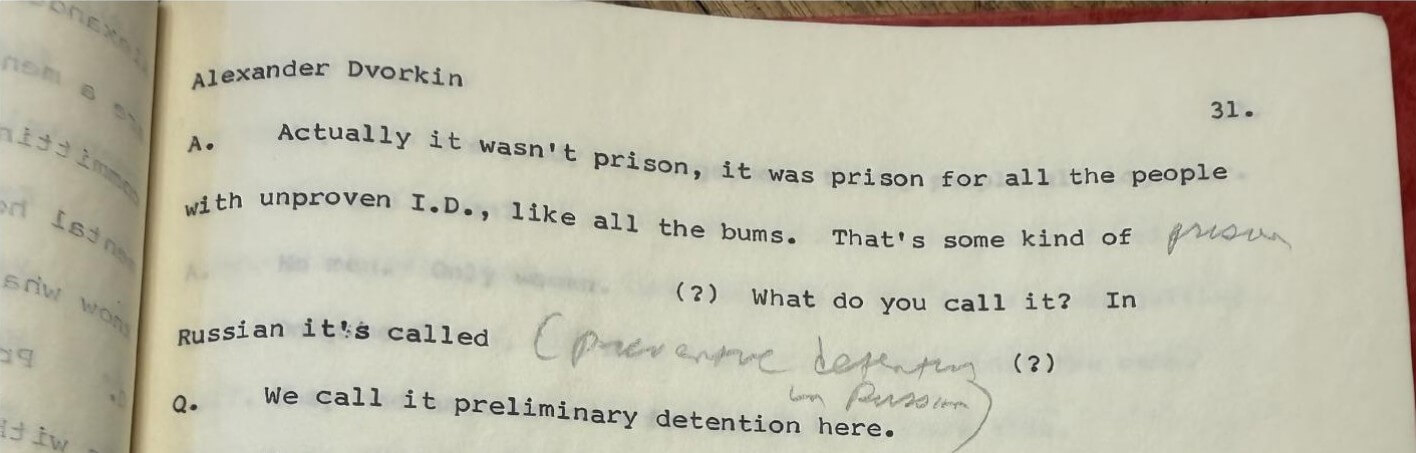
A. Okay. Well, the most heavy, once we were in Crimea where I was shaved once, then in the city of Kherson I was taken to prison for two weeks. Well, besides the ones where I was beaten, but, okay, it happened too much, so I can’t remember all the times.
Q. Why did they take you to prison in Kherson?
A. Because they said that my friend and me had false passports, and if a person can’t prove his identification, they have a right to arrest him in his city for three days and in a strange city for two weeks. So there, of course, it took them two weeks to call to Moscow and prove…
Q. That you were you.
A. — my passport. Yes.
Q. What was the prison like?
A. Actually it wasn’t prison, it was prison for all the people with unproven I.D., like all the bums. That’s some kind of prison (?) what do you call it? In Russian it’s called “priyomnoye otdeleniye”.
Q. We call it preliminary detention here.
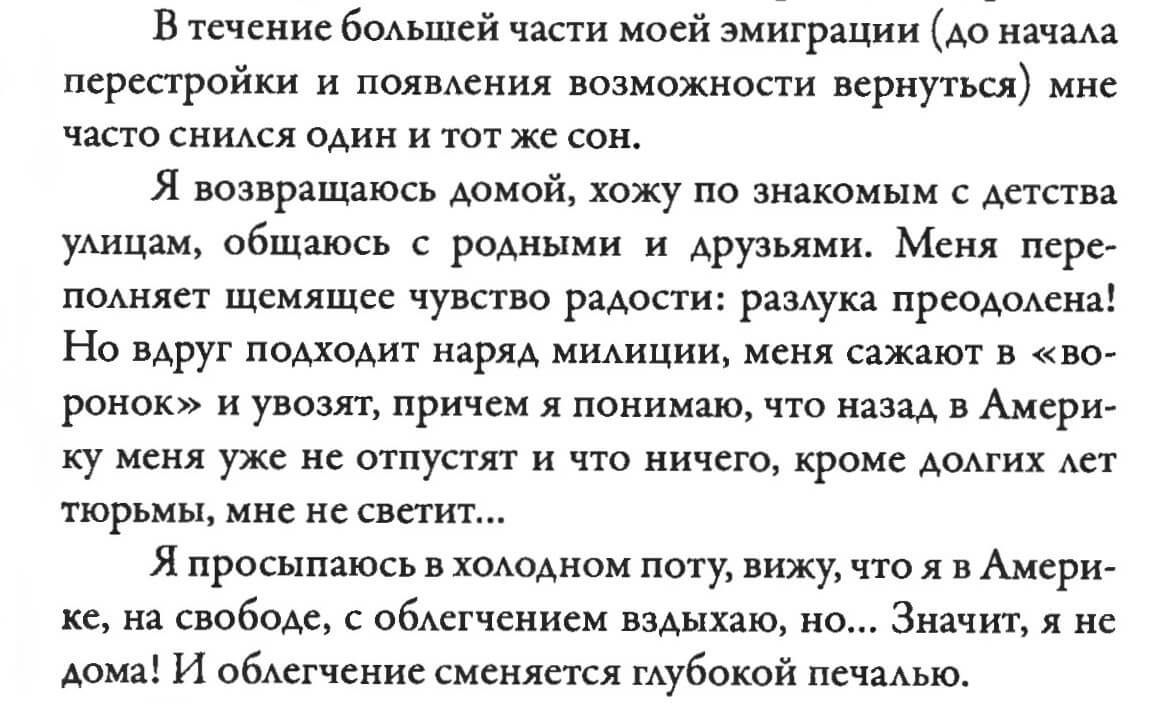
On the other hand, in his autobiographical book “My America,” Alexander Dvorkin recounts episodes indicating a pronounced panic reaction to contact with authorities and law enforcement, both in a recurring dream and in real-life situations: “For most of my time in emigration (until the beginning of Perestroika and the possibility of returning), I often had the same recurring dream.
“I return home, walk along the streets I’ve known since childhood, and talk with relatives and friends. I am filled with a piercing feeling of joy: the separation has been overcome! But suddenly a police patrol approaches, they put me into a police van and take me away; and I realize they won’t let me back to America and that nothing but long years in prison await me…
“I wake up in a cold sweat, see that I’m in America, free, sigh with relief, but… that means I’m not home! And the relief is replaced with deep sadness.” 1
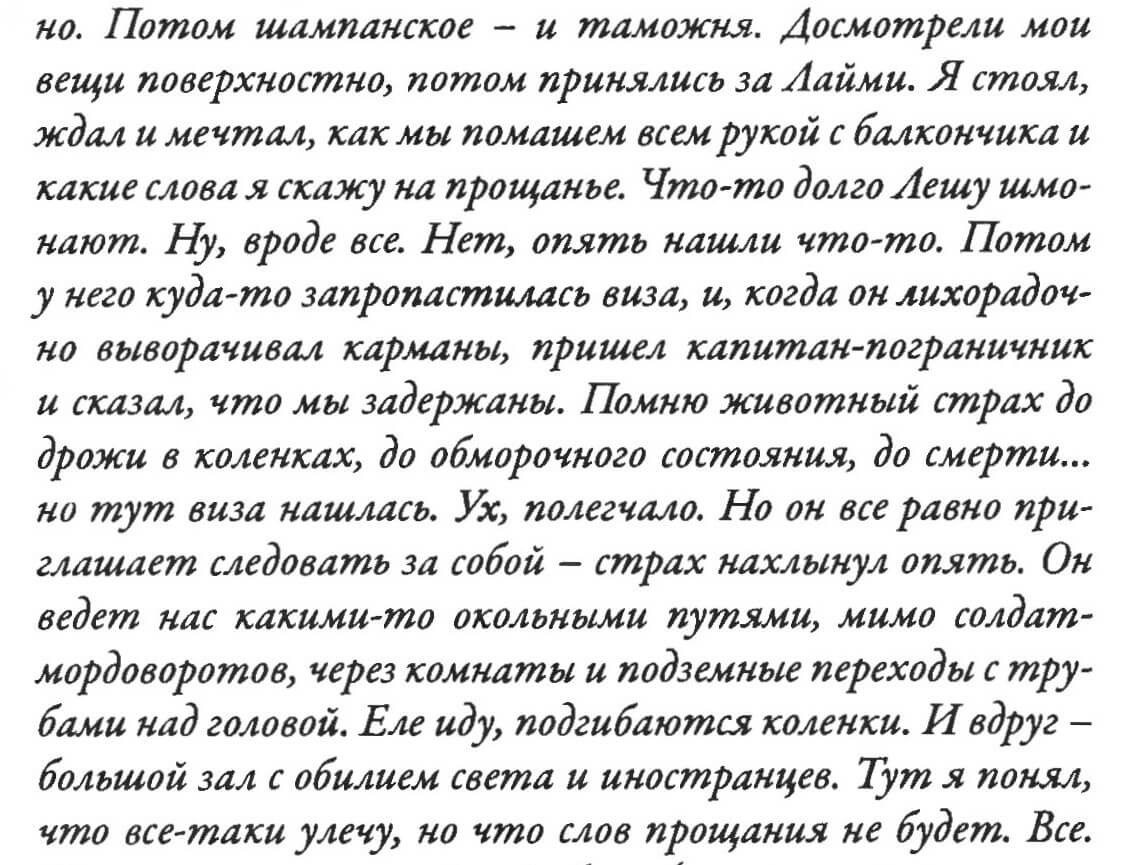
Another episode describes Dvorkin’s panic-stricken fear of law enforcement just before his flight abroad:
“Then champagne and customs. They gave my things a superficial check, then started on Laimi. I stood waiting and dreaming of how we would wave to everyone from the balcony and what parting words I would say. They took a long time checking Lyosha’s things. Okay, seems like they’re done. No, they found something. Then his visa went missing, and as he frantically turned his pockets inside out, a border guard captain arrived and said we were detained. I remember a primal fear: knees shaking, a near-fainting state, a fear of death… but then the visa was found. Phew, what a relief. But he still told us to follow him — the fear rushed back. He led us through roundabout ways, past burly soldiers, through rooms and underground passages with pipes overhead. I could barely walk; my knees were buckling. Suddenly, we entered a large hall with plenty of light and foreigners. Then I realized I would be departing after all, but there would be no final goodbyes. That was it.” 1
The contradiction between Alexander Dvorkin’s ironic mention of police detentions during his time vagabonding through various towns and villages in a 1979 interview and the panic-stricken memories in his autobiography “My America,” written three decades later, reflects an evolution of narrative and psychological defense mechanisms. They point to a deep-seated, unconscious sense of guilt transforming into paranoid anxiety. In the absence of a real threat of prosecution, Dvorkin could afford to retrospectively acknowledge the deep fear he had previously suppressed. Nevertheless, the very need to describe this fear with such intensity may be viewed as an indirect marker of latent guilt associated with undisclosed grave deeds from the past.
In criminal psychology, such dynamics are often observed in individuals who conceal severe crimes. Despite the absence of objective grounds for concern, they experience an obsessive fear of exposure, a sense of being pursued, and a conviction that those around them, especially authority figures, “know the truth.” 1
Source:
1. Alexander Dvorkin. “My America” https://web.archive.org/web/20260329153005/https://fb2.top/moya-amerika-813075
2. Book “Kalalatsy” by Arkady Rovner — Moscow: “New Time” International Association of People of Culture, PSK Timan, 1990.
3. Alexander Dvorkin. “Teachers and Lessons. Memories, Stories, Reflections” https://web.archive.org/web/20260318131018/https://www.labirint.ru/books/240384/
4. A 1979 interview with Alexander Dvorkin for the project “Recent Soviet Immigrants in America.”
Interviewer: Lynn Visson (June 19–20, 1979). William E. Wiener Oral History Library of the American Jewish Committee. New York Public Library (NYPL) Research Libraries.
https://archive.org/details/alexander-dvorkin-interview-june-19-1979/page/n5/mode/2up
5. Ronningstam, E. F. (2005). Identifying and understand the narcissistic personality. Oxford University Press. https://psycnet.apa.org/record/2005-05680-000
6. https://www.ncbi.nlm.nih.gov/books/NBK556001/#:~:text=Psychoanalyst%20Wilhelm%20Reich%20described%20,the%20development%20of%20NPD%20in