Introduction
Before we begin, let us agree on a unit of measurement.
“Five tons of documents,” reports the official website of a Belarusian church organization. It states this matter-of-factly, using the same standard font such websites use for a schedule of church services 5. That is how one measures coal, cement, or gravel. One does not measure dossiers on believers that way, and that fact alone should have drawn notice, but 16 years have passed…
Let us put this into perspective. A ream of office paper weighs about 2.5 kg, which means there are about 400 reams in a metric ton, making 5 tons roughly equivalent to a million A4 sheets. Stacked up, they would form a column up to 100 meters high, reaching right up to the cross on the dome of the Berlin Cathedral. To be sure, the collection didn’t just comprise loose sheets of paper; it included books, bound periodicals, card file drawers, and heavier materials. Yet the order of magnitude remains the same: we are talking about a large truckload, the relocation of an entire library, a collection comparable to the holdings of a modest research archive.
In September 2010, this five-ton archive left Berlin for Minsk. It had been compiled over 30 years by the Lutheran anticult pastor Thomas Gandow. Yet, he didn’t entrust it to the Federal Archives of Germany, the Berlin State Archive, the Free University, or Humboldt University (both just a half-hour drive from his office). He didn’t even give it to the archive of his own church, which he had served for 34 years. He handed it over to a diocese of the Belarusian Orthodox Church, or more precisely, to the St. Joseph of Volotsk (Volokolamsk) Apologetic Center. And the purpose of the donation was stated in the official announcement without any diplomatic pretense: “for scholars of Belarus and state administration bodies.”
The same announcement included a promise to publish an inventory of the collection 6. Yet 16 years have passed, and no one outside that Minsk depository knows exactly what is kept inside.
In all fairness, the contents of this archive may well fall far short of a major sensation. Or perhaps, once this investigation is published, the documents of “particular” interest will be more carefully concealed or lost to history entirely — just to be on the safe side. But wait: can we rule out the possibility that the most “valuable parts of this archive” have long been kept in Russia with Alexander Dvorkin? No, we cannot. After all, the Belarusian St. Joseph of Volotsk Anticult Center has been a member of RACIRS (Russian Association of Centers for the Study of Religions and Sects) since 2007 32. In any case, we are unlikely to ever find out. However, it was exactly these attempts to uncover what secrets the archive holds, where it came from, and why it was transferred to Minsk that launched this very investigation. And in the end, it revealed far more to us than the mere mystery of an archive.
Three Libraries That Do Not Intersect
Hundreds of volumes have been written about the collaboration between the German Protestant Church and Hitler’s Nazi regime. The “German Christians” movement, the Confessing Church, the Barmen Declaration, Niemöller, Bonhoeffer, the Stuttgart Declaration of Guilt from October 1945: in Germany, this is part of the school curriculum. The German effort to reckon with its own past, Vergangenheitsbewältigung (“struggle of overcoming the past”), has been carried out more thoroughly and honestly than in any other European country, including the victorious nations.
The Holocaust Memorial in Berlin
German universities unearthed the biographies of their professors, German corporations funded research on forced labor in their factories, German cities renamed their streets, and in 2007, even a street named in honor of Bavarian Bishop Hans Meiser was renamed after his stance during the Nazi era was documented and substantiated.
The second library, on the history of German “sectology,” is far more modest. It consists of a single systematic monograph on the Apologetische Centrale 3, several academic articles 2, and anniversary publications by the institutions themselves 18, 24, which, as we shall see, reveal a great deal on their own if read closely.
The third library, covering the modern anticult movement, is written by religious scholars, human rights defenders, and attorneys – ourselves included – many of whom deal with the real-world fallout in courtrooms.
The trouble is that these three libraries have always stood in different buildings and on different shelves. They have never intersected. A historian of church resistance does not look into manuals written by anticultists. An academic scholar of religion rarely reads the 1933 German transcripts of closed Gestapo meetings. And a Russian defense attorney representing yet another Jehovah’s Witness in court today usually has no inkling that the ban on their clients in Germany in 1933 was pushed through not by the state, but by a church agency 2; that this agency supplied materials directly to the Gestapo 22; and that a direct personnel thread stretches from it to the very “experts” testifying for the prosecution in their own trial.
Until now, no one has attempted to bring these three libraries together under one cover. No one has traced this line step by step – from the 1921 Berlin church archive to the 2010 Minsk warehouse – by names, dates, and archival call numbers, scrupulously separating verified fact from polemics and hearsay.
That is the exact task of our investigation. And its subject must be defined with utmost precision: this is not a history of theology, not the sociology of religion, and not human rights commentary. It is the bloodline of anticult technology.
The technology itself is as old as the world: branding someone else’s faith as a state security threat that must be eradicated by police measures. This technology has specific authors, staffing tables, budgets, reference manuals, and departmental card indexes. The primary conclusion of this investigation is that it did not arise spontaneously. It possesses an unbroken, documentarily verified line of continuity: from the administrative card indexes of the Berlin Apologetische Centrale in 1921 and Nazi expert reports of the 1930s and 1940s, through postwar Western European structures, to the 2010 Minsk archive, and ultimately to the convictions being churned out on the basis of fabricated “religious studies expert evaluations” today.
Not a Word!
In 1990, German historian Dr. Harald Iber published an archival report submitted by the director of the church apologetic service to the Reich church government – the very one stating that Walter Künneth’s “exchange of materials” with the Secret State Police (Gestapo) was already underway. Upon publishing it, Iber remarked:
“In none of the accounts published by the Apologetische Centrale after 1945 is there any mention of this connection with National Socialist state bodies” 22.
Not a word in the 45 years separating the surrender of Nazi Germany from the day Harald Iber sat down to write his commentary. And all that time, the document had been resting quietly in the church archives in Berlin, accessible to any researcher under a call number that can be looked up in the catalog: EZA Berlin, 1/C3/392 (Künneth’s letter of December 16, 1933).
German religious scholar Horst Junginger went even further, revealing far more striking facts. In analysing the post-war narrative, in which churches are retrospectively portrayed as being on the side of the victims and the Resistance, he observed that under this view, “the significance of the Church’s hostility towards the Jews for the anti-Semitism of the Third Reich is downplayed in a manner that can hardly be described as anything other than shameless”, adding that “taken to its logical conclusion, this construct ‘turns a nation of perpetrators into a nation of victims’” 2.
The German culture of repentance achieved an extraordinary amount, yet in one specific, narrow sector it accomplished nothing at all.
That sector is called “apologetics” – in plain terms, the church’s fight against religious competitors. The organization that waged this battle under the Weimar Republic and under Hitler was shut down (according to the official narrative) in 1937 and reconstituted in 1960 under a different name, with both of its former directors joining its board of trustees 24, 26, including the author of that very December 1933 report. There was no inquiry and no admission of guilt. There was continuity – institutional, methodological, and, as the minutes make clear, entirely personal.
To call it a conspiracy? We have no proof of that, nor is that our purpose. Silence is sustained far less often by collusion than by the fact that the question simply never occurs to anyone: it is not on the agenda, grants are not awarded for it, dissertations are not defended on it, and anyone who raises it risks being labelled a “Scientology apologist.” A silence without an author is the most durable silence of all. But its consequences are identical to those of collusion: an unidentified technology, never subjected to audit or inspection, never passed through denazification, remains in working order and is exported abroad to countries that know nothing of its origins and care to know even less.
Why should a modern reader care about the biographies of anticultists who died in the last century, you might ask? Because contemporary anticultism is neither science nor theology; it is a craft with its own tools, passed down from hand to hand along with the practical skill. And skill does not pass down in isolation – with it come underlying premises that no one articulates aloud, because people only debate what is controversial. These assumptions seem as self-evident as a hammer to a carpenter. Perhaps that is why they have never once been revised.
Let us begin with the card index, for that is where everything else began. In 1921, the Apologetische Centrale set up a library and archive of “ideological communities deemed hostile” 2, and this decision contained more significance than any theological treatise of that era. Consider this: a church that had lost nearly a million parishioners in four years could have debated, could have preached, or could have attempted to understand those who left. Instead, it began keeping files on dissidents. From that day on, someone else’s faith ceased to be a subject of theological debate and became an object of administrative description. And unlike a debate, a description is strictly one-sided: an index card does not object, present arguments, or file a lawsuit. Today, that same card is called a “database of destructive cults” and circulated to schools and local police precincts, yet its essential nature has not changed an iota in an entire century.
From the card index emerged the next tool, developing so subtly that the transition is nearly impossible to pinpoint. An information service was established alongside the archive. This service issued expert testimonies – initially to pastors, and then, as delicately phrased in an academic account, it was “increasingly utilized… by the state” 2.
Trace what occurred within that phrase: information transformed into expert testimonies. The distinction is fundamental: an argument can be challenged, but an expert evaluation cannot be debated – it can only be accepted or rejected, and it is usually accepted by someone with no expertise in the subject, for why else would they require an expert? Thus emerged the figure who runs through this entire investigation and forms the subject of its concluding part: a specialist whose word carries the weight of legal evidence, even though he is unelected, unaccountable, and irreplaceable. Today, his evaluations serve as the basis for convictions – typically entirely bogus – for involvement in the activities of an extremist organization.
Another tool surfaced on December 16, 1933, in written form, which is fortunate for us. In the report we will examine line by line below, the church organization enumerated the adversaries against whom it offered joint operations to the Gestapo: “freethought, Marxism, Bolshevism” 22. Note that: three items, not one of them theological. No heresy, no false doctrine, no dispute over sacraments – just a concrete political target list drawn up by the church and addressed to the police. Had the apologists quietly morphed into policemen? On that day, disputes about God were shifted into the registry of state security, and they have never returned to theology since, altering only their vocabulary: faith was now declared a threat to national security, and the parishioner an agent of influence.
That is why the question of the origins of these tools is, in our view, of critical importance. When an expert evaluation is read aloud in a courtroom, it helps to know who trained that expert. And when it turns out that he was trained by someone who was trained by someone who learned the craft directly from the director of a card registry that exchanged intelligence with the Gestapo, that circumstance surely warrants at least a mention in ongoing discussions.
On the Sources
The main foundation rests on the works of religious historian Horst Junginger, who worked for many years at the University of Tübingen 2; on Matthias Pöhlmann’s monograph “Kampf der Geister” (Battle of Spirits; Stuttgart, 1998), a systematic study of the Apologetische Centrale 3; on the book by sociologist of religion Elisabeth Arweck from the University of Warwick 4; on the work of the Swedish researcher of new religious movements Bishop Bertil Persson 12; on archival documents from the Protestant Central Archive in Berlin published in two independent academic editions in 1990 22; and on publications of the institutions themselves, such as the Berlin-based EZW 18, 24, documents of the BIFFF (Berliner Institut für Faschismus-Forschung und Antifaschistische Aktion) – the Berlin Institute for Research on Fascism headed by Peter Kratz – the Minsk Synodal Center for Sect Studies 5, and many others.




Pöhlmann warrants a separate note here: while he wrote the monograph on the Apologetische Centrale, he is himself on the staff of its anticult successor organization, and he and Junginger differ fundamentally in their assessment of the very same facts. Where Pöhlmann sees an organization that was “imperceptibly” drawn into a political wake and “instrumentalized” (that is, manipulated as an unwitting tool), Junginger, on the contrary, sees an organization that itself pushed the state toward more decisive measures 2! And this is a substantial divergence; we will highlight it where it arises.
Heirs To The Anticult Archive. Five Tons of Paper Shipped to Minsk. Part 1
Prologue. The One Line That Was Never Fulfilled
Let us begin with what anyone can read with their own eyes. The Synodal Center for Sect Studies in the name of the Venerable Joseph of Volotsk of the Belarusian Orthodox Church was founded on April 18, 1997, and exists to this day 5. Its website features a page about its archive, written in the dry, matter-of-fact language of an official report without a trace of emotion – which is why it should be quoted verbatim:
“To expand the archive, materials from 30 specialized archives in Belarus, Russia, Ukraine, Germany, Austria, and other countries have been transferred to the center at various times. The largest shipment, 5 tons of documents, was donated by the well-known German sect expert, honorary doctor of the BSU Institute of Theology, Pastor Thomas Gandow from Germany” 5.
Thirty archives from six countries, and one man whose contribution is singled out because it is the largest. Not “one of the largest.” The largest, and on a scale rarely seen by an organization of this kind in its entire history.
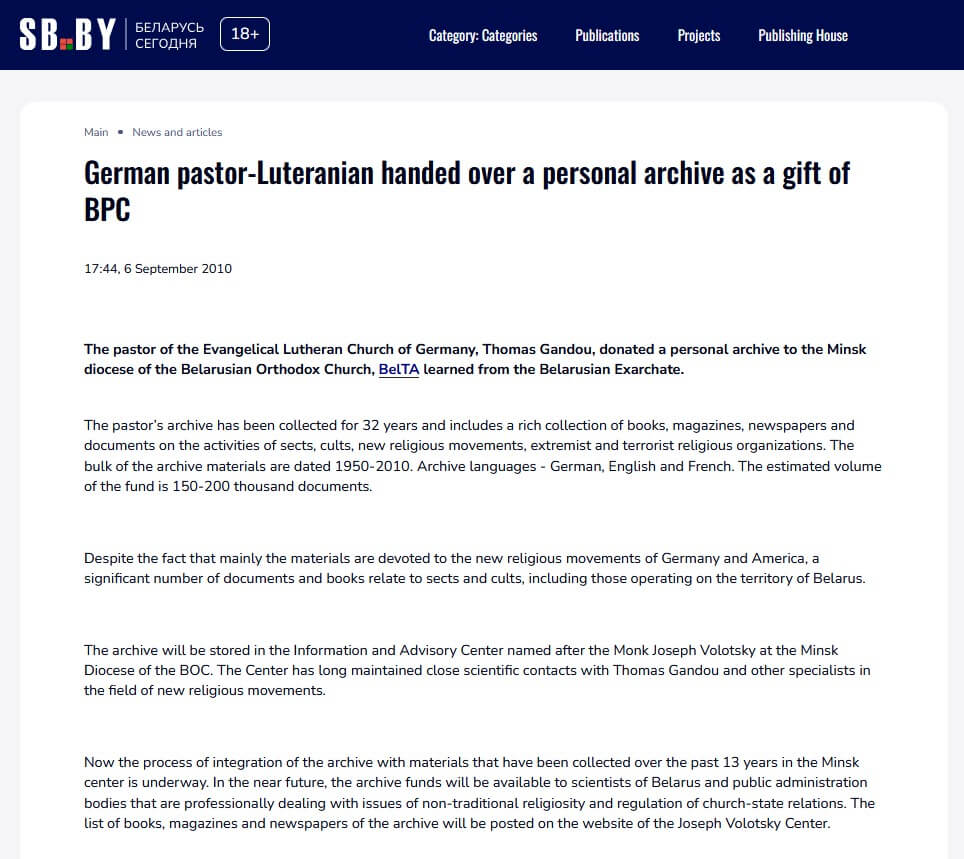
A report in the state newspaper Belarus Segodnya [Belarus Today] on September 6, 2010, citing the Belarusian Exarchate, stated:
“Pastor Thomas Gandow of the Protestant Lutheran Church of Germany has donated his personal archive to the Minsk Diocese of the Belarusian Orthodox Church… The pastor’s archive was gathered over 32 years and includes an extensive collection of books, magazines, newspapers, and documents on the activities of sects, cults, new religious movements, and extremist and terrorist religious organizations. The bulk of the archival material dates from 1950 to 2010. Archival languages: German, English, and French. The estimated size of the collection is 150,000 to 200,000 documents” 6.
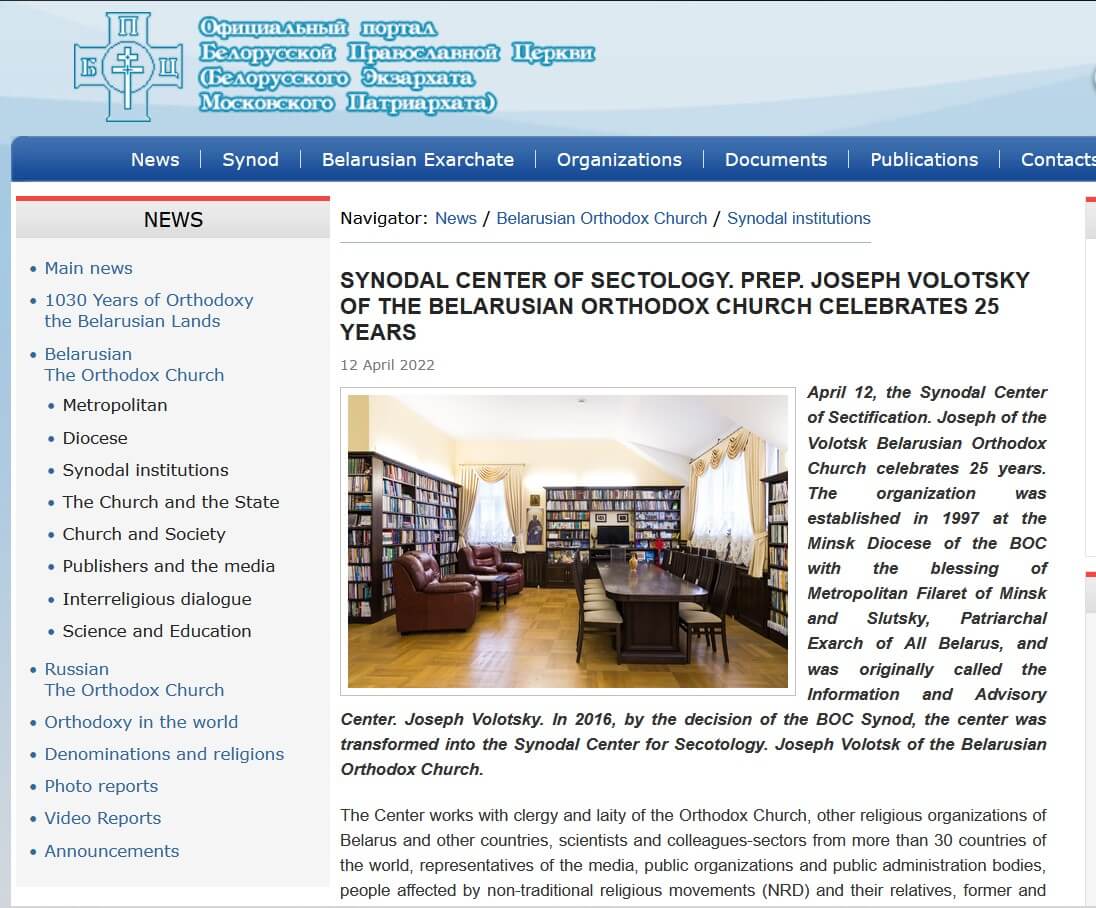
Reports on the official portal of the Belarusian Orthodox Church confirm the transfer.
And a single line at the end reads: “A list of books, journals, and newspapers in the archive will be published on the website of the St. Joseph of Volotsk Center” 6.
Sixteen years later, the inventory is still nowhere to be found. A check in August 2026 reveals that the center’s website features sections titled “About Us,” “Library,” the journal Sektovedenie (Sectology), Vestnik SCS (Bulletin of the Synodal Center for Sect Studies), and “Contacts,” but contains neither a catalog nor a finding aid for the collections; domain searches for “inventory” and “collections” yield no results, nor is any inventory to be found on the church.by or unrel.org portals 7. In other words, five tons of dossiers on European believers remain locked behind closed doors in a Minsk depository, and their contents are entirely unknown to the public.

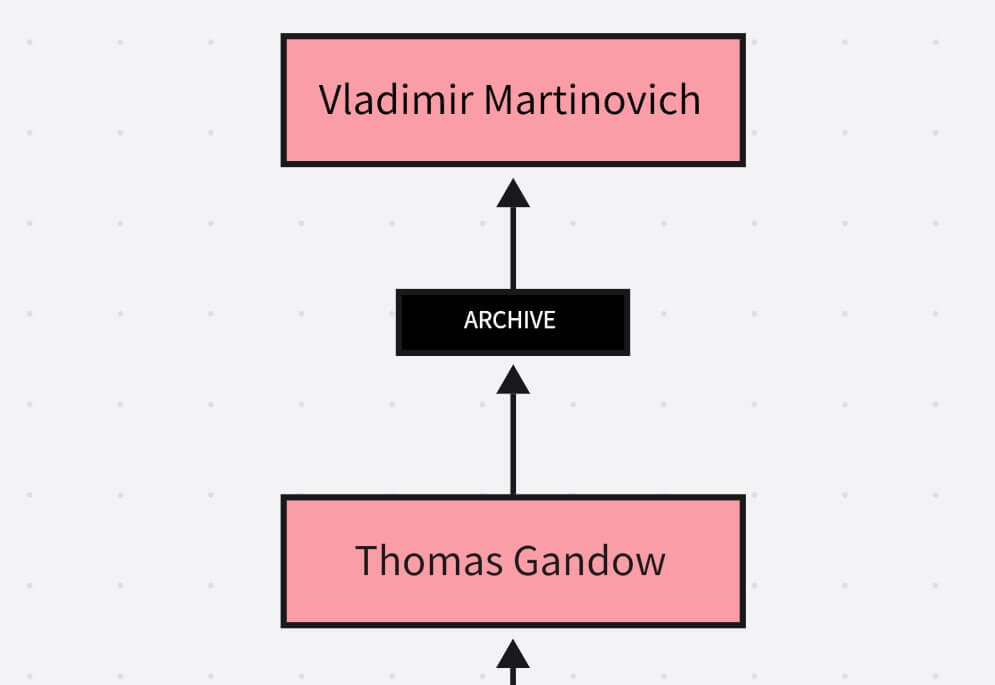
And this raises questions. Why did a body of 200,000 documents on “sects,” “cults,” and “extremist religious organizations” depart Berlin for Minsk? Germany possesses an archival culture refined to the point of pedantry; it preserves parish council correspondence and the bookkeeping of church kindergartens, and the personal collection of an individual who served for 34 years in a prominent and fiercely polemical church post would be the most obvious candidate for a regional church archive. Yet, for some reason, it did not end up there.
Why did a diocese become the recipient, and why were its users identified as “scholars of Belarus and state administration bodies” 6? That phrasing is a rare stroke of luck for a researcher, as it articulates the donation’s purpose in plain language, without equivocation or shame. An archive concerning believers was handed to a church structure with the explicit stipulation that government agencies could access it as well. We will return to this line later, when it will carry a vastly different resonance.
What exactly had the Berlin pastor been collecting for thirty-two years, and more importantly, from whom did he gather it?
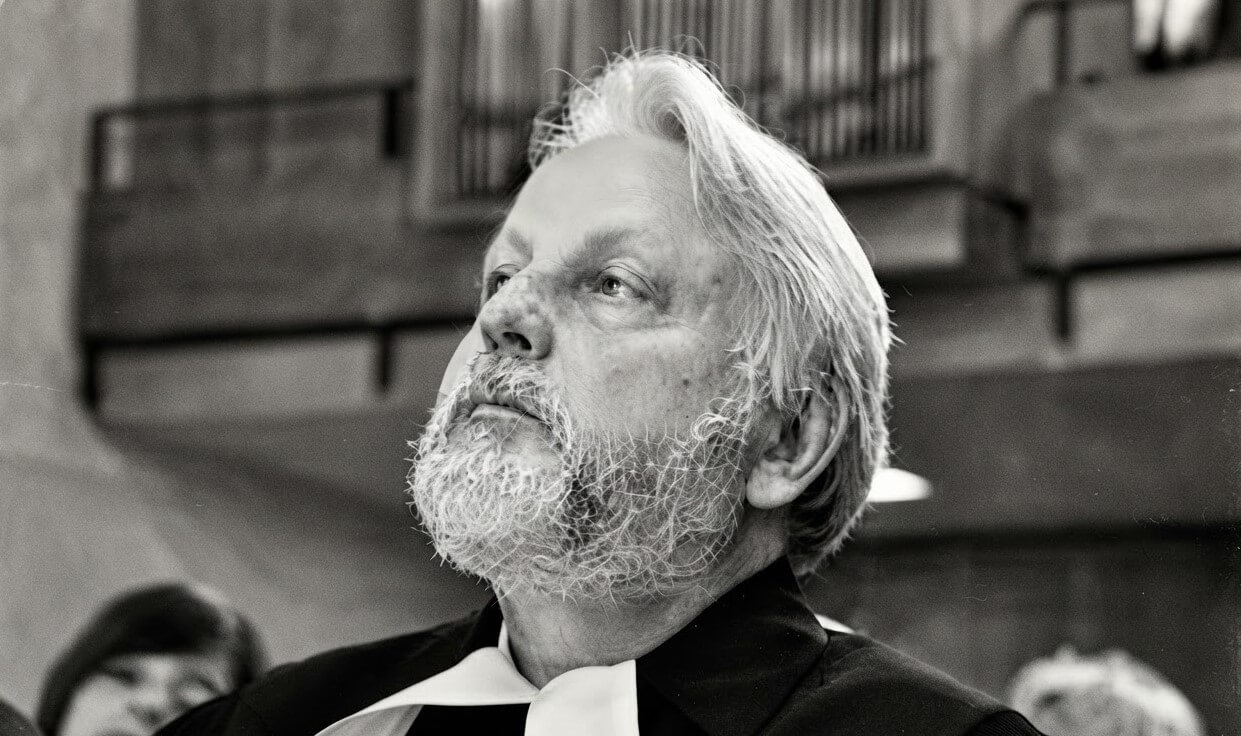
Chapter 1. A Pastor Commissioned for War
The few publications concerning Thomas Gandow, appearing primarily in the church and anticult press, rely on boilerplate phrases: “a leading international authority,” “a foremost expert,” “more than thirty years of ministry.”
BACKGROUND
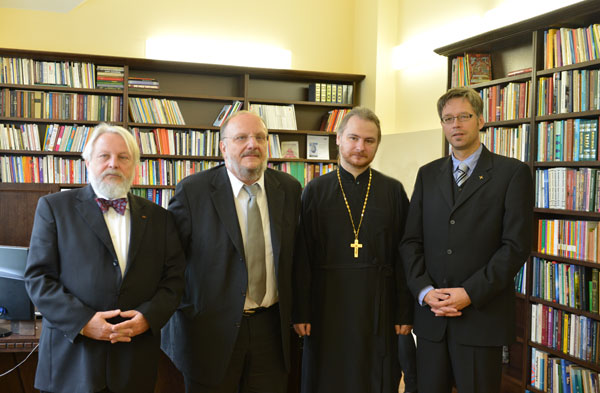
- Thomas Gandow was born in 1946 in Berlin, the seventh of eight children, as he recounted in an interview with the newspaper taz on September 20, 2004, published under the headline “Religion ist eine scharfe Sache” (Religion Is a Sharp Thing) 8. In 1977, the Protestant Church of Berlin-Brandenburg tasked him with “the performance of pastoral services in the Youth Work Department with a focus on ‘New Religious Communities’”. In 1992, he was appointed to the permanent post of provincial pastor for sect and worldview issues 9. He retired on Aug. 27, 2011, and in March 2012 received the Order of Merit of the Federal Republic of Germany (Bundesverdienstkreuz) 9, 10, 11. Beginning in 1995, he published the journal Berliner Dialog and directed the Berlin branch of Dialog Center International. He is an honorary doctor of the Institute of Theology at Belarusian State University 5.
The headline of that interview, “Religion ist eine scharfe Sache,” deserves a closer translation. The German word scharf means “sharp,” “hot,” and “spicy,” but when applied to ammunition, it means “live”: scharfe Munition refers to live rounds, as opposed to blanks. For sure, it was the editor, not the pastor, who penned the headline, but one could hardly conceive of a more fitting epigraph for a 34-year career, and we intend to make use of it.
It should be noted that the starting point was not a formal post for sect issues, but youth outreach with an ideological slant – that is, cautionary talks with adolescents deemed in need of “safeguarding.” The craft began with prevention. It became a permanent staff position only 15 years later, in 1992.
The year of that appointment is worth noting specifically. Friedrich-Wilhelm Haack, West Germany’s most prominent “sect expert,” died on March 4, 1991 16, and just over a year elapsed between the predecessor’s death and the permanent appointment of his successor. The field, evidently, tolerated no vacancies.
From 1995 onward, Thomas Gandow published Berliner Dialog, which Persson describes as “the German edition of the journal of the Dialog Center International” 12. The masthead of the second issue of 1995 warrants a line-by-line examination: publisher Wichern-Verlag GmbH, Berlin; editor-in-chief Thomas Gandow; editor Professor Johannes Aagaard from Aarhus, Denmark. From the outset, the magazine maintained an academic advisory board (Wissenschaftlicher Beirat) of 17 names, among them “Alexander Dvorkin (Moscow)” and “Andrej Kuraev (Moscow)” 13.

Seventeen names on the back cover of a low-circulation Berlin journal might seem like a mere detail for a footnote, and in 1995, a detail was all they were. These lines acquire their true significance only in hindsight, once it becomes clear who was standing side by side on that roster. The first name, “Prof. Dr. Alexander Dvorkin (Moskow),” belongs to the man destined to become Russia’s foremost “sectologist,” gain a state platform, and secure a seat on the Expert Council under the Ministry of Justice. The second belongs to a German legal scholar whose name we will not yet disclose, as he will be the subject of a detailed discussion later on.
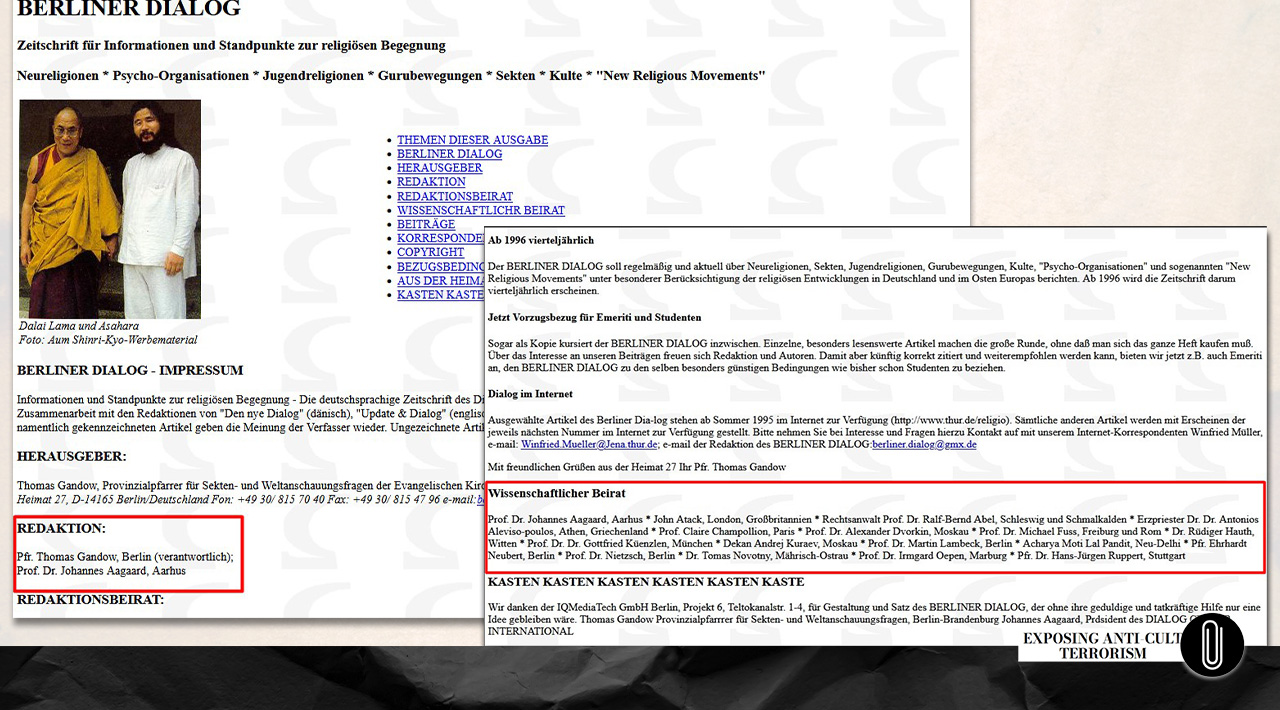
The date itself is also telling. Russian “sectology” was integrated into the German advisory board in 1995 – three years before the publication in Russia of Alexander Dvorkin’s book Sektovedenie (Sectology), which gave the discipline its name, and long before the Russian general public had ever heard of the field.
Furthermore, Gandow headed the Berlin branch of Dialog Center International, founded around 1973 by the Danish professor of missiology Johannes Aagaard (1928–2007) in Aarhus 14. The Danish branch of the DCI ceased operations on April 2, 2011 15 – just five months before Gandow was retired and six months after the Berlin archive was dispatched to Minsk. Note this synchronization of dates: the organization at the center of the European anticult network and its Berlin node wound down their activities almost concurrently, by which time the archives of one of them were, in all likelihood, already across the European Union border.
An Episode Absent from Anniversary Articles
According to Persson’s glossary in the book “The Fight against sects” in the 1970s, prior to launching his career as a “sect expert,” Thomas Gandow belonged to the Maoist organization “Liga gegen den Imperialismus” (League Against Imperialism), founded on July 14, 1971, in Berlin as an affiliate of the KPD/AO; its charter permitted the use of violence, and the Federal Office for the Protection of the Constitution issued it an official warning 12.
Thus, the man who built a career stamping religious communities with labels of “extremism” and “destructiveness” himself emerged from an organization tracked by domestic intelligence as potentially violent. The 20th century witnessed many such transformations – from left-wing radicalism to guardians of public order. Both stances demand the very same skill: the ability to divide the world into “us” and “enemies” – a skill entirely indifferent to the content of one’s beliefs. Typically, only the address of the enemy changes.
Taking Up Haack’s Mantle
Elisabeth Arweck, a sociologist of religion at the University of Warwick, wrote in 2006 that Pastor Gandow “is perceived to have taken on the mantle of Pastor Haack” and characterized his approach with the scholarly term militant apologetics 4. In her words, this term describes a variety of apologetics where defending one’s own faith is replaced by attacking another’s.
Horst Junginger, after listing the institutions involved in German ‘sect studies’, put his point more bluntly:“As the example of the well-known Berlin ‘sect pastor’ and publisher of the journal ‘Berliner Dialog,’ Thomas Gandow, demonstrates, the apologetic dispute can here take the form of extremely aggressive propaganda, the tone of which evokes memories of bygone days” 2.
A reader who arrives at this phrase in Junginger’s work, if not already aware, will soon understand which “bygone days” he meant: the historian was describing meetings at Gestapo headquarters in May and June 1933, where church representatives demanded more decisive measures from the state than the state had originally planned 2.
Chapter 2. How the Post of Anticultist Was Invented in Germany
BACKGROUND
- Friedrich-Wilhelm Haack was born on August 11, 1935, in Grünberg, Silesia (known since 1945 as Zielona Góra, Poland) and died on March 4, 1991, in Munich at age 55 16. In 1969, he became Germany’s first full-time regional church commissioner for sect and worldview issues: “1969 wurde er vollamtlicher Beauftragter für Sekten- und Weltanschauungsfragen der Evangelisch-Lutherischen Landeskirche in Bayern” 16. By 1987, he had published around 40 books with a total circulation of roughly 700,000 copies, served as vice president of Aagaard’s Dialog Center in Aarhus, and maintained close ties with FAIR in Britain, ADFI in France, and the AFF in the United States 4. He was the author of the book “Wotans Wiederkehr. Blut-, Boden- und Rasse-Religion” (Wotan’s Return: Blood, Soil, and Race Religion; Munich, 1981, 255 pages).
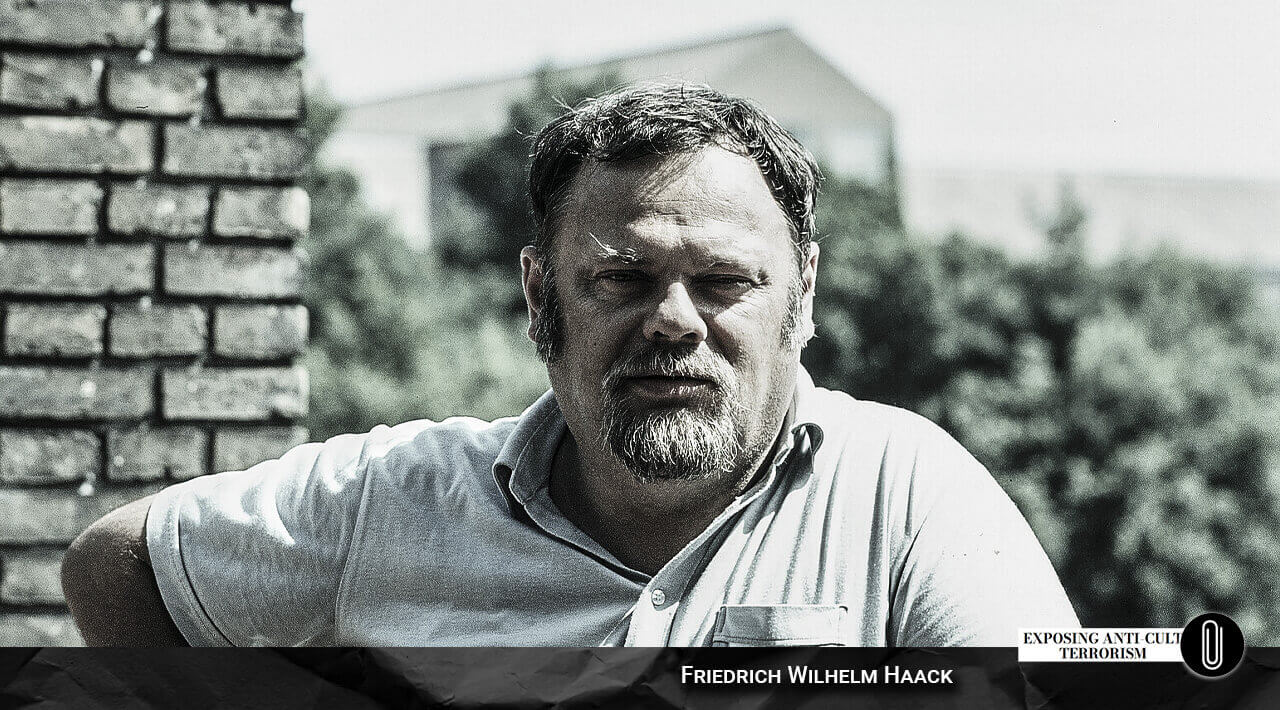
Note the word: vollamtlich, or “full-time.” Prior to 1969, “sects” in German Protestantism were handled on a part-time basis – a pastor in his spare time, a lecturer between classes, a bulletin editor, or the Stuttgart center with its minuscule staff. It was an initiative rather than a profession. But beginning in 1969, a permanent post emerged – the Sektenbeauftragte (“commissioner for sect issues”) – meaning an individual receiving a salary, an office, a budget, and dedicated working hours solely to monitor and oppose other religious communities.
Even setting aside the hypothesis of the historical continuity of destructive anticult ideology, the processes triggered by this development gained rapid momentum. A budgeted position needed to justify its existence, and the justification was the presence of a threat. An absence of threat meant the elimination of the post; consequently, the office possessed a structural interest in ensuring that the threat existed, expanded, and remained conspicuously visible to the “higher-ups.” Not once in half a century has any Sektenbeauftragte submitted a report stating that no dangerous religious movements were identified in the assigned territory during the reporting period and that the post should be abolished as unnecessary.
This is how any threat-based bureaucracy functions, after all – from sanitary inspections to counterintelligence – and it is normally kept in check by two mechanisms: external oversight and an adversarial procedure in which the accused can offer a defense. The beauty of the church “sect commissioner” was that he was subject to neither. He answered to no secular oversight, the communities he targeted had no procedural venue to reply, and his evaluations were utilized by third parties (journalists, civil servants, courts) as specialized expertise obtained from unknown quarters and audited by no one.
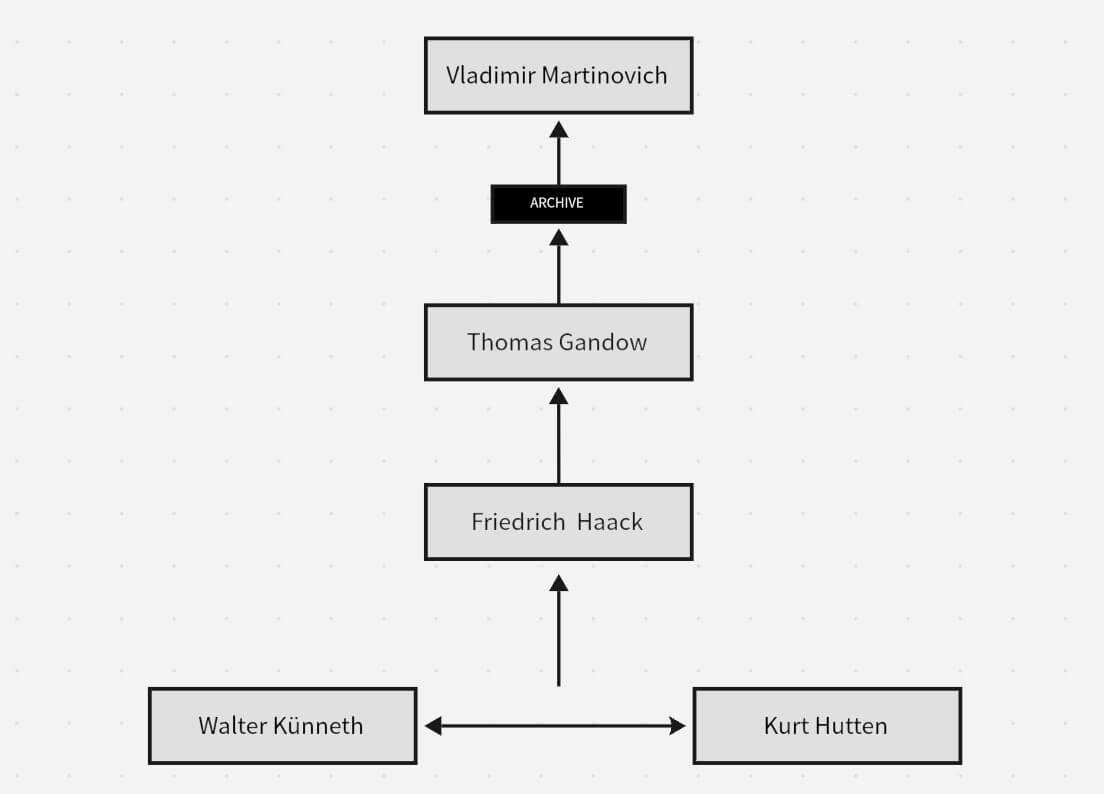
Thus, the Bavarian precedent of Haack’s appointment in 1969 can be considered the launchpad for the organized expansion of the movement. According to Persson, the network of sect commissioners (Sektenbeauftragte) swiftly enveloped Germany 12 and subsequently, under direct German patronage, spread internationally.
This network was funded out of church budgets, and the budgets of German churches are financed by the church tax, collected on their behalf by the state through its tax authorities. In 2024 alone, the Protestant regional churches collected 5.97 billion euros in this manner 30. The share allocated to “sectology” from this sum is, of course, microscopic (a matter of dozens of salaried posts, not thousands), but that does not alter the nature of the funds: the church agency’s battle against religious competitors was paid by the state’s fiscal apparatus, and through it, ultimately, by all the country’s taxpayers – including the very individuals whom this anticult agency was characterizing in its brochures as untrustworthy. Such is the underlying economy.
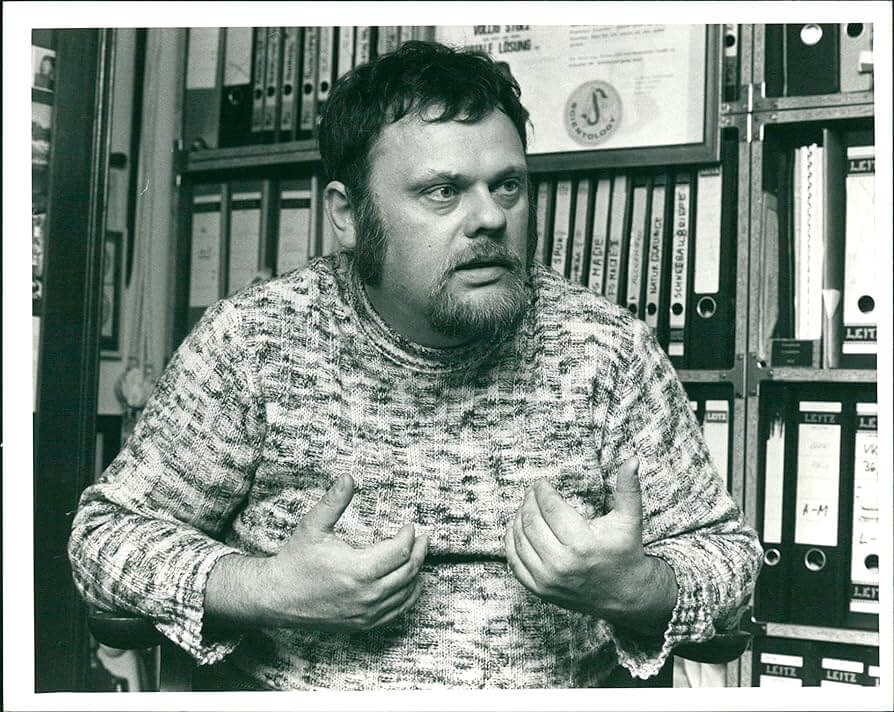
Seven Hundred Thousand Copies
Elisabeth Arweck’s data allows one to grasp the scale of Friedrich-Wilhelm Haack’s publishing output: the total print run of his 40 works reached 700,000 copies (an average of 17,500 per publication), matching the circulation figures of mass-market literature. While university studies in religious history appeared in press runs of only a few hundred copies, Pastor Haack’s personal publications outstripped the entire academic sector in Germany by more than two orders of magnitude. Journalists visiting his office likened what they saw to an “inquisitor’s treasure house” 4.
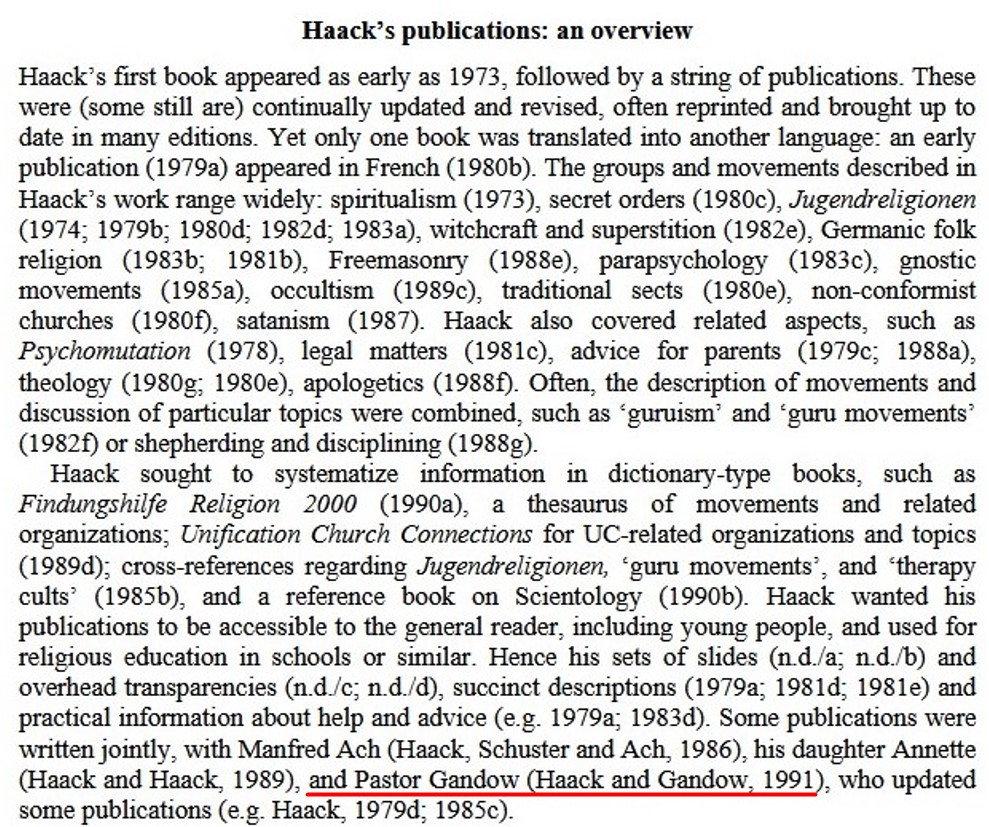
By the way, in her book, Elisabeth Arweck notes that several of Haack’s publications were co-authored with Thomas Gandow:
This precedent clearly exhibits a model later replicated in detail in Russian practice. The contest between academia and anticultists was decided not by the evidentiary weight of scholarly argument, but by informational asymmetry, where sheer volume of print ensured victory in the public sphere. While scholars and historians of religion conversed among themselves, anticultism engaged directly with the public and state authorities – families, law enforcement, and parliamentarians – thereby seizing the initiative.
In “Der Weg des Lebens nun ist dieser. Apologetik an der Schwelle des 3. Jahrtausends” (This Is the Way of Life: Apologetics on the Threshold of the Third Millennium; Munich, 1988), F.-W. Haack formulated a doctrinal criterion: a “sect” is defined as any group that “preaches in opposition to the churches founded upon the Creed, and claims to possess truths from sources outside the Bible” 12.
If one reflects upon it, this definition encompasses virtually any community recognizing any source of truth outside the Bible as interpreted by the church – that is, Buddhists, Hindus, Muslims, Mormons, Baha’is, Anthroposophists, Theosophists, and anyone who believes that God might have spoken something else to someone else.
Haack’s definition was constructed entirely around the principle of otherness, laying bare the foundational axiom of anticult apologetics: their primary objective is guarding the boundaries of their own faith, not public safety. Under this premise, any departure from church doctrine is automatically deemed a threat.
“Gandow Is Haack’s Successor” – Confirmed Twice
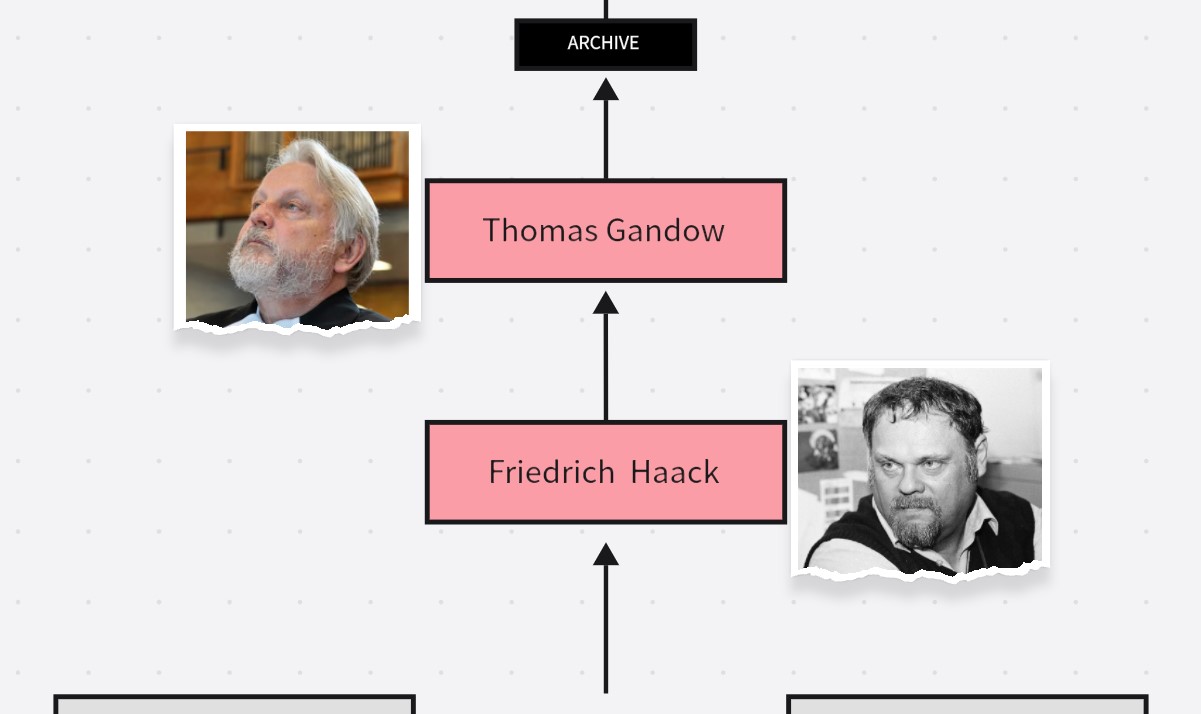
The assertion that “Gandow is Haack’s successor” was verified by us with special care and substantiated twice by entirely different sources.
Bertil Persson writes: “Following Haack’s death in 1991, the most prominent voice in the general chorus was that of Thomas Gandow of Berlin,” and further: “Thomas Gandow, working in Berlin, can rightfully be called Haack’s successor” 12.
Elisabeth Arweck, an academic sociologist, writing with a different tone and from another country, observes the exact same thing: Gandow “ is perceived to have taken on the mantle of Pastor Haack” 4.
Furthermore, Persson draws attention to a detail significant not merely for biographical interest, but for understanding the mechanics of the process itself: Gandow’s books “consisted mainly of reprints of Haack’s publications” 12. In other words, texts produced in Bavaria during the 1970s simply reappeared in Berlin during the 1990s under new covers – without any revision or amendment. The anticult craft was handed down not merely as personal experience from mentor to disciple, but as a kit of ready-made formulas and standardized manuals passed from one era to the next.
In summary, a new permanent salaried post was established in German Protestantism in 1969. Haack’s definition of a “sect” contains not a single word about danger to the public; his sole concern was that someone prayed differently. Yet two decades later, that very church anathema – rewrapped in pseudo-scholarly buzzwords (“totalitarianism,” “mind control”) – would be foisted upon secular judiciaries in countries around the globe.
But that’s not the most interesting part. Even critics will not find in Haack the founder of the tradition. For upon closer examination, he was merely continuing someone else’s work. The genuine roots ran far deeper into the past – back to a figure who, by 1970, had already devoted four full decades to this fight.
Chapter 3. Kurt Hutten: The Man Who Transferred His Past into the Future
In 1970, a meeting took place in Germany that largely went unnoticed by history. Few details about it have survived, but Bertil Persson recorded the essential fact:
“In 1970, Detlef Bendrath (sect commissioner from Lübeck), Haack, Hutten, Hans-Dieter Reimer, and other Lutheran anti-sect activists held a meeting of the Working Group on Free Churches and Sects. From that time on, Haack took over Hutten’s mantle and became the most prominent Lutheran anticultist” 12.
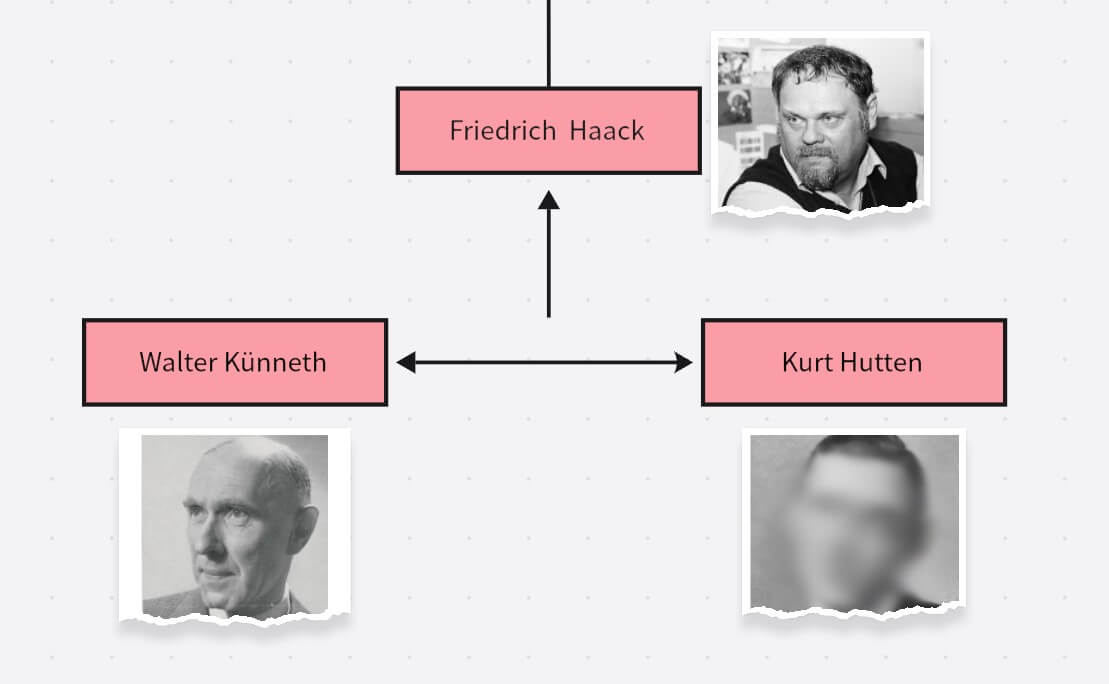
BACKGROUND
- Kurt Hutten was born on March 6, 1901, in Langenburg, a Württemberg town with Hohenlohe Castle overlooking the Jagst River, and died on Aug. 17, 1979, in Ludwigsburg 17. In the late 1920s, he defended his doctoral dissertation in Tübingen, titled “Die Bhakti-Religion in Indien und der christliche Glaube im Neuen Testament” (The Bhakti Religion in India and Christian Faith in the New Testament). He was a staff member of the Apologetische Centrale and editor of its newsletter, Materialdienst. He authored the reference manual “Seher, Grübler, Enthusiasten” [“Seers, Brooders, Enthusiasts”] (Stuttgart, 1950), which went through 15 editions 19. He served as the first head of the EZW beginning April 1, 1960 (Evangelische Zentralstelle für Weltanschauungsfragen – Protestant Central Agency for Worldview Issues), leading it for eight years 17, 18.
Even though Kurt Hutten is one of the central figures of this story and an acknowledged classic of German apologetics whose name and works are still celebrated on the official EZW website (ezw-berlin.de) 33, a striking fact confronts us: there is not a single digitized photograph of Hutten in the public domain of the internet. A man whose manuals shaped the fight against sects for half a century to come has remained, for the digital age, an influential figure without a face.
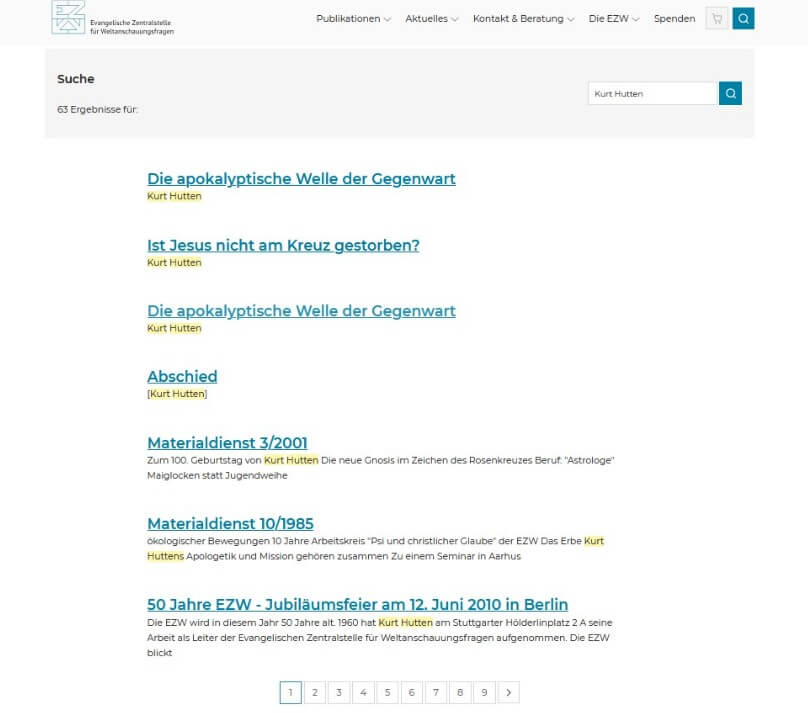
Let us make an important qualification: this chapter deals solely with Kurt Hutten’s “façade” biography – the one displayed in standard reference works. The dark side uncovered by historian Horst Junginger (Hutten’s membership in the pro-Nazi “German Christians” movement, his anti-Semitic articles of 1937, and his remarkably smooth 1946 denazification without a shred of repentance 2) will be examined in detail, grounded in archival documents, in Part 2.
Right now, Hutten matters to us in a different capacity: as the architect of a system who forged two key instruments and passed them like a baton to his successors.
Instrument One: The Organization That Resumed the Old Mission
The EZW (Evangelische Zentralstelle für Weltanschauungsfragen – Protestant Central Agency for Worldview Issues) itself gives the exact date of its rebirth in its 2021 anniversary publication: “On April 1, 1960, Kurt Hutten took up his work as head of the EZW in Stuttgart” 18. Along with the new center, the newsletter Materialdienst (“Information Service”) was also revived – the future mold for all of Germany’s anti-sect press, including Berliner Dialog, which Thomas Gandow would launch 35 years later.
“Revived” is precisely the word. This was not the creation of something new, but a deliberate relaunch: the bulletin Materialdienst had been published before the war under the prewar Apologetische Centrale and fell silent only in 1941 24. In 1960, it was simply restarted under the exact same name, in the same genre, and with the very same editor at the helm.
And there is no journalistic exaggeration in this direct continuity. The EZW itself openly acknowledges this fact in its anniversary publications 34: the agency was established to carry on prewar apologetic work in new historical circumstances 18. Sociologist Elisabeth Arweck likewise stresses that it was Kurt Hutten’s experience and research that formed the bedrock of all the center’s activities 4.
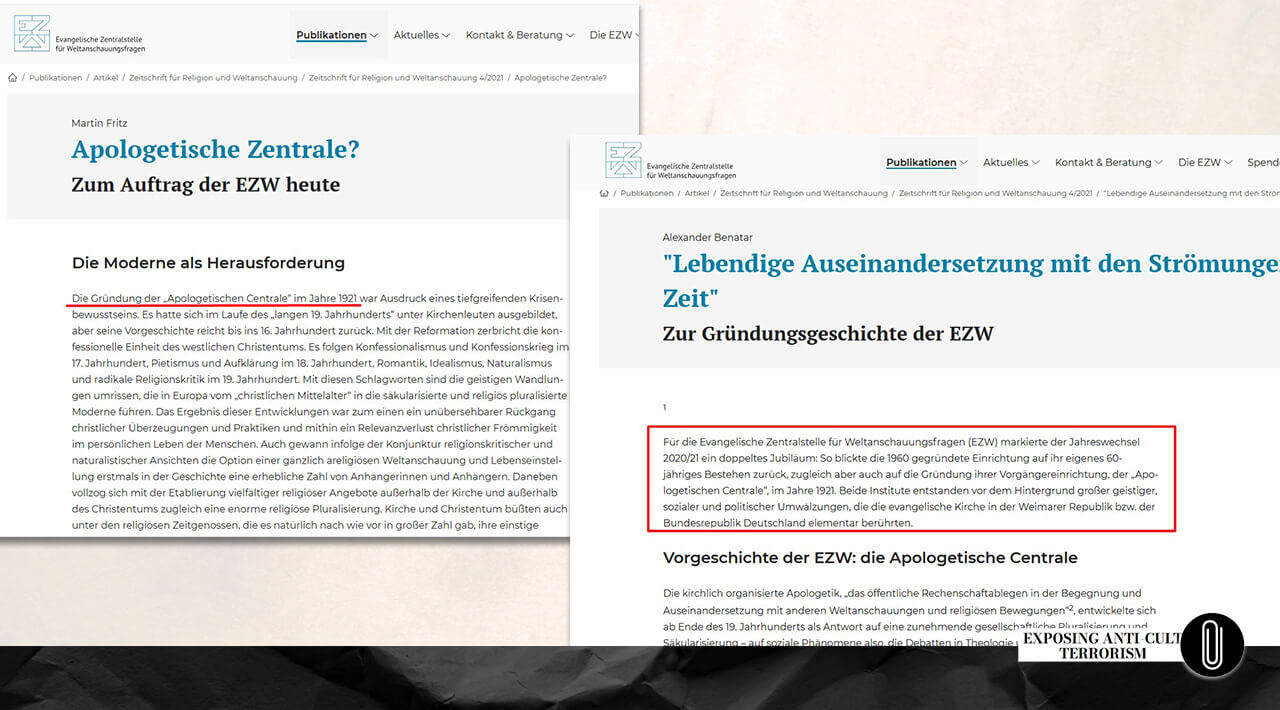
No one hid anything. The continuity is openly proclaimed on the official website; they saw no need to conceal the past. Another question is: what exactly was its predecessor doing, at least between 1933 and 1937? Here lies a blank slate. But we will discuss that in the next part of our investigation.
Instrument Two: The Reference Manual That Survived Four Eras
In 1950, a book was published in Stuttgart with a title that in itself amounts to a minor masterpiece: “Seher, Grübler, Enthusiasten. Das Buch der traditionellen Sekten und religiösen Sonderbewegungen” – translated as “Seers, Brooders, Enthusiasts: The Book of Traditional Sects and Special Religious Movements.” It served as the canonical postwar manifesto of German “sectology.” The book’s publishing trajectory speaks for itself: 15 editions (the third as early as 1953, the 10th in 1966, the 12th in 1982, and the 15th in 1997), plus another reprint in 2002 2, 19.
Just consider it: a full half-century of continuous presence on bookstore shelves!
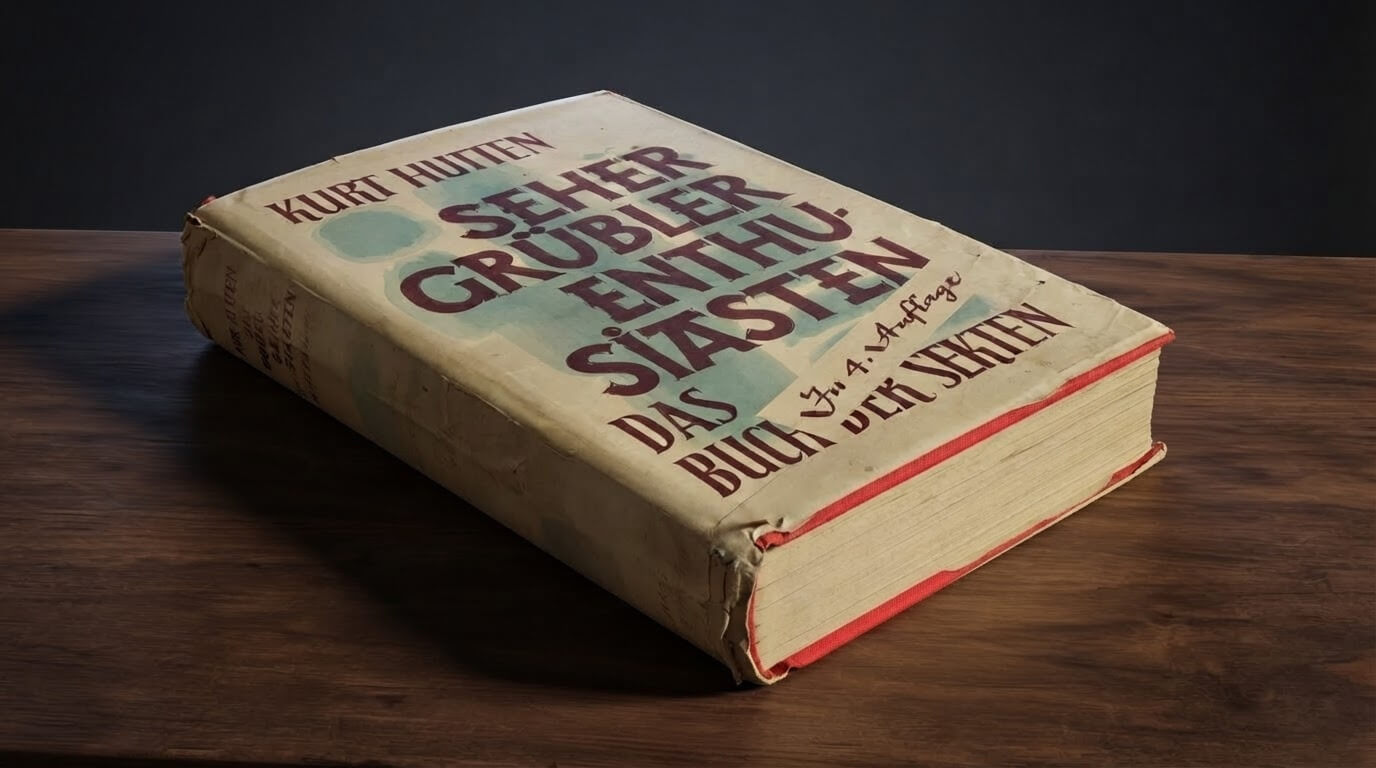
Let us evaluate this half-century by the standards of scholarly life. Over 50 years, the field of religious studies managed to turn its methodology upside down four times over: discarding old armchair theories, passing through fascinations with sociology, anthropology, and cognitive science. Academic scholars first subjected the very word “sect” to fierce criticism, then judged it scientifically untenable, and ultimately replaced it with the neutral term “new religious movements.” Classic academic treatises of the 1960s are opened today merely as historical artifacts of their era rather than relevant scholarly sources.
Yet throughout those 50 years, Hutten’s reference book quietly continued to be reissued. It outlasted Chancellor Adenauer, the West German “economic miracle,” the youth protests of 1968, the chancellorship of Willy Brandt, the wave of left-wing terrorism in the 1970s, the Helmut Kohl era, the fall of the Berlin Wall, German reunification, and Gerhard Schröder’s first cabinet. During the decades that book sat on bookstore counters, the German state itself changed its political system twice and radically redrew its borders. States collapsed and emerged anew, but the manual endured – and, judging by its relentless print runs, enjoyed constant demand, shaping the outlook of multiple generations of Germans.
Scholar Horst Junginger captured the crux of this phenomenon with unsparing clarity: “Just five years after the end of the war, the first of what have now become 15 editions of Hutten’s well-known and highly successful book ‘Seher, Grübler, Enthusiasten’ appeared. With it, he transferred his worldview journalism from the past into the future. On the basis of this work, Hutten was appointed in April 1960 as head of the Protestant Central Agency for Worldview Issues (EZW), the successor organization to the Apologetische Centrale” 2.
“Transferred from the past into the future”
Indeed, he did not repent, did not reexamine, did not reconsider through the lens of the ruins of 1945; he simply transferred it. Just as one transfers funds from one bank account to another. Five years after the war ended, a book was published in Stuttgart that preserved every ounce of its prewar core – the techniques, the perspective, the categorization, the familiar tone of supremacy and the condescending posture toward all religious minorities – that quintessential habit of depicting another’s faith “from the outside” and “with a slight air of superiority.”
Only the cover was new. New, too, was the list of groups against which the public in the new Federal Republic needed warning, since after 1945 it had become unacceptable to discuss certain previous targets in the old tone. In such publications, however, the target list is updated with each edition – it is the most mutable component. Everything else, the very reason the book was conceived, was left untouched.
Ten years after the book’s publication, the creator of this instrument was handed the keys to the country’s premier anticult agency.
Reference Books on Sects
Here we must briefly step away from the individuals, because the genre itself in this story matters far more than any single author.
Any reference guide to “sects” is structured precisely like a botanical field guide to plants: an alphabetical or thematic catalog, an individual entry for each group, and inside – a brief history, core dogmas, approximate membership numbers, names of leaders, and a mandatory assessment. That assessment is the linchpin; without it, the reference guide loses all purpose. After all, it is created not to understand a phenomenon, but to enable the reader to instantly identify it and apply a label.
This format possesses three fundamental attributes that cannot be mitigated by any editorial revision or good intentions on the part of the author.
First, it precludes dialogue. The author of an entry is under no obligation to hear out the organization, quote its own perspective, or publish rebuttals. A botanical guide does not debate weeds, and a plant does not sue the botanist.
Second, it equates the incomparable. Under a single cover, using a uniform template and grouped into shared classifications, a totalitarian cult that drives members to suicide peacefully coexists alongside a harmless community of vegetarian enthusiasts. To be sure, differences may be acknowledged within the text of an entry. Yet the very structure of the catalog implants an ironclad assumption in the reader’s mind: all of these are phenomena of the same dangerous order, branded under the generic label of “sect.” The contents of individual entries are powerless against this: people remember tables of contents and target lists far better than footnotes and qualifiers.
Third, it is practically timeless. Once entered into the registry, a text begins to migrate from edition to edition and from country to country for decades. The leadership within an organization may have changed long ago, past controversies and scandals may have subsided, schisms and reforms may have taken place, but in the 12th edition of 1982, the reader encounters verbatim the very same scare stories that appeared in the third edition of 1953. It is a permanent card index bound in a hardback volume. Disseminated worldwide and translated into dozens of languages, compilations of this kind are still distributed in bulk to schools, dioceses, and local police precincts today.
This raises a natural question: did Kurt Hutten single-handedly revive this entire anti-sect apparatus, write the postwar canon from scratch, and pass it on to Haack, who in turn passed it to Johannes Aagaard, Thomas Gandow (whose five tons of archives have now settled in Minsk with Martinovich), and Alexander Dvorkin?
Where did Hutten himself acquire this methodology, the card registry, and the very mechanics of classifying enemies?
When the war ended, Hutten was only 44 years old. Yet by 1950, he already had two decades of battling “sects” under his belt. As it turns out, throughout those 20 years he had a specific boss, and that boss had an office, a staff, and, apparently, his own working archive as well.
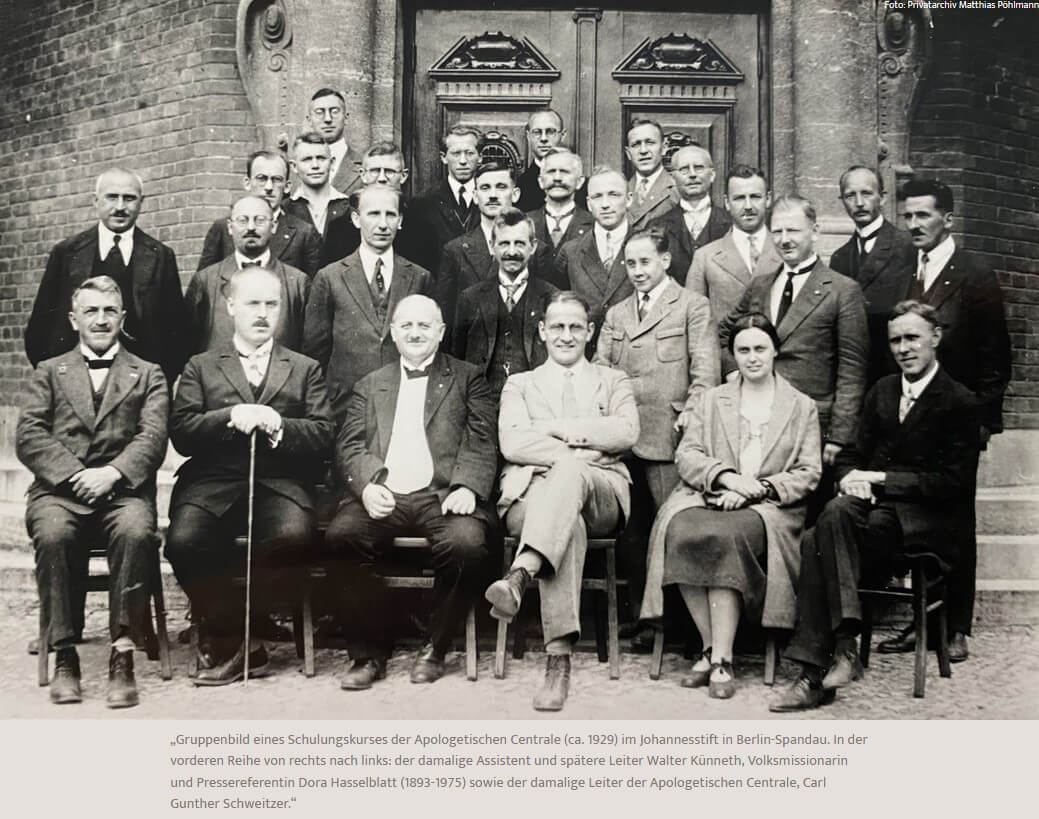
That office was located in the Spandau district of Berlin, at the Protestant institute Evangelisches Johannesstift. The boss’s name was Walter Künneth.
Chapter 4. Walter Künneth: The Card Index, the Gestapo, and the Banner Raised in 1994
Walter Künneth is a truly monumental figure. He was not merely Kurt Hutten’s mentor, but the first person — in the historical period we know of — to put the church’s file on “cultists” at the service of the state’s apparatus of coercion. And he was the only theologian among this group whose name, decades later, would be given to an entire institute openly at war with neutral science.
BACKGROUND
- Walter Künneth, January 1, 1901, Etzelwang, Upper Palatinate – October 26, 1997, Erlangen 20. Studied at Erlangen and Tübingen, received his doctorate in 1924, member of the Wingolf student fraternity 32. From 1927, edited the “Wort und Tat” (Word and Deed) series of the Apologetische Centrale; directed the institution from 1932 until its closure 21. In 1933, published the essay “Das Judenproblem und die Kirche” (The Jewish Problem and the Church) in the anthology “Die Nation vor Gott” (The Nation Before God), Berlin 23. In 1937, released a polemic against Alfred Rosenberg, the chief Nazi Party ideologue on worldview matters, after which the Gestapo revoked his license to lecture 20. Honorary professor at Erlangen from 1946, held a full professorship from 1953, retired in 1969 20. Sat on the board of trustees of the EZW beginning in 1960 24, 26. In 1994, the Walter Künneth Institute was established in his honor 26.
Ninety-six years! Born under the German Empire of Wilhelm II and passing away under Chancellor Kohl, Künneth traversed four distinct German states and outlived almost all his peers in the field.
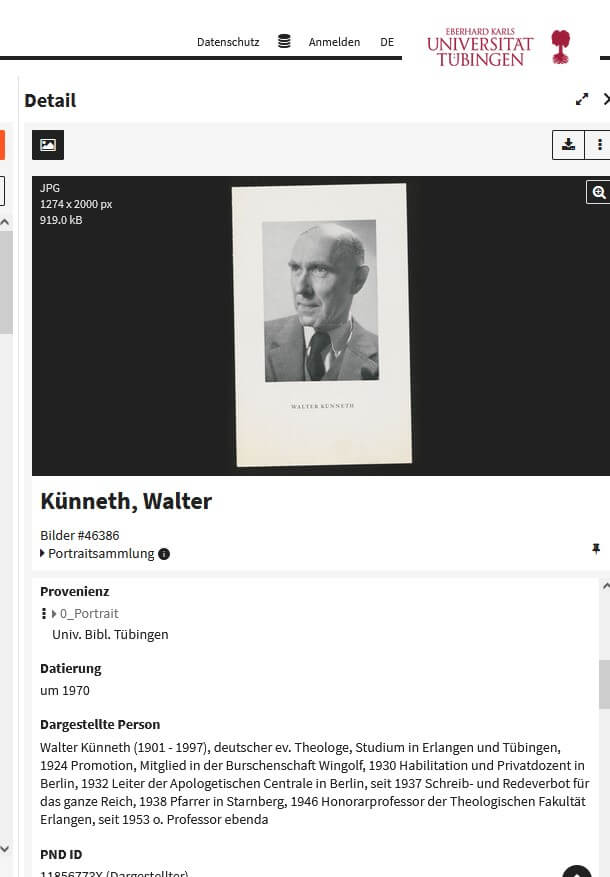
Peers from the Same University
Walter Künneth was born on January 1, 1901 20, and Kurt Hutten on March 6 of that same year 17. The age gap between them was just over two months. They were peers who breathed the air of the very same university lecture halls. Künneth studied at Erlangen and Tübingen, completing his doctorate there in 1924. Hutten defended his doctoral thesis at the same university in Tübingen four years later, in 1928 – with his dissertation devoted to the general history of religions rather than church dogmatics.
Here, for the first time, we encounter the figure of Hutten’s doctoral adviser: the Indologist Jakob Wilhelm Hauer 36. This was the very same Professor Hauer who would demonstratively renounce the church, found the Nazi-aligned “German Faith Movement” (Deutsche Glaubensbewegung), and don the uniform of an SS officer. However, a detailed analysis of this sinister figure and others who emerged from that Tübingen department will be reserved for other parts of this investigation.
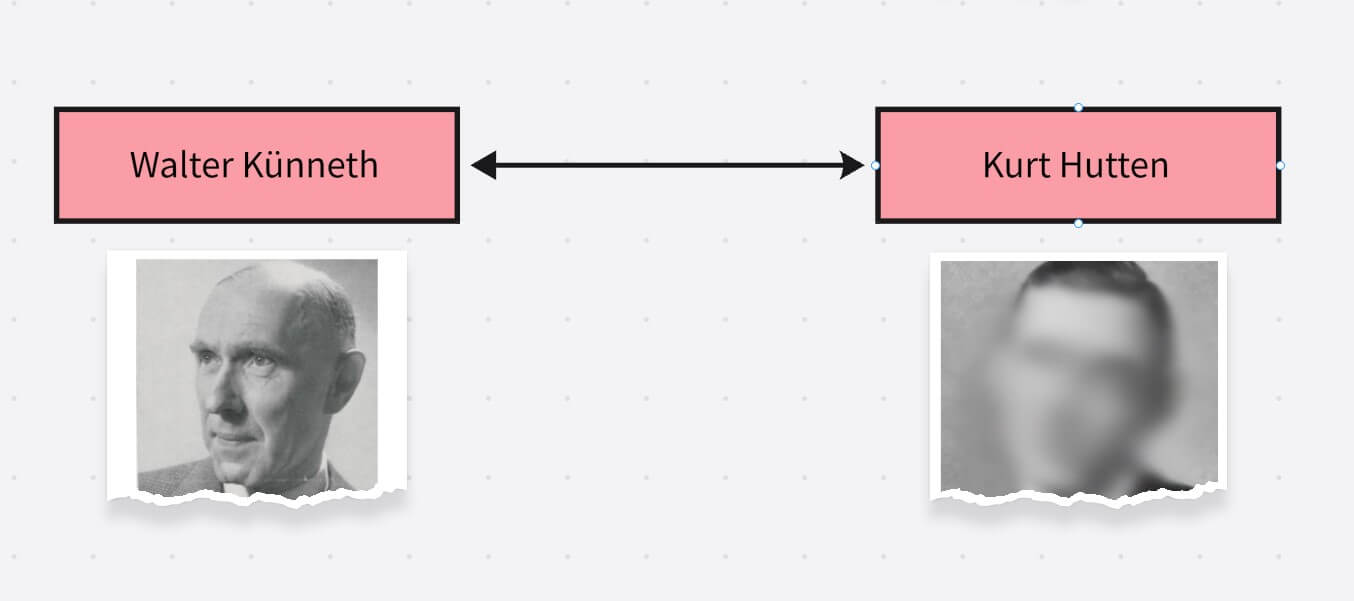
Subsequently, Künneth’s and Hutten’s paths crossed at the headquarters of the prewar Apologetische Centrale. Beginning in 1927, Künneth supervised its flagship book series, “Wort und Tat” (Word and Deed), and in 1932 became director of the entire anticult agency 21. Hutten worked in the same organization as an author and lecturer, concurrently heading the editorial board of the bulletin Materialdienst 2, 24.
This very bulletin became the indispensable operational tool that managed to survive even the dissolution of the Apologetische Centrale itself! It fell silent only with the outbreak of the war in 1941, making a triumphant return under the same title in 1960 – when Kurt Hutten took the helm of its postwar successor agency, the EZW 18, 24.
History records another pivotal nexus in their collaboration: the spring and summer of the fateful year 1933. That period saw the emergence of the so-called Young Reformation Movement (Jungreformatorische Bewegung) within German Lutheranism. This group adopted a dual posture typical of conservatives: it enthusiastically welcomed the Nazi accession to power (the “new state”) while simultaneously seeking to defend the church’s autonomy from crude interference by Nazi Party functionaries.
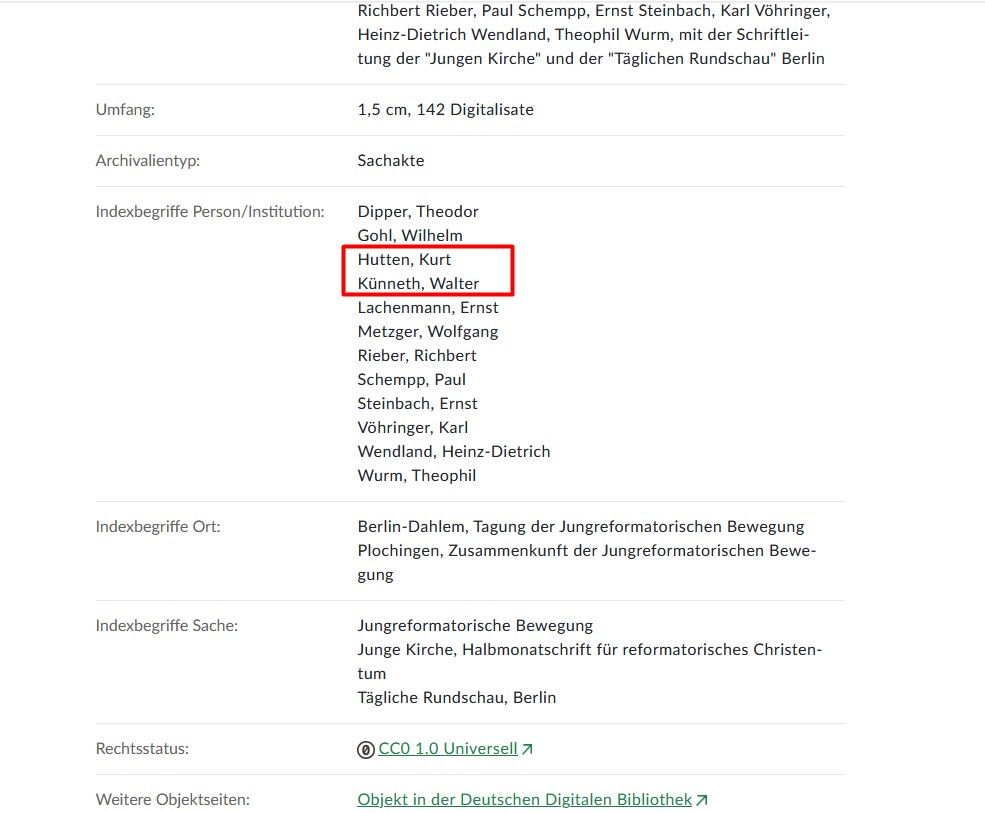
In the movement’s documents, Walter Künneth is listed as one of its three official leaders – specifically in his capacity as “Director of the Apologetische Centrale in Spandau” 35. Meanwhile, Hutten’s surname surfaces alongside Künneth’s in the correspondence archive of the Württemberg pastor Heinrich Fausel (comprising 142 digitized archival folios from May–December 1933, where Hutten is recorded as the movement’s regional commissioner) 37. We will discuss this in greater detail in the second part of our investigation.
Subsequently, Künneth’s and Hutten’s paths crossed at the headquarters of the prewar Apologetische Centrale. Beginning in 1927, Künneth supervised its flagship book series, “Wort und Tat” (Word and Deed), and in 1932 became director of the entire anticult agency 21. Hutten worked in the same organization as an author and lecturer, concurrently heading the editorial board of the bulletin Materialdienst 2, 24.
This very bulletin became the indispensable operational tool that managed to survive even the dissolution of the Apologetische Centrale itself! It fell silent only with the outbreak of the war in 1941, making a triumphant return under the same title in 1960 – when Kurt Hutten took the helm of its postwar successor agency, the EZW 18, 24.
History records another pivotal nexus in their collaboration: the spring and summer of the fateful year 1933. That period saw the emergence of the so-called Young Reformation Movement (Jungreformatorische Bewegung) within German Lutheranism. This group adopted a dual posture typical of conservatives: it enthusiastically welcomed the Nazi accession to power (the “new state”) while simultaneously seeking to defend the church’s autonomy from crude interference by Nazi Party functionaries.
In the movement’s documents, Walter Künneth is listed as one of its three official leaders – specifically in his capacity as “Director of the Apologetische Centrale in Spandau” 35. Meanwhile, Hutten’s surname surfaces alongside Künneth’s in the correspondence archive of the Württemberg pastor Heinrich Fausel (comprising 142 digitized archival folios from May–December 1933, where Hutten is recorded as the movement’s regional commissioner) 37. We will discuss this in greater detail in the second part of our investigation.
The Card Index as a Response to the Loss of the Flock
The Apologetische Centrale was founded in 1921 by the Central Committee for the Inner Mission of the German Protestant Church in Berlin 21, and Horst Junginger described the circumstances of its emergence without dramatization:
“When the ‘Apologetische Centrale’ was founded in 1921 by the Central Committee for the Inner Mission, the Protestant church was responding to the problem that following World War I, the number of people leaving the church had skyrocketed and, at the same time, groups of freethinkers and “free-religious” individuals had experienced a rapid influx of members.” 2.
A chronicle of the mass exodus from the German Protestant Evangelical Church in those years reads like a battlefield report:
- 1919: 237,740 people;
- 1920: 314,005 people;
- 1921: 256,452 people;
- 1922: 154,810 people 29.
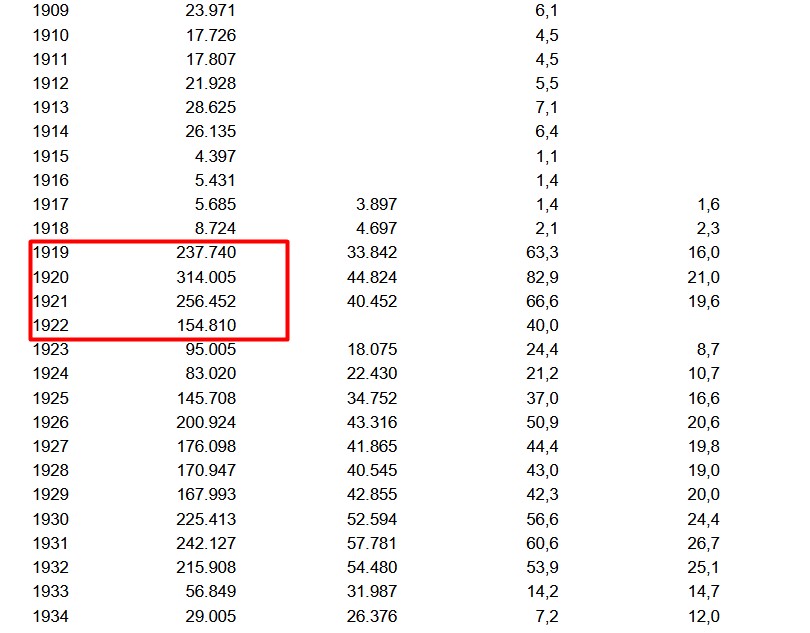
Nearly a million parishioners (963,000 people) in just four years! More than 800,000 of those left during the three years immediately preceding the deployment of the Apologetische Centrale. And this, we emphasize, reflects statistics for Protestants alone.
For a Germany of 60 million people, where church membership had for centuries been the default norm confirmed by tax records, this was not merely an outflow – it was an outright catastrophe.
There were plenty of reasons: national shock over the lost world war; the abdication of the Kaiser, who had simultaneously served as supreme governor of the Prussian church; the disestablishment of state religion under the Weimar Constitution; and runaway hyperinflation that turned church funds into dust. Finally, millions of Germans gained a purely practical motive: one could now free oneself from paying church taxes with a single signature.
What was a religious organization losing a million adherents supposed to do in such a situation? It would seem that the time was ripe for a profound theological reform, a reevaluation of the stale language of sermons, an honest discussion of the causes of the crisis, and an effort to understand those who have drifted away. All of this was discussed in church offices, of course… at length and to no effect.
In practice, something entirely different was done: a card registry was established. Junginger described the operational setup of the new organization as follows: “In addition to extensive publishing and lecturing activities, the task of the ‘Apologetische Centrale’ was primarily to provide training materials to pastors and laypeople and to conduct training courses itself. For this purpose, a library was established and the creation of an archive on worldview communities deemed hostile was begun. The information service, which was also set up, was intensively used both within the church and by the state” 2.
So: a library, an archive of “hostile worldview communities,” and an information service utilized by the state. Is this not the very archetype of the shelves in Minsk? And these three elements would be reproduced for a hundred years running without a single change: in 1920s Berlin, in 1960s Stuttgart, in 1970s Munich, in 1990s Berlin, and in 2000s Moscow and Minsk.
The growth of this card file can be traced through the center’s own internal reports, published by Matthias Pöhlmann 38 and analyzed by historian Horst Junginger 2:
- 1928: approximately 700 subject dossiers on 150 worldview movements;
- 1933: approximately 250 organizations monitored;
- 1936: already approximately 500 associations officially labeled “dangerous.”
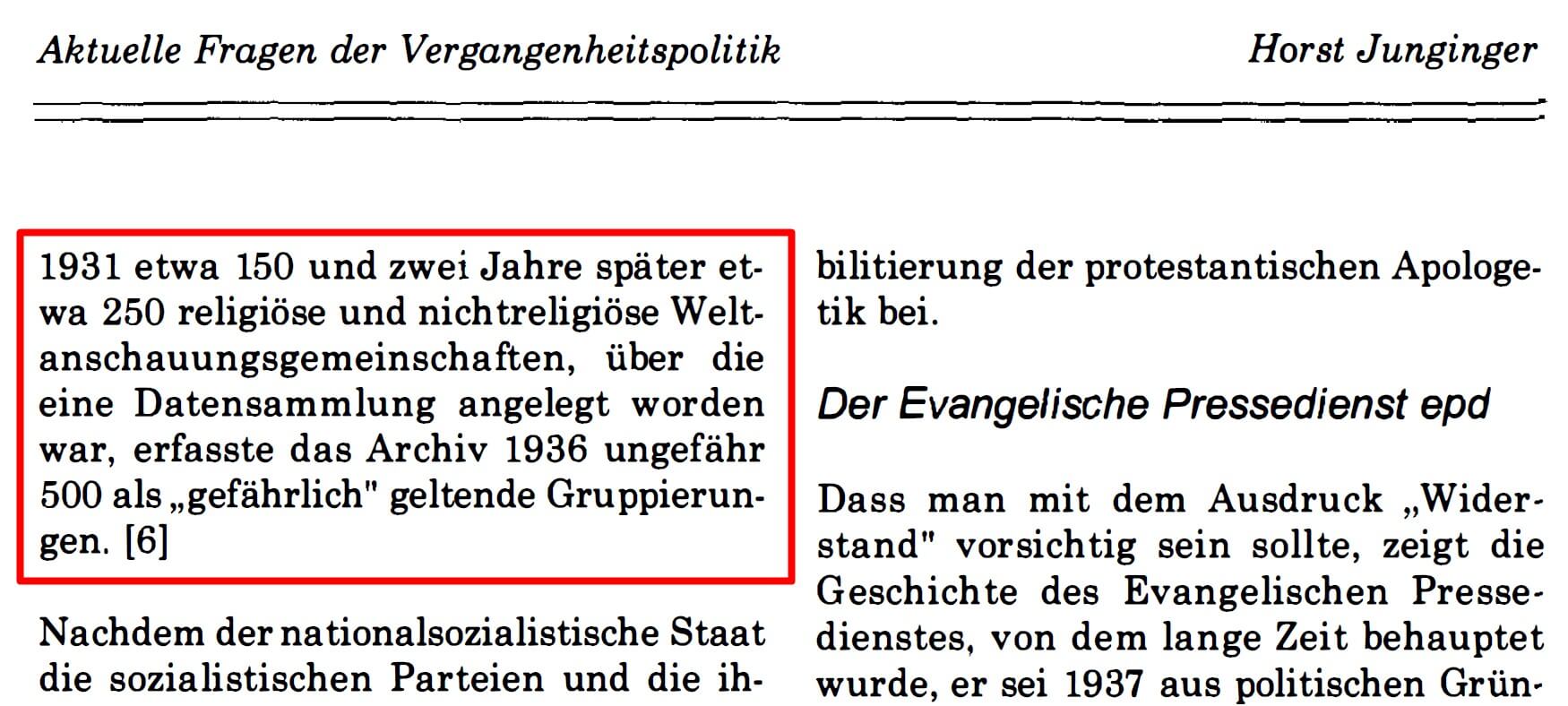
The database doubled in size during the exact three years when all freedom of assembly and religion was utterly extinguished in Nazi Germany! New congregations were barred from registering, publishing literature, or assembling together. By all reasonable logic, their numbers should have plummeted precipitously.
The explanation to this paradox is simple and fundamental to our entire investigation. The card index swelled not because dangerous sects and cults were multiplying across Germany, but because the church itself – or more precisely, the anticultists of the era – were relentlessly expanding the very definition of what was deemed “dangerous.” Suddenly, there was a frantic demand for “blacklists,” and the church card index acquired a new, highly interested, and powerful client: the state and its security apparatus.
The personnel history of the Apologetische Centrale is remarkably straightforward. Its first director was Carl Gunther Schweitzer (1889–1965) 21, who launched a series of pamphlets titled “Wort und Tat” (Word and Deed). Walter Künneth served as editor-in-chief of this series from 1927 to 1932 12, 21. In 1932, Künneth succeeded Schweitzer as director, remaining at the head of the center until it was shut down. Working under him as staff lecturer and editor of the newsletter Materialdienst was the young pastor Kurt Hutten.
The entire lineage of German “sectology” was condensed within the walls of a single Berlin office during the decade between 1927 and 1937. It consisted of a director who would step from the editor’s chair into a professorship, and his subordinate who would take charge of the official successor agency after the war.
December 1933: The Letter Overlooked for Forty-Five Years
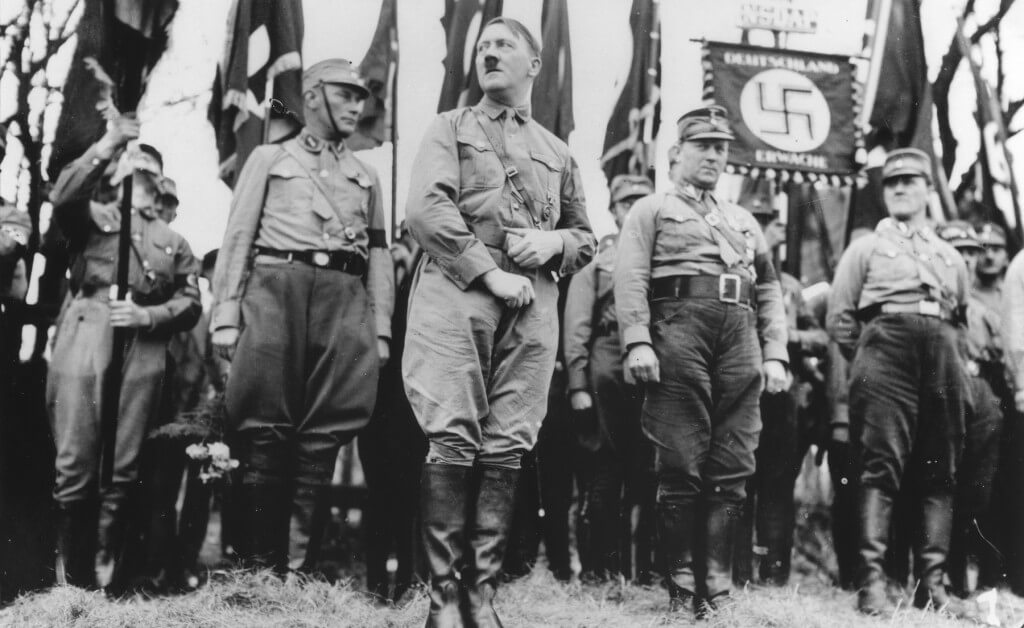
On December 16, 1933 – exactly ten and a half months after Adolf Hitler was appointed Reich Chancellor, eight months after the introduction of the anti-Semitic “Aryan paragraph,” and six months after the dissolution of all opposition parties in Germany – the director of the Apologetische Centrale, Walter Künneth, sent another routine official report to the Reich Ministry for Church Affairs.
Horst Junginger offers an assessment of this collaboration that leaves no room for ambiguity:
“The ‘Apologetische Centrale’ was not above enlisting the aid of the Secret State Police (Gestapo), just as it conversely supplied state authorities with material aimed at combating the freethinkers’ and godless movement, as well as competing religious groups such as Jehovah’s Witnesses and other associations” 2.
The document is preserved intact in the Evangelical Central Archive in Berlin (file reference number EZA Berlin, 1/C3/392) 22. In 1990, it was published independently by two scholarly research teams: Eberhard Röhm and Jörg Thierfelder in their fundamental study “Juden, Christen, Deutsche” (Jews, Christians, Germans), and Harald Iber in the anthology “Diakonie im ‘Dritten Reich’” (Diaconia in the Third Reich) 22.
And here is what Walter Künneth himself wrote in black and white:
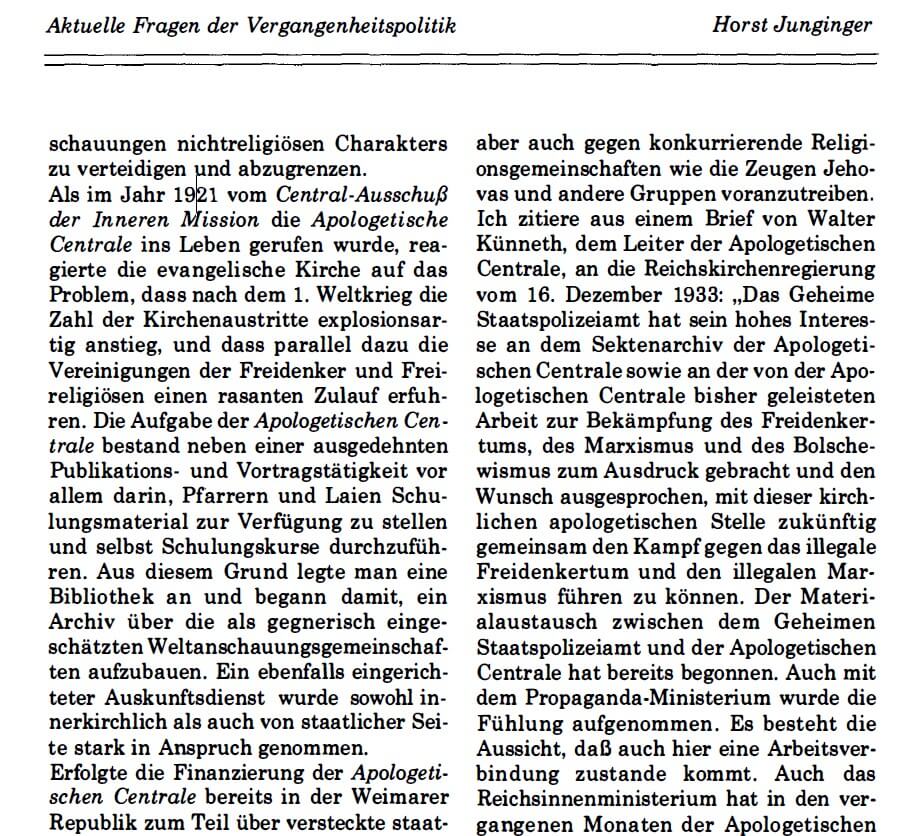
“The Secret State Police Office has expressed its keen interest in the sect archive of the Apologetische Centrale, as well as in the work performed so far by the Apologetische Centrale in combating freethought, Marxism, and Bolshevism, and expressed the wish to be able in the future to wage the struggle against illegal freethought and illegal Marxism jointly with this church apologetic office. The exchange of materials between the Secret State Police Office and the Apologetische Centrale has already begun. Contact has also been established with the Ministry of Propaganda. There is every prospect that an operational link will be forged here as well. In recent months, the Reich Ministry of the Interior has also repeatedly provided the Apologetische Centrale with important material for implementation and practical use” 22.
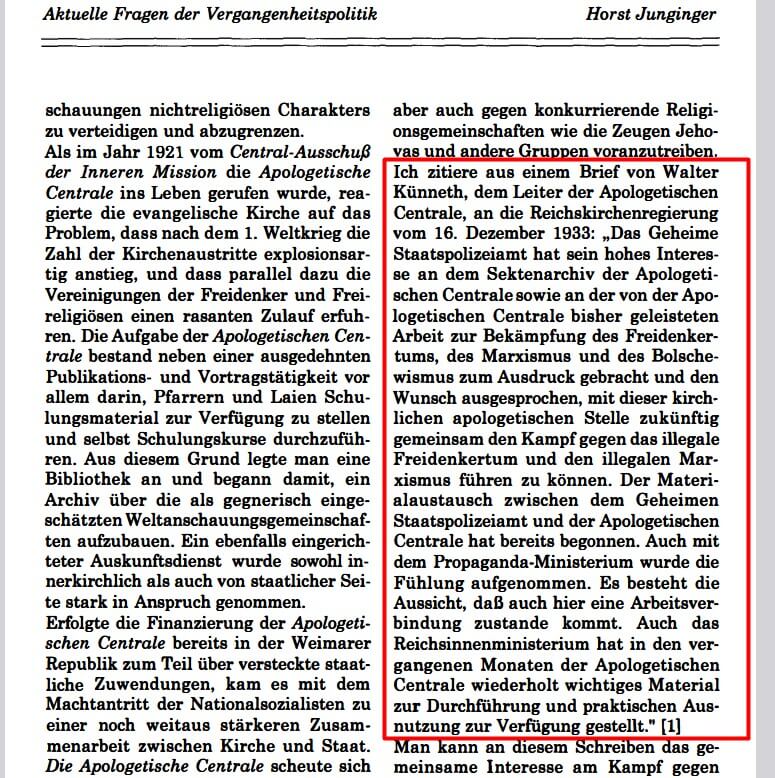
An exchange of materials!
There was no pressure or extortion on the part of the authorities. The Gestapo did not raid the premises with search warrants or haul off filing cabinets. The card index was not seized by force. The Nazis merely indicated their interest, and the two parties agreed on a partnership. And an exchange by definition implies voluntariness and mutual benefit: the anticult agency handed over its dossiers on dissenting citizens, and in return, the Nazis supplied them with operational materials “for implementation and practical use.”
Now look at the list of adversaries against whom the anticultists agreed to align with the Nazis: “freethought, Marxism, Bolshevism.”
Not a word about theology. No disputes over dogmas or heresies. Strictly political labels that were already grounds for imprisonment in Germany in December 1933. The Nazis had crushed the freethinkers’ associations back in the spring and the communists in February and March. By the time this report was drafted, their activists and parliamentary deputies were already behind the barbed wire of Dachau concentration camp, opened on March 22, 1933. In other words, the church apologetic agency offered to join forces with the Gestapo against people who were actively being sent to concentration camps.
Publishing this document in 1990, researcher Harald Iber added two pointed comments of his own. The first one is full of genuine human anguish: “The mere thought that materials from the Apologetische Centrale helped send freethinkers or Marxists to concentration camps causes a heavy tightness in my chest.”
And the second commentary delivers a definitive diagnosis of the entire postwar anticult record: “Not a single publication about the Apologetische Centrale published after 1945 contains a single word about its connection to Nazi punitive agencies” 22.
Not a single word for fourty-five years. All while the damning document rested quietly in a public church archive in the heart of Berlin, filed under the exact reference number we cited above, and anyone can request to see it today.
A Dispute Between Two Historians
When two German historians, Horst Junginger and Matthias Pöhlmann, clashed head-on, there was no smoothing over the disagreement, so let us present it as it is.
Horst Junginger wrote plainly:
“At various work meetings held in May and June 1933 at the Secret State Police Office in Berlin, the demands of the attending church representatives went even further than the measures envisioned by the state. When it came to groups like the Earnest Bible Students (Jehovah’s Witnesses), the Protestant Supreme Church Council, and the Apologetische Centrale were the driving forces that considered the ban inevitable. […] When Matthias Pöhlmann writes in his book about the Apologetische Centrale that, in collaborating with the Nazi state, the Center ‘unobtrusively’ drifted into a political wake and allowed itself to be ‘used,’ this turns the events upside down. For in a number of instances, it was precisely the churchmen who literally pushed state organs toward the harshest crackdowns” 2.
Two mutually exclusive narratives!
In Pöhlmann’s version, the anticultists were innocent victims of circumstance, who were “dragged in,” used, and set up. The state is the predator here, while the apologists are naive sheep led astray before they even realized what was happening.
In Junginger’s account, however, things unfolded in the exact opposite manner: inside Gestapo offices, it was men in clerical robes who bayed for blood louder than the investigators themselves, actively extracting bans on nonconformists from the Nazis.
There is no need to force a conclusion here. It is enough to recall that Matthias Pöhlmann is himself an anticultist and a staff member of the EZW, the direct successor to that prewar center. This does not diminish the value of his foundational 1998 book (without him, many archives would have remained hidden from us) 3. But when Pöhlmann addressed the question of “who used whom,” he was assessing the history of his own employer. The reader should keep this in mind.
Just as one should remember that Künneth’s December 1933 letter was not written from the standpoint of a victim. Did he complain about being cunningly exploited? On the contrary, he proudly reported that the Gestapo was thrilled, data exchanges were in full swing, and a direct work relationship had been established with Goebbels’s ministry 22.
The “Earnest Bible Students” (Jehovah’s Witnesses): The True Cost of Expertise
At the time, Jehovah’s Witnesses were known in Germany as the Ernste Bibelforscher (“Earnest Bible Students”). Horst Junginger places them first among those whose elimination the anticultists persistently demanded from the Nazis 2. And this story must be told to the very end, otherwise, the phrase “considered the ban inevitable” remains an empty bureaucratic formula.
The anticult consultations at the Gestapo yielded swift results. Merely weeks after those May and June meetings in 1933, Hermann Göring (then Prussia’s Minister of the Interior) signed a decree banning the community on Prussian territory 2. By April 1, 1935, the ban had been enacted nationwide across the Reich; the authorities ordered the liquidation of the organization across all of Germany 28.
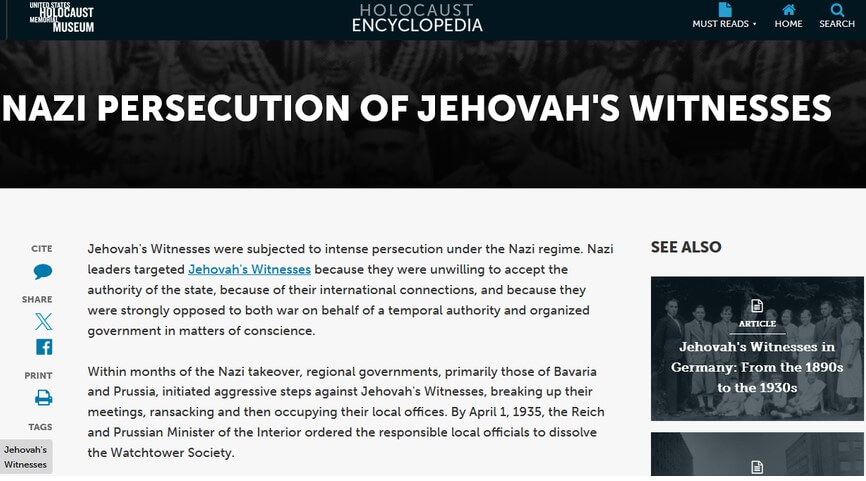
What followed these bans? Let us turn to the records of the Holocaust Memorial Museum in Washington, D.C. 28.
In 1933, there were between 25,000 and 30,000 Jehovah’s Witnesses in Germany. Over the 12 years of Nazism, every second person who refused to renounce their faith fell victim to the machinery of repression. By 1939, approximately 6,000 believers were detained in prisons and concentration camps (including those in annexed Austria and Czechoslovakia). At least 3,000 passed through camp barracks, where the purple triangle was sewn onto their prison uniforms – a specific stigma devised exclusively for them.

An estimated 1,000 German Witnesses died or were tortured to death in prison cells, and another 400 or so victims were citizens of other occupied countries. Finally, at least 273 people were sentenced to death by military courts for refusing to take up arms, and every single one was executed by either firing squad or guillotined.
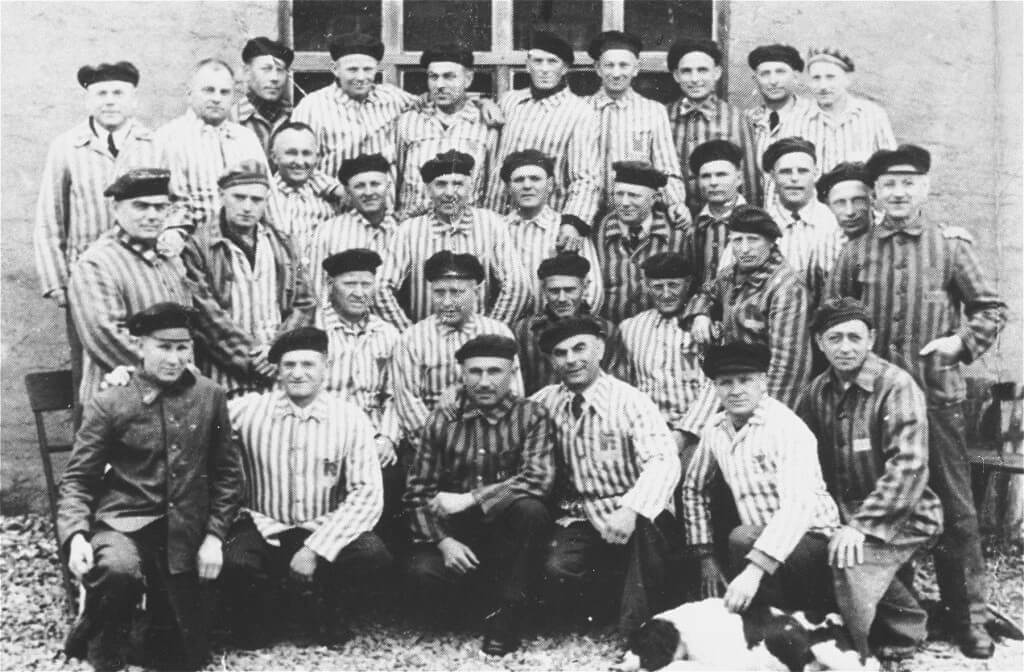
Two hundred seventy-three executions merely for refusing to kill other human beings!
However, to avoid drifting into anti-war polemics, let us be clear: the killings were carried out not by the anticult information bureau, but by the Nazi state. And the Gestapo had plenty of its own reasons to hate this community: they refused to raise their hands in the “Heil Hitler!” salute, they did not vote, and they refused to serve in the Wehrmacht.
But the main question lies elsewhere: how did this alliance actually function?
The archival meeting minutes provide an unequivocal answer. At the closed-door meetings where the fate of Jehovah’s Witnesses was decided, it was the anticult experts who demanded eradication far more persistently than the Nazi officials themselves 2. They arrived at government offices fully prepared, bringing their card indexes, dossiers, and lists of leaders. And that contribution cannot be erased from history. As Horst Junginger notes, church journals of those years regularly published “triumphant” reports announcing the shutdown of yet another religious competitor (the word “triumphant” is the historian’s own term).
And on April 16, 1937, the Materialdienst bulletin, personally edited by Kurt Hutten, published a comprehensive list of all religious groups banned since Hitler took power. Junginger bluntly calls the section on Jehovah’s Witnesses as an act of denunciation 2.
The year was 1937. Thousands of people from that list were already languishing in prisons and concentration camps, and the editorial staff under Walter Künneth and Kurt Hutten knew perfectly well where the subjects of their card index were being sent.
Chapter 5. December 8, 1937: Who Shut Down the Apologetische Centrale?
On December 10, 1937, the Apologetische Centrale, the reference and analysis agency based at the Johannesstift institute in Berlin, was shut down 21. Everyone agrees on this date, from university dissertations to encyclopedias. Admittedly, an error circulated in the academic literature for a long time: in the writings of historian Horst Junginger, the date appeared as “February 10, 1937.” We cross-checked the date against five independent sources (including Diakonie records, EZW publications, and Seibert’s study) and concluded that February was a simple typographical error. The exact day was indeed December 10.
Yet while the date is clear, another question remains far murkier: who exactly shut the agency down?
Drawing on RSHA (Reich Main Security Office) archives, historian Seibert states plainly that on December 10, 1937, the center was “closed by the Gestapo” 40, and standard reference works repeat this claim. However, in the EZW’s own 2021 anniversary report, a different account emerges: the center was liquidated “at the behest of the Reich Ministry for Church Affairs” 44. Was it the Gestapo or the ministry? There appears to be a distinction, yet the essence remains the same: Hanns Kerrl’s ministry was just as much an organ of the Nazi state as the police 45. In either case, the outfit was supposedly closed by Hitler’s regime.
Im Einvernehmen
Let us turn directly to the source. The text of the order is cited by the anticult historian Matthias Pöhlmann in an essay on the history of apologetics 43, referencing a Gestapo letter to Walter Künneth dated December 8, 1937:
“In agreement with the Reich and Prussian Minister for Church Affairs, the Apologetische Centrale (Berlin-Spandau, Johannesstift), is hereby dissolved and banned pursuant to § 1 of the Decree of the Reich President for the Protection of the People and the State of February 28, 1933.”
What a curious phrasing: “in agreement with” (Im Einvernehmen), wouldn’t you say? The order was issued by the Gestapo, while the church ministry merely countersigned it. Perhaps historians were quoting different parts of the same sentence, each selecting whatever was most convenient. The timeline is also telling: the letter was issued on December 8, and the office was shut down on December 10. Two days to pack up, with zero chance of appeal.
The Sole Source!
Here, however, an inconvenient fact emerges: this text is known from exactly one single publication. Neither Seibert with his archival base, nor independent studies by Berlin libraries, nor general reference books cite this specific paragraph. All of them fall back on the generic phrase “forcibly closed.”
A direct search for the precise wording of the decree yields only that single article by Pöhlmann in the EZW’s institutional journal. There is no independent confirmation of the document, though there are no refutations either. Yet we must not forget that the author of that text is a deeply interested party – a salaried anticultist writing the history of his own organization.

BACKGROUND
- Matthias Pöhlmann, theologian. Defended his doctoral dissertation at Friedrich-Alexander University Erlangen-Nuremberg in 1997 with the distinction summa cum laude. The topic: “Publizistische Apologetik. Die Auseinandersetzung der Apologetischen Centrale mit den religiös-weltanschaulichen Strömungen in der Weimarer Republik und im ‘Dritten Reich’” (Journalistic Apologetics: The Apologetische Centrale’s Polemics with Religious and Ideological Movements in the Weimar Republic and the “Third Reich”). Based on this research, he published the monograph “Kampf der Geister. Die Publizistik der ‘Apologetischen Centrale’ (1921–1937)” (Battle of Spirits: The Journalism of the Apologetische Centrale [1921–1937]) in the academic series “Konfession und Gesellschaft” from Kohlhammer Verlag, edited by Jochen-Christoph Kaiser. From 1999 to 2011, he served as a research fellow (wissenschaftlicher Referent) at the EZW in Berlin, heading the department of esotericism, occultism, spiritualism, and Satanism. From 2007, he was deputy director of the institute and editor-in-chief of the monthly journal Materialdienst der EZW. Later, he became Kirchenrat and commissioner for ideological issues of the Protestant Lutheran Church in Bavaria, effectively becoming the direct successor in office to Friedrich-Wilhelm Haack.
In short, the picture that emerges is as follows: The article containing the text of the Gestapo order appeared in 2000, in Pöhlmann’s very first year on staff at the EZW and within that organization’s in-house journal. However, he uncovered the archival document itself two years earlier (in 1998) while writing his dissertation for a state university, which was subsequently published by an independent academic publisher.
However, ordinary readers never saw the archival citation for the December 8 letter. Presumably, it should appear in Pöhlmann’s monograph “Kampf der Geister,” but that volume is not publicly accessible online. Thus, until it can be directly verified, the existence of this document formally rests entirely on the word of a single author.
Paragraph § 1
§ 1 – the Decree of the Reich President for the Protection of the People and the State of February 28, 1933 – was signed by Hindenburg the day after the Reichstag fire. Its § 1 suspended the articles of the Weimar Constitution that guaranteed personal liberty, the right to free expression of opinion including freedom of the press, on the right to assembly and the right to association, as well as the privacy of correspondence and the inviolability of the home 42. This was the “Reichstag Fire Decree,” the legal foundation for the entire repressive apparatus of the Third Reich.
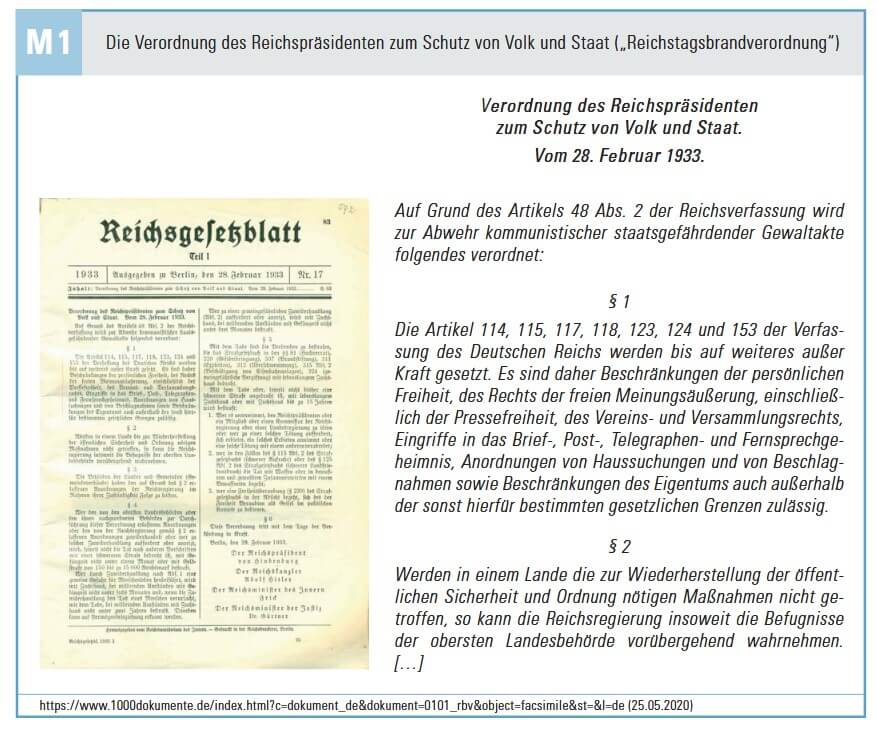 The bitter irony is that the very organization that had spent its entire existence pushing for § 1 to be used against rival congregations was dissolved under that same § 1 in December 1937. Yes, this is the very paragraph used in the spring of 1933 to launch nationwide crackdowns on Jehovah’s Witnesses across Germany 41. These bans, as we know from closed-door Gestapo meetings, were primarily instigated by the churchmen and the Apologetische Centrale.
Provenance research conducted by the Berlin Central and Regional Library notes: “At the end of 1937, the Apologetische Centrale was forcibly closed, and in 1938 its entire assets, including the 2,000-volume library, were confiscated for the benefit of the German Reich” 39. Seibert identifies the recipient: “The SD took over its library” 40.
In short, while much of the episode remains murky, one fact appears clear: the SS confiscated the card registry. The fact of this confiscation is proven: in 2025, the Berlin Central Library officially restituted to the church a surviving 1936 book bearing the stamp of the Apologetische Centrale – a book that had passed through Nazi special collections 46.
Chapter 6. Postwar Canonization
Or how two directors joined the new board of trustees.
In 1947, Walter Künneth published a book in Hamburg titled “Der große Abfall: Eine geschichtstheologische Untersuchung der Begegnung zwischen Nationalsozialismus und Christentum” (The Great Apostasy: A Theological-Historical Investigation of the Encounter Between National Socialism and Christianity) 25. National Socialism was explained to Germans as Abfall – that is, an apostasy or falling away from God – and therefore as a phenomenon inherently external to the church: something that had happened to the nation, rather than something the church itself had done.
Horst Junginger writes:
“While in the 1930s Künneth counted Jewry, liberalism, and Bolshevism among the three great demons of the time, he now deemed it opportune to interpret National Socialism as an anti-Christian power. […] Künneth’s shift in perspective and the contrast between his arguments before and after 1945 reached such a degree that, during his research, Wolfgang Maaser was left with the impression that these were two completely different individuals, and that Künneth had simply erased parts of his identity from his biographical history” 2, 23.
The three great demons of the time: Jewry, liberalism, and Bolshevism. The list was drawn up in the 1930s. After 1945, the first item became unspeakable, and into the vacated spot Künneth neatly inserted National Socialism itself. Yet, did changing the list alter the underlying mindset?
Maaser’s impression (“that these were two completely different individuals”) is not a metaphor for a historian’s despair, it is a precise description of what was then taking place across Germany on a massive scale. German postwar culture even coined a specific term for it: Persilschein (“Persil certificate”), named after the laundry detergent brand. This was the name given to the certificate of political ‘cleanliness’ that former comrades-in-arms eagerly issued to one another within the denazification commissions. Millions of questionnaires, millions of certificates, and a negligible number of real consequences.
The year Künneth received his honorary professorship, 1946, warrants particular attention. German universities were undergoing denazification under the oversight of the Allied occupation authorities at that exact moment, yet the author of a 1933 article asserting that the church would not hold back the hand of the state returned to lecturing just one year after the surrender. The Gestapo’s Redeverbot (speech ban) certainly helped: on the 1946 questionnaires, the regime’s ban imposed on his professorship carried far more weight than the publications that had prompted the ban. It must be said that this mechanism worked flawlessly—and not only in his case.
Yet the most underappreciated fact emerged in the institutional history of the EZW itself. When the EZW, the successor organization to the Apologetische Centrale, was established in 1960, both former AC directors – Carl Schweitzer and Walter Künneth – were appointed to its board of trustees (Kuratorium). And the position of director of the EZW was assumed by former AC staff member Kurt Hutten! The board held its inaugural meeting on Nov. 17, 1960, opened by the 71-year-old Schweitzer 24.
Rudolf Ladwig independently confirms this: “The former AC directors Schweitzer and Künneth were appointed to the new board of trustees of the EZW” 26.
Thus, the continuity between the Apologetische Centrale and the EZW was not merely ideological and methodological, but personal.
The very man who, in December 1933, reported to the Reich church government that the exchange of intelligence with the Gestapo was already underway, was listed in November 1960 as a member of the board of trustees of an organization which, from that time until the present day, has shaped official stance of German Protestantism on “sects.” Between those two dates lay roughly 30 years, a world war, six million murdered Jews, the Nuremberg trials, denazification, the partition of Germany, and the Stuttgart Declaration of Guilt. No investigative proceedings were ever conducted into the apologetics sector; no review of its methods ever took place. What occurred was continuity formalized through personnel appointments, and, judging by the meeting minutes, no one raised an eyebrow.
The 1994 Banner: Establishment of an Institute Against Neutrality
In 1994, the organization Evangelische Notgemeinschaft in Deutschland [Protestant Emergency Association in Germany] established the Walter Künneth Institute, describing it, in its own words, as a “further successor institution to the Apologetische Centrale” 26. Horst Junginger explains the rationale behind its founding:
“…I would like to explicitly emphasize that serious work on an objectively grounded foundation is indeed being conducted at the Protestant Central Agency for Worldview Issues today. But it was precisely this pursuit of objectivity and ideological neutrality that faced rejection in fundamentalist circles. For this reason, a counter-institute named after Walter Künneth was established in 1994, whose apologetic intent consists primarily in countering argumentative engagement with people of other faiths and non-believers with its own preconceived bias rooted in a biblicist understanding of faith” 2.
So, according to Junginger, it turns out that the Institute was created precisely to counter arguments with bias? Not with other scientific arguments or an alternative research school, but specifically with bias — as a principle, as an openly stated position consciously put in the place of facts.
The Institute openly accused the EZW of “insufficient fidelity to the Bible” (mangelnde Bibeltreue) (mangelnde Bibeltreue) and declared itself to be a “Weaponry from a Missionary Perspective” (Angriff in missionarischer Perspektive). On its roster of primary adversaries, it listed “aggressive feminism” and “socialism masquerading as anti-fascism” 26.
Once again, what we see are the evils of the time, their enumeration, and the crusade against them. Nothing had changed.
Arweck, writing independently in a dry, descriptive register, adds three revealing details: “The Walter-
KiinnethInstitut sees itself as the Centrale’s heir, with Adolf Künneth, Walter Künneth’s son, as its president. The EZW considers the Institut politically conservative and opposed to its position.” 4. Succession was therefore sealed in a literal hereditary sense as well – a remarkable gift for an investigation tracing genealogies.
The subsequent fate of this institutional construct is difficult to trace. Its founding body, the Evangelische Notgemeinschaft in Deutschland, established on Sept. 30, 1966, in Stuttgart, was expunged from the registry of associations on May 30, 2017 27, and no functioning website for the institute could be found.
Chapter 7. What Does the Minsk Archive Contain?
Now let’s go back to the prologue once more — but this time with the context we’ve gathered — and try to analyze the 2010 message the way one would analyze a historical document.
“The pastor’s archive was gathered over 32 years” 6
Counting backward from 2010 brings us to 1978, whereas German sources point to 1977 – the year the Church tasked Gandow with work related to new religious communities 9. A one-year discrepancy when calculating “over the course of thirty-two years” represents a routine rounding error in verbal retellings, but what matters here is something else: two figures obtained from distinct, independent sources – a Belarusian press release and a German church magazine – align.
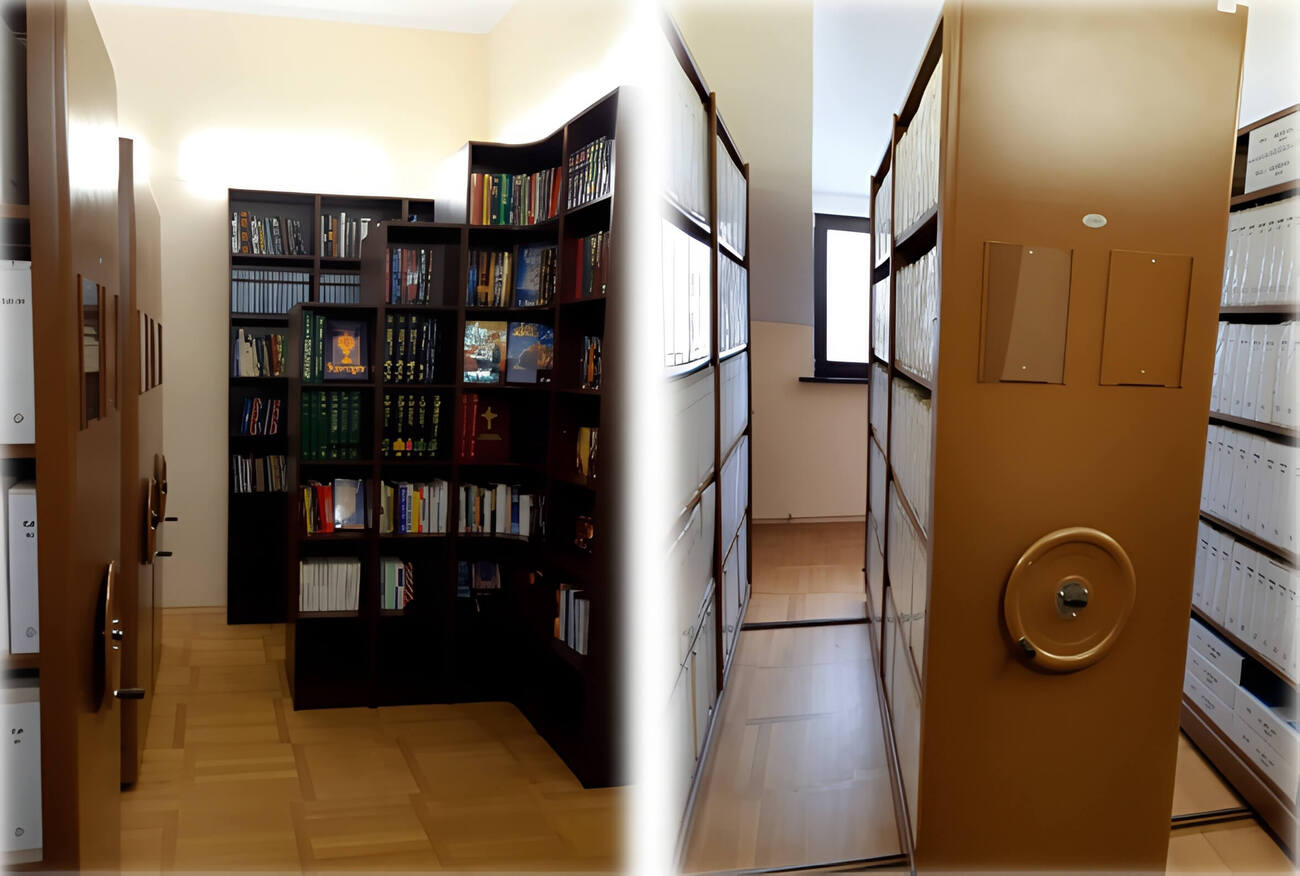
“The bulk of the material dates from 1950 to 2010” 6
This is where things get most interesting, and here we invite the reader to take up a pencil, because arithmetic comes into play. The lower boundary of the time frame — 1950 — is the year Kurt Huttten’s first edition of Seher, Grübler, Enthusiasten was published.¹⁹
Yet the arithmetic of age is even more significant, and it is inescapable. Thomas Gandow was born in 1946 18. He could not physically have collected materials from the 1950s in person: in 1950, he was four years old. Consequently, the documents spanning from 1950 to 1977 – nearly half of the collection’s entire stated timeframe – entered the archive not through the donor’s personal collecting efforts. He received them from someone else.
From whom exactly were they acquired?
That was the very question that gave the initial impetus to our investigation. And as you have realized, the candidates have already been named in preceding chapters. Haack, who died in 1991, whose office journalists compared to an “inquisitor’s treasure house” 4, and whose successor took up the Berlin post a year later? The Munich bureau of the Bavarian regional church? The Stuttgart EZW with its Materialdienst? Aagaard’s Danish Dialog Center, which wound down in April 2011 15? Any of these organizations amassed collections that had to go somewhere once their custodian departed, and archival collections of this kind – unlike furniture – are not simply thrown away.
“Archival languages: German, English, and French” 6
In all likelihood, German denotes Germany: the EZW in Stuttgart and Berlin, the nationwide network of Sektenbeauftragte, Haack’s Bavarian bureau, and Gandow’s Berlin office. English denotes Denmark and the Anglophone world: Aagaard’s Dialog Center in Aarhus, which published in English, FAIR in Britain, and AFF in the United States 4,14. French denotes France: ADFI, the association from whose ranks FECRIS (European Federation of Centres of Research and Information on Cults and Sects) emerged in 1994, which will be discussed in upcoming parts.
Three languages functioning as three hubs of the transatlantic anticult infrastructure in the second half of the 20th century. And not a single language of the countries whose religious minorities this infrastructure documented – which itself, it must be acknowledged, speaks volumes about the nature of the enterprise.
Recent data from Vladimir Martinovich refines this picture somewhat. The entire archival collection of the Synodal Center for Sect Studies is distributed as follows: Russian 30%, English 30%, German 35%, and other languages (French, Danish, Polish, Czech, Spanish, Italian, Bulgarian, Korean, Japanese, Greek, and others) 5% 47.
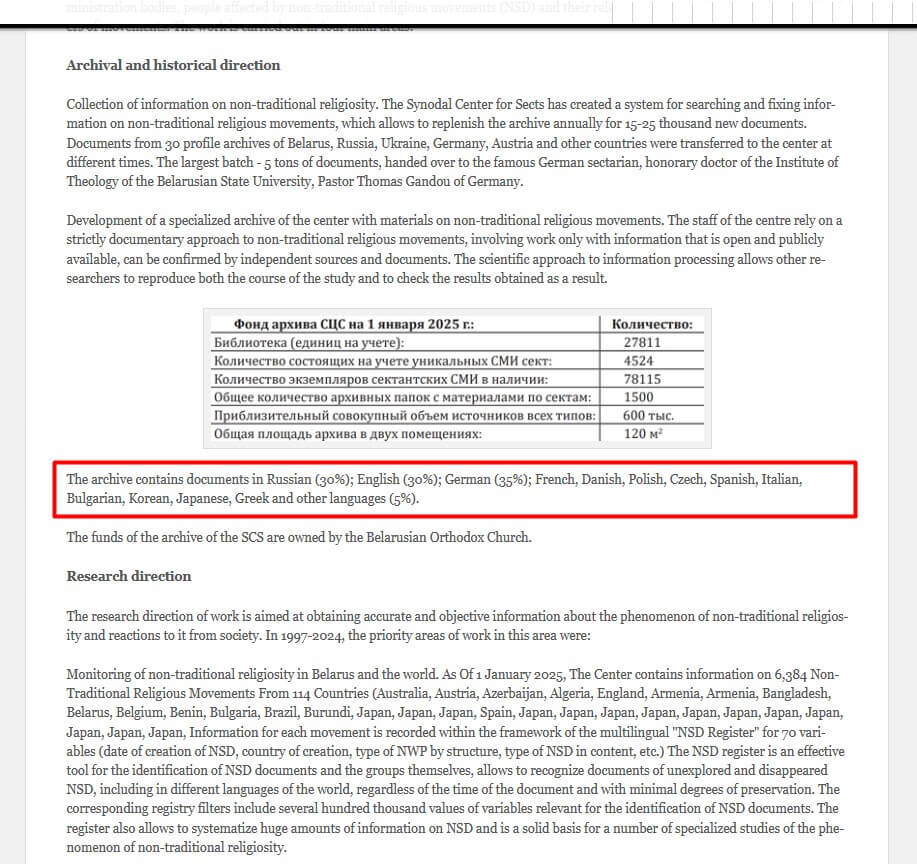
German is thus the largest linguistic segment of the Minsk collection. Given that the largest single shipment was donated specifically by Gandow 5, the conclusion is inescapable: the German core of the Minsk archive is, in all probability, the 2010 Berlin transfer. In other words, the single largest component by volume of the documentary collection held by the Belarusian church center is of German origin and traces back to the tradition examined in our preceding chapters.
“150,000–200,000 documents” vs. “5 tons”
Formally, the numbers do not contradict each other: in archival accounting, a “document” is a storage unit that may comprise a single sheet or hundreds of pages, and books and bound volumes weigh incomparably more than loose sheets.
Yet the physical volume illuminates the logistics, and that is where questions begin. Five tons is not a matter of a few cardboard boxes. That’s a large truckload. That means a freight operation involving customs clearance, insurance, loading, and unloading – an undertaking that costs money and requires approvals on both sides of the European Union’s external border. Such logistical operations do not occur as an elderly pastor’s spontaneous whim; they are planned, funded, and coordinated.
Who financed the transit? Who processed the export paperwork? Who took delivery of the cargo in Minsk? Open sources provide no answers.
To convey the scale, consider another figure from the recipient’s website: the proprietary search system of Martinovich’s center allows it to “expand the archive by 15,000 to 25,000 new documents annually” 47. Two hundred thousand divided by twenty thousand equals ten. Gandow’s single donation was therefore equivalent to roughly a decade’s worth of work by the entire Belarusian center.

“Donated… to the Minsk Diocese”
Once again, we are confronted with the perplexing reality. Not the Bundesarchiv. Not the Berlin State Archive. Not the archive of his own church. Not the Free University or Humboldt University, both located in the same city. Not Tübingen, where Junginger worked, nor Marburg with its famed religious studies collection. But Minsk.
BACKGROUND
- The Synodal Center for Sect Studies in the name of the Venerable Joseph of Volotsk of the Belarusian Orthodox Church was founded on April 18, 1997. Its founder and head is Vladimir Aleksandrovich Martinovich, chair of the Department of Apologetics at the Minsk Theological Academy, holding a doctorate in theology from the University of Vienna and a candidate of sociological sciences degree. In the center’s roster of partners, the first entity listed is the “Office of the Commissioner for Religious and Ethnic Affairs under the Council of Ministers of the Republic of Belarus,” followed by the Education Committee of the Moscow Patriarchate, the Synodal Biblical-Theological Commission of the Russian Orthodox Church, and international counterparts from over 30 countries.

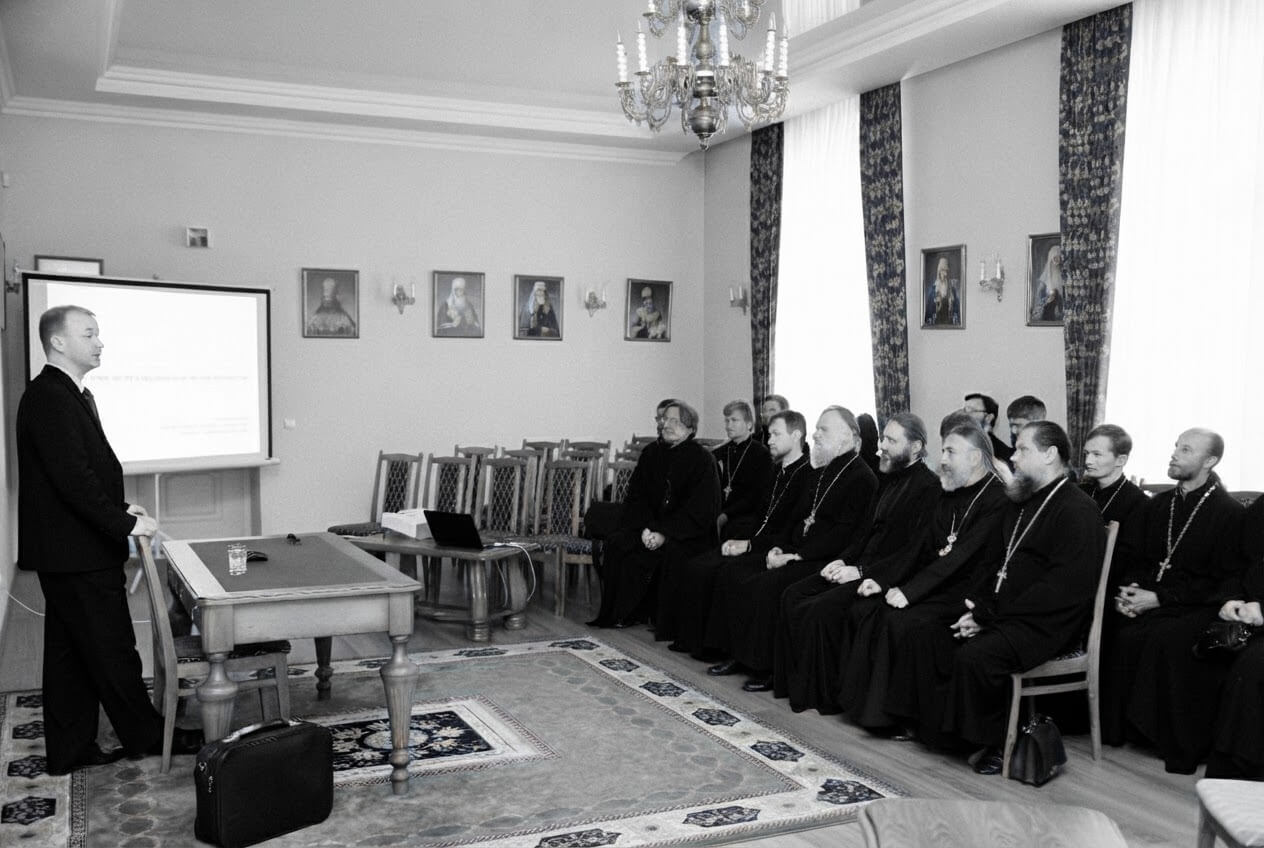
In fairness, it must be noted that Martinovich is the only figure in our entire chain with proper academic training across two disciplines and a dissertation defended at a Western European university. Today, he writes articles for peer-reviewed journals and speaks at international anticult conferences.
Gandow himself already enjoyed academic status in Belarus by the time of the transfer: he is listed as an honorary doctor of the Institute of Theology at Belarusian State University. In this system, an academic title serves as a certificate of authenticity; it transforms a political opinion writer into a scholar and his personal archive into a scholarly collection — effortlessly, with a single stroke of the pen by the academic council.
“For scholars of Belarus and state administration bodies”
Could this be the most revealing line of all? The list of partners of the church archive on believers includes a government agency that determines the fate of believers. We won’t comment on this for now; there’s nothing more to add.
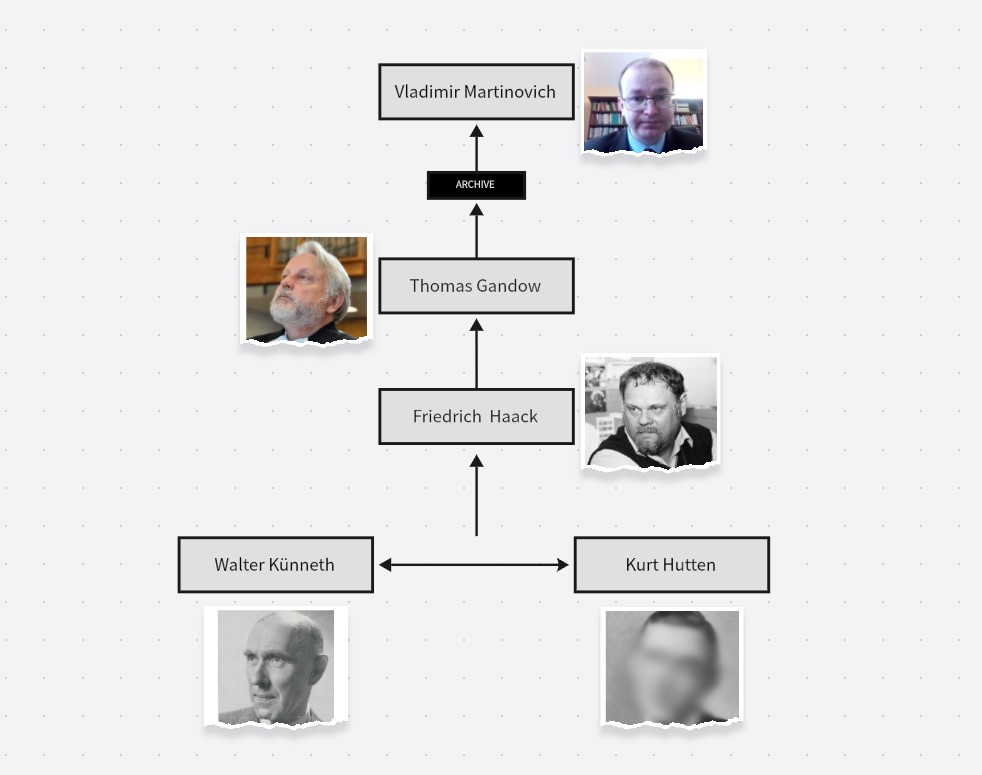
Conclusion
Berlin, 1933: An anticult organization maintains an archive on religious and ideological minorities, forwards materials to the Gestapo, and receives materials in return.
Minsk, 2010: An anticult organization receives a German archive on new religious movements, publicly declaring its purpose “for scholars of Belarus and state administration bodies.” And by 2026, it formally cements the specialized state agency for religious affairs as its primary partner.
Naturally, a fundamental gulf exists between these historical contexts, and they are not identical. In the Germany of 1933, preparations were underway for the physical extermination of human beings, whereas in contemporary Belarus the reality involves denials of registration, administrative fines, and court trials. Drawing a direct analogy would distort the true scale of events.
Yet what confronts us is the very same institutional model: a card index of dissidents held by an anticult organization, serving as the basis for state regulation of the religious sphere. Between these two points lie 77 years and an unbroken line of succession whose links have been enumerated above by name, date, and archival call number.
What is remarkable is that the mechanism survived all of this for one simple reason: it is indifferent to political ideology. It matters not in the least what form the state takes – the Weimar Republic, the Third Reich, the Federal Republic, the Soviet Union, or the Republic of Belarus. It requires only two things: an archive and an addressee. The recipient changes, the roster of targeted groups changes, the terminology evolves (“freethought” gives way to “destructiveness”), yet the card index and the advisory bureau attached to it endure, because they are the heart of the matter.
And finally, the inventory. “A list of books, journals, and newspapers in the archive will be published on the website of the St. Joseph of Volotsk Center” 6, they promised in 2010. Sixteen years later, the inventory is still absent.
The consequence, however, remains unchanged – identical to the silence that descended after 1945. What is not catalogued cannot be audited, and what cannot be audited must be accepted as truth. Truth as it is defined by the very people whose work we are examining here…
Sources:
- Bertil Persson, a Swedish clergyman and researcher of new religious movements, presiding bishop of the Apostolic Episcopal Church, and author of works on the history of the anticult movement.
- Horst Junginger. “Aktuelle Fragen der Vergangenheitspolitik. Am Beispiel der apologetischen Publizistik des Protestantismus” (Current Issues in Politics of the Past: The Example of Apologetic Journalism in Protestantism), in Humanismus aktuell, no. 20, 2007, pp. 31–42. PDF: https://ub01.uni-tuebingen.de/xmlui/handle/10900/94079 https://ub01.uni-tuebingen.de/xmlui/bitstream/handle/10900/94079/Junginger_026.pdf?sequence=1&isAllowed=y
- Matthias Pöhlmann. “Kampf der Geister. Die Publizistik der ‘Apologetischen Centrale’ (1921–1937)” (Battle of Spirits: The Journalism of the “Apologetische Centrale” [1921–1937]), Kohlhammer, Stuttgart, 1998, pp. 214–220. https://www.abebooks.com/9783170154612/Kampf-Geister-Publizistik-Apologetischen-Centrale-3170154613/plp
- Elisabeth Arweck. “Researching New Religious Movements: Responses and Redefinitions,” Routledge, 2006, chap. 6, notes 25–26. https://www.routledge.com/Researching-New-Religious-Movements-Responses-and-Redefinitions/Arweck/p/book/9780415277556
- http://church.by/news/sinodalnyj-centr-sektovedenija-im-prep-iosifa-volockogo-belorusskoj-pravoslavnoj-cerkvi-otmechaet-25-letie
- “Nemetskiy pastor-lyuteranin peredal lichnyy arkhiv v dar BPTs” (German Lutheran Pastor Donates Personal Archive to the Belarusian Orthodox Church): https://www.sb.by/articles/nemetskiy-pastor-lyuteranin-peredal-lichnyy-arkhiv-v-dar-bpts.html
- St. Joseph of Volotsk Anti-Cult Center in the Republic of Belarus https://unrel.org/
- “Religion ist eine scharfe Sache” (Religion Is a Sharp Thing), interview with T. Gandow, taz. Die Tageszeitung, Sept. 20, 2004: https://taz.de/Religion-ist-eine-scharfe-Sache/!697437/. Verbatim: “Als siebtes von acht Kindern 1946 in Berlin geboren…”; “…1992 zum Sektenbeauftragten wurde.”
- “Sekten-Experte zum Abschied: Fliege ist ein ‘Irrlehrer’” (Cult Expert upon Farewell: Fliege Is a “False Teacher”), https://www.pro-medienmagazin.de/sekten-experte-zum-abschied-fliege-ist-ein-irrlehrer/, Aug. 27, 2011. Verbatim: “1977 hatte die Kirche ihn mit der Wahrnehmung der pfarramtlichen Dienste im Amt für Jugendarbeit mit dem Schwerpunkt ‘Neue Religiöse Gemeinschaften’ beauftragt”; “im Jahr 1992 wurde ihm die Provinzialpfarrstelle für Sekten- und Weltanschauungsfragen übertragen”; “Nach über 30 Jahren als ‘Sekten-Jäger’… wurde Gandow am Samstag in Berlin mit einem Gottesdienst in den Ruhestand verabschiedet.”
- “Verteidiger des Glaubens” (Defender of the Faith), Der Tagesspiegel, Aug. 26, 2011: https://www.tagesspiegel.de/berlin/verteidiger-des-glaubens-1984078.html
- “Evangelische Sektenarbeit: Bundesverdienstkreuz für Scientology-Experten” (Protestant Cult Work: Federal Cross of Merit for Scientology Expert), Der Tagesspiegel, March 8, 2012: https://www.tagesspiegel.de/potsdam/brandenburg/bundesverdienstkreuz-fur-scientology-experten-6415009.html
- Bertil Persson. “Borba protiv sekt: ideynye osnovy i ikh nesostoyatelnost” (The Struggle Against Cults: Ideological Foundations and Their Bankruptcy), Moscow: Drevo Zhizni, 2012 (trans. A. Kurochkin), pp. 51–53; glossary, entries “Gandow, Thomas,” “Künneth, Walter,” “Hutten, Kurt,” “Haack, Friedrich-Wilhelm.” Ibid., definition of “cult” according to: F. W. Haack, “Der Weg des Lebens nun ist dieser. Apologetik an der Schwelle des 3. Jahrtausends,” Munich, 1988.
- Masthead of Berliner Dialog, no. 2/1995: https://religio.de/dialog/295/impres295.html; no. 3/1997: religio.de/dialog/397/impres397.html. Publisher: Wichern-Verlag GmbH, Berlin. Wissenschaftlicher Beirat (Academic Advisory Board), 17 names, including “Prof. Dr. Alexander Dvorkin (Moskau)” and “Dekan Andrej Kuraev (Moskau).”
- https://en.wikipedia.org/wiki/Dialog_Center_International, “Dialog Center International”: “founded in 1973 by a Danish professor of missiology and ecumenical theology, Dr. Johannes Aagaard (1928–2007).” Also: M. Introvigne, “In memoriam: Johannes Aagaard,” cesnur.org/2007/aagaard.htm
- Wikipedia DA, “Dialogcentret”: “Organisationen ophørte sit virke den 2. april 2011.”
- https://de.wikipedia.org/wiki/Friedrich_Wilhelm_Haack_(Theologe), “Friedrich Wilhelm Haack (Theologe)”: “* 11. August 1935 in Grünberg in Schlesien; † 4. März 1991 in München”; “1969 wurde er vollamtlicher Beauftragter für Sekten- und Weltanschauungsfragen der Evangelisch-Lutherischen Landeskirche in Bayern.”
- https://de.wikipedia.org/wiki/Kurt_Hutten, “Kurt Hutten”: “* 6. März 1901 in Langenburg; † 17. August 1979 in Ludwigsburg”; head of the EZW for eight years starting in 1960. Confirmation of dates: Kalliope, GND 1012275396.
- Alexander Benatar. “Lebendige Auseinandersetzung mit den Strömungen der Zeit” (Vibrant Engagement with the Currents of the Time), EZW, 2021: https://www.ezw-berlin.de/publikationen/artikel/lebendige-auseinandersetzung-mit-den-stroemungen-der-zeit/
- Kurt Hutten. “Seher, Grübler, Enthusiasten. Das Buch der traditionellen Sekten und religiösen Sonderbewegungen” (Seers, Brooders, Enthusiasts: The Book of Traditional Sects and Special Religious Movements), https://www.amazon.de/Seher-Enthusiasten-traditionellen-religi%C3%B6sen-Sonderbewegungen/dp/379182130X Quell-Verlag, Stuttgart, 1950; 12th ed., 1982, ISBN 3-7918-2130-X; 15th ed., 1997; reprint 2002. Publishing history according to: Junginger (2), footnote 24.
- https://de.wikipedia.org/wiki/Walter_K%C3%BCnneth, “Walter Künneth”: “* 1. Januar 1901 in Etzelwang; † 26. Oktober 1997 in Erlangen”; “erhielt Künneth Schreib- und Redeverbot für das ganze Reichsgebiet”; Erlangen: honorary professorship (1946), chair (1953), retirement (1969).
- https://de.wikipedia.org/wiki/Apologetische_Centrale, “Apologetische Centrale”: founded in 1921 by the Central Committee of the Inner Mission; Carl Gunther Schweitzer (1889–1965); “seit 1932 Walter Künneth, der auch leitender Redakteur der Schriftenreihe des Instituts Wort und Tat war”; “Am 10. Dezember 1937 wurde sie von der Gestapo geschlossen und ihre weitere Tätigkeit verboten.”
- Evangelisches Zentralarchiv Berlin, 1/C3/392, letter from Walter Künneth to the Reich church government dated December 16, 1933. https://publikationen.uni-tuebingen.de/xmlui/handle/10900/94079 Published in: Eberhard Röhm, Jörg Thierfelder (eds.), “Juden, Christen, Deutsche,” vol. 1: 1933–1935, Stuttgart, 1990, p. 412; Harald Iber, “Die Apologetische Centrale und der Centralausschuß für die Innere Mission,” in Th. Strohm, J. Thierfelder (eds.), “Diakonie im ‘Dritten Reich’,” Heidelberg, 1990, pp. 108–124, here p. 122 (ibid., Iber’s commentary). Cited from [2].
- Walter Künneth. “Das Judenproblem und die Kirche,” in W. Künneth, H. Schreiner (eds.), “Die Nation vor Gott. Zur Botschaft der Kirche im Dritten Reich,” Berlin, 1933, p. 193. Academic analysis: Wolfgang Maaser. “Theologische Ethik und politische Identität. Das Beispiel des Theologen Walter Künneth,” Bochum, 1990, pp. 173–201, 194, 197. Cited from [2].
- Matthias Pöhlmann. “Evangelische Apologetik im Wandel der Zeit,” in EZW-Texte, no. 154 (2000), pp. 2–17, here pp. 10–13, 61. PDF: https://www.ezw-berlin.de/fileadmin/user_upload/ezw-berlin/PDF/EZW-Texte_PDF_Dateien/EZW-Texte_154.pdf. Verbatim (p. 11): “Im Einvernehmen mit dem Herrn Reichs- und Preussischen Minister für die kirchlichen Angelegenheiten wird die Apologetische Centrale Berlin-Spandau, Johannesstift, auf Grund des § 1 der Verordnung des Herrn Reichspräsidenten zum Schutze von Volk und Staat vom 28. Februar 1933, aufgelöst und verboten”; (p. 13): “17.11.1960 eröffnete der 71-jährige Carl Schweitzer in Abwesenheit Künneths – als Abgesandtem der theologischen Fakultäten – die erste Kuratoriumssitzung.” Confirmation of closing date: Matthias Pöhlmann / Anika Albert, “Apologetik,” diakonie.de: “Am 10. Dezember 1937 wurde die Apologetische Centrale gewaltsam geschlossen.”
- Walter Künneth. “Der große Abfall. Eine geschichtstheologische Untersuchung der Begegnung zwischen Nationalsozialismus und Christentum” (The Great Apostasy: A Theological-Historical Investigation of the Encounter Between National Socialism and Christianity), Hamburg, 1947.
- Rudolf Ladwig. “Von der ‘Apologetischen Centrale’ zur EZW” (From the “Apologetische Centrale” to the EZW), IBKA-Rundbrief, December 2004: https://ibka.org/de/artikel/rundbriefe04/apol.html. Verbatim: “Die früheren AC-Leiter Schweitzer und Künneth wurden in das neue Kuratorium der EZW berufen”; “Die ‘Evangelische Notgemeinschaft in Deutschland’ gründete 1994 das ‘Walter-Künneth-Institut’, als weitere ‘Nachfolgeeinrichtung der Apologetischen Centrale’. Dort wirft man der heutigen EZW mangelnde Bibeltreue vor und versteht sich selbst als ‘Angriff in missionarischer Perspektive’.”
- Wikipedia DE, “Evangelische Notgemeinschaft in Deutschland”: founded on Sept. 30, 1966, in Stuttgart; removed from the registry on May 30, 2017.
- United States Holocaust Memorial Museum, Holocaust Encyclopedia, “Nazi Persecution of Jehovah’s Witnesses”: https://encyclopedia.ushmm.org/content/en/article/nazi-persecution-of-jehovahs-witnesses. Verbatim: “Of the 25,000 to 30,000 Germans who in 1933 were Jehovah’s Witnesses”; “By April 1, 1935, the Reich and Prussian Minister of the Interior ordered the responsible local officials to dissolve the Watchtower Society”; “By 1939, an estimated 6,000 Witnesses… were detained in prisons or camps”; “At least 3,000 Jehovah’s Witnesses were sent to concentration camps”; “An estimated 1,000 German Jehovah’s Witnesses died or were murdered in concentration camps and prisons” + “400 Witnesses from other countries”; “At least 273 Jehovah’s Witnesses were sentenced to death by military courts for refusing military service were executed.”
- Antonius Liedhegener. “Statistik der Kirchenaustritte in Deutschland 1862–2019” (Statistics of Church Withdrawals in Germany 1862–2019), https://liedhegener.info/wp-content/uploads/2020/07/AL-Statistik-der-Kirchenaustritte-in-D-1862-2019-PDF-20-07-28.pdf summary table, liedhegener.info (PDF, 2020). Withdrawals from the Protestant Church: 1919: 237,740; 1920: 314,005; 1921: 256,452; 1922: 154,810.
- “Einnahmen aus Kirchensteuer bleiben stabil” (Revenues from Church Tax Remain Stable), https://www.evangelisch.de/inhalte/243640/23-05-2025/zahlen-von-2024-veroeffentlicht-einnahmen-aus-kirchensteuer-bleiben-stabil, May 23, 2025: church tax revenues of the Protestant regional churches for 2024 totaled 5.97 billion euros.
- Verordnung des Reichspräsidenten zum Schutz von Volk und Staat vom 28. Februar 1933 (RGBl. I S. 83), the “Reichstag Fire Decree,” § 1: suspension of Articles 114, 115, 117, 118, 123, 124, and 153 of the Weimar Constitution.
- https://www.sobor.by/center.php
- https://www.ezw-berlin.de/
- https://www.ezw-berlin.de/publikationen/artikel/apologetische-zentrale/
- Hub, monograph on Kurt Hutten, section 6.2, “Hutten’s Origins, His Studies, and First Years of Ministry”: seminaries of Maulbronn and Blaubeuren 1915–1919, studies in Tübingen, Marburg, and Berlin, second examination in 1926 with grade II b.
- https://en.wikipedia.org/wiki/Jakob_Wilhelm_Hauer
- https://www.archivportal-d.de/item/A6MFULUXA5KO5QVDPJVKOX2P3G6MHFSY?lang=de
- https://www.ezw-berlin.de/fileadmin/user_upload/ezw-berlin/PDF/EZW-Texte_PDF_Dateien/EZW-Texte_154.pdf
- Zentral- und Landesbibliothek Berlin, Provenienzforschung, “Apologetische Centrale (Berlin).” Verbatim: “Ende 1937 wurde die Apologetische Centrale zwangsweise geschlossen und 1938 das gesamte Vermögen inklusive der 2.000 Bände umfassende Bibliothek zugunsten des Deutschen Reichs eingezogen. Der Sitz der Apologetischen Centrale befand sich im Evangelischen Johannesstift in Berlin-Spandau”; “Aufgrund der Bestandsgeschichte der Bibliothek der Apologetischen Centrale erscheint ein Zugang über die Bergungsstelle 15 (Depot des Reichssicherheitshauptamts, RSHA) wahrscheinlich.” 2025 restitution: Ferdinand Sauerbruch, Hans Wenke, “Wesen und Bedeutung des Schmerzes,” Berlin, 1936, transferred to the Archive and Library of the Evangelisches Werk für Diakonie und Entwicklung e.V.
- Sebastian Seibert, “Die Bibliothek des Reichssicherheitshauptamtes und der Kulturgutraub in der Zeit des Nationalsozialismus,” Berliner Handreichungen zur Bibliotheks- und Informationswissenschaft, no. 515, Humboldt-Universität zu Berlin, 2023, p. 23. Verbatim: “Auf evangelischer Seite traf es die Apologetische Centrale der Inneren Mission der Deutschen Evangelischen Kirche in Berlin-Spandau, die bereits seit 1934 beobachtet worden war. Sie wurde verdächtigt eine illegale Fortbildungsstätte der Bekennenden Kirche zu sein und am 10. Dezember 1937 von der Gestapo geschlossen. Ihre Bibliothek übernahm der SD.”
- Detlef Garbe, “Glaubensgehorsam und Märtyrergesinnung. Die Verfolgung der Zeugen Jehovas im ‘Dritten Reich’,” EZW-Texte, no. 145, Berlin, 1998, p. 5. PDF: EZW-Texte 145. On the link to § 14 PVG: Demokratische Geschichte, vol. 12, essay 7 (Beirat für Geschichte), p. 100, PDF: beirat-fuer-geschichte.de: “§1 der ‘Verordnung des Reichspräsidenten zum Schutze von Volk und Staat’ (sog. Reichstagsbrandverordnung) vom 28. Februar 1933 in Verbindung mit §14 PVG.”
- “Verordnung des Reichspräsidenten zum Schutze von Volk und Staat” of Feb. 28, 1933, RGBl. I p. 83. § 1 suspends Articles 114, 115, 117, 118, 123, 124, and 153 of the Weimar Constitution.
- Matthias Pöhlmann, “Evangelische Apologetik im Wandel der Zeit,” in EZW-Texte, no. 154 (2000), pp. 2–17, here p. 11 and footnote 31. PDF: EZW-Texte 154. Verbatim: “Im Einvernehmen mit dem Herrn Reichs- und Preussischen Minister für die kirchlichen Angelegenheiten wird die Apologetische Centrale Berlin-Spandau, Johannesstift, auf Grund des § 1 der Verordnung des Herrn Reichspräsidenten zum Schutze von Volk und Staat vom 28. Februar 1933, aufgelöst und verboten.” In footnote 31, the source is identified as “Schreiben der Geheimen Staatspolizei an Künneth vom 8. Dezember 1937.” The sole source of this phrasing. A targeted search (August and September 2026) yielded no independent reproduction. Archival reference to be verified against: Matthias Pöhlmann, “Kampf der Geister. Die Publizistik der ‘Apologetischen Centrale’ (1921–1937),” Kohlhammer (series “Konfession und Gesellschaft,” ed. Jochen-Christoph Kaiser), ISBN 9783170154612, chapter on the end of the AC. The book is not openly accessible; a library request is required.
- Alexander Benatar, “Lebendige Auseinandersetzung mit den Strömungen der Zeit,” EZW, July 1, 2021. Verbatim: “Am 10. Dezember 1937 wurde die AC im Auftrag des 1935 eingerichteten Reichskirchenministeriums geschlossen”; “Am 1. April 1960 nahm Kurt Hutten in Stuttgart seine Arbeit als Leiter der EZW auf.”
- Wikipedia DE, “Reichsministerium für die Kirchlichen Angelegenheiten”: the agency was split off from the Reich Ministry of the Interior in 1935; Hanns Kerrl was appointed Reich Minister on July 16, 1935; the German Protestant Church was subordinated to “einem der Reichsregierung und einem Reichsminister für die Kirchlichen Angelegenheiten unterstehenden Reichskirchenausschuss.” Also: Reich Ministry for Church Affairs; agency records: EHRI, Reichsministerium für die kirchlichen Angelegenheiten (BArch R 5101).
- Zentral- und Landesbibliothek Berlin, Provenienzforschung, “Apologetische Centrale (Berlin).” Verbatim: “Ende 1937 wurde die Apologetische Centrale zwangsweise geschlossen und 1938 das gesamte Vermögen inklusive der 2.000 Bände umfassende Bibliothek zugunsten des Deutschen Reichs eingezogen. Der Sitz der Apologetischen Centrale befand sich im Evangelischen Johannesstift in Berlin-Spandau”; “Aufgrund der Bestandsgeschichte der Bibliothek der Apologetischen Centrale erscheint ein Zugang über die Bergungsstelle 15 (Depot des Reichssicherheitshauptamts, RSHA) wahrscheinlich.” 2025 restitution: Ferdinand Sauerbruch, Hans Wenke, “Wesen und Bedeutung des Schmerzes,” Berlin, 1936, transferred to the Archive and Library of the Evangelisches Werk für Diakonie und Entwicklung e.V.
- http://web.archive.org/web/20251117161907/https://unrel.org/