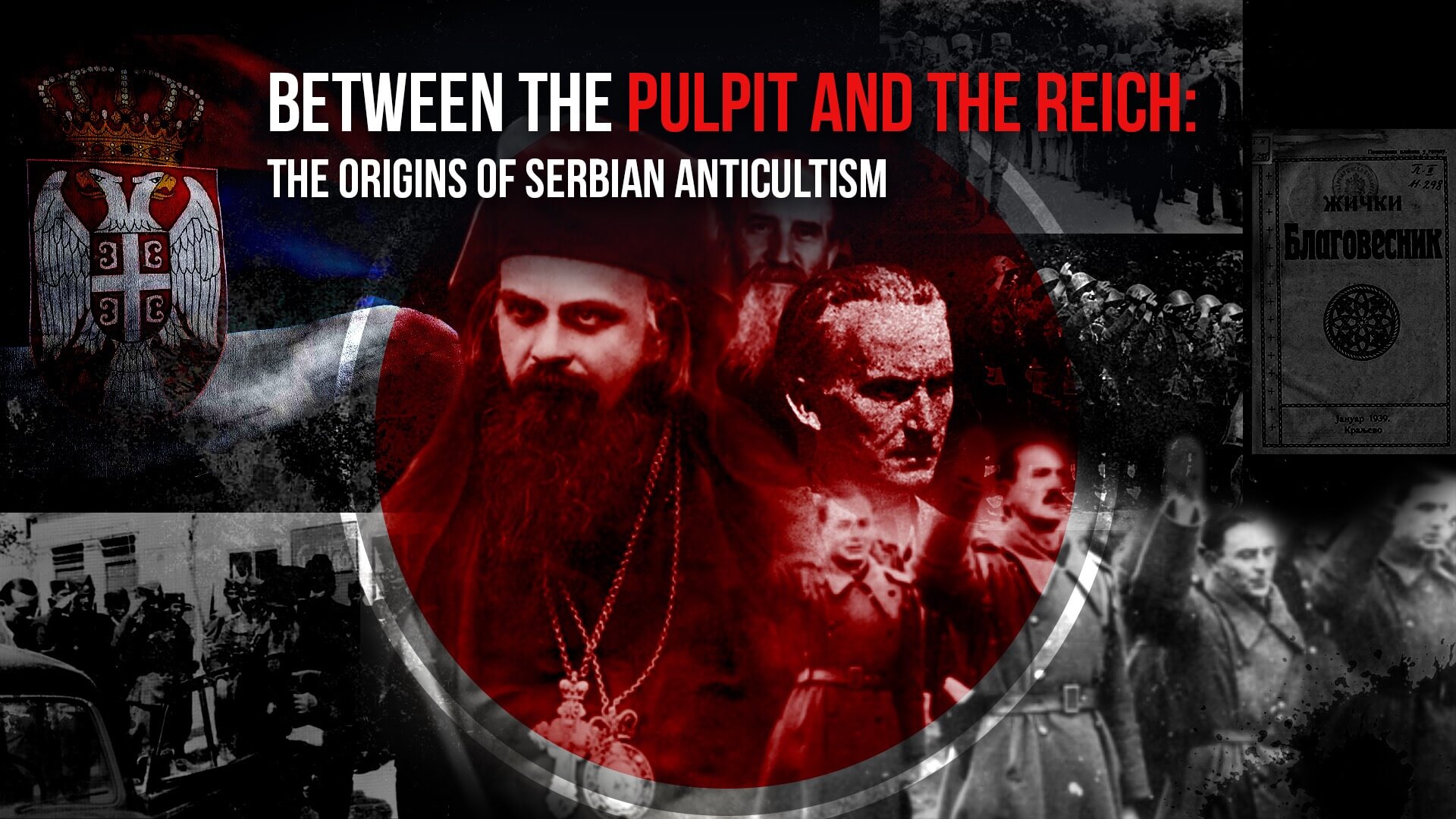
This article provides the background to the events examined in previously published articles on Actfiles:
- “Künneth’s Legacy in the Bosnian War. Part 1”
- “Anticult Trail in the Yugoslav Wars. Part 2: Symphony of Church and State”
- “War in the Minds: Why Reconciliation in the Post-Yugoslav Space Remains Elusive. Part 3” Until 1932, the fight against “sects” and “cults” within the Bogomoljci movem
This study examines the origins of the Serbian anticult movement and Serbian nationalism, as well as the role of their ideologue, Bishop Nikolaj Velimirović, who led the Bogomoljci (Prayers) anticult movement in the early 1920s, collaborated with the leadership of Nazi Germany, and organized Serbian volunteer armed units that fought alongside the German army during World War II. The ranks of these volunteers included members of the Serbian Bogomoljci movement, essentially a prototype of the Serbian anticult movement of that era.
Bishop Nikolaj Velimirović is known today as St. Nikolaj of Serbia, an Orthodox theologian and philosopher. This is how he is referred to by the Serbian Orthodox Church and the Russian Orthodox Church.
Yet despite the years-long efforts of Nikolaj Velimirović’s followers to shape the historical narrative of his life and promote this version in the public sphere, numerous contradictory facts, chronicles and archival materials have survived that do not fit the accepted narrative. These obscure and inconvenient facts reveal that Nikolaj Velimirović supported Hitler’s ideas and was an outspoken antisemite and racist, and that in 1934 (or 1935, according to some accounts) he received an order from Hitler. Today, this ideologue of Serbian nationalism remains one of the most controversial figures in the history of the Serbian Orthodox Church during the era of the two world wars.
It’s important to examine this figure because he was a key ideologue and mentor of the Serbian “war hawks” discussed previously on Actfiles. These men were the conceptual architects of Serbian nationalism, anticultism, and the idea of Greater Serbia, which drove the radicalization and laid the groundwork for a decade of bloody wars in the Balkans in the 1990s. These included hierarchs of the Serbian Orthodox Church — Atanasije Jevtić, Irinej Bulović, Amfilohije Radović and Artemije Radosavljević. Their roles in the Balkan wars were examined previously in the article “Anticult Trail in the Yugoslav Wars. Part 2: Symphony of Church and State”.
The first question is how did Bishop Nikolaj Velimirović come to embrace Nazi ideology?
Bishop Nikolaj and the Fight Against Sects
The historical portrait of Bishop Nikolaj consists of several distinctly different stages. One of them was the creation of the Bogomoljci movement among the Serbian people, which was engaged in fighting against “sects.” Beginning in the early 1920s, during the period between the two world wars, Bishop Nikolaj took charge of the Serbian Bogomoljci movement. This is confirmed by material published on the websites of dioceses of the Russian Orthodox Church 1:
“Recognizing the danger of sectarian propaganda, which was already gaining strength at the time, Bishop Nikolaj took charge of the so-called ‘Bogomoljci movement’ among the Serbian people, whose purpose was to bring ordinary, often illiterate peasants living in remote mountain villages into the church.”
The facts of the Orthodox bishop’s life bear a striking resemblance to those of another key Nazi ideologue — the German Protestant theologian and anticultist Walter Künneth.
Both led campaigns against “cults” in their respective countries and promoted an ideology of one group’s superiority over others, including through church and missionary publications. Künneth was editor-in-chief of the Protestant periodical Wort und Tat. Velimirović meanwhile, initiated the founding of the diocesan journal Žički blagovesnik, appointing editors from his inner circle of clergy (see below). Both received considerable loyalty from the political leadership of Hitler’s Germany during their anticult apologetic activities before World War II; both were outspoken antisemites and racists.
Interestingly, in both Germany and Serbia, the creation of an anticult movement and the recruitment of people from the general population began at almost the same time. In Germany, the anticult center known as the “Apologetic Center of the Evangelical Church of Germany” (modern name: the “Evangelical Center for Worldview Issues”), which theologian Walter Künneth would soon lead, was established in 1921. In Serbia, the Bogomoljci movement fighting against “sects” also began operating in the early 1920s, led by theologian Nikolaj Velimirović. It is known that as early as 1921, Bishop Nikolaj published an article defending the “Bogomoljci” movement titled “Do Not Reject Them — A Note to the Clergy” (Velimirović, 1921). Immediately afterward, this powerful and influential defender was elected the movement’s patron and spiritual leader.
Under Velimirović’s leadership, the popular movement of “fighters against sects” quickly gained strength. A governing council, known as the Central Office, was elected to coordinate all activities, bringing the affairs of the brotherhoods under its direct supervision. As a result of this centralization, the movement acquired a new official name: Narodna hrišćanska zajednica (People’s Christian Community). The anticult Bogomoljci movement also controlled the church missionary press, including the journal Hrišćanska zajednica (Christian Community), which changed its name in 1936 to Misionar (The Missionary).
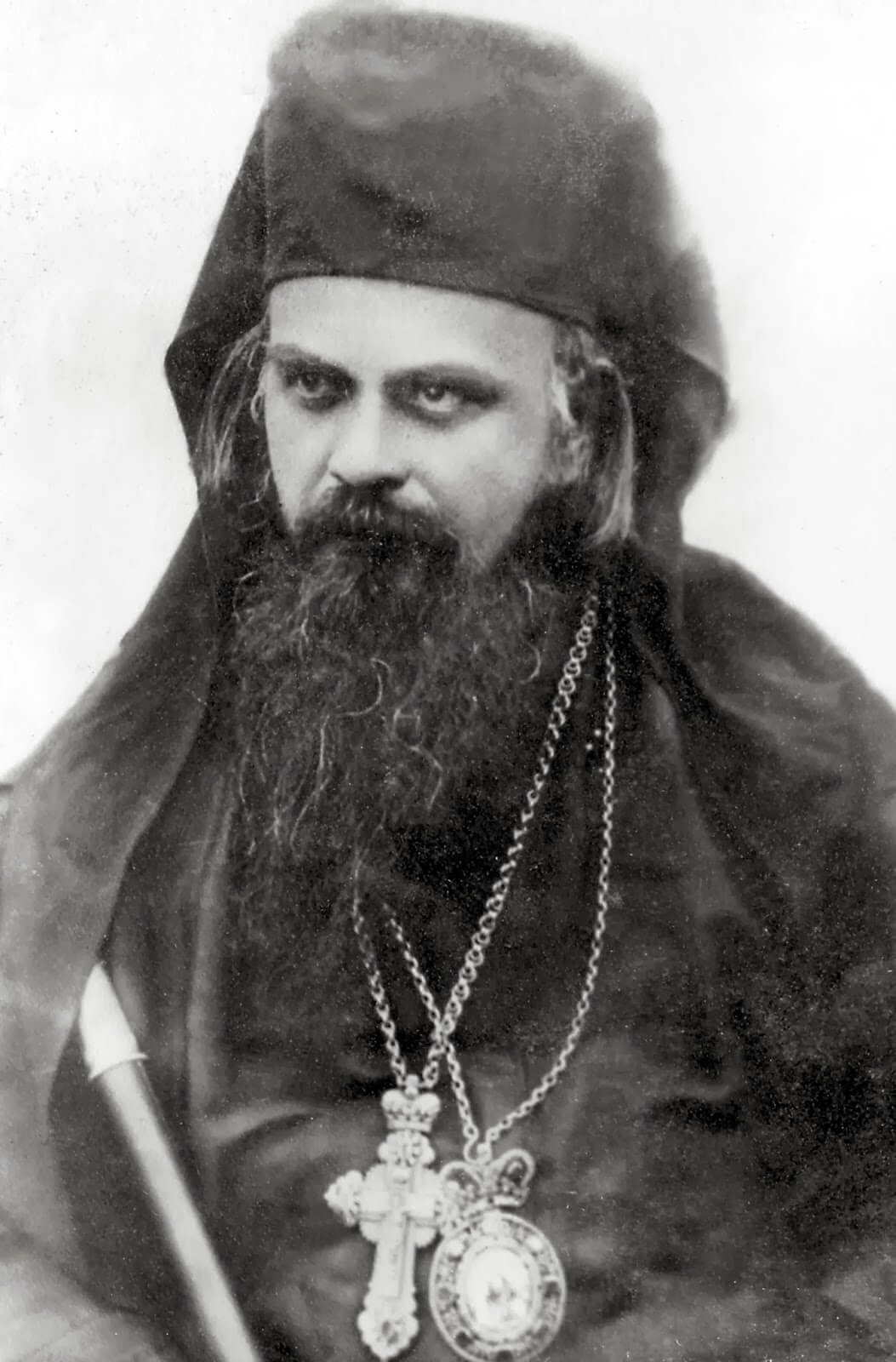
Until 1932, the fight against “sects” and “cults” within the Bogomoljci movement was combined with other activities. Beginning in 1932, however, missionaries from the Bogomoljci movement shifted their focus entirely to apologetic and anticult activities 2:
“However, from 1932 onwards the training of the ‘missionaries’ who were sometimes referred to as ‘people preachers’ or ‘zealots of Orthodoxy’ was reorganised and focused on apologetics. Conferences were organised more professionally and with specific aims to train the new missionaries for their ministry. The aim was to enable them to oppose the ‘sectarian preachers and book sellers among the people.’” — from the scholarly work by Australian-Serbian researcher and theologian Nemanja S. Mrđenović, “Bogomoljci: A Missional Movement of the Orthodox Laity as a Blessing and a Challenge to the Church.”
At the same time, 1932 was also the exact year that Walter Künneth took full leadership of the German Apologetic Center for combating “sects.”
The consequences of the activities of the German theologian and Serbian theologian, who became ideologues and teachers for their followers and successors, were felt by the world both during World War II and much later, during the decade of wars in the Balkans in the 1990s.
It is also known that in Germany, alongside the main Apologetic Center for combating “sects” mentioned above, there was another analogue of the Serbian popular Bogomoljci movement — the Arbeitsgemeinschaft deutscher Volksmissionare (Association of German People’s Missionaries). This popular movement of German missionaries was directly linked to Künneth’s Apologetic Center and its goals and objectives, including the promotion of Nazism, antisemitism and anticult activity. Below is an excerpt from a letter of the Arbeitsgemeinschaft deutscher Volksmissionare (Association of German People’s Missionaries), dated December 31, 1937 3:
“Anyone who gives up a position like the Apologetic Center will, sooner or later, be forced to give up even more important positions. The battle for the Apologetic Center is a section of the front that must not be surrendered under any circumstances.”
(Original German: “Wer eine Position wie die Apologetische Centrale preisgibt, wird gezwungen sein, über kurz oder lang noch wichtigere Positionen aufzugeben. Der Kampf um die Apologetische Centrale ist ein Frontabschnitt, den man unter keinen Umständen preisgeben darf”.)
It is noteworthy that the Serbian theologian Nikolaj Velimirović, despite his Orthodox education, was known as an Anglophile with sympathies for the Lutheran Church. He was educated in Western Europe — in Switzerland, Germany and Great Britain. After his ordination in 1911, however, the young hieromonk Nikolaj traveled to Russia to attend the Russian Orthodox Theological Seminary in St. Petersburg. Instead of studying, he embarked on an extended journey across various regions of the Russian Empire, including numerous monasteries.
Upon his return from Russia, Nikolaj Velimirović was appointed a lecturer at the Belgrade Orthodox Theological Seminary and assumed a key role in the life of the Serbian Orthodox people. Father Nikolaj quickly became popular as a charismatic speaker with a Western education. He gained influence across different segments of society and succeeded in bringing together and directing an entire movement that included both the uneducated masses and the intelligentsia, as well as the intellectual and political elite.
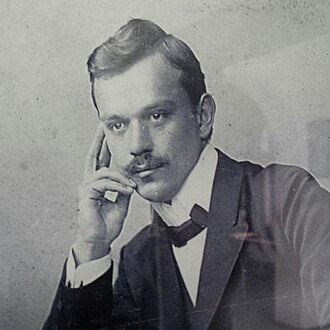
Also after returning from the Russian Empire, Father Nikolaj published “Sermons under the Mountain” — a selection of speeches delivered by Nikolaj Velimirović between 1909 and 1912. The collection became a bestseller at the time, with its first edition selling over 1,800 copies 4. It had a key influence on radically minded young people, including members of various secret nationalist-terrorist or underground revolutionary organizations. What were these sermons about, and to whom were they delivered?
Father Nikolaj’s sermons called for a revival of Serbian nationalism. In his work “Religion and Nationality in Serbia,” published later both as a pamphlet in 1915 and as part of the collection “The Soul of Serbia” in 1916, Velimirović expressed pro-Yugoslav sentiments.
Some of his statements, such as “Jugoslavs — Serbs, Croats, and Slovenes” are “one and the same nation in language, in blood, in destiny, and in their aspirations” 4, conveyed a particular message. It was not a call for unity, respect for other peoples, cultures and religions, or friendly relations among Serbs, Croats and Slovenes, but an ideology of superiority and the promotion of the idea of creating a “Greater Yugoslavia,” or, more precisely, a “Greater Serbia.” In these sermons, Velimirović identified the sole “cruel and bloodthirsty Islam” as the ultimate enemy of Serbian Christian civilization.
At the same time, Velimirović’s publicly proclaimed interfaith Christian dialogue among Catholicism, Lutheranism, and Orthodoxy was merely populism and demagoguery on the part of the Serbian theologian. This is supported by Father Nikolaj’s private conversations with his associates, in which he called for a complete break with the Vatican and the creation of a separate national (Yugoslav) Catholic Church 4. Yet it was the Orthodox Church that occupied a privileged position in Velimirović’s doctrine. It was supposed to preserve and ultimately cement its status as the principal state religion in the future “Greater Yugoslavia,” a status it already held in the Kingdom of Serbia.
It was through Bishop Nikolaj’s many years of activity among the Serbian people that the ideology of Serbian nationalism was ultimately formed, consolidated, and articulated to the masses.
The culmination of this ideology can be seen in Bishop Nikolaj’s 1939 speech “Whose are you, little Serbian people?” (“Čiji ste vi, mali Srbi?”), delivered at a ceremony marking the 550th anniversary of the Battle of Kosovo. The speech addressed Serbs as “God’s children and people of the Aryan race, who have been granted the honorable role of being the main pillar of Christianity in the world” (Velimirović, 2001, p. 40). Bishop Nikolaj stated that “we are Aryan by blood, Slavs by surname, Serbs by name, Christians in heart and spirit” 4.
At the same time, just as it was in Serbia and Nazi Germany at the time (and as it occurs today in Serbia and Russia) radical nationalism is consistently accompanied by anticultism, serving as a key channel for imposing an ideology of superiority on the population. And it was Nikolaj Velimirović who led the anticult movement among the Serbian people in the early 1920s.
But before taking the lead in the anticult movement, Nikolaj Velimirović played an ideological role in radicalizing a group of Serbs who carried out the Sarajevo assassination, which led to the outbreak of World War I. This is an important period in the history of humanity that must be briefly examined before turning to the Bogomoljci movement.
Sarajevo Assassination and Vidovdan
The assassination of Archduke Franz Ferdinand in Sarajevo took place on June 28, 1914 — on Vidovdan, the very holiday commemorating the Battle of Kosovo that Nikolaj Velimirović had been using during those same years as a central symbol in his sermons and ideology. Many people are familiar with the key perpetrators of this political assassination — members of the Serbian nationalist group Mlada Bosna (Young Bosnia) and the affiliated Black Hand. Yet the ideological role of Bishop Nikolaj Velimirović remains largely unpublicized to this day.
Researchers note that Nikolaj Velimirović was particularly popular in Habsburg-occupied Bosnia and that his speeches caused a sensation among revolutionary youth. He had considerable influence there among members of Mlada Bosna. In 1912, at a celebration in Sarajevo marking the 10th anniversary of the Serbian cultural society Prosvjeta, Nikolaj Velimirović delivered a speech that had a decisive impact. Today, several researchers cite the bishop’s words: “With your great love and your big heart, you Bosnian Serbs have annexed Serbia to Bosnia” (“svojom velikom ljubavlju i velikim srcem Srbi Bosanci anektirali Srbiju Bosni”) 5. At the time, Bosnia and Herzegovina was under Austrian annexation, so such a statement from the Serbian theologian and orator was not only a direct challenge to the Austro-Hungarian authorities, but also a powerful catalyst that inspired radically-minded young people to take concrete action.
At the 1912 celebration of the 10th anniversary of the Prosvjeta society, Nikolaj Velimirović also delivered these now-legendary words: “I have come from Serbia, that island of freedom, to bring you, our brothers in slavery, greetings from Belgrade” (“Dolazim iz Srbije, tog ostrva slobode, da vama, našoj braći u ropstvu, donesem pozdrave Beograda”) 6. He was greeted with an ovation, like a prophet, and his words had the effect of an exploding bomb. He particularly inspired the youth of Bosnia and Herzegovina and members of Mlada Bosna 4.
As a result of such speeches, the Austro-Hungarian authorities prevented Velimirović from visiting Zagreb the following year to speak at a commemoration of Njegoš. However, the Serbian ideologue’s speech reached Zagreb anyway and was read there.
In addition to Velimirović’s ideological speeches, frequent visits, and personal meetings, researchers point to the influence of his published collection, “Sermons under the Mountain.”
On the eve of the Sarajevo assassination, the evening of June 27, 1914, members of Mlada Bosna, including Gavrilo Princip, the future assassin of the Austrian Archduke, gathered at the grave of nationalist Bogdan Žerajić. There, over the collection “Sermons under the Mountain” by Nikolaj Velimirović, members of Mlada Bosna swore an oath of loyalty and steadfastness, treating the book as if it were the Gospel itself 7.
The following day, June 28, 1914, on Vidovdan (the day of the Kosovo Covenant, or the Kosovo sacrifice), a terrorist group of five Serbian and one Bosnian, led by Gavrilo Princip, a member of Mlada Bosna, assassinated Archduke Franz Ferdinand, heir to the Austro-Hungarian throne, and his wife, Duchess Sophie of Hohenberg. The assassination served as the catalyst for the outbreak of World War I.
It is worth noting that today, on the exact spot where the Archduke was killed, there is a museum dedicated to the memory of the assassins, and many today know them as the “Vidovdan Heroes.”
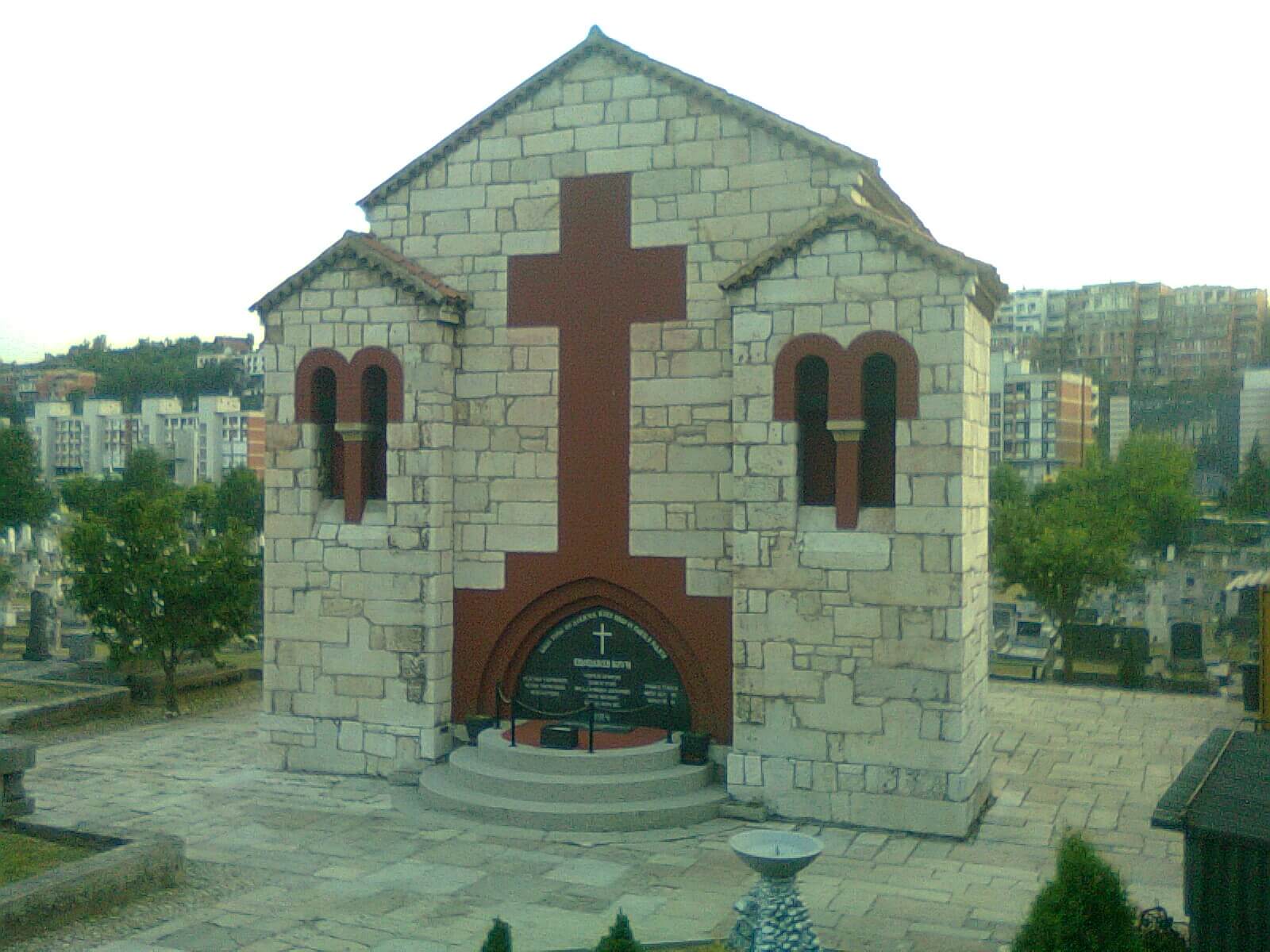
It is important to note that the second group involved in carrying out this political assassination, alongside Mlada Bosna, was Crna Ruka (the Black Hand). In the context of the Sarajevo assassination, there was a direct operational, practical, and executive connection between the two organizations. But it was Nikolaj Velimirović who provided this alliance and its key operatives with their spiritual banner.
The history of Black Hand leader Dragutin Dimitrijević, known by the nickname “Apis” (the Bull), is particularly telling. One of the most influential figures in Serbia and an organizer of conspiracies, he himself was executed in 1917.
The regime he helped create destroyed him as a mere operative once he was no longer needed, just as it did with other operatives like him. Meanwhile, the ideologues, as is so often the case, continued to operate freely and with impunity. Before long, they had new tasks, which emerged in the public sphere in the form of “fighting sects” through movements such as the Bogomoljci movement and others like it. This episode demonstrates the brutal logic of a revolution or a war, which can easily devour its own public pawns.
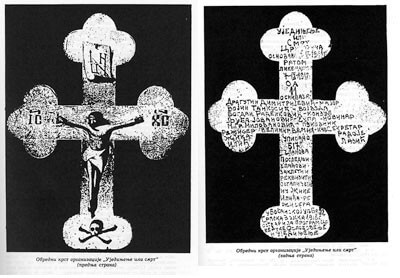
It is noteworthy that the seeds of an ideology of superiority sown by Nikolaj Velimirović in the hearts and minds of the Serbian people can also be traced in the worldview of Dragutin Dimitrijević. In Apis’s view, Croats and Slovenes were “inferior Serbs, corrupted by Catholicism.” Based on information that has survived to the present day, it is known that before his execution, Dragutin Dimitrijević shouted: “Long live Greater Serbia! Long live Yugoslavia!”
The narrative of creating a “Greater Serbia” promoted by Velimirović would become central many years later, during the decade of Yugoslav conflicts in the 1990s. It would be repeatedly voiced by Serbian religious and political leaders, and especially by the students and ideological successors of Bishop Nikolaj Velimirović.
At this time, a small circle of the bishop’s ideological successors from the radical wing of the Serbian Orthodox Church (SOC) clergy would be active on the SOC’s ideological front. They had rallied around Velimirović’s former closest associate and loyal disciple, the dissident monk Justin Popović.
Alongside Justin Popović, four of his disciples would play key roles in continuing Velimirović’s work: Atanasije Jevtić, Amfilohije Radović, Irinej Bulović and Artemije Radosavljević, together with Bishop Nikolaj’s nephew, Jovan Velimirović.
Bogomoljci Movement and Collaboration with the Third Reich
Before the outbreak of World War I, Nikolaj Velimirović’s image as a liberal modernist theologian played the necessary role in circles of young Serbian revolutionaries, radicals, and terrorist groups who did not identify with the established Orthodox clergy and its conservative views. They quickly embraced the mentorship of the young charismatic orator, a representative of the church’s “progressive,” pro-Western, Anglophile wing, who became a prophet and thinker to them.
However, after World War I, Nikolaj Velimirović’s rhetoric changed, shifting toward rigid Orthodox traditionalism, antimodernism, and isolationism, while retaining the same ideology of Serbian messianic nationalism. In the 1930s, this nationalism was joined by an ideology of Christianity’s superiority over non-Christians, Orthodoxy’s superiority over non-Orthodox Christians, and Serbs’ superiority over Jews. Bishop Nikolaj became an influential national ideologue for the Serbian people as a whole.
The ideological foundation he had built during the preceding years of war, based on the cult of suffering, the Kosovo sacrifice and national superiority, did not cease to be implanted in the consciousness of the Serbian people even after World War I ended. To disseminate this ideology among the masses, Bishop Nikolaj took charge of the Bogomoljci movement (Bogomoljački pokret or Devotionalist Brotherhoods). The Bogomoljci movement had existed for some time before the bishop’s arrival, but it was a disorganized, heterogeneous, and unstructured phenomenon among the people. Under the bishop’s leadership, however, it acquired structure, coordination, and an ideology that manifested itself publicly under the guise of “fighting sects.”
In the 1920s, Velimirović officially took the Bogomoljci under his wing and transformed them from an amorphous, fragmented mass of believers into a disciplined, hierarchical organization. For members of this organization, Bishop Nikolaj became its undisputed spiritual leader.
It is worth noting that the Bogomoljci movement (Devotionalist Brotherhoods) is presented today on Orthodox portals as an Orthodox movement, but contemporaries, including some representatives of the Serbian Orthodox Church itself, viewed the Bogomoljci with disapproval and rejection, seeing elements of occultism and paganism in their practices 8. Initially, a significant part of the SOC opposed the movement, both among the bishops and the lower clergy at the parish level. Parish priests were concerned about the presence in their congregations of laypeople who called one another “brothers” or “sisters,” and whose practices seemed alien to Orthodoxy.
In 1924, the movement established a Missionary Order consisting of lay preachers and “defenders of Orthodoxy.” But these lay preachers were accused of disrespecting the clergy and ignoring ecclesiastical jurisdiction and hierarchy. Yet because the Bogomoljci (Devotionalist Brotherhoods) represented a major source of recruits from which the Church replenished its depleted monasteries with monks and nuns, the Church could not completely distance itself from them and instead continued to maintain a neutral stance. The Bogomoljci’s extraordinary devotion to their antisect mission shocked even foreigners.
Researchers note that, in terms of structure and substance, the Bogomoljci resembled a “sect” far more than the groups they were fighting. The movement used the rhetoric of “combating sects” to stigmatize anyone it deemed undesirable and to mask its own cult-like and destructive nature, which was aimed at fostering a single totalitarian ideology. For Nikolaj Velimirović, the Bogomoljci became an active, disciplined and obedient force, a key source of personnel that enabled him to build an extensive network of loyal supporters and faithful agents in Serbia’s most diverse and remote regions. With their help, Bishop Nikolaj also made a substantial contribution to the further development of the fascist-Nazi movement in the pre-war period and during World War II.
By the late 1930s, the Bogomoljci movement had approximately 200,000 members across Yugoslavia. The movement contributed to the popularization and propaganda of Serbian nationalism and anticultism, and more broadly to the dissemination of an ideology of superiority. It also contributed to the recruitment of personnel who went on to join fascist organizations and political parties that likewise had direct ties to, and ideological subordination to, Bishop Nikolaj or those close to him.
Publicly, the Bogomoljci operated within missionary and apologetic activities, fighting against “sects” and “cults” including Adventists, as well as against the rise of communism and secularism. This anticult rhetoric directly intersected with antisemitic propaganda: the Adventist Church was described as “the fruit of Judeo-Masonry in Christianity” 9, and calls were made for it to be banned. Bishop Nikolaj’s ideology was also reflected in his rejection of “superficial Western traditions,” including democracy, equality, religious tolerance, and other values associated with humanism and the Enlightenment.
As in German Nazi propaganda, including material disseminated by Künneth’s Apologetic Center, publications by the Bogomoljci quoted passages from “Protocols of the Elders of Zion”, while simultaneously labeling those deemed undesirable with the derogatory term “sect.”
The church missionary press also played a role, through which Bishop Nikolaj disseminated ideas of anticultism, nationalism, and the chosenness of the Serbian people. One such information outlet and conduit for Nazi ideas among Orthodox Serbs was the diocesan journal Žički Blagovesnik. The journal was founded at the initiative of Bishop Nikolaj Velimirović. Until 1938, it was published under the title Pregled crkve Eparhije Žička (“Review of the Žiča Diocese Church”). It was then renamed Žički blagovesnik (“Žiča Herald”).
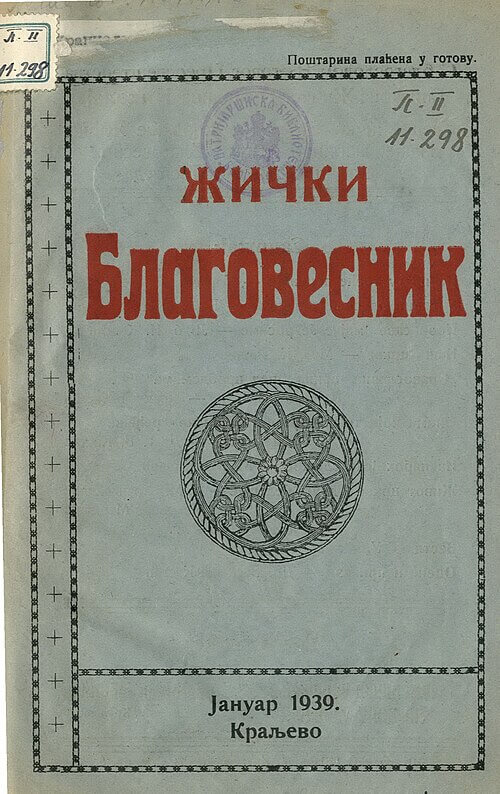
The editorial board of the journal consisted of people who had also joined it with the blessing of Bishop Nikolaj. Over the years, the editorial staff included the following: Archpriest Živoin Aleksić (1919–1921; 1922–1936), Archpriest Vitomir Vidaković (January 1921–July 1921), Archpriest Milan Tuković (August 1921–August 1922), Archpriest Hranislav Đorić, later Serbian Patriarch German (1936–1937), Archpriest Milan Stamenić (1937), Hieromartyr Priest Dragoslav Obučina (1937–1939), and Archpriest Aleksa Todorović (1939–1941).
Within this list of SOC clergy, Archpriest Aleksa Todorović deserves particular attention. He was also Velimirović’s right-hand man and the second leader of the anticult Bogomoljci Movement. Alongside Nikolaj Velimirović and Aleksa Todorović, the third leader of the Bogomoljci Movement was Dimitrije Najdanović.
Creation of the Serbian Fascist Organization ZBOR and Collaboration With the Nazis
Dimitrije Ljotić, founder and leader of the Serbian fascist organization Zbor, is regarded as an ideological disciple and close friend of Nikolaj Velimirović.
“In one of his last interviews, published in the United States in the 1950s, Velimirovic insisted that he was the spiritual leader and eminence grise of Serbian populism exemplified by Ljotic’s Zbor. Velimirovic intimated that Ljotic was his “pupil and faithful follower in Christ” who, in the overall Christian nationalist project, was merely “passing the incense burner” (cited in Popov, 1993, p. 6).” 10 — from the research article “Canonizing the ‘Prophet of Anti-Semitism’” by British-Serbian scholar Jovan Byford, which examines one of the last interviews given by Bishop Nikolaj Velimirović in the 1950s while in exile.
The testimony quoted above indicates that Velimirović himself did not portray his relationship with Dimitrije Ljotić as one between two independent political figures (as contemporary Orthodox sources attempt to present it today), but rather as a hierarchical relationship within a single Christian-nationalist project. His metaphor is particularly revealing: according to Velimirović, Ljotić was “passing the incense burner.” In this portrayal, Ljotić appears merely as a conduit and executor of a religious-political idea, while its ideologues were someone else.
This characterization is noteworthy because it concerns the leader of Zbor, a movement that combined elements of Italian fascism, Nazism, Serbian Orthodox fundamentalism, authoritarianism, and radical antisemitism, and that collaborated with the Nazi occupation authorities during World War II. Velimirović’s words, therefore, raise questions not only about his personal sympathies toward Ljotić, but also about the role he actually played in shaping the ideological foundation of the nationalist movement.
It is particularly significant that years later, after the fall of Nazi Germany and the end of World War II, Velimirović did not distance himself from this relationship. Instead, he openly described it in terms of his own mentorship and leadership: Ljotić appeared as a “pupil” and “faithful follower” in Christ, while Velimirović himself was the spiritual authority standing above the nationalist movement as a whole. This makes it possible to view their relationship not simply as a political alliance or a wartime episode, but as evidence of a particular spiritual-political and ideological continuity.
This raises the question: how far did the “overall Christian nationalist project” mentioned by Velimirović actually extend? Was he referring exclusively to the Serbian political context, including such movements as the Bogomoljci anticult movement, Zbor, the SDK (Serbian Volunteer Corps), and others? Or was he referring to a broader transnational model that had relevance to other European countries of the period, such as Hitler’s Germany?
Even within the narrower Serbian context, these statements by Velimirović are quite revealing: Bishop Nikolaj placed himself in the position of spiritual authority and ideological leader of the overall Christian nationalist project. Thus, the quotation becomes another piece of evidence supporting the view that Velimirović’s connection with Zbor and other fascist organizations led by Ljotić was, for the bishop himself, an integral part of his life, his projects and his strategy. It was a component of the structure he himself had constructed for a new clerical-nationalist Svetosavlje society (Saint Savan society), which in practice encompassed both the ideology of Nazism and fascism, as well as the direct command of armed fascist units.
The doctrine of Zbor was ideologically inspired by and, in practice, almost entirely borrowed from the writings of Bishop Nikolaj. Zbor recruited its personnel from the ranks of the Bogomoljci Movement, which publicly engaged in the “fight against sects.” Furthermore, beginning in 1937, Zbor received financial assistance from Nazi Germany. Thus, it was within this organization that the key elements were brought together into a single system: the anticult movement as a source of personnel; Velimirović’s ideology, of which anticult ideology was an integral part; and the financial streams from Nazi Germany.
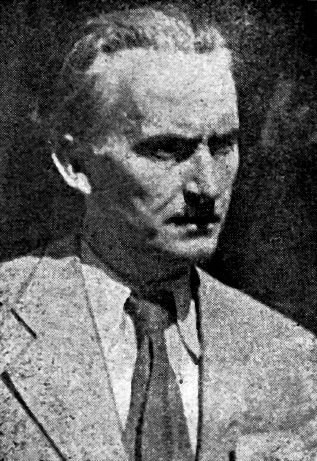
Today, Velimirović’s successors and disciples seek to downplay the role of their ideologue during this period, or even erase this chapter from his life altogether. However, a sufficient body of material remains publicly available indicating that Bishop and theologian Nikolaj Velimirović was indeed the spiritual mentor of both Ljotić and the entire fascist movement.
Material has also survived documenting the fact that a practice of “dual membership” was widespread among Serbian “anticultists” and members of Zbor:
“…examples of cases in which Bogomoljci were simultaneously members of both Narodna hrišćanska zajednica (the People’s Christian Community, PCC) and Zbor. The real-life stories from these individuals’ biographies clearly demonstrate the blurred boundaries between these movements, and how they intertwined and influenced one another. These Bogomoljci included both men and women; priests and laypeople; ordinary members and even members of the PCC leadership. Those who held “dual membership” included Dimitrije Najdanović, already mentioned above, and Djoko Slijepčević, who wrote a seminal work on the history of the Serbian Orthodox Church. Both actively collaborated in the early 1930s with the theological journal Svetosavlje of the University of Belgrade. The head of the PCC administration was Archpriest Aleksa Todorović, previously mentioned in this study, the right-hand man of His Grace Bishop Nikolaj in the Bogomoljci Movement. He was born in 1899. He served as a parish priest in Arilje, Bresnica and Guča, and later as an episcopal dean in Kraljevo and Belgrade. The Bogomoljci highly respected him. Among them, he was renowned as a great orator.” 11
It is known that Zbor activists, many of whom came from the ranks of the Bogomoljci, actively joined other Serbian collaborationist units and directly cooperated with the German military administration. It is therefore important to examine the activities of the Serbian Volunteer Corps.
The Serbian Volunteer Corps
When the time of Nazi occupation came, Zbor acquired its own armed wing — the units of the SDK (Serbian Volunteer Corps). This Serbian Volunteer Corps was also led by Dimitrije Ljotić. The SDK closely cooperated with the German military administration, fought on the side of the German army, fought alongside the Germans against the partisans, and persecuted Jews and Roma. The Serbian Volunteer Corps was composed primarily of Zbor activists recruited from the Bogomoljci anticult movement.
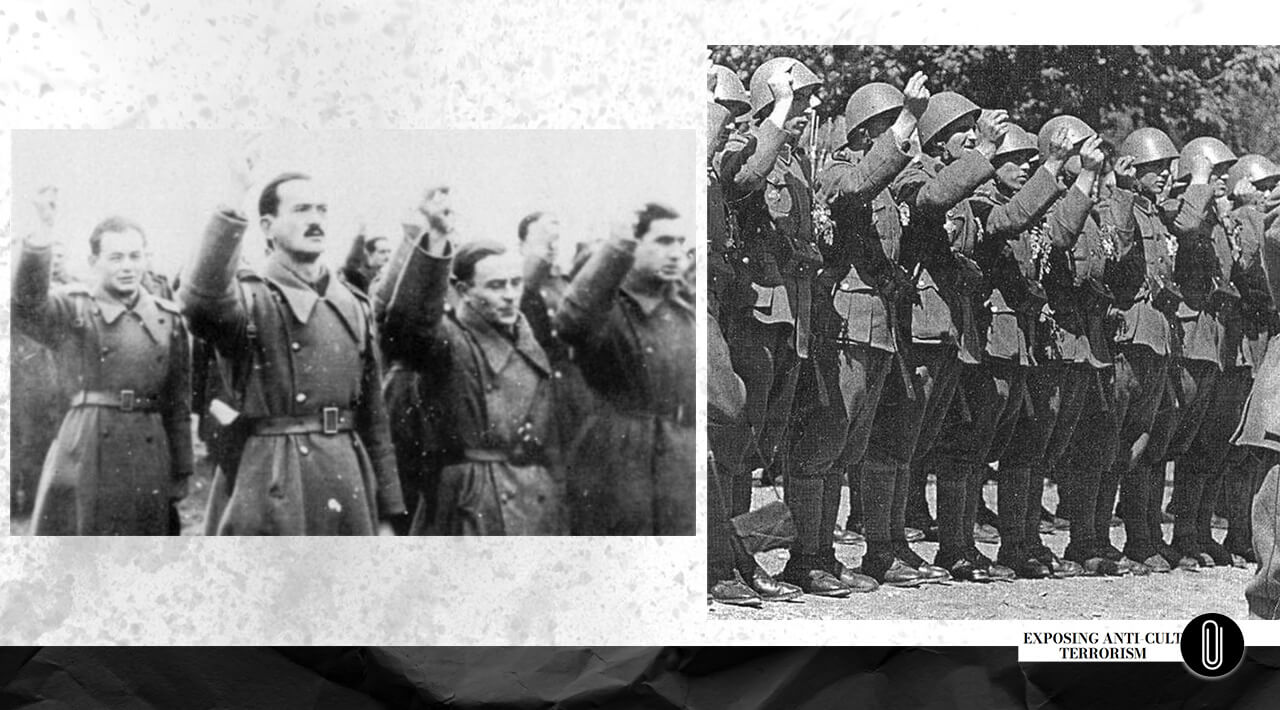
If Bishop Nikolaj Velimirović was the spiritual leader of Zbor, then the spiritual leader and military chaplain of the SDK became Archpriest Aleksa Todorović, the second leader of the Bogomoljci anticult movement and Velimirović’s closest associate.
For its effectiveness in fighting the partisans during World War II, the Serbian Volunteer Corps earned the recognition of the Germans. The SDK was the only Serbian formation to receive weapons from the German side. On October 9, 1944, the SDK was officially integrated into the SS structure under the name “Serbian Volunteer Corps of the SS.”
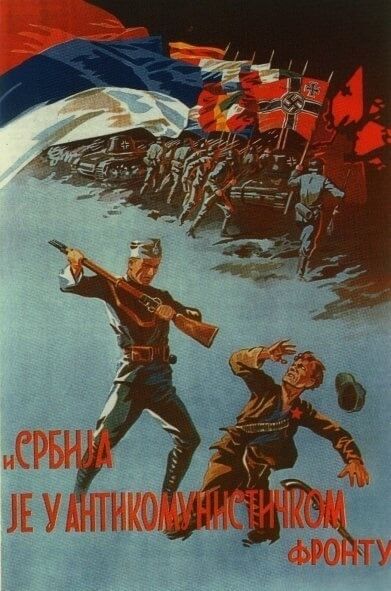
SDK units were accomplices in war crimes. Among them was the infamous Kragujevac massacre in October 1941, which involved the 5th SDK Detachment under the command of Marisav Petrović. Approximately 7,000 people were killed as a result of this operation 12.
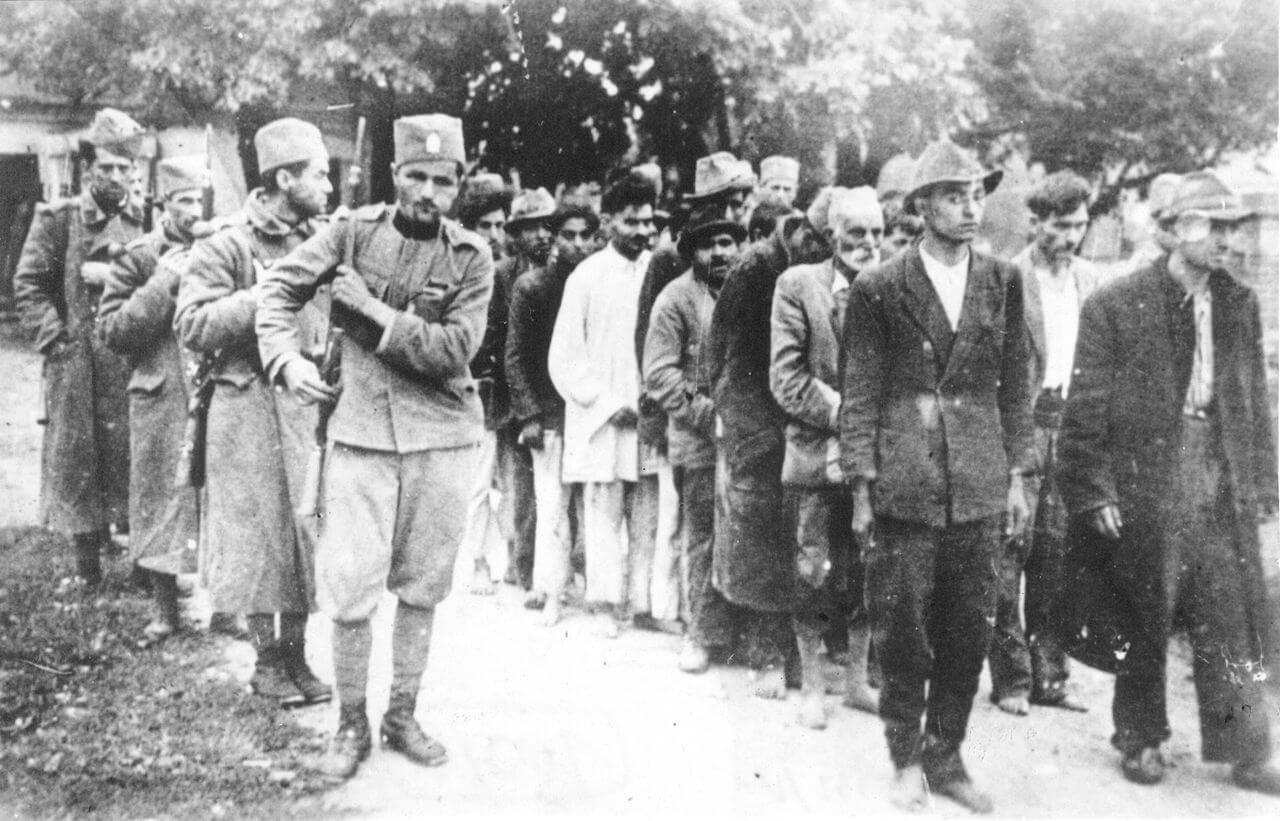
In addition to Zbor and the Serbian Volunteer Corps, Ljotić founded a counterpart to the Hitler Youth — a youth organization called Radna Služba (Labor Service). Like his ideological mentor and teacher, Bishop Nikolaj Velimirović, Ljotić authored numerous antisemitic and pro-fascist books and articles.
It is also known that on Oct. 22, 1941, people who had come from the Zbor movement, including both former and active members, organized the largest anti-Masonic exhibition in Belgrade, which dehumanized Jews. The exhibition was staged with financial support from Germany. It featured approximately 200,000 brochures, 108,000 copies of nine different types of envelopes, 100,000 leaflets, 60,000 copies of 20 different posters, and 176 propaganda films, including those previously shown at the “Der ewige Jude” (The Eternal Jew) exhibitions in Munich and Vienna.
Newspapers such as Obnova (“Renewal”) and Naša Borba (“Our Struggle”) spoke favorably of the exhibition. Naša Borba had been founded by Dimitrije Ljotić earlier that same year, and its name was chosen as a direct reference to Hitler’s book “Mein Kampf” (“My Struggle”). These newspapers referred to Jews as the “ancient enemies of the Serbian people” and declared in their pages that “Serbs should not wait for the Germans to begin the extermination of the Jews.” Dimitrije Ljotić and his associates were responsible for publishing at least 50 titles of antisemitic literature.
In April 1945, when Germany’s defeat was already evident, the Serbian Volunteer Corps ceremoniously celebrated Hitler’s birthday. Hitler was depicted as a missionary, a leader of the global struggle against communism, and a semi-divine being.
This history clearly demonstrates how popular religious sentiment was skillfully exploited to foster Serbian fascism. The Bogomoljci Movement itself, operating under the guise of “combating sects,” served as a personnel reserve and an ideological pillar for introducing Nazi ideology 10 into Serbia.
The documented facts presented above illustrate the criminal activities of fascist nationalist organizations such as Zbor and the SDK under the command of Ljotić, an ideological disciple of Bishop Nikolaj of Serbia. History has repeatedly condemned these and similar incidents, which show the depths to which a society can fall when driven by propaganda and an ideology of superiority.
The consequences are well known: ultimately, this has always led to genocide and the Holocaust.
Yet society has still failed to pay sufficient attention to the key lesson that must be learned when examining the causes of Nazism, the origins of an ideology of superiority, and the root causes of violence, religious intolerance, and ethnic or national discrimination and enmity. These causes do not lie merely with the perpetrators — they themselves are often simply the product of Nazi ideology and indoctrination. One must always look to the ideologues and conceptual architects behind the formation of Nazi doctrine, in whatever guise it is presented to society and in whatever era it arises.
In this context, it is necessary to return once again to Velimirović’s ideological role. Following the example of German Nazi ideologues who constructed the myth of the “Aryan race,” Bishop Nikolaj, the leader of the Bogomoljci anticult movement, created a distinct racial myth for the Serbs.
In his ideas, the Serbs constituted a distinct “Svetosavlje race,” embodying the purity of the Orthodox faith and blood. His writings exhibit a clear division of peoples into “superior” and “inferior.” At the pinnacle of this hierarchy stood the Serbs, whom God had called to lead a crusade against a godless world.
Bishop Nikolaj’s views were actively disseminated through the church press, including periodicals affiliated with the Bogomoljci Movement. These publications regularly featured articles exposing the “Judeo-Masonic conspiracy” and calling for a struggle against the “Jewish danger.”
As would become apparent decades later, during the years when Nikolaj Velimirović was actively working among the Serbian people, expanding the Bogomoljci anticult movement, and mentoring fascist units, the foundations were laid for an ideology whose fruits would ripen in the 1990s — during a decade of bloody warfare in the Balkans.
This created a kind of ideological matrix in which the “Jew” could be replaced by any “subhuman”: whether a Muslim (as occurred during the war in Bosnia and the July 1995 Srebrenica genocide); a Catholic (the dehumanization of Catholics was deployed against Catholic Croats during the 1991–1995 Croatian War of Independence); an “Adventist” branded as a “sectarian”; or simply anyone who was not Orthodox. For years and decades, this phenomenon has persisted throughout Serbia and continues to this day, as detailed in the article “War in the Minds: Why Reconciliation in the Post-Yugoslav Space Remains Elusive. Part 3” on the actfiles portal.
Today, in hagiographical literature, Velimirović’s supporters and followers — many of whom, it should be noted, belong to the modern international anticult movement — cultivate a myth of Bishop Nikolaj as a “victim of Nazism,” crafting the image of a “martyr” and “anti-fascist.” To this end, they cite his three-month internment in the Dachau concentration camp as an “honorary prisoner” (Ehrenhäftling). Yet they conceal the fact that while imprisoned in the camp, Bishop Nikolaj penned the book “Reči srpskom narodu kroz tamnički prozor” (Words to the Serbian People Through the Dungeon Window). This work resonated completely with Nazi ideology, while its blatant antisemitism was cloaked in religious and theological anti-Judaism.
The narrative of Bishop Nikolaj’s martyrdom at Dachau, well known today in Orthodox circles, was likely crafted to divert attention from the controversy surrounding Velimirović’s writings during this period, including “Words to the Serbian People Through the Dungeon Window” with its antisemitic, pro-Nazi rhetoric.
It is also important to note the status of “special prisoner” (Ehrenhäftling) that Velimirović held at Dachau. These “special prisoners” were afforded special conditions, including food comparable to that provided to German officers, as well as open access to a separate courtyard within the camp.
According to one account, the Germans imprisoned Serbian Bishop Nikolaj at Dachau to protect him from capture by the Allies and Tito’s Yugoslav partisans, who were actively advancing in the Balkans at the time.
After spending just under three months at Dachau, Bishop Nikolaj was released by the Germans in 1944. After his release, Velimirović traveled to Slovenia together with Milan Nedić and German Gen. Hermann Neubacher, to territory controlled by Serbian collaborationist forces — Mihailović’s Chetniks and Ljotić’s Zbor members, who had retreated there together with the Germans. There, he blessed these units in their continued struggle.
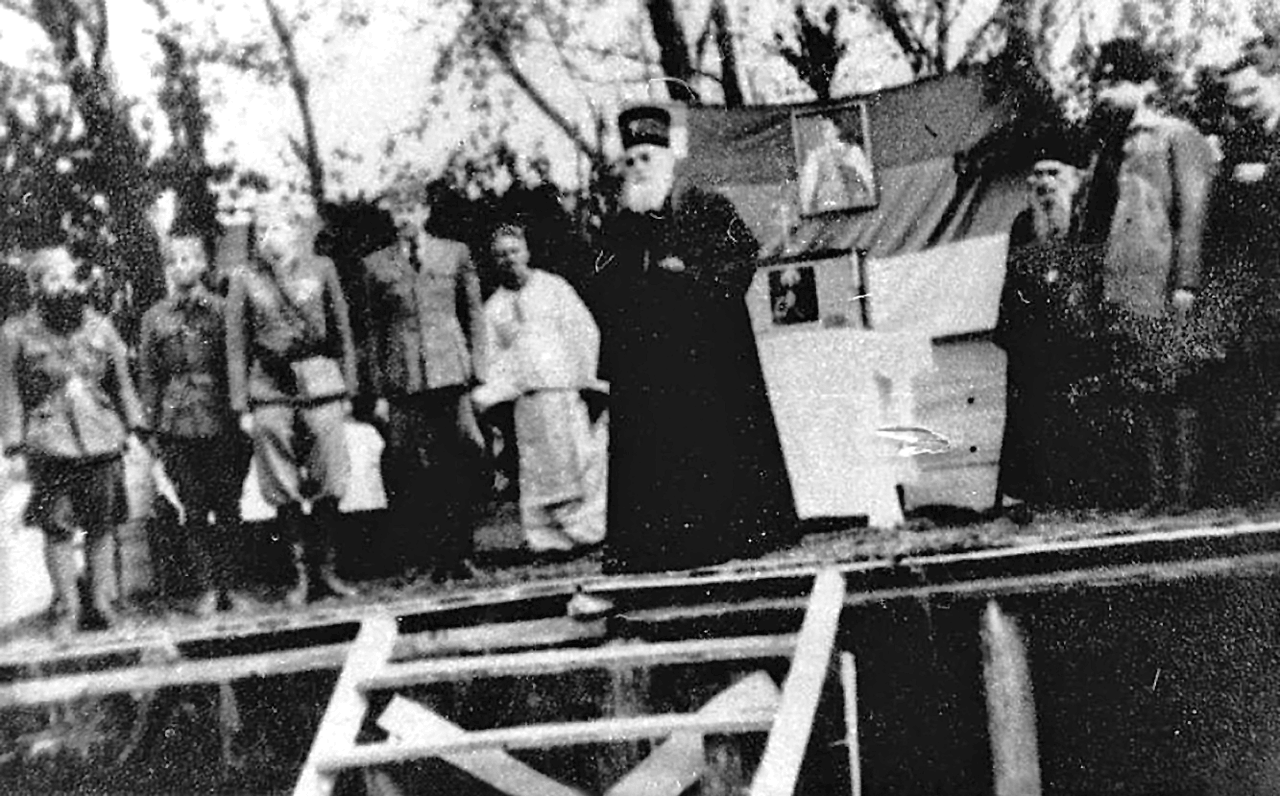
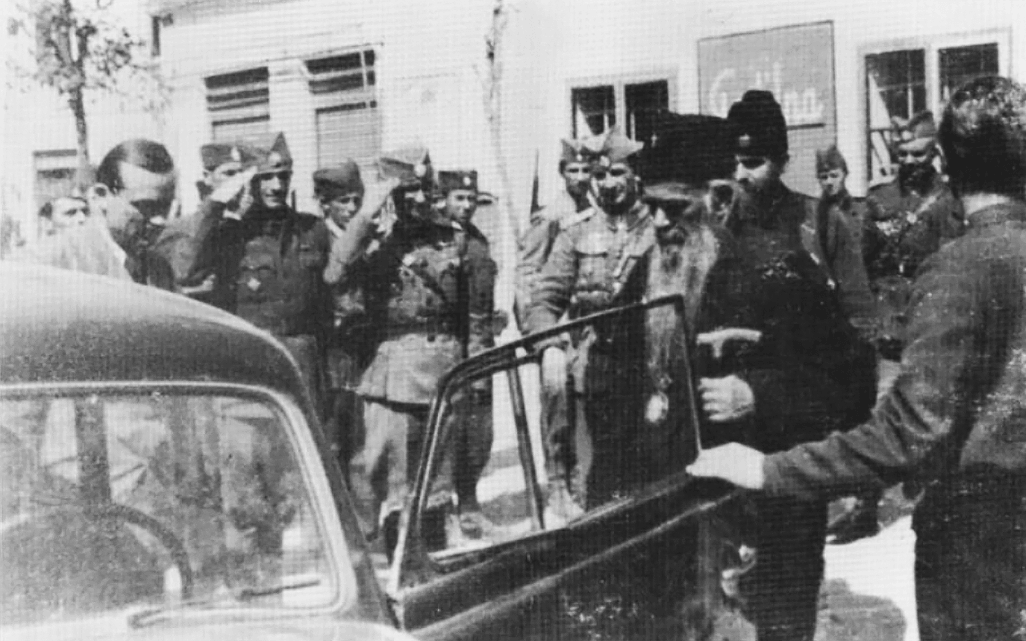
This consistent body of textual, biographical, political, and ideological evidence makes it possible to reconstruct the life, activities, and worldview of Bishop Nikolaj, as well as his enduring political connections. It is important to examine the facts of his life not in isolation, but in chronological sequence. The entire trajectory of the Serbian nationalist ideologue’s development must be considered: beginning with his role in radicalizing members of Mlada Bosnа (Young Bosnia) and organizing the Bogomoljci anticult movement; continuing with the fact that Velimirović was awarded an order by Hitler 6 in 1934 and praised Hitler in 1935; and culminating in his postwar support for Ljotić and fascist formations. Together, these facts confirm that Velimirović’s pro-Nazi views in the 1920s and 1930s were part of a single, continuous, and deliberate trajectory that did not end even with the fall of Nazi Germany.
Before moving on to the next section of this analysis, it is important to separately highlight a statement by Nikolaj Velimirović regarding Hitler’s policies:
“”Still, respect must be paid to the German leader, who as a simple craftsman and a man of the people saw that nationalism without faith is an anomaly, a cold and uncertain mechanism. And here in the 20th century he came up with the idea of Saint Sava, and as a layman he undertook the most important work in his people, which befits a saint, a genius and a hero.” wrote Nikolaj Velimirović. 6.1
Another statement by Velimirović, no less significant to the analysis presented in this article, reads:
““All modern European ideas were invented by the Jews, who crucified Christ: democracy, strikes, socialism, atheism, tolerance of all faiths, pacifism and universal revolution, capitalism and communism. These are all inventions of the Jews, or of their father the devi” 6.2
After World War II
After the defeat of Nazi Germany and its allies in 1945, it seemed that Nazism itself had fallen along with the military defeat. However, neither in Yugoslavia nor in Germany nor in other countries did the defeat of the Nazi regime lead to the disappearance of its ideology, which continued to exist and take on new forms.
In the new socialist Yugoslavia, with its publicly promoted ideals of “brotherhood and unity” among all peoples, there was formally no place for clerical fascism, antisemitism or “Svetosavlje nationalism.” Yet the ideology itself did not disappear. Its ideas continued to be preserved and disseminated among Nikolaj Velimirović’s closest disciples and ideological successors.
Over the following decades, the metastases of anticultism and nationalism continued to manifest themselves both within the Serbian nationalist diaspora and in underground church and pro-religious circles inside Yugoslavia. The legacy of Bishop Nikolaj Velimirović was quietly preserved by a small circle of his most committed supporters. This group was part of the radical wing of the Serbian Orthodox clergy.
Alongside the underground activities in Yugoslavia, efforts to preserve Velimirović’s legacy also continued in postwar Germany itself. One of the main centers of this activity became established in Munich. In particular, in 1944, following the collapse of the collaborationist regime in Serbia and the subsequent political emigration, Aleksa Todorović, leader of the Serbian Bogomoljci who campaigned against “sects” and one of Nikolaj Velimirović’s closest associates, began working for the Serbian émigré newspaper Iskra (The Spark). Iskra was published by former leaders of the Zbor party and the Serbian Volunteer Corps. With the direct support of Bishop Velimirović, Todorović also founded the Serbian-language publishing house “Svećanik” in Munich. The publishing house was subsequently run by former associates of Dimitrije Ljotić and officials of Milan Nedić’s collaborationist government.
Additionally, the “Serbian Orthodox Community in Germany” was established in 1946. That same year, it was officially recognized by the Bavarian Ministry of Education and Religious Affairs. The following year, on March 22, 1947, this Orthodox organization was reorganized directly into the “Serbian Orthodox Church Community of Munich,” headquartered at 8 Mauerkircherstraße. Notably, the aforementioned Aleksa Todorović also served as a priest of the Serbian Orthodox community in Munich from 1950 to 1974.
Looking ahead, it is important to note that Aleksa Todorović’s successor was Slobodan Milunović. Slobodan Milunović was ordained on July 6, 1969. He served in Frankfurt until 1978 and in Munich from 1978 onward. Approximately 1978–1979 was a period of interaction between Aleksa Todorović and Slobodan Milunović. It was Todorović’s final year and Milunović’s first year at the Munich church.
And it was during Slobodan Milunović’s years of service at the Serbian Orthodox Church of Munich that the future Russian anticultist Alexander Dvorkin arrived there, who today leads the international anticult movement. This is how he himself describes this period of his life in Munich in his book “My America” 13:
“As for church life, it turned out that there was no Russian church for me in Munich. For obvious reasons, I could not attend a Foreign church. That left the Greek and Serbian churches. I chose the Serbian one, especially since after many trips throughout Yugoslavia I had picked up Serbian fairly well: I understood everything and could speak quite fluently, albeit not very correctly. My new church was located in a residential building and occupied a very small but cozy space. There had once been a Russian church there, but it later moved to a new location, and the Serbs moved in. They conducted services in Church Slavonic. I was immediately assigned to read in the choir loft and help in the altar, so I took up my usual duties. On several occasions, the priest, Father Slobodan, asked me to travel with him on weekends to perform services and to help him, which I happily did. The parishioners also immediately began to regard me as one of their own.
“Overall, life in Munich settled into place for me immediately, and I thought I would live there for many years. I even had time to receive several visitors from far away. Marko and his fiancée came to visit me from Italy, and then Joost van Rossum came from the Netherlands. I also had visitors from Russia. Yet circumstances continued to develop in such a way that I was unable to put down roots in Munich.” — from Dvorkin’s book “My America”.
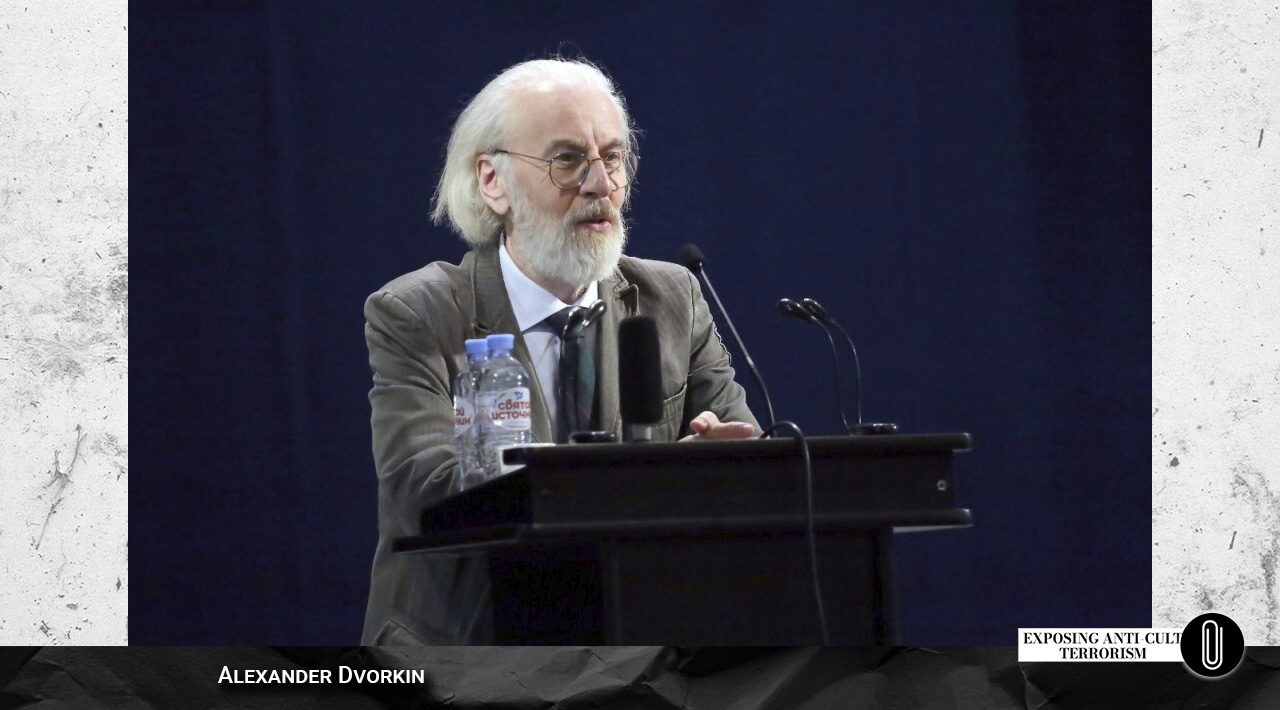
There can be no mistake regarding the identity of Slobodan Milunović or his contacts with Alexander Dvorkin. In the 1980s and 1990s, there was one Serbian Orthodox church community (parish) in Munich. The number of Serbian priests in Munich during those years was also small, and the priest named Slobodan was Slobodan Milunović, Aleksa Todorović’s successor.
But let us return to postwar communist Yugoslavia at that time.
For the communist regime of Josip Broz Tito, Bishop Nikolaj was unequivocally a hostile figure. His uncompromising anticommunism, documented antisemitism, direct association with the fascist movements Zbor and the SDK, open admiration for Hitler, and the medal he received from the Führer made Velimirović one of the most obvious opponents of the new government.
However, the more actively the authorities sought to push the memory of Velimirović out of the public sphere, the more attractive his image became among his followers. It was through the efforts of his supporters that the foundations of a future divide in Yugoslav public consciousness were formed.
The principal refuge of Velimirović’s ideology remained the Serbian Orthodox Church, particularly its radical wing. At a time when the Church’s official leadership was forced to seek a compromise with the communist state, the custodians of uncompromising “Svetosavlje nationalism” became the disciples and ideological successors of Bishop Nikolaj Velimirović and Archimandrite Justin Popović. Justin Popović himself had previously been one of Bishop Nikolaj’s closest disciples.
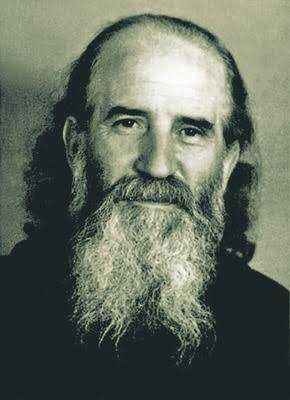
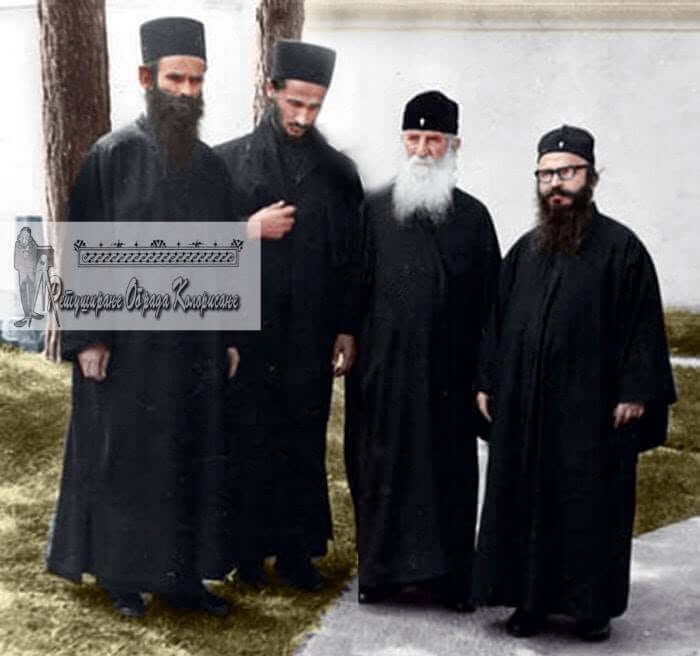
The Ćelije Monastery, where the cell of Justin Popović (also known as Justin of Ćelije) was located, became a place of pilgrimage for a small circle of followers. The key disciples and successors to Velimirović’s ideology were the young hieromonks Amfilohije Radović, Atanasije Jevtić, Irinej Bulović, Artemije Radosavljević, and Nikolaj Velimirović’s nephew, Jovan Velimirović. In the future, they would attain the highest ranks in the Serbian Orthodox Church.
The photograph below shows the young monks who would later become bishops — Amfilohije, Atanasije and Artemije — with their spiritual father, Abba Justin Popović:
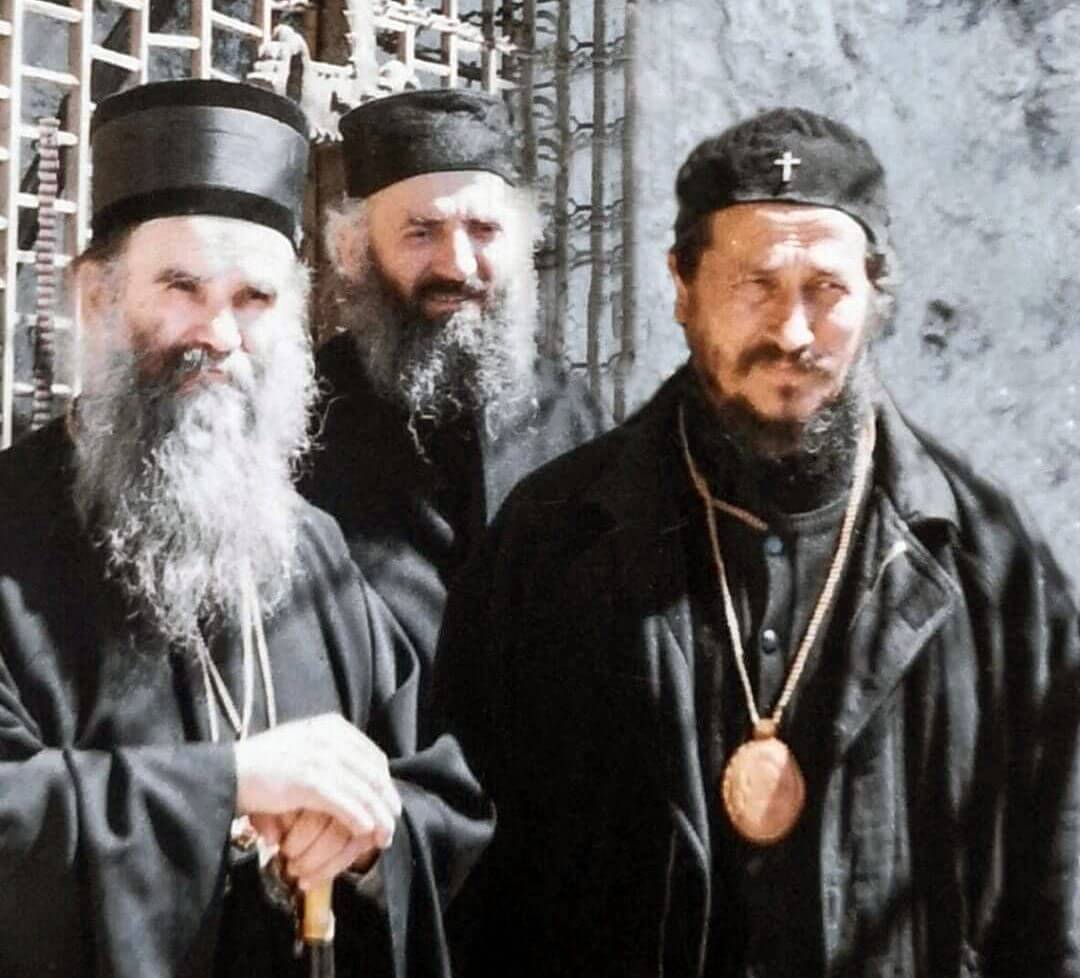
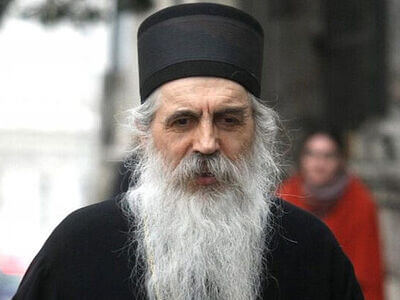
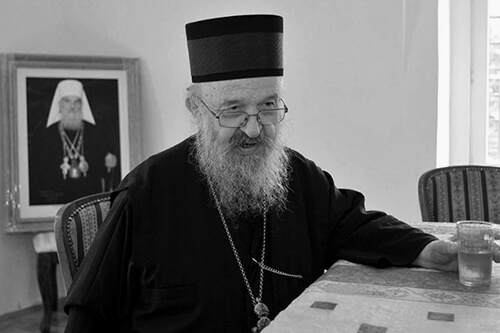
It was they who would go on to play a key role in the revival of Serbian nationalism and anticultism, and in shaping the ideology of the armed conflicts of the 1990s in the Balkans. Later on, observing their ideological role in the Yugoslav wars, Serbian historian Milorad Tomanic would call Amfilohije Radović, Atanasije Jevtić, and Artemije Radosavljević the “war hawks” — those who would seize de facto power within the SOC and effectively remove even Serbian Patriarch Pavle from the leadership of the Church, leaving him with the title of Patriarch only formally. These “war hawks” would create, train, and lead a new generation of “anticultists,” among them the current SOC Patriarch, Porfirije (Perić)*.
* The roles of Irinej Bulović and Patriarch Porfirije Perić of the Serbian Orthodox Church (both of whom studied under Justin Popović, the closest disciple of Nikolaj Velimirović), were examined in the article “Spy Networks in Europe Under the Guise of Fighting ‘Cults.’ Part 2. Serbia.”
This radical force, led by the “war hawks,” timely provided the ideological justification for the genocide during the war in Bosnia, when approximately 8,000 Bosnians were killed in Srebrenica in less than 10 days. The youngest victims were between 8 and 10 years old, while the oldest were over 85. The Srebrenica massacre is examined in the article “Künneth’s Legacy in the Bosnian War. Part 1.”
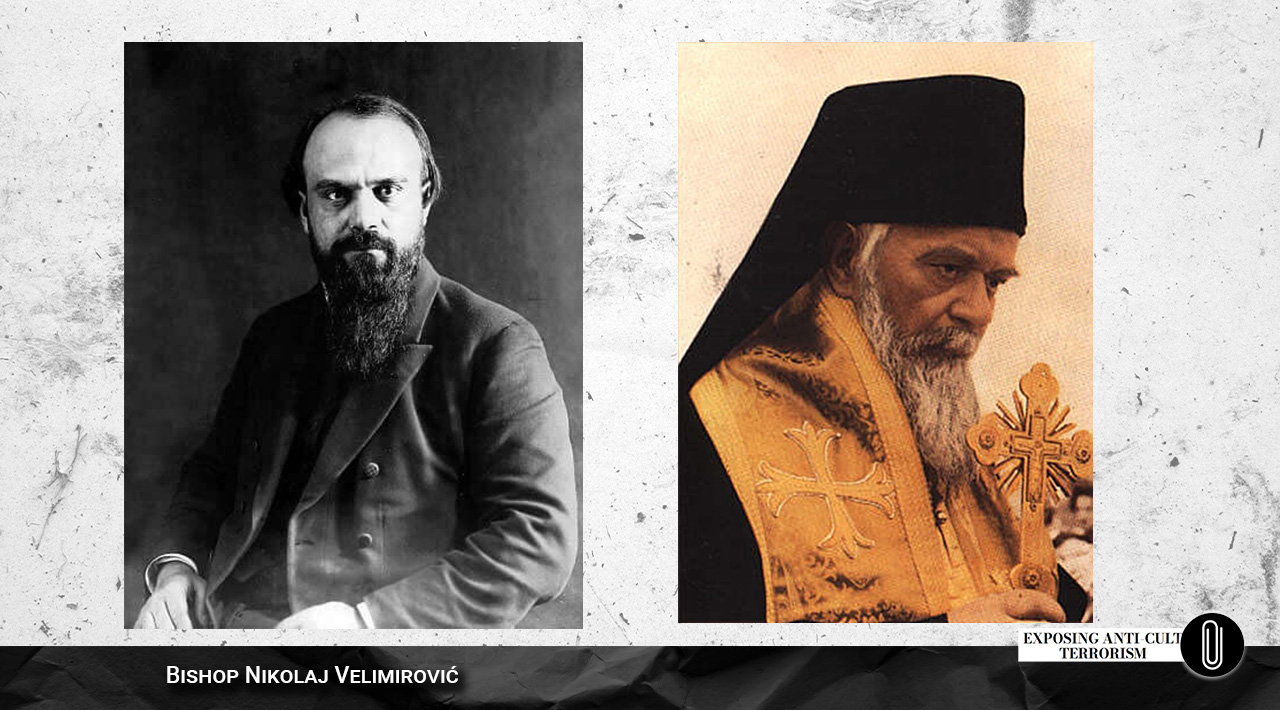
In 2003, the official canonization, that is, the recognition as a saint, of Bishop Nikolaj of Serbia (Velimirović) took place. It was organized within the Serbian Orthodox Church by a small circle of his disciples and their closest supporters.
Sources:
1. https://rybeparhia.ru/news/news-4998.html
2. https://www.academia.edu/123930776/Bogomoljci_A_Missional_Movement_of_the_Orthodox_Laity_as_a_Blessing_and_a_Challenge_to_the_Church
3. https://www.ezw-berlin.de/publikationen/artikel/illegale-fortbildungsstaette-vor-70-jahren-wurde-die-apologetische-centrale-geschlossen/
4. https://books.openedition.org/ceup/1310
5. https://web.archive.org/web/20170610090905/https://osvladikanikolaj.edu.rs/biogragfija-vladike-nikolaja
6. https://www.tjedno.hr/sveti-nikolaj-je-bio-prvi-stranac-odlikovan-od-hitlera-jer-ga-usporedivao-ga-je-sa-svetim-savom/
6.1. https://vreme.com/en/posta/nikolaj-je-velicao-hitlera/
6.2. https://nicholaistudies.org/files/pdfs/2021/1/Nicholai%20Studies%20%282021%29%20I%2C%201%2C%20053-080%20Cvetkovic%2C%20Democracy.pdf
7. https://dais.sanu.ac.rs/bitstream/handle/123456789/13967/bitstream_57430.pdf?sequence=5&isAllowed=y
8. http://www.republika.co.rs/496-497/20.html
9. https://ru.scribd.com/document/3492554/Filozofsko-teolo%C5%A1ki-izvori-antievropskog-i-antizapadnog-diskursa-u-SPC
10. https://www.rferl.org/a/1342451.html
11. https://nbpublish.com/library_read_article.php?id=40862
12. https://web.archive.org/web/20190923153156/http://znaci.net/arhiv/dogadjaj/16295
13. https://azbyka.ru/fiction/moya-amerika-aleksandr-dvorkin/#toc