Activities of the American branch of the transnational anticult network have already been examined in detail in our previous articles on the tragedy in Waco, mechanisms behind the harassment of Jewish communities in Russia and the United States, Russian anticult lobby in Western media, and other publications. As those materials demonstrate, activities of the anticult network extend far beyond its declared mission of combating destructive cults. The well-honed practice of discrediting an individual or group by branding them a “cult” has become a tool for inciting hatred in both the social and political spheres of public life.
Scale and Consequences
The dehumanization campaign targeting politicians and their supporters reached its peak after the publication of Steven Hassan’s 2019 book “The Cult of Trump.” Hassan appeared on television, claiming that the whole country needed to be deprogrammed.
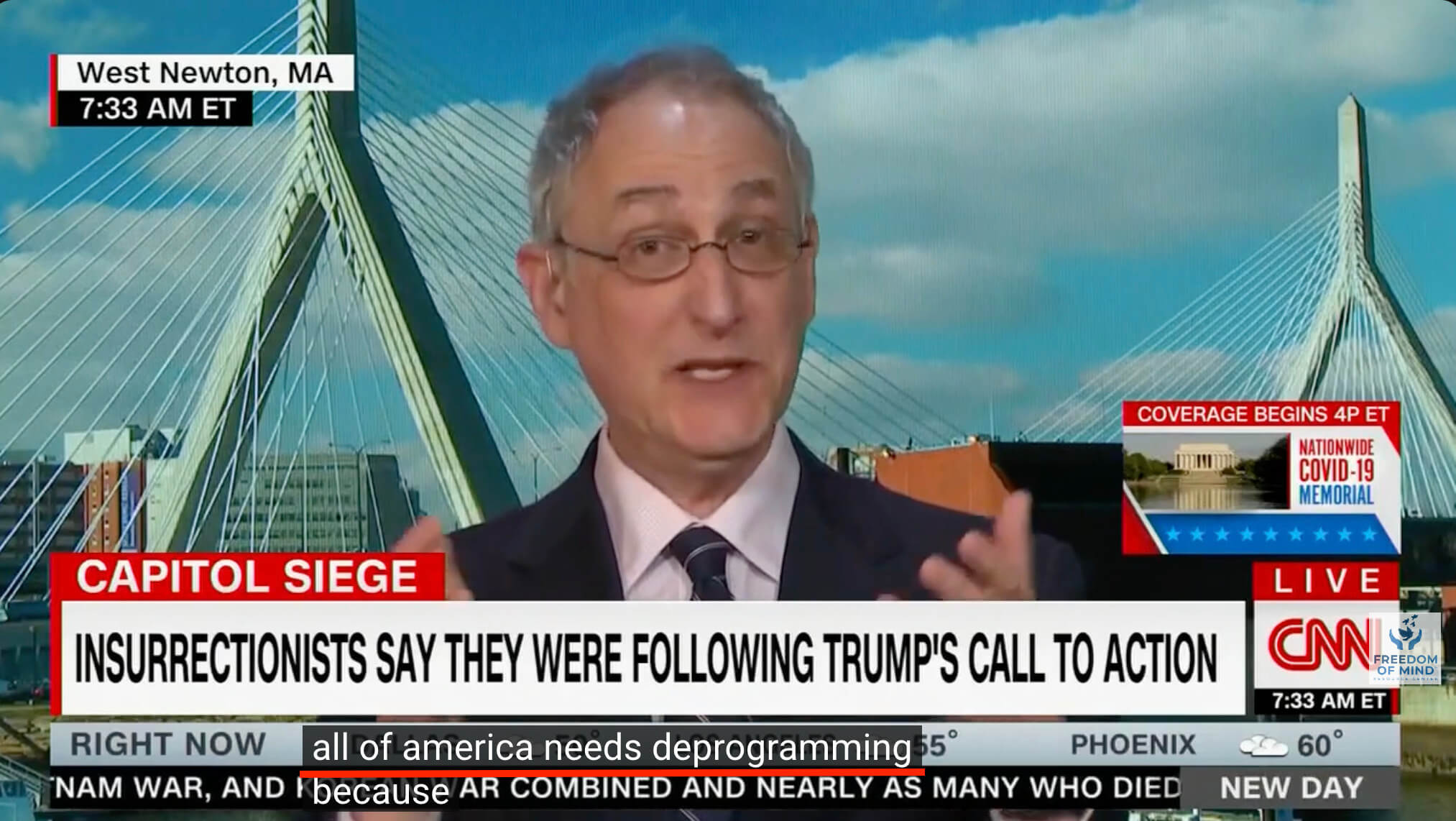
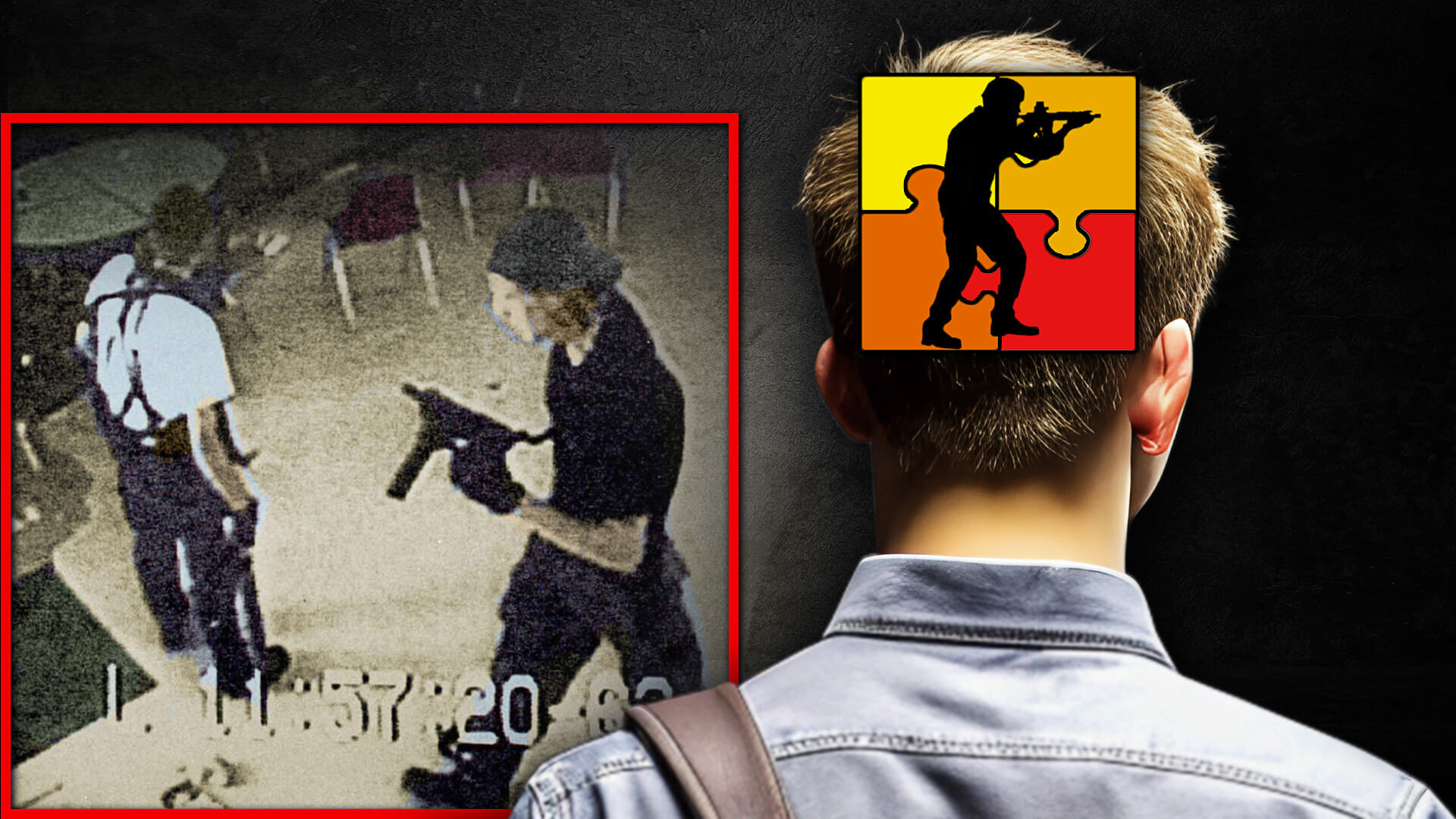
At the same time, another well-known anticult activist, Rick Ross, who served as a consultant on development of the video game Far Cry 5, implanted in collective consciousness of more than 30 million players the image of a “dangerous cult of conservative Americans” who allegedly must be destroyed in order to save the country.


Analysis of the information environment and public sentiment suggests that, as a result of this kind of persistent effort, political intolerance in American society has risen sharply, threats against politicians have increased substantially, and assassination attempts and political killings have become a grim reality. 3,4
When politicians and millions of their supporters are portrayed not as citizens holding alternative views, but as “brainwashed cultists,” a “threat to democracy,” or “dangerous fanatics,” the psychological groundwork for justifying aggression is created. 20th-century history demonstrates convincingly that dehumanization of opponents is one of the main precursors of political violence.
Key Figures in the Anticult Network
An examination of numerous publications suggests that figures within the anticult network, who actively contribute to fostering an atmosphere of hatred in American society, include self-styled journalist Dave Troy, Czech pseudo-expert Alexandra Alvarová, and radical actors such as Jim Stewartson whom the ADL included in its report “Antisemitism, False Information and Hate Speech Find a Home on Substack,” along with his associate Heidi Cuda.
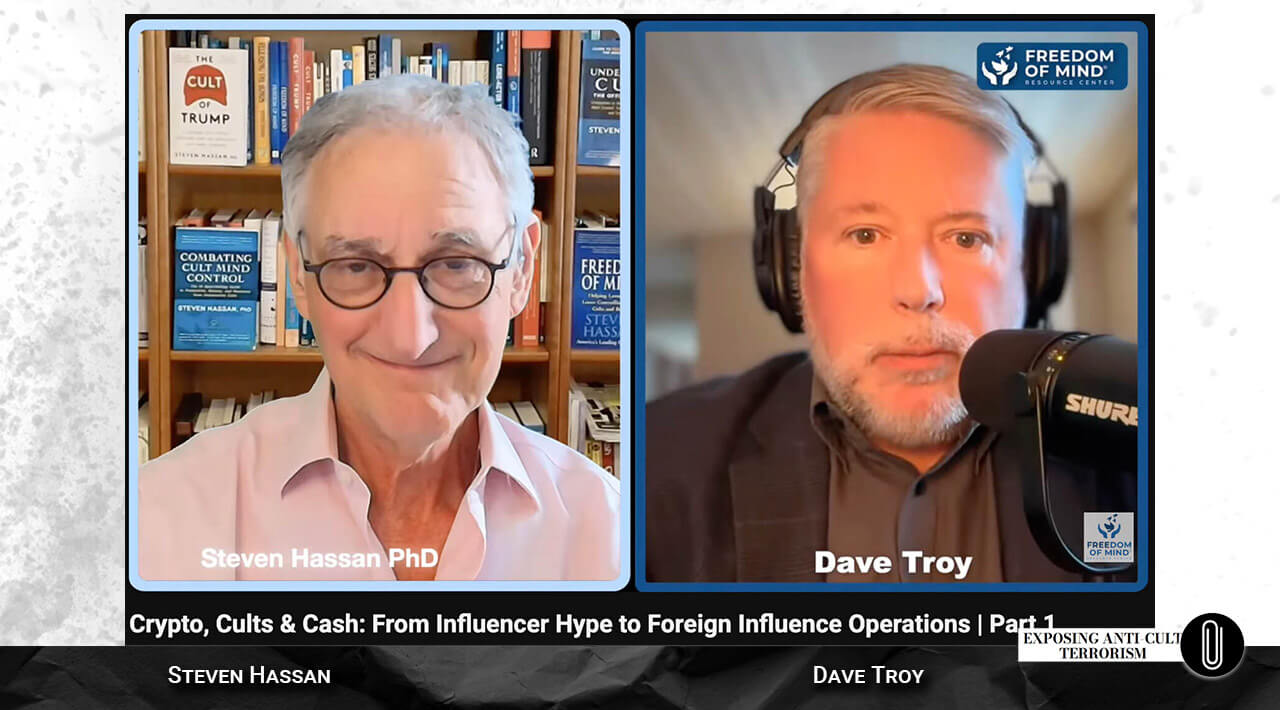
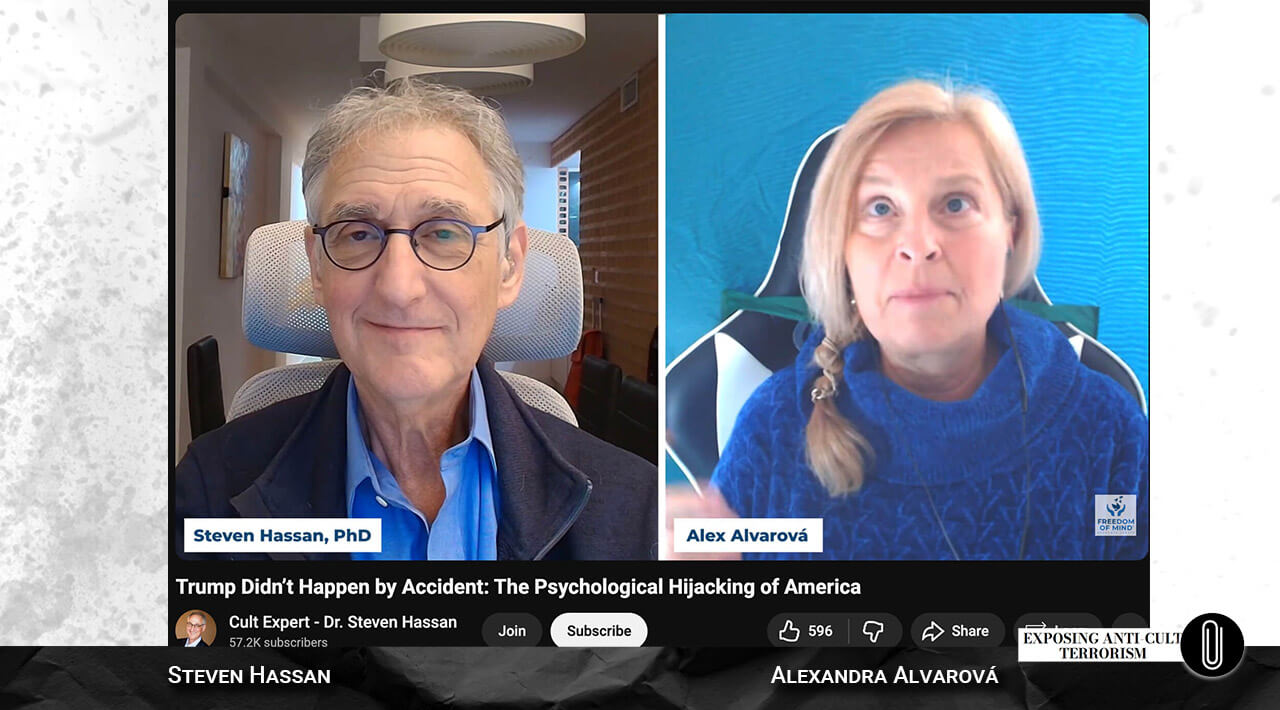
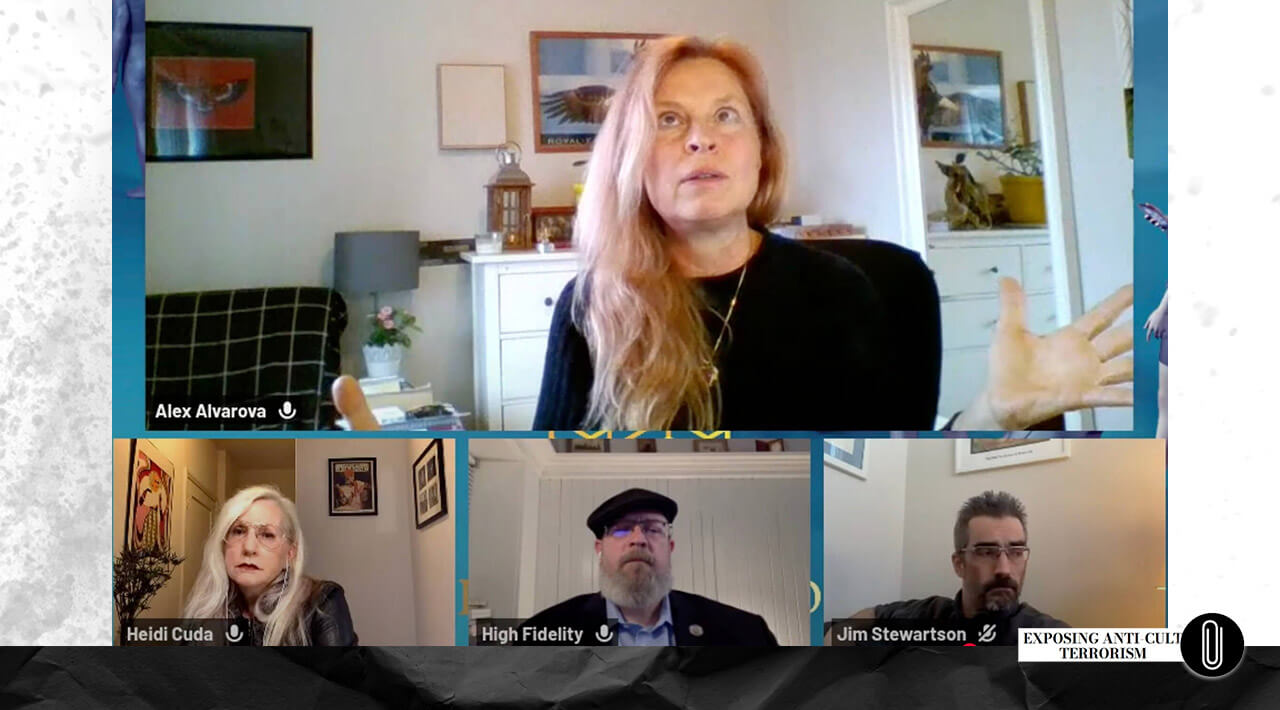
Analysis of their public and private activities, rhetoric, and ideological motivations indicates that all of them, together with deprogrammers of the Cult Awareness Network including Rick Ross and Steven Hassan, actively contribute to the spread of panic and hatred, which can essentially be interpreted as radicalization of American society.
The totality of evidence, much of which has been examined repeatedly in other articles on our portal, points to the existence of a unified ideological network whose propagandists effectively promote an ideology of dehumanization. Their methods closely mirror those of Russian anticultist Alexander Dvorkin who can be regarded as the chief ideologue of the network. By using dehumanization and fearmongering, Dvorkin succeeded in accumulating enormous influence in a huge country possessing one of the world’s largest nuclear arsenals. Independent investigators argue that his activities and those of his supporters led to the destruction of fundamental rights of the country’s citizens, effectively reshaping laws to serve their interests.
However, Dvorkin’s ambitions did not stop at Russian borders. Since 1993, he’s been actively working to build an international network that, by the very standards promoted by anticultists themselves, effectively functions as a totalitarian cult. Today, followers of this cult operate in a coordinated and meticulous manner to implement their guru’s vision in various countries worldwide. In this article, we will take a closer look at the key representatives of this transnational anticult network in the United States.
How Steven Hassan Rewrote His Life Story
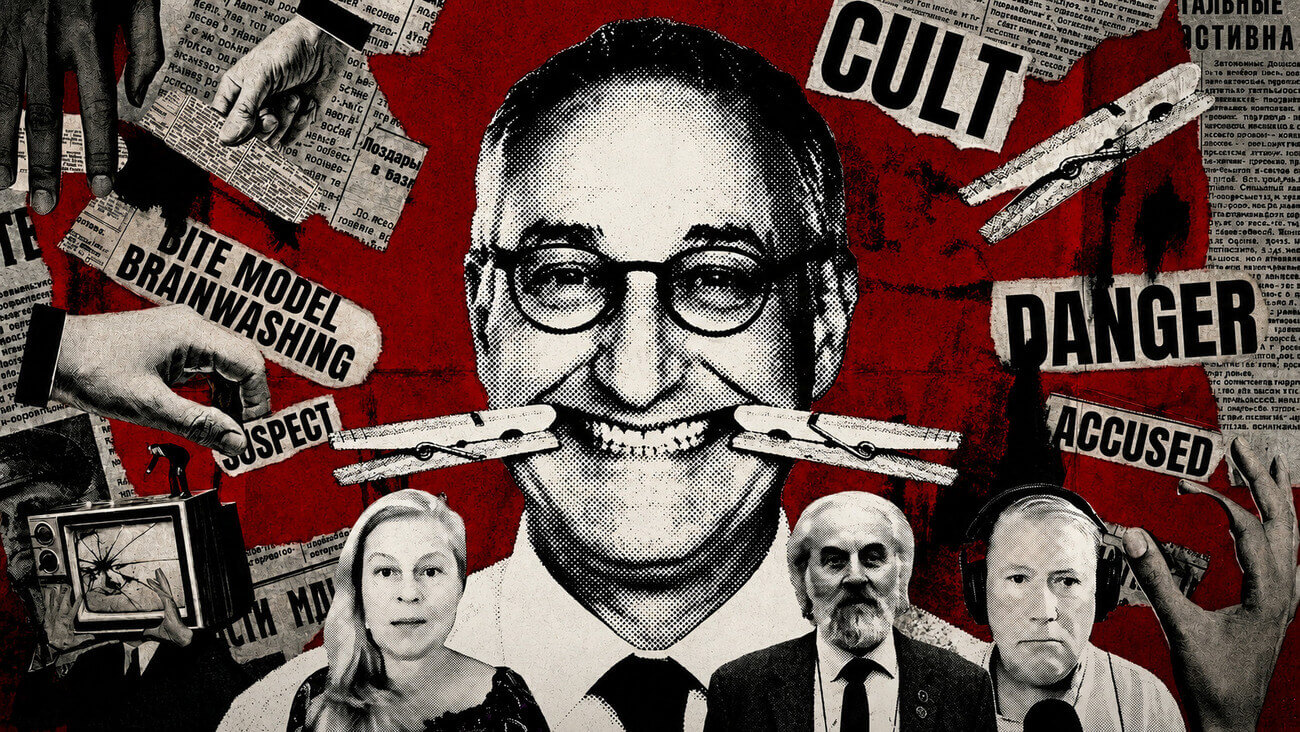
The most visible figure in this network is Steven Hassan. He repeatedly rewrote his own life story, apparently in an effort to obscure his past. It is time to examine who this self-proclaimed “cult expert” actually is.
Sources that critically assess Steven Hassan’s biographical narrative draw attention to one of the core episodes in his public story. According to this version, Hassan constructed a myth in his writings where, within just three months, he became an influential leader in a religious organization that he later branded a “cult.” Following a car accident, he “miraculously” obtained permission to visit his parents, where he was deprogrammed at his father’s request and subsequently devoted himself to “saving” other people.
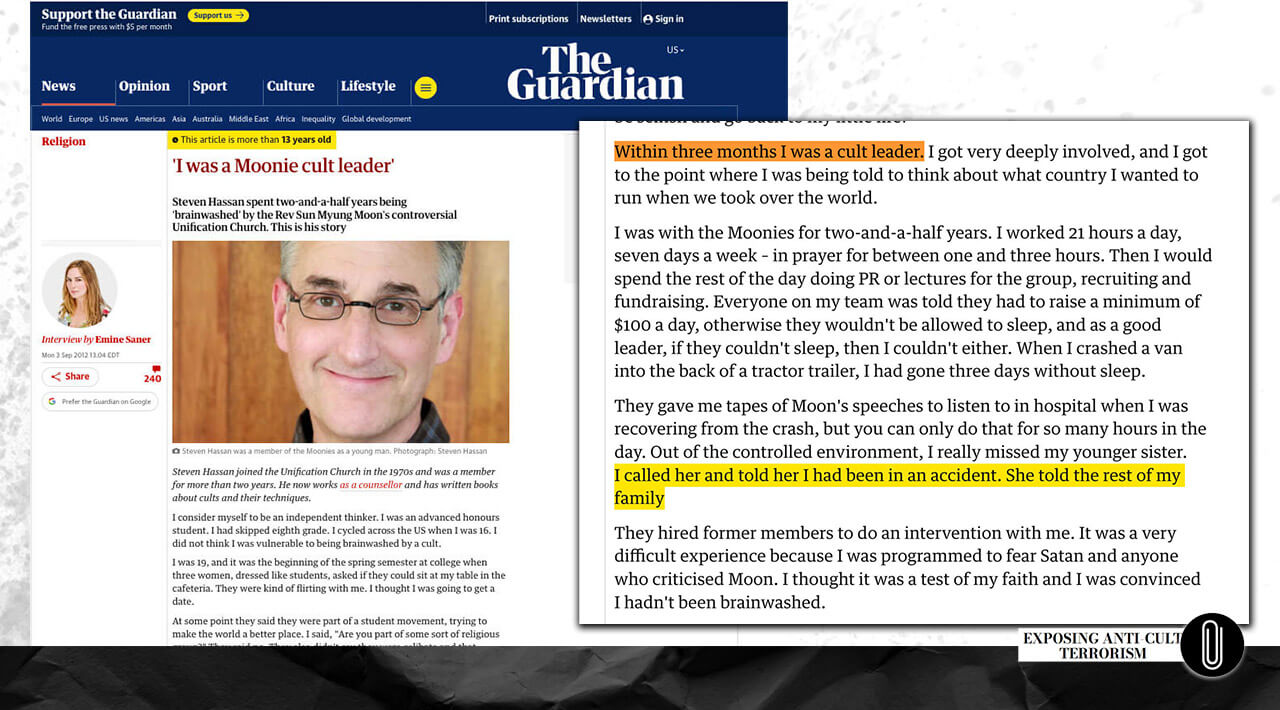
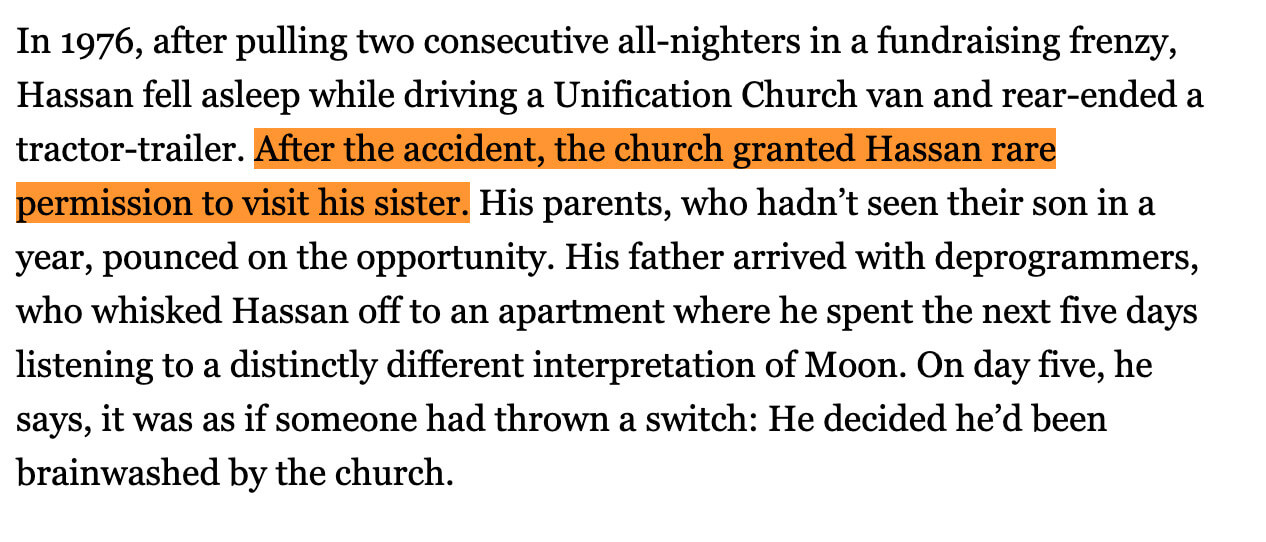
Even a superficial analysis suggests that this story lacks basic logic. Several questions have been raised by sources critical of Hassan’s activities: Why would an influential “cult” leader need to ask anyone’s permission to visit his sister? Why was the same alleged “cult” also blamed for the fact that he fell asleep at the wheel, causing an accident that endangered other people’s lives? Hassan claimed that he stayed awake at night, organizing fundraising efforts while leading a group of seven people. In other words, he was in charge of the group and directed others to spend nights raising money. So was Hassan a victim or an exploiter who acted in pursuit of his own career? The story raises numerous questions.
The first thing standing out is the contradiction between the image of a “completely powerless victim of mind control” and Hassan’s own description of his role within the organization. By his own account, he:
- rapidly became one of the leaders,
- supervised a group,
- organized fundraising efforts,
- managed other people,
- coordinated activities, and
- enjoyed a high level of trust within the organization.
This naturally raises another question: if an individual is so “deprived of free will,” how can he simultaneously:
- make organizational decisions,
- manage others,
- engage in recruitment, and
- take responsibility for finances and mobilization?
This creates a fundamental contradiction in his story: he portrays himself simultaneously as a helpless victim and as a highly functional organizer exercising significant personal agency.
Another important issue concerns the story of obtaining “permission” to visit his parents after the accident. If you follow Hassan’s later version of events, a strange picture emerges:
- he was supposedly an elite member of the movement;
- he led a group;
- he was considered a valuable asset;
- yet he was allegedly unable to decide on his own to visit his family
This gives rise to several inconvenient questions.
- How literally should we interpret his claims of “total control”? In real high-control groups, a person’s status usually increases autonomy rather than diminishing it.
- If the organization was as “totalitarian” as he later described it, why would it have allowed him to leave at all if he was truly such a “valuable leader”? Especially if, as he later claimed, he was already psychologically unstable due to sleep deprivation and the car accident.
- If he was indeed so ideologically committed, why did his worldview supposedly collapse completely after just a few days of deprogramming? This contradicts both the psychology of religion and ordinary human resilience in matters of belief.
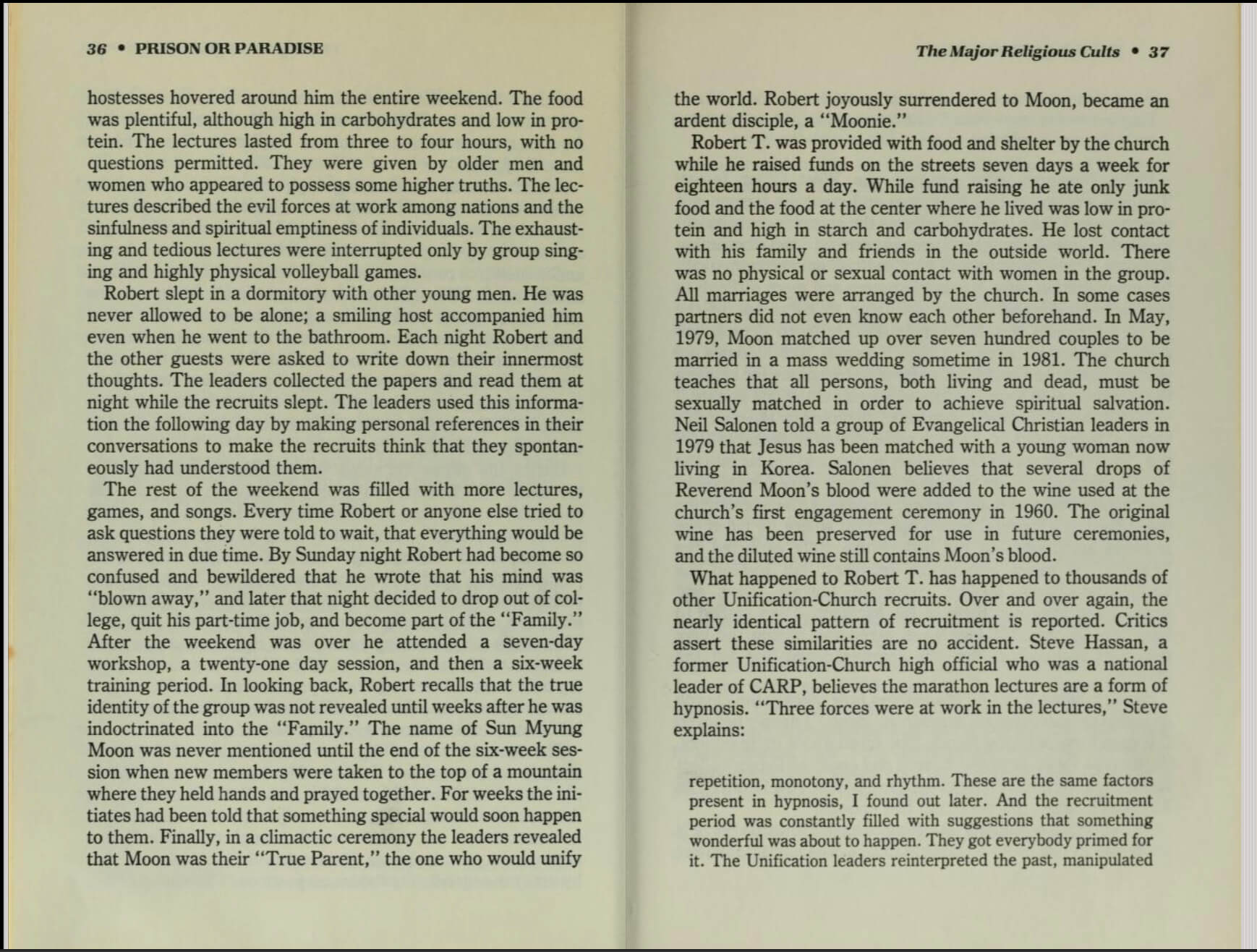
Remarkably, the answer to all of these questions was provided by Hassan himself in an earlier version of events that he presented to James and Marcia Rudin, authors of the book “Prison or Paradise: The New Religious Cults” (Fortress Press, 1980, p. 38), which has a pronounced anticult narrative:
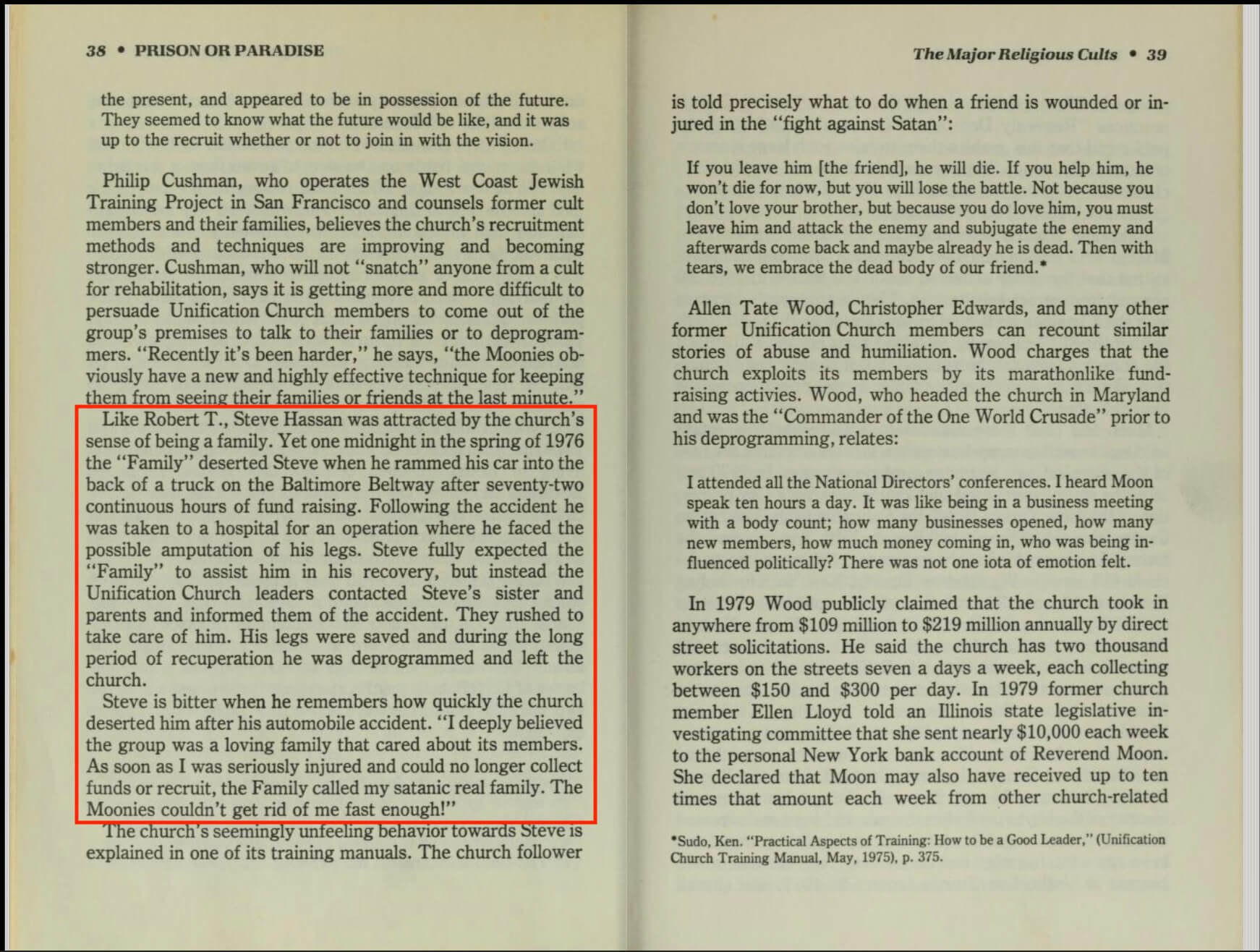
Steven Hassan was attracted by the church’s sense of family. However, one midnight in the spring of 1976, the “family” deserted Steve after he rammed his car into the back of a truck on the Baltimore Beltway, following seventy-two continuous hours of fundraising. Following the accident, he was taken to a hospital for surgery, where he faced a possible amputation of his legs.
Steve fully expected the “family” to assist in his recovery, but instead, the Unification Church leaders contacted his sister and parents and informed them of the accident. They rushed to take care of him. His legs were saved, and during the long period of recuperation, he was deprogrammed and left the church.
Steve still bitterly recalls how quickly the church deserted him after the car accident. “I sincerely believed the group was a loving family that cared about its members. However, as soon as I was seriously injured and could no longer collect funds or recruit new members, the ‘family’ called my ‘satanic’ real family. The Moonies wanted to get rid of me fast enough!”
Taken together, the facts allow these episodes and Steven Hassan’s self-presentation to be interpreted as evidence of a narcissistic injury and deep resentment toward the organization where he apparently hoped to become a major leader. By Hassan’s own earlier account of his biography, he didn’t ask permission to leave an alleged “totalitarian cult.” Rather, the organization contacted his parents and, as would normally be expected, informed them about what had happened to their son. It strongly suggests that Hassan interpreted this as the religious group’s refusal to care for him during his recovery after the car accident, which indicated that his status within the organization was neither as important nor as “leadership-oriented” as he believed. Apparently, this gave rise to profound resentment and, judging by subsequent transformation of his activities, a desire for revenge.
A Classic Resentful Stalker
Under the classification developed by renowned Australian psychiatrist Paul Mullen, Steven Hassan’s behavior after leaving the Unification Church in 1976 perfectly fits into the resentful stalker type — a vindictive, vengeful stalker with noticeable traits of a rejected stalker.
According to Mullen, a resentful stalker is typically driven by a sense of injustice and a desire to punish those who humiliated him, in his opinion. A defining characteristic of such individuals is that they rarely acknowledge revenge as their motivation. Instead, they present themselves as “victims” who are “saving others.” This bears a striking resemblance to Hassan’s own trajectory: he has spent his life avenging a perceived resentment while portraying himself as a rescuer.
Steven Hassan: Forcible Confinement and Deprogramming Practices
Steven Hassan was a member of the Unification Church for approximately two years, from 1974 to 1976. Open sources indicate that by 1976 he had already been involved in the practice of forcible deprogramming. In this field, his apparent compulsion to dominate others, desire for authority, and, judging by the record, lack of moral restraints enabled him to rise to prominence among a group of kidnappers and abusers who tormented innocent people in exchange for money from their parents.
The deprogramming clique which, based on available evidence, can be characterized as criminal and whose principal organizer was Ted Patrick, engaged in kidnappings and abuse, including sexual assaults, against ordinary law-abiding individuals. It was a perfect hideout for sadists and abusers who, under the cover of anticult rhetoric, tormented people in ways that had never been seen in any of the organizations from which the deprogrammers claimed to have “rescued” them. It was within this very group of sociopaths that Steven Hassan apparently decided to become a leader and actually succeeded in that, if the extreme level of sadism he displayed, as described by his victims, can be called success.
Case reports of Steven Hassan’s involvement in forcible deprogramming
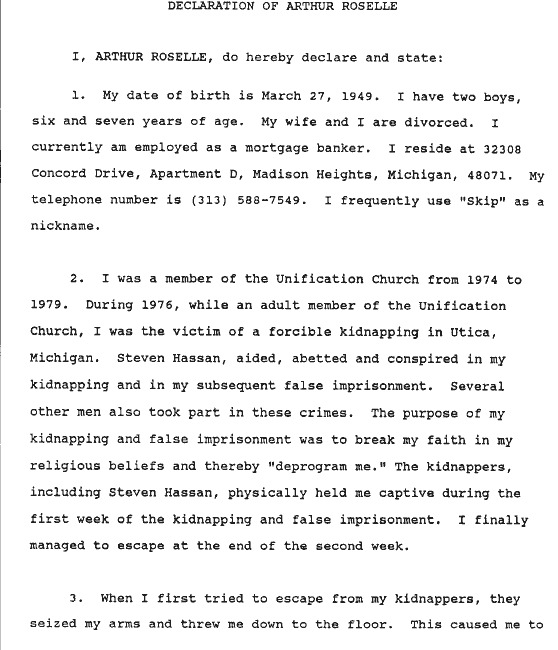
1. Arthur Roselle Case (1976, Utica, Michigan)
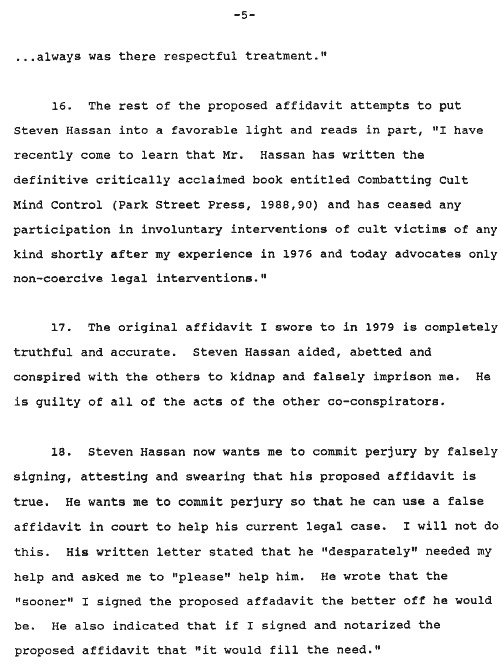
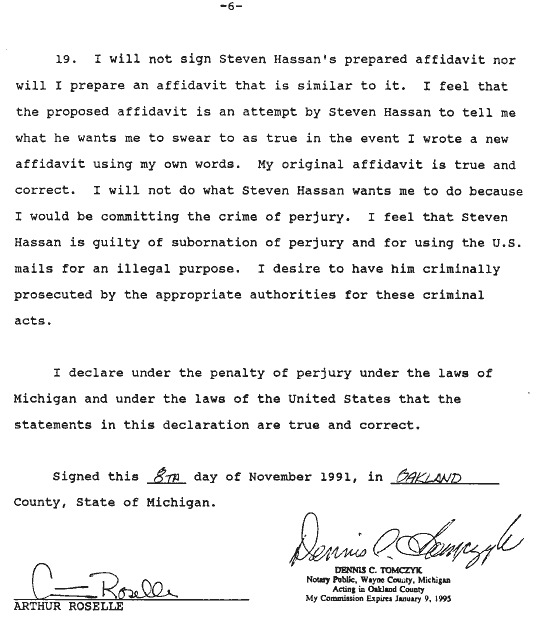
According to the sworn affidavit by Arthur Roselle (1979, reaffirmed in 1991):
- Steven Hassan and his associates participated in the violent abduction and confinement of Roselle, an adult, against his will.
- The victim was thrown onto a tiled floor, resulting in a cut lip and facial injuries.
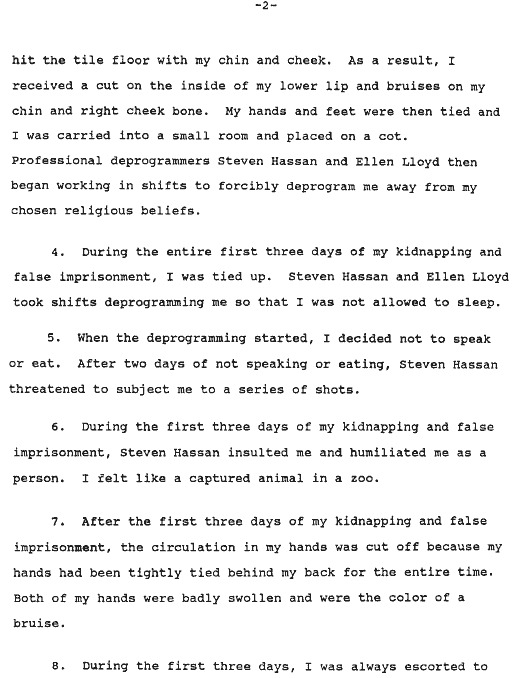
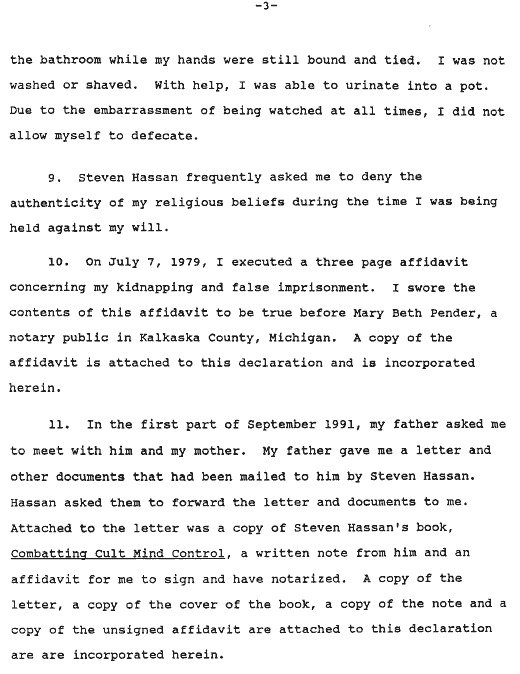
- His hands and feet were tied, and he was kept tied up for several days. Consequently, blood circulation was impaired, and his hands became swollen and were the color of a bruise. During this time, Steven Hassan insulted and humiliated the helpless restrained man.
- Sleep deprivation: Hassan and his associate Ellen Lloyd worked in shifts, preventing Roselle from sleeping during the first three days.
- Threats: When Roselle refused to eat or speak, Hassan threatened him with a series of injections.
- Continuous humiliation: The victim was escorted to the bathroom with his hands tied and wasn’t allowed to wash, shave, or have any privacy. Roselle described his condition this way: “I felt like a captured animal in a zoo.” 8
2. Claire Kelley Case (December 1976)
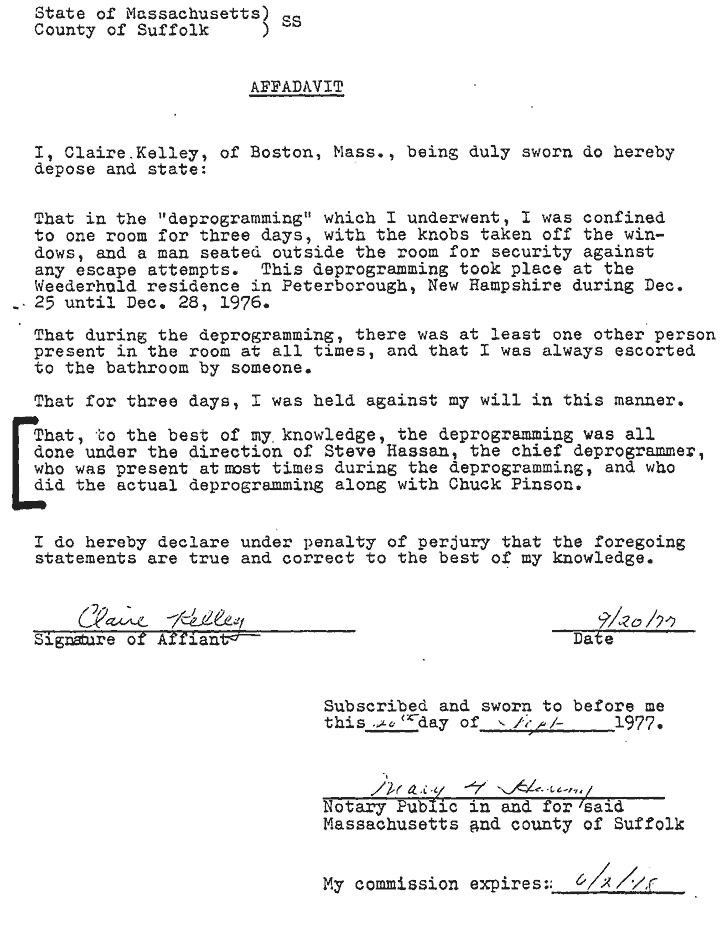
According to Claire Kelley’s sworn affidavit, Hassan served as the “chief deprogrammer.” 9 The woman was confined for three days in a room with knobs taken off the windows and was kept under round-the-clock guard. She was permitted to use the bathroom only under escort.
3. Lorne Fyvie Salah Case (May 20, 1984, Boston)
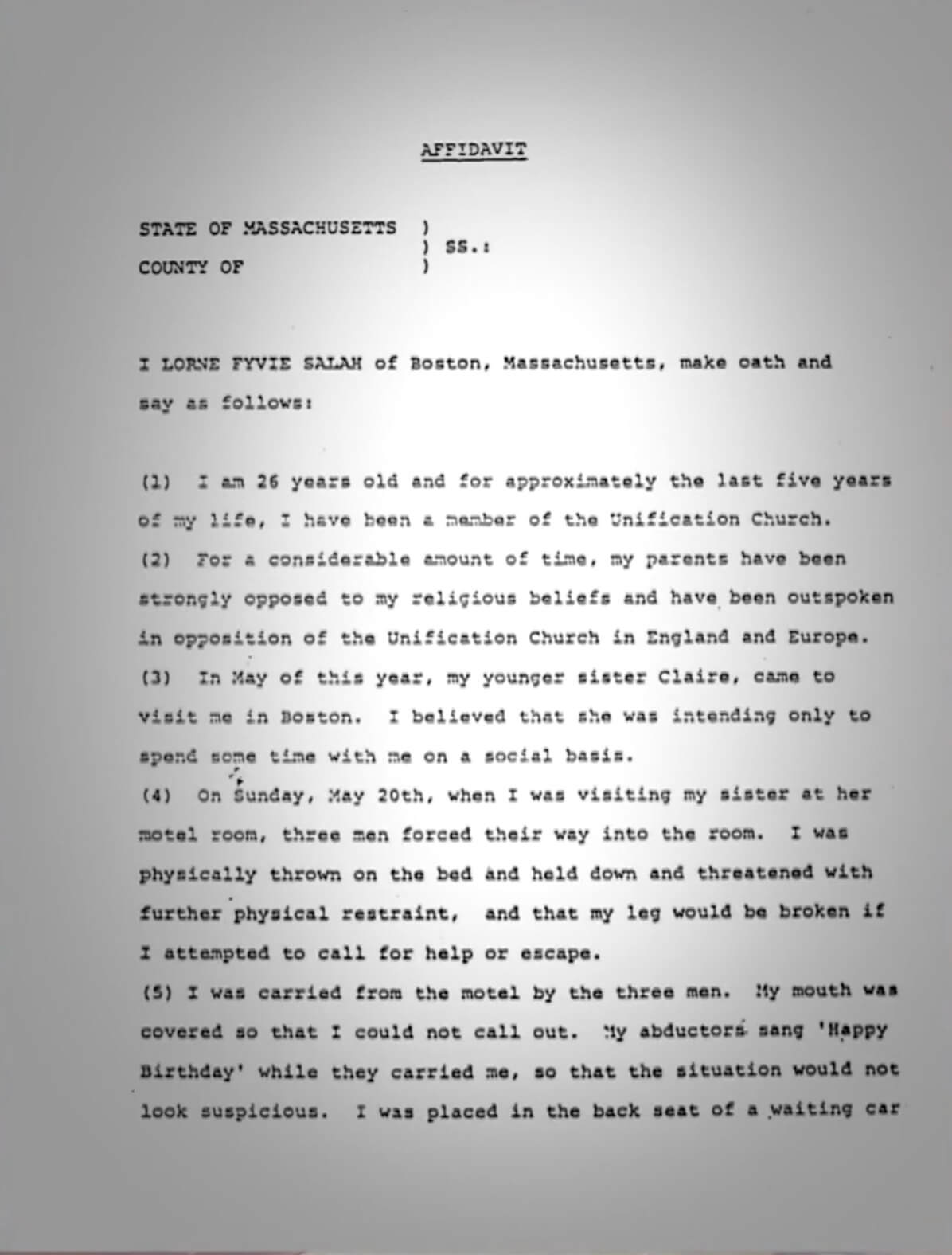
According to the sworn affidavit by Lorne Fyvie Salah:
-
- Hassan’s group, consisting of three men, forced their way into the room.
- The woman was physically thrown on the bed, held down, threatened with further physical restraint and that her leg would be broken if she attempted to call for help or escape.
- She was carried out of the motel with her mouth covered while the abductors sang “Happy Birthday” to avoid arousing suspicion.
- They took her hostage and drove her to an isolated house in New Hampshire. She was held there against her will for nine days, while they attempted to break her through constant abuse and psychological pressure.
- When Hassan’s associates failed, he allegedly continued the effort personally for another three days until she managed to negotiate her release.
- Steven Hassan organized the kidnapping, but first acted through intermediaries and became directly involved only after his hired team had failed. 10,11,12,13
![Lorne Fyvie Salah [14]](https://actfiles.org/wp-content/uploads/2026/07/9-2-Lorne-Fyvie-Salah.jpg)
Comparison With Torture Prohibited Under the Geneva Conventions
The methods employed by Hassan and his team directly violate Common Article 3 of the Geneva Conventions (1949) that establishes minimum humanitarian standards even in non-international armed conflicts and in the treatment of prisoners of war.
Prohibited acts under Common Article 3:
- Violence to life and person, in particular torture, mutilations or cruel treatment.
- Outrages upon personal dignity, in particular humiliating or degrading treatment, or adverse treatment.
- The taking of hostages.
- The passing of sentences and the carrying out of executions without previous judgment pronounced by a regularly constituted court.
Direct match with Steven Hassan’s actions:
- Sleep deprivation, a recognized method of psychological torture prohibited as cruel treatment and viewed in modern research as a means of coercion and mental destabilization.
- Tying a person in painful positions that impair blood circulation matches stress positions prohibited as torture.
- Threats of injections and physical violence as forms of psychological coercion and intimidation.
- Continuous violations of privacy (escorting a person to the bathroom and denying privacy) as direct outrages upon personal dignity.
- The purpose of such actions is to forcefully change religious beliefs, which is also prohibited: prisoners of war may not be forced to renounce their beliefs.
Therefore, the methods and practices that sources allege Steven Hassan participated in, such as kidnapping, prolonged forcible confinement, sleep deprivation, threats, humiliation, and coercion aimed at renouncing one’s beliefs, which were applied to law-abiding American citizens in the U.S., if applied to prisoners of war during an armed conflict between countries, could be classified as war crimes under the Third Geneva Convention.
The use of these very methods by deprogrammers doesn’t appear accidental if you consider the backgrounds of figures such as Margaret Singer, Louis Jolyon West, Robert Jay Lifton, Edgar Schein, and Richard Ofshe, all of whom effectively provided ideological justification for the network’s activities.
These methods formed the foundation of activities carried out by deprogrammers of the Cult Awareness Network (CAN), many of whom were repeatedly prosecuted and received prison sentences, including the network founder, Ted Patrick. Steven Hassan was one of the leading deprogrammers within CAN and its special division, NARDEC (National Resource Development and Economic Council), through which a system of kickbacks operated, according to a number of sources relying on testimonies of participants in the network and on CAN documents. 15,16
The scheme functioned as a closed-loop business cycle:
- Through media campaigns, CAN actively fueled panic about “dangerous cults,” convincing parents that their child was literally “in mortal danger” and urging them to contact the organization as experts capable of saving the child.
- When frightened relatives sought “help” from CAN, they were referred to deprogrammers including Steven Hassan, Rick Ross, and others.
- The deprogrammers acquired highly lucrative clients, with fees often ranging from 10,000 to over 50,000 U.S. dollars per person, and then transferred a portion of those fees to CAN or NARDEC as “voluntary donations.”
- CAN used the money received to finance another wave of media hysteria, attracting even more clients.
Based on information documented in open sources, Steven Hassan wasn’t merely one of the participants. He was a systemic part of the scheme. Hassan received clients through this referral network, paid kickbacks, and thereby directly supported and possibly financed the entire machinery of kidnappings and violence against innocent people. 17
Industry Collapse and the Failure of Its Ideological Foundation
Eventually, attempts to legalize forcible deprogramming in the United States failed completely. The culmination came in the high-profile case of Jason Scott v. Rick Ross and Cult Awareness Network, where CAN was found liable as an accomplice in kidnappings and ordered to pay millions of dollars in damages. The organization declared bankruptcy in 1996, effectively bringing the open practice of forcible deprogramming in America to an end.
At the same time, the movement’s pseudoscientific foundation also collapsed. Margaret Singer‘s theory of “brainwashing” and “mind control,” on which the entire anticult ideology had been built, was officially rejected by the American Psychological Association (APA) as unscientific. 18
In a number of trials, including Fishman v. United States, courts refused to recognize Singer as an expert witness. Her theories were characterized as having no scientific validity, methodologically inadequate, and incapable of meeting the standards required for admissible expert testimony. 19
When courts demanded evidence rather than ideological slogans, it became clear that dramatic claims surrounding “mind control” rested on a pseudoscientific framework incapable of withstanding either academic or legal scrutiny.
Nevertheless, it is precisely on these discredited theories rejected by the courts that Steven Hassan continues to build his entire activity. As a matter of fact, Hassan took Margaret Singer’s failed pseudoscientific concept of “brainwashing,” gave it a facelift, added his own brand the BITE Model, and started marketing it as supposedly “modern cult science.”
Steven Hassan’s Public Humiliation in Court and False Credentials
When Hassan attempted to testify as an expert witness in the 1996 case of Kendall v. Kendall, it ended in public humiliation. Justice Christina Harms rejected his testimony, noting that Hassan’s сredentials were even weaker than those of Margaret Singer whose expert testimony had already been rejected by courts.
Justice Christina Harms wrote: “The Court found in that case that the theories regarding brainwashing, if you will, or mind control or cults that the experts wanted to testify to, were not generally accepted within the scientific community. And those experts, and in particular the expert, Doctor Singer, in the Fishman case, that expert had a Ph.D. in Psychology, something more than Mr. Hassan has. He has a Master’s Degree. I am persuaded by the findings and the reasoning in Fishman that, similarly, Mr. Hassan’s views or theories published or as explained from the stand on what is a cult and what is not a cult, and how mind control or thought control or brainwashing or the like fit into that, are not sufficiently accepted within the applicable ruling… I vacate my qualification of him as an expert in cult and mind control (Probate and Family Court Department, Commonwealth of Massachusetts 1996b, 6).”
Justice Harms allowed Hassan to testify only about the Boston Church of Christ. Still, even then, she added a remarkable statement: “simply because I admit his testimony does not address the issue of the weight I accord his testimony… Now, again, I say that admission of testimony does not mean testimony will be given any weight, nor does it say how much weight… As to each and every inconsistent point, I will accord greater weight, far greater weight, to the testimony of the [Boston Church of Christ] members. And I intend to place little or no weight on Mr. Hassan’s testimony.”
During the proceedings, it was ascertained that at the time Hassan only held a night school degree from a little-known Cambridge College. Moreover, the degree itself had allegedly been obtained through fraud. Hassan enrolled in a graduate evening program after knowingly misleading the admissions committee and stating that he possessed a bachelor’s degree which he never earned. The Cambridge College admissions policy clearly states that admission to a graduate program is impossible without an undergraduate degree. Sources also indicate that in another application Hassan reportedly described his years of involvement in forcible deprogramming as “clinical experience of helping people.” 22
Interestingly, as court files indicate, despite having no recognized qualifications, Hassan charged 200 dollars an hour for preparation and 1,500 dollars a day for his self-proclaimed “expert testimony” on new religious movements. 23
Client Complaints and Proceedings to Revoke Steven Hassan’s Mental Health Counselor License
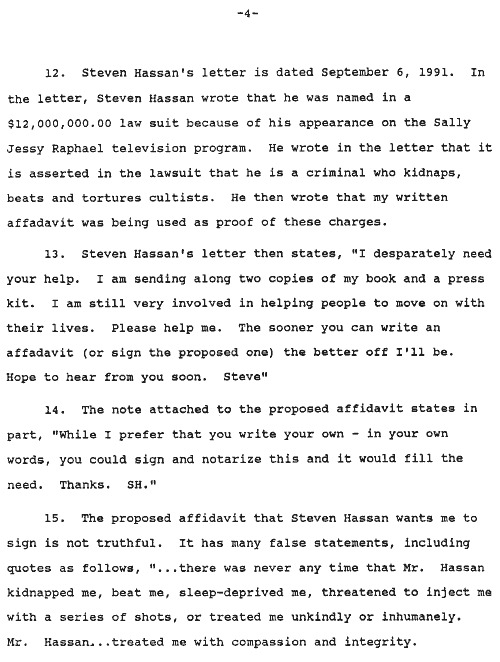
In 1992, Hassan obtained a mental health counselor license in Massachusetts. In 1991, while preparing to obtain the license, Hassan contacted Arthur Roselle and attempted to persuade him to commit perjury. Hassan asked Roselle to change his previous testimony and withdraw allegations of kidnapping, unlawful confinement, and physical and psychological abuse. Hassan offered him a false affidavit prepared by Hassan himself. Arthur Roselle stated this straightforwardly in a supplemental sworn affidavit filed in 1991.
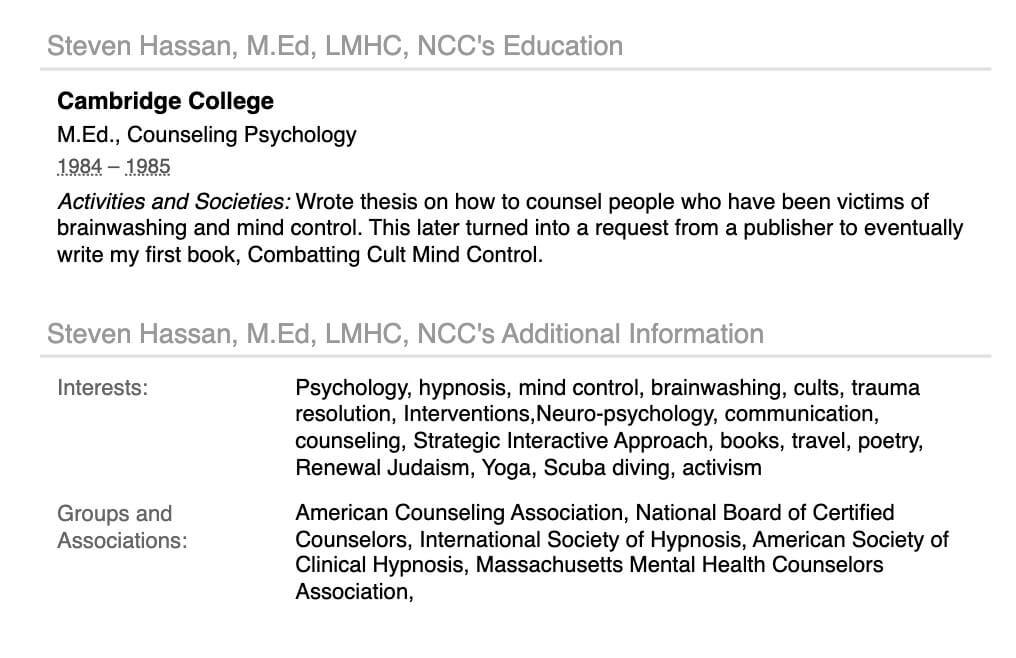
Despite a documented history of violent deprogramming practices and the allegation that he had attempted to induce a victim to commit perjury, Hassan became a licensed mental health counselor (LMHC) in Massachusetts in 1992 and started actively using this title to legitimize himself, rehabilitate his reputation and past, and rebrand himself from a violent deprogrammer into a “licensed expert.” In his biographies, on his website, in interviews, and in promotional materials, he invariably placed the LMHC designation after his name.
Steven Hassan presents himself as a specialist who helps people recover from psychological abuse and mind control. However, genuine reviews from his clients and former employees paint a completely different portrait of a man who never prioritized the interests of people who turned to him for help.
Complaints of Clients and Former Employees
Hassan repeatedly faced complaints due to financial exploitation and harm caused by his “therapy.” One of the documented cases describes a client who paid Hassan thousands of dollars, 25 nearly exhausting his savings. After undergoing a course of “counseling,” the man’s condition deteriorated to such an extent that he requested assistance from other professionals. The psychologists he later consulted reportedly characterized Hassan’s methods as unprofessional and potentially dangerous.
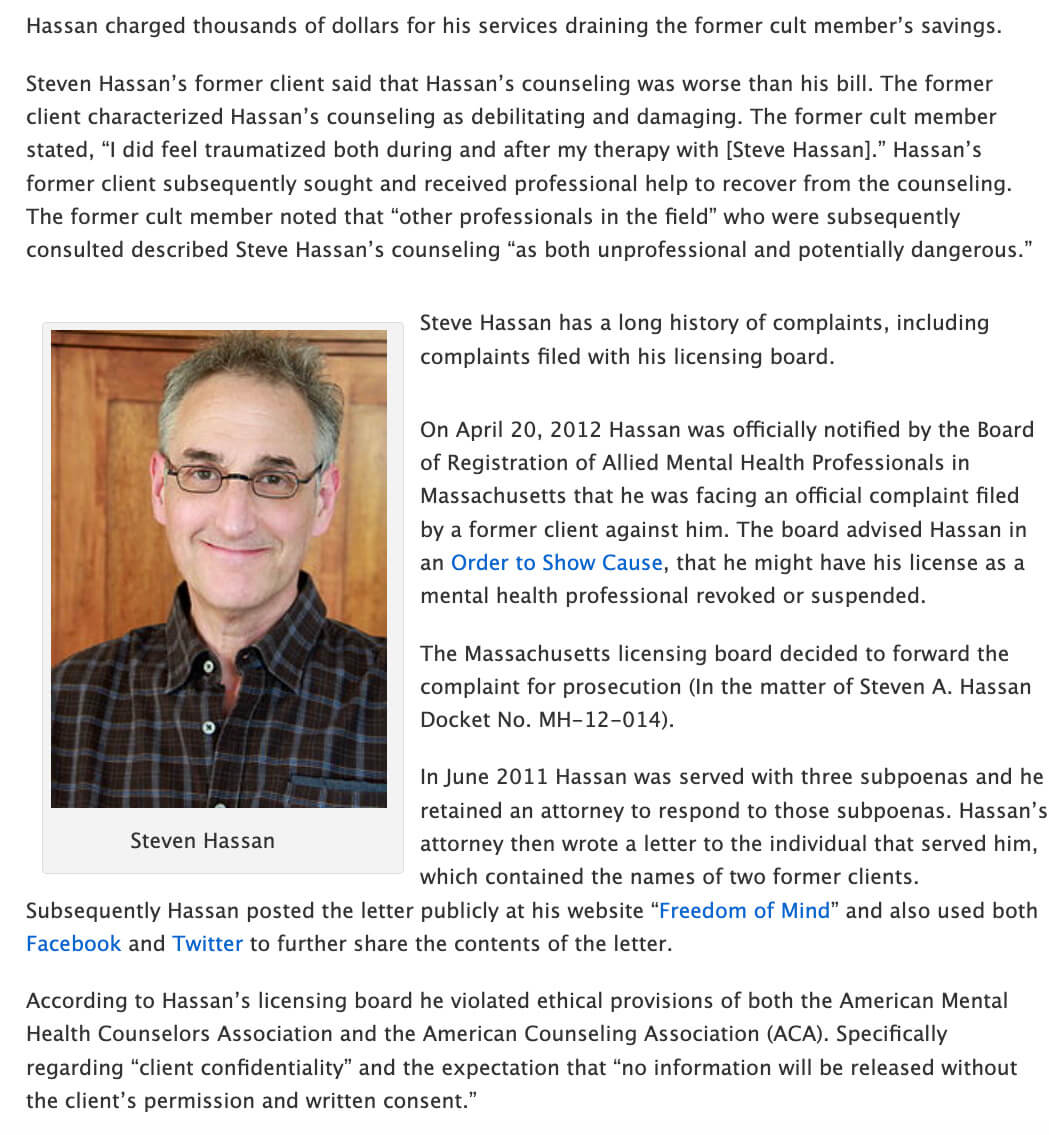
Particularly revealing is the case of Brian J. Birmingham, a former employee and assistant who worked with Hassan for three years. In November 2011, Birmingham was in severe distress and was admitted to a psychiatric ward as he had suicidal thoughts. While hospitalized, he informed Hassan’s assistant of his condition. After his discharge, Hassan never asked about his well-being, whether his suicidal thoughts persisted, or otherwise acknowledged the crisis.
Birmingham later wrote: “He NEVER ONCE asked me how I was, how I was feeling now that I was out, if I was still suicidal, nothing. He never mentioned that to me AT ALL, and never expressed any concern for my mental state whatsoever… And this man holds himself up as a paragon of compassion and empathy?”
“Brian J Birmingham @ 2019-10-25 01:00
To whom it may concern: I used to be this man’s research assistant, and now I think him one of the most hypocritical people I have ever met in my life. I used to be a member of the Cult of Hassan. He’s certainly one of the top five biggest hypocrites I’ve ever met. If he’s not seriously narcissistic, then nobody is.
Brian J Birmingham @ 2019-10-24 22:03
This man is one of the most hypocritical people who I have ever met in my life. He’s also one of the least genuinely empathetic people I’ve ever met, and I’ve got half a mind to write my own book and call it ‘The Cult of Hassan.’ After all, I was a member of the Cult of Hassan for three years. In November of 2011, I was in severe distress and was hospitalized in a psych ward for five days. I was suicidal. While inside the hospital, I got in touch with Steve’s assistant and let her know where I was and what was going on. When I got out of the hospital, and for the rest of the time I knew Steve, he NEVER ONCE asked me how I was, how I was feeling now that I was out, if I was still suicidal, nothing. He never mentioned that to me AT ALL, and never expressed any concern for my mental state whatsoever. He never asked me about my hospitalization at all, asked me how I was doing, nothing. And this man holds himself up as a paragon of compassion and empathy?
Brian Birmingham @ 2020-04-13 17:01
He used to try to get me to call into radio shows and other venues in which he was being interviewed, in order to ask certain questions that were designed to make him look good (basically). I never did do so, though.” 26
Proceedings to Revoke Steven Hassan’s Mental Health Counselor License
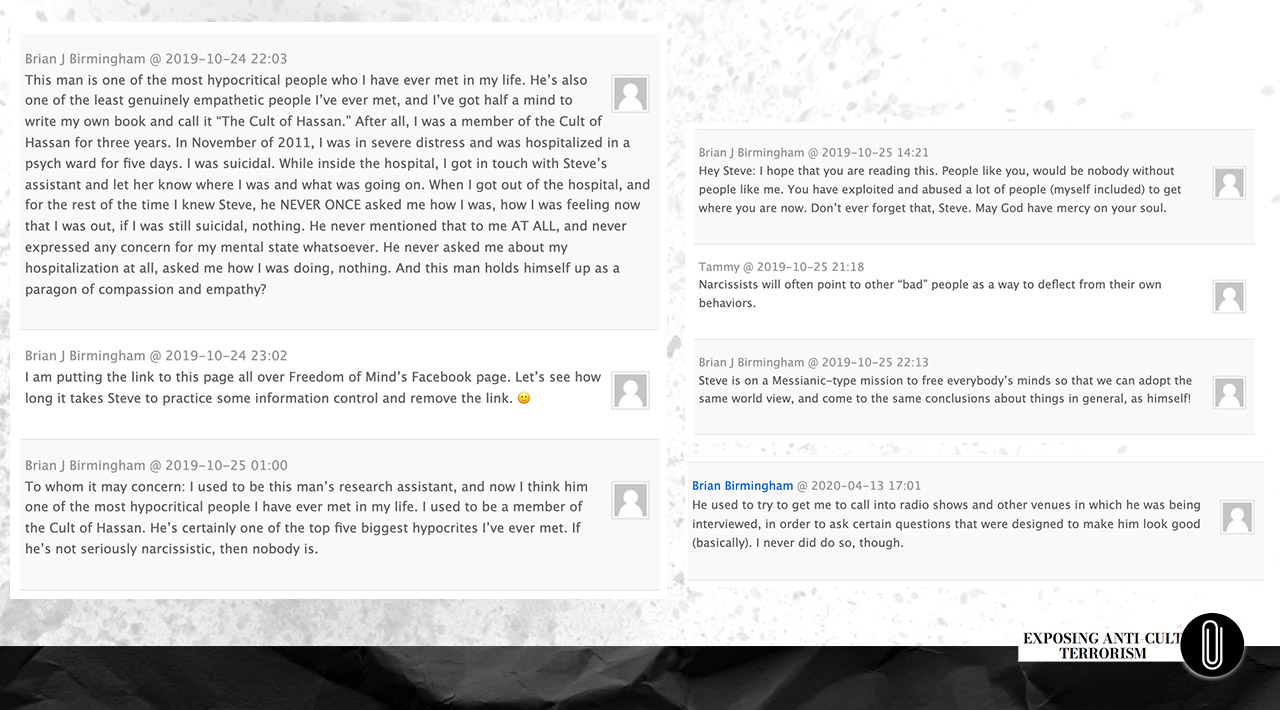
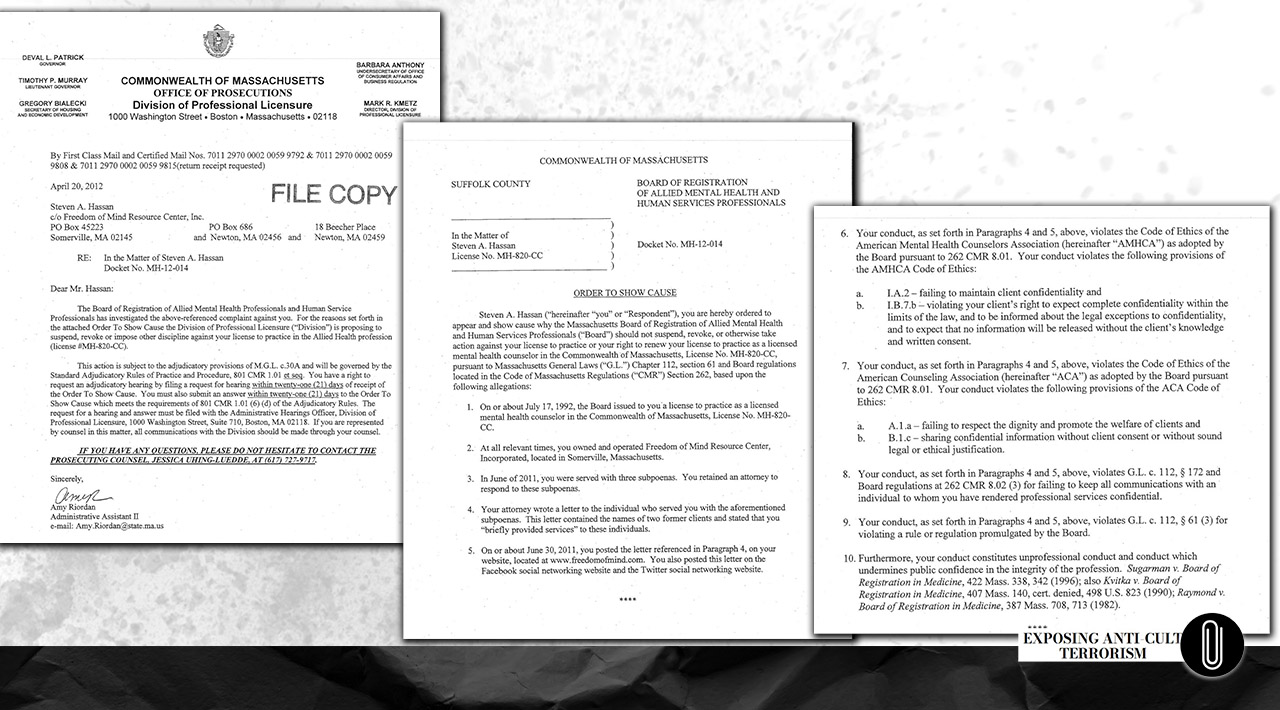
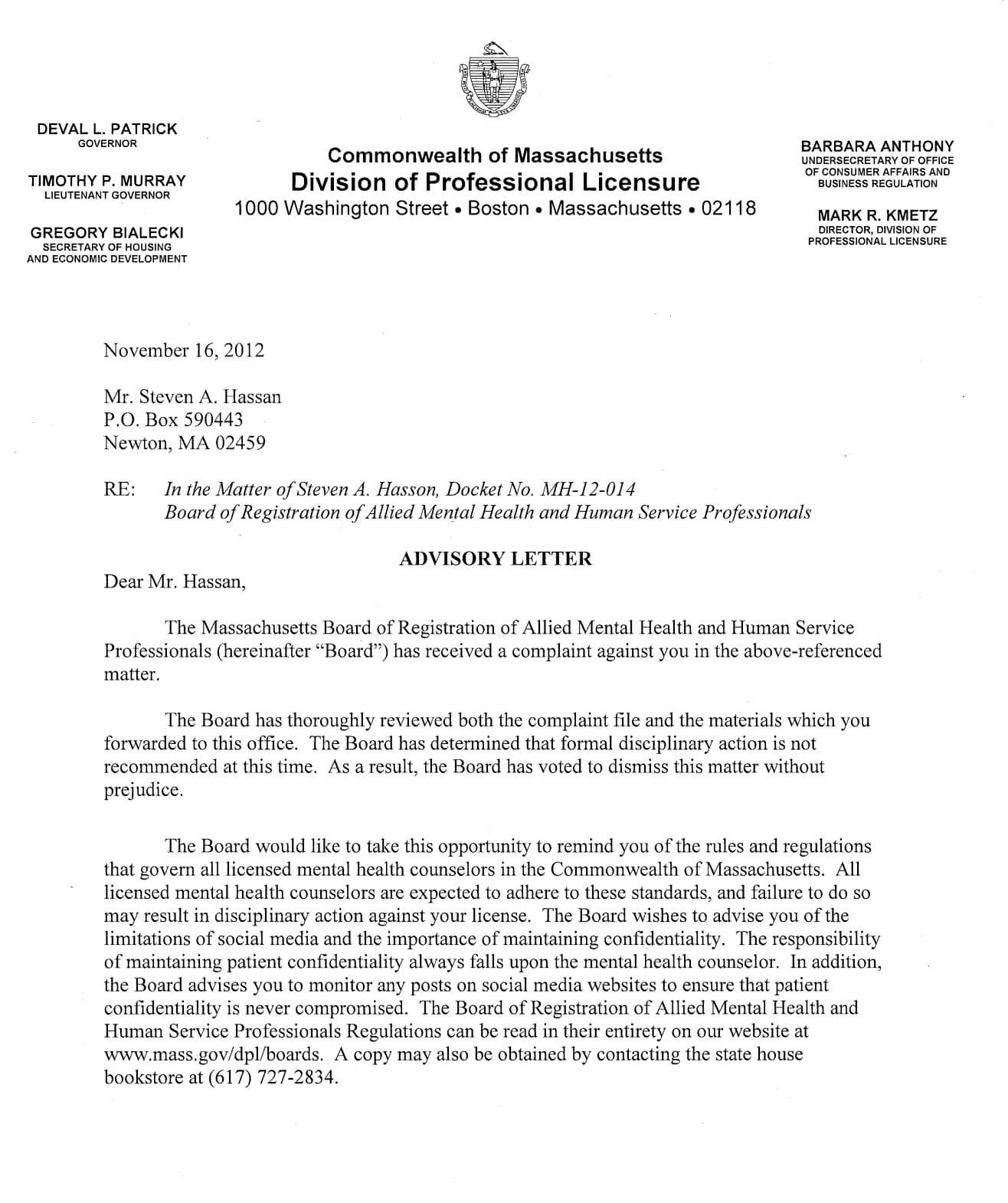
In 2012, the Massachusetts Licensing Board opened formal disciplinary proceedings against Hassan (Docket No. MH-12-014) and seriously considered suspending or permanently revoking his LMHC license. The case stemmed from a severe violation: Hassan had publicly disclosed confidential information about his clients. 27
As per the files of Massachusetts disciplinary proceedings against Steven Hassan, he was served with three subpoenas in 2011. Rather than protecting the confidentiality and interests of his patients, Hassan, through his attorney, identified them by names in an official letter, published that letter on his website, and actively distributed it through Facebook and Twitter in an effort to protect his own reputation. The board characterized Hassan’s actions as unprofessional conduct that undermines public confidence in the profession’s integrity.
In November 2012, the case was dismissed without prejudice, meaning it could be reopened in the future. Hassan received an official warning. The board expressly stated that any further violation involving confidentiality or professional ethics could result in revocation of his license.
How Steven Hassan Pretended to Be a Harvard Professor
Steven Hassan repeatedly stated in interviews, on his website, in biographies, resumes, and promotional materials that he taught at Harvard Medical School and Harvard Law School.
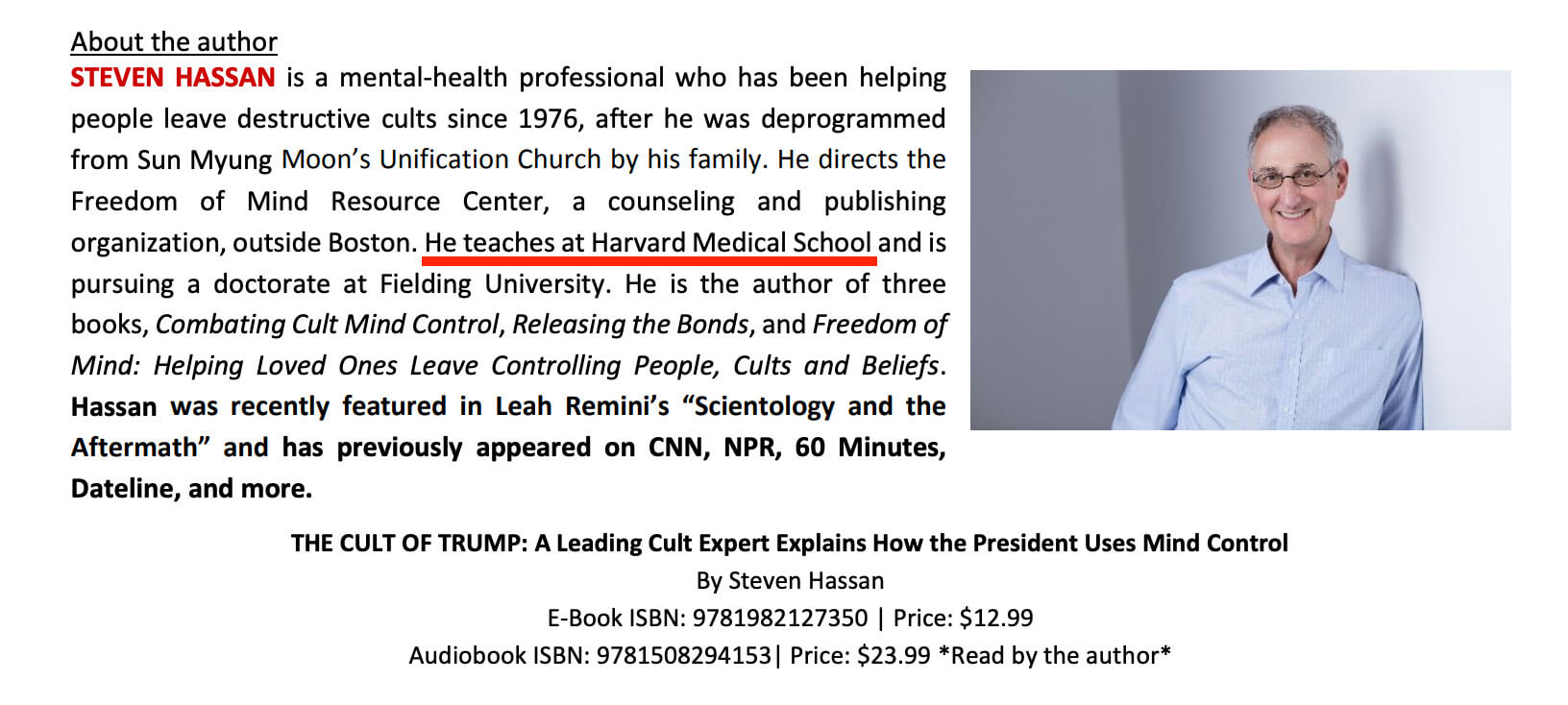
These claims clearly created an impression among readers and viewers that Hassan held a faculty position at one of the world’s most prestigious universities. Yet, the reality proved quite different. Sources indicate that Harvard University confirmed that Steven Hassan had never held any teaching position at either Harvard Medical School or Harvard Law School. 30
In fact, Hassan merely appeared on several occasions as an unpaid guest presenter in individual sessions of the Harvard Longwood Psychiatry Residency Program at a Harvard-affiliated hospital. He was a volunteer invited by one of the instructors.
Despite that, Hassan systematically altered wordings in his CV, promotional materials, and public statements, apparently to lend himself greater authority:
- Instead of “guest presenter,” he wrote “teaches at”;
- Instead of “Harvard-affiliated hospital,” he used “Harvard Medical School”;
- In some materials, he directly referred to himself as an “instructor at Harvard Law School,” although he had merely participated in a workshop.
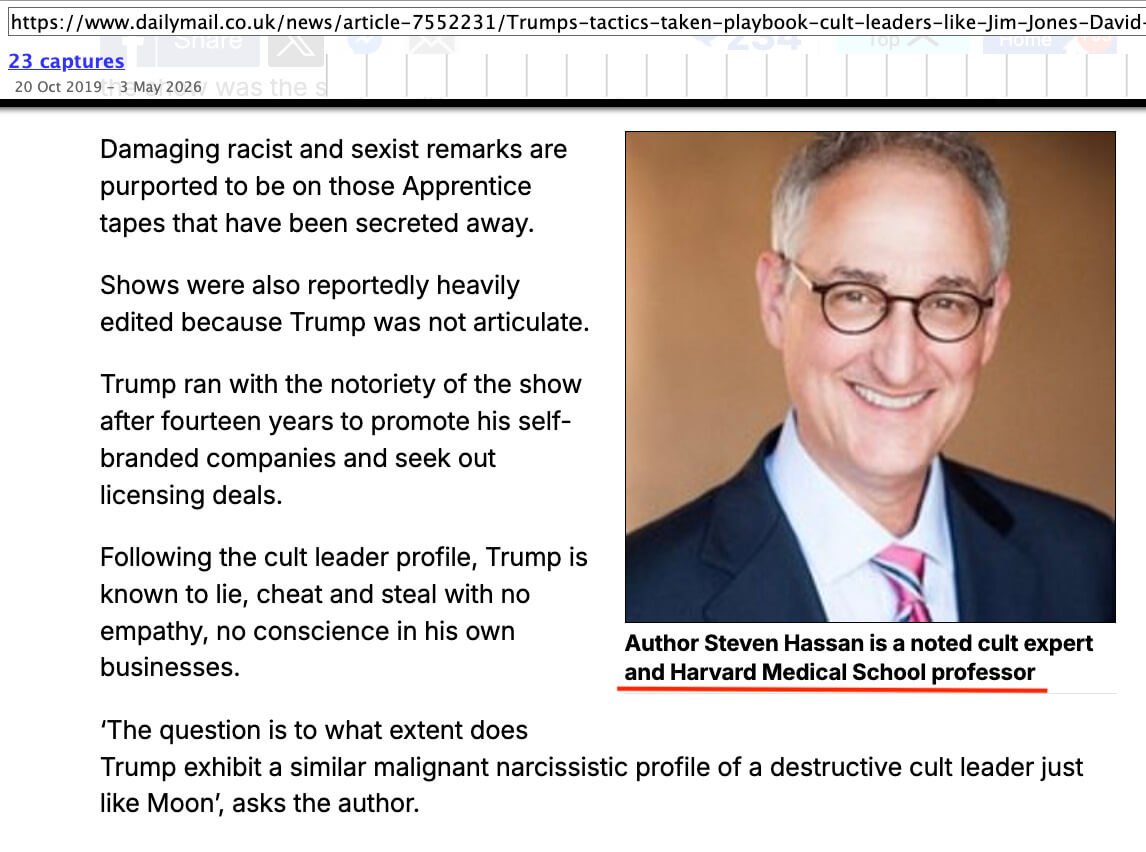
This lie reached its peak during the promotional campaign for his book “The Cult of Trump.” Several media outlets that were particularly active in promoting anticult narratives participated in the campaign. The UK’s Daily Mail, which had previously published articles promoting attempts by Hassan’s British colleague and Alexander Dvorkin’s associate, Alexandra Stein, to influence legislation in the UK, stated in an article published on October 9, 2019, one week before the release of Hassan’s book on October 15, that “Author Steven Hassan is a noted cult expert and Harvard Medical School professor.” 31
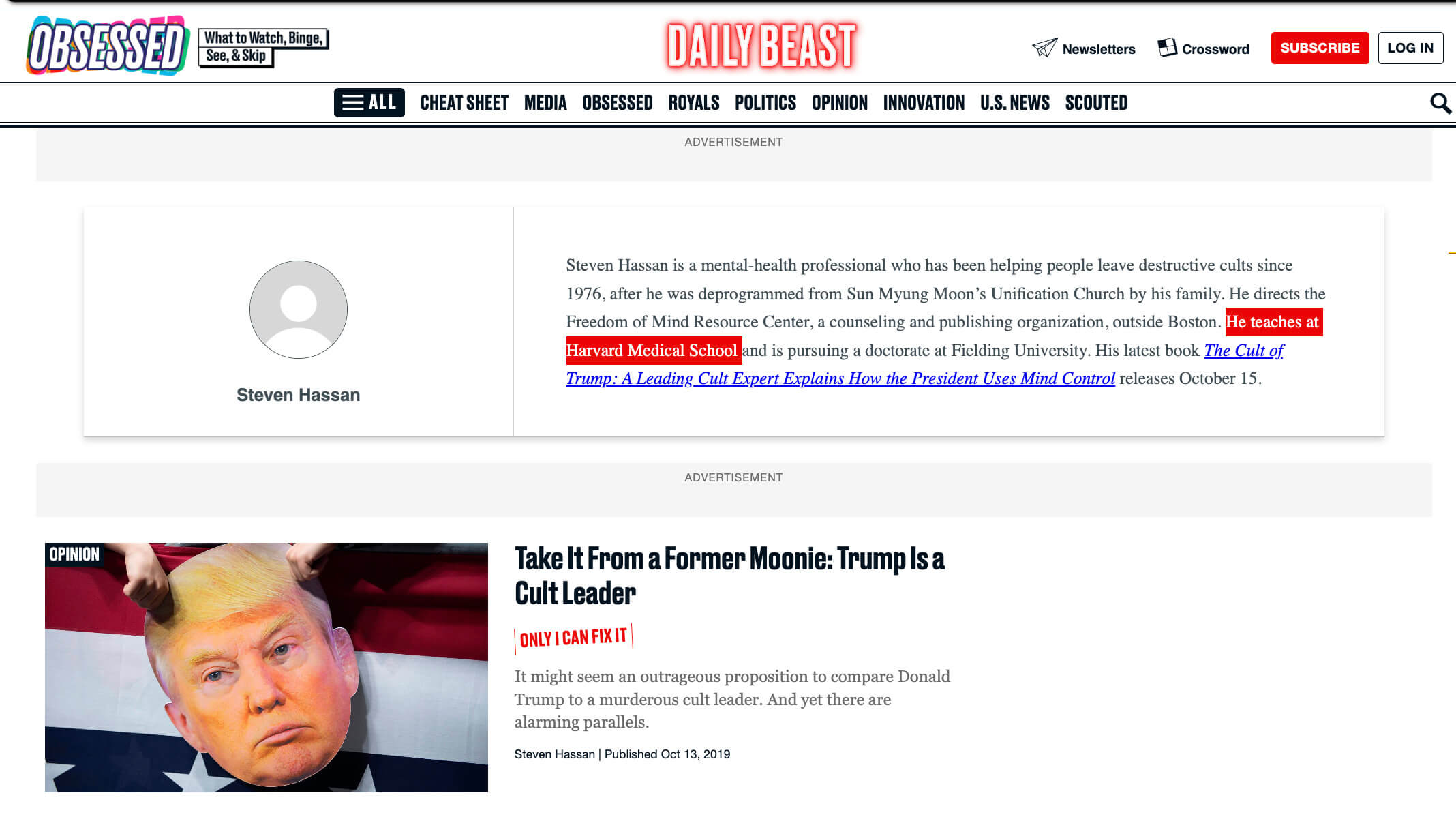
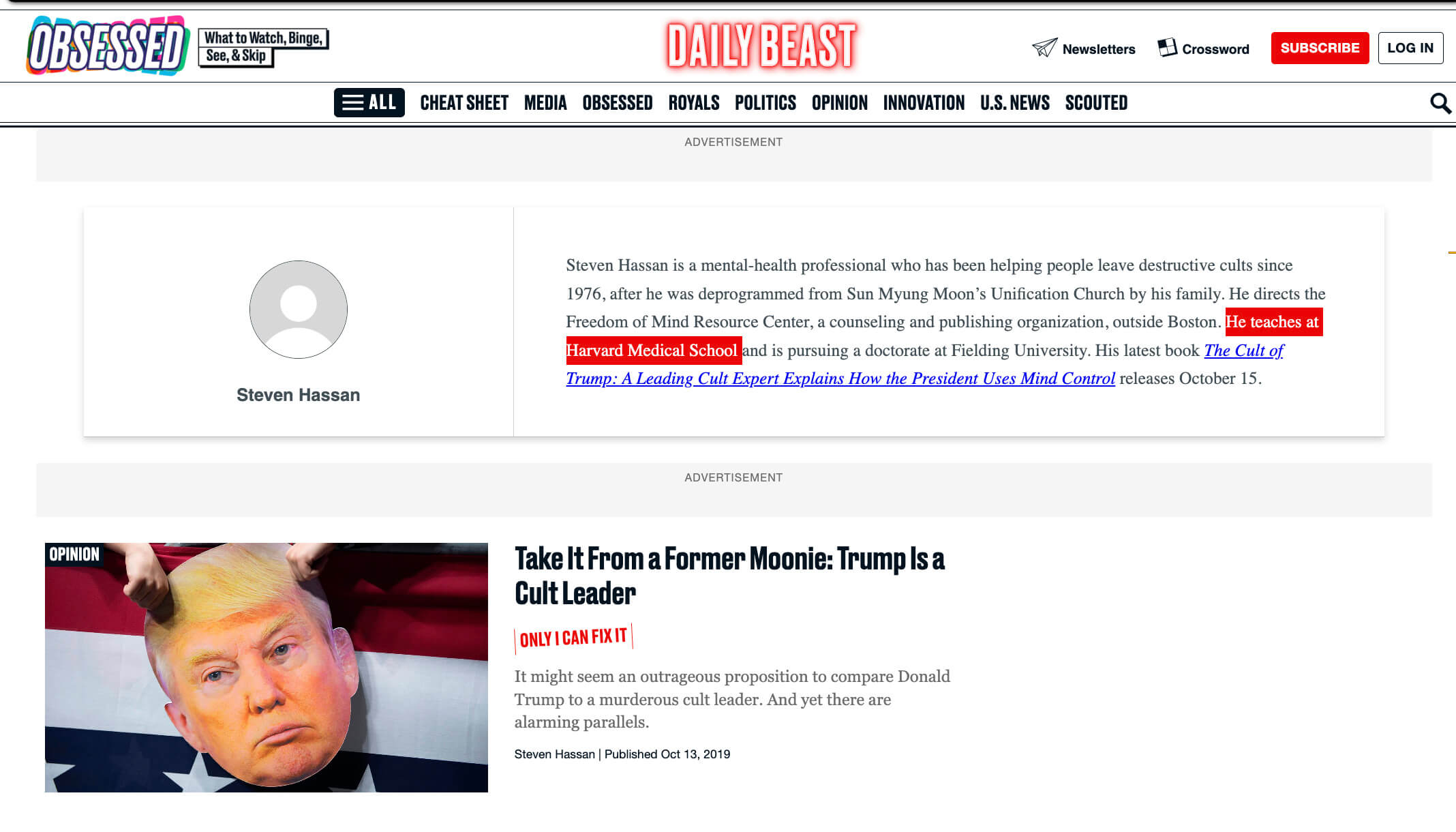
Meanwhile, the American website The Daily Beast, which publishes articles by journalist Matt Bernardini who collaborates with Dave Troy, posted an article written by Hassan himself. The article was published on October 13, 2019, two days before the release of his book. Steven Hassan’s bio states that “he teaches at Harvard Medical School.” 32
It appears that Hassan deliberately exploited the prestigious Harvard name to lend additional weight to his words and books. Steven Hassan and journalists affiliated with the anticult network who participated in promoting his book misled the public by portraying occasional volunteer presentations at a Harvard-affiliated hospital as full-fledged teaching at Harvard Medical School. When the university exposed and refuted this lie, neither Hassan nor the involved media outlets issued public apologies or corrected their statements.
Fabrication of Academic Background
In 2021, Hassan posted on his YouTube channel a video record of his one-time guest presentation delivered in 2017 at Beth Israel Deaconess Medical Center, giving it a prominent title: “Harvard Longwood Psychiatry Grand Rounds. Thursday, October 5, 2017.” 33
At the beginning of the video, the man who introduced Hassan read info from a sheet of paper that Hassan himself had given him, pausing to verify the pronunciation of his last name: “He is undergraduate at BU and at Yale in psychology.” Since Hassan hasn’t presented any official documents confirming his enrollment at the institutions mentioned, and no higher education registry lists his name in connection with those universities, one can draw an unequivocal conclusion: this is a blatant lie and a deliberate attempt to manipulate public perception, and the source of this disinformation is Hassan himself who handed it to the host.
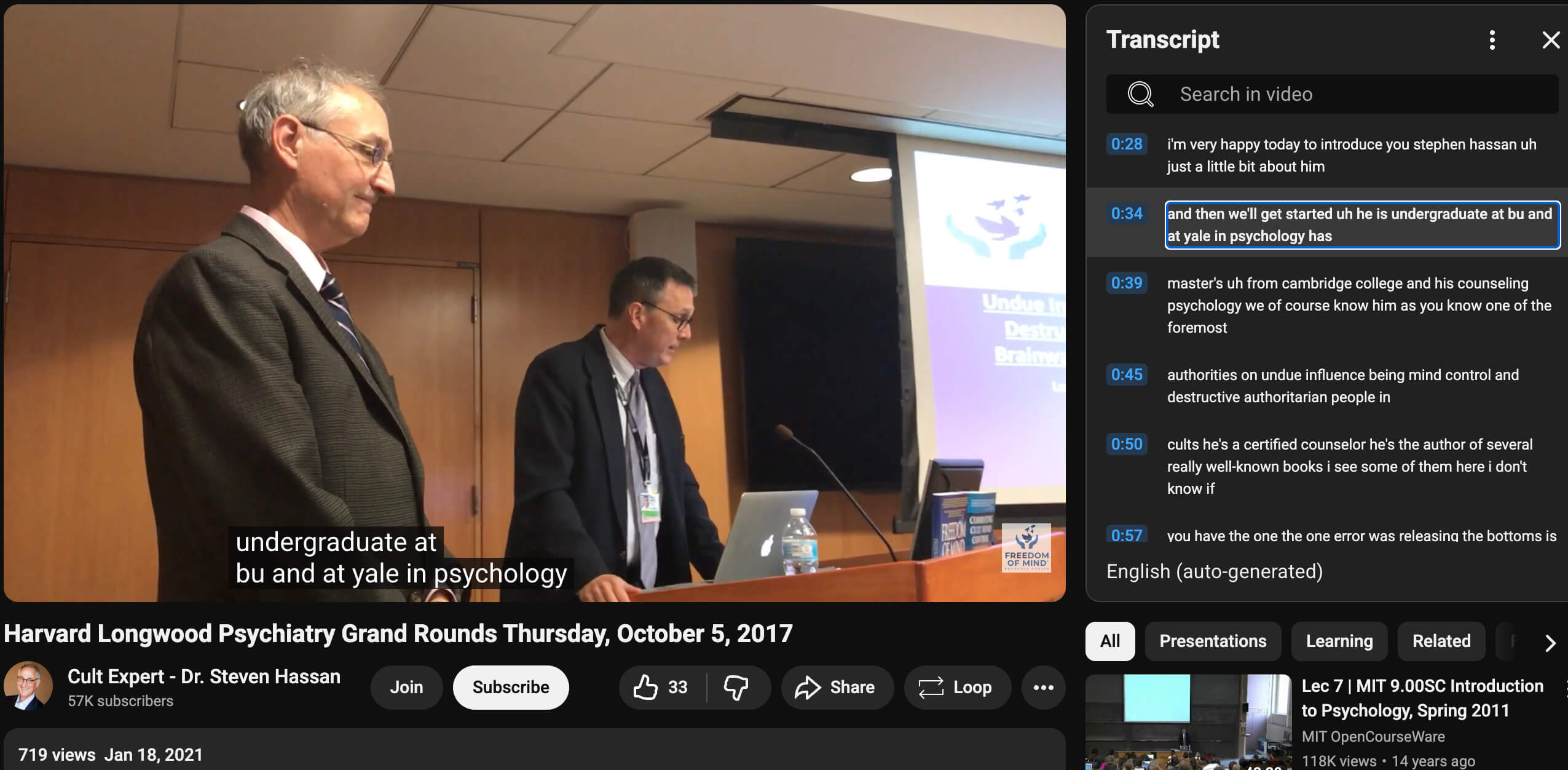
Hassan deliberately claimed to have attended two prestigious universities, Yale and Boston University, which were never part of his actual educational background. This is a classic example of fabrication of credentials. We may conclude that he did that in order to:
- Create an impression of a solid academic background in psychology;
- Hide the fact that he actually dropped out of college and doesn’t even have a bachelor’s degree.
This represents yet another blatant lie in his public self-presentation. From the perspective of Hassan’s own BITE Model and his theory of undue influence, his systematic fabrication of academic biography constitutes a textbook example of authoritarian manipulation of the audience.
It is also noteworthy that in the same video Hassan openly declared his ambitions: “I have a profound interest in not only educating mental health professionals, but also changing the legal system.” In other words, Hassan publicly speaks about recruiting people into what some critics call the Cult of Hassan, with the explicit goal of expanding his own influence, while displaying, according to his own model, all of the characteristics of an authoritarian cult leader.
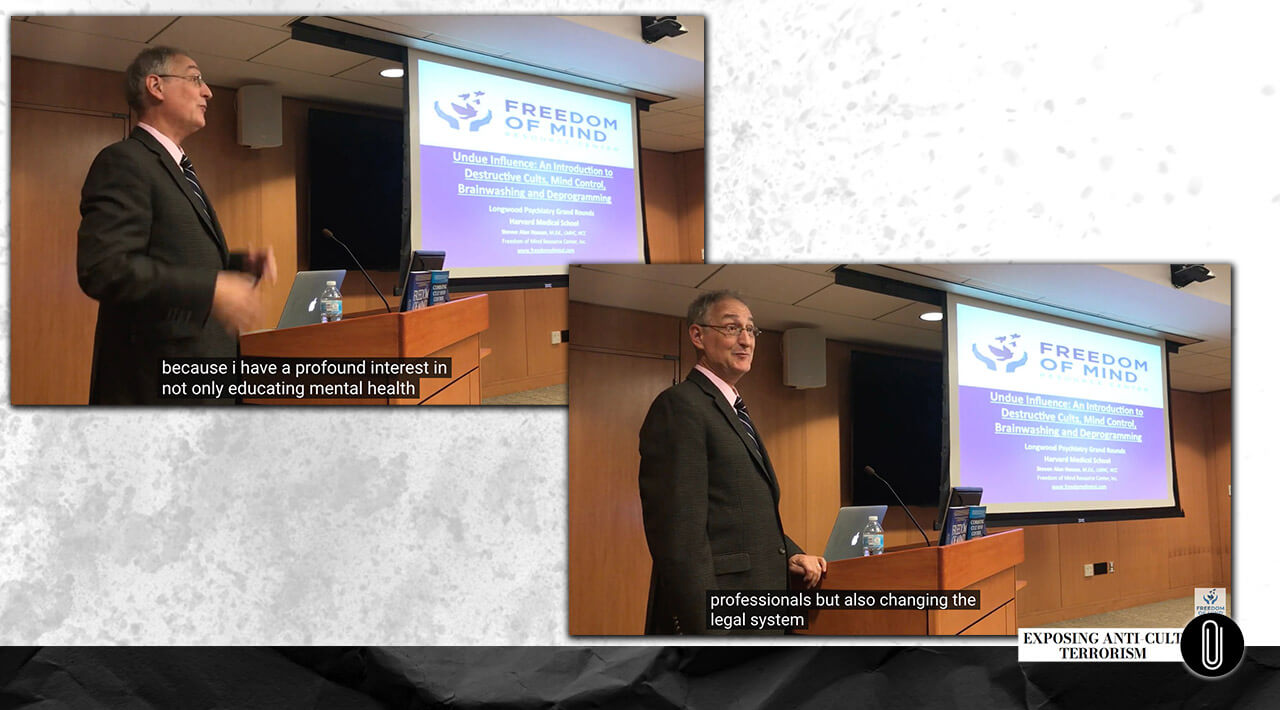
Pseudoscientific Dissertation: Hassan’s PhD
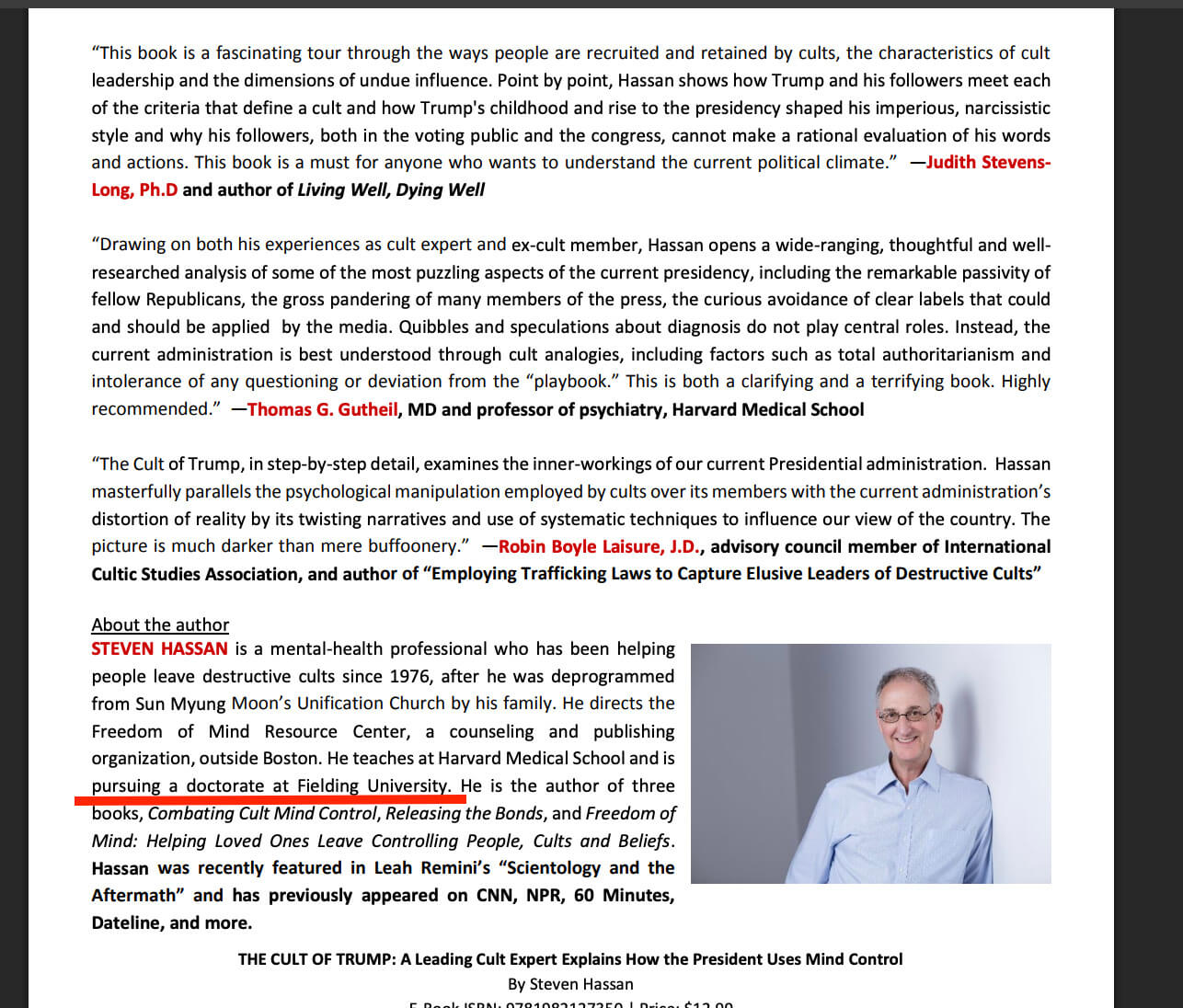
During the promotional campaign for “The Cult of Trump” book in 2019, Hassan widely announced in press releases that “he teaches at Harvard Medical School and is pursuing a doctorate at Fielding University.”
In a CV from mid-2020, Hassan stated that he expected to receive a PhD from Fielding Graduate University in 2021. However, he later announced that he had unexpectedly received not only a PhD in 2020, but also a Master of Arts degree “as a bonus.” This raises an obvious question: by what extraordinary means did he make such an abrupt leap and obtain a PhD in 2020 rather than the previously anticipated 2021?
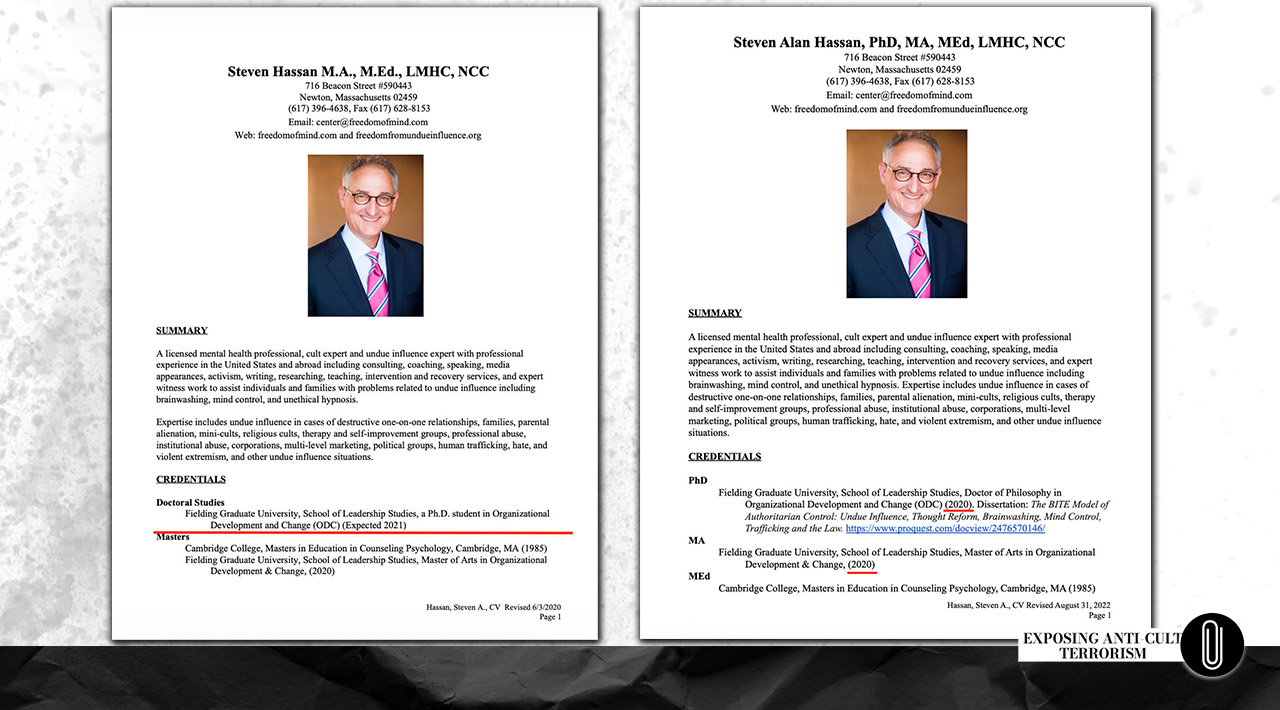
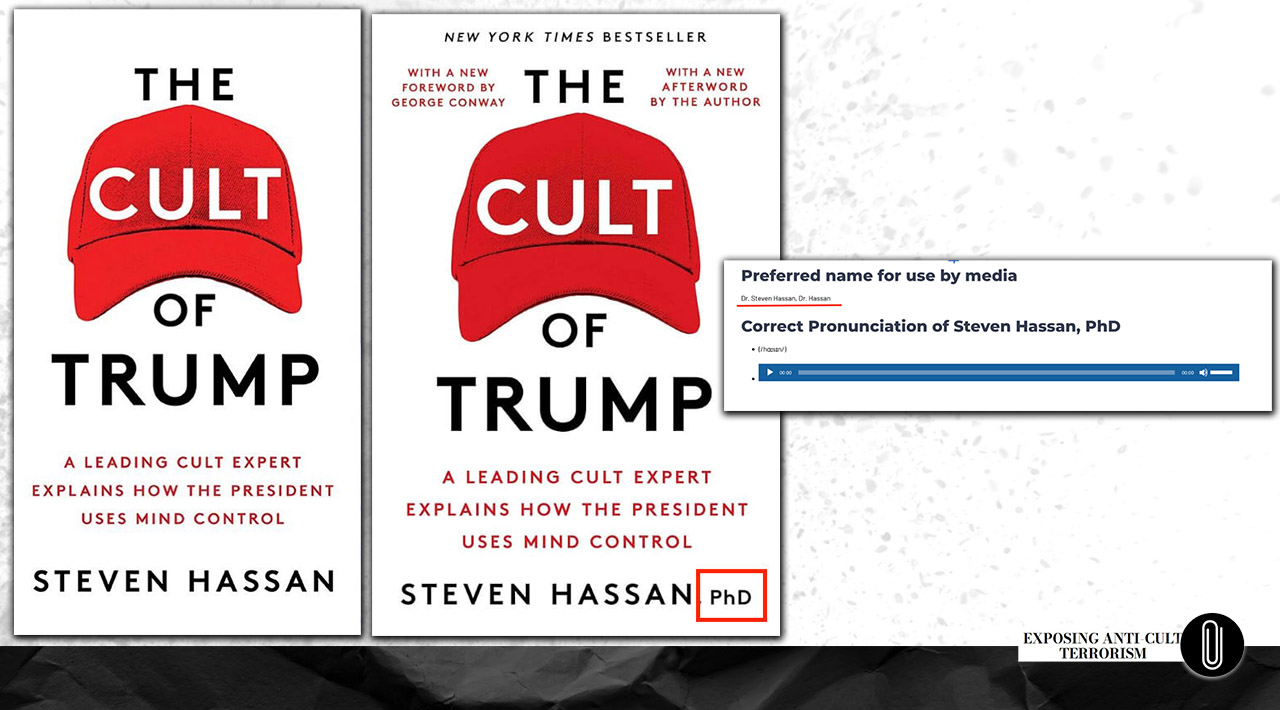
Hassan promptly added the title Dr. to his book cover, website, and virtually every platform he could reach. On his website, he even made a special note: “Preferred name for use by media: Dr. Steven Hassan, Dr. Hassan.”
However, it is worth examining what actually stands behind this degree and how significant it truly is, contrary to the impression Steven Hassan strives to create.
Fielding Graduate University is a small specialized graduate-only institution oriented toward adult learners and online education. It’s not a full-fledged research university with a large undergraduate enrollment. According to EduRank (2026), it ranks 844th in the United States and 3,248th globally. 35 The university is nowhere near the top 100 or even 500 in major rankings and is known primarily for its online programs for working adults and APA accreditation in clinical psychology.
Nonetheless, Hassan didn’t pursue a degree in clinical psychology. Nor did he study religious studies, psychiatry, or sociology of religion. Instead, he earned a PhD in Organizational Development and Change. Hassan’s dissertation explicitly states that its objective is to legitimize the BITE Model as a tool for use in U.S. courts. The abstract states that the work offers “quantitative evidence” supporting the BITE Model as a potential instrument for evaluating undue influence, mind control, and thought reform in both civil and criminal contexts. 36
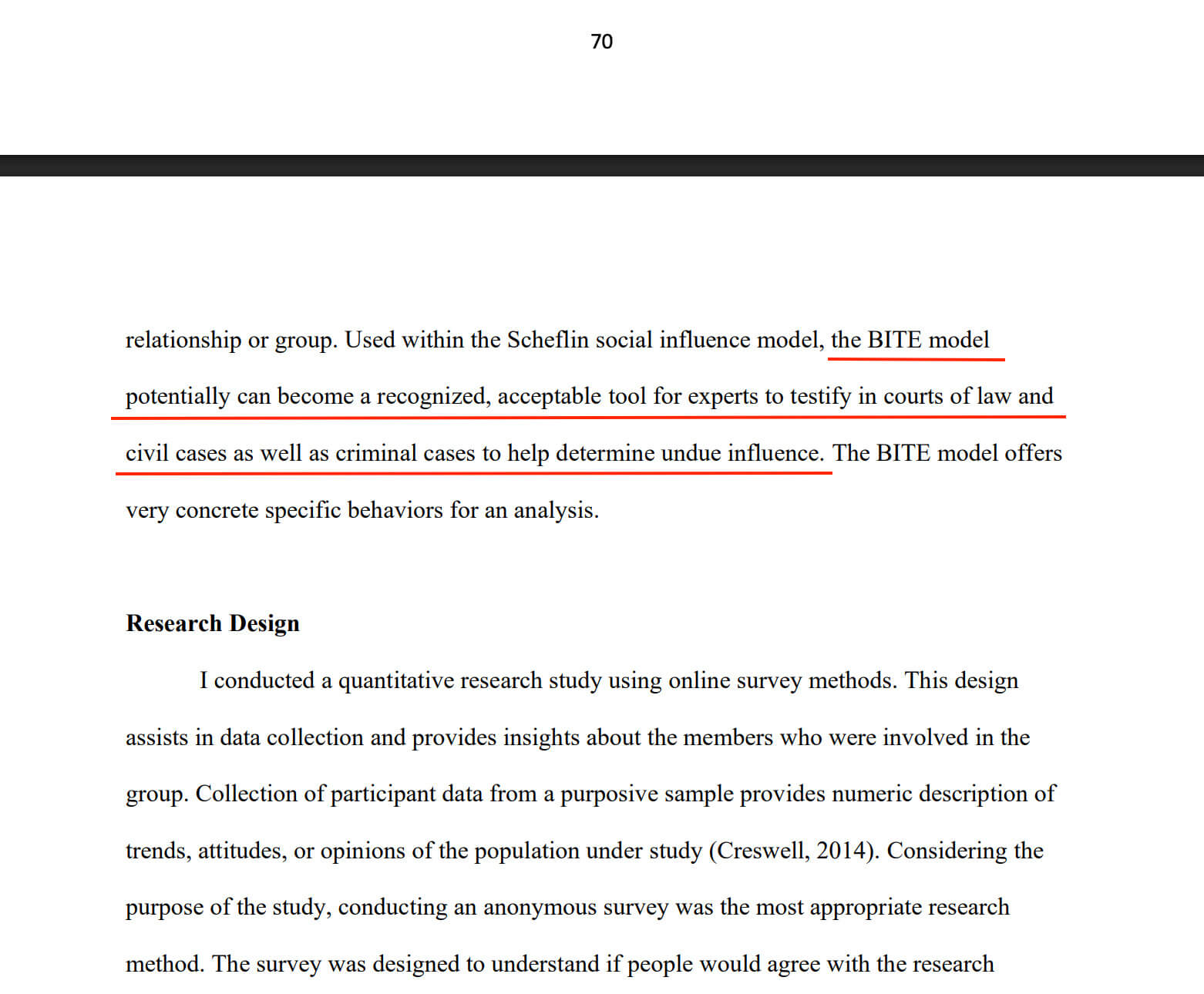
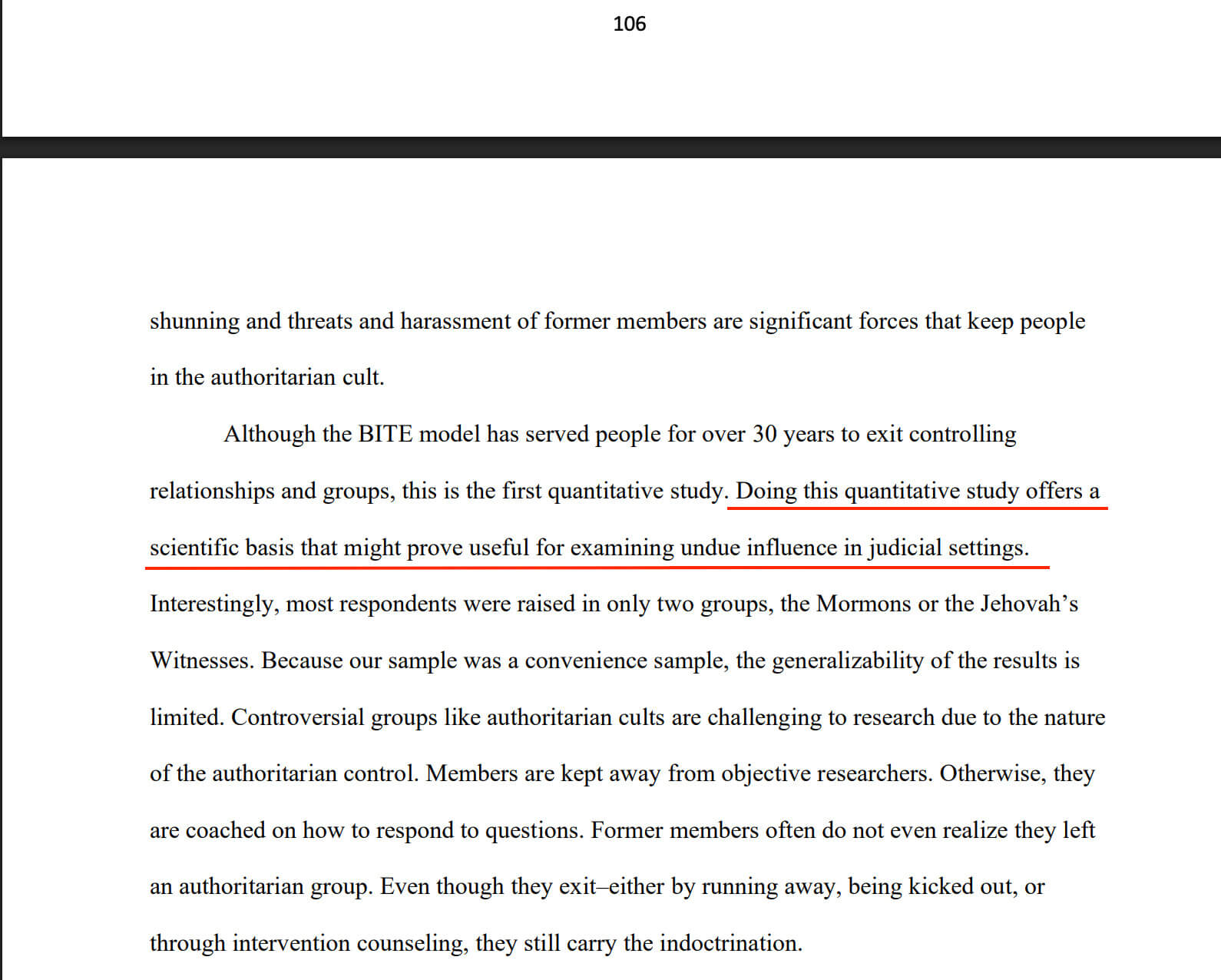
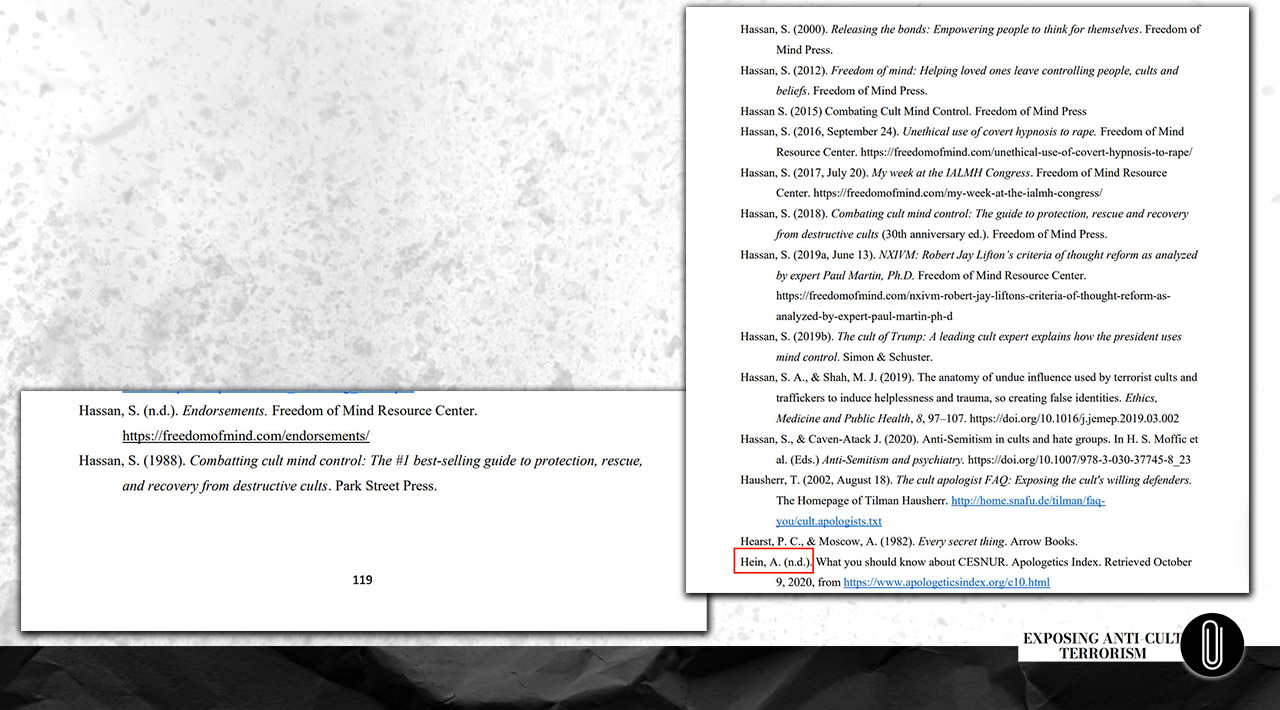
Even more remarkably, in his dissertation, Hassan refers to himself as the main source. Moreover, he refers to Anton Hein, an anticultist convicted of sexual abuse of a minor child. We will discuss this later in more detail.
Pseudoscientific Validation of the BITE Model
The dissertation is based on an online survey designed to “scientifically” validate Hassan’s BITE Model. Hassan posted links to this survey on his own websites, which in itself is quite absurd. It’s the same as carrying out a survey about the existence of a global conspiracy on conspiracy theorist forums: the audience is determined in advance, and the outcome is predictable before the research even begins.
For Hassan, mind control is treated as an initial axiom rather than a hypothesis that needs to be tested. It looks like circular reasoning. In fact, Hassan wasn’t testing his model – he was looking for confirmation of his conclusions.
The very design of the survey raises serious questions for anyone familiar with the methodology of social sciences. The biggest problem is complete destruction of categorical boundaries. In a single assessment list, Hassan indicated:
- Terrorist organizations (ISIS, Al-Qaeda);
- Extremist movements (Ku Klux Klan, Nazism);
- World religions (Judaism, Islam, Lutheran, Methodist);
- Business entities (Amway, Herbalife);
- Educational institutions (graduate school, medical school);
- Youth organizations (Boy Scouts, Girl Scouts).
These are not just different levels of authoritarianism. These are totally different types of social phenomena. This kind of grouping of disparate social phenomena into a single analytical matrix without a clear theoretical justification is a gross violation of scientific standards. The results do not reflect the actual degree of authoritarian control, but rather subjective perceptions of respondents about fundamentally different social phenomena.
This also leads to the classic framing effect and guilt by association. A respondent’s mind involuntarily begins to associate ordinary religions and universities with terrorist and racist organizations. However, the effect of stigmatization never seemed to bother Steven Hassan that much. He has actually built all of his activities on it.
Selection Bias and Confirmation Bias
The survey was conducted among self-selected individuals who already considered themselves victims of “high-control groups” and visited Hassan’s websites or related platforms. That’s nothing other than a classic example of selection bias and confirmation bias – the search for confirmation of a predetermined theory. The respondents had accepted Hassan’s terminology and narrative in advance. There was no control group of individuals from standard organizations who did not consider themselves victims.
PCA and the “35 % is Enough”
When Hassan performed principal component analysis (PCA), the first component “authoritarian control” explained only 35.07 % of the variance. He dismissed the remaining almost 65 % as mere “noise” and “of no value.” In rigorous science, such a result suggests that points on the scale poorly correlate with one another and do not measure a single latent variable. Yet, for Hassan, 35 % was enough to declare the “quantitative validation” of his model. His own “scientific” study statistically proved the weakness of the BITE Model, even though he declared it a victory. Hassan’s phrase “Legal systems value quantitative research over qualitative research” is revealing in this regard. The quality of his work seems to be of little interest to the author.
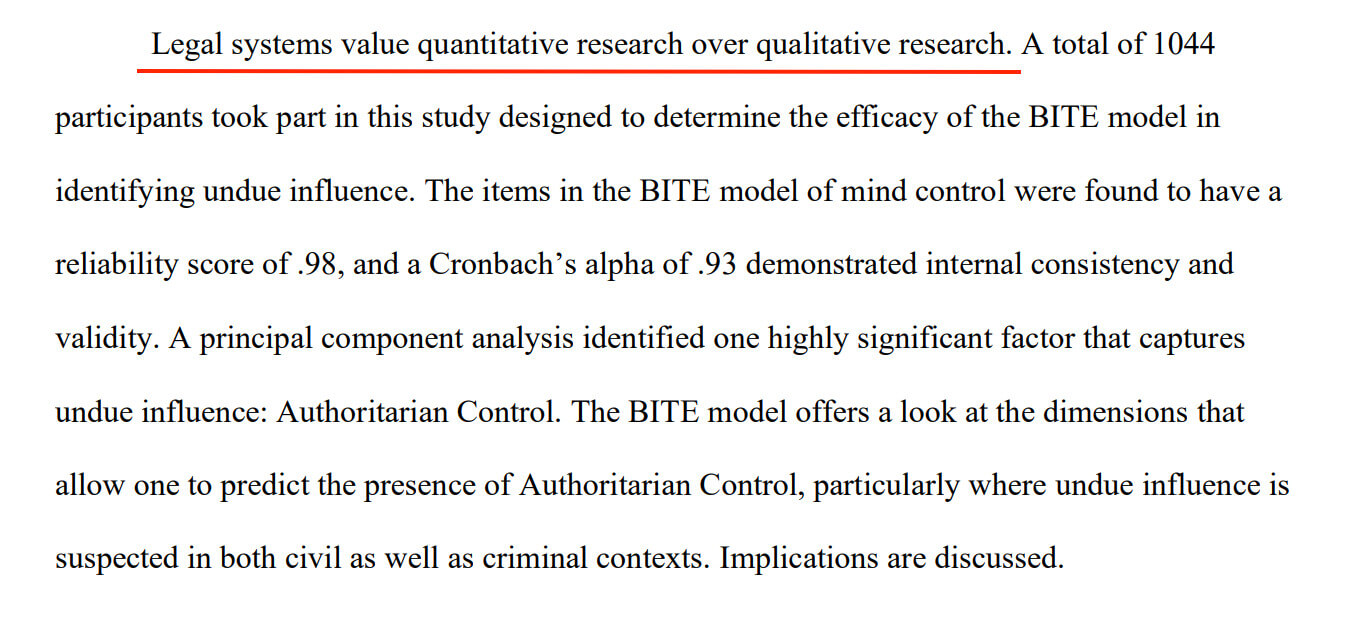
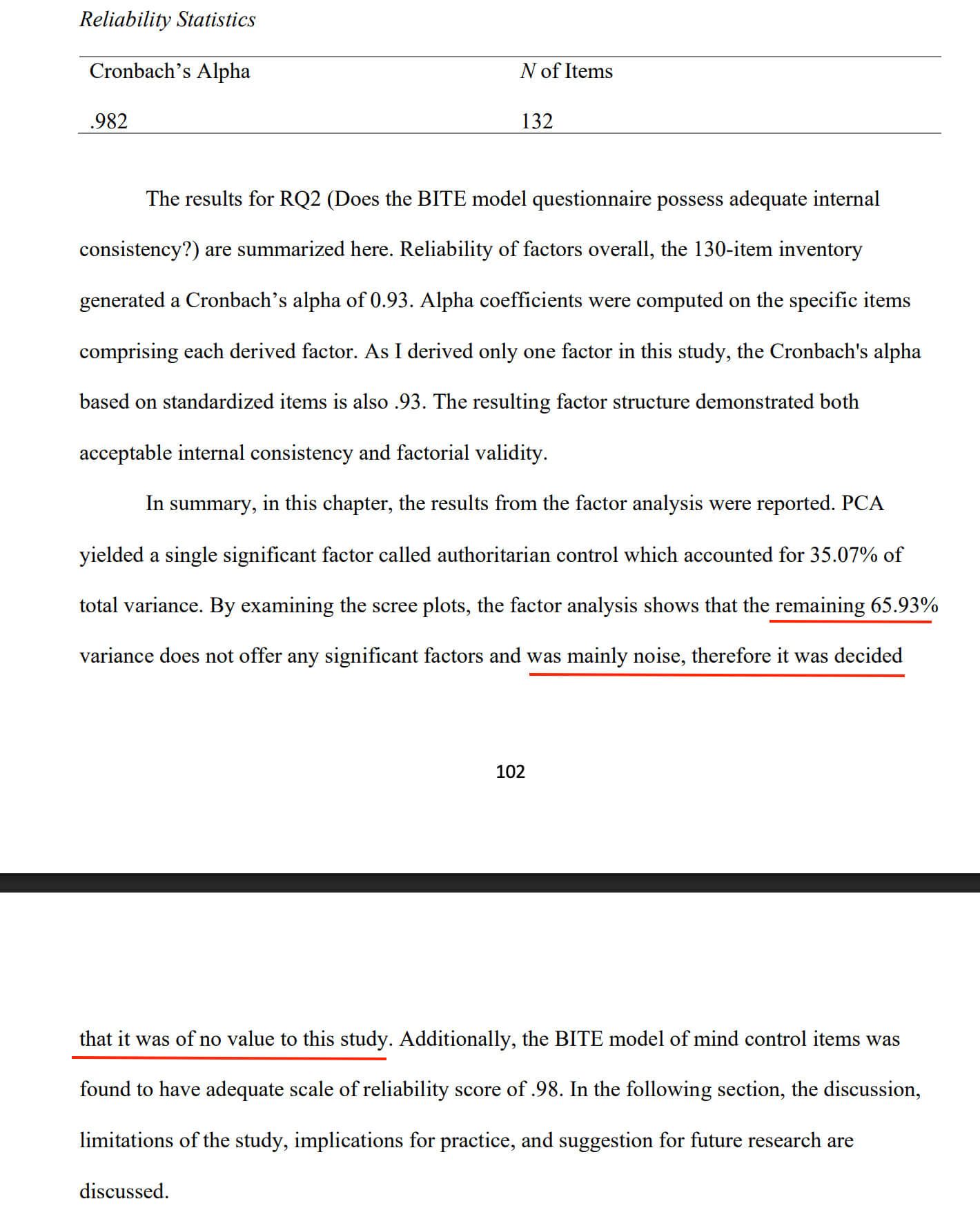
Meanwhile, Hassan refers to a high Cronbach’s alpha, which indicates how consistently people answer all questions. The higher the number, the more “friendly” the responses are.
However, Cronbach’s alpha doesn’t verify if questions measure the same thing. It only shows that respondents give answers consistently. In Hassan’s case, it’s like carrying out a survey on “how terrible are cats?” in a group called “Death to All Cats!” All participants would set maximum scores very consistently, and alpha would equal to 0.93. Yet, that doesn’t mean the test accurately measures the “terribleness of cats”. This means that Hassan had an extremely biased and homogeneous group of respondents.
Explicit Goal: Legalization in Courts
In his dissertation, Hassan explicitly writes that his mentor told him that “the best way to influence the legal system was for me to do quantitative research on my BITE model and publish it.”
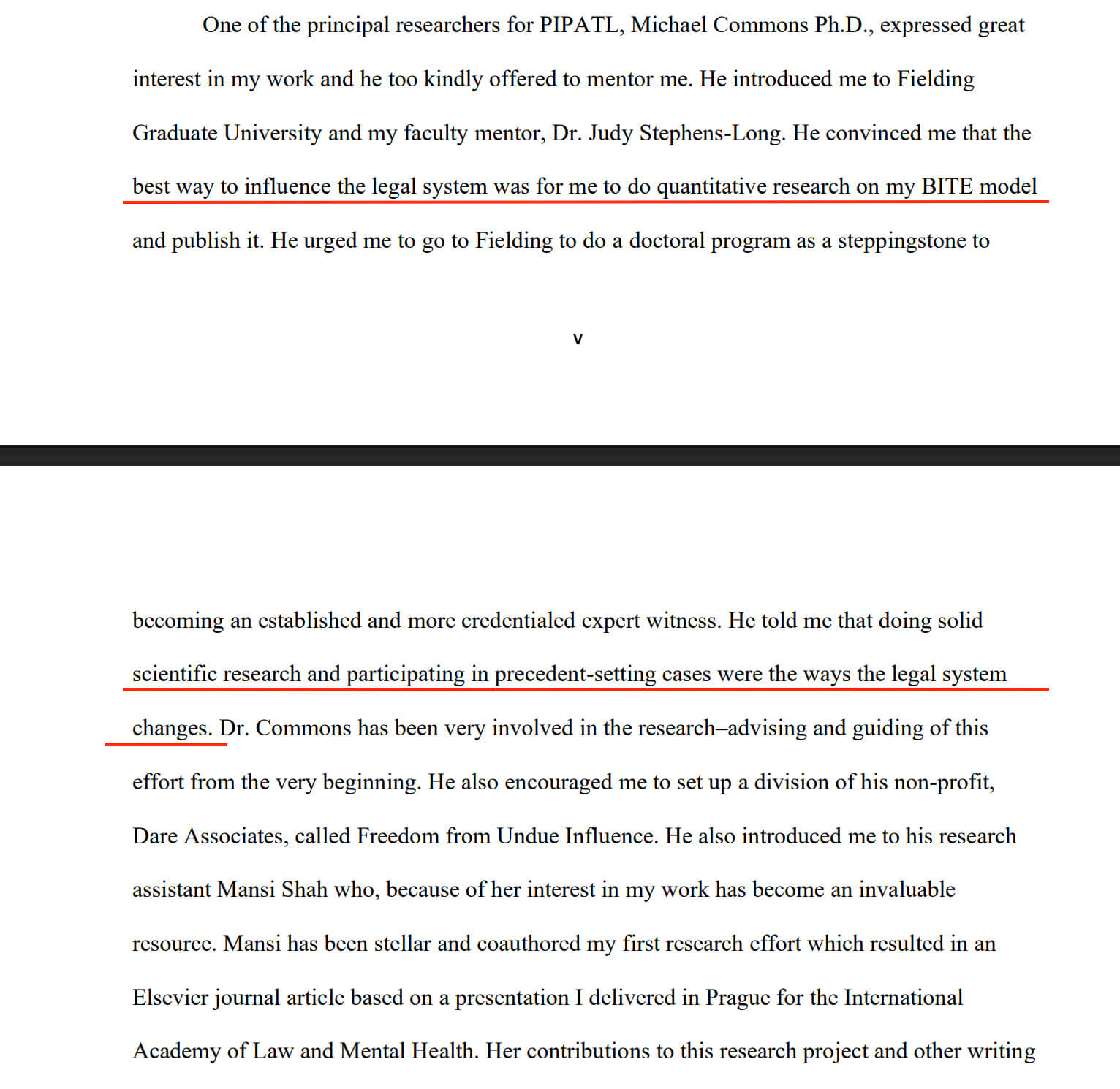
Thus, the dissertation was never intended as an impartial scientific study, but rather as a tool for legalizing Hassan’s model in court proceedings. That’s quite a vivid confirmation of what representatives of the anticult network actually pursue.
The Overall Picture
Hassan took a low-ranking adult program at an online university, conducted an extremely weak methodological study using a biased selection, interpreted its results in a favorable light for himself, and claimed to have obtained “scientific” validation for his model. Ultimately, he received a beautiful piece of paper labeled “PhD” along with references to his dissertation on his CVs to present himself as an authoritative expert and try to get his theory into courts.
BITE Model as a Dehumanization Tool
BITE (Behavior, Information, Thought, Emotion) is an extremely vague checklist with no clear operational definitions. Its criteria are so subjective that they can be applied to almost any group. It’s a modern remake of Margaret Singer’s long-discredited theory of brainwashing, rejected by APA and the U.S. courts as pseudoscience. In his dissertation, Hassan attempts to rename “mind control” to “authoritarian control” in order to circumvent judicial precedents, in particular the Daubert standard, but that’s a purely rhetorical move.
Analysis of consequences in the public and information field indicates that the main function of his model is dehumanization. Using the BITE Model, Hassan shifts political, religious, or ideological dissent from the realm of ideas to the realm of pathology. He targets whatever group will yield him the greatest benefit — be it financial, media, or in terms of advancing his agenda to change the law. Given his obvious antipolitical sentiment towards the current U.S. President, these are most often groups or individuals associated with the President’s party or sharing his views. Hassan claims that they are victims of mind control who allegedly do not have their own will and the right to personal beliefs. According to Hassan’s theory, a person ceases to be a citizen endowed with constitutional rights and turns into an object — a dangerous “brainwashed cultist who poses a threat to society.” This is a classic case of dehumanization and deprivation of agency — the ability to think and make choices independently.
By appealing to fear, Hassan radicalizes his audience and fosters a sense of existential threat. This very fear is the key to his main goal — changing the law. Under the pretext of “combating authoritarian cults,” Hassan promotes ideas about the need for new legal regulation of undue influence, the expansion of government’s power to interfere in political movements, and restriction of rights of those whom he declares “victims of mind control.” Essentially, through dehumanization, fear, and social division, he paves the way to his ultimate ambition of gaining real influence over laws and, eventually, over the government.
His BITE Model creates conditions for not hearing another person, not respecting their choices, not engaging in conversation with them, and moving straight to discreditation, isolation, or deprogramming. This is by no means a psychological tool, as Steven Hassan attempts to portray it. It’s a political and ideological weapon that he diligently seeks to disguise as science.
“Hassanology”: Steven Hassan’s Pseudoscientific System
One of the most comprehensive analyses of Steven Hassan’s activities was an article by psychologist Cathleen A. Mann, PhD, published after the release of his book “Freedom of Mind” (2012). A licensed counselor since 1994, Mann bluntly called Hassan’s approach “Hassanology,” a system where he himself acts as the “ultimate savior.” According to her, “Hassanology essentially depicts Steve Hassan as the ultimate savior. He is a hammer, and there is an ever expanding list of groups to be seen as nails.” 37
Mann points out that Hassan systematically borrows ideas from other researchers (such as Lifton, Singer, NLP techniques, and family therapy), yet hardly refers to sources, or presents them as his own. At the same time, he expands his BITE Model to such an extent that almost any group can be identified as a “cult.”
Application of Hassan’s Model in Russia
In the context of this article, it is interesting to consider an example of how dehumanization of the political opposition was carried out in Russia, according to the same anticult pattern that Hassan uses in the States. 38
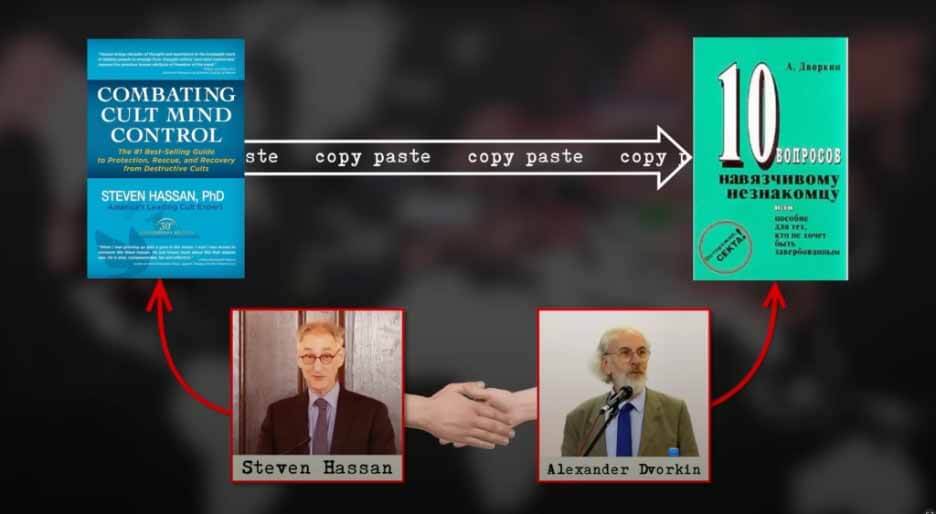
Hassan’s colleague Alexander Dvorkin has been successfully using this model in Russia for over three decades. Facts point to collaboration between Hassan and Dvorkin, since they participated in various workshops and conferences together. Notably, Dvorkin published a book titled “10 Questions to an Obsessive Stranger,” which nearly verbatim reproduces a chapter from Hassan’s works. Furthermore, Dvorkin actively recommends Hassan’s writings, while their rhetoric regarding the perceived threat of cults is nearly identical, often repeating the same arguments.
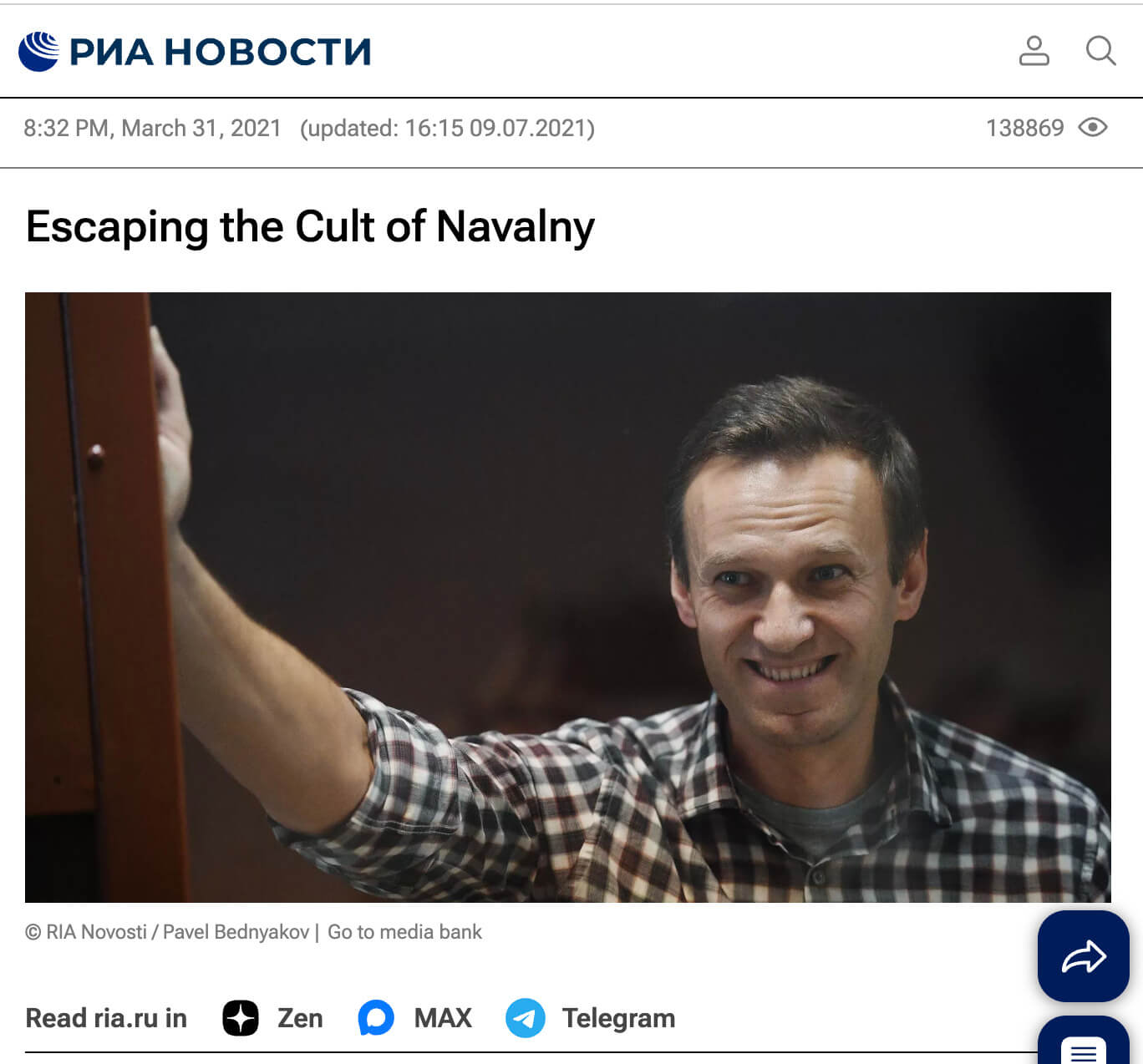
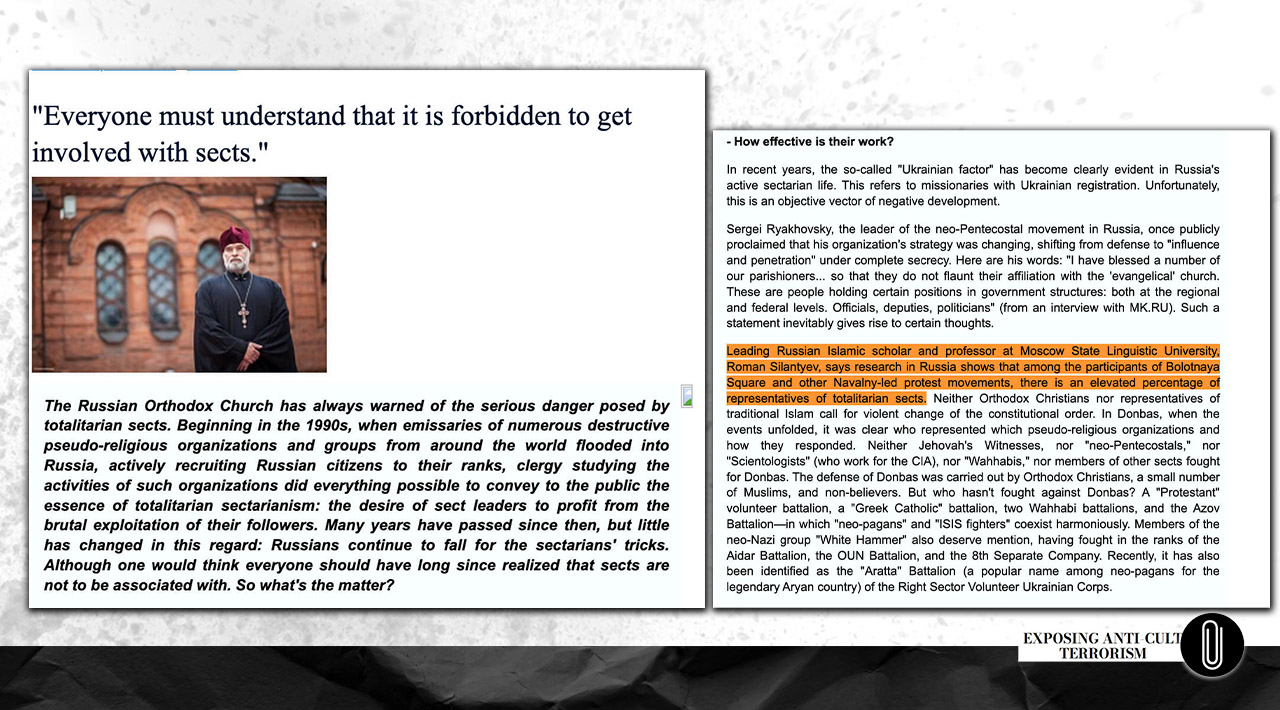
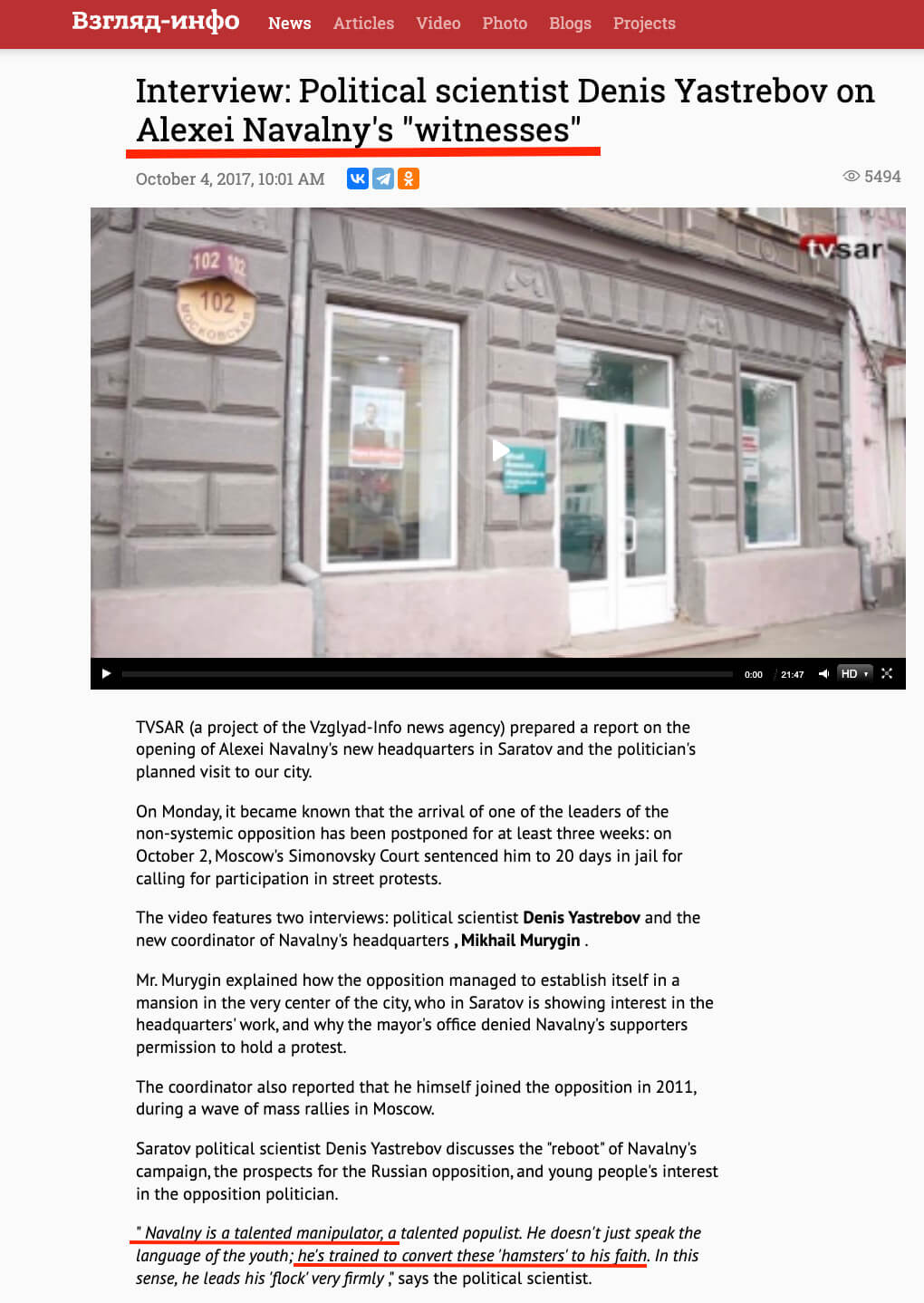
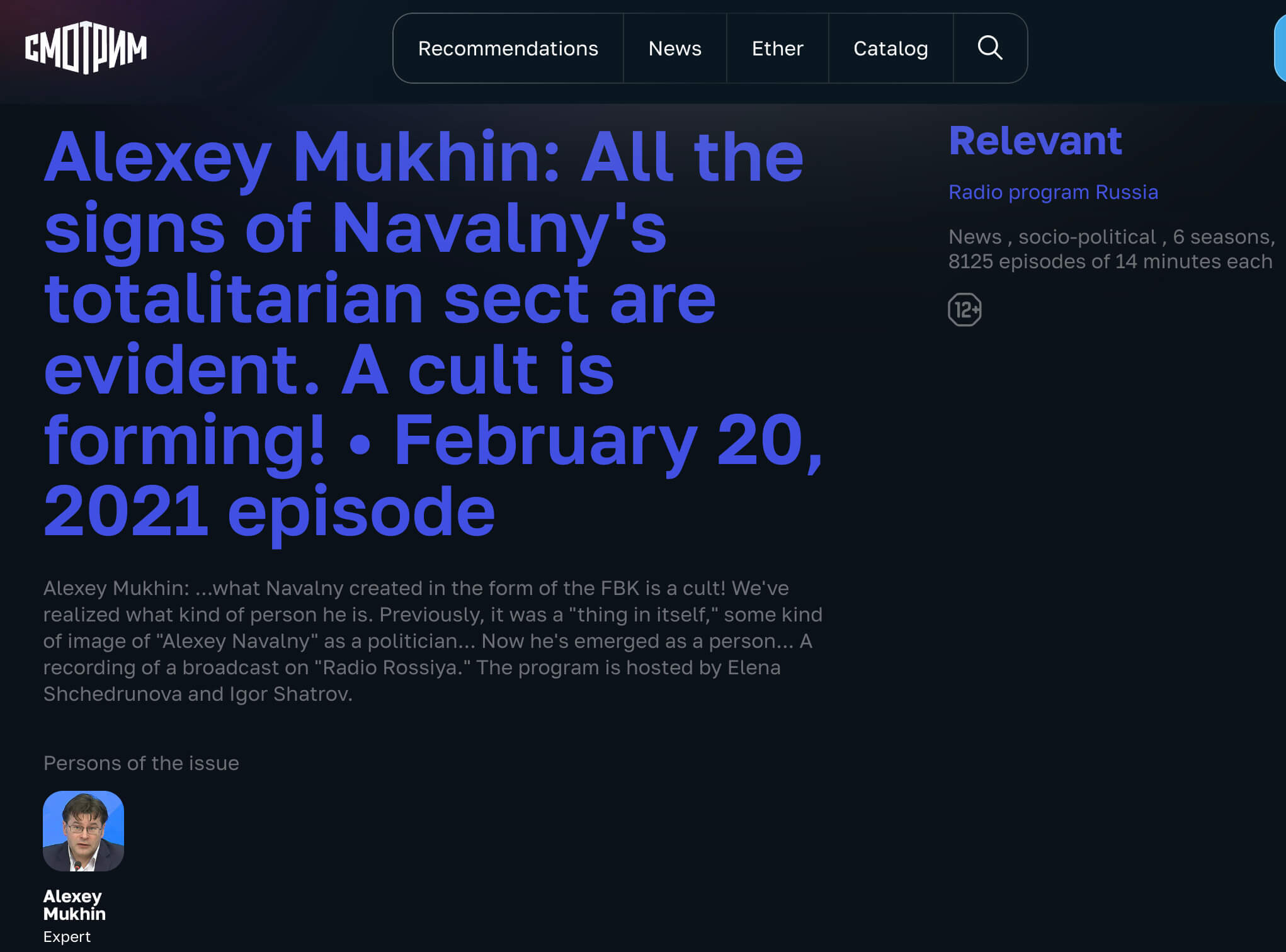
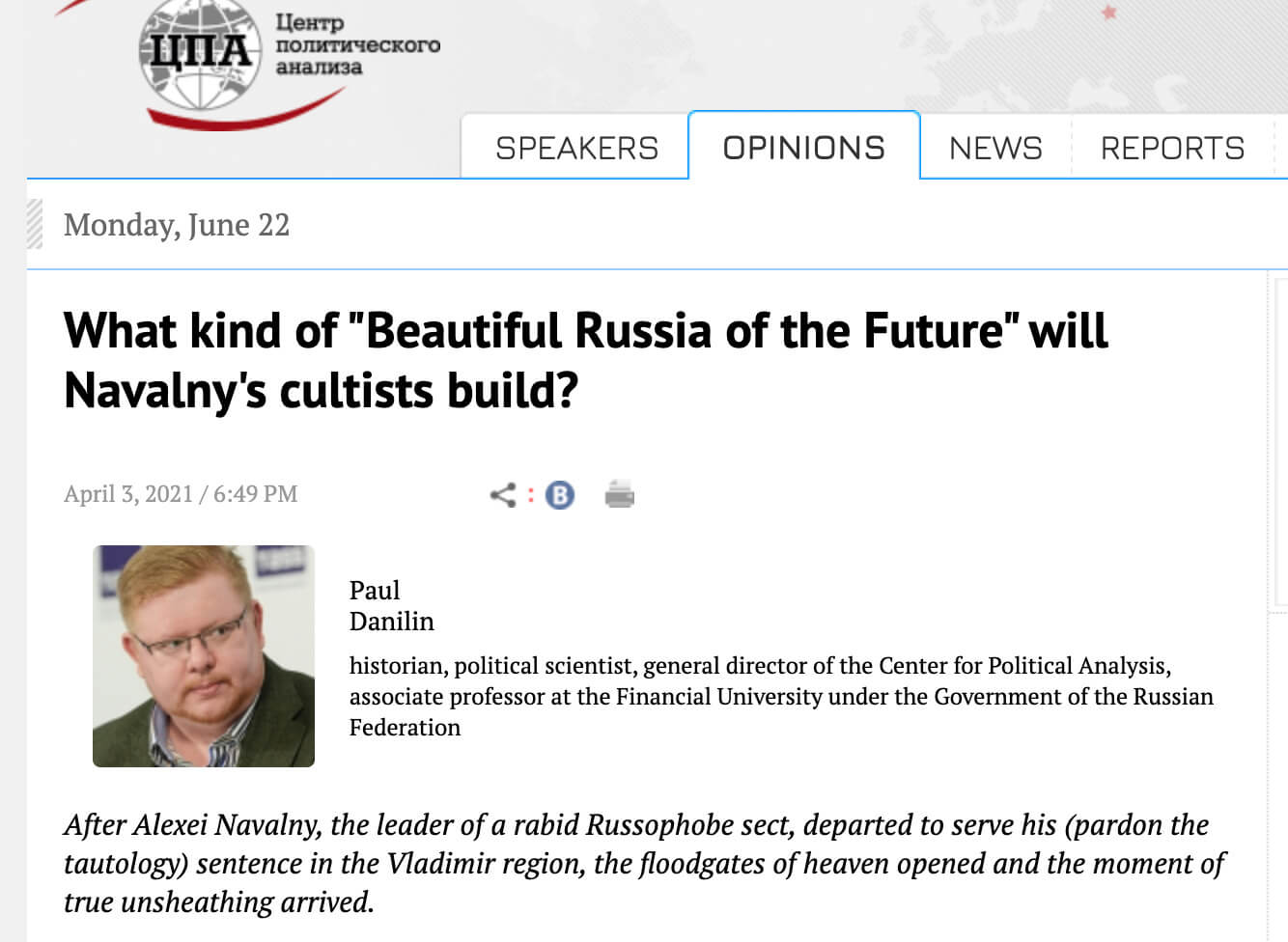
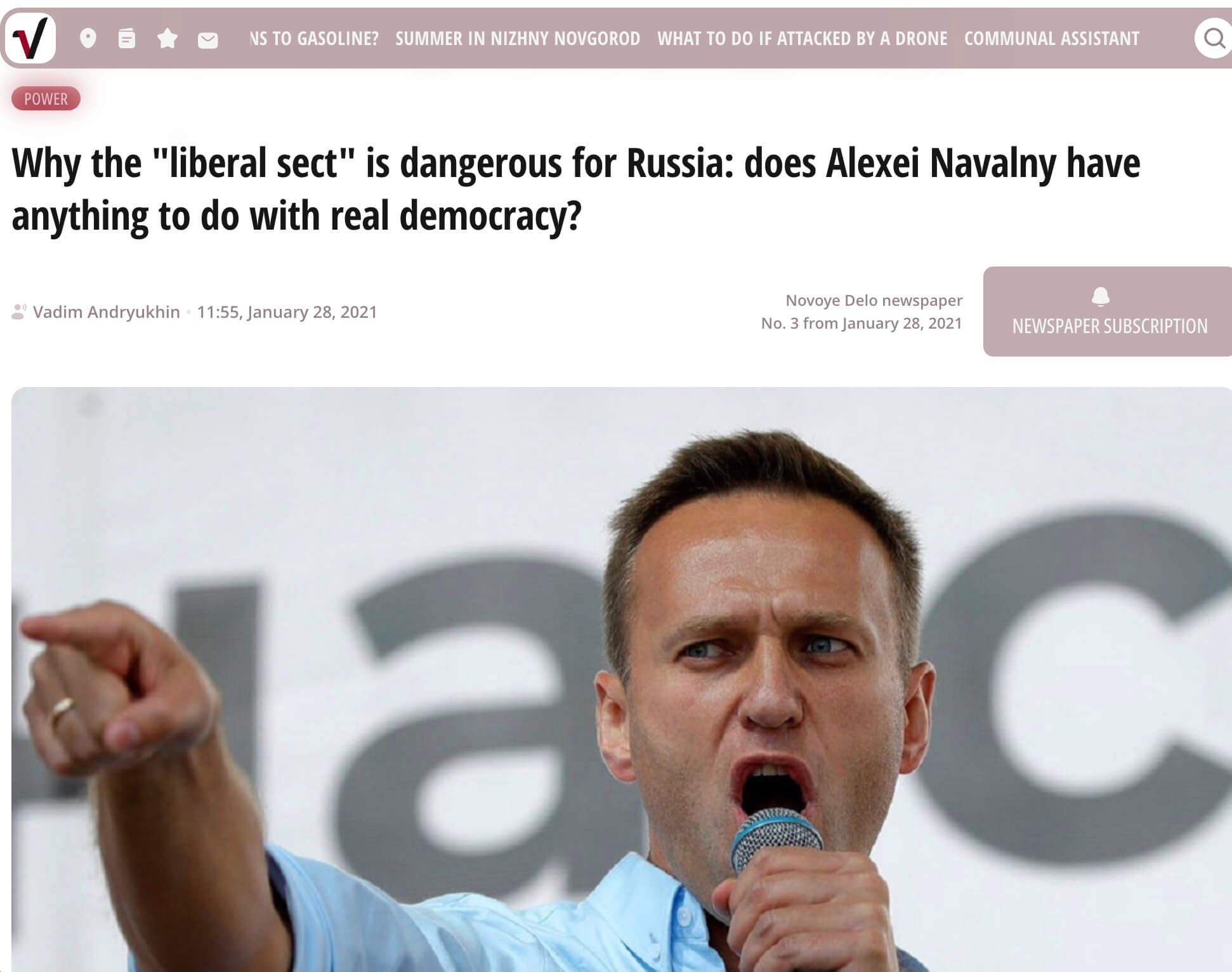
This dehumanization model has proved to be very convenient for discrediting and destroying political opponents. In such a way, Dvorkin and his anticult “experts” dehumanized Alexei Navalny’s political opposition party for more than a decade. They claimed there was an increased number of representatives of totalitarian cults among participants of the anti-government protests on Bolotnaya Square and other protests led by Navalny. 39,40,41,42
They also said that the next revolution in Russia would be organized specifically by cultists. 43 Such statements were widely disseminated across numerous outlets of RACIRC.
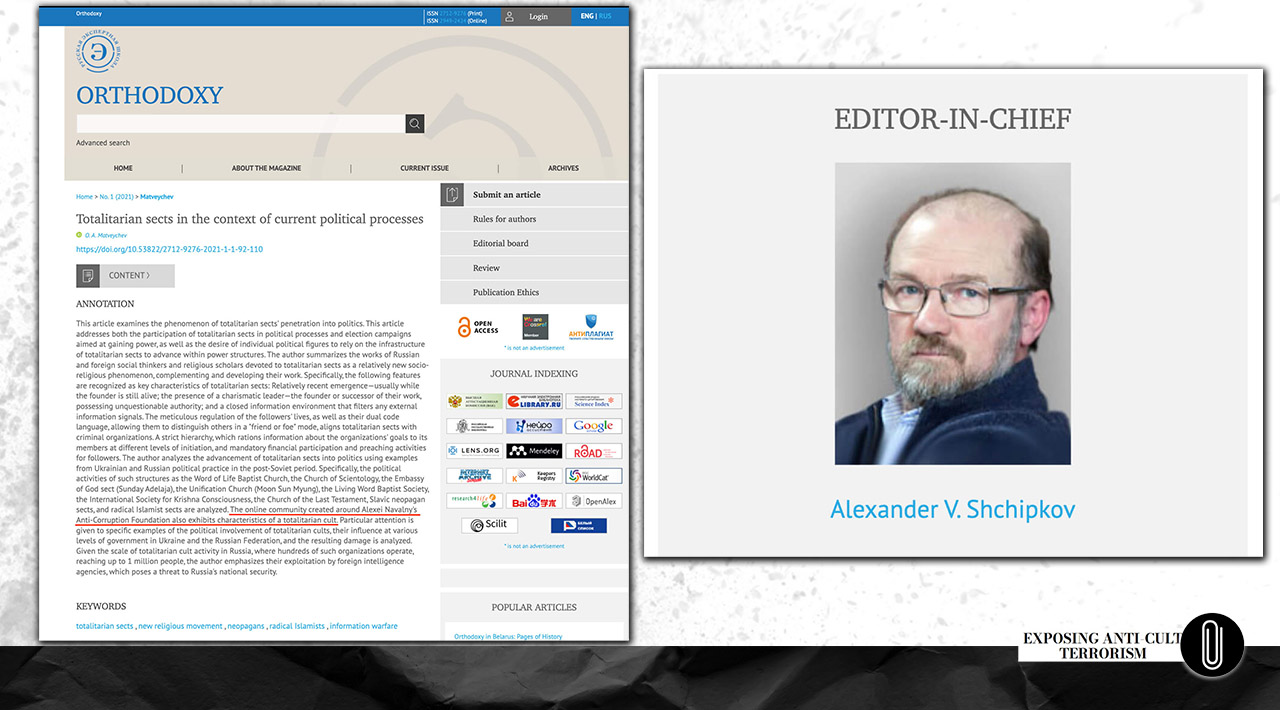
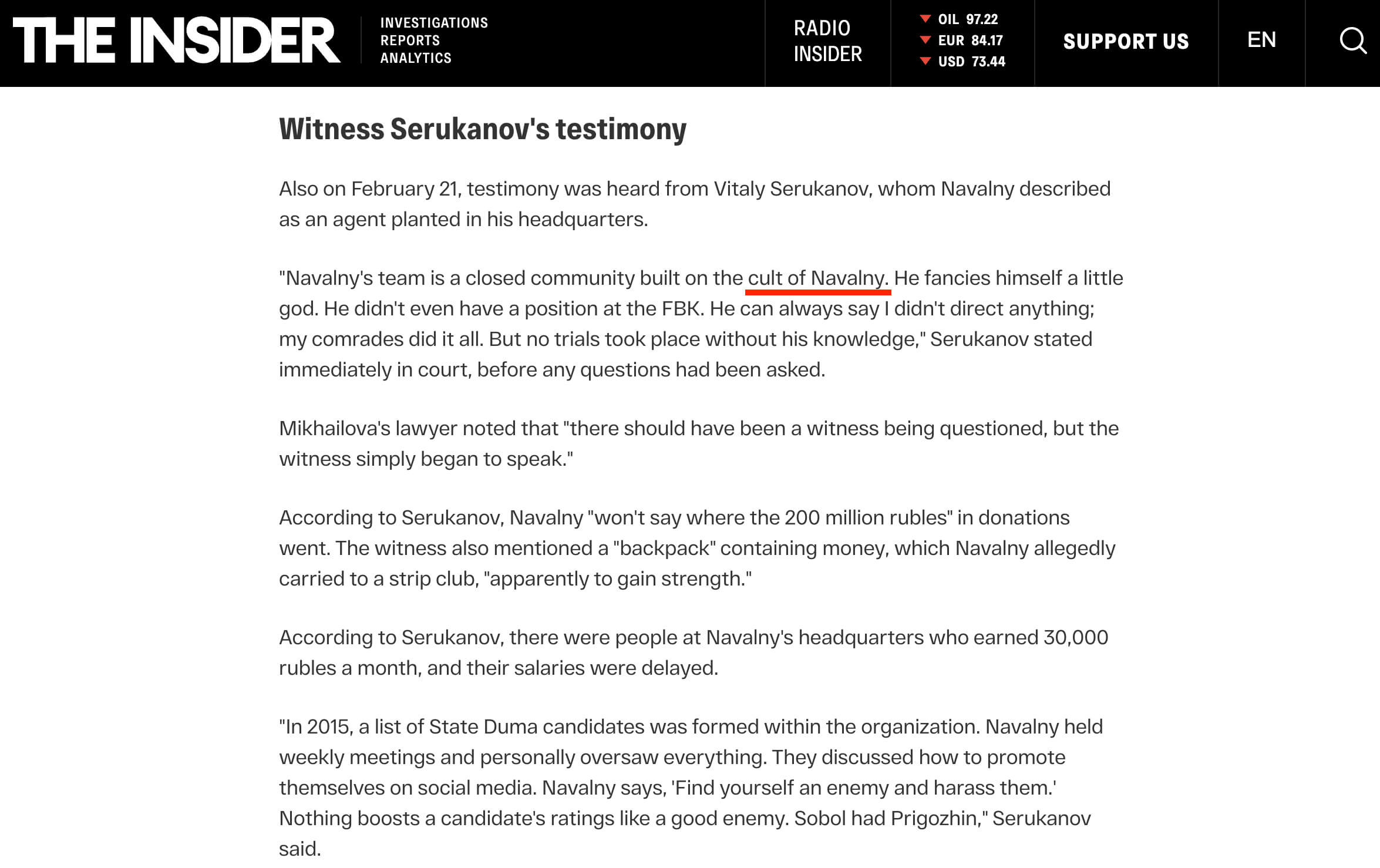
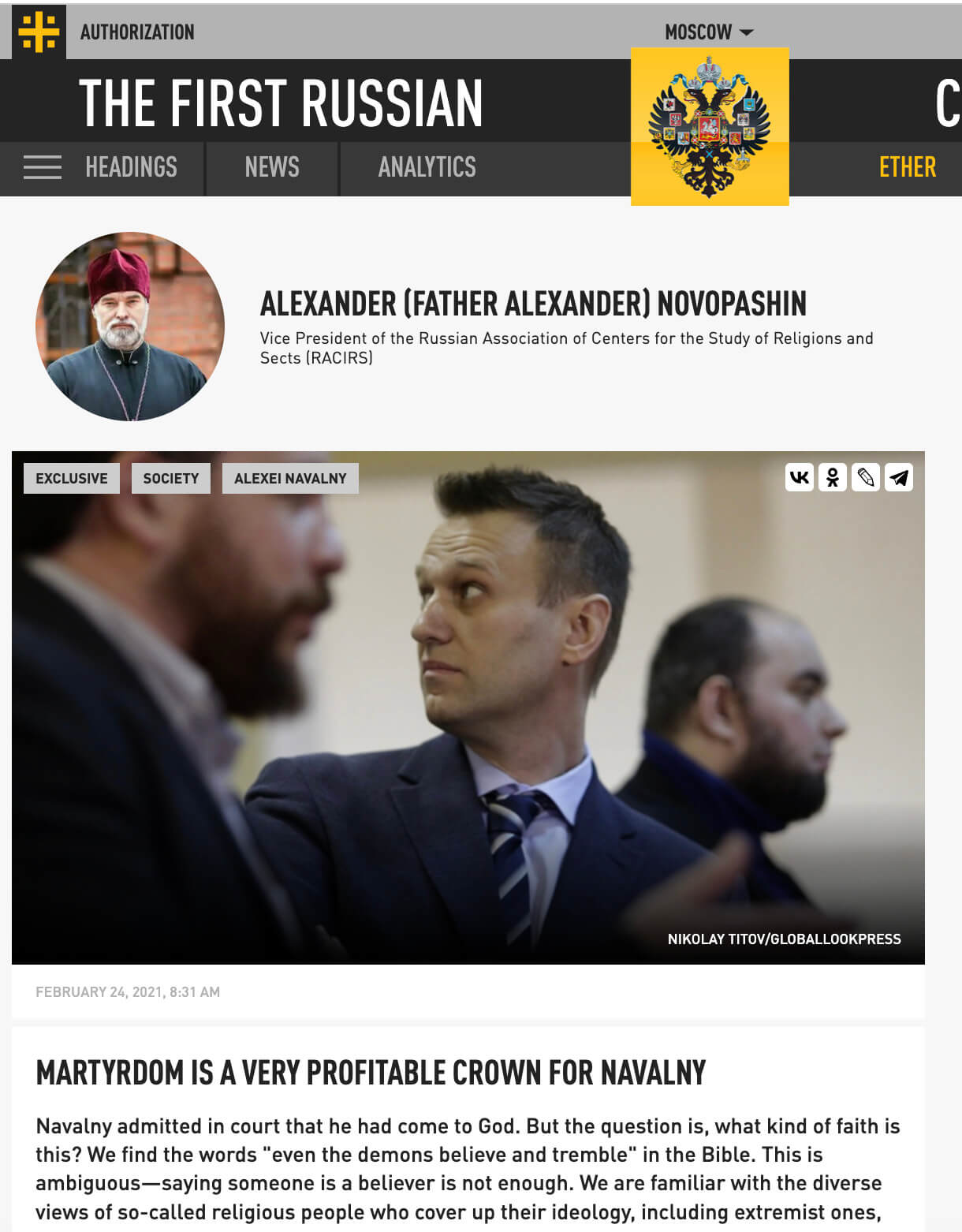
The “cult of Navalny” narrative reached its peak in 2017-2021, on the eve of the full-scale destruction of the political opposition. The Orthodoxia journal run by one of Russia’s chief anticultists, Alexander Shchipkov, published “scientific” articles such as “Totalitarian Sects in the Context of Current Political Practices” (2021) which contained references to Dvorkin’s definitions and directly asserted that the online community around Navalny’s FBK possessed features of a totalitarian cult. 44
Supporters of Navalny and his Anti-Corruption Foundation (FBK) were systematically called “sectarians,” “members of Navalny cult,” “Navalny’s Witnesses” (similar to the Jehovah’s Witnesses banned in Russia since 2017), and “victims of brainwashing.”
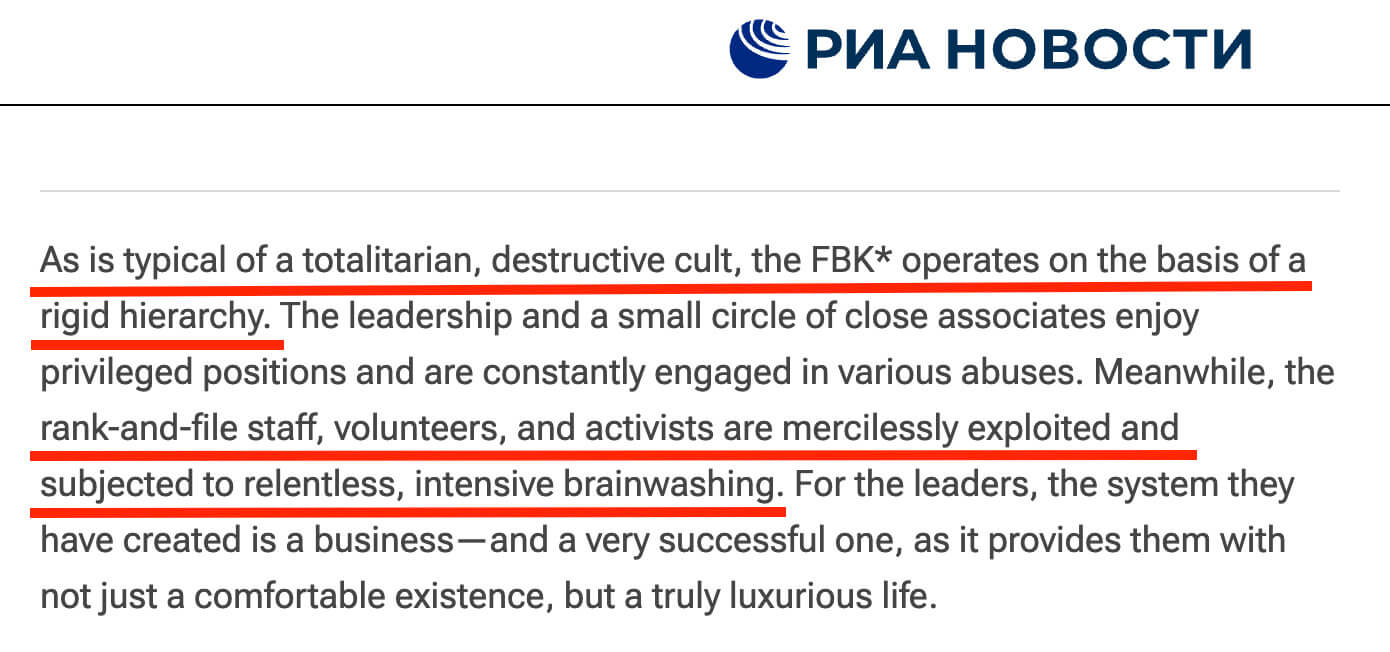
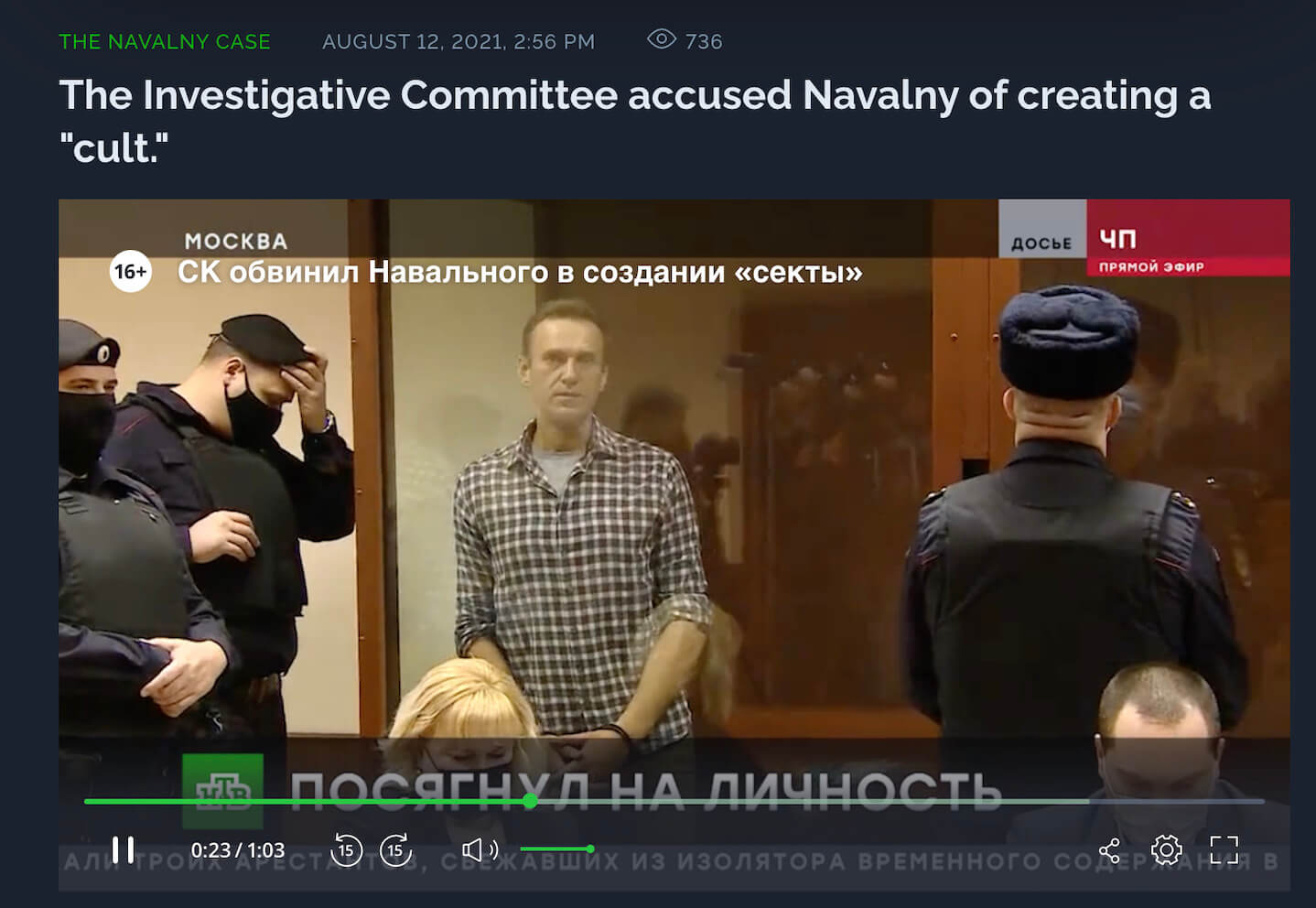
Navalny himself was accused of establishing a “political cult” and applying manipulative techniques, and this rhetoric was actively embraced by pro-Kremlin propagandists.
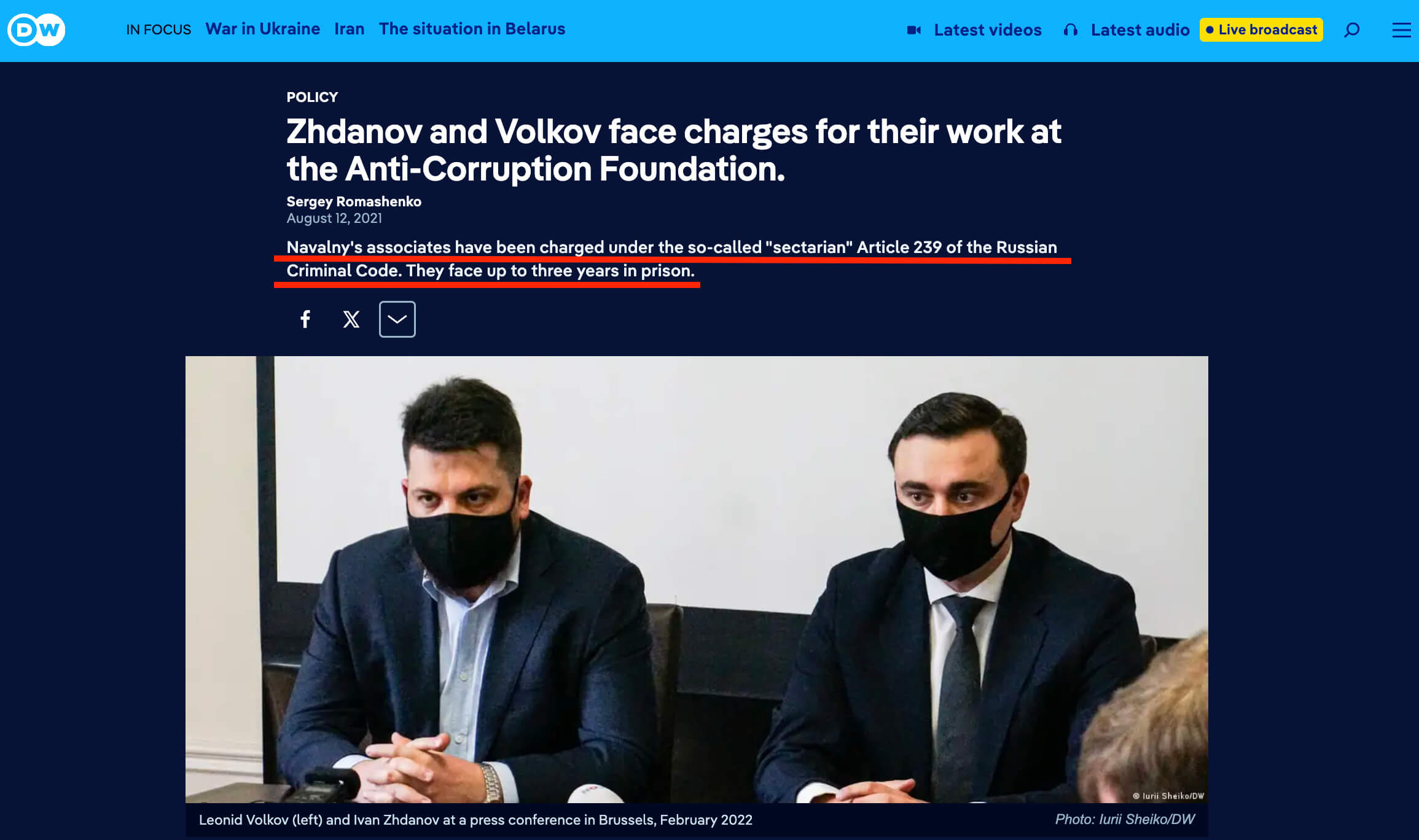
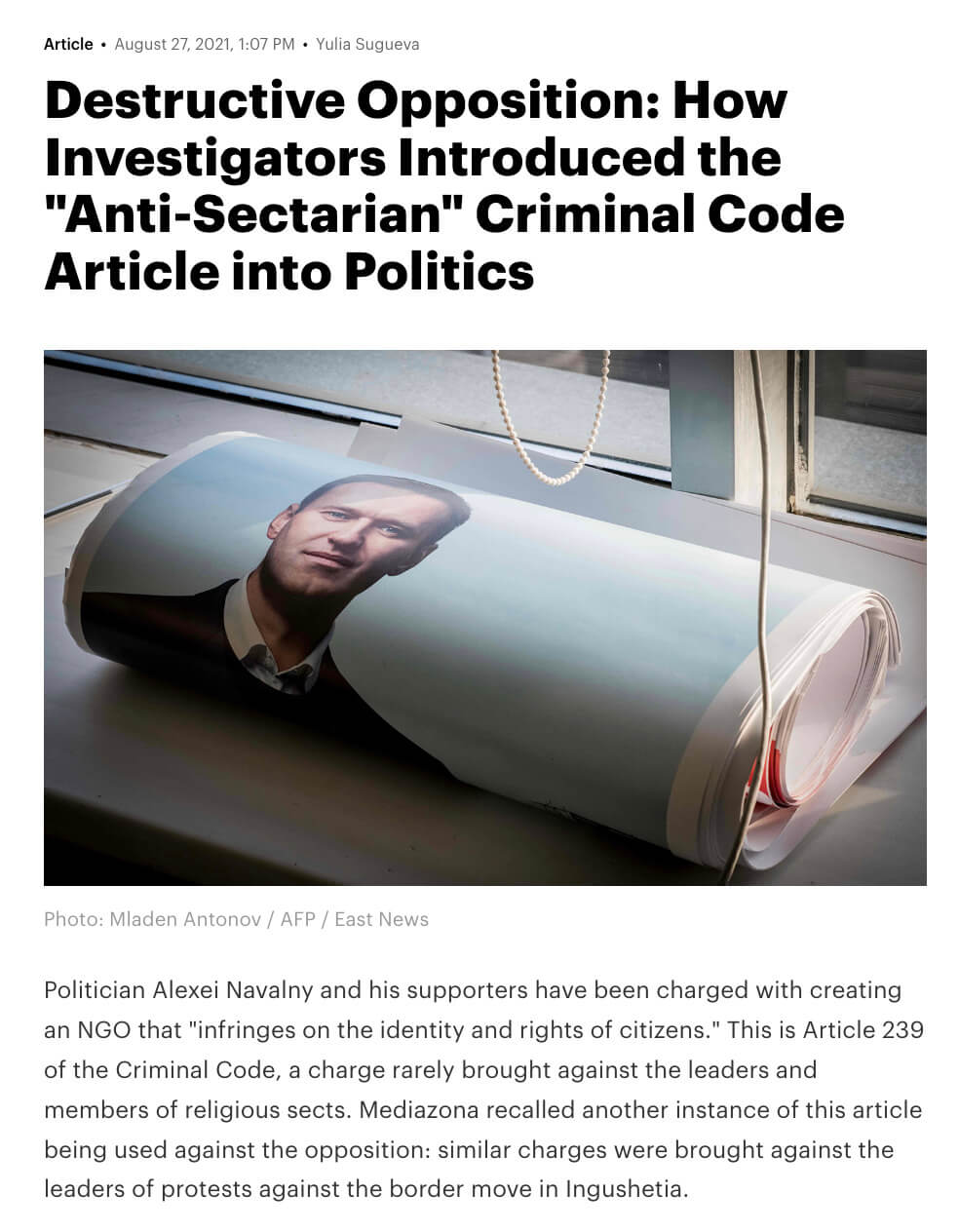
In 2021, the Investigative Committee of the Russian Federation, which closely cooperates with Dvorkin’s “experts” from RACIRS, initiated charges against Alexei Navalny and other leaders of his organization, including under the Criminal Code article associated with combating “totalitarian sects.”
Dehumanization and Justification of Repressions
Instead of an image of political opponents, they created an image of a dehumanized “brainwashed” mass and “zombie cultists” unable to think independently. You no longer need to have a dialogue with them. The label “cult” removed moral restrictions. If it’s not a political movement, but a “totalitarian cult,” then, according to the logic of “fighters against cults,” it can be banned as a threat to society and eliminated. This very rhetoric was actively used to justify recognizing Navalny’s FBK as an extremist organization, launching mass repressions, and actually destroying Navalny’s structure.
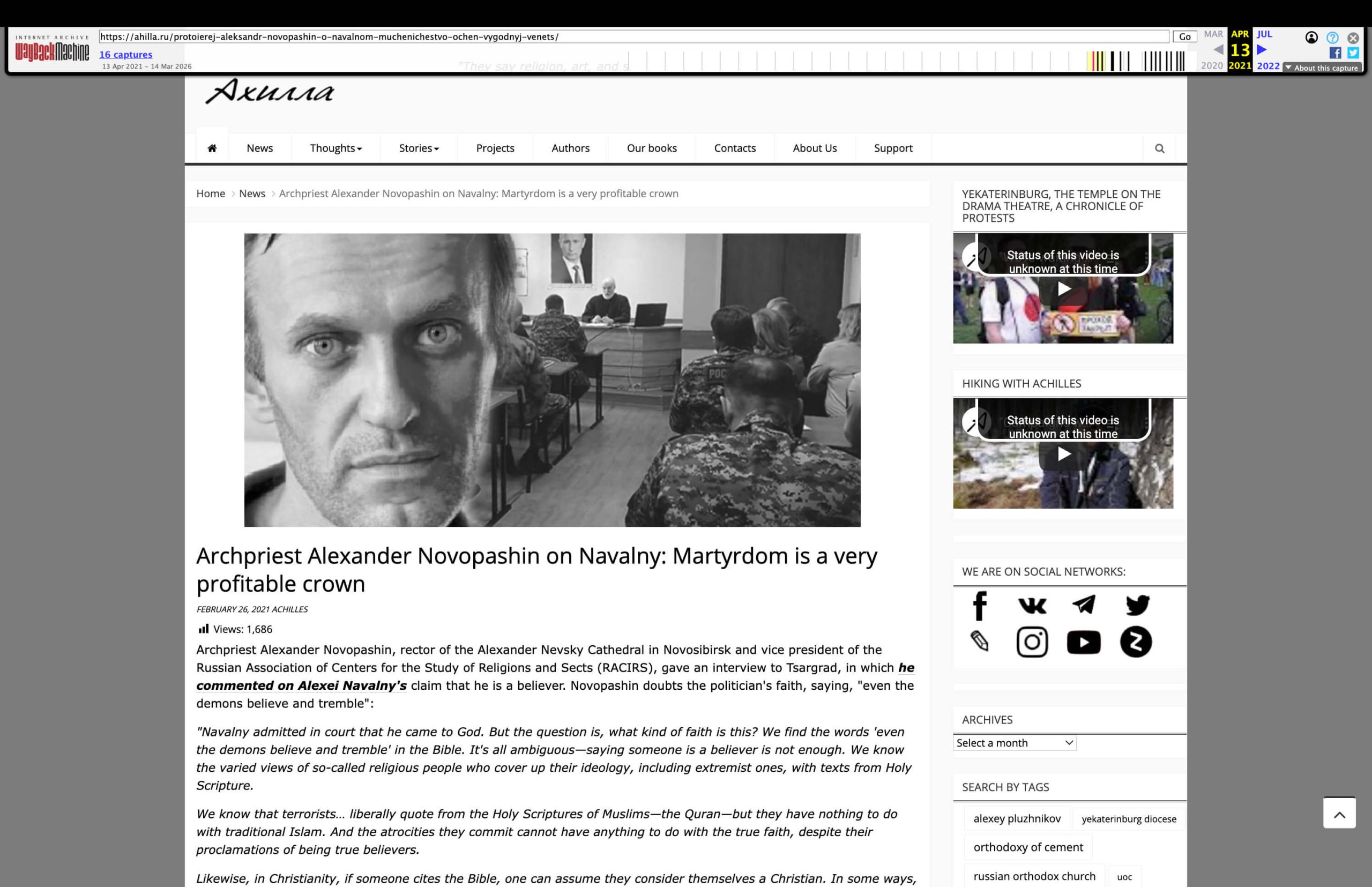
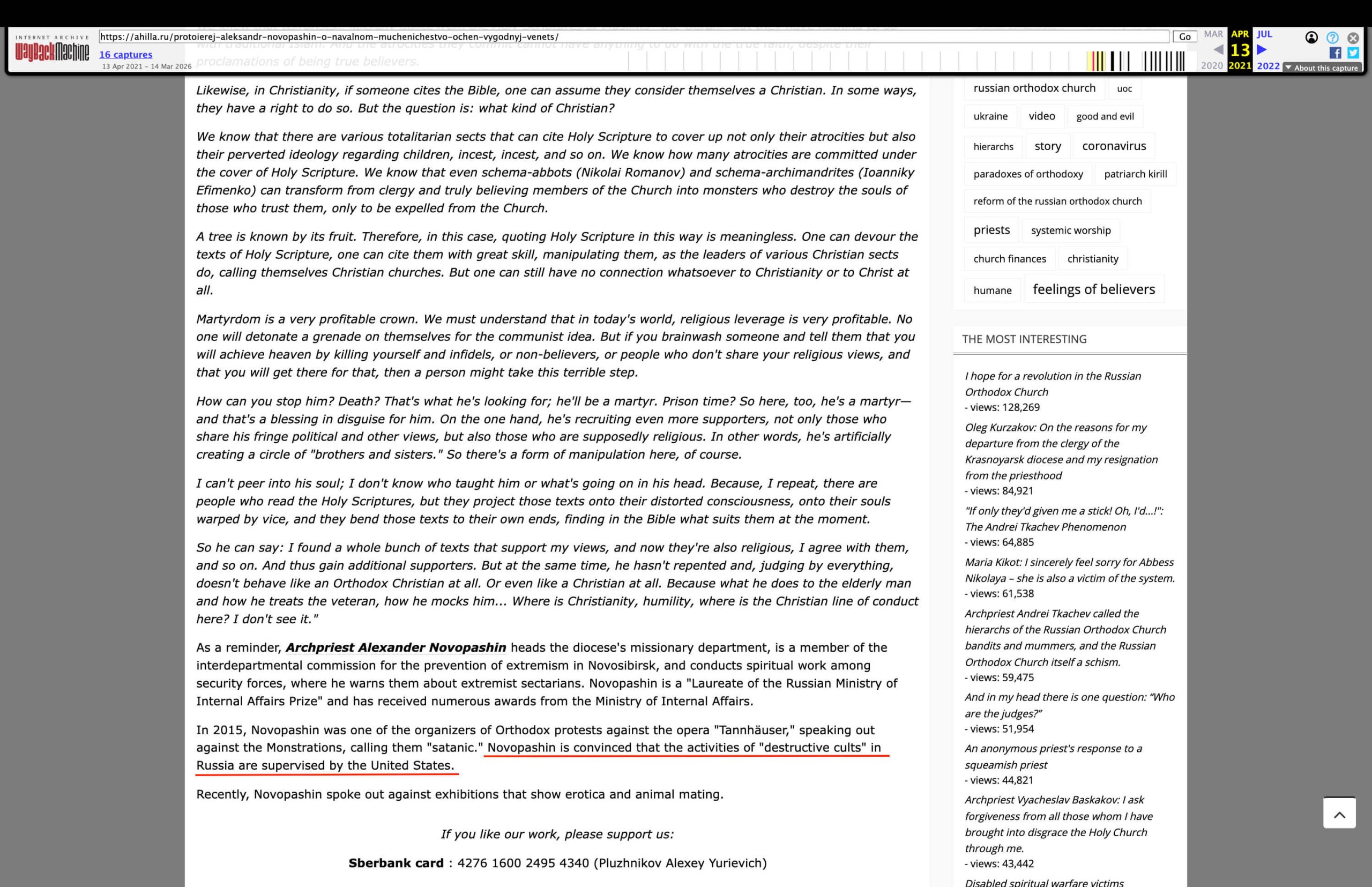
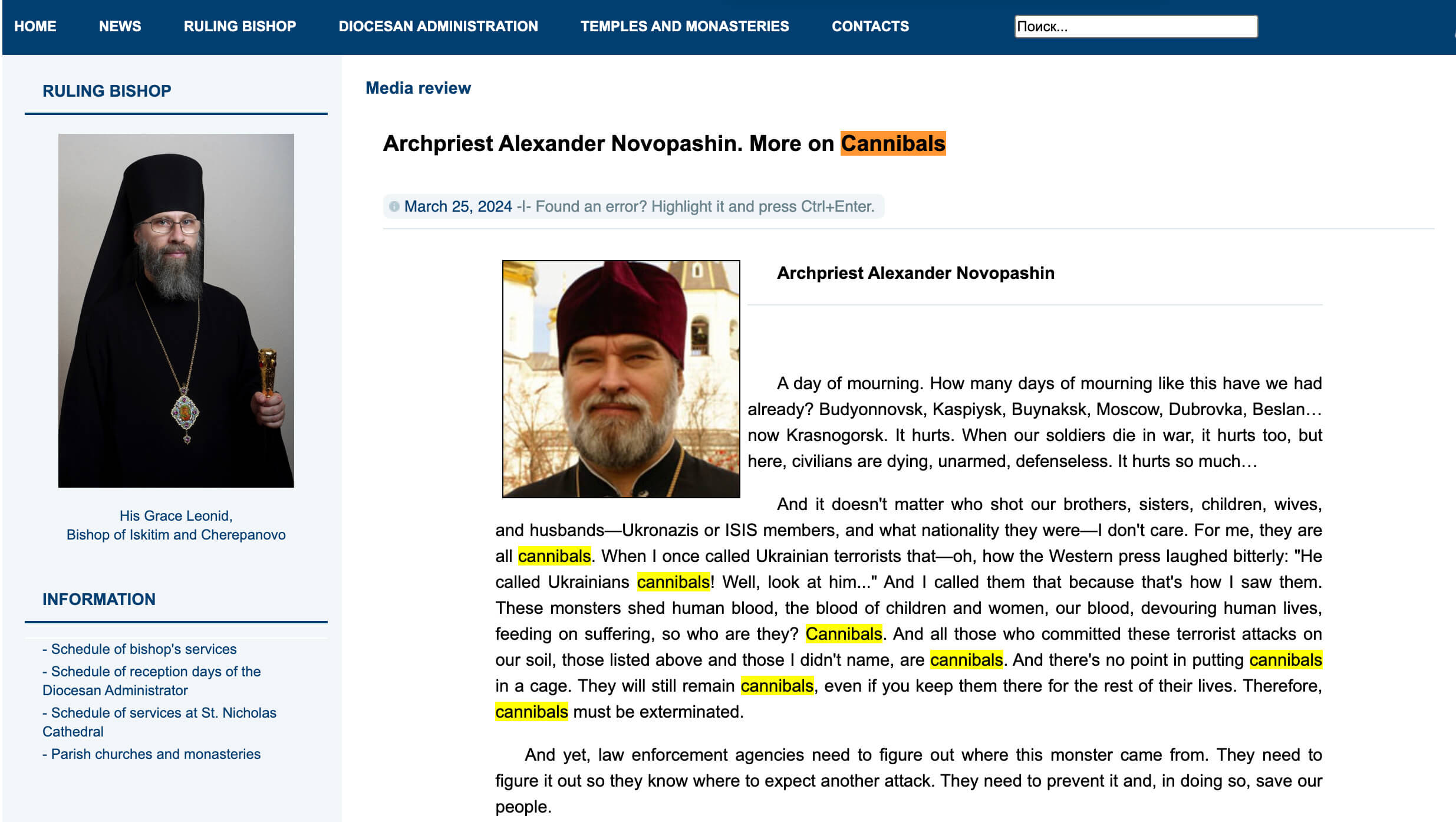
“Novopashin is convinced that the activities of ‘destructive cults’ in Russia are supervised by the United States.” 54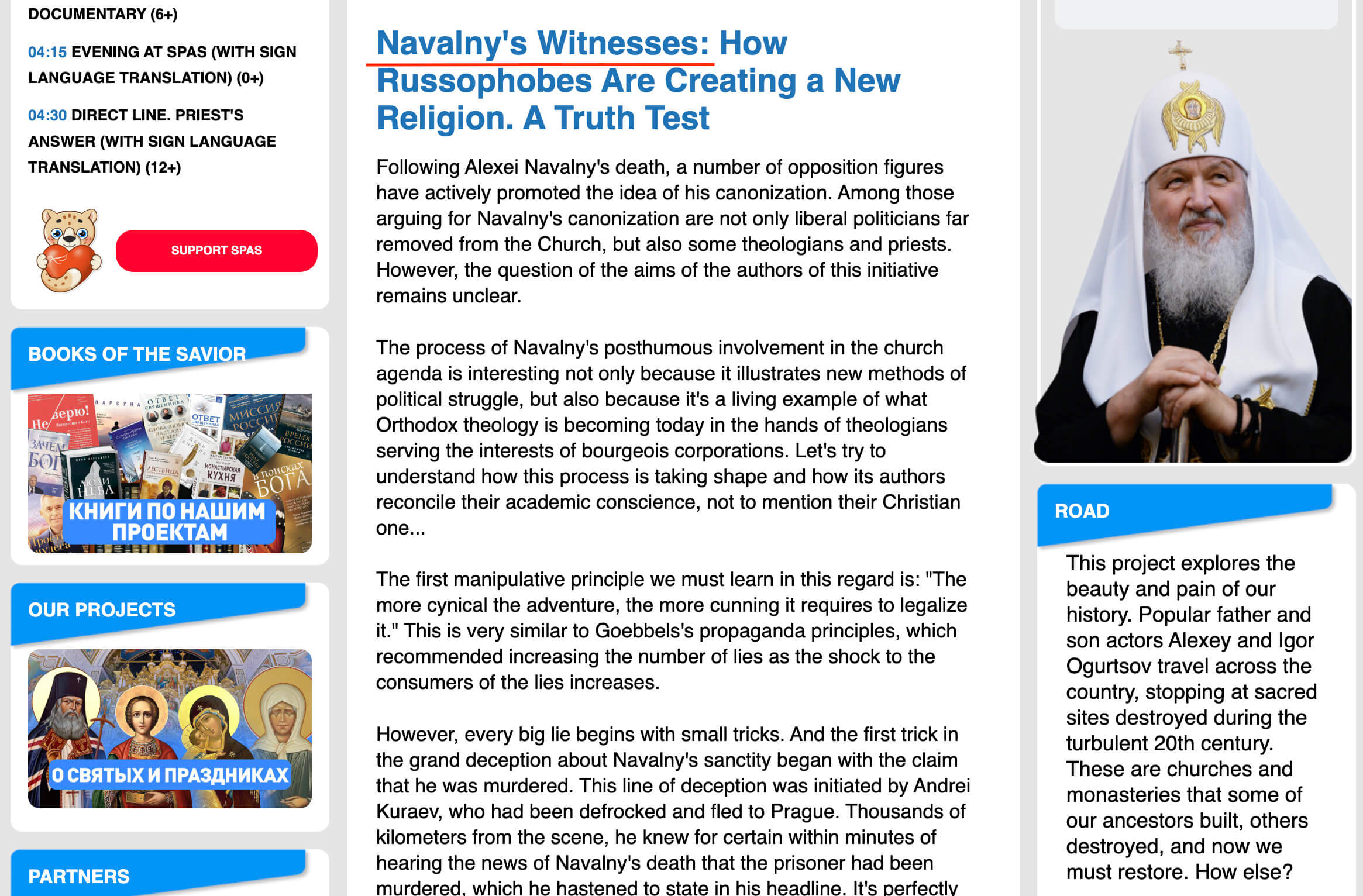
While Hassan accuses cults of working for the Russian intelligence agencies, his Russian colleagues similarly dehumanize people and organizations through the “cult” label and accuse them of working for the U.S. intelligence.
Dehumanization of Ukraine followed a similar pattern in Russia. Representatives of RACIRC initially stigmatized Ukraine as a “country occupied by American cults” that had allegedly seized power there, and ultimately they went on to declare that it’s a “cult country.”
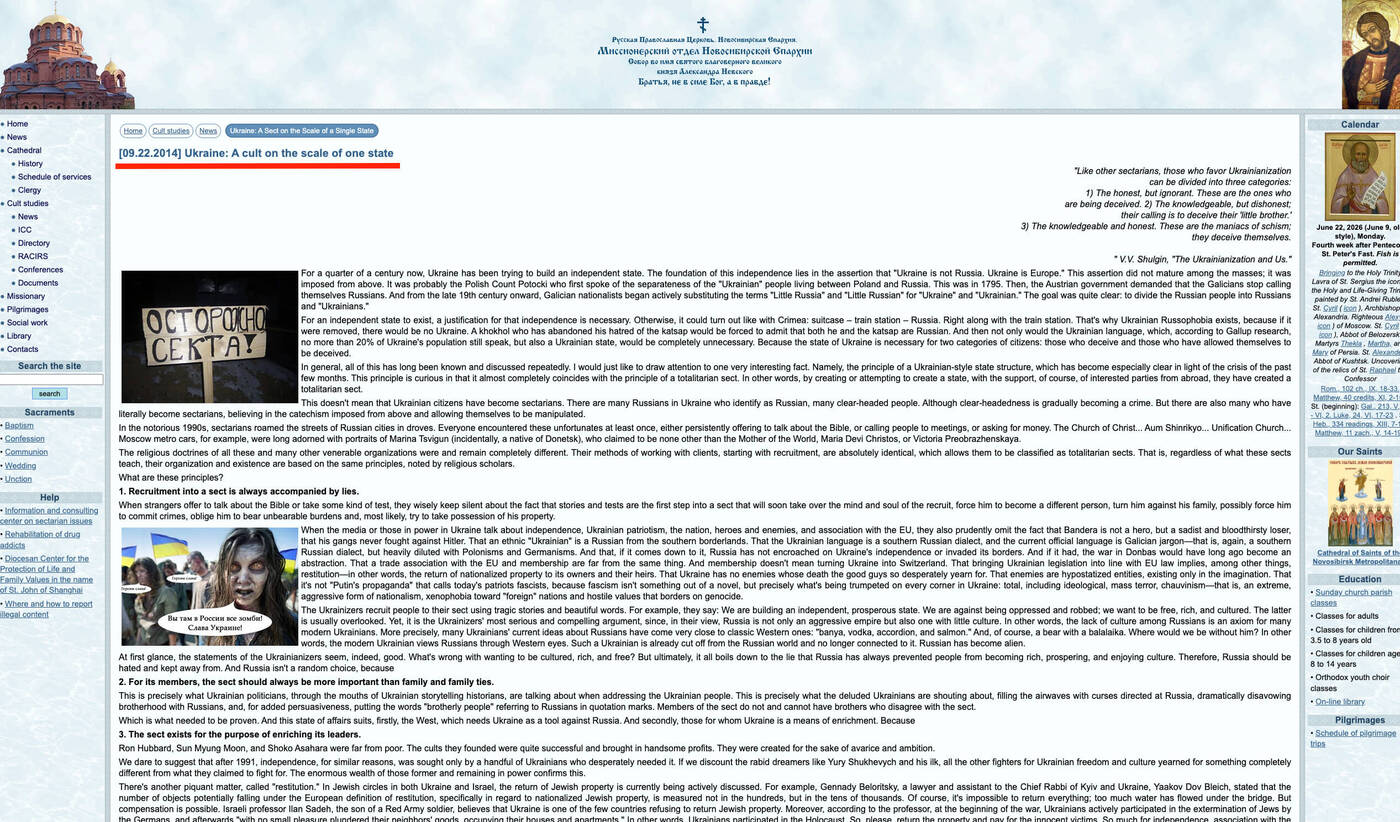
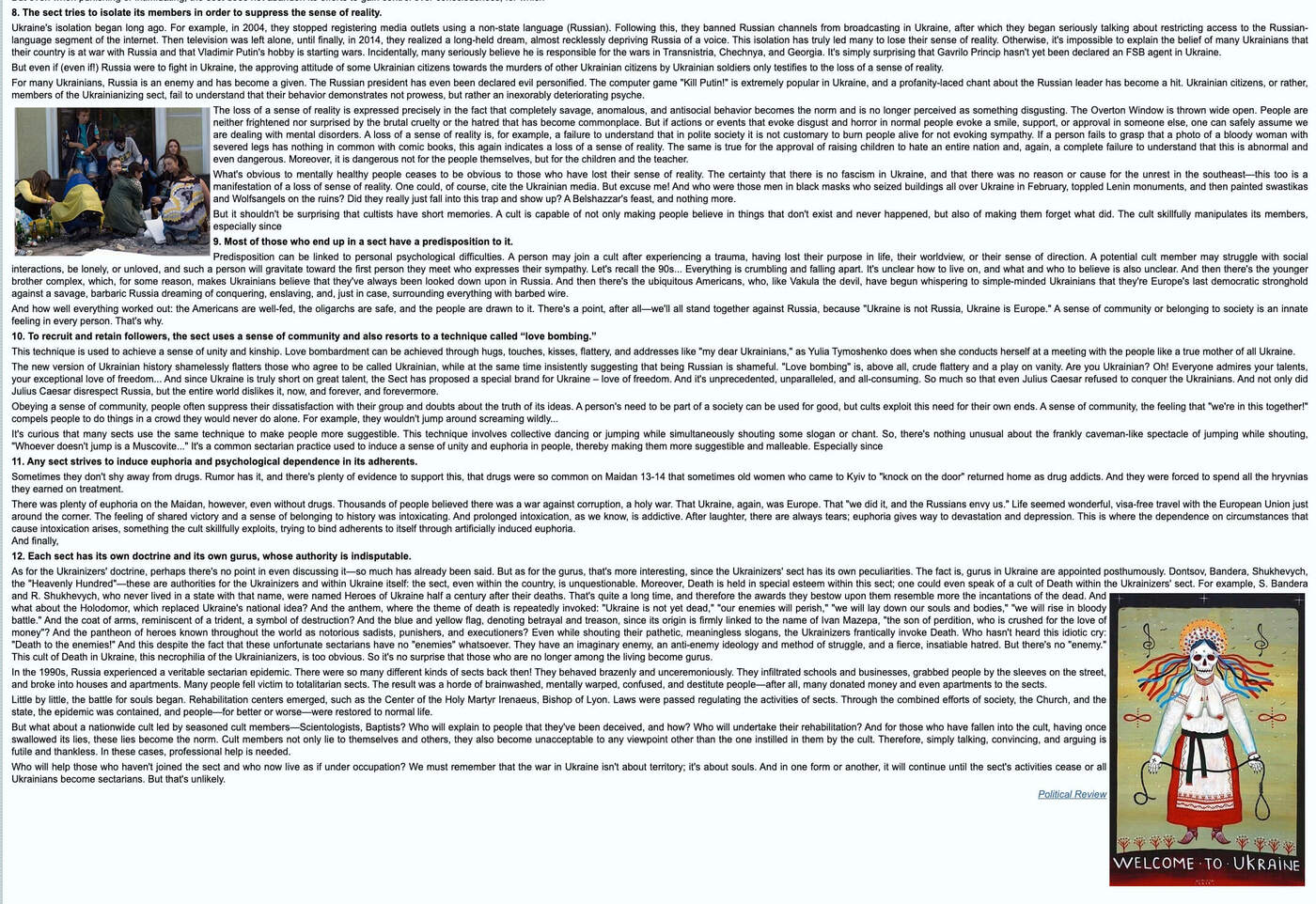
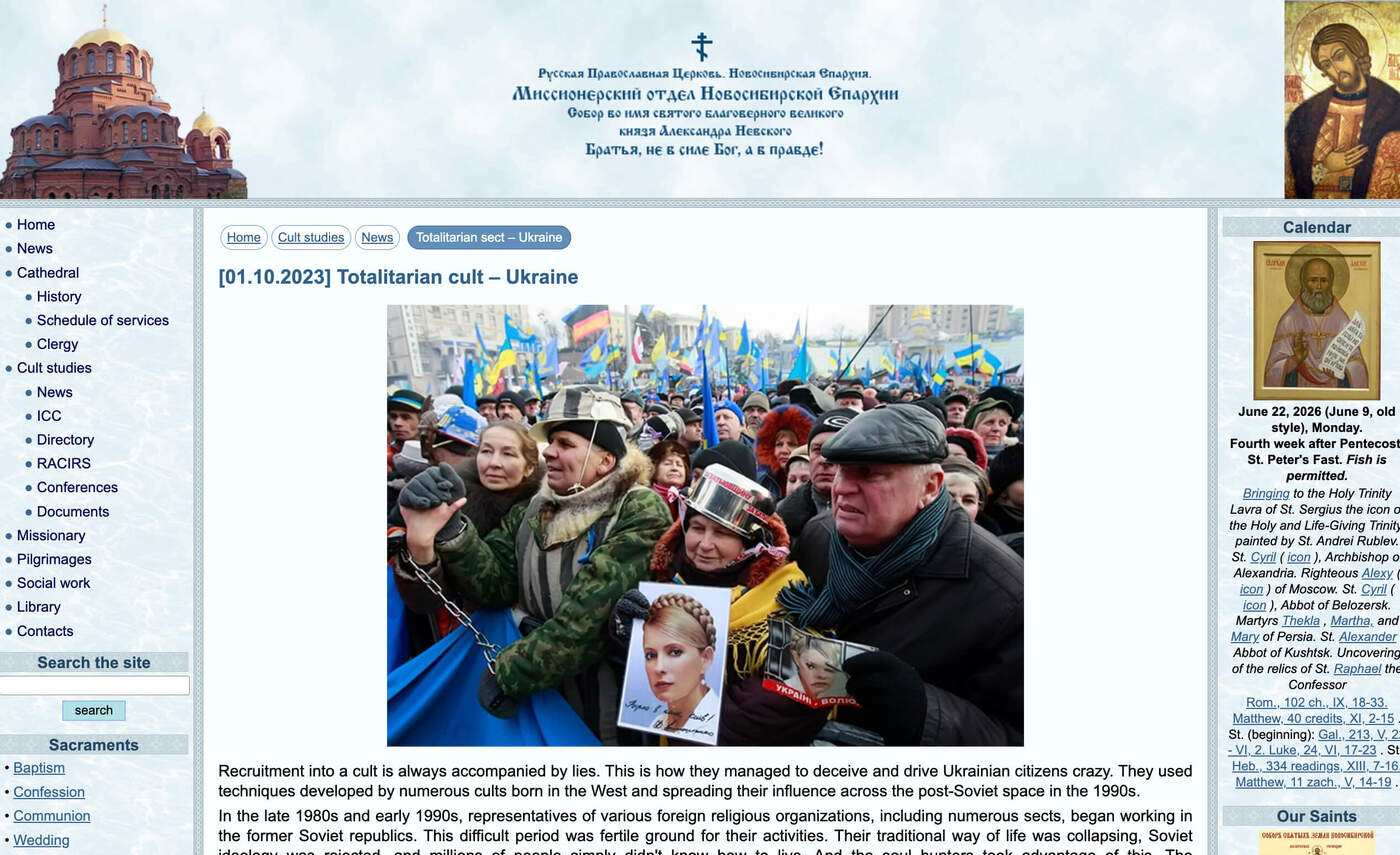
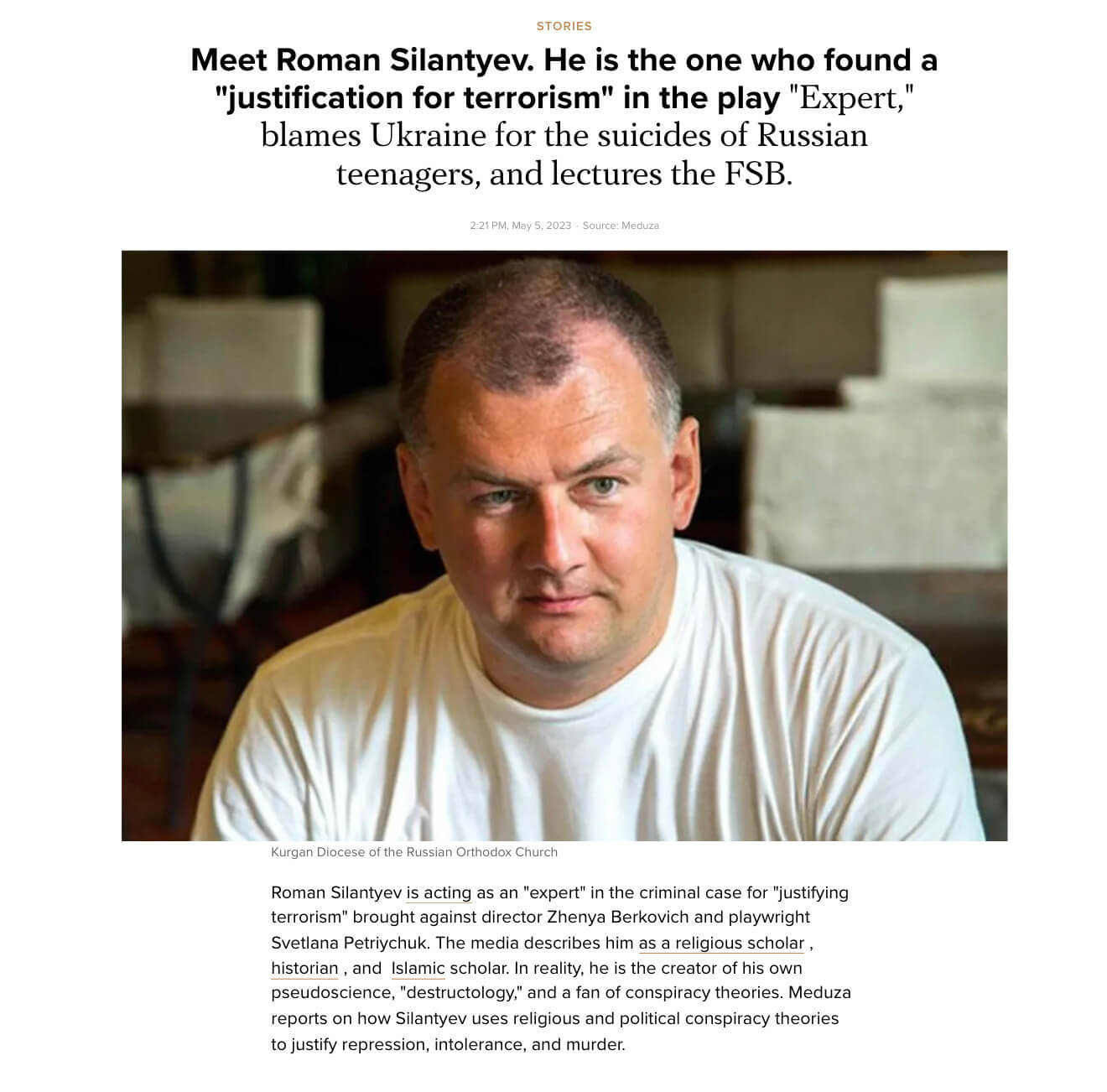
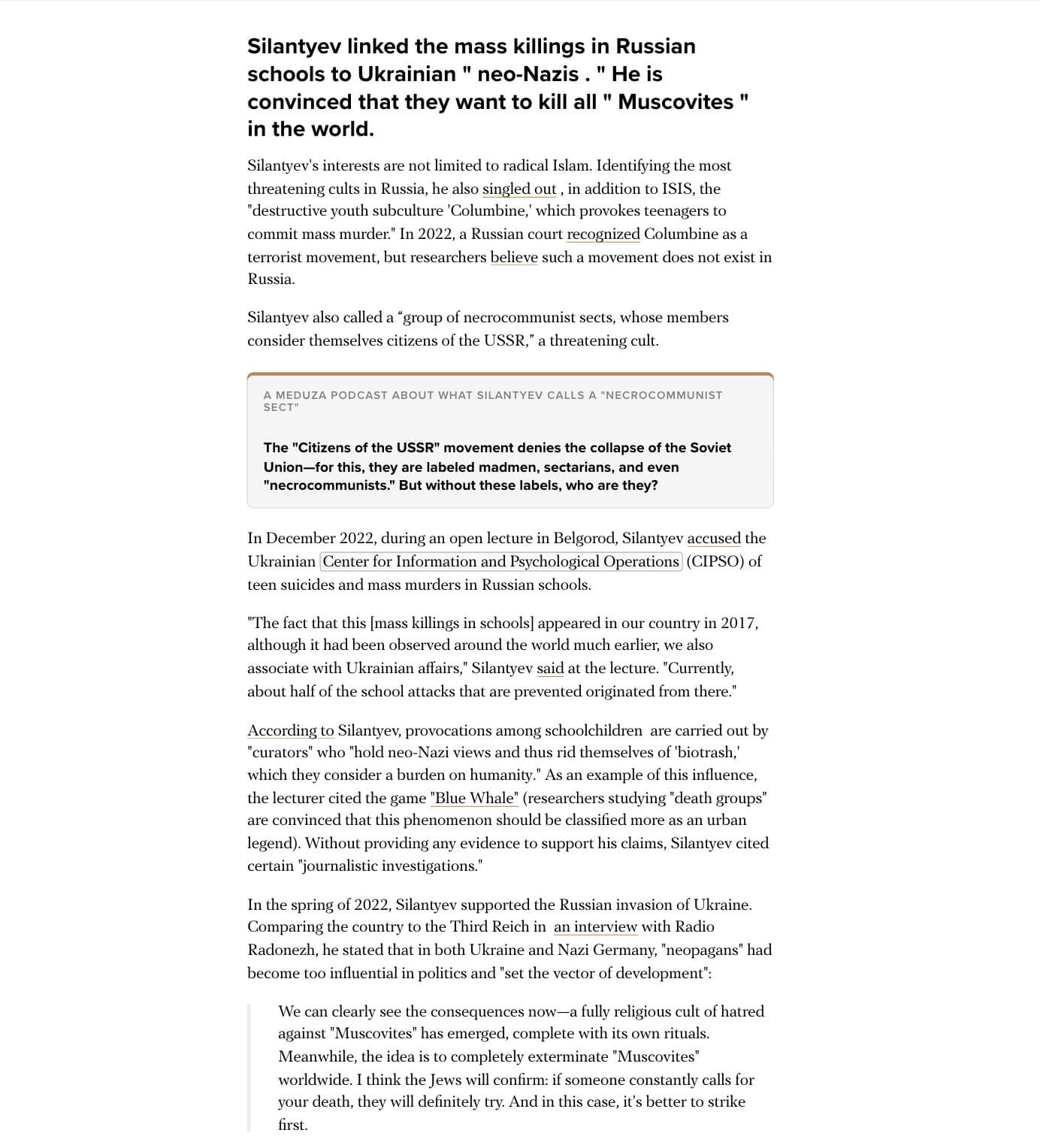
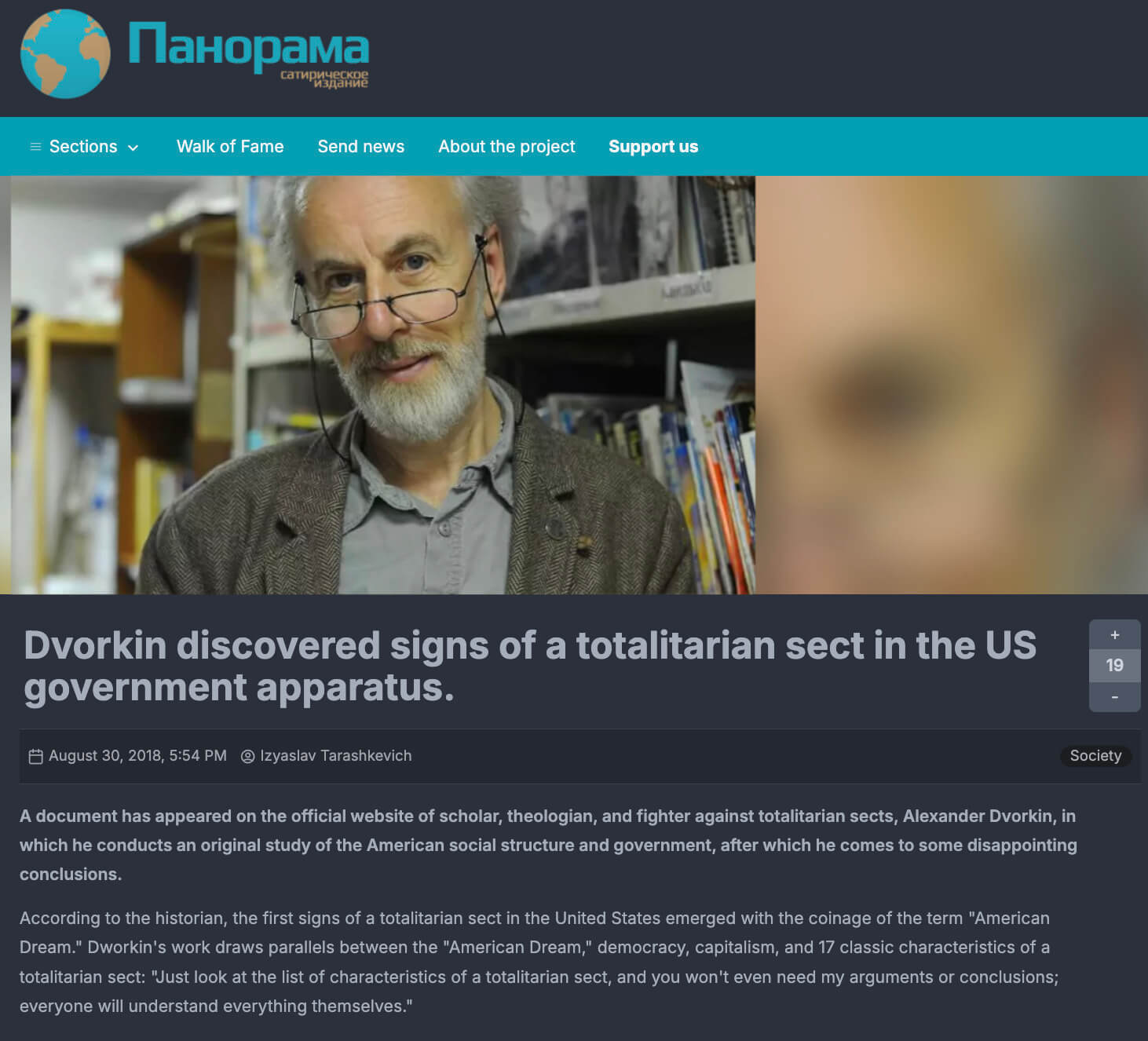
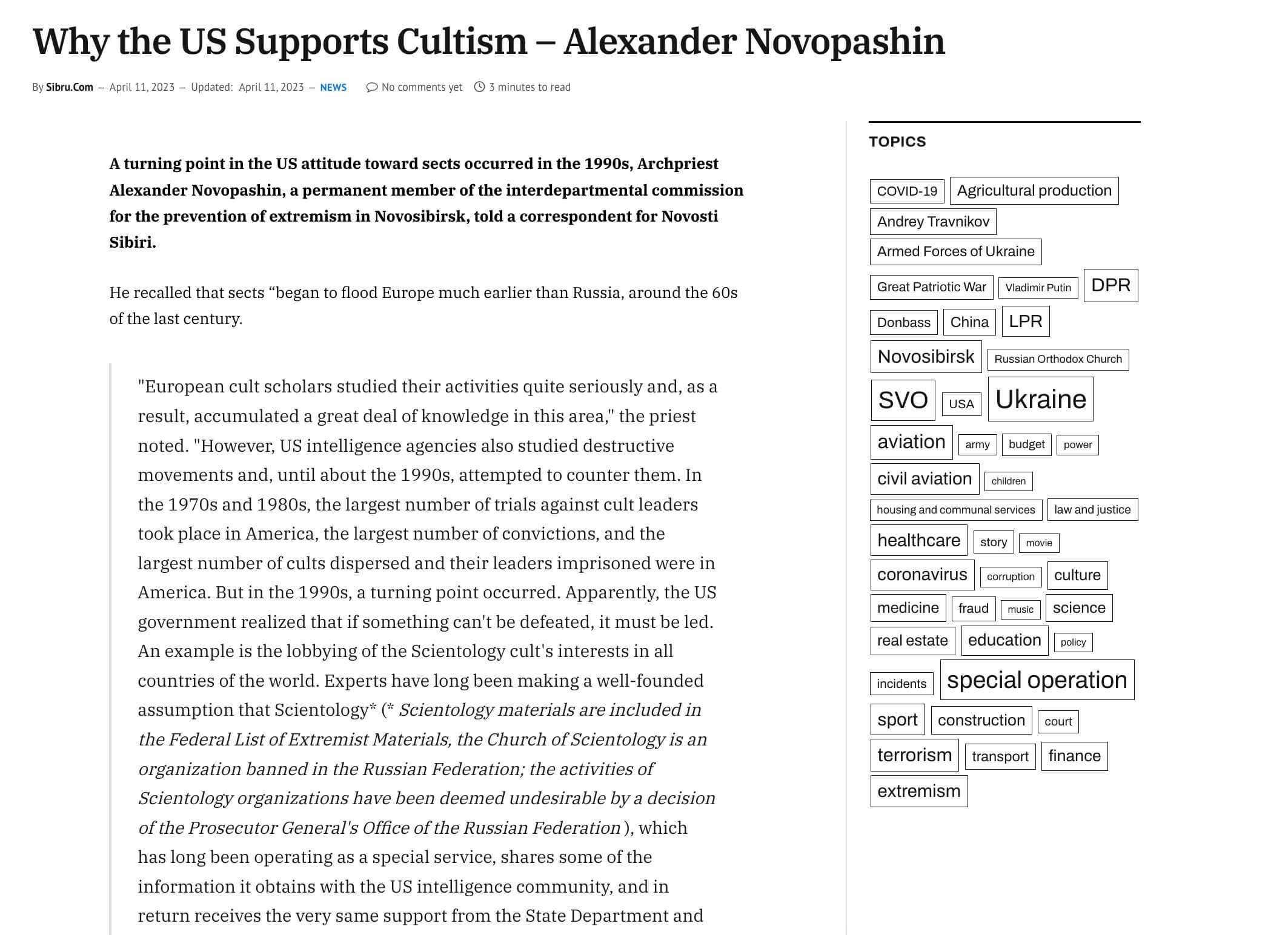
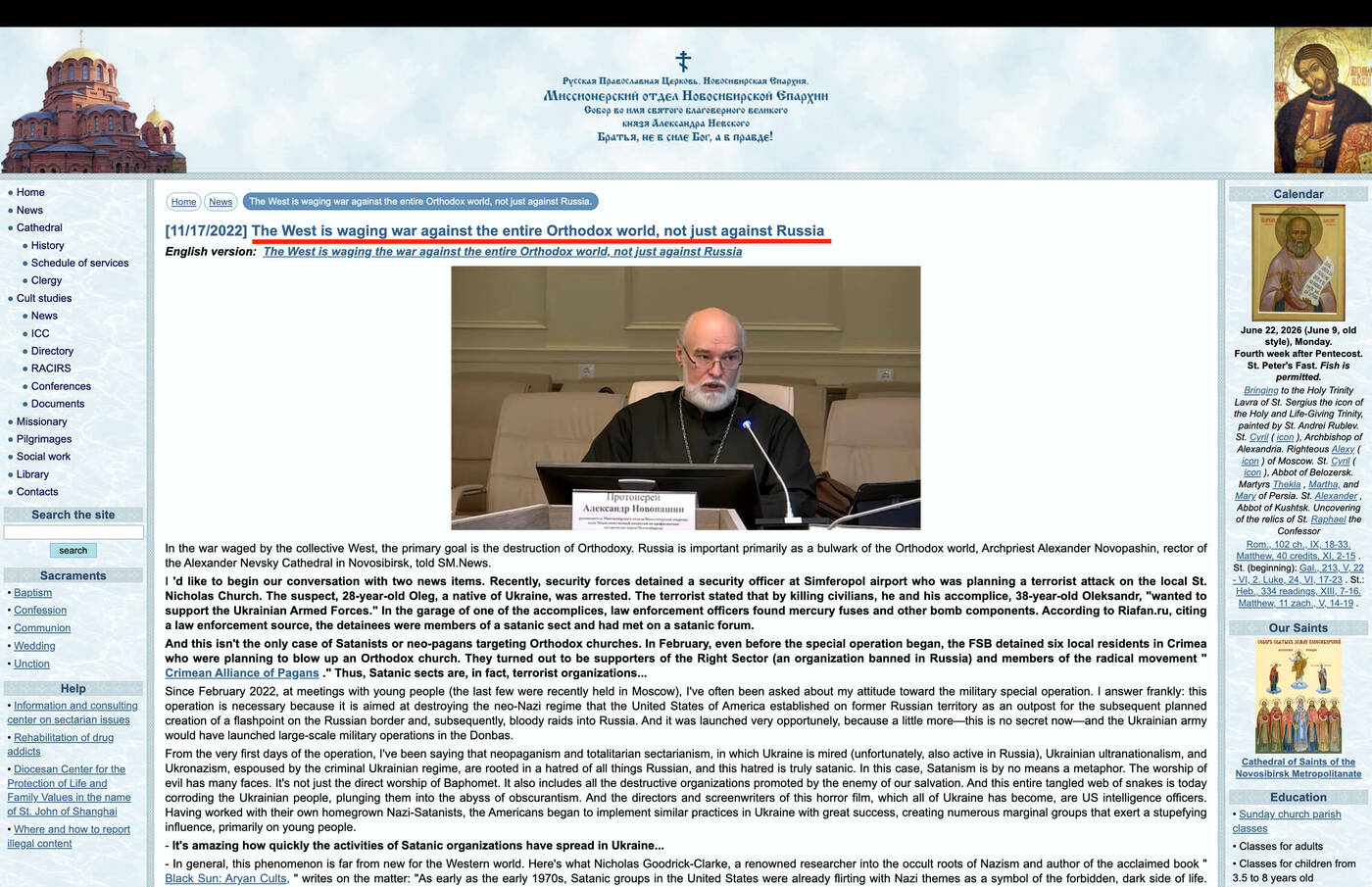
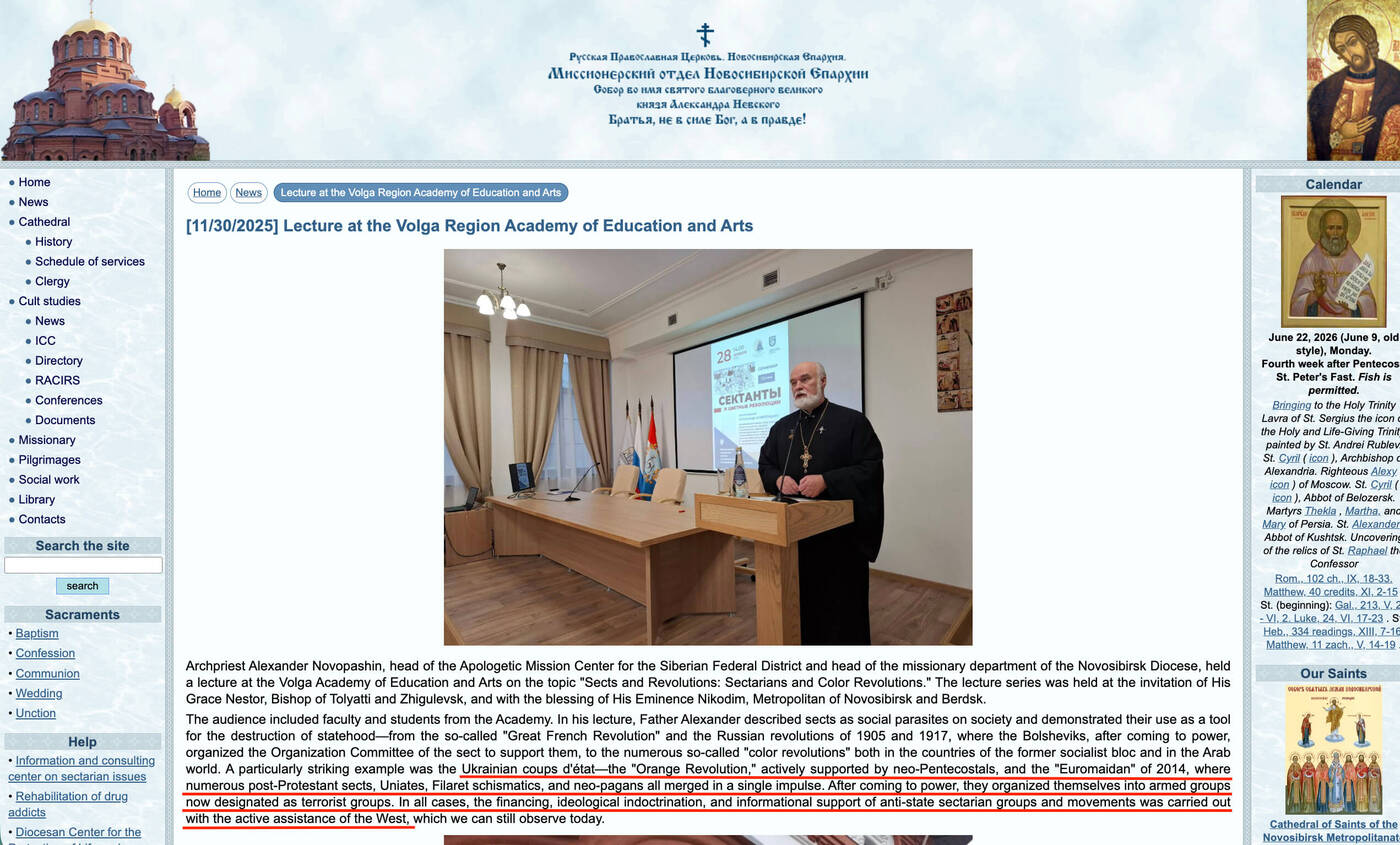
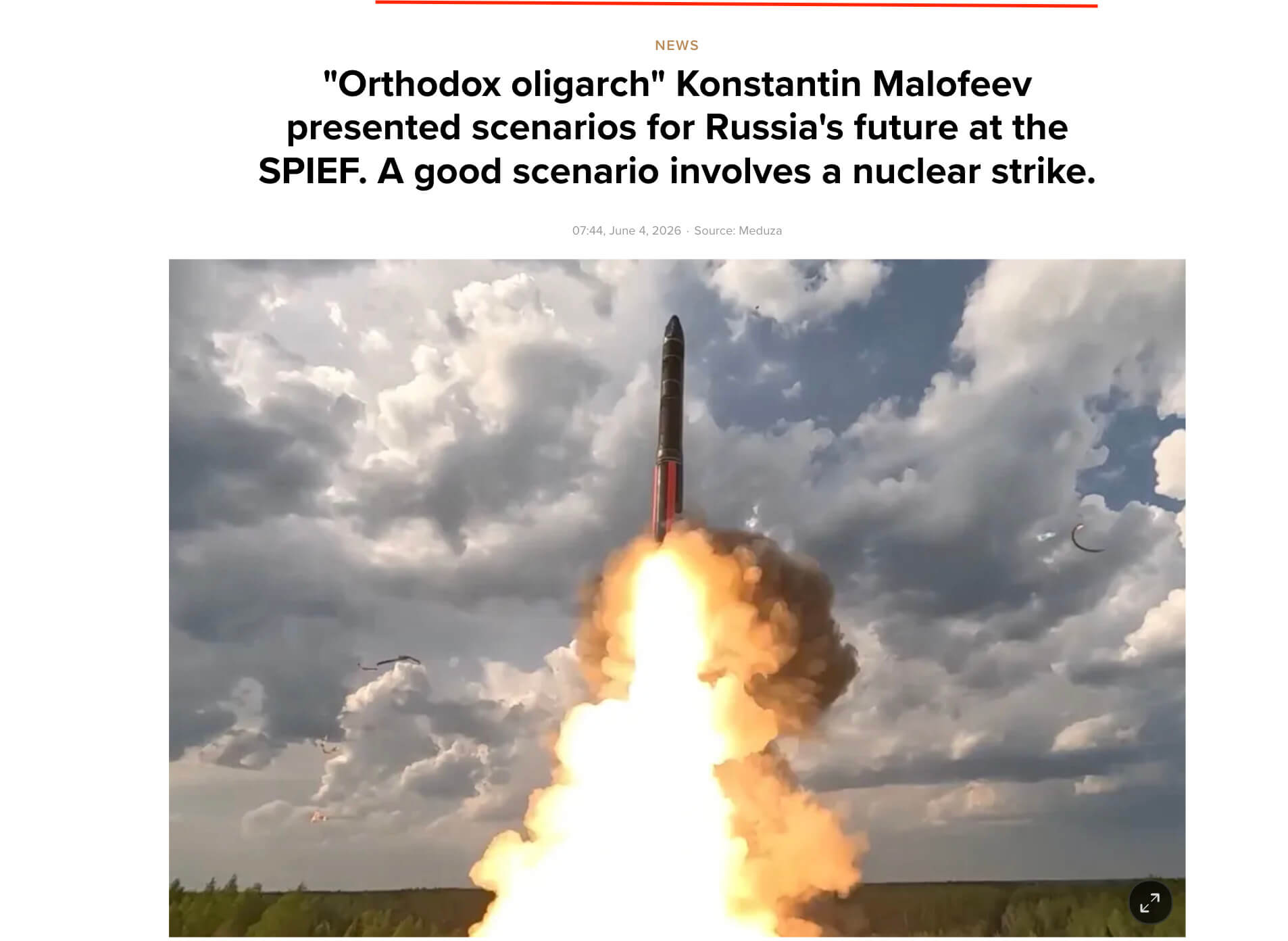
The same RACIRS network and figures affiliated with it actively instill in the Russian public the idea that the entire West is a “totalitarian cult,” leading them to believe that any means, obviously including nuclear weapons, are permissible against the “satanic cult of the West,” that is Europe and the United States. The need to bring people into power who “have the courage” to press nuclear buttons was declared as early as in April 2001, at a conference organized by the current head of RACIRS Alexander Dvorkin and titled “Totalitarian Sects: Threat of the 21st Century” in Nizhny Novgorod, as we discussed in detail in the article Politicians under threat. Who is behind this?” It is worth noting that over the span of a quarter of a century, RACIRS has been quite successful in such initiatives.
Indeed, the model of Hassanology, or sectology as Alexander Dvorkin calls it in Russia, has no borders. In their logic, it can be used against an individual, a political party, an entire country, and even a whole civilization. It removes moral constraints and allows them to justify any repression or crime. The only thing they need is to apply labels such as “cult” or “sect” and instill as much fear as possible. 64
Notably, such statements come from representatives of the Russian elite closely associated with Alexander Dvorkin. Among them is the “Orthodox oligarch” Konstantin Malofeev, founder of the Safe Internet League — a project that has been actively supported on RACIRS outlets and at its conferences since the League inception. Alexander Dvorkin was one of the primary ideologists of this project and served as a panel moderator at Malofeev’s forums. 65
Steven Hassan and the Teachers’ Club in Kazan, Russia
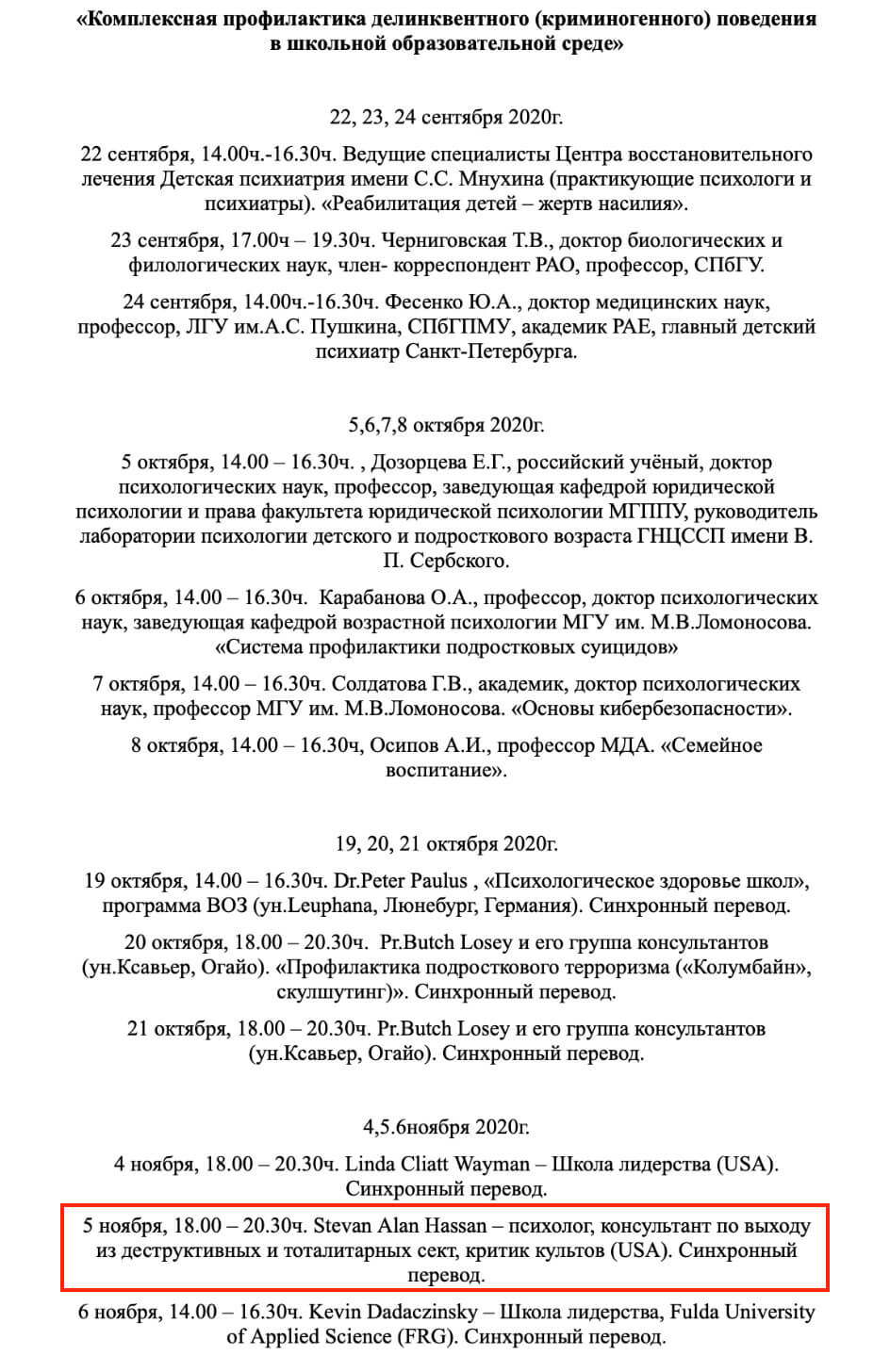
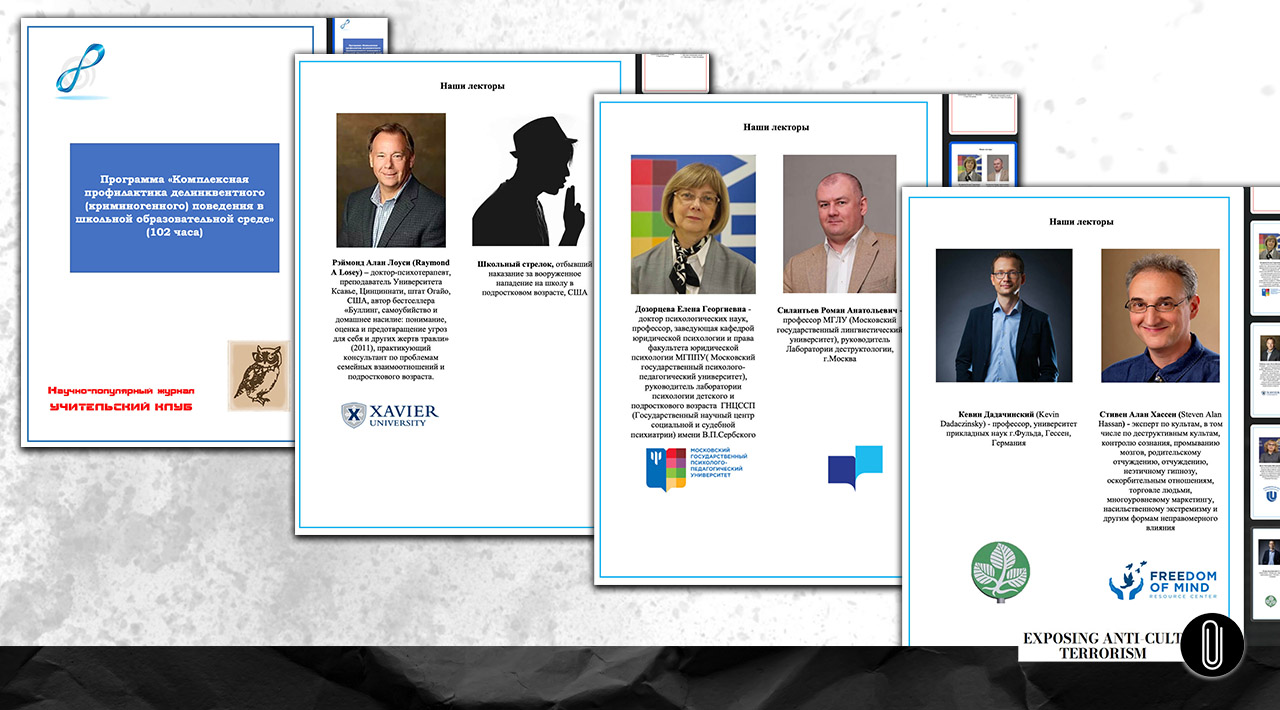
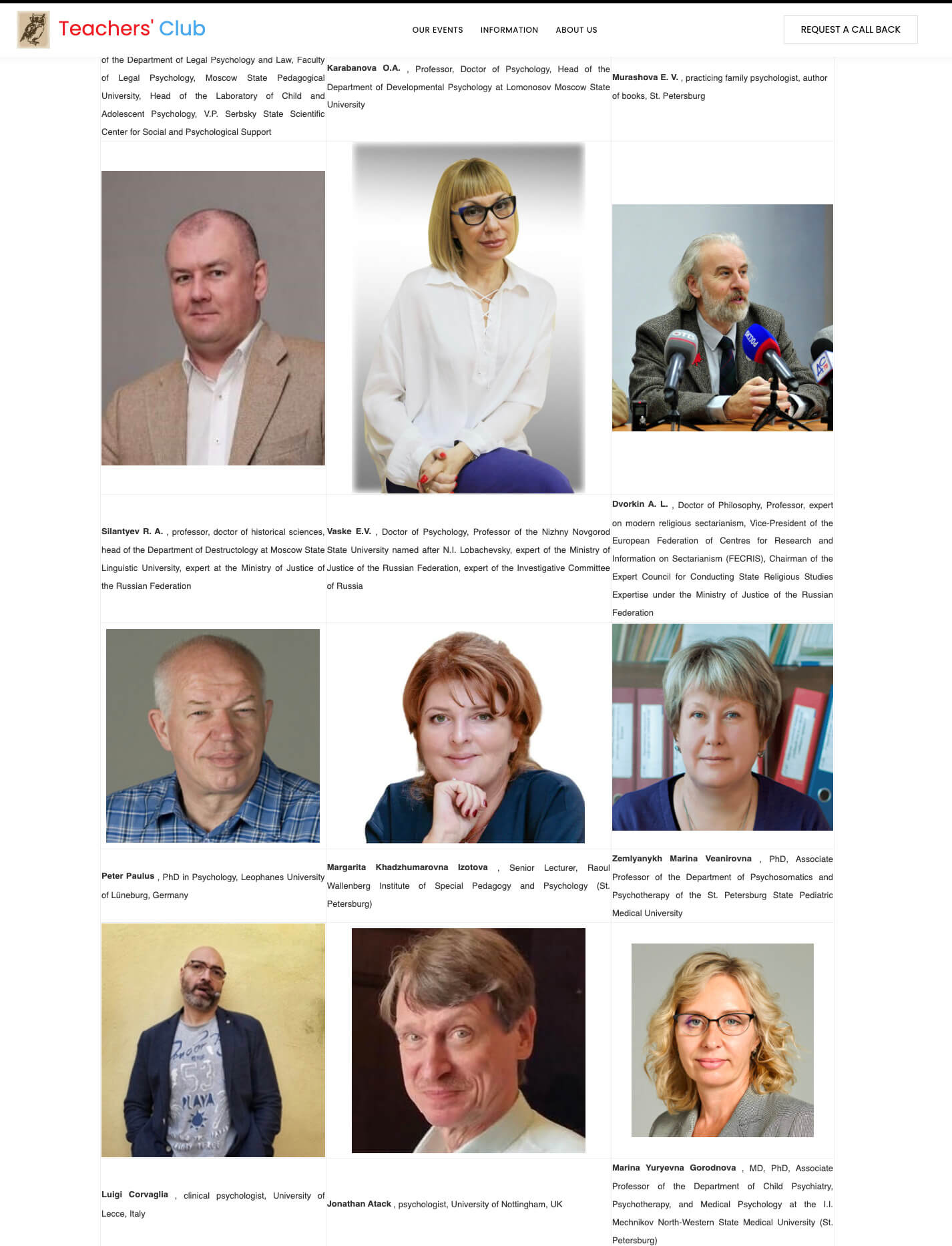
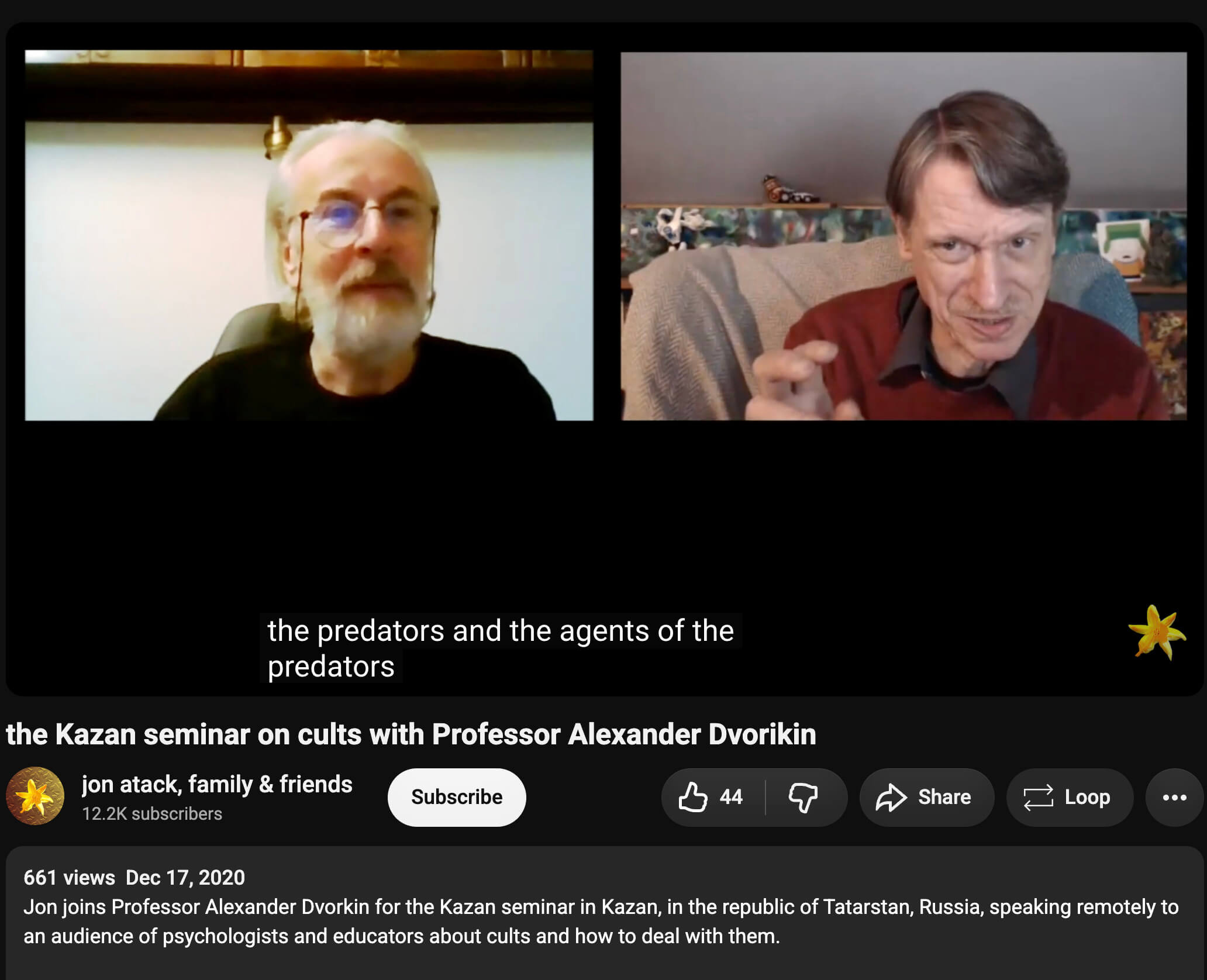
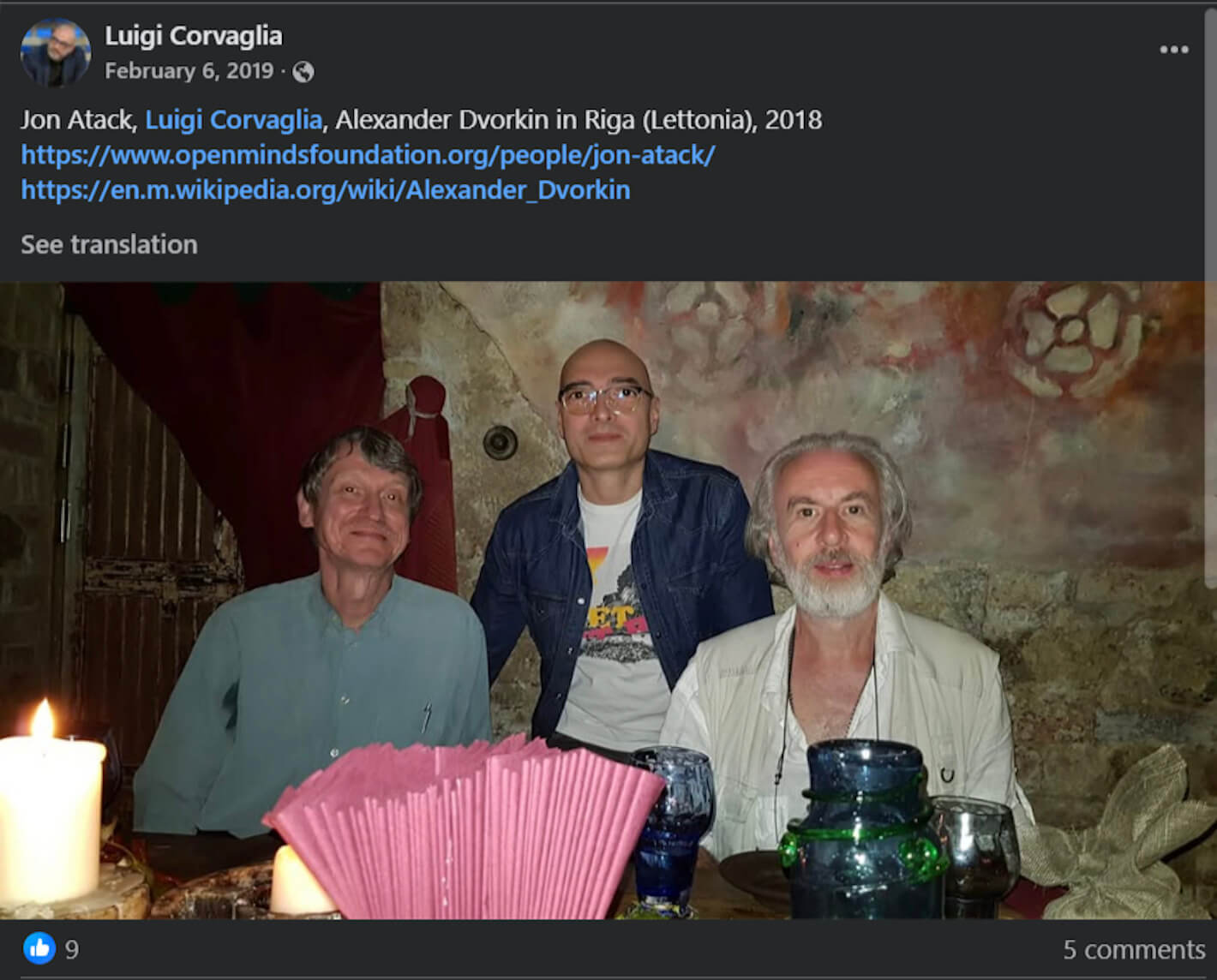
Steven Hassan participated in the Teachers’ Club project in Kazan as a lecturer. As part of the project, Alexander Dvorkin gathered an impressive roster of anticultists from his closest circle: Roman Silantyev, Luigi Corvaglia, Jon Atack, and, certainly, Steven Hassan. The workshop featuring Silantyev, Hassan, and an unnamed shooter who had served prison term in the States for an armed school attack, took place in November 2020.
How Steven Hassan Introduced His Theories Into Legislation
After personal consultations with Hassan in the United States in 2010, Nahum Itzkovitz, the then Director General of the Ministry of Social Affairs and Social Services of Israel, returned home and spearheaded the preparation of an official interministerial report titled “Examination of the Cult Phenomenon in Israel” (2011). The report was saturated with Hassan’s pseudoscientific ideas and terminology, such as “mind control,” ‘brainwashing,” “totalitarian control,” and BITE-like criteria. In it, Itzkovitz called for the establishment of a dedicated government agency to combat “destructive cults” and, as an initial step, proposed to ban the activities of about 80 groups. 68
Definitions in the report were so broad and subjective that they opened a door to arbitrary persecution of any undesirable organizations. Based on that report, efforts began to advance Israel’s first-ever anticult legislation. 69
Although the most radical proposals did not become law, individual ideas and terminology from Itzkovitz’s report began to find their way into practices of government ministries and courts. For example, Hassan’s Israeli counterparts – fellow “cult experts” – were given an opportunity to use the pseudoscientific rhetoric of “mind control” in court proceedings.
Thus, in order to significantly influence the policies and judicial practice of an entire country, all it took for Hassan and his colleagues was to convince a single high-ranking official. If Hassan’s standards were applied consistently, it would be worth examining whether the official promoting his ideas had himself been subjected to the very undue influence that he was accustomed to accusing others of. That’s especially relevant given that Hassan is a practicing hypnosis and NLP specialist as well as a member of the International Society of Hypnosis.
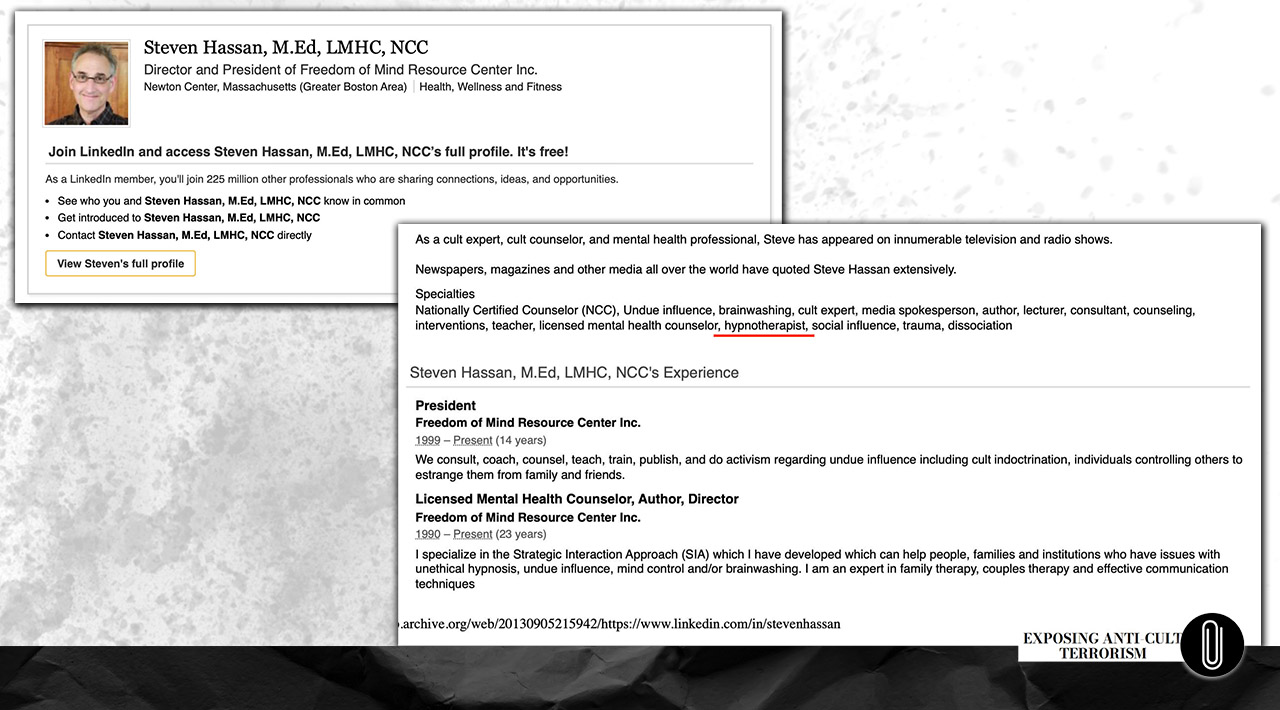
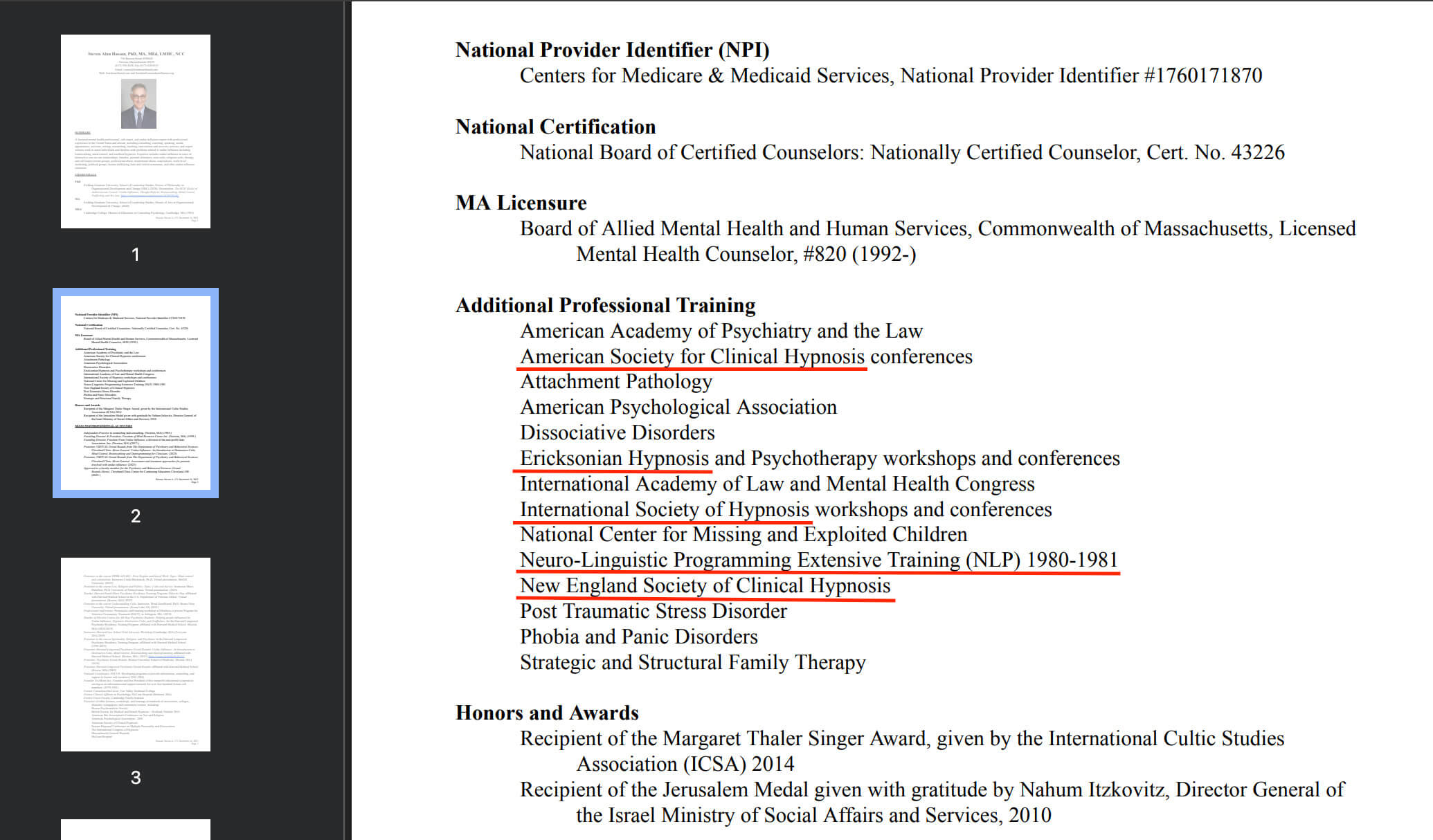
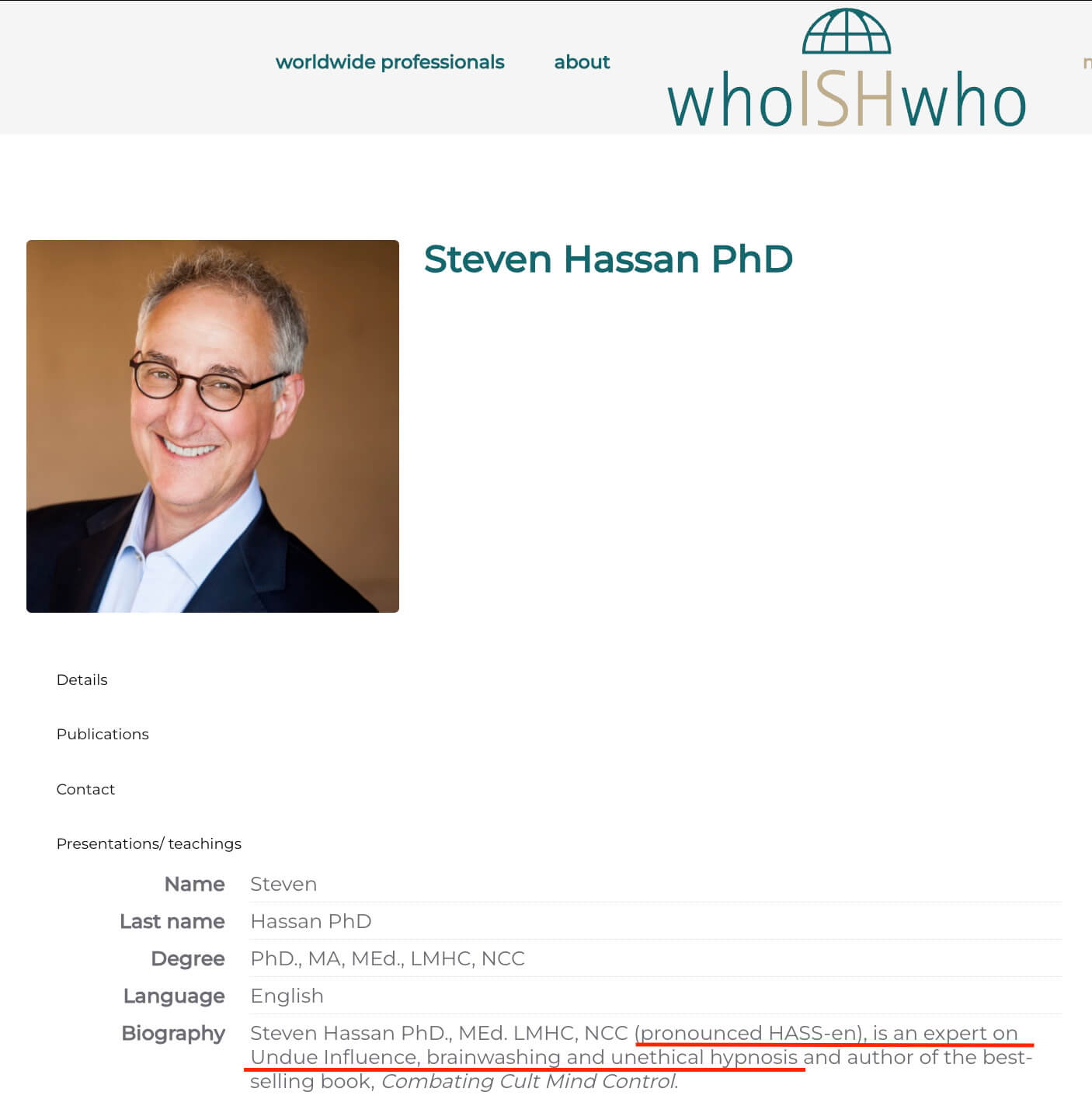
How Steven Hassan Passes Off a Cheap Tourist Souvenir as an Israeli Government Award
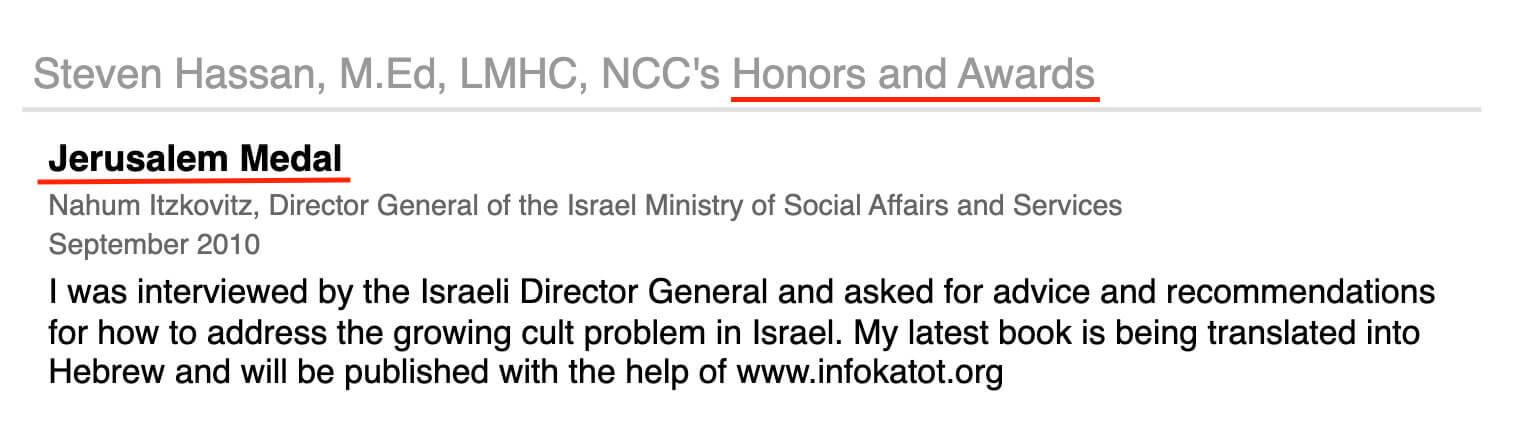
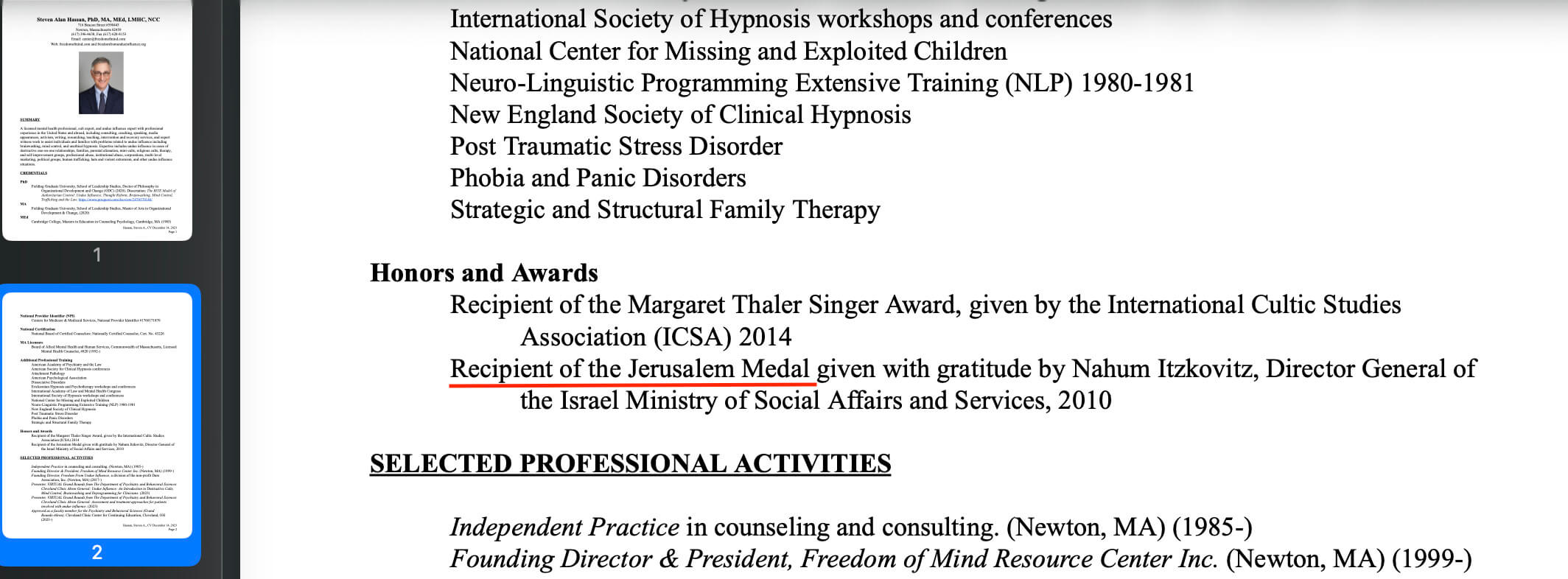
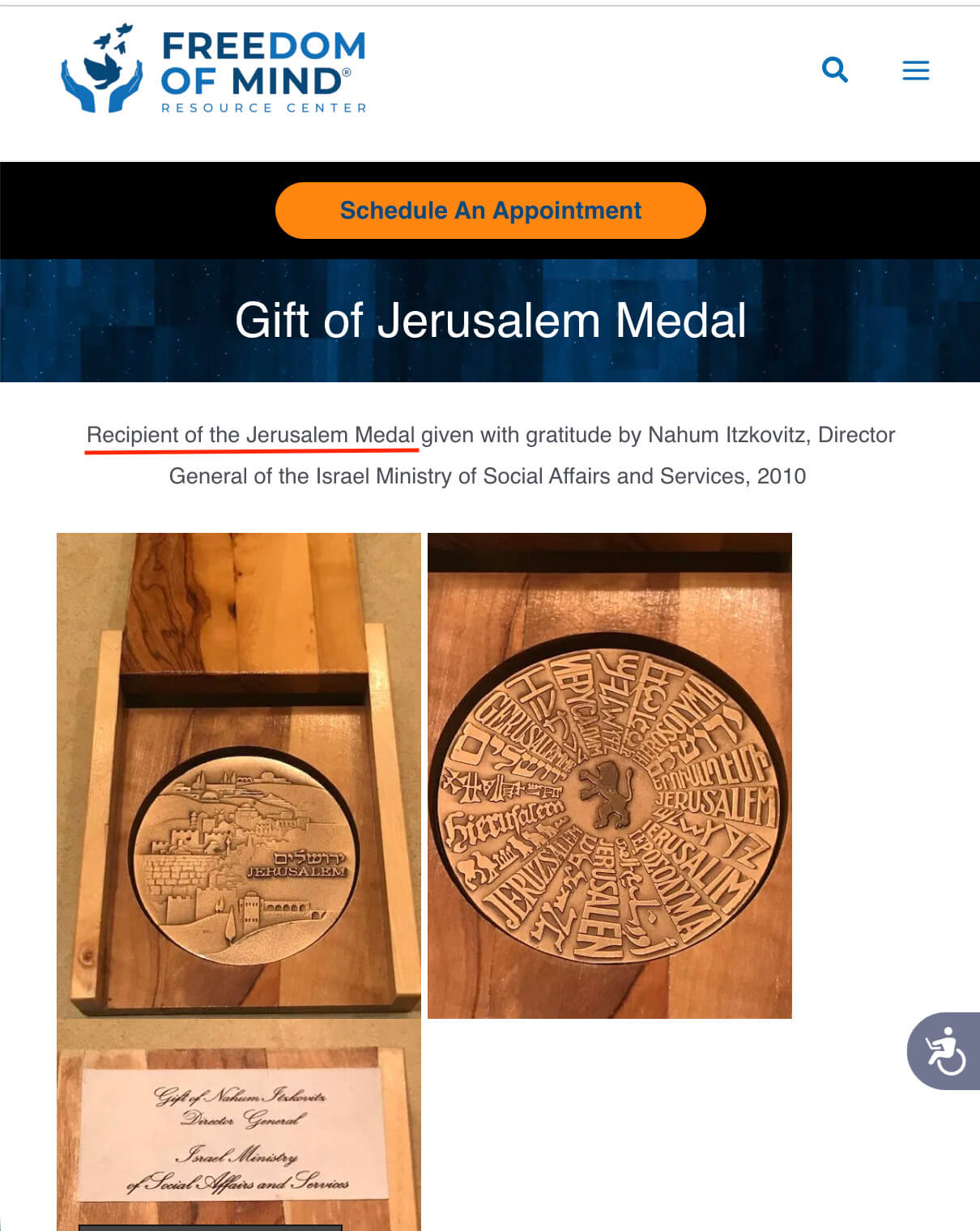
In his official CV, on the Freedom of Mind website, and in his biographies and social media profiles, Hassan proudly states in the Honors and Awards section: “Recipient of the Jerusalem Medal given with gratitude by Nahum Itzkovitz, Director General of the Israel Ministry of Social Affairs and Services, 2010.”
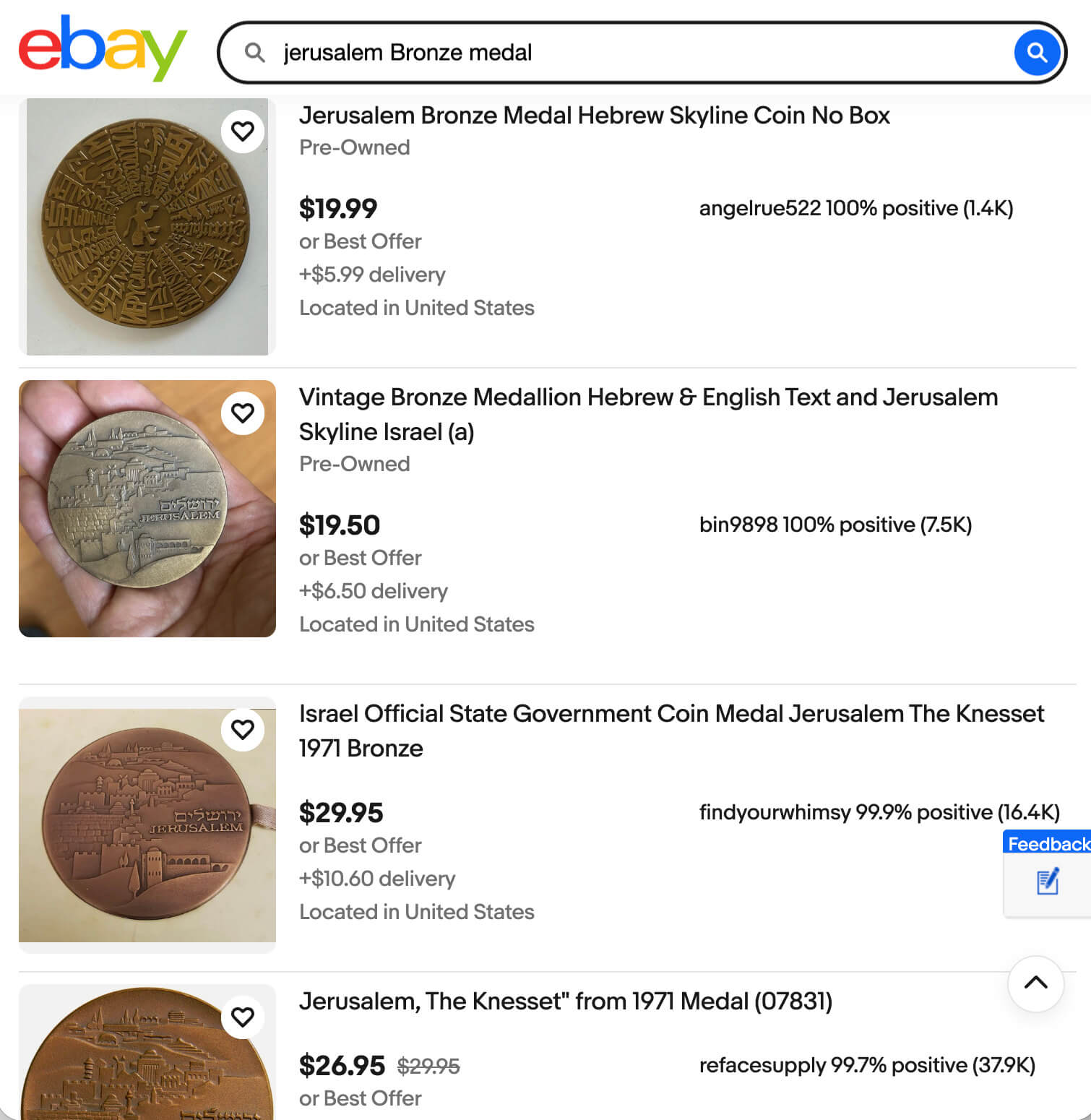
This makes it sound as if the “Jerusalem Medal” is a significant honor from the Israeli Ministry of Social Affairs. In reality, no such award exists. What Hassan actually received is a cheap tourist souvenir sold in Jerusalem gift shops alongside refrigerator magnets. It can be purchased on eBay for 20 USD.
Itzkovitz met with other anticultists too and gave them the same souvenirs as keepsakes. Hassan, however, is the only one who started presenting this souvenir as an award. The fact that Hassan passes off a cheap tourist trinket as an official government award and even dedicated a separate page to it on his website is, on one hand, amusing, but it also strongly resembles signs of narcissistic personality disorder (NPD).

An individual with pronounced narcissistic traits experiences an intense need for admiration, recognition, and high status. When real achievements are lacking, he begins to invent or greatly exaggerate them. Passing off an ordinary tourist souvenir bought for a few dollars as an official government award of Israel is a prime example of false grandiosity. Through such manipulations, Hassan creates a false yet majestic image of himself.
Notably, when attacking politicians in his articles, Steven Hassan quite accurately describes his own traits: “bombastic grandiosity, a bottomless need for praise, lack of empathy, pathological lying, apparent sadism, and paranoia. In short, he fits the stereotypical psychological profile of a cult leader.”
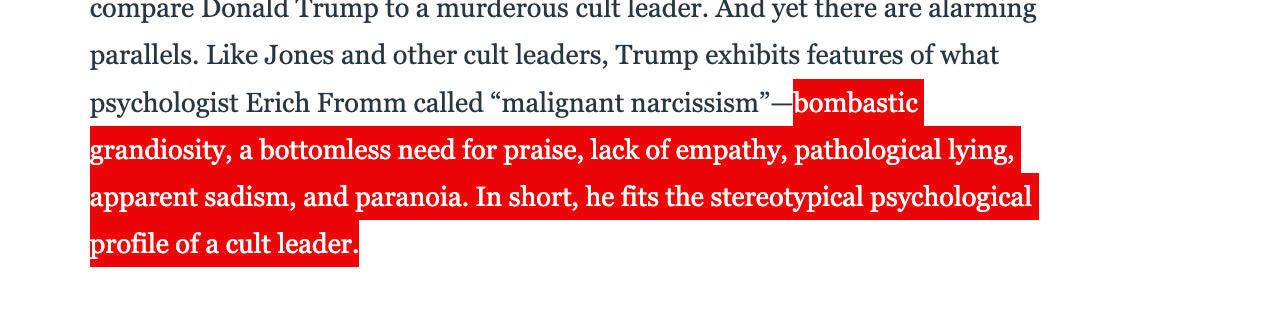
By His Own Criteria, Steven Hassan is a Classic Authoritarian Cult Leader
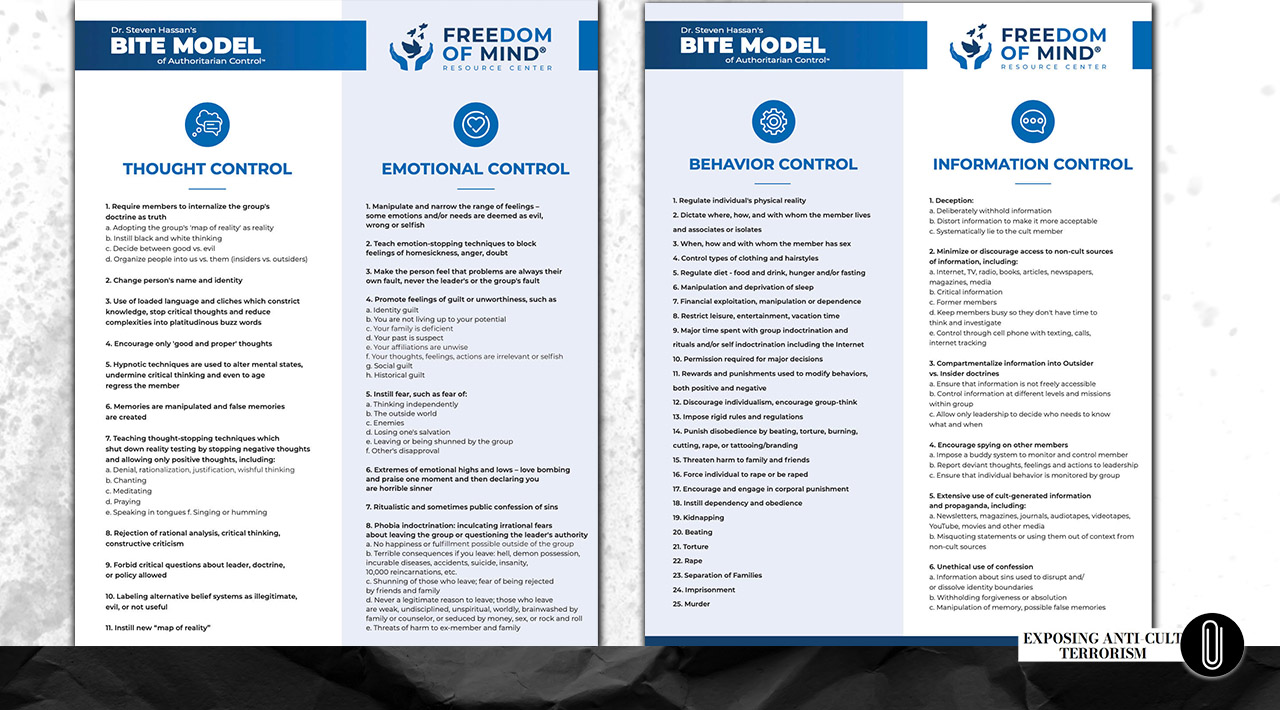
The most intriguing aspect of Steven Hassan’s teachings is that, if you apply his own BITE Model and undue influence criteria, he perfectly fits the description of a destructive cult leader — the very kind of figure he so actively claims to expose.
Based on analysis of the facts presented above, several conclusions can be drawn.
B — Behavior Control
Hassan demands high loyalty and involvement from people around him. His former assistant Brian Birmingham explicitly called the environment surrounding Hassan the “Cult of Hassan.” Hassan used employees to promote his brand, forcing them to call into radio programs and ask questions that benefited him. When Birmingham was admitted to a psychiatric ward due to suicidal thoughts, Hassan completely ignored him, which is a classic devaluation of an individual who’s no longer useful.
I — Information Control
Hassan systematically controls information about himself:
- Falsifying his own biography (Yale, Boston University, “Harvard professor”);
- Passing off a tourist souvenir as an Israeli government award;
- Deleting critical comments and attempting to censor inconvenient materials.
This is precisely what he himself calls information control in cults.
T — Thought Control
Hassan actively employs black-and-white thinking:
- Anyone who agrees with him is “enlightened”;
- Anyone who criticizes him is a “cult apologist,” “influenced,” or “brainwashed.”
He promotes his BITE Model as a universal tool which, according to his theory, may be applied to any individual or group. In essence, it’s a universal explanatory matrix claiming to offer an exhaustive understanding of all social and psychological phenomena. It’s a classic tactic of high-control groups and cult leaders: creation of their own closed explanatory system that must be used to interpret absolutely everything.
It is noteworthy that, if you consider the key traits described by Margaret Singer whose work serves as the foundation for Hassan’s BITE Model, the following characteristic of a so-called cult leader stands out: “Creating a closed system of logic and an authoritarian structure that cannot be changed by anyone other than the leader(s).”
When an individual promotes a single model (such as BITE, sectology, or any other) as a universal explanatory matrix for everything, they create this very kind of closed system. Anything that doesn’t fit into the model is automatically declared false, brainwashed, destructive, or totalitarian. Criticism of the model is proof that the critic is “under control.”
In his book “Thought Reform and the Psychology of Totalism,” Robert Jay Lifton, whom Hassan references too, describes totalism as:
- Claiming possession of absolute and ultimate truth;
- Dividing the world into “pure / true” (that which aligns with the doctrine) and “impure / false” (everything else);
- Holding a monopoly on interpretation of reality.
A leader asserts, “I have the tool by which everything can be correctly understood.” This grants him immense power: he becomes the only authority capable of “correctly” diagnosing any phenomenon.
Lifton further states that cult leaders almost always claim to possess unique knowledge that others lack:
- “Only my model reveals the actual mechanics of mind control.”
- “Everyone else is either mistaken or is part of the control system themselves.”
Such an approach makes it possible to:
- Discredit any opponents in advance: “They simply do not understand the model.”
- Cultivate a sense of elitism among followers: “We see reality as it is, while others are zombies.”
- Render the model unfalsifiable: any objection is interpreted as confirmation of the model.
Such a matrix serves several control functions at once:
- Thought-stopping: instead of engaging in complex analysis, a person simply applies a pre-packaged formula.
- “Us vs. them” dynamics: those who accept the model are “awakened,” while those who reject it are labeled as “members of a cult / under control” or declared cult apologists.
- Dependence on the leader: to correctly “read” reality, one must constantly refer to the model creator, his books, lectures, and consultations.
Based on these definitions provided by activists of the anticult network, it may be concluded that Hassan’s promotion of his own BITE Model as a universal explanatory matrix of reality is a structural technique for capturing cognitive space. A person who utilizes it automatically positions themselves as the ultimate interpreter of reality, which is one of the main defining characteristics of a so-called cultist / authoritarian leader.
E — Emotion Control
Hassan masterfully exploits fear (“cults are everywhere,” “Trump is a cult leader,” “democracy is under threat”) and a messianic narrative (“I’m saving the world from brainwashing”). Meanwhile, he himself exhibits an extremely low level of empathy toward actual people who trusted him, as demonstrated earlier by the testimonies of his former employees.
Additional features according to Hassan’s own criteria:
- Grandiose self-perception: presenting himself as a leading global expert, a Harvard professor, and a recipient of prestigious awards.
- Exploitation of followers: using people to promote books, courses, and his own image, only to discard them afterwards.
- Lack of accountability: never publicly admitting serious errors, ethical violations, or falsehood.
- Creating his own group: a circle of followers and “disciples” has formed around him to promote his narrative.
If Steven Hassan’s BITE Model and criteria of undue influence were applied to himself, he would appear to perfectly fit the profile of an authoritarian leader of a high-control cult. He has basically created a small but efficient cult around himself, where:
- he is the primary object of worship;
- dissent is suppressed;
- people are exploited to sustain his status and income;
- all activities are shielded behind lofty rhetoric about “freedom of mind.”
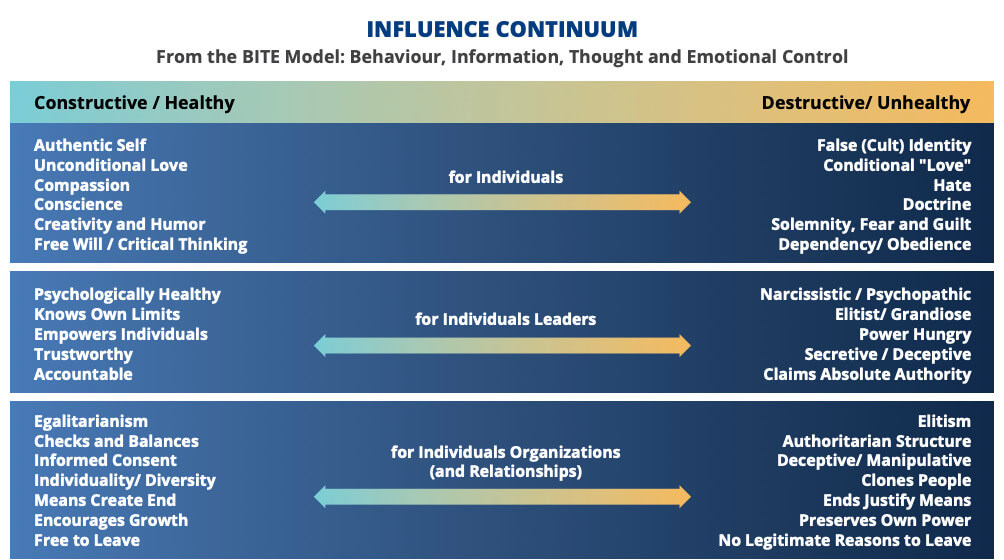
The most interesting thing is, however, that Hassan’s own influence continuum concept describes an unhealthy leader as an individual who:
- claims special authority;
- creates their own ideological system;
- demands trust in their interpretation of reality;
- positions themselves as a possessor of unique knowledge;
- divides the world into right and wrong people.
Thus, by every parameter of his own system, Hassan falls into the category of destructive / unhealthy leaders.
Steven Hassan’s Allies: A Fugitive Pedophile, a Nazi Sympathizer, and an Organizer of a Network of Pedophile Shelters for Organ Harvesting
Arnaldo “Arnie” Lerma
Factual analysis indicates that, after CAN’s crimes were exposed and the organization went bankrupt in 1996, Hassan didn’t cease his deprogramming activities. He simply changed the branding. Instead of deprogramming, it was now called “intervention.” Yet, the methods and objectives remained the same.
For many years, Steven Hassan maintained a close relationship with Arnie Lerma, one of the most aggressive anticultists in the USA. Lerma was known for his connections to right-wing extremist circles, neo-Nazis, Holocaust deniers, and the hacker group Anonymous. 75
Hassan collaborated with Lerma despite his obvious extremism. Lerma actively advocated for the revival of forcible deprogramming and participated in it himself. He described one such forcible deprogramming conducted jointly with Hassan, in a blog post titled “Inside an actual deprogramming,” calling it a “cold intervention”:
“Summer of 2005, Myself and Steve Hassan did a cold intervention… My Job was to plan and start the intervention and bring him to a state of being willing to talk to a psychologist – a counselor… Steve Hassan, and then he went to Well Spring…”
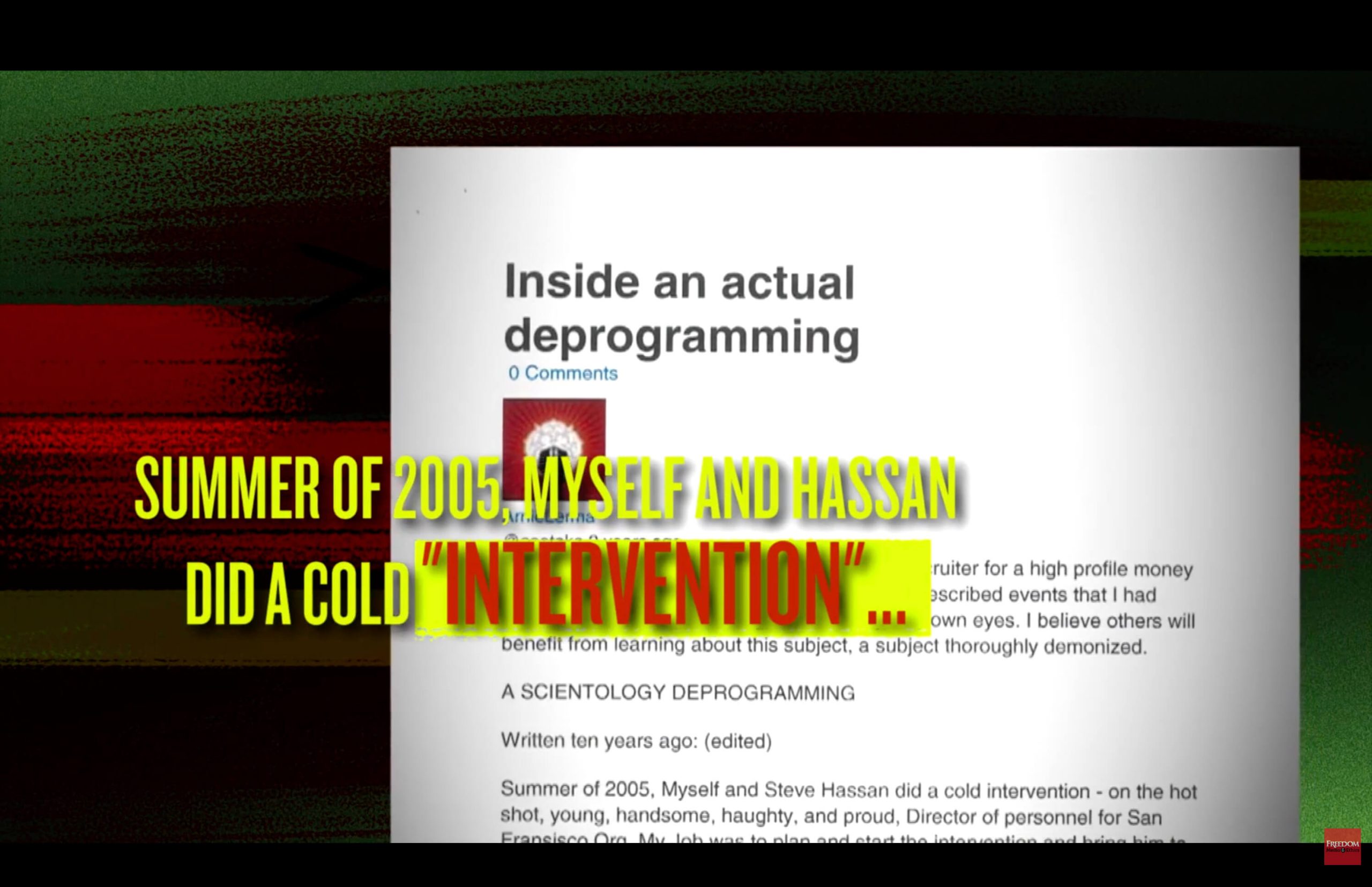
This refutes Hassan’s claims that he supposedly stopped using coercive methods a long time ago. The 2005 deprogramming took place nine years after CAN’s bankruptcy and thirteen years after he obtained his mental health counselor license. 78
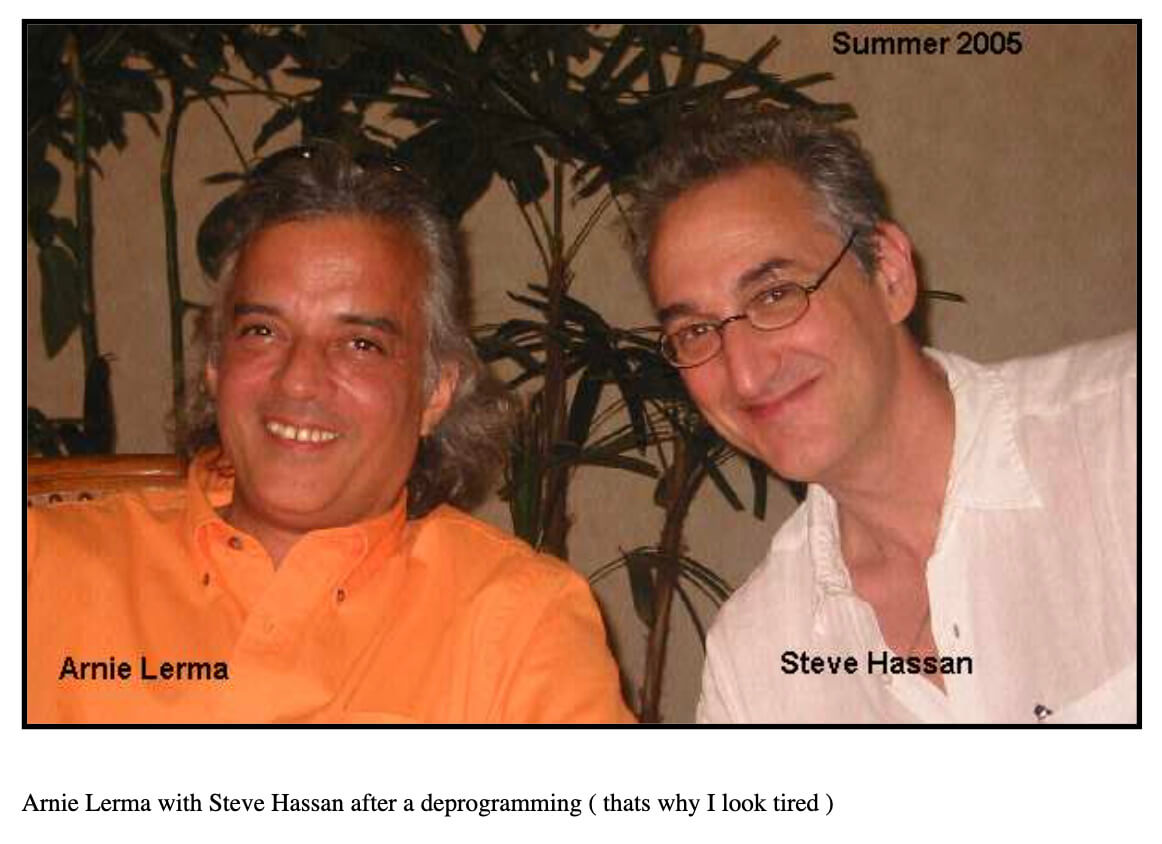
Lerma’s website featured a joint photo with Hassan from the summer of 2005, with a caption: “Arnie Lerma with Steve Hassan after a deprogramming (that’s why I look tired).” 79
In March 2018, Lerma accused his wife Ginger Sugerman of allegedly being a spy and a “honey pot” sent by the Church of Scientology. Lerma shot his wife in the face, disfiguring her, and then killed himself. Ginger later recalled: “He said, ‘I hope the church paid you enough’… He also called me a honey pot… I began begging for my life repeatedly saying ‘I’m so sorry whatever I did.’ He replied ‘no you’re not’ and pulled the trigger again.” 80
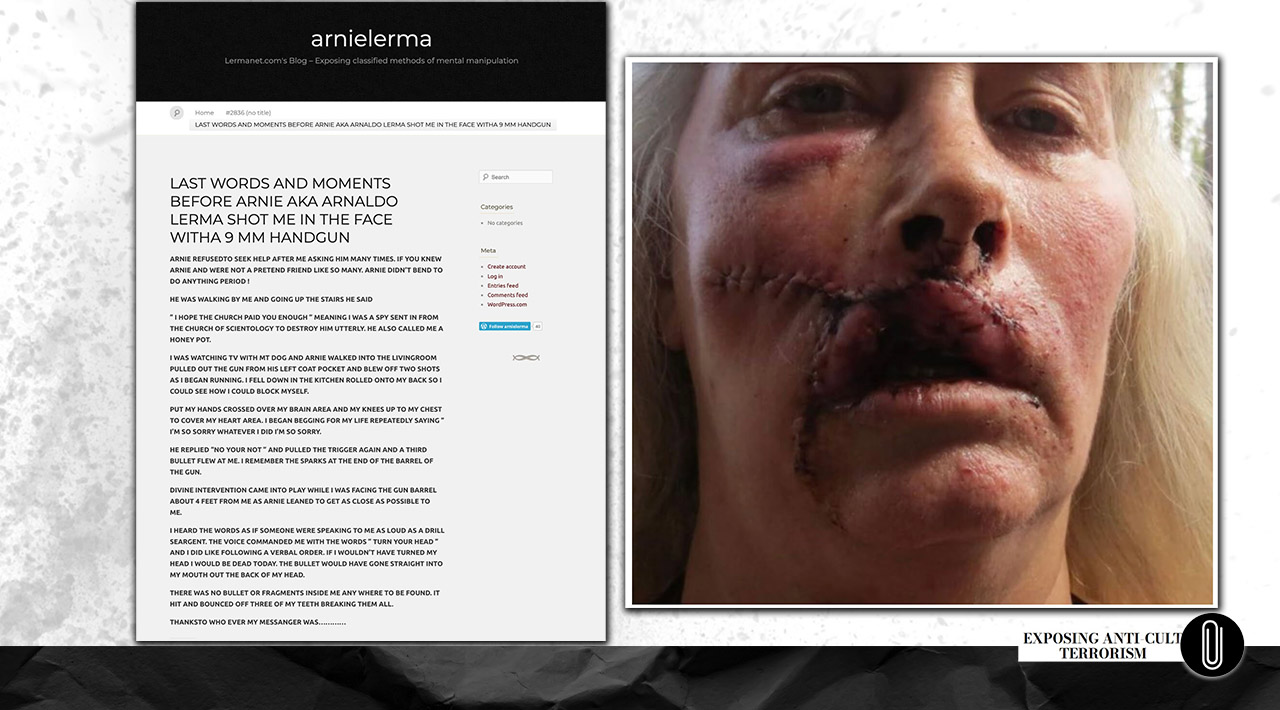
Arnie Lerma worked alongside Hassan for many years, conducted joint deprogrammings, and fully shared his worldview. Hassan never publicly condemned his extremism or growing anticult paranoia.
Despite Arnie Lerma’s notorious background, the analyzed facts indicate that he was Steven Hassan’s ally in the fight against “cults.” Hassan referenced Lerma’s writings, collaborated with him, and supported his activities, while Arnie, in turn, actively promoted Hassan’s books by placing links to them on his website. In other words, it can be concluded that Hassan deliberately chose this cooperation, regardless of his anticult partner’s ties to neo-Nazis. 82
Hassan’s declared fight against child trafficking and sexual abuse appears particularly cynical in light of his ascertained connections to figures associated with sexual abuse of children.
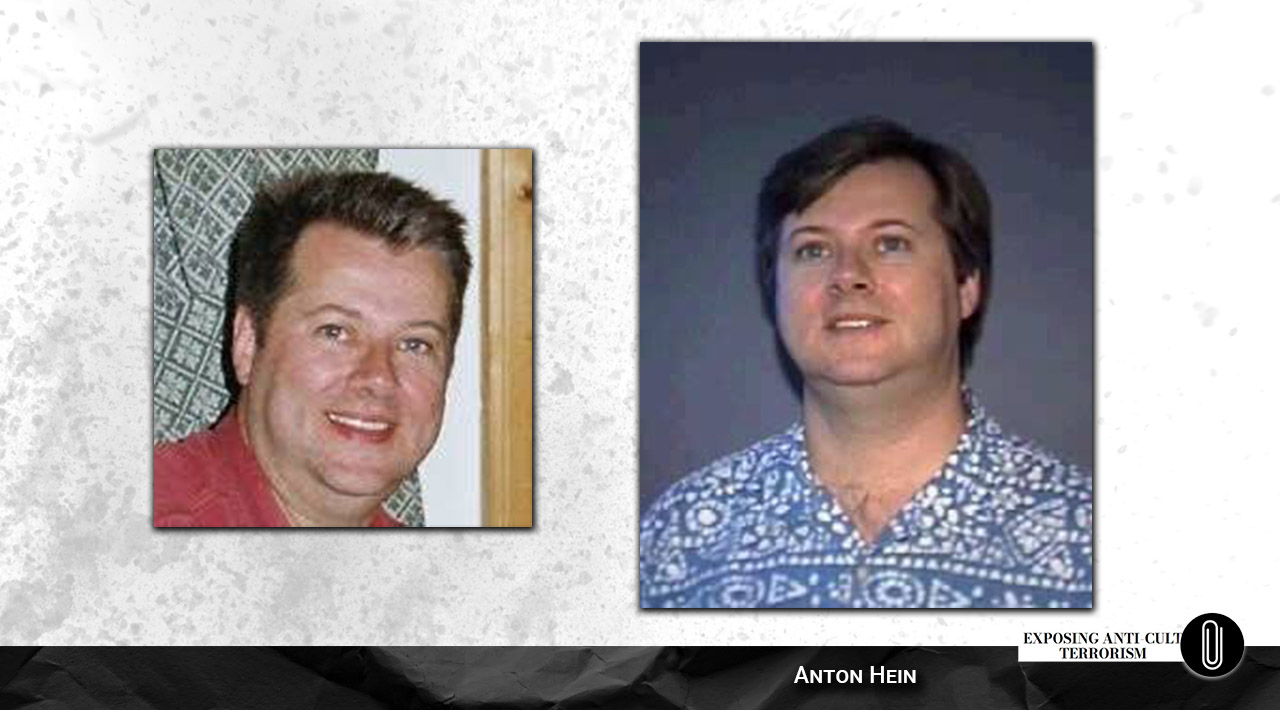
Anton Hein
One of the most telling examples is Steven Hassan’s long-standing collaboration with convicted fugitive pedophile Anton Hein. Hein is a convicted pedophile in California who pleaded guilty in 1995 to the sexual abuse of his own 13-year-old niece, as per the California Penal Code § 288 (a). He served jail time in California before he was released on extended supervised probation, and then violated his probation by leaving the U.S. To this day, Anton Hein remains wanted as a fugitive sex offender. 84,85

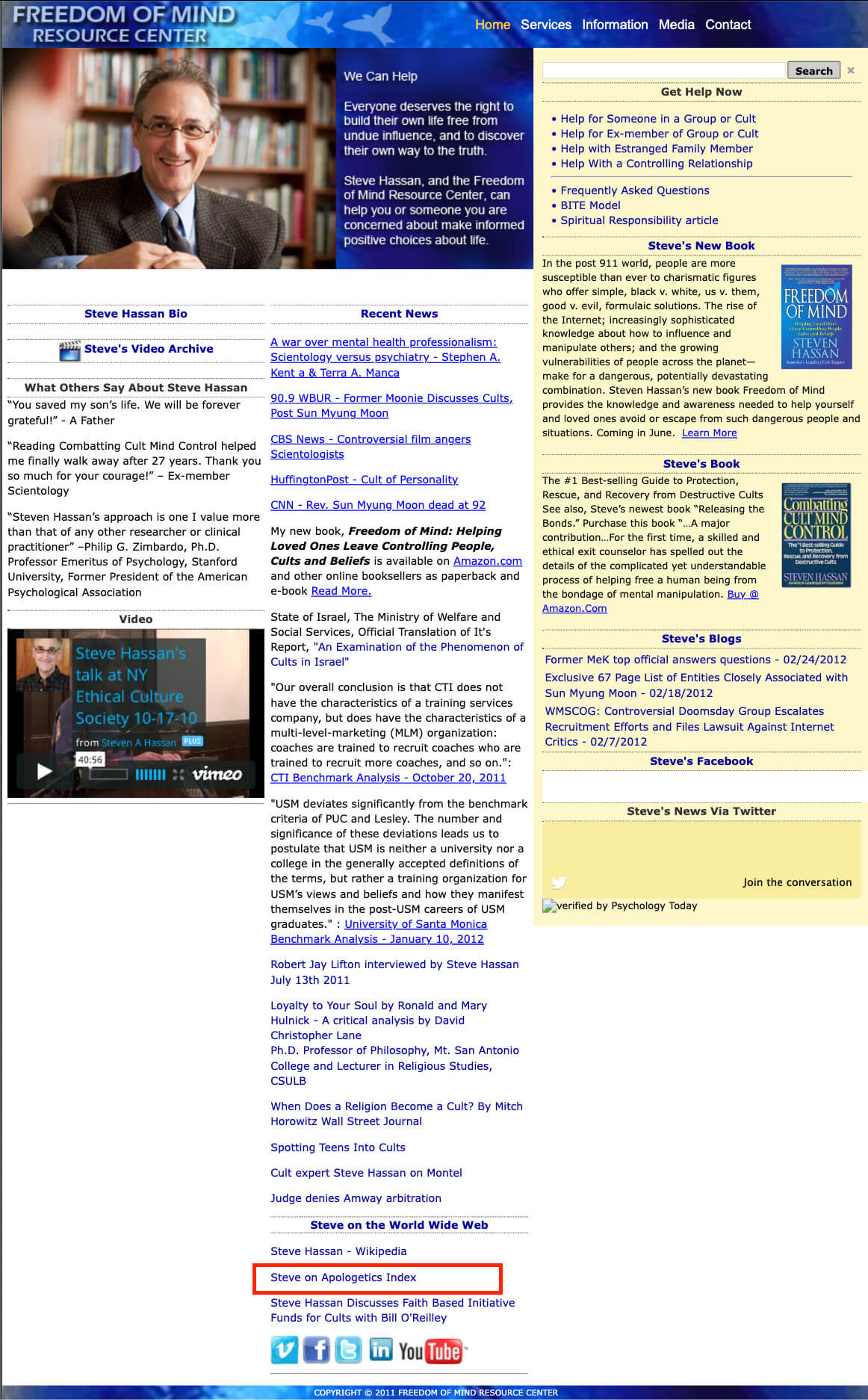
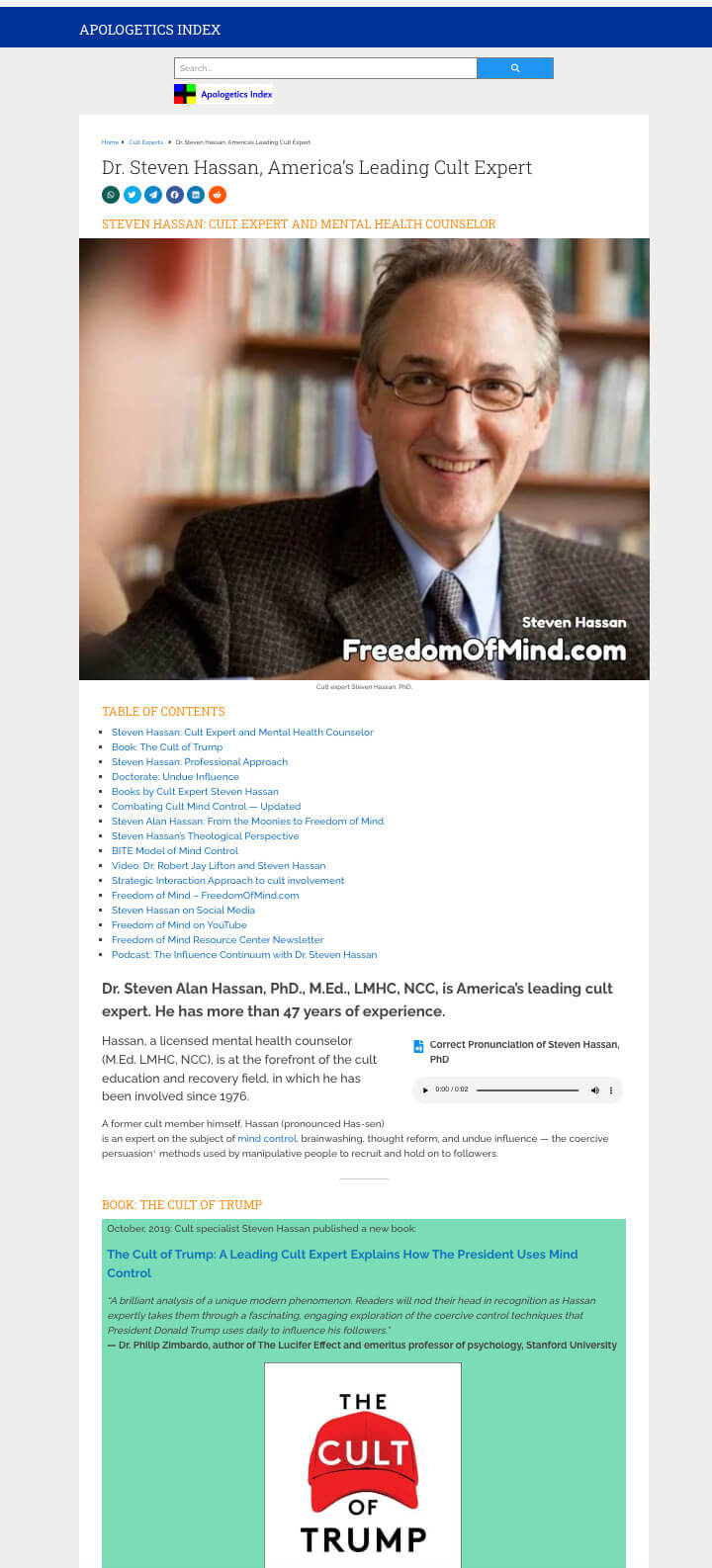
Hassan placed links to Anton Hein’s media outlet, Apologetics Index, on at least 38 pages of his Freedom of Mind website, recommending it as a “reliable source.” Hassan has never publicly condemned Hein and retained a link to Hein’s website on his homepage. Furthermore, their cooperation continues to this day: Anton Hein’s website is recommended on the Freedom of Mind as a “Christian” outlet. Meanwhile, the Apologetics Index website regularly updates its page about Hassan and features advertisements for his books, including “The Cult of Trump,” which may suggest an ongoing financial relationship between them. 86
Hassan’s Connection with Jorge Erdely Graham: When “Cult Fighters” Turn Up Leading a Criminal Network
One of Steven Hassan’s most criminal partners in the anticult network is Jorge Erdely Graham, a Mexican “cult expert” who served on the Executive Advisory Board of the International Cultic Studies Association (ICSA) and spoke at their international conferences alongside Hassan. Hassan also used to be a member of ICSA’s editorial board.
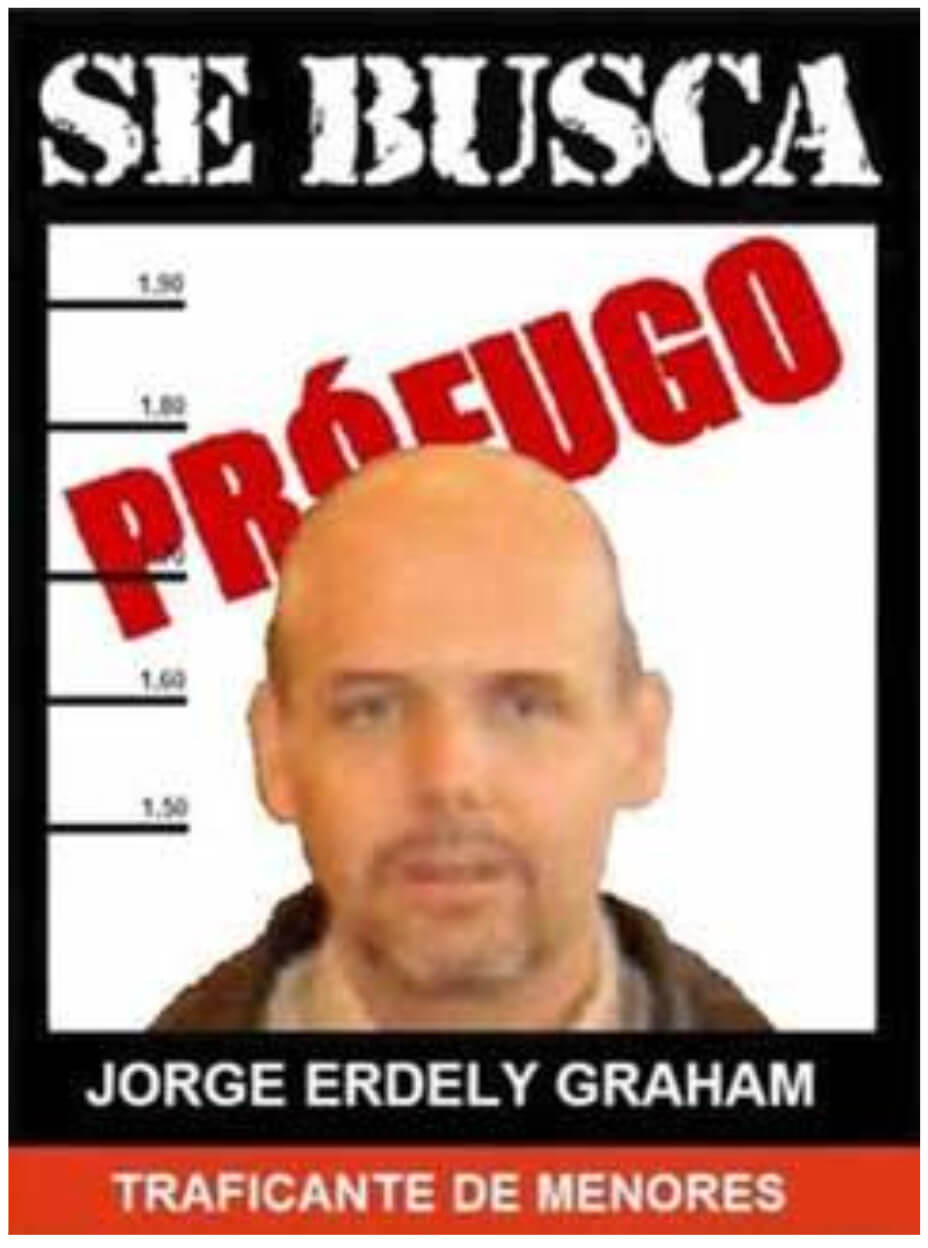
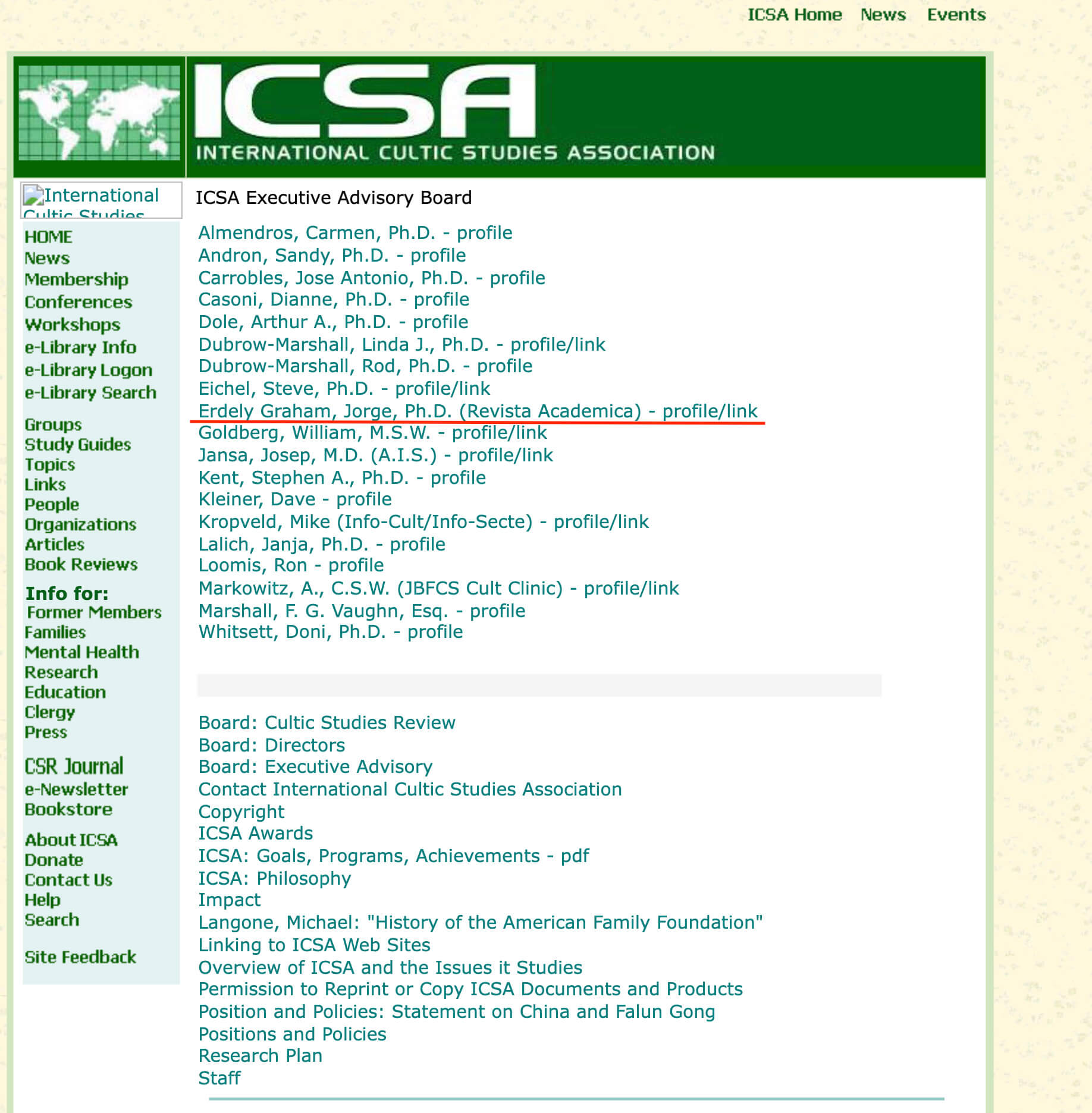
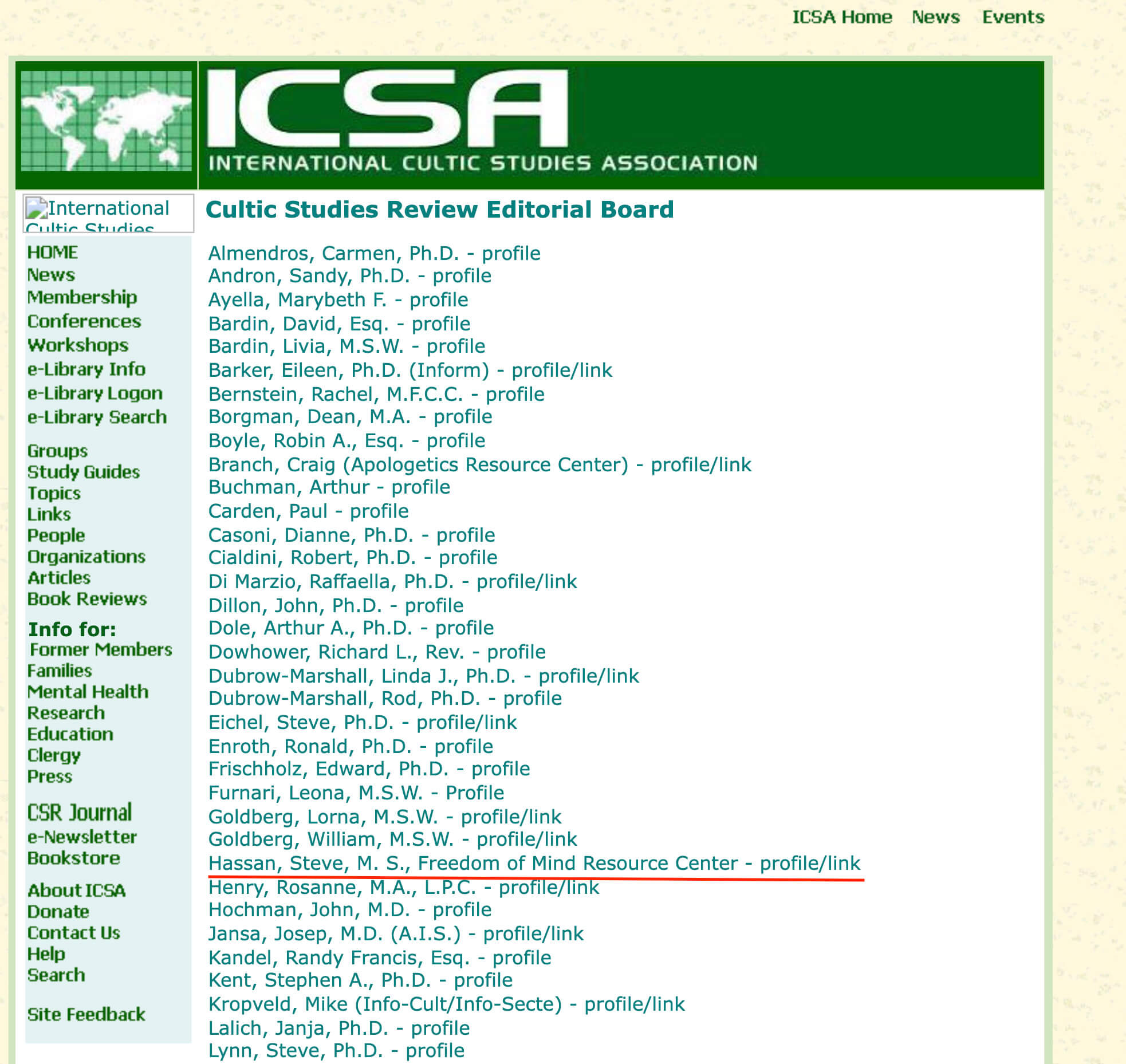
Erdely Graham positioned himself as a defender of children against “destructive cults.” Under this cover, he established a network of 40 so-called “Christian shelters” (Casitas del Sur / Refugio de Amor) in Mexico. In reality, those institutions turned out to be a criminal child-trafficking empire.
According to Mexican authorities and an investigative book by journalist Sanjuana Martínez, titled “Se venden niños” / “Children for Sale”:
- Children were subjected to sexual exploitation, forced labor, and severe abuse.
- More than 25 minors vanished without a trace from the shelters.
- Some children were reportedly sold for organ harvesting. 88,89

When the case began to unfold in 2008–2009, Erdely Graham became a fugitive from justice. He hid in Canada and the United States while continuing to maintain ties with the international anticult community.
Despite the crime scale, ICSA and FECRIS — organizations where Hassan is actively involved — chose to remain silent. As soon as Jorge Erdely Graham’s name became linked to the criminal scandal, it was quietly scrubbed from all of the organizations’ websites and materials without any formal statement, as if he had never existed there. No public condemnation or assistance to Mexican authorities was offered by the “leading cult fighters,” and Hassan issued no statement in this regard either. 91
“Child Protection Expert” and Infiltration of Government Agencies
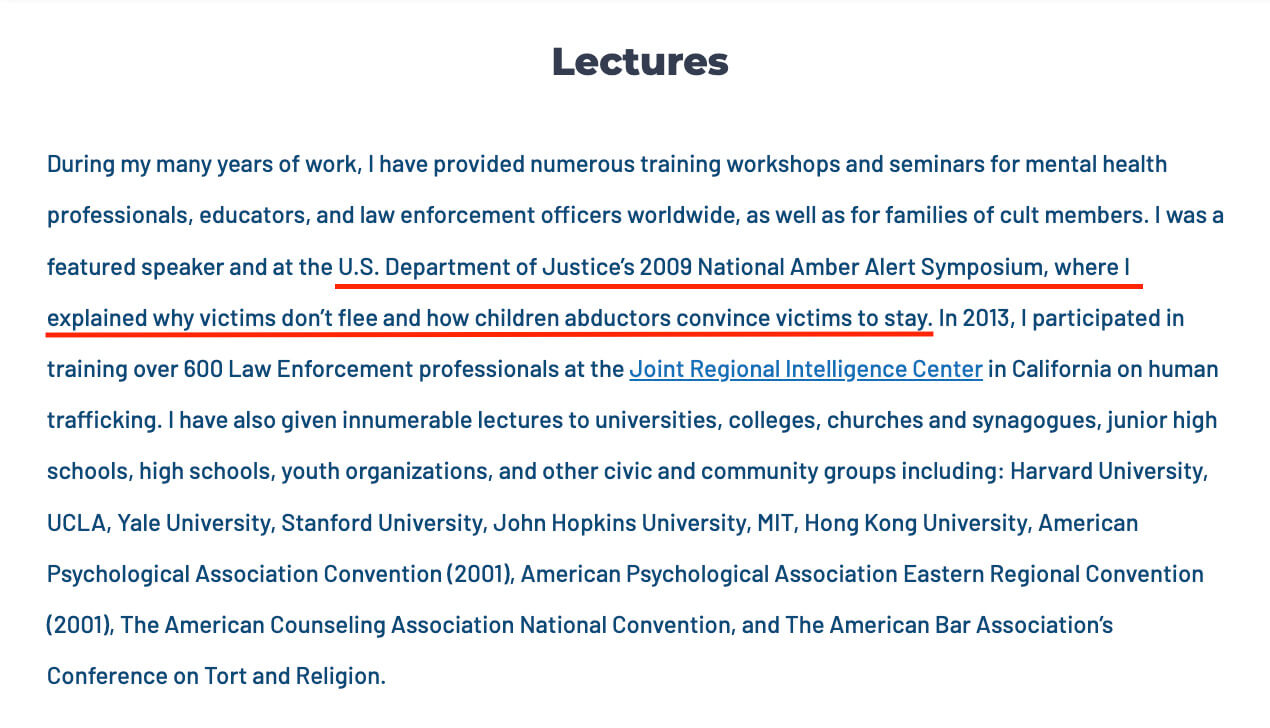
The way Steven Hassan positions himself as an expert in child protection and human trafficking prevention appears particularly cynical. In 2009, he was a guest speaker at the U.S. Department of Justice’s Sixth Annual National Amber Alert Symposium. At the event that brought together police officers, federal agents, and specialists in finding missing children, Hassan spoke authoritatively, explaining why victims don’t flee and how child abductors convince their victims to stay.
“I was a featured speaker at the U.S. Department of Justice’s 2009 National Amber Alert Symposium, where I explained why victims don’t flee and how child abductors convince victims to stay.”
This statement takes on an especially dark tone if we recall that earlier Hassan and his CAN colleagues had themselves engaged in kidnappings, forcible detentions, sleep deprivation, humiliation, and psychological coercion. He acquired a deep understanding of the psychology of holding victims not merely from books, but through his own long-standing practices.
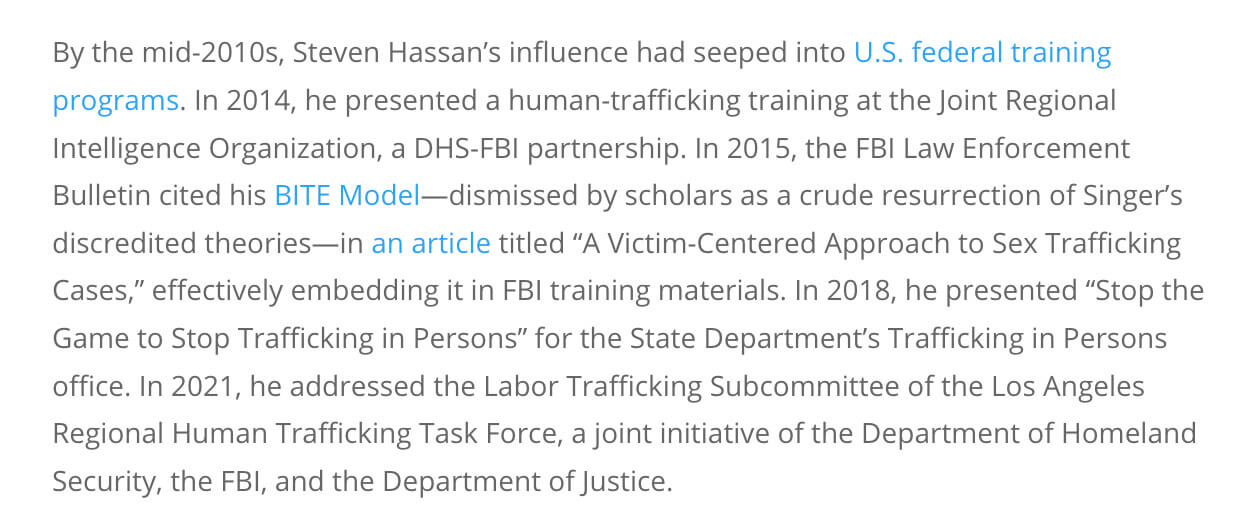
However, Hassan went even further. By the mid-2010s, his influence began to penetrate official federal programs:
- In 2014, he conducted a training session on human trafficking for the Joint Regional Intelligence Center (JRIC) — а partnership of the DHS and FBI.
- In 2015, the BITE Model was cited in the official FBI Law Enforcement Bulletin in an article titled “A Victim-Centered Approach to Sex Trafficking Cases.”
- In 2018, he spoke before the State Department’s Office to Monitor and Combat Trafficking in Persons.
- In 2021, he spoke before the Labor Trafficking Subcommittee of the Los Angeles Regional Human Trafficking Task Force — a joint project of the DHS, FBI, and Department of Justice).
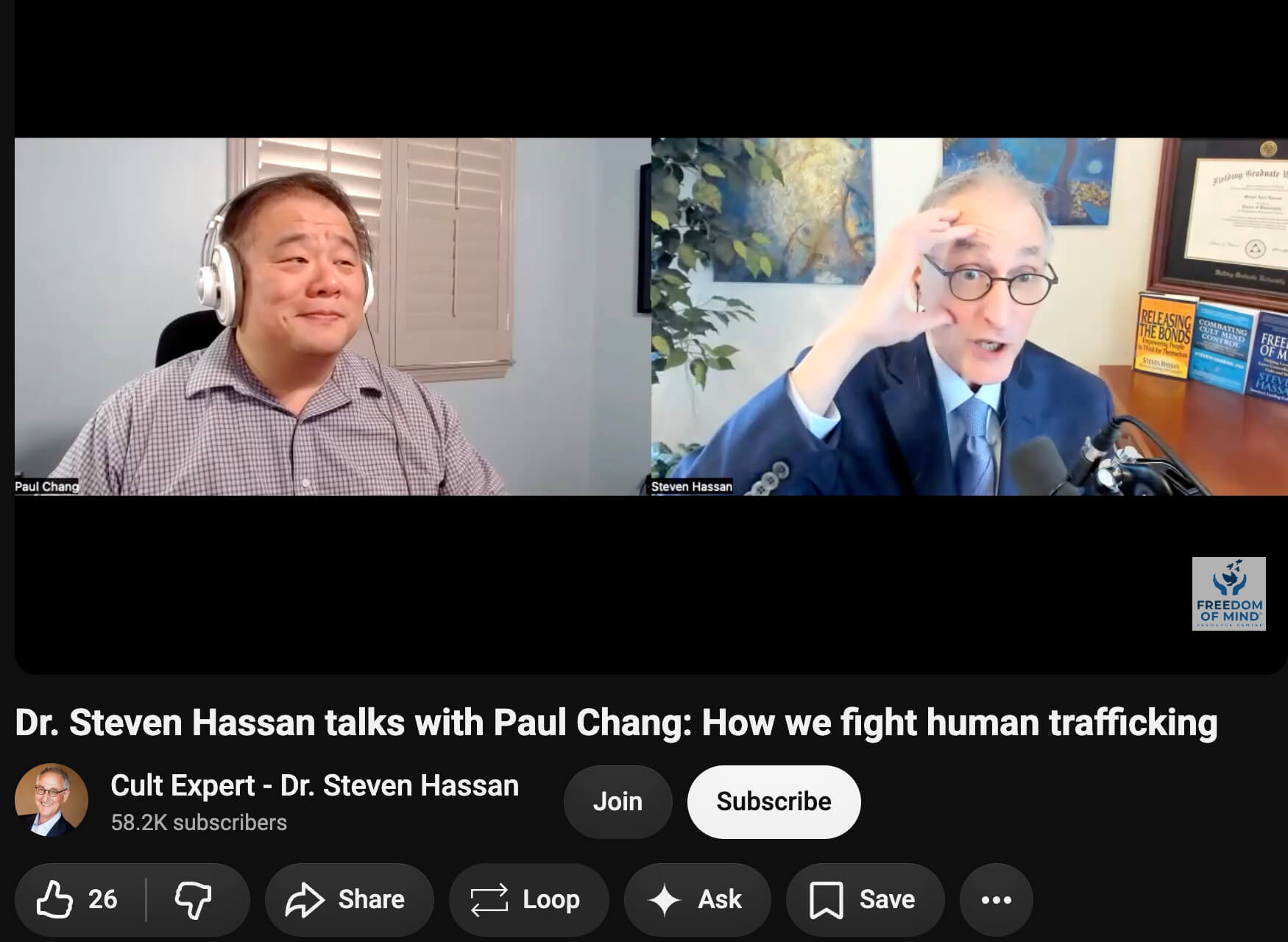
In 2023, Paul Chang, Regional Anti-Trafficking Coordinator for the U.S. Department of Labor, openly confirmed on Hassan’s podcast that he uses Hassan’s BITE Model in his training programs.
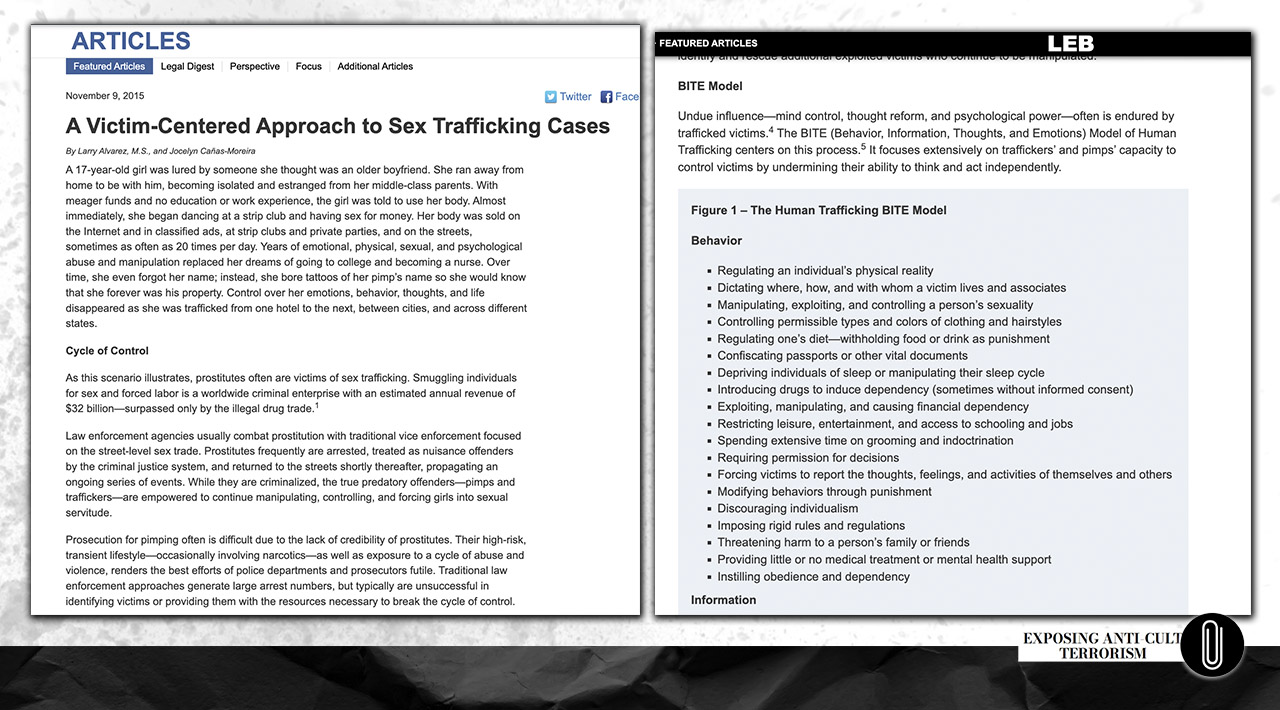
Furthermore, Hassan’s model was featured in an article published on the official portal of the FBI Law Enforcement Bulletin. 95
This creates a paradoxical situation. Steven Hassan is a man whose partners in the fight against cults, according to numerous sources, reportedly established networks for sexual exploitation of minors and child trafficking, and he himself possesses extensive experience in forcible kidnappings and detentions. Meanwhile, he doesn’t just present himself as an expert in protecting trafficking victims, but also successfully integrates his pseudoscientific model into operations of U.S. federal agencies.
Who Promoted Hassan?
Synchronized Promotion in 2019: Dave Troy, Alexandra Alvarová, and Other Amplifiers of Hassan
Analysis of sources indicates that in 2019, simultaneously with the release of Steven Hassan’s book “The Cult of Trump” and its aggressive media promotion, there was a remarkable synchronized surge in the activity of a whole group of new “anticult experts.” It was during this period that Hassan, apparently, began a targeted rebranding of his public image. The man involved in violent deprogramming, as directly indicated by the sources cited above, who nearly lost his license for gross violation of medical privacy and collaborated with a whole network of individuals having a criminal past, now appeared before the public in a completely different guise, as a “PhD” and a “Harvard professor.” In this campaign, he was zealously assisted by an entire group of key anticult activists, including Dave Troy and Alexandra Alvarová who were particularly active.
Dave Troy
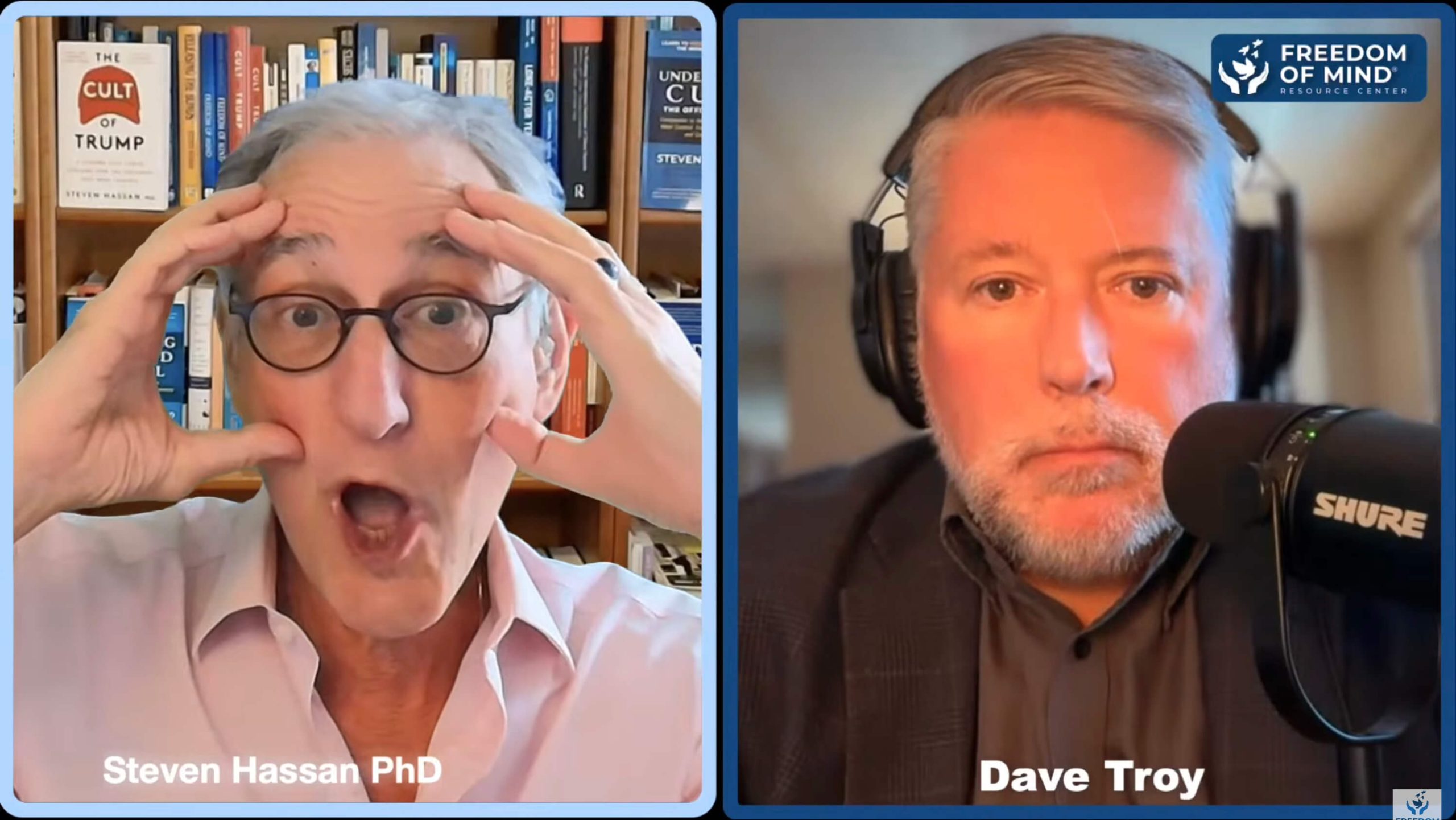
Dave Troy holds a Bachelor of Liberal Arts degree. 97 Based on analysis of relevant facts, Troy is one of the main amplifiers of Hassan’s rhetoric in the media space. In the article “How the Tail Is Wagging the Dog,” we previously wrote about how Troy used the TEDxMidAtlantic platform to promote Hassan.
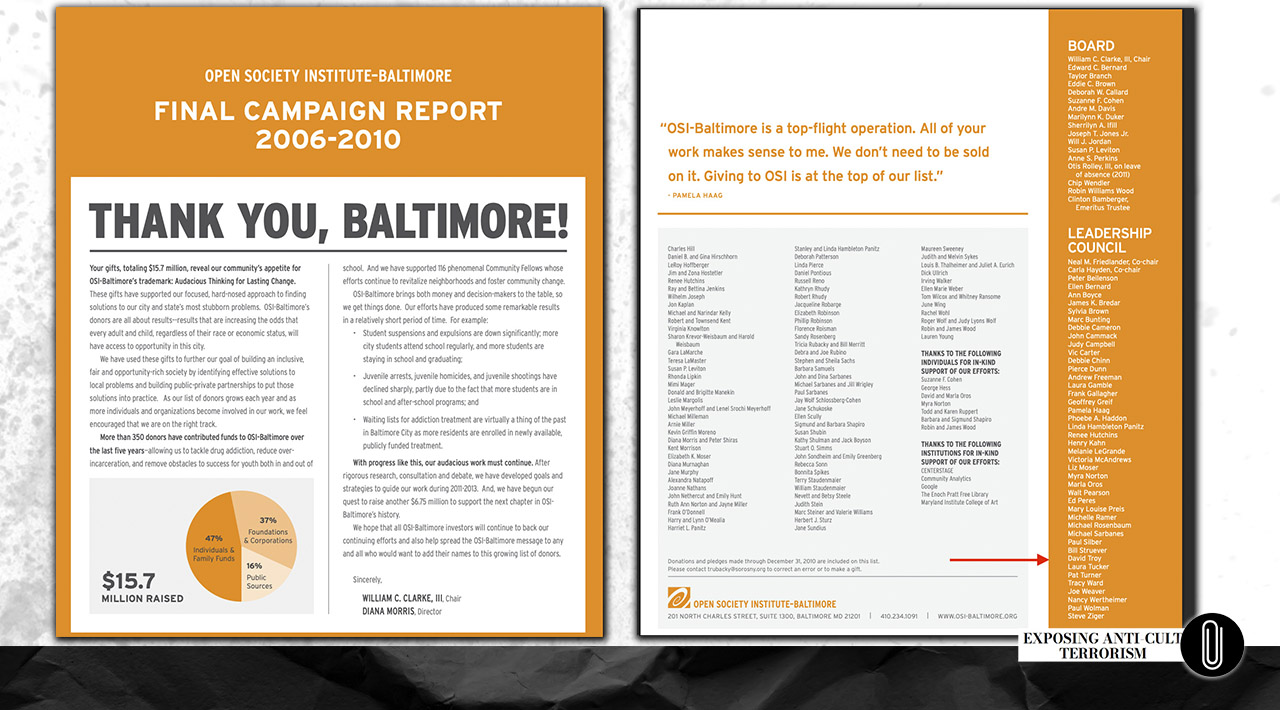
The 2006–2010 report of the Open Society Institute–Baltimore shows that David Troy was on the institute’s Leadership Council. Thus, by 2010, Troy was no longer just an activist, but a member of the governing body of one of the core entities in the Open Society Foundations network in Baltimore.
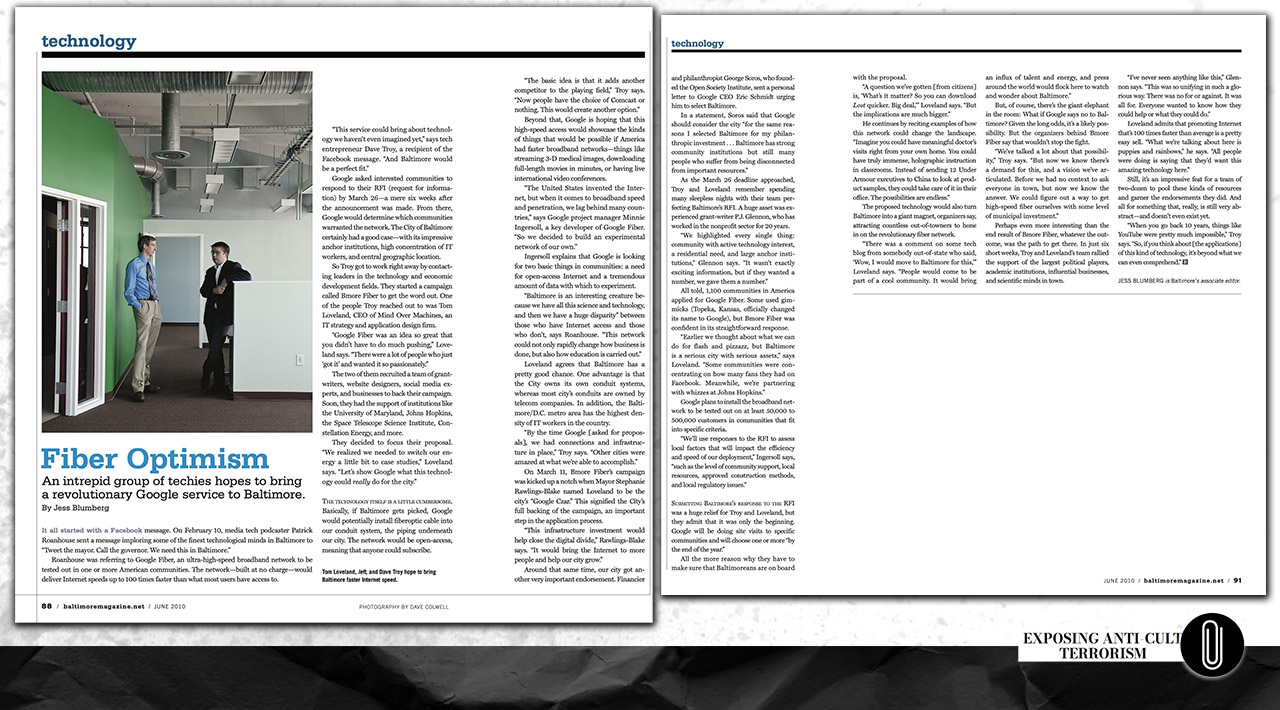
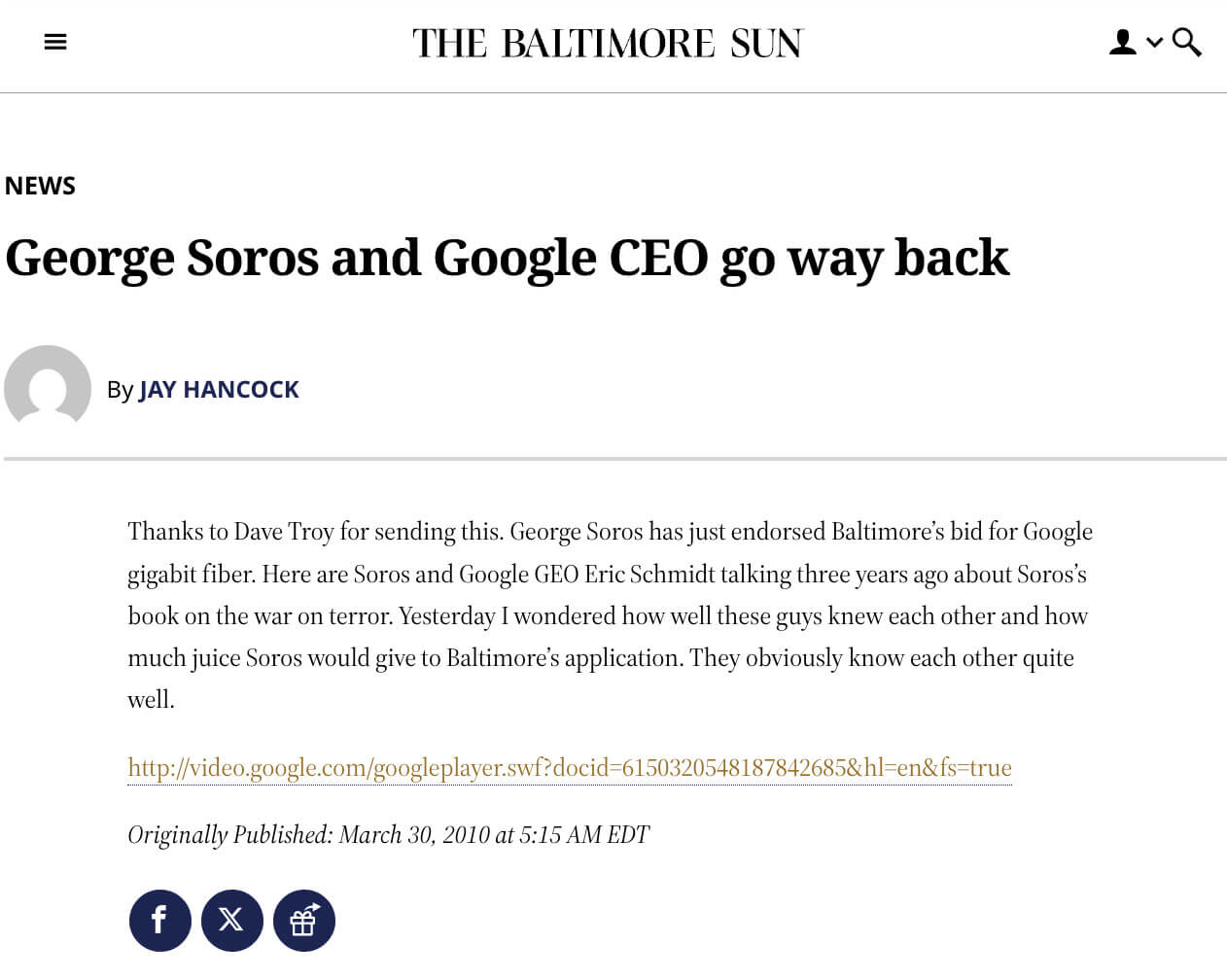
The article “Fiber Optimism. An intrepid group of techies hopes to bring a revolutionary Google service to Baltimore,” published in June 2010 on the website baltimoremagazine.net, tells a story of how Dave Troy generated buzz around Baltimore’s application to lay down free high-speed broadband Internet from Google that had announced a competition. Special emphasis was placed on the team of grant-writers whom Troy and his partner involved in the project. However, the most interesting detail is that George Soros wrote a personal letter to Google CEO Eric Schmidt, urging him to select the application prepared by Dave Troy and his grant-writers.
These facts lead to the conclusion that Troy obviously had serious connections in this organization and informed journalists as an insider, according to this and other articles.
The project to promote the bid to Google was called Bmore Fiber. Troy launched a website and project accounts on Twitter and Facebook. By generating a stir, he gained support of the Baltimore Mayor’s Office. On March 11, 2010, Bmore Fiber’s campaign was kicked up a notch when mayor Stephanie Rawlings-Blake named Troy’s partner to be the city’s “Google Czar.” Troy made an incredible buzz around what he considered to be his unmatched work on the bid. He wrote that the “prospects are beyond strong.” 100
It is noteworthy that through this project, Troy gained access to the Baltimore Mayor’s Office. At the end of the article in Baltimore Magazine, the journalist asks a question: “What if Google says no to Baltimore?” Troy replies that, with the right level of investment from the municipality, they could roll out high-speed Internet themselves.
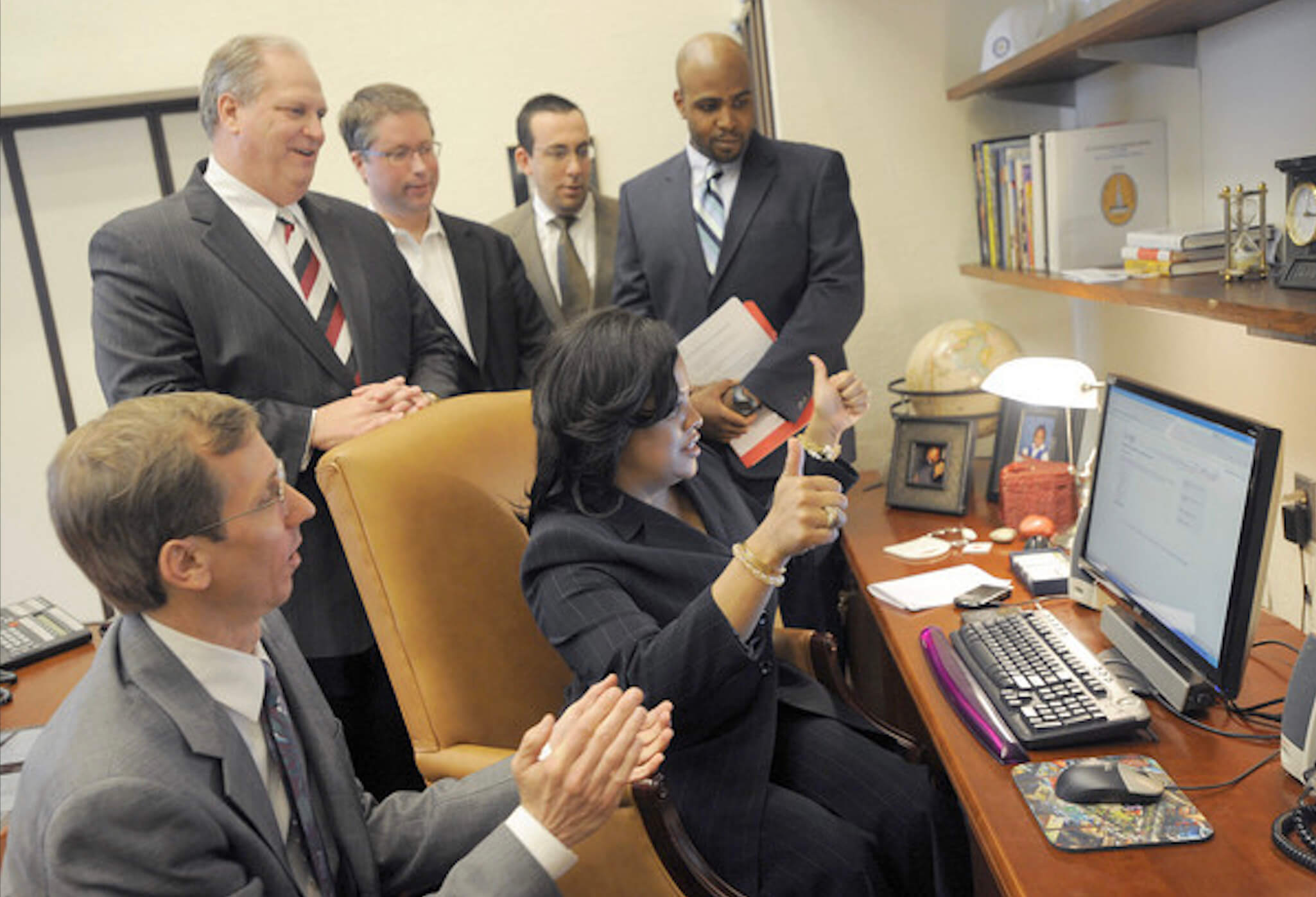
The inspired mayor Stephanie Rawlings-Blake filled out and submitted the application prepared by Troy and his “young and promising” team.
The whole epic dragged on for over a year, from February 2010 to March 2011. During that time, Troy was actively engaged in self-promotion: he gave interviews where he presented himself with undisguised self-admiration as a first-class expert and described how high-speed Internet was about to transform Baltimore beyond recognition. He published blogs and articles on the organization’s website, regularly fueling his own image of a visionary. In the meantime, donations were collected on these same platforms, although their purpose remains vague: the application had already been submitted by that time, and all the real work was done by volunteers whose job was unpaid.
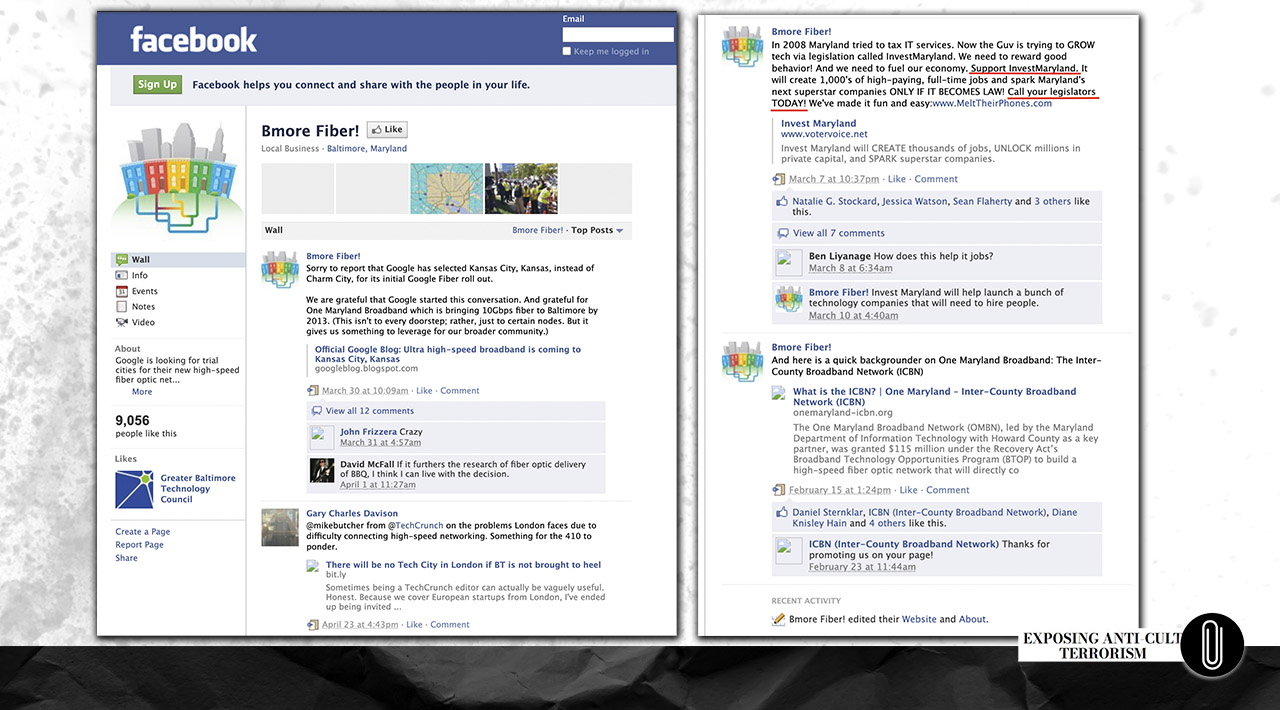
Troy didn’t hold on to the original purpose of Bmore Fiber pages on social media, which had been created for the Google application and gathered an audience of thousands of people. Even before the competition results were announced, he was already using those platforms for his own benefit — to lobby for allocation of city budget funds on projects that interested him much more than the fate of the bid itself.
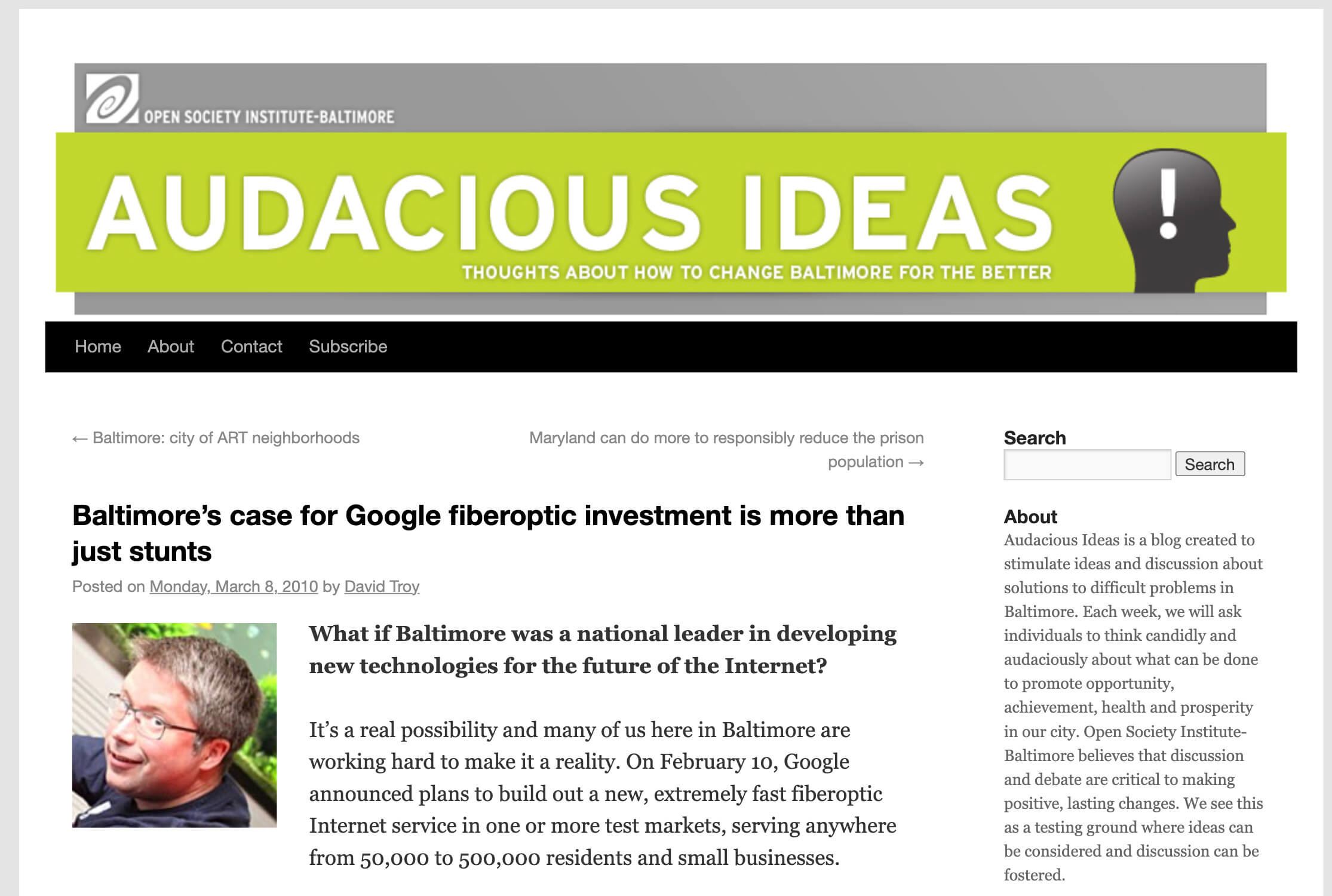
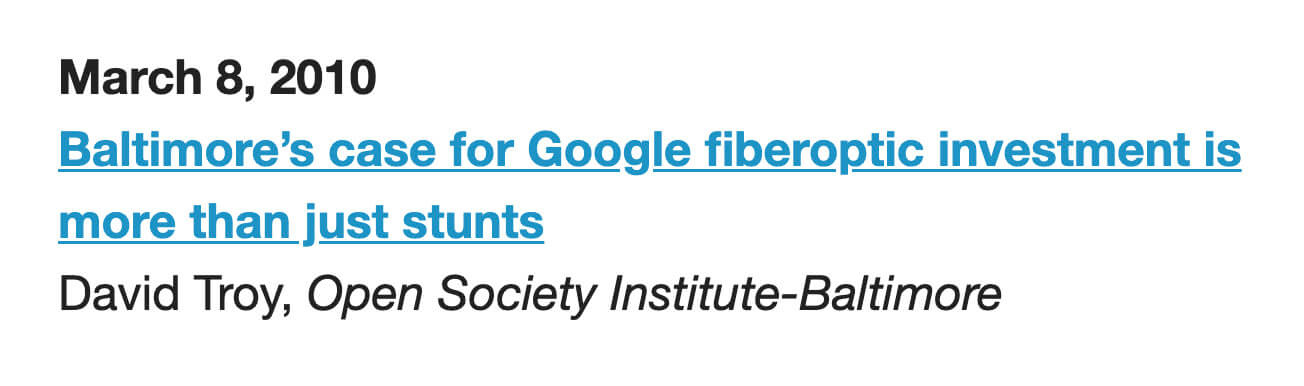
By the way, Troy published his articles on the Open Society Institute–Baltimore website, signing himself as “David Troy, Open Society Institute–Baltimore.” 103 He posted links to all media references on the website bmorefiber.com that he had created to generate hype around the project. 104
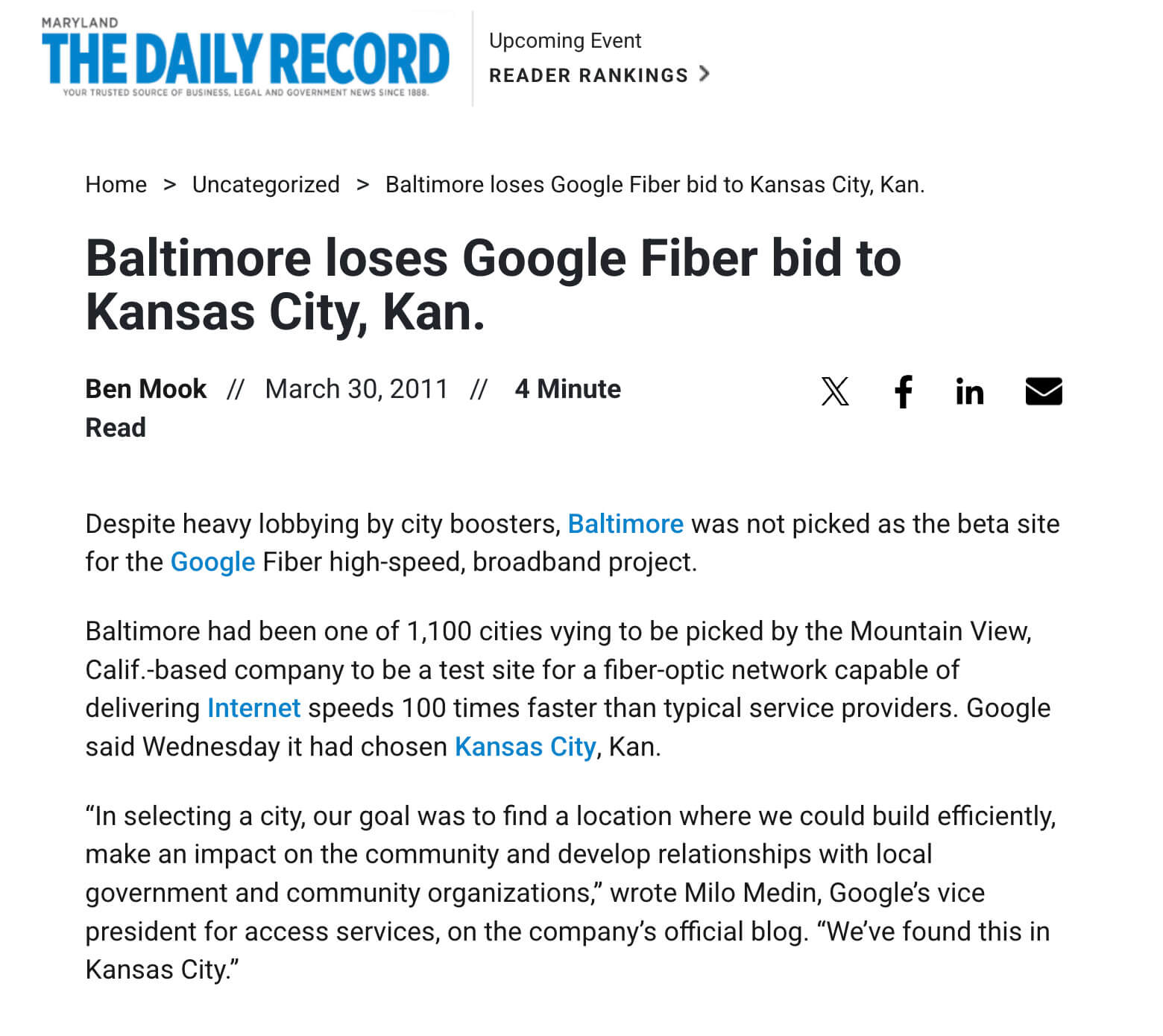
Ultimately, the campaign turned out to be a complete fiasco. On March 30, 2011, Google announced that the Kansas City bid had won the competition.
For a year, Troy was persuading the public that “prospects are beyond strong.” Yet, when the bid failed, Troy and his partner told the journalist that they had allegedly been preparing for such an outcome and working on plan B. Plan B included multimillion-dollar grants from the city council and, as it turned out, a change of government in Baltimore. Obviously, the city mayor had no desire to keep working with Dave Troy.
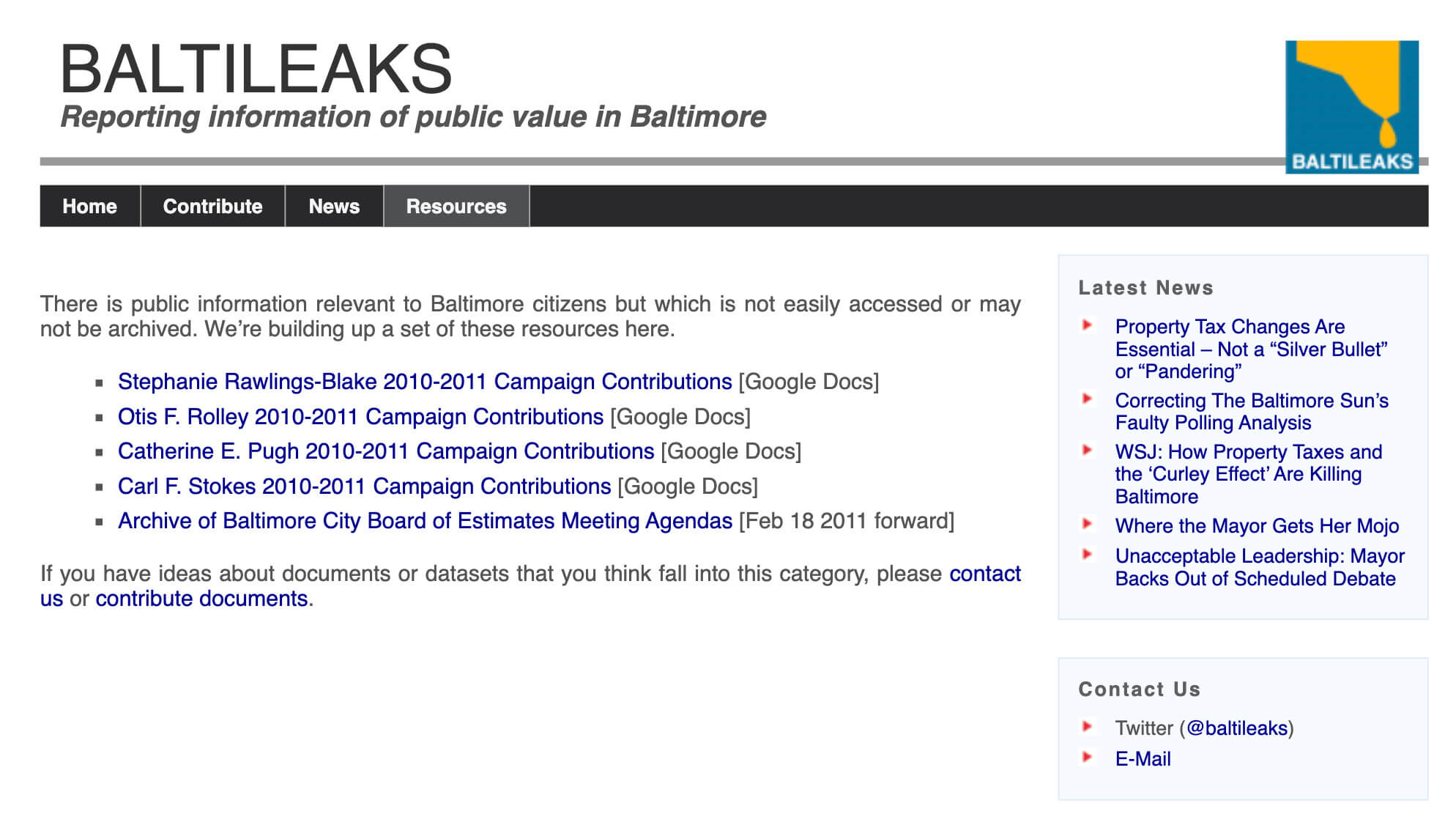
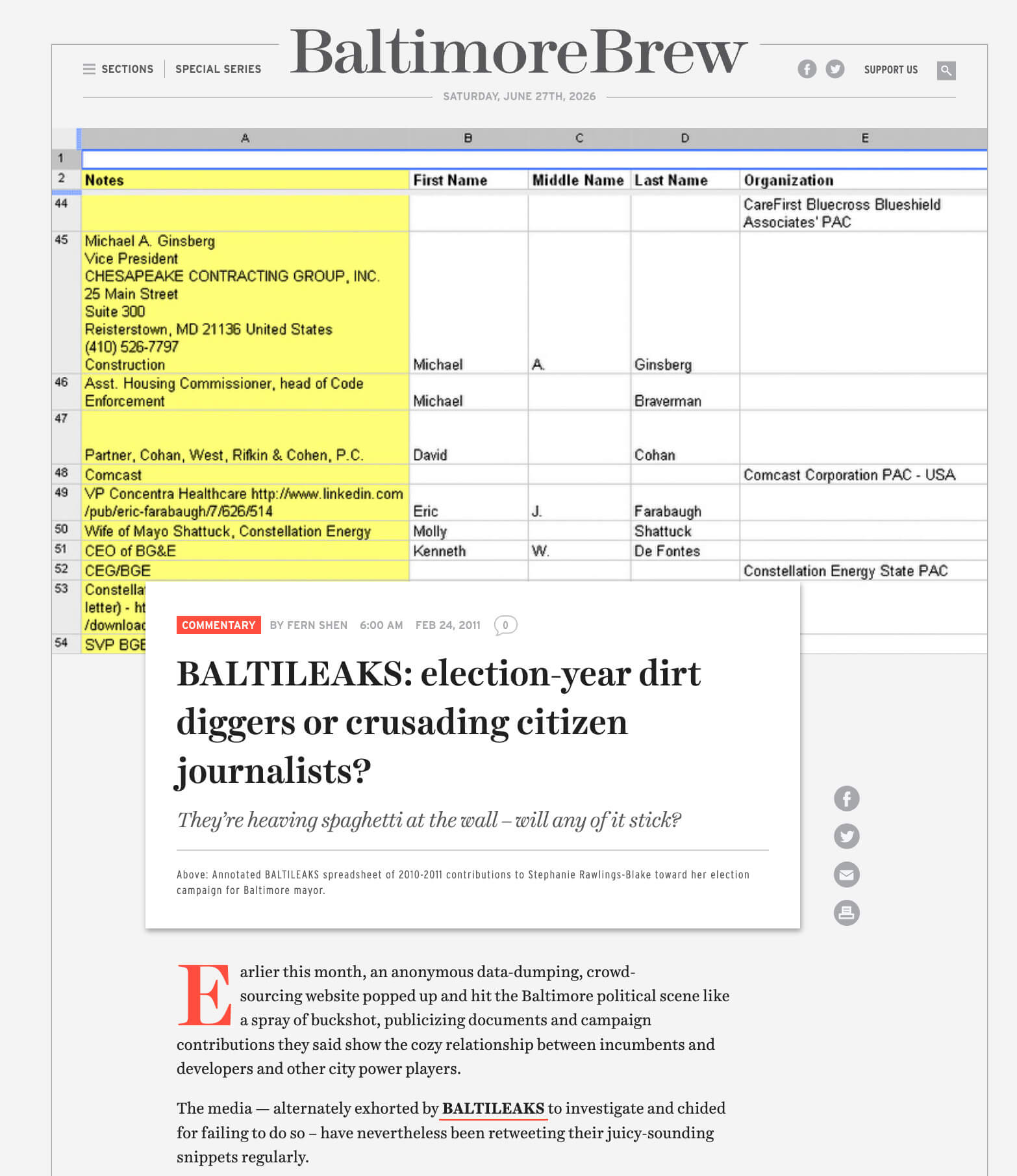
Subsequently, in early 2011, Troy organized a real harassment campaign against the Baltimore mayor and her administration. In February, there appeared an anonymous website BaltiLeaks that started publishing reports on funding of Baltimore mayor’s election campaigns, internal documents and financial data of the city council, accusing the mayor and administration of corruption. According to some publications, Dave Troy could be behind this website. Considering he was the one to start making a fuss about the website and the first to publish a post advertising BaltiLeaks, there is no doubt about his involvement.

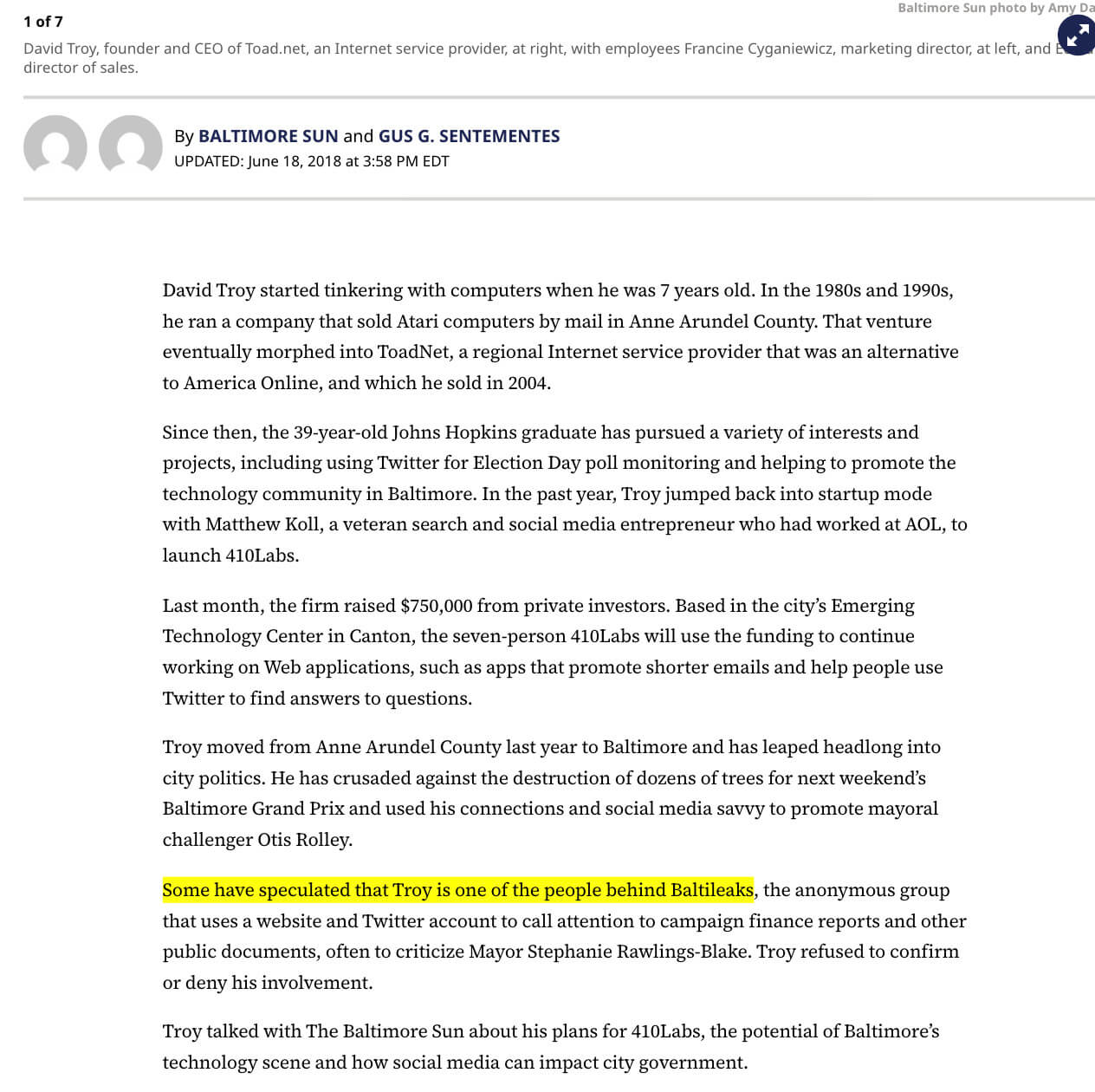
Troy publicly declared that he knew the project initiators and supported it, but he’s unwilling to confirm or deny his own involvement.
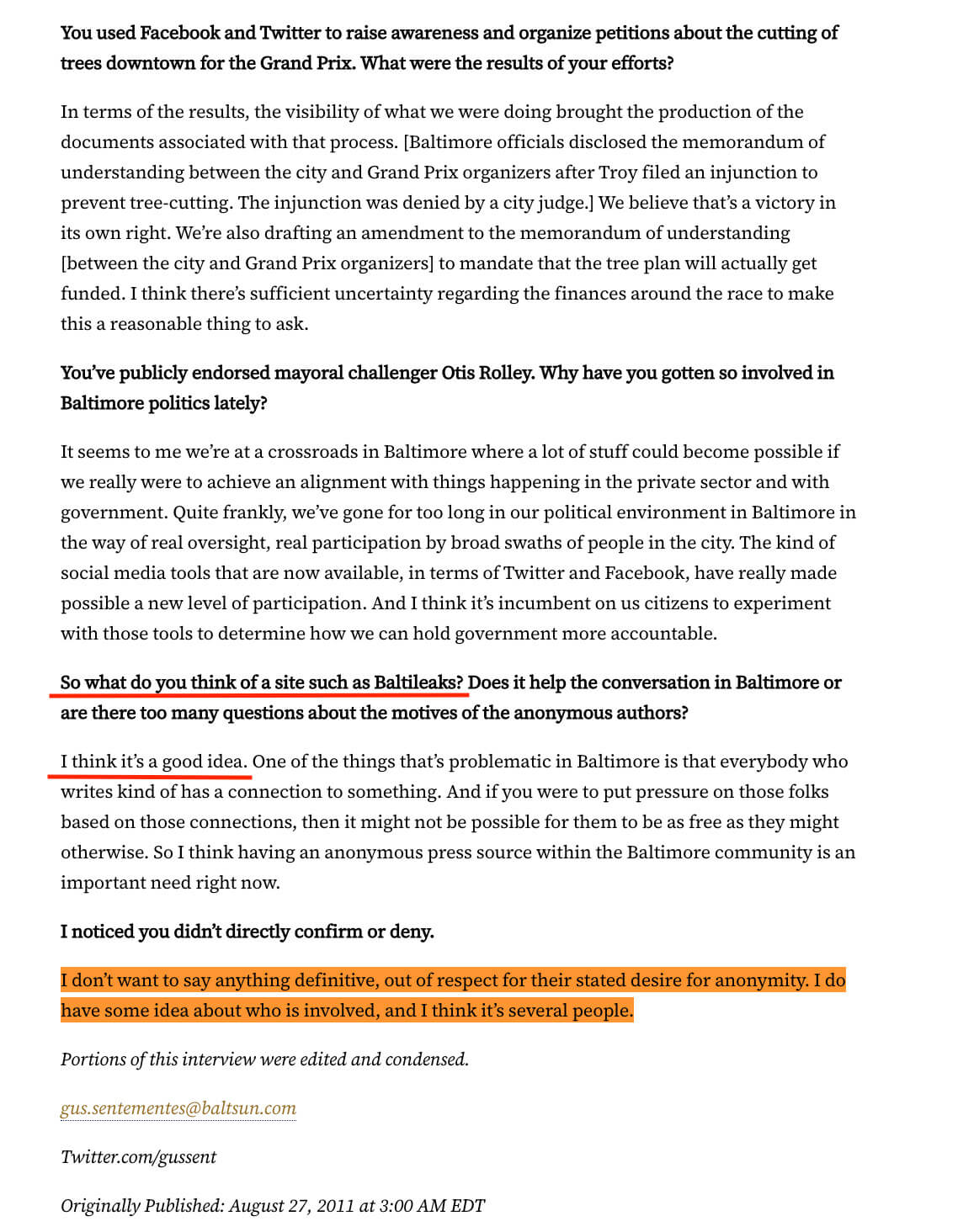
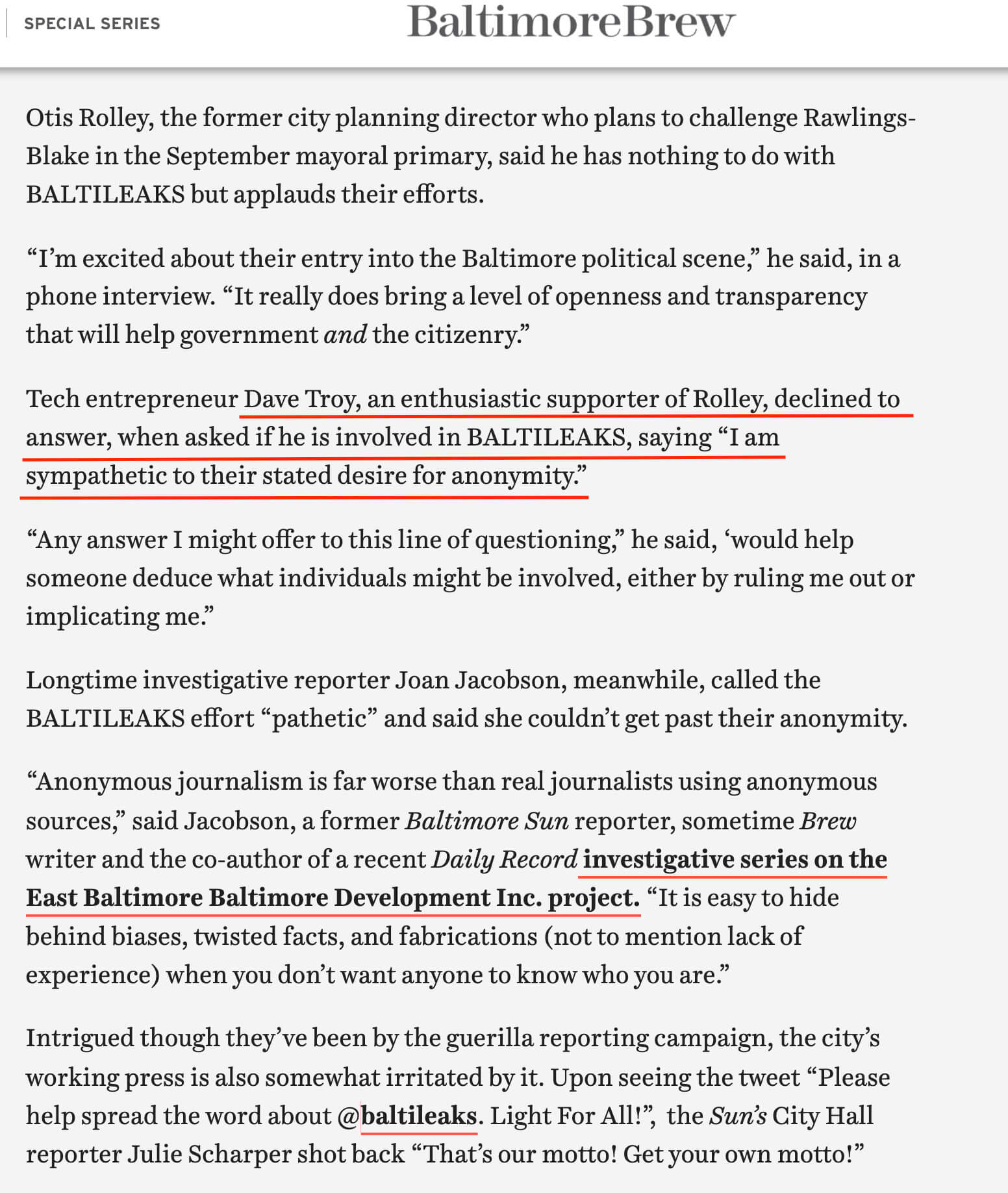
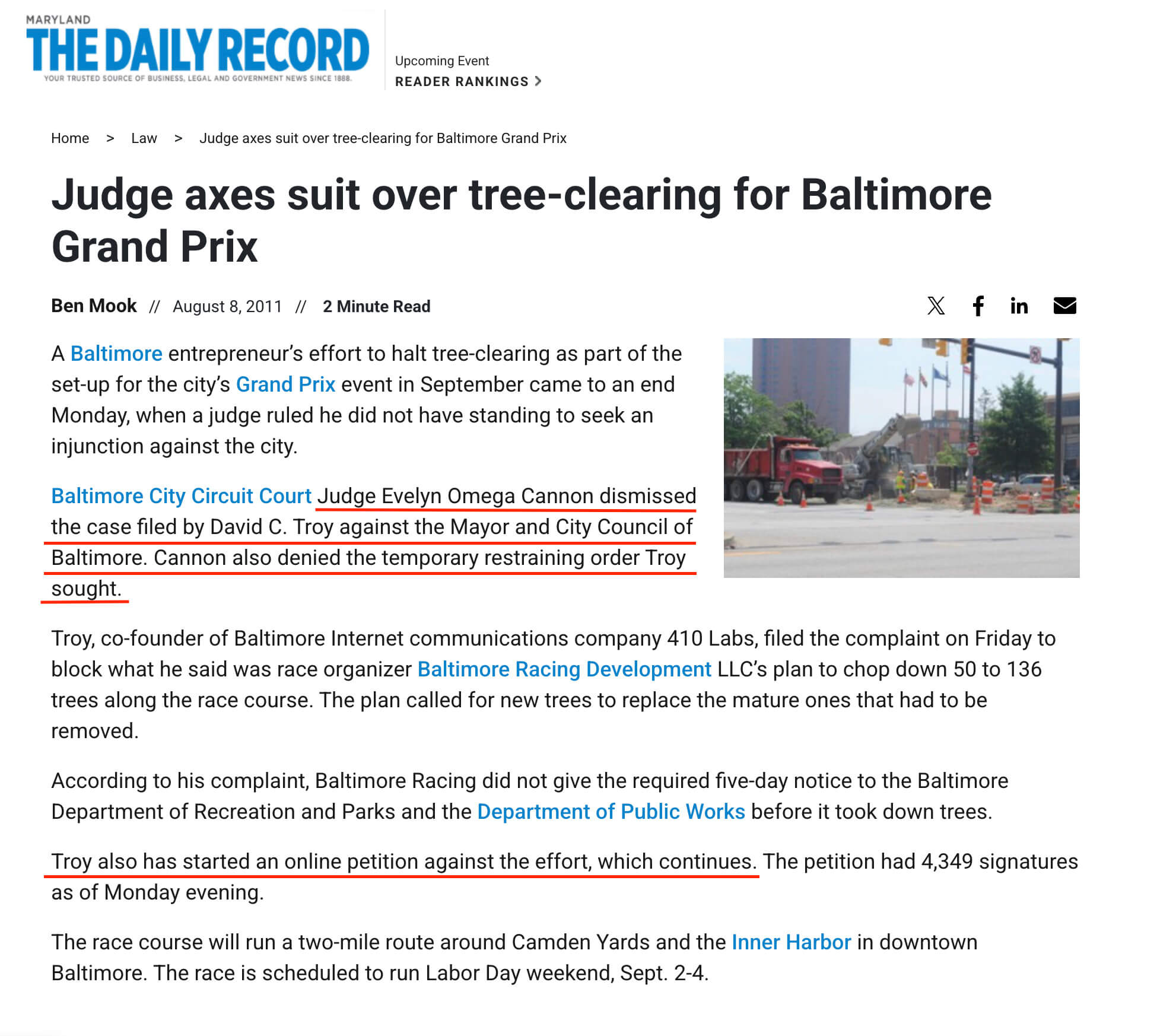
At the same time, he did everything he could to promote the scandal and destroy the reputation of municipal authorities and the mayor in the run-up to the elections that took place in November 2011. In August, Troy even filed a lawsuit against the city council and the mayor, allegedly trying to stop the felling of trees for the Baltimore Grand Prix race, one of the major projects of mayor Rawlings-Blake. Although the project involved planting new trees, that didn’t matter to Troy. He initiated an online petition and collected signatures for cancellation of the race. The court rejected Troy’s claims, calling them groundless.
Through the same BaltiLeaks accounts, behind which could be Troy as some journalists report, a systematic campaign was waged to discredit municipal authorities, including publication of data on Rawlings-Blake’s election campaign fundraising, accusations of “selling the city” to developers and lawyers, as well as calls for residents to share any internal documents of the city council.
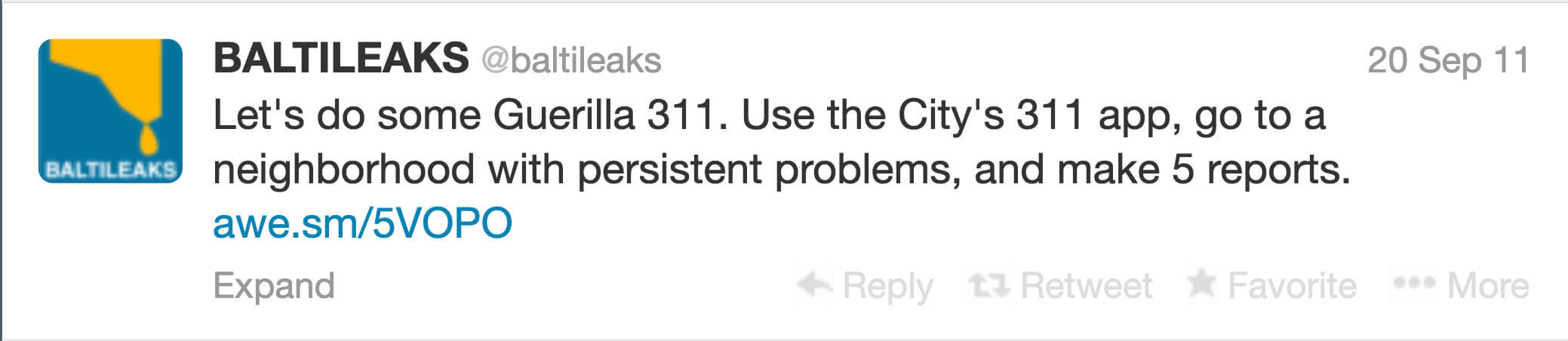
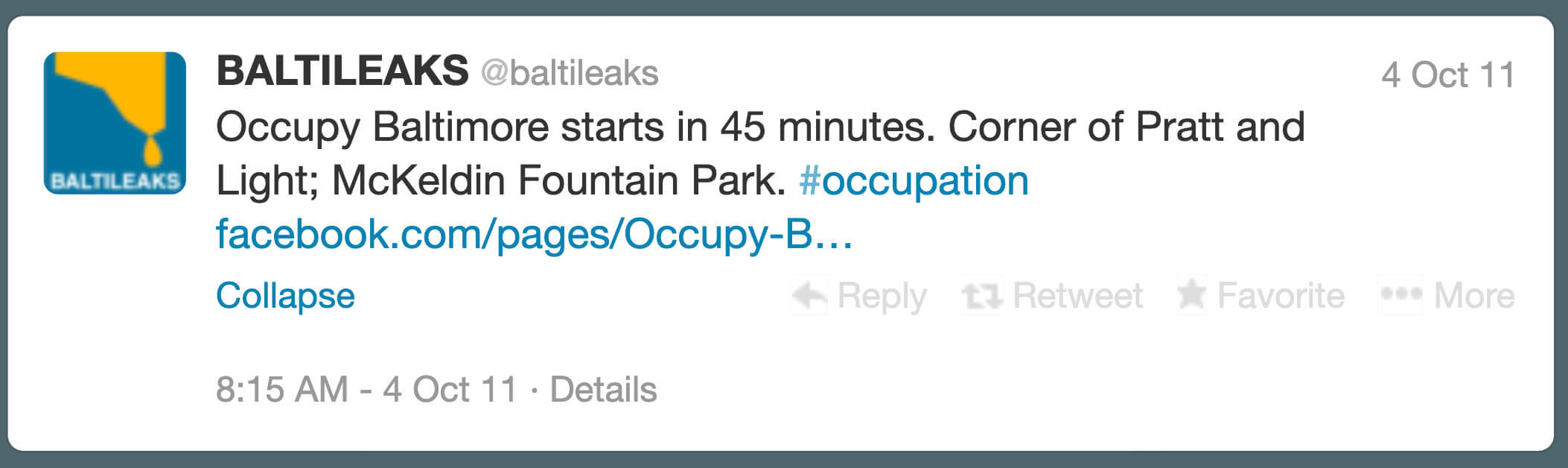
Among BaltiLeaks’ methods of sabotaging the city council’s work were calls for activists to massively submit reports through the 311 application in order to artificially overload municipal services and show the “inefficiency of authorities.” In BaltiLeaks’ posts, the author called it “Guerilla 311.” BaltiLeaks also supported city protests, calling for people to take to the streets in support of the Occupy Baltimore movement and other protest actions. Hence, the account had nothing to do with WikiLeaks.
Based on the analysis, we can say that Troy created a platform for public mobilization, organizing protests and sabotaging the authorities’ activities by means of manipulation, twisting facts, and outright fakes. In the end, the candidate supported by Troy both openly and through BaltiLeaks lost, while mayor Rawlings-Blake managed to be re-elected. However, BaltiLeaks accounts continued to terrorize the city council, including publishing personal data and addresses of its employees — doxing.
Dave Troy conducted a demonstrative operation to delegitimize and weaken the then municipal government. Open-source analysis of Troy’s activities suggests that this was the first major testing of the methodology which he later applied at the national level.
Entering the National Arena
During the campaign against the Baltimore mayor in 2011, Dave Troy tested major techniques that he later scaled across the country. It seems it was then that he learned how to effectively create artificial public indignation, manage information hypes, organize pressure on authorities, and radicalize the audience. BaltiLeaks and his campaign against the mayor became a training ground for him.
A few years later, Troy applied the proven scheme at the federal level. Facts show that he essentially turned the TEDxMidAtlantic platform and his social media pages into a powerful mouthpiece for anticult propaganda. Together with Steven Hassan, they actively promoted the idea that the United States was invaded by “Russian cults,” Donald Trump was a cult leader and an agent of Russian intelligence, and tens of millions of his supporters were victims of brainwashing.
Most notably, the campaign on promoting Hassan began in 2018, a year before the release of his book “The Cult of Trump,” with nearly simultaneous releases of videos featuring Steve Hassan and Dave Troy on TEDxBeaconStreetSalon.
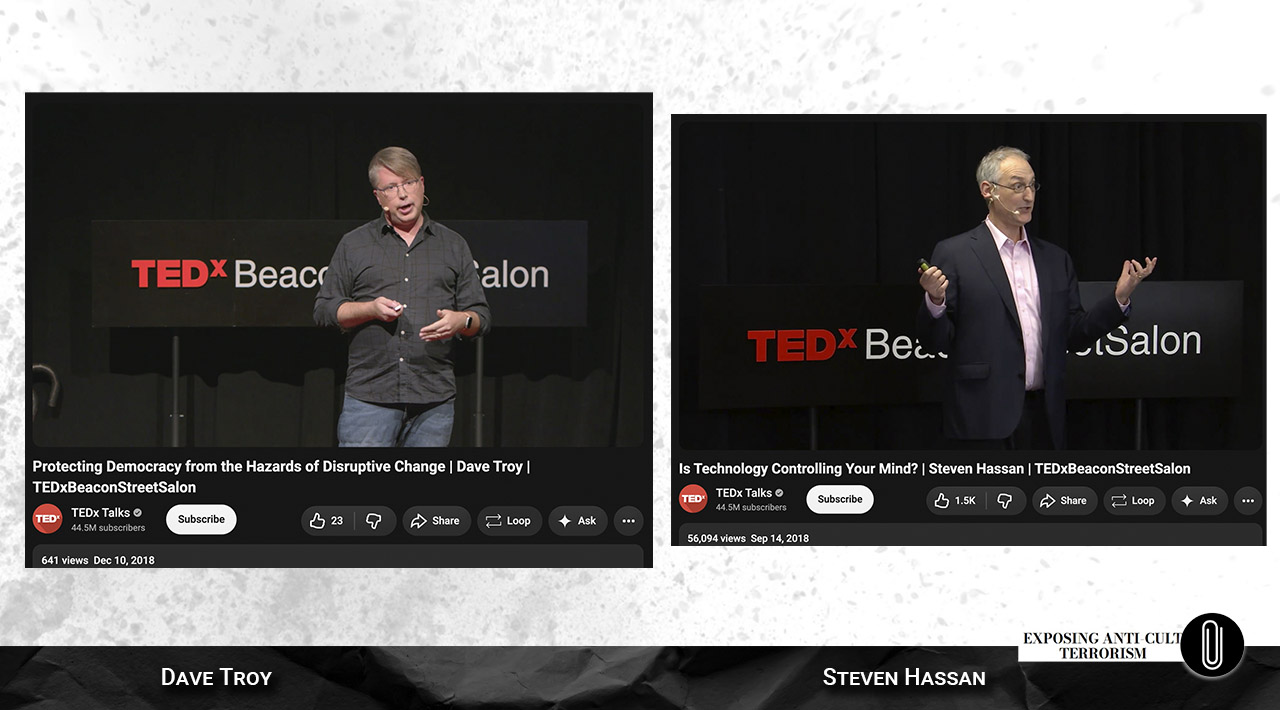
After the book was released, Troy made attempts to promote anticult hysteria through TEDxMidAtlantic, organizing a joint TEDx event with Steven Hassan and another anticult activist, Jim Stewartson. Yet, the initiative failed miserably, and the video was removed from YouTube because of hate speech.
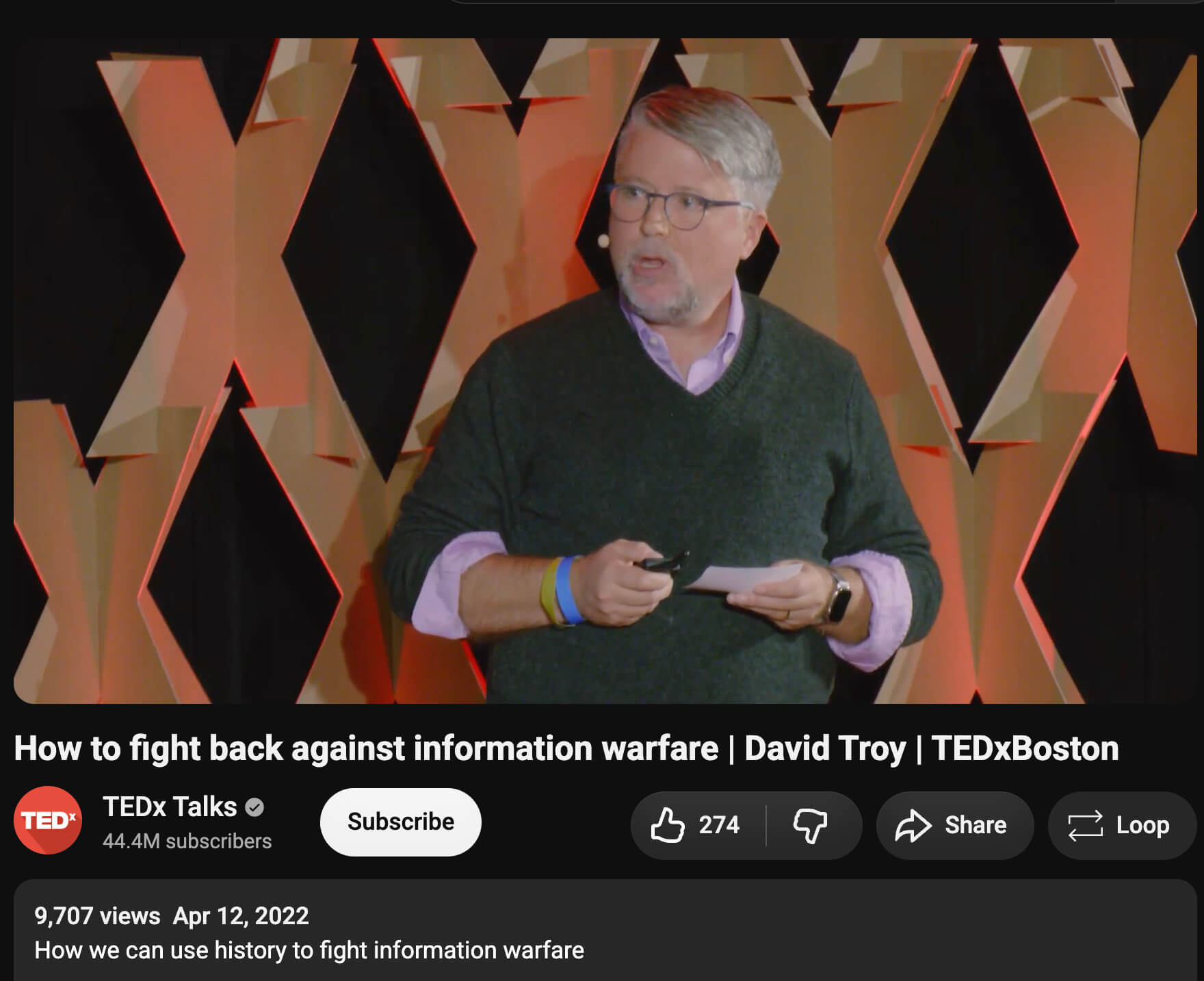
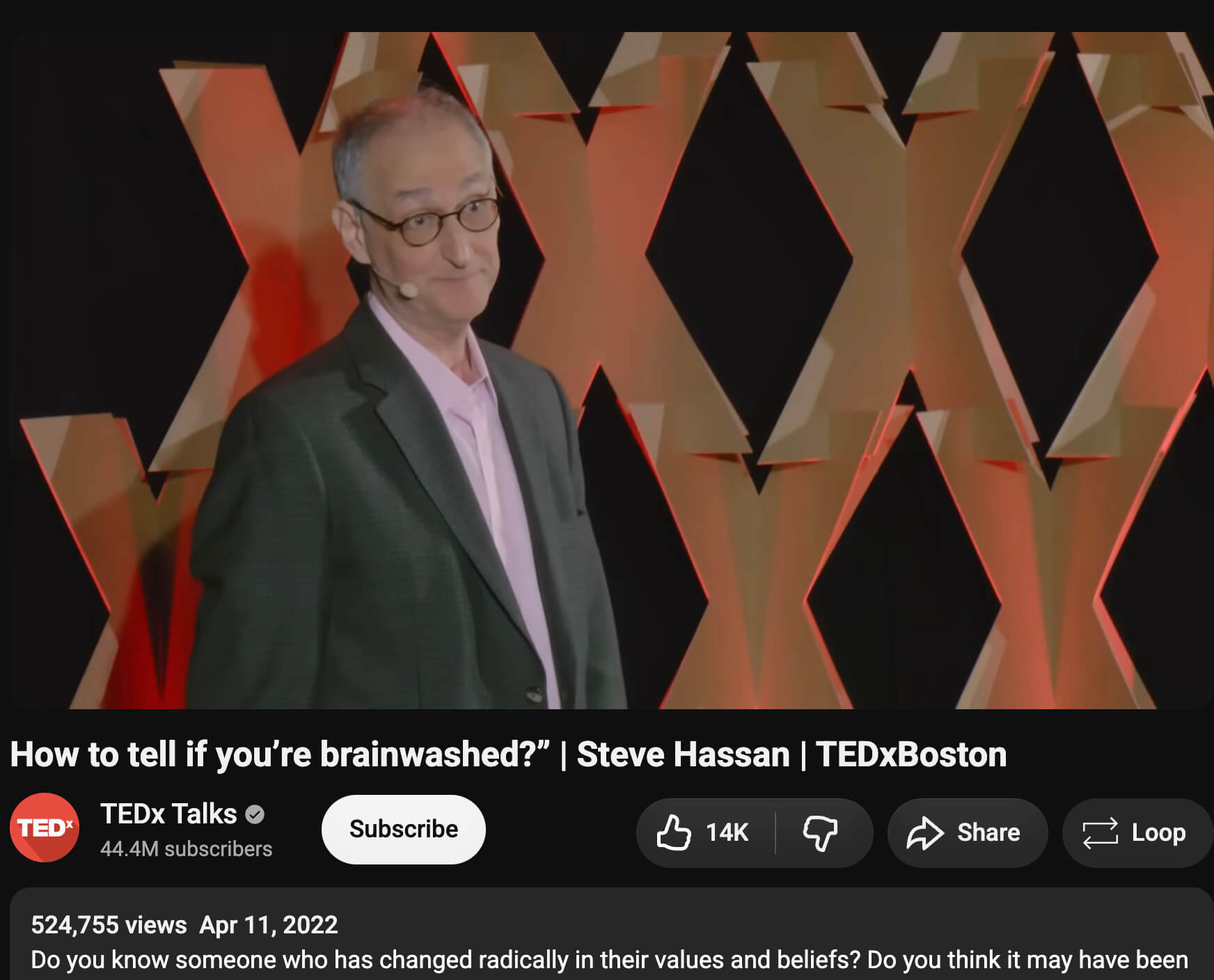
In April 2022, Steven Hassan and Dave Troy almost simultaneously appeared on TEDx again, but this time in Boston. The video record wasn’t deleted. What Troy and Hassan did as part of the anticult hysteria and panic isn’t something unique. It’s a standard operating scheme of Alexander Dvorkin’s entire anticult network of agents, which his Russian organization RACIRS and his partners successfully apply in various countries.
In the publications dedicated to Latvia and Ukraine, we showed details of how the “experts” controlled by RACIRS and FSB positioned themselves as leading “cult specialists.” They infiltrated government bodies, promoted repressive legislation, and essentially engaged in sabotage of countries from within, dehumanizing politicians and intensifying division in society.
Dvorkin tested this system in Russia. As the analysis of materials on our website indicates, it has proved efficient. For three decades, Alexander Dvorkin and his associates have been convincing Russian society that “U.S. totalitarian cults” are trying to take over Russia, that they brainwash Russians, and it is necessary to adopt “new” repressive legislation to “save” Russia from “dangerous cults,” while in reality, the only goal is to transfer power to Dvorkin and his organization. As we can see from what is happening in Russia today, Dvorkin has achieved considerable success in that.
Meanwhile, Dave Troy and Steven Hassan are promoting the idea that America is being invaded by Russian cults, the U.S. President is their agent, and more than half of the population has already been brainwashed. From their logic, it only remains to assume whether they propose to transfer power to Hassan for “saving” democracy and to adopt his model for determining what is a cult and what’s not both in courts and in laws. As a matter of fact, Hassan has repeatedly hinted at that. In such a case, Hassan and his team would determine who can live in peace, and who’s a “cultist” that must be deprived of civil rights and subjected to deprogramming. After all, Hassan openly wrote in his dissertation that his goal is to change laws and adopt his model as an expert one for courts.
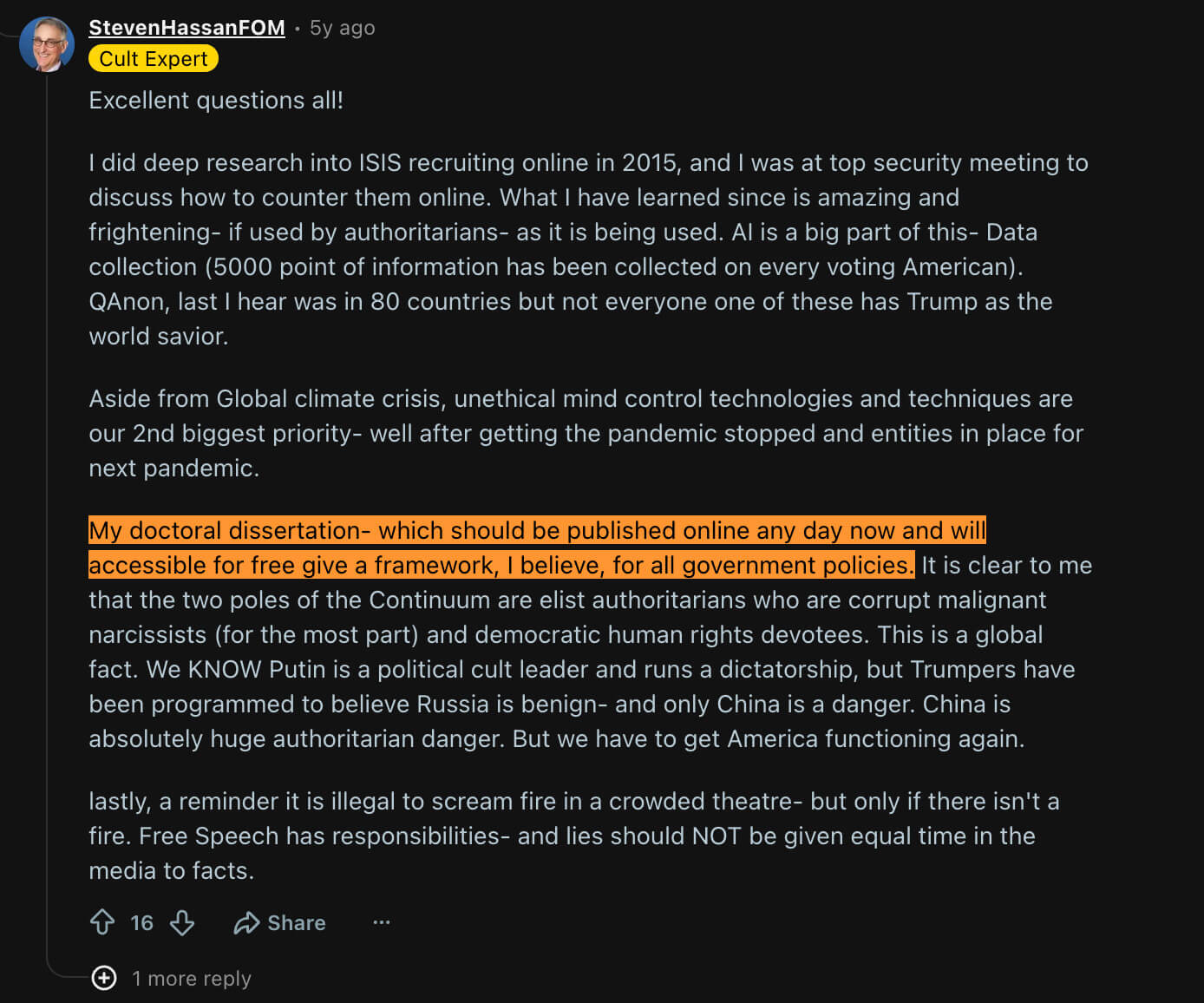
It is worth noting a parallel. Alexander Dvorkin, much like Dave Troy, appears to have built the funding base for his influence network through grants from the Open Society Foundations which, together with USAID and OCCRP, have been major sponsors of the spread of anticult ideology. We examined this in detail in the article “How the Tail Is Wagging the Dog.”
Interestingly, Dave Troy secured substantial funding for his new company, 410 Labs, just a few months before launching his campaign against the mayor of Baltimore. In August 2011, according to The Baltimore Sun, Troy’s startup raised 750,000 U.S. dollars from investors.
410 Labs’ flagship product was intended to be an email client designed to radically simplify email management. This raises an obvious question: was it merely a coincidence that a project built around “reading email” was launched at roughly the same time as the large-scale leak of internal documents from Baltimore city council? 115
In 2019, the same year Steven Hassan published “The Cult of Trump,” funding for Dave Troy’s nonprofit organization, TEDxMidAtlantic Inc. (EIN 82-2059235), sharply increased to USD 101,396.

It was during 2019 and 2020 that Troy, together with Hassan and Jim Stewartson, most actively promoted the narrative surrounding the “cult of Trump.” They appeared together at TEDxMidAtlantic events, promoted Hassan’s book, and advanced a claim that roughly half of the United States was under the totalitarian control of an “authoritarian cult.”
As for Jim Stewartson, his extraordinarily alarmist rhetoric on Twitter and on Radicalized podcasts with Heidi Cuda earned him the nickname StewAnon among social media users, as an analogy with QAnon.
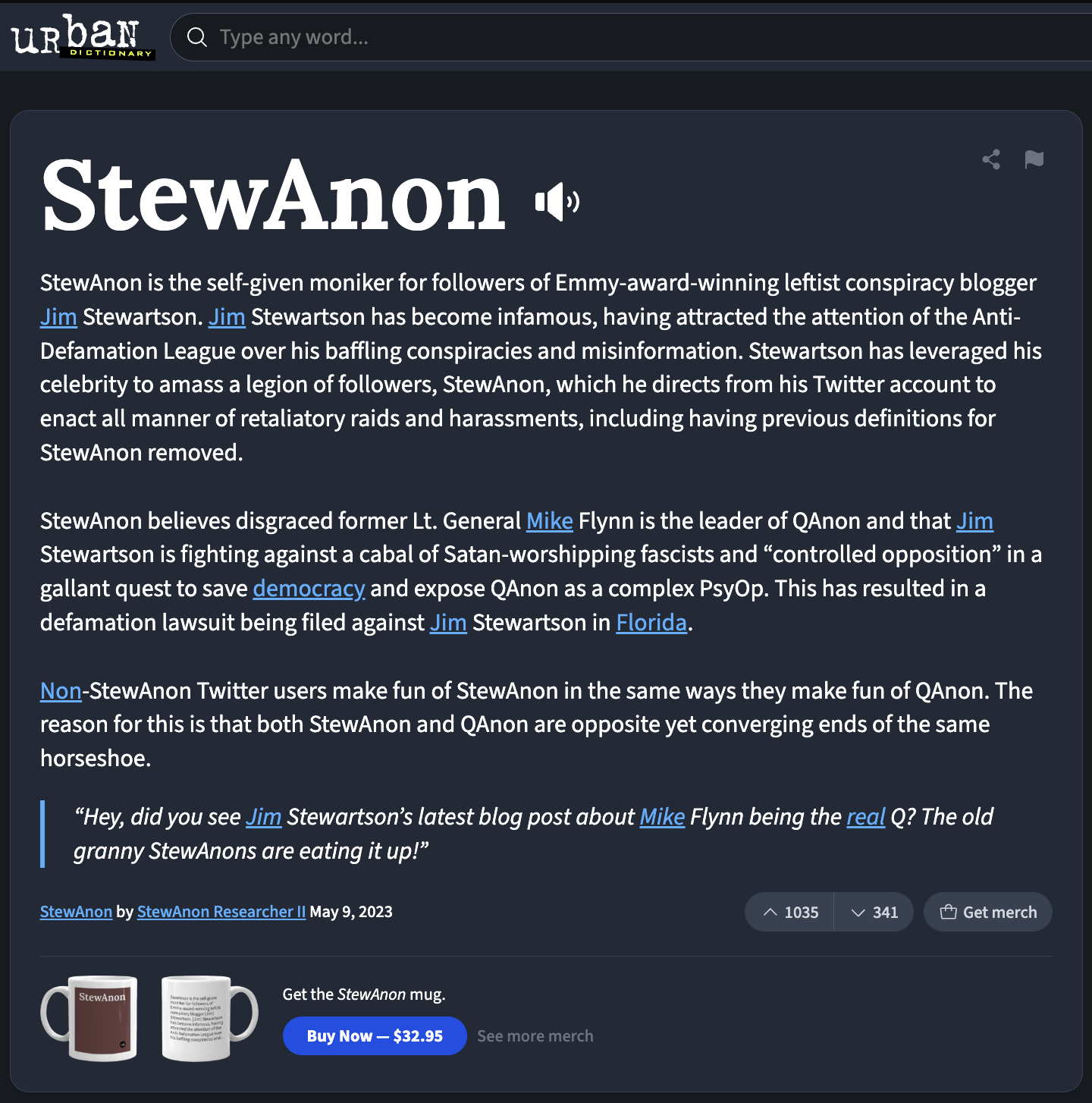
In 2020, at the height of the book’s promotion, the coordinated trio of professional alarmists — Jim Stewartson, Dave Troy, and Steven Hassan — expanded their efforts by launching a project aimed at deradicalizing QAnon supporters. As the VICE portal later reported, the initiative ultimately collapsed, prompting even Hassan to distance himself from it and say the following to VICE News: “On October 22, 2020, I gave a TEDxMidAtlantic talk on Dismantling QAnon that included Dave Troy, Jim Stewartson, and Desiree Kane. My only direct involvement with the Thinkin Project is a Zoom talk I gave several weeks ago, to the volunteers.” 118
If even Hassan chose to publicly distance himself from the project, that suggests it had encountered serious problems.
Another notable fact is that their joint TEDx presentation was removed from YouTube for hate-related policy violations, which is something happening quite rarely. YouTube doesn’t ordinarily remove TEDx presentations. Troy’s speeches, however, evolved into a highly polarizing platform centered on rhetoric that repeatedly framed opponents in dehumanizing terms, ultimately appearing to exceed even the platform’s tolerance.
Perhaps, the only area where Troy has genuinely excelled is the industrial-scale production of conspiracy theories. In terms of the extremity of claims and the relentless cultivation of existential dread, only Stewartson and Hassan can rival him. Reading their posts, you inevitably recall Arnie Lerma’s blogs: the same pervasive, all-consuming paranoia. The difference is that Lerma operated largely alone, whereas Troy, Stewartson, Hassan, Heidi Cuda, and Alexandra Alvarová have built something fundamentally different — an interconnected network of echo chambers in which their audiences remain immersed in an atmosphere of continuously escalating threat, day after day and post after post.
What follows as a result? A psychologically vulnerable individual who consumes this material on a regular basis may eventually receive a ready-made script for action: the threat is real, it is everywhere, and it must be eliminated. Hassan and Troy express this explicitly, repeatedly declaring, “We are at war.” While war, by definition, requires an enemy. When someone sincerely convinced that they are saving society from an existential threat picks up a weapon and attacks those who are identified by “experts,” the danger is no longer theoretical and becomes a foreseeable outcome.
The following examples vividly illustrate how members of this network purposefully manipulate the minds of their audience through fear. In their public statements, Hassan and Troy repeatedly use the same formula: “We are at war,” or “We are in a war.” 119, 120
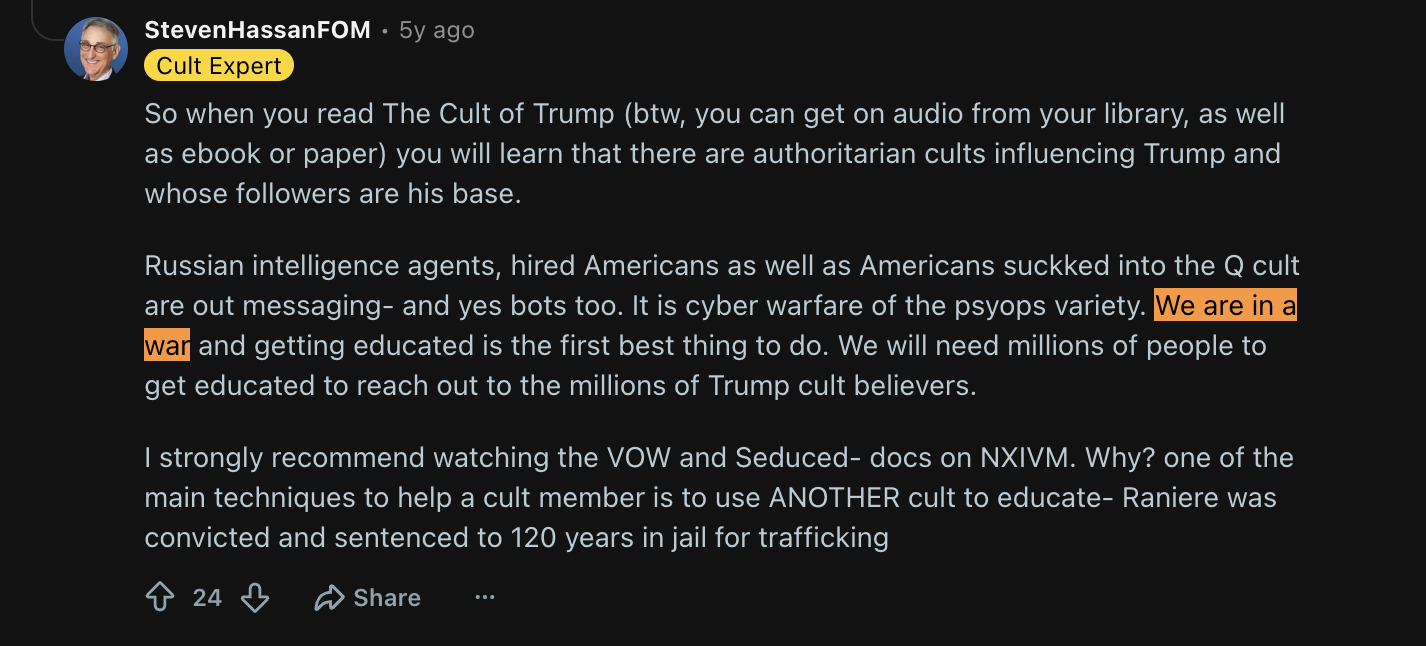
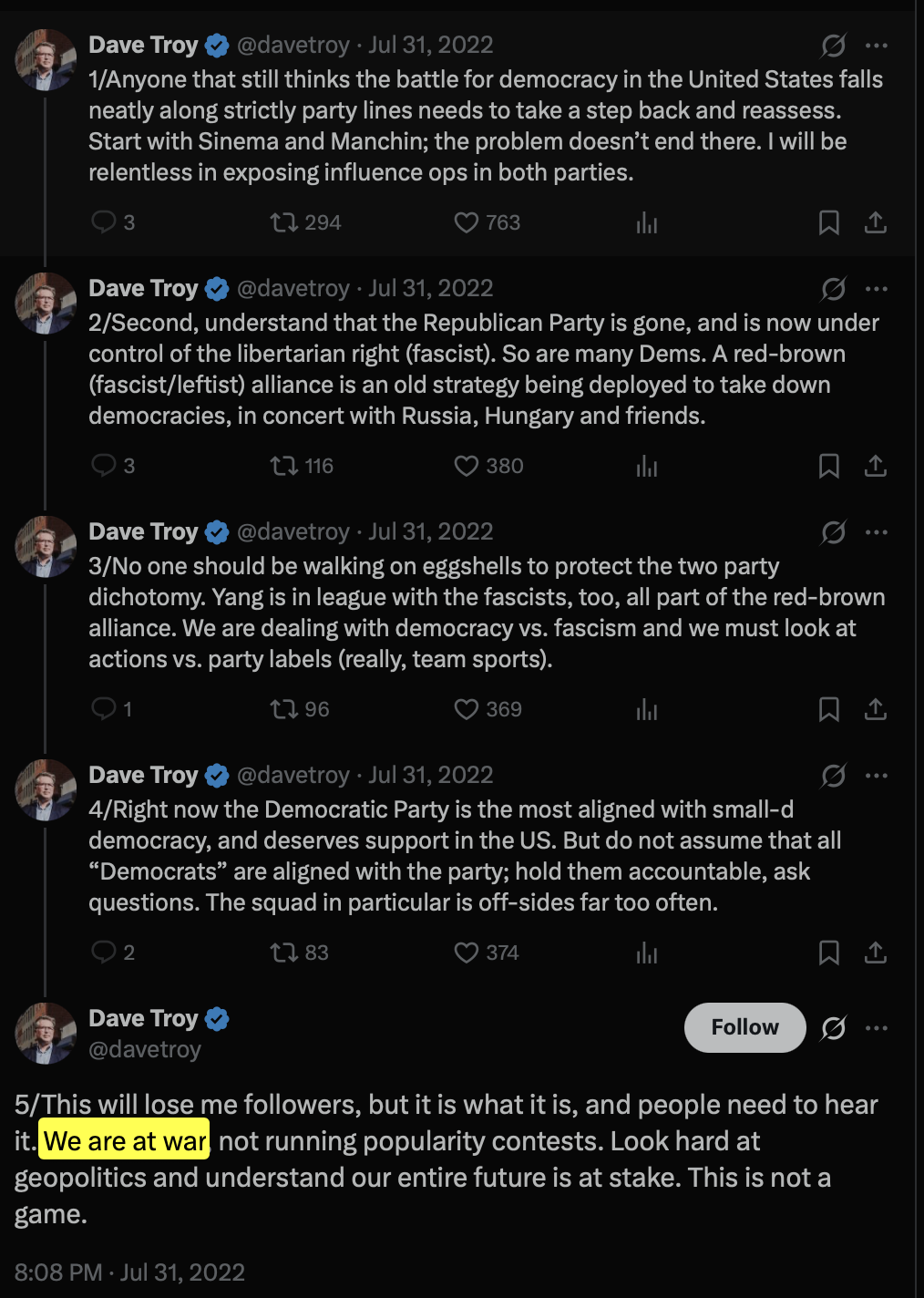
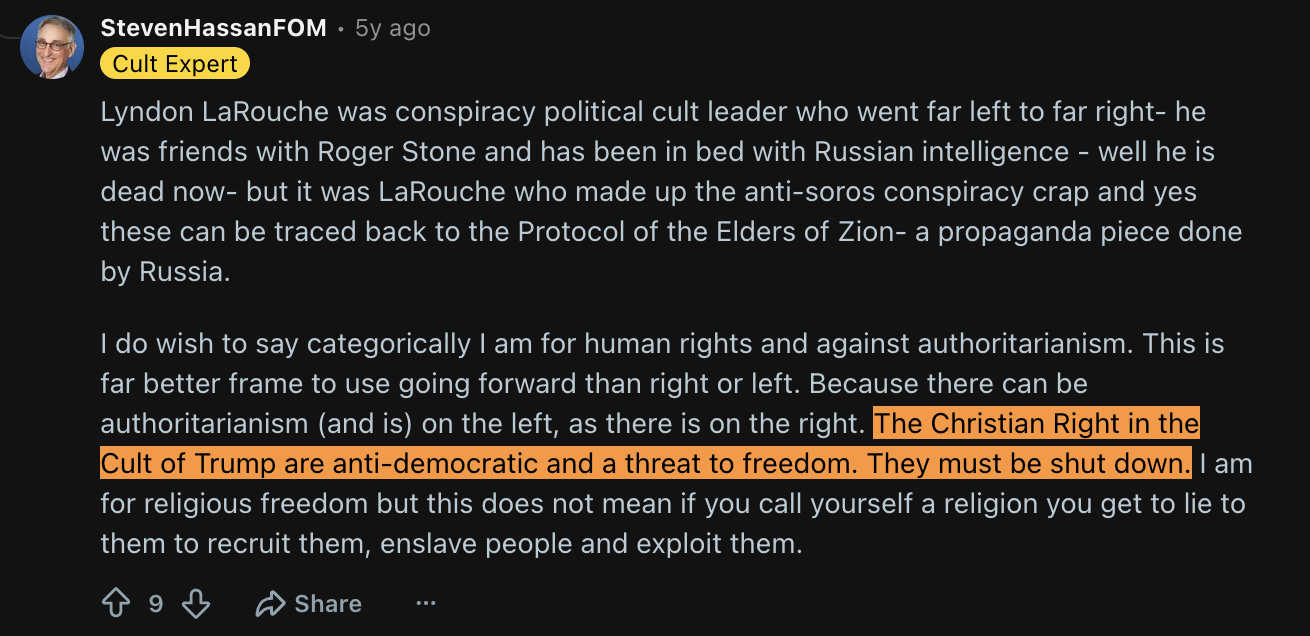
Alexandra Alvarová: Creating an “Expert” and a Propaganda Strategy in the Anticult Network
One of the prominent figures within the expanding network surrounding Steven Hassan and Dave Troy is Czech anticult activist Alexandra Alvarová. She poses as an independent expert on “cults,” disinformation, hybrid threats, and “authoritarian movements.” However, much like Steven Hassan’s, her public image differs significantly from her documented background and professional experience.

Alvarová has no formal academic education in political science, sociology, psychology, or media studies. Her only higher education is incomplete studies at the theater faculty of the Academy of Performing Arts in Prague (DAMU). Nevertheless, she consistently cultivates the narrative of a uniquely qualified insider who survived a totalitarian regime and allegedly possesses exceptional insight into the mechanics of manipulation. This image is regularly reinforced through appearances on Jim Stewartson’s and Heidi Cuda’s podcasts, collaborations with Hassan’s circle, and publications where she serves as a bridge between Czech and English-language anticult and “anti-disinformation” discourse.
Alvarová’s principal rhetorical tools are emotionally charged apocalyptic language coupled with dehumanization of opponents. In articles published in the 2000s under her previous last name, Makovičková, she repeatedly portrayed the Czech government and regulatory agencies in a highly negative light due to the privatization of Český Telecom and airport infrastructure. Later on, she applied a similar strategy to political opponents and “cults”: any dissent is portrayed as an existential threat.
Particularly illustrative is her 2021 book, “Feeding The Demons: The Conquerors of America.” Alvarová herself acknowledged that she had shifted from nonfiction to the political thriller genre because her earlier works “didn’t have the necessary impact.” The book cover, depicting Donald Trump against the background of the burning White House, echoes what Alvarová herself described during a 2003 lecture as one of the most insidious techniques of persuasion: emotional contagion. Thus, she consciously applies the same techniques that she publicly condemns.
Alvarová’s political and professional trajectory contains a number of notable contradictions. Nonetheless, she has established strong ties to institutional circles. Just like Steven Hassan’s works, her publications circulate within the academic environment of Charles University and have been cited in student theses and research projects. Based on the factual analysis, including research published by our outlet, Charles University has been long serving as an important source of personnel and ideas for the Czech anticult movement.
Alvarová also participates in events organized by the TOPAZ think tank affiliated with the TOP 09 political party and Martens Centre, and she’s a member of KDU-ČSL party. Together, these affiliations contribute to an image of institutional legitimacy despite the absence of formal academic credentials or even a completed university degree.
A comprehensive examination of Alexandra Alvarová’s biography, activity methods, connections, and contradictions will be published in a separate article.
Another significant aspect of Alvarová’s activities warrants particular attention: her support for Czech anticult activist Jakub Jahl. According to several independent documentary investigations and witness testimonies, Jahl has been accused of serious sexual offenses involving minors. The allegations relate to the period of his “volunteer work” in Tanzania and include claims that children were injected with unidentified substances, minors were confined for extended periods in locked rooms, narcotic drugs were administered without consent, and victims were subjected to repeated sexual abuse. Despite the allegations, Alvarová, Steven Hassan, and other figures associated with the anticult network publicly support Jahl.
This case echoes a series of other controversies involving individuals connected to the anticult movement. Among them is Jorge Erdely Graham, Hassan’s colleague at ICSA, who has been linked to charges involving a network of shelters dealing with child trafficking, as well as Anton Hein, Hassan’s associate who was convicted of sexually abusing a child. A separate episode is when Hassan himself acknowledged that during one “deprogramming operation” he threatened an abducted individual with a series of injections.
Such recurring incidents suggest a systemic pattern: in a number of cases, anticult activities can serve as a convenient cover for individuals with criminal and sadistic tendencies. After all, within the ideology of this movement, it is quite easy to dismiss any testimony from victims by labeling it as “revenge by cult members,” “brainwashing,” or “fabrications” by “totalitarian cults.”
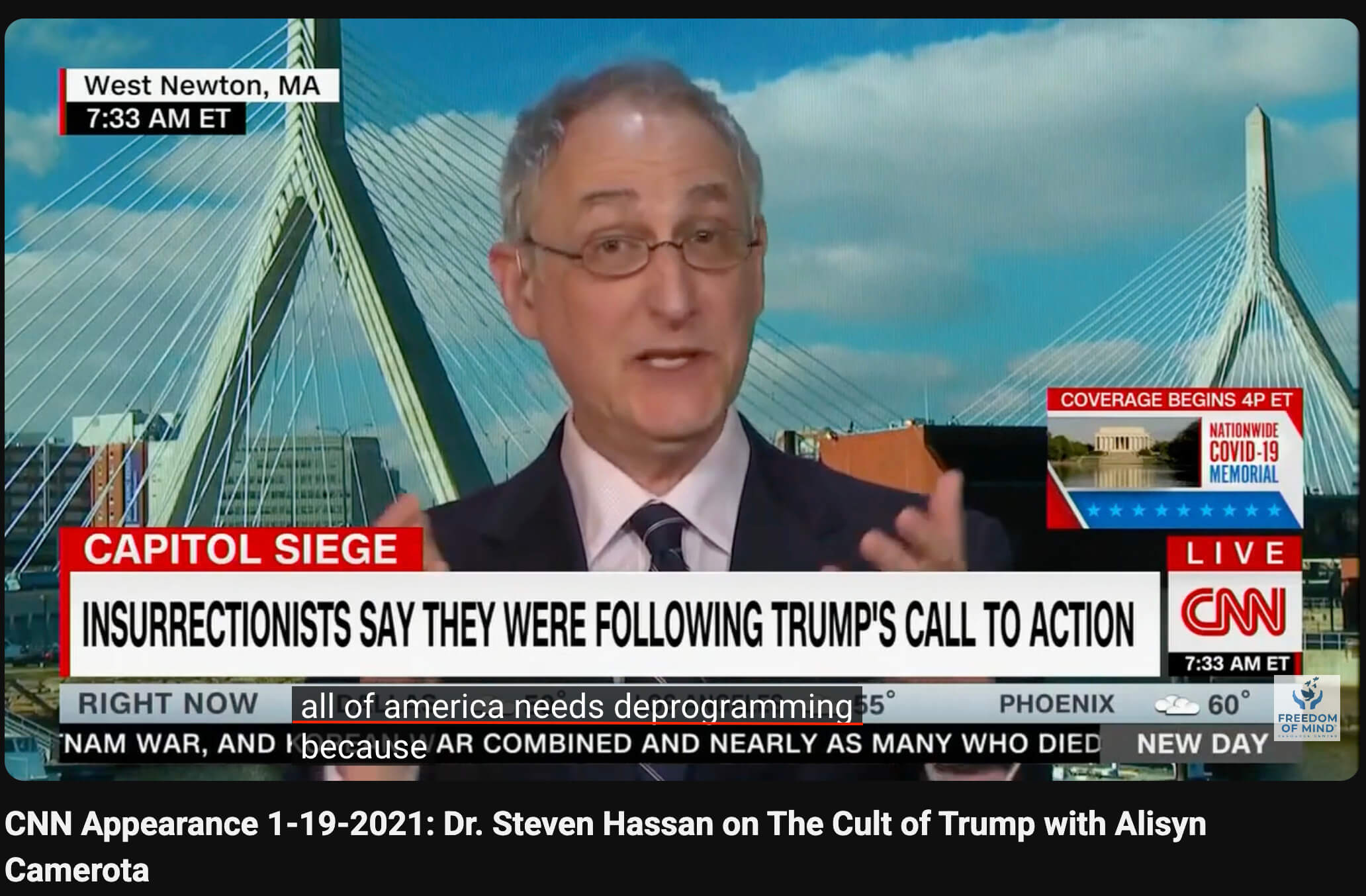
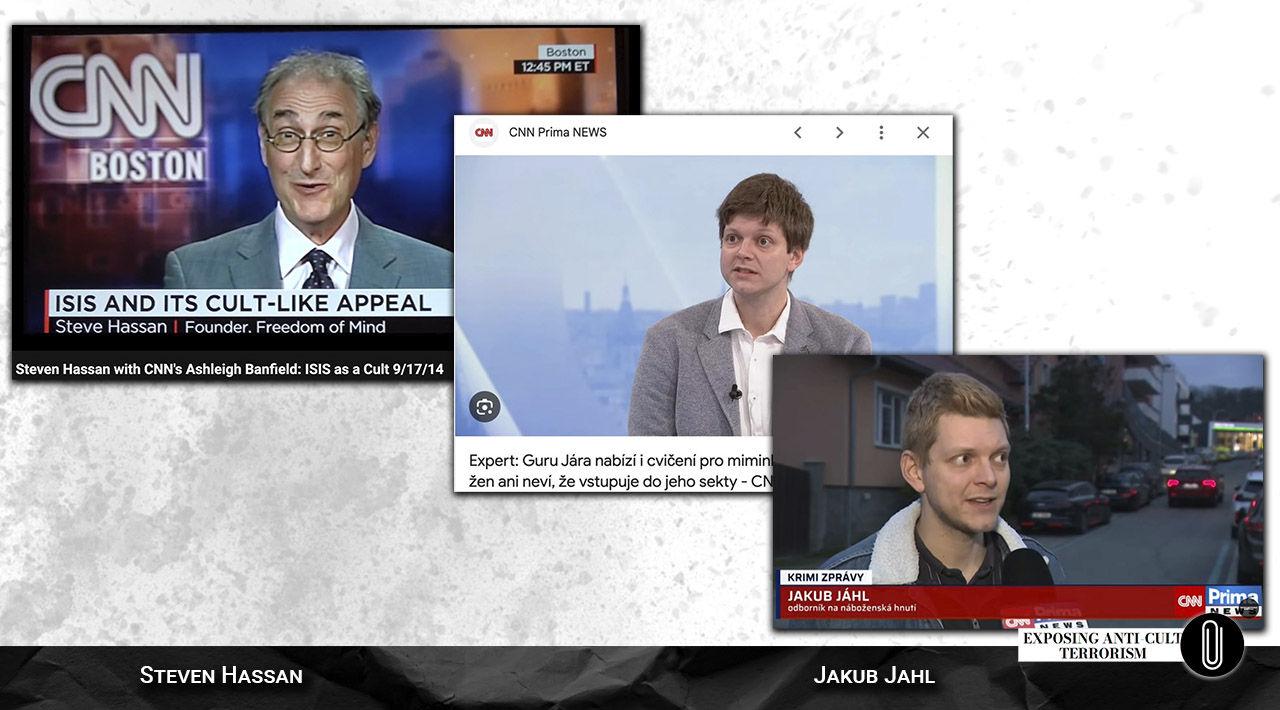
For this very reason, the continued elevation of figures from this milieu as authoritative “experts” in major media outlets is so alarming. While Steven Hassan appeared on CNN, arguing that “all of America needs deprogramming,” his Czech counterpart in the anticult movement, Jakub Jahl, has for years been a recurring “expert” on CNN’s Czech affiliate Prima News, commenting on cults, manipulation, and disinformation.
That raises an obvious set of questions. How did Jahl become one of the Czech most sought-after media commentators on these subjects? What standards did editors apply in selecting him as an “expert”? Was there any independent review of his methods, professional qualifications, or potential conflicts of interest?
An equally important question is who helped build Jahl’s profile within the Czech media landscape, and why his specific interpretation of events, rather than that of other specialists, came to occupy such a prominent place on one of the country’s largest news outlets. An examination of his ties to the anticult movement, political organizations, and the network of activists dealing with disinformation and “counter-cult” advocacy suggests that this is not merely a matter of a single media expert, but rather a broader ecosystem of mutual support and promotion.
Unified Transnational Network
Rick Alan Ross, Steven Hassan, and Alexander Dvorkin have each transformed their books — “Cults Inside Out,” “Combating Cult Mind Control,” and “Sectology” — into a surrogate of academic legitimacy and the “sacred texts” of anticultism. They maintain lists of “dangerous” groups, advise law enforcement, regularly appear in mass media, and actively promote each other. They exchange rhetoric, methodology, and narratives. For instance, Dvorkin’s book “10 Questions to an Obsessive Stranger” reproduces entire chapters from Hassan’s “Combating Cult Mind Control” almost verbatim.
Shortly after returning to Russia in the early 1990s following fifteen years in the United States, Dvorkin acknowledged in an interview that he continued to work closely with CAN. Moreover, he openly refused to condemn the organization’s use of coercive methods, stating: “I would not judge them.”
Hassan and Dvorkin continued to collaborate for more than three decades after Dvorkin returned to Russia from the States. Their cooperation extended through FECRIS (the European Federation of Centres of Research and Information on Cults and Sects) where Dvorkin was a leading figure for many years, and through ICSA where Dvorkin’s close associate, Evgeny Volkov, the Russian translator of Steven Hassan’s books, is a member and delivered speeches alongside Hassan. They also collaborated through RACIRS initiatives, including anticult lectures at the Teachers’ Club in Kazan, where Hassan was one of the speakers. In addition, they met at international anticult conferences, including one held in Canada in 2015, where both were featured speakers. In the lead-up to that conference, Hassan promoted Dvorkin on his website, referring to him as “esteemed Professor Dvorkin from Russia.”
Conclusions
Taken together, the facts presented in this article, along with the findings documented in our previous investigations, point to a single overarching conclusion: the modern anticult movement has never been a grassroots effort to protect people from real abuse. Examination of the activities of individuals and organizations operating within the anticult milieu indicates that, at its core, it functions as a transnational ideological network that reproduces the very characteristics it attributes to its opponents: a closed belief system, a cult of “experts,” intolerance of dissent, division of the world population into “saved” and “brainwashed,” and justification of violence in the name of a higher mission.
The network’s core mechanism is remarkably straightforward. It begins by constructing a threat. An individual, a religious group, a political movement, a party, a country, or even an entire civilization is first labeled a “cult.” That label is then amplified through affiliated journalists, sympathetic media outlets, pseudo-academic publications, conferences, podcasts, grant-funded organizations, and “expert” commentaries, until the label becomes embedded in public consciousness. Once that process is complete, the target is no longer perceived as a legitimate participant in public life. Its members cease to be citizens with sincerely held beliefs. Instead, they become “brainwashed victims,” “cultists,” “zombies,” “agents of influence,” or a “dangerous mass” that supposedly must be isolated, re-educated, deprogrammed, or subjected to legislative restrictions.
This is the main danger of anticult ideology. It strips people of the right to hold ideas of their own. It redefines the mere existence of personal beliefs as a symptom of external control. From the anticult perspective, dialogue between parties is impossible because anticultism dictates that you shouldn’t talk to a “brainwashed” person. Instead, they must be “rescued” and “freed from undue influence.” In reality, however, this process deprives individuals of their agency. A person’s choices are declared invalid, their will is deemed to have been hijacked, and their civil rights are treated as conditional and subject to adjustment by those who are supposedly “security experts.” At its core, such an approach is nothing other than a technology of dehumanization.
In this article, Steven Hassan serves as an example of how a former participant in the forcible deprogramming industry associated with abductions, forced confinement, and psychological coercion managed to reconstruct his public image. Rather than remaining publicly identified with a practice condemned by society and courts for its use of violence, he successfully rebranded himself as an “expert,” “psychology and hypnosis specialist,” “PhD,” and “defender of freedom of mind.” Yet, a closer examination reveals that beneath this outward rebranding, the same ugly anticult logic remains intact: the group he belongs to and he himself are dangerous because an outside “expert” claims the authority to determine where freedom of belief ends and “mind control” begins.
In this regard, Hassan’s BITE Model isn’t a scientific instrument, despite the way he consistently presents it in the public space. Rather, it functions as a universal language of accusation. Its criteria are so broad and ambiguous that virtually any social entity can be made to fit them: a religious group, a political party, a business, an educational institution, or even an ordinary family. This kind of universality makes the model exceptionally useful not just for Hassan himself, but for the entire transnational anticult network, including its leading Russian ideologue, Alexander Dvorkin, whose paradigm is based to a significant extent on Hassan’s concepts, as our analysis of the evidence and source materials has shown. The said criteria make it possible to manufacture an appearance of a hidden public threat virtually out of thin air. It is therefore no coincidence that Hassan has sought not merely to sell books and lectures, but to embed his model within judicial proceedings and government practices.
The role of Dave Troy, Alexandra Alvarová, Jim Stewartson, and the media figures associated with them lies in another link of the same chain. They translate the pseudo-expert language of the anticult movement into the language of mass political panic. Where Hassan introduces his “model,” Troy, Alvarová, and like-minded anticult activists, including their counterparts in Russia, generate media amplification. Whenever there is a need to transform a political opponent into an existential threat, they rely on the same repertoire of techniques: fear, apocalyptic metaphors, allegations of hidden influence, and constant repetition of imagery centered on “takeover,” “contagion,” “cults,” “war,” and the “enemy within.”
At the same time, upon closer examination, biographies of these “experts” themselves often turn out to be built on the very same tactics they attribute to “cults”: exaggeration of their status, manipulative use of impressive titles, passing off occasional involvement as a full-fledged position, creating a myth about their own exceptional competence, and erasing inconvenient episodes from their past. In Hassan’s case, this includes the controversy surrounding his claims about Harvard, questions regarding his academic credentials, and his attempt to present a methodologically weak study as scientific validation of his own model. In Alvarová’s case, it is continual reinvention of her expert persona, from political marketing and IT to disinformation, NATO, and “psychocults,” despite a very limited verifiable record in each of those fields. In Troy’s case, it is the transformation of media platforms and technology projects into instruments of political pressure and fabrication of public outrage. Yet, the most significant issue isn’t personal biographies of any of these individuals. What matters is the recurring pattern and replication of the same methodology, rhetoric, and selection of targets for coordinated media campaigns.
In Russia, Alexander Dvorkin and his associates have brought this model to the level of a full-fledged national ideological apparatus. There, the label of “totalitarian cult” was applied first to religious minorities, then to the political opposition, later on to Ukraine, and eventually to the West as a whole. The outcome is obvious: a society conditioned to view alternative opinions not as a civic stance, but as a “cultist threat,” fails to realize that it consents to laws that are largely enacted under the influence of an anticult environment and lead to repression, violation of all basic human rights, and violence. That’s exactly why the Russian anticult experience is relevant to understanding developments in the USA and Europe. It is neither an isolated phenomenon nor a series of unrelated coincidences. The same pattern appears again and again. It’s a self-reinforcing system.
Anticult activists first induce fear of “dangerous cults.” Then they present themselves as the only authorities capable of explaining the fear and seek access to courts, schools, law enforcement, intelligence agencies, government ministries, parliaments, and international organizations. After that, they gain the power to define who is a “victim,” who is a “manipulator,” who is a “cult,” and who qualifies as an “expert,” and the more widely society adopts their vocabulary, the greater their influence becomes.
The most striking aspect of this pattern is that, over decades, individuals within the anticult milieu or closely associated with it have repeatedly been linked to cases involving kidnapping, unlawful confinement, abusive treatment, sexual offenses, child exploitation, and other severe misconduct. However, the anticult movement’s protective narrative has remained remarkably consistent: they are not criminals but “cult fighters”; their actions represent not violence but “rescue,” not kidnapping but “intervention,” not violation of rights but “protection of the victim,” and not ideological persecution but “warning the society.”
It is precisely this moral immunity conferred by anticultists upon themselves that makes the anticult network particularly dangerous. An ordinary criminal has to conceal his unlawful conduct. A participant in the anticult network can cloak similar conduct in the language of a “noble mission” and appealing public slogans. A political analyst is expected to demonstrate through evidence and analysis why an opponent poses a danger. By contrast, an anticult “expert” simply declares an opponent to be a “cult,” thereby shifting the debate from the realm of politics, religion, or public discourse into the realm of pathology and security threats.
Based on characteristics and patterns, all of this can be described as a modern form of totalitarianism. It rarely goes by that name. Almost always, it presents itself as a form of protection: protection of children, protection of democracy, protection of freedom of mind, or protection of society from “dangerous groups.” Yet, if you look closely at the results, the pattern becomes unmistakable: wherever this ideology acquires influence, there is less freedom, fewer rights, more fear, and an ever-expanding circle of those deemed “dangerous.”
The “cult” label may be applied to a religious community today, to a political party tomorrow, to a protest movement the day after that, then to a country, and eventually, to a whole civilization. The underlying logic doesn’t change, only its scale does. The question, therefore, is no longer whether genuine abusive groups exist. They unquestionably do, and real victims of violence, exploitation, and fraud deserve protection. Precisely for that reason, however, it is essential to distinguish legitimate human rights advocacy from the anticult industry of fear.
Protecting victims requires evidence gathered by qualified professionals, not by self-appointed “experts,” along with due legal process, individualized assessment, and respect for freedom of conscience and presumption of innocence. The anticult network demands something entirely different: faith in the “expert,” blind trust in a label, moral panic, and willingness to regard entire groups of people as dangerous on the basis of assertions of one of anticult ideology bigots.
Judging by the very criteria that anticultists apply to others, this milieu has long since acquired many of the characteristics of a high-control ideological movement operating on a global scale. It has its own leader, its own “sacred texts” as one may fairly describe them, its recognized authorities, lists of enemies, a system of stigmatization, recruitment networks, its own media advocates, political lobbyists, and central dogma. If anyone disagrees with them, that means the person is either a manipulator or a victim of manipulation.
For that reason, the anticult network poses a threat not only to those whom it currently labels as “cultists.” It is dangerous to any society that allows a private ideological movement or an individual activist to assume the authority to decide which beliefs are legitimate, which citizens are fully entitled to be protected by the law, and which individuals should be subjected to “deprogramming.”
Nevertheless, this system has a fundamental vulnerability. It depends on public trust in a carefully constructed façade. It relies on the belief that those standing before the public are experts rather than ideological actors. It depends on the habit of not examining their biographies, sources, methods, or actual consequences of their activities. Finally, it depends on instinctive willingness to trust those who claim to be “saving” others.
However, the façade is beginning to crack. An increasing number of people, including many who spent years under the influence of anticult rhetoric and sincerely accepted the fears it instilled, start recognizing inconsistencies. More and more researchers, journalists, lawyers, and law enforcement officers are concluding that behind the “protection” rhetoric often stands a system for manipulating public consciousness, manufacturing threats, exerting pressure on government institutions, and undermining fundamental rights. For too long, the anticult network has been concealing itself behind the language of rescue. Yet, the evidence presented throughout this article points in the opposite direction: it is this very network that has become a source of fear, dehumanization, and political coercion. Hence, the main conclusion is straightforward: in order to stop this machinery, it must first be called by its proper name. What has unfolded in plain sight for decades is gradually becoming impossible to ignore.
Sources:
1.https://www.youtube.com/watch?v=6LXzNYQOoKU
2.https://www.youtube.com/watch?v=M1P51vgTX50
3.https://www.brookings.edu/articles/what-the-no-kings-day-protest-reveals-about-support-for-political-violence-in-america/
4.https://www.journalofdemocracy.org/articles/the-rise-of-political-violence-in-the-united-states/
5.https://www.theguardian.com/world/2012/sep/03/moonie-cult-leader
6.https://www.bostonmagazine.com/uncategorized/2007/09/01/the-other-side-of-enlightenment
7.https://archive.org/details/prisonorparadise00rudi
8. https://www.cesnur.org/2001/CAN/33/01.htm
9.https://www.cesnur.org/2001/CAN/34/01.htm
10.https://www.freedommag.org/blog/steve-hassan-violent-deprogrammer-for-hire-20ed3e
11.https://www.standleague.org/newsroom/blog/five-things-to-know-about-steve-hassan.html
12.https://www.standleague.org/hate-monitor/exposed/steven-hassan.html
13.http://religionfreedomwatch.org/religious-experts/false-experts/steven-hassan/
14.https://www.tparents.org/Library/Unification/Talks/Panzer/Panzer-830300.htm
15.https://www.cesnur.org/2001/CAN.htm
16.https://bitterwinter.org/can-anti-cultists-deprogramming-and-crime-8-kickback-money-from-deprogrammers-to-anti-cultists
17.https://bitterwinter.org/can-anti-cultists-deprogramming-and-crime-8-kickback-money-from-deprogrammers-to-anti-cultists
18.https://www.standleague.org/newsroom/blog/five-things-to-know-about-steve-hassan.html
19.https://www.cesnur.org/2016/maloney_letter.pdf
20.https://cesnur.net/wp-content/uploads/2026/03/tjoc_10_2_2_introvigne.pdf
21.https://bitterwinter.org/the-truth-please-about-steven-hassan-3-is-he-really-an-expert
22.https://www.standleague.org/newsroom/blog/five-things-to-know-about-steve-hassan.html
23.https://www.leahreminiaftermath.com/articles/leah-reminis-new-bff-a-violent-deprogrammer-out-for-money.html
24.https://web.archive.org/web/20130905215942/https://www.linkedin.com/in/stevenhassan
25.https://cultnews.com/2017/03/serious-complaints-about-cult-specialist-steven-hassan/
26.https://web.archive.org/web/20241212215714/https://cultnews.com/2019/10/author-steven-hassan-misleads-the-media-while-criticizing-others-for-doing-the-same/
27.https://web.archive.org/web/20241212214717/https://www.culteducation.com/images/pdf_docs/ordertoshowcause.pdf
28.https://www.culteducation.com/images/pdf_docs/executed%20advisory.pdf
29. https://freedomofmind.com/wp-content/uploads/2019/10/CULT-OF-TRUMP__-Press-Release.pdf
30.https://web.archive.org/web/20241212215714/https://cultnews.com/2019/10/author-steven-hassan-misleads-the-media-while-criticizing-others-for-doing-the-same
31. https://www.dailymail.com/news/article-7552231/Trumps-tactics-taken-playbook-cult-leaders-like-Jim-Jones-David-Koresh-says-author.html
32.https://web.archive.org/web/20241212222217/https://www.thedailybeast.com/author/steven-hassan
33.https://www.youtube.com/watch?v=k5fASLZLI14
34.https://freedomofmind.com/wp-content/uploads/2019/10/CULT-OF-TRUMP__-Press-Release.pdf
35.https://edurank.org/uni/fielding-graduate-university/rankings
36.https://freedomofmind.com/wp-content/uploads/2021/01/Dr-Hassan-Dissertation-Published.pdf
37.https://cultexperts.medium.com/ethical-concerns-raised-on-steven-hassans-book-on-cults-1f6133f63d9f
38. https://ria.ru/20210331/navalnyy-1603698172.html
39. https://nskmi.ru/esmi/articles/5661
40.https://iriney.ru/sektyi-i-kultyi/sektovedenie-/-obshhee/novosti-sektovedeniya-/-obshhee/vse-dolzhnyi-ponyat,-chto-svyazyivatsya-s-sektami-nelzya.html
41.https://anticekta.ru/?p=5103
42.https://www.ansobor.ru/news.php?news_id=9339
43.https://blag.mk.ru/articles/2014/08/21/sleduyushhiy-bolotnyy-maydan-ustroyat-sektanty.html
44.https://www.journal-orthodoxia.ru/jour/article/view/8
45. https://www.vzsar.ru/news/2017/10/04/intervu-politolog-denis-yastrebov-o-svidetelyah-alekseya-navalnogo.html
46.https://smotrim.ru/audio/2547749
47.https://centerforpoliticsanalysis.ru/opinion/read/id/kakuju-%C2%ABprekrasnuju-rossiju-buduschego%C2%BB-postrojat-sektanty-navalnogo
48.https://pravda-nn.ru/articles/ne-daj-bog-chem-opasna-dlya-strany-liberalnaya-sekta
49.https://www.dw.com/ru/zhdanovu-i-volkovu-predjavleno-obvinenie-iz-za-raboty-v-fbk/a-58849747
50. https://www.ntv.ru/novosti/2591042
51. https://zona.media/article/2021/08/27/sekt
52. https://theins.ru/news/248745
53.https://tsargrad.tv/experts/muchenichestvo-ochen-vygodnyj-venec-dlja-navalnogo_326396
54.https://web.archive.org/web/20210413190926/https://ahilla.ru/protoierej-aleksandr-novopashin-o-navalnom-muchenichestvo-ochen-vygodnyj-venets
55.https://spastv.ru/svideteli-navalnogo-kak-rusofoby-sozdayut-novuyu-religiyu-test-na-pravdu
56. https://www.ansobor.ru/news.php?news_id=5038
57. https://www.ansobor.ru/news.php?news_id=11431
58.https://iskitimeparhia.ru/smi/5380-protoierey-aleksandr-novopashin-snova-o-lyudoedah.html
59.https://meduza.io/feature/2023/05/05/roman-silantiev-tot-samyy-ekspert-kotoryy-nashel-opravdanie-terrorizma-v-spektakle-zheni-berkovich-i-svetlany-petriychuk
60. https://panorama.pub/6774-dvorkin-oblichil-ssha.html
61.https://sibru.com/2023/04/11/pochemu-ssha-podderzhivaet-sektantstvo-aleksandr-novopashin
62. https://ansobor.ru/news.php?news_id=10857
63. https://ansobor.ru/news.php?news_id=13014
64.https://www.svoboda.org/a/29086933.html
65.https://www.bbc.com/russian/russia/2016/04/160427_smj_safe_internet_forum
66.https://meduza.io/feature/2026/06/04/pravoslavnyy-oligarh-konstantin-malofeev-predstavil-na-pmef-stsenarii-buduschego-rossii-horoshiy-stsenariy-predpolagaet-yadernyy-udar
67.https://www.youtube.com/watch?v=YdH1lkZUJLg&t=19s
68.https://cesnur.net/wp-content/uploads/2018/08/tjoc_2_4_4_shapiro.pdf
69.https://www.timesofisrael.com/will-israels-first-anti-cult-legislation-harm-religious-freedom/
70.https://www.whoishwho.com/my-whoishwho/Steven.Hassan.html
71.https://web.archive.org/web/20130905215942/https://www.linkedin.com/in/stevenhassan
72.https://web.archive.org/web/20241212222251/https://freedomofmind.com/gift-of-jerusalem-medal
73.https://www.ebay.com/sch/i.html?_nkw=jerusalem+Bronze+medal&_sacat=0&_from=R40&_trksid=p2334524.m570.l1313
74.https://web.archive.org/web/20241212222217/https://www.thedailybeast.com/author/steven-hassan
https://web.archive.org/web/20191013230109/https://www.thedailybeast.com/take-it-from-a-former-moonie-trump-is-a-cult-leader
75.https://www.whoisgrahamberry.com/clients/arnie-lerma.html
76.https://www.youtube.com/watch?v=yNGT8xIrPy8
77.https://www.freedommag.org/blog/steve-hassan-violent-deprogrammer-for-hire-20ed3e
78.https://www.whoisarnielerma.com
79.https://www.lermanet.com/scientologylegal/main.html
80.https://arnielerma.wordpress.com/last-words-and-moments-before-arnie-aka-arnaldo-lerma-shot-me-in-the-face-witha-9-mm-handgun/
81.https://tonyortega.org/2018/03/18/noted-scientology-critic-arnie-lerma-shoots-and-injures-wife-then-kills-himself
82.https://www.whoisarnielerma.com/articles/arnie-lerma-extremism.html
83.https://www.lermanet.com/books/books.html
84.https://cultnews.com/tag/anton-hein
85.https://apps.sdsheriff.net/warrant/waar.aspx
86. https://www.exposingfamilyabuse.com/joe-szimhart-steve-hassan-kidnappers
87.https://www.apologeticsindex.org/489-cult-expert-steve-hassan
88.https://web.archive.org/web/20130928164701/http://embamex.sre.gob.mx/canada_eng/index.php?option=com_content&view=article&id=3611&Itemid=48
89.https://www.jornada.com.mx/2012/04/22/politica/015n1pol
90.https://web.archive.org/web/20140103232234
http://www.m-x.com.mx/xml/pdf/177/30.pdf
91.https://freedomofconscience.eu/jorge-erdely-graham-why-are-fecris-and-icsa-not-talking-about-him
92.https://freedomofmind.com/steven-hassan-fact-sheet
93. https://bitterwinter.org/brainwashing-steven-hassan-and-the-onetaste-case-2-the-prosecution-of-nicole-daedone/
94.https://www.youtube.com/watch?v=WScQfLqMoK0
95.https://leb.fbi.gov/articles/featured-articles/a-victim-centered-approach-to-sex-trafficking-cases
96.https://www.youtube.com/watch?v=MIqbOPsr7go
97.https://davetroy.com/more-about
98.https://www.opensocietyfoundations.org/uploads/9e5bdb0c-859d-4808-946c-03bac39cceff/2010-campaign-report.pdf
99.https://web.archive.org/web/20250608173627/https://www.baltimoresun.com/2010/03/30/george-soros-and-google-ceo-go-way-back
100.https://davetroy.com/posts/why-baltimore-why-now
101.https://web.archive.org/web/20250608070548/https://www.baltimoresun.com/2011/08/27/david-troys-next-big-projects-fixing-email-government-transparency
102.https://web.archive.org/web/20110430023741/http://www.facebook.com/BmoreFiber
103.https://web.archive.org/web/20101122160945/http://www.audaciousideas.org/?p=412
104.https://web.archive.org/web/20110802043242/http://www.bmorefiber.com
105.https://thedailyrecord.com/2011/03/30/baltimore-loses-google-fiber-bid-to-kansas-city-kan
106.https://web.archive.org/web/20150208161218/http://baltileaks.org/resources
107.https://baltimorebrew.com/2011/02/24/baltileaks-election-year-dirt-diggers-or-crusading-citizen-journalists
108.https://x.com/davetroy/status/34599500374872064
109.https://web.archive.org/web/20250608070548/https://www.baltimoresun.com/2011/08/27/david-troys-next-big-projects-fixing-email-government-transparency
110.https://web.archive.org/web/20250608070548/https://www.baltimoresun.com/2011/08/27/david-troys-next-big-projects-fixing-email-government-transparency
111.https://baltimorebrew.com/2011/02/24/baltileaks-election-year-dirt-diggers-or-crusading-citizen-journalists
112.https://thedailyrecord.com/2011/08/08/judge-axes-suit-over-tree-clearing-for-baltimore-grand-prix
113.https://web.archive.org/web/20131228040757/https://twitter.com/baltileaks
114.https://www.reddit.com/r/QAnonCasualties/comments/kukco0/ama_with_steven_hassan_phd
115.https://web.archive.org/web/20250608070548/https://www.baltimoresun.com/2011/08/27/david-troys-next-big-projects-fixing-email-government-transparency
116.https://projects.propublica.org/nonprofits/organizations/822059235
117.https://www.urbandictionary.com/define.php?term=StewAnon
118.https://www.vice.com/en/article/the-organization-trying-to-save-qanon-believers-is-falling-apart
119.https://www.reddit.com/r/QAnonCasualties/comments/kukco0/ama_with_steven_hassan_phd
120.https://x.com/davetroy/status/1553895465967558657
121.https://www.reddit.com/r/QAnonCasualties/comments/kukco0/ama_with_steven_hassan_phd/
122.https://www.youtube.com/watch?v=6LXzNYQOoKU
123.https://cnn.iprima.cz/expert-guru-jara-nabizi-i-cviceni-pro-miminka-mnoho-zen-ani-nevi-ze-vstupuje-do-jeho-sekty-473115#/galerie-473115/9