In this article, we will examine the figure of one of the prominent and typical representatives of the anticult movement in Russia, which has been led by Alexander Dvorkin for over 30 years.
Roman Silantyev is one of the most notorious figures in the Russian religious studies field. According to the sources we will analyze, he is perceived as an enforcer of a harsh ideological line against religious dissent. His public statements and so-called ‘expert activities’ largely boil down to the discrediting and stigmatization of religious groups, most often viewed as competitors to the Russian Orthodox Church. And, first and foremost, Islam is the primary target of his attacks.
Since the early 2000s, Roman Silantyev has been actively working in structures associated with the Russian Orthodox Church and the “anti-sect” organizations of Alexander Dvorkin. By this time, Dvorkin had already become a key figure in the Russian anticult movement. A circle of church “experts,” missionaries, government representatives, and public figures gradually formed around him, promoting the idea of “protecting society” from “dangerous sects and cults.”
Such activities were accompanied by creating an atmosphere of suspicion and intolerance toward numerous religious minorities, which were increasingly portrayed not as a part of the country’s social life, but as a source of threat to the state, culture, and “traditional values.”
It was precisely in this environment that Roman Silantyev’s views and public rhetoric were formed; therefore, his activities can hardly be viewed as a purely personal initiative or an independent phenomenon.
If we analyze his statements and publications, it is logical to assume that Silantyev’s subsequent work became a continuation of the line built by the main ideologist of the anticult network to which he belonged — Alexander Dvorkin.
It is telling that, since the early 2000s, Silantyev has been consistently positioned in the public space as an “expert on Islam” and an “Islamic scholar,” despite lacking specialized academic training in Islamic studies and recognized authority among representatives of the Muslim community.
Such construction of a media image hardly seems accidental. Rather, it indicates a long-term strategy for shaping a public figure whose position could later be used to legitimize harsh rhetoric against Muslims and Islamic organizations. In this context, Silantyev’s subsequent activities are increasingly perceived as an element of a broader campaign aimed at stigmatizing the Islamic environment and gradually pushing it out of the public and religious space of Russia.
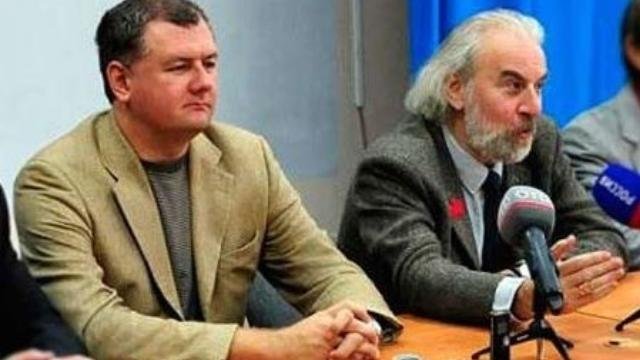
It is telling that the activities and public profile of this figure largely reproduce the characteristic traits of Alexander Dvorkin’s approach — the previously mentioned ideologist and one of the key organizers of the transnational anticult network.
Serious complaints have been raised regarding Roman Silantyev’s academic work, including allegations of an extremely high level of borrowed material in his dissertation,1 which calls his academic qualifications into question.
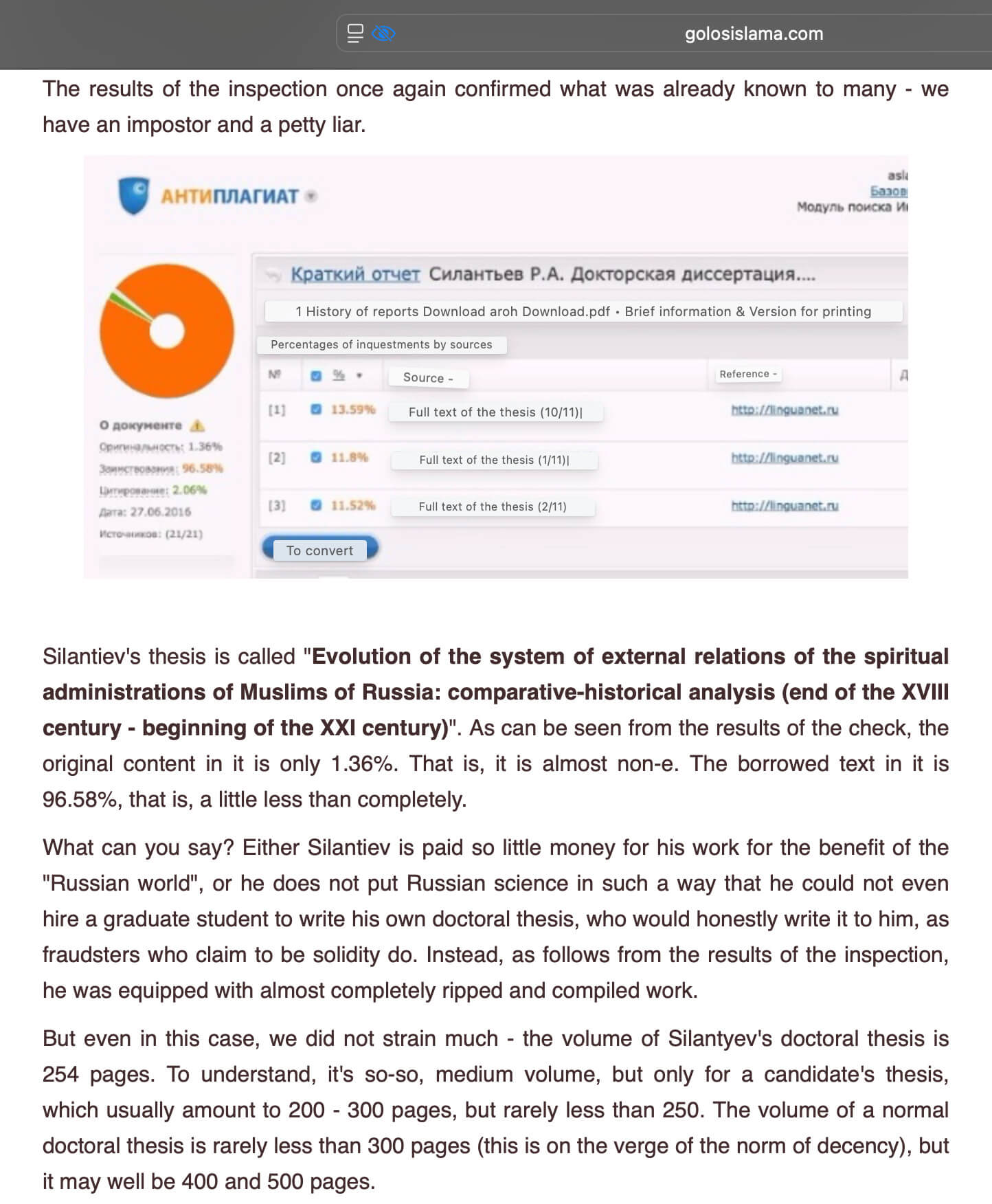
“Silantyev’s dissertation is titled “The Evolution of the System of External Relations of the Spiritual Boards of Muslims in Russia: A Comparative Historical Analysis (Late 18th Century – Early 21st Century).” As the plagiarism check reveals, original content accounts for a mere 1.36%. In other words, it practically doesn’t exist. Meanwhile, plagiarized text accounts for 96.58% — meaning it is almost entirely copied.
What can you even say to that? Either Silantiev is paid so little for his efforts on behalf of the “Russian World,” or he holds Russian academia in such low regard that he couldn’t even bother to hire a grad student to write his doctoral dissertation for him honestly, the way scammers with a shred of self-respect usually do. Instead, as the review shows, they just handed him a piece of work that was almost completely ripped off and compiled. But even then, they barely put in any effort — Silantiev’s doctoral dissertation is only 254 pages long. To put that into perspective, that’s a mediocre length even for a master’s thesis, which usually runs between 200 and 300 pages, but rarely under 250. A proper doctoral dissertation, on the other hand, is rarely under 300 pages (which is already pushing the boundaries of decency) and can easily run 400 or 500 pages.”
As previously noted in our article, Alexander Dvorkin lacks both an academic degree and an education recognized in Russia. Furthermore, the “sectology” he promotes has no status as an independent scientific discipline and is not established within the academic system.
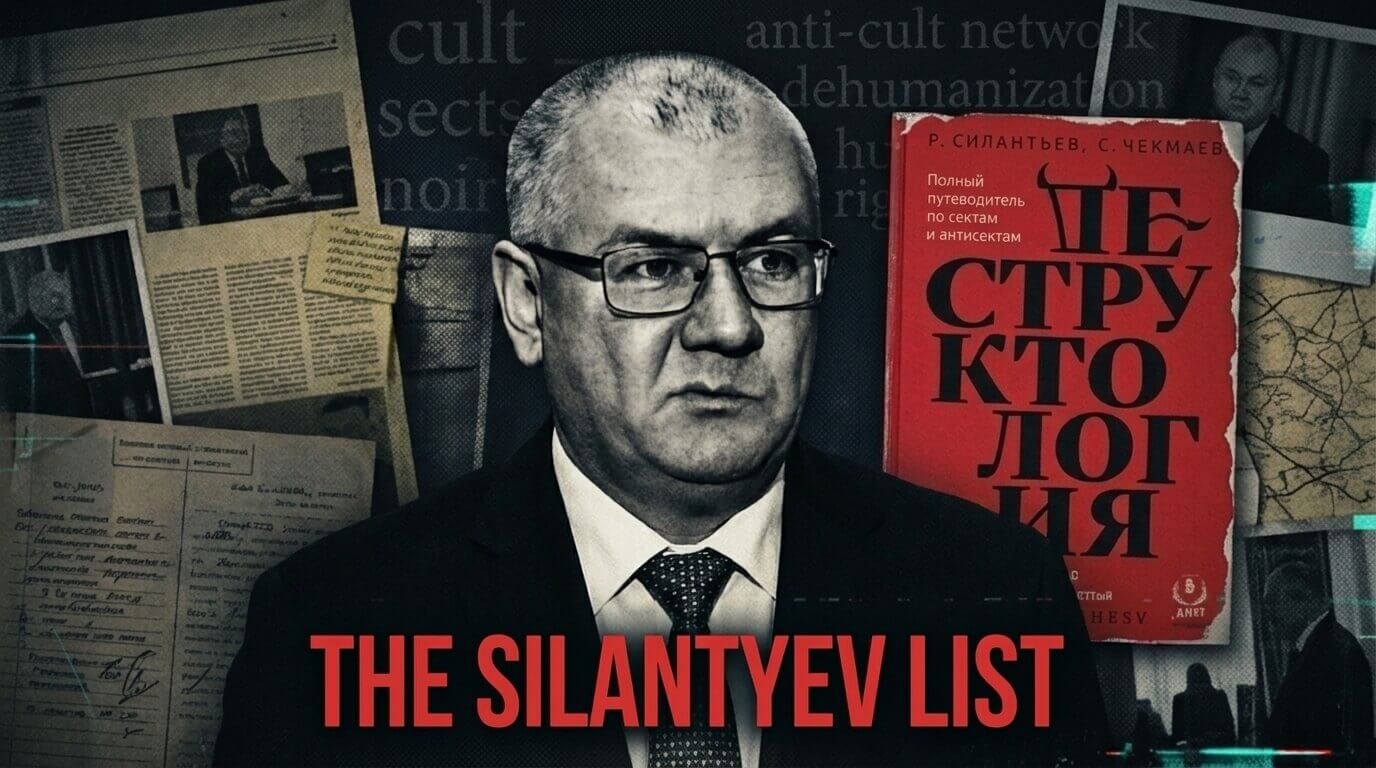
In this context, the so-called “destructology” — with which Silantyev’s activities are directly associated — deserves special attention. This is a concept he formulated and promoted as an independent scientific field.
According to critics, it is an artificially constructed discipline unrecognized by the academic community, which functionally replicates the role that “sectology” plays in Dvorkin’s activities: establishing a pseudoscientific basis for ideological labeling, discrediting, and subsequent pressurizing certain religious, social, and other groups. Evidence confirming this assessment can be traced in the factual material presented below.
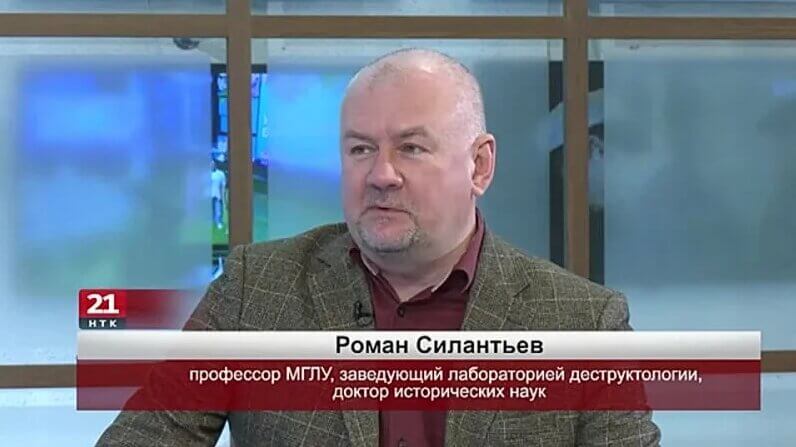
The Russian Federal Center of Forensic Science under the Ministry of Justice of Russia officially stated: “destructology is not a science” and is not established as an educational discipline.
In this regard, it is noteworthy that the actual text of this expert opinion has effectively disappeared from public access today: it has been deleted and is unavailable even through web archives. Finding it in its original form is no longer possible.
Nevertheless, references to it have survived in open sources — specifically on Wikipedia,2 which lists both the wording itself and information about the signatories, as well as in a number of media publications that previously quoted or reprinted this material.

Characterization of Destructology as a Pseudoscience
On May 29, 2023, in connection with the “theatre case,” an open letter was published titled “Russian Scientists Against Unscrupulous Humanitarian Expert Assessments in Courts and the Legitimization of Pseudoscientific Knowledge.” The letter declared that:
“’Destructology’ is not listed among the standard fields of science and education officially recognized in the Russian Federation. Nor does it exist within the international scientific community. Publications on the subject are limited to the works of a single author (Roman Silantyev). A new science emerges not because someone proclaims it to be one (as is the case with destructology), but through discoveries made within its framework that are recognized by the scientific community. This has not happened. And in this regard, destructology resembles such pseudosciences as somatypology (divination by body shape), Human Design (a new form of astrology), and wave-linguistic genetics (DNA hologram).
It is unacceptable for individuals with pseudoscientific and anti-scientific views to participate in preparing humanitarian expert evaluations for court hearings, as they thereby mislead the court. We particularly note that this is occurring against the backdrop of a growing number of centers similar to the ‘Laboratory of Destructology’—entities that bring together individuals with pseudoscientific views yet receive commissions for official state expert assessments, thereby leading to the legitimization of pseudoscientific fields.”
The letter was signed by more than 200 Russian scientists, including Professor Mikhail Gelfand, Doctor of Biological Sciences; the co-founders of the Dissernet community, physicists Andrey Rostovtsev and Andrey Zayakin; Fyodor Uspenskiy, Director of the Institute of the Russian Language of the Russian Academy of Sciences; Alexander Panchin, a member of the RAS Commission on Combating Pseudoscience; and Evgeny Alexandrov, the commission’s chairman.”
The similarity between Alexander Dvorkin and Roman Silantyev is not limited to their shared lack of specialized academic training in recognized scientific disciplines, nor to their attempts to construct quasi-scientific fields — “sectology” and “destructology” — that claim expert and scientific status.
Another key point of convergence is the nature of their rhetoric: the introduction and active dissemination of stigmatizing concepts that serve as ideological labels, delegitimizing and socially excluding specific religious and social groups.
While Alexander Dvorkin popularized the term “totalitarian sect” in public discourse — a stigmatizing label used to intimidate and manipulate public consciousness — Roman Silantyev, following a similar logic, actively employs broad categories such as “Wahhabis” and “Islamists.” These umbrella terms are applied to various Muslim groups that do not fit within the confines of so-called “traditional Islam.”
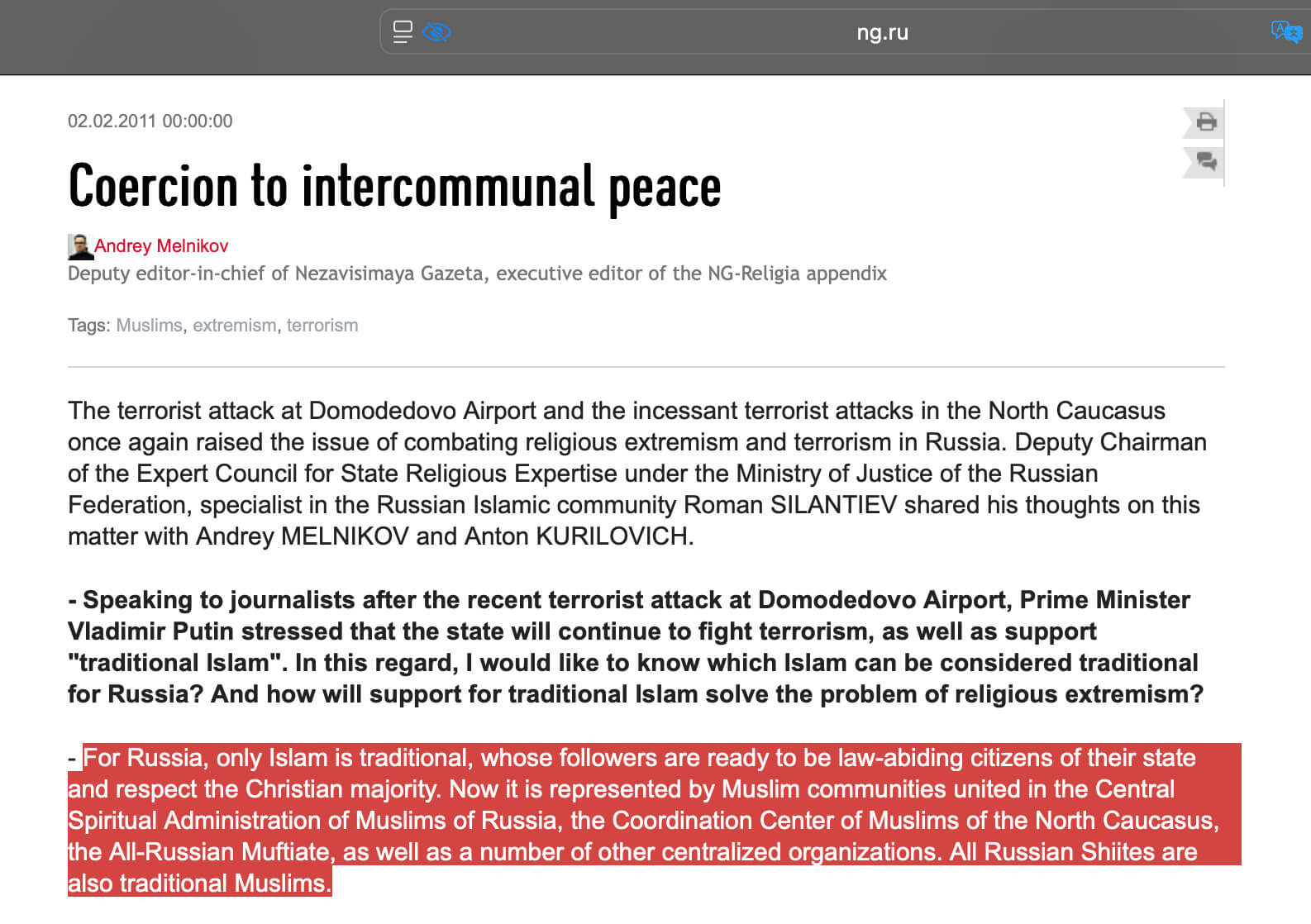
What, then, is “traditional Islam” according to Silantyev? In an interview with Nezavisimaya Gazeta on February 2, 2011, he stated the following:
“For Russia, only that Islam is traditional whose followers are ready to be law-abiding citizens of their state and respect the Christian majority.” 3
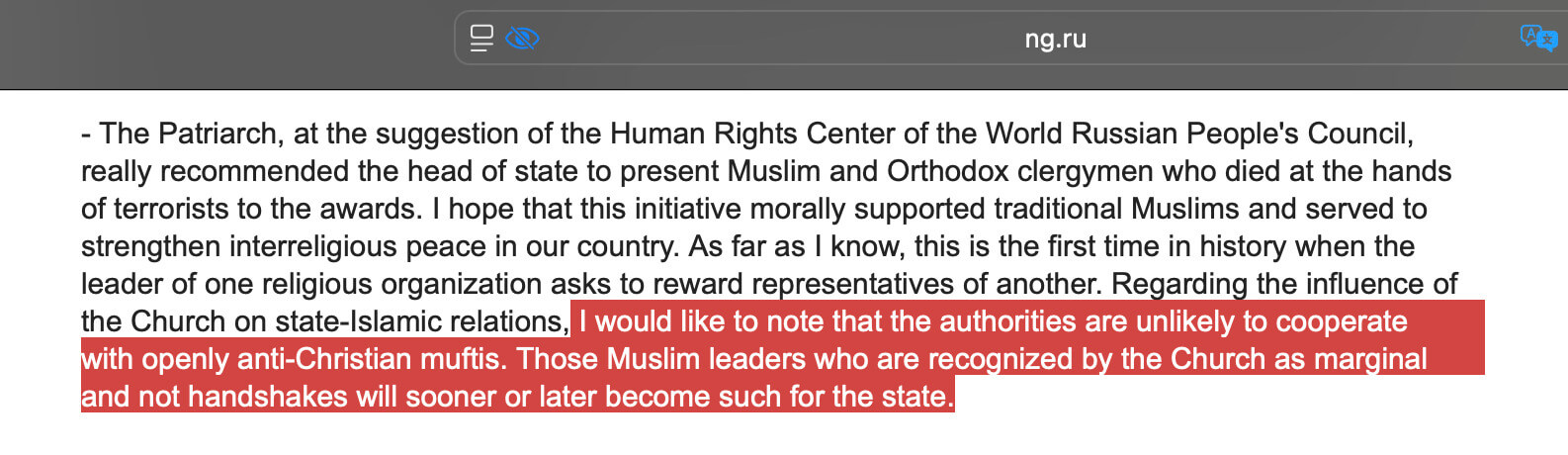
Furthermore, in the same interview, he continues:
“The authorities are unlikely to cooperate with overtly anti-Christian muftis. Those Muslim leaders who are deemed marginalized and pariahs by the Church will, sooner or later, become so for the state as well.” 4
An analysis of these statements allows us to construct a cohesive picture of the model he proposes.
In the first formula, “traditionalism” is effectively redefined: instead of theological and historical criteria, a political-loyalist and hierarchical principle is introduced. Under this principle, the only “permissible” Islam is that which not only demonstrates loyalty to the state but also accepts the dominant position of the Christian majority.
In the second formula, this construct is completed by an implementation mechanism: the assessment coming from the Russian Orthodox Church becomes a sort of filter through which the legitimacy of Muslim leaders must pass, with this assessment subsequently being transferred to the level of state policy. At the same time, given Silantyev’s affiliation with church and state structures, he de facto claims the role of the sole arbiter deciding which Muslim leaders, organizations, and movements can be considered “acceptable” and which are subject to stigmatization and public delegitimization.
Like other representatives of the anticult network, Silantyev employs a model of extreme delegitimization, wherein the target of criticism is systematically stripped of their status as a full and equal participant in public life. Such dehumanizing rhetoric fosters an environment in which pressure and persecution can take increasingly radical forms, and violence — up to and including the physical elimination of specific individuals or groups — begins to be perceived as permissible, or at least fails to evoke the appropriate legal and societal response.
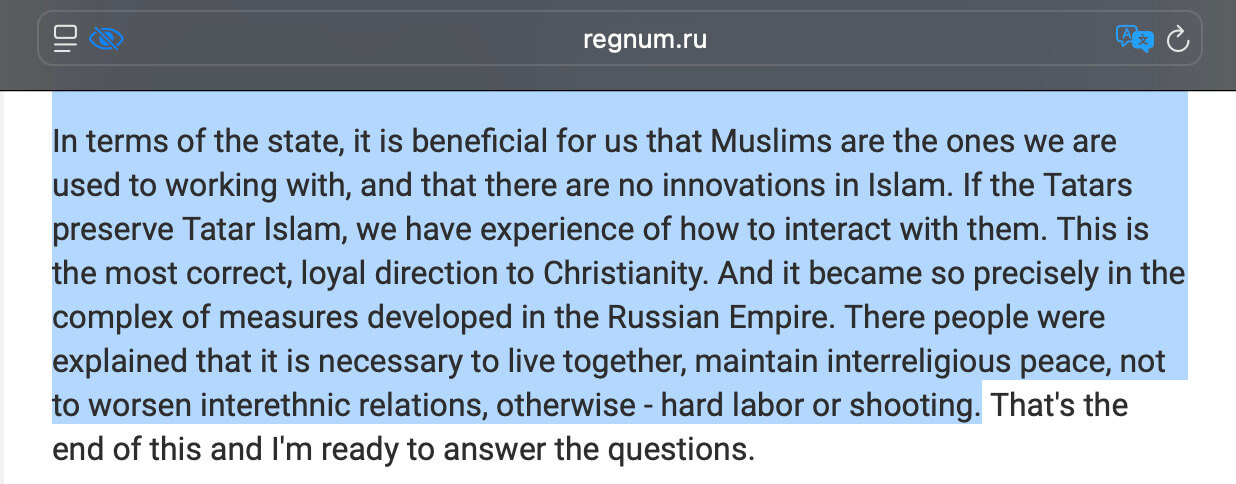
Against this background, of particular interest is his statement recorded in a Regnum News Agency publication dated July 20, 2012, under the headline: “Our Level of Understanding of What is Happening Among Muslims is Still Low.”
“On a state level, it is beneficial for us that Muslims are those with whom we are accustomed to working, and that there are no innovations in Islam. If the Tatars preserve Tatar Islam, we have experience in how to interact with them. This is the most correct branch, loyal to Christianity. Moreover, it became this way precisely through a complex of measures developed in the Russian Empire. There, it was explained to people that they must live in harmony, maintain interreligious peace, and not worsen interethnic relations — otherwise, hard labor or execution.” 5
Let us analyze this quote:
- The phrasing “us” and “we” can hardly be called neutral in this case. At the time, Silantyev was a member of the expert council for conducting state religious studies evaluations under the Ministry of Justice. However, in this statement, he speaks less as an expert and more as someone who effectively associates himself with the state and its affiliated structures. In such a framework, the role of the expert is blurred, giving way to the position of a self-appointed arbiter claiming the right to define the permissible boundaries of religious legitimacy.
- The assertion regarding the “most correct branch, loyal to Christianity” also deserves separate attention, as it essentially assumes the speaker’s right to determine which religious movements are “acceptable” and which are not. In other words, this is an attempt to usurp the function of religious classification and the distribution of symbolic legitimacy.
- The appeal to the experience of the Russian Empire, with its explicit mention of “hard labor or execution,” introduces a model in which violence is treated as a permissible or historically justified mechanism for manufacturing “loyalty.”
Taken together, all of this looks not merely like a demonstration of a hardline stance, but like a rhetoric of self-authorization. The speaker effectively places himself in the position of a subject who determines what corresponds to the “interests of the state,” what forms of religiosity are permissible, and what methods should be used to enforce this “correctness.” In this context, we are dealing not so much with an expert opinion as with an attempt to speak the language of power — with a subsequent transition to increasingly radical conclusions regarding those who do not fit the specified model.
It is important to emphasize that the previously mentioned phrasing regarding “hard labor or execution” does not appear to be an accidental or emotional remark. On the contrary, it fits into a consistent rhetorical pattern that Silantyev has systematically reproduced over a span of several years.
This is a systematic repetition of the exact same premise: moving from appeals to historical practices of coercion to direct assertions that force and suppression are the only effective tools.
As an example, Silantyev’s statement from 2016 is a logical continuation of this established trajectory, where the idea of a violent resolution is consistently normalized and cemented in public discourse as acceptable:
“We need to sharply toughen our legislation and stop thinking that anything can be resolved by peaceful means and treaties. We just need to destroy them. Just as we killed the fascists, so we must kill the Wahhabis,” such was the appeal Silantyev made as far back as 2016. 6
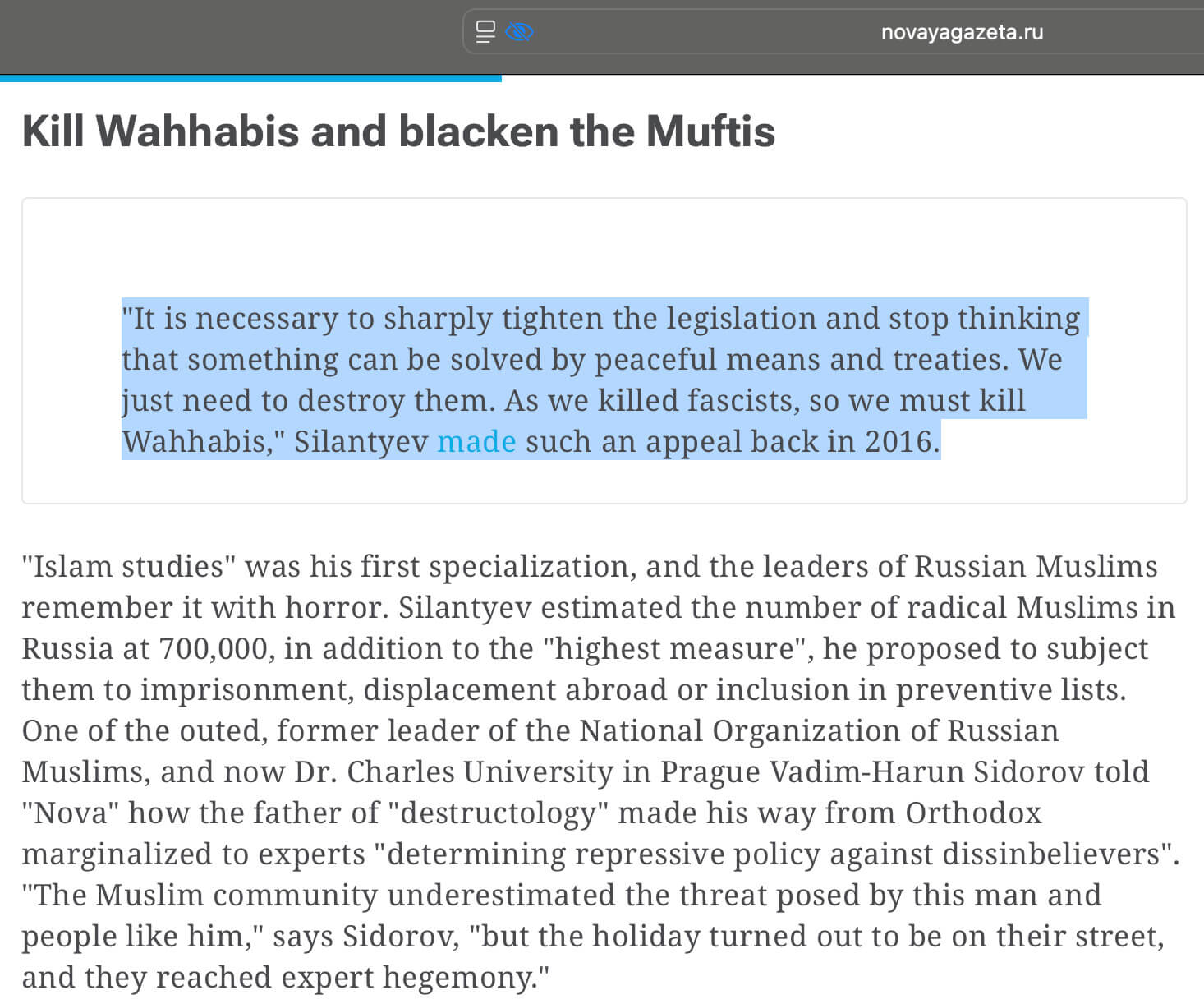
Comparing “Wahhabis” to fascists is a classic example of “guilt by association.” By utilizing an image that is historically as negative and morally charged as possible (“fascists”), the status of absolute evil is automatically projected onto another group. This removes the need for proof and simplifies perception: if they are “like fascists,” then they “must be destroyed.”
We have already written on numerous occasions that “guilt by association” is a favorite rhetorical manipulation consistently and regularly deployed by members of the anticult movement worldwide. It is their key tool, allowing them to substitute analysis with labels, bypass critical thinking, and steer the audience’s perception in the desired direction.
The phrasing “we just need to destroy them” demonstrates an extreme level of generalization and depersonalization. There is no mention of specific crimes, legal procedures, or individual accountability. The group is declared homogeneous and subject to liquidation as a whole — a typical hallmark of rhetoric that normalizes violence.
The direct instruction to “stop thinking that anything can be resolved by peaceful means and treaties” effectively amounts to a rejection of the legal framework, proposing instead the alternative of forceful suppression.
The status of the quote itself deserves separate attention. Despite the existence of links to the original statement, the primary source is absent from the public domain, even when attempting to locate it via web archives. Only reprints in various publications survive.
As mentioned earlier, a similar pattern has already been observed with materials criticizing “destructology” as an academic discipline. The disappearance of original materials combined with the survival of their secondary publications and citations creates a strong impression of selective scrubbing of the information space. Such dynamics may point to efforts to minimize public access to content that could compromise either the anticult movement as a whole or its individual representatives.
This likely explains the vanishing of the most aggressive phrasings previously voiced by Silantyev — particularly those statements that, upon detailed legal scrutiny, could potentially lead to serious legal consequences, including possible prosecution under current Russian anti-extremism legislation.
Furthermore, an analysis of Silantyev’s rhetoric clearly reveals the long-known “Roman Formula”: “stigmatization – discrimination – persecution.” This is a mechanism for the unrestrained destruction of any individual or group, up to and including physical elimination. We described this old inhumane strategy in one of our articles. Essentially, these are three stages through which a group is systematically stripped of its legal and social status. As a typical representative of the anticult movement, Silantyev has mastered this logic to perfection.
In the quotes under review, this strategy is replicated almost literally: first, guilt by association and labeling; then, delegitimization and the denial of the right to equal coexistence; and finally, direct calls for destruction. The primary danger here lies in fostering a climate of impunity — where violence begins to be perceived as a justified and acceptable measure outside the courtroom and legal procedures.
It is precisely this stage — the stage of actual physical elimination—that we must proceed to next. This analysis of Silantyev’s rhetoric was necessary to evaluate who might stand behind this practice: behind the physical elimination, criminal prosecution, and expulsion of Muslim leaders from Russia. This is precisely why the material on the Golos Islama (Voice of Islam) website was titled “The Silantyev List.”
But first, let us look at how Muslims themselves view this self-proclaimed destructologist, who so confidently takes it upon himself to judge their faith, movements, and leaders. This question turns out to be far more telling than any of Silantyev’s self-presentations. After all, we are talking about a man who is promoted in the public arena as an “Islamic scholar,” despite persistent questions regarding the quality and academic validity of his scholarly work. Earlier, we also pointed out the circumstances surrounding his dissertation, which has raised serious doubts among critics.
Throughout his career, Roman Silantyev has regularly found himself at the center of high-profile scandals. This does not involve isolated incidents, but rather a consistently repeating pattern of public conflicts and controversial statements.
Let us begin with a prominent episode from the mid-2000s: following the release of his book The Modern History of the Islamic Community of Russia (2005), which provoked a sharp public backlash from the Muslim clergy, he lost his position as Executive Secretary of the Interreligious Council of Russia, a post he had held since 2001. The scandal surrounding the publication was so severe that it was accompanied by official appeals and accusations of inaccuracy, offensiveness, and fanning interreligious tension — up to assertions that the book was a “guide to inciting interreligious intolerance.” Ultimately, against the backdrop of this conflict, Silantyev was forced to step down.7
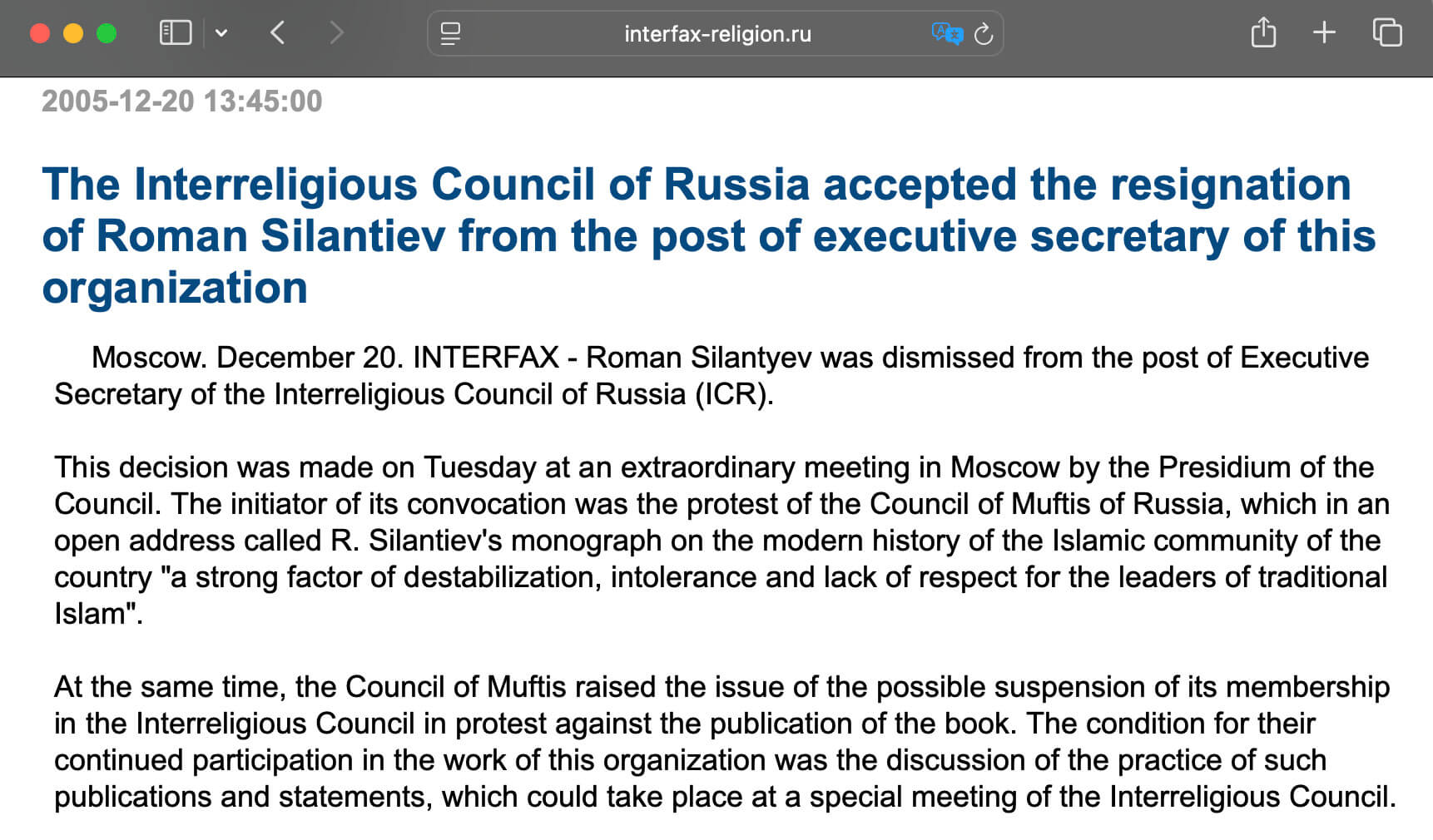
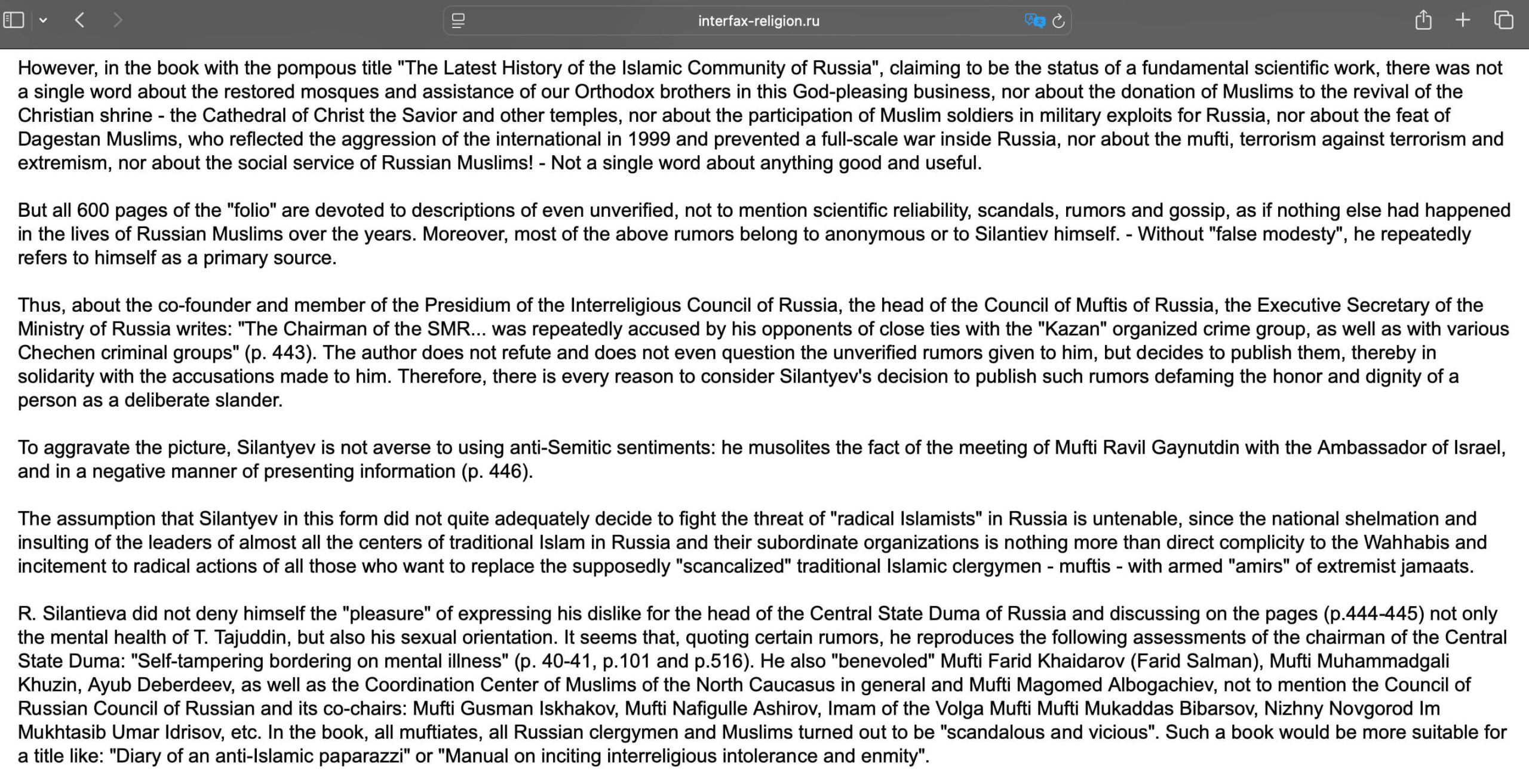
Here is an excerpt from the appeal of the Council of Muftis of Russia to the Presidium of the Interreligious Council of Russia regarding the publication of R. Silantyev’s book The Modern History of the Islamic Community of Russia 8:
“However, in this book with its grandiose title, ‘The Modern History of the Islamic Community of Russia,’ which claims the status of a fundamental scholarly work, there is not a single word about reconstructed mosques and the help of our Orthodox brothers in this godly endeavor, nor about Muslim donations for the restoration of Christian holy sites — the Cathedral of Christ the Savior and other temples — nor about the participation of Muslim soldiers in military exploits for Russia, nor about the heroic deed of Dagestani Muslims who repelled the aggression of international terrorism in 1999 and prevented a full-scale war inside Russia, nor about the muftis who speak out against terrorism and extremism, nor about the social service of Russian Muslims! Not a single word about anything good or beneficial.
Instead, all 600 pages of this ‘tome’ are devoted to descriptions of scandals, rumors, and gossip that are not even verified, let alone scientifically credible, as if nothing else had occurred in the lives of Russian Muslims over these years. Moreover, most of the cited rumors are attributed to anonymous sources or to Silantyev himself. Unbothered by anything resembling modesty, he repeatedly cites himself as the primary source.
For instance, regarding the co-founder and member of the Presidium of the Interreligious Council of Russia, the head of the Council of Muftis of Russia, the Executive Secretary of the ICR (Interreligious Council of Russia – Author’s note) writes: ‘The Chairman of the CMR (Council of Muftis of Russia – Author’s note)… has been repeatedly accused by his opponents of close ties with the “Kazan” OCG (organized crime group – Author’s note), as well as with various Chechen criminal groups’ (p. 443). The author does not refute or even question the unverified rumors he presents, but instead chooses to publish them, thereby aligning himself with the accusations. Therefore, there is every reason to consider Silantyev’s decision to publish such rumors, which defame a person’s honor and dignity, as deliberate slander.
To worsen the picture, Silantyev does not shy away from exploiting anti-Semitic sentiments: he dwells on the fact of Mufti Ravil Gainutdin’s meeting with the Israeli ambassador, presenting this information in a negative light (p. 446).
The assumption that Silantyev, in such a manner, made an inadequate decision to fight the threat of ‘radical Islamists’ in Russia is untenable, because the public pillorying and insulting of the leaders of almost all centers of traditional Islam in Russia and their subordinate organizations is nothing less than direct assistance to the Wahhabis and incitement to radical actions for anyone wishing to replace the supposedly ‘scandal-ridden’ traditional Islamic clergy — the muftis — with armed ‘amirs’ of extremist jamaats.
R. Silantyev did not deny himself the ‘pleasure’ of expressing his animosity toward the head of the CABM of Russia (Central Spiritual Board of Muslims of Russia – Author’s note) and discussing on these pages (pp. 444–445) not only T. Tadzhuddin’s mental health, but also his sexual orientation. As if quoting certain rumors, he reproduces such characterizations of the CABM chairman as: ‘willfulness bordering on mental illness’ (pp. 40–41, p. 101, and p. 516). He likewise ‘bestowed his favor’ upon Mufti Farid Khaidarov (Farid Salman), Mufti Mukhammadgali Khuzin, Mufti Ayyub Deberdeev, as well as the Coordinating Center of Muslims of the North Caucasus as a whole, and Mufti Magomed Albogachiev, not to mention the Council of Muftis of Russia and its co-chairs: Mufti Gusman Iskhakov, Mufti Nafigulla Ashirov, the Imam of the Volga region Mufti Mukaddas Bibarsov, the Nizhny Novgorod Imam-Mukhtasib Umar Idrisov, and others. In the book, all muftiates, all Russian clergy, and all Muslims turned out to be ‘scandalous and corrupt.’ A more fitting title for such a book would be: ‘Diary of an Anti-Islamic Paparazzo’ or ‘A Guide to Inciting Interreligious Intolerance and Enmity.’”
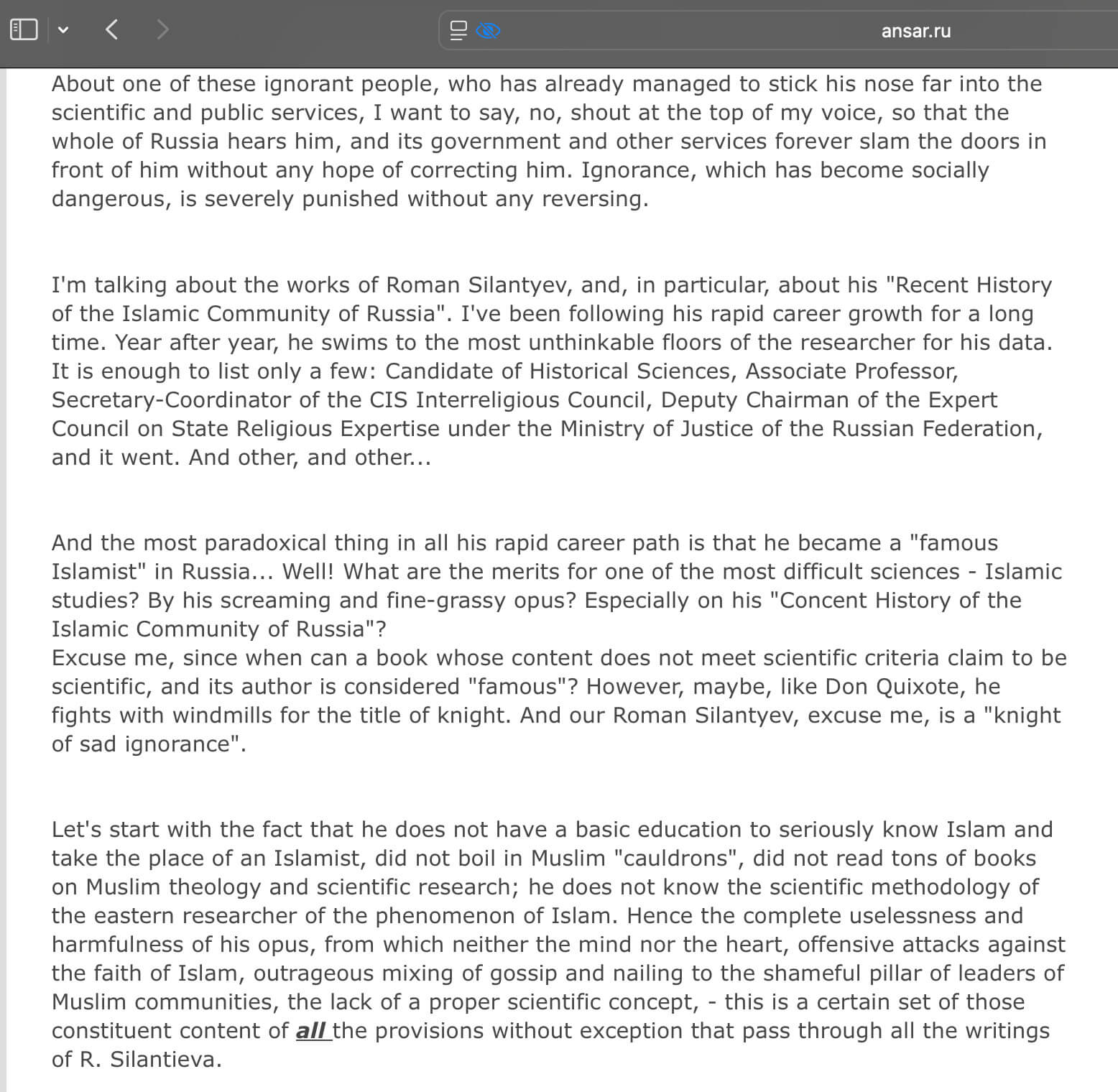
It is important to emphasize that criticism of Silantyev’s book came not only from representatives of the Muslim community. Representatives of academia also sharply criticized Silantyev’s book, The Modern History of the Islamic Community of Russia. In particular, Yuri Petrash — Doctor of Philosophical Sciences, Professor, and Academician of the RANS (Russian Academy of Natural Sciences – Author’s note) — wrote in his article, “An ‘Islam-Eater’ Has No Place in the Theory and Practice of Islamic Studies”:
“Regarding one of these ignoramuses, who has already managed to stick his nose deep into scientific and public organizations, I want to say—no, scream at the top of my lungs, so that all of Russia hears it, and so its government and other agencies slam their doors shut before him forever, without any hope of his reformation. Ignorance that has become socially dangerous is severely punished without any turning back.
I am speaking of the works of Roman Silantyev, and in particular, his ‘The Modern History of the Islamic Community of Russia.’ I have been following his rapid career growth for a long time. Year after year, he drifts up to the most unthinkable research heights for someone with his credentials. It is enough to list just a few: Candidate of Historical Sciences, Associate Professor, Secretary-Coordinator of the Interreligious Council of the CIS, Deputy Chairman of the Expert Council for conducting state religious studies evaluations under the Ministry of Justice of the Russian Federation, and on and on it goes. Et cetera, et cetera…
And the most paradoxical thing about his entire rapid run up the career path is that he has become a ‘well-known Islamic scholar’ in Russia… Come on! By what merits for the sake of one of the most difficult sciences, Islamic studies? For his scandalous petty opuses? Especially for his ‘The Modern History of the Islamic Community of Russia’?
Excuse me, since when can a book whose content fails to meet scientific criteria lay claim to being scholarly, and its author be considered ‘well-known’? Though perhaps, like Don Quixote, he is tilting at windmills to win the title of a knight. And our Roman Silantyev is, excuse me, a ‘knight of mournful ignorance.’
To begin with, he lacks the basic education to seriously know Islam and take the place of an Islamic scholar; he has not been tempered in Muslim ‘melting pots,’ nor has he read tons of books on Muslim theology and scholarly research. He does not possess the scientific methodology of an Eastern researcher studying the phenomenon of Islam. From this stems the complete uselessness and harmfulness of his opuses, which offer nothing to either the mind or the heart; his offensive attacks against the teachings of Islam; his outrageous mixing of gossip and his pillorying of the leaders of Muslim communities; and the absence of a proper scientific framework. This is a partial set of the components that make up all of the assertions, without exception, that run through all of R. Silantyev’s writings.” 9
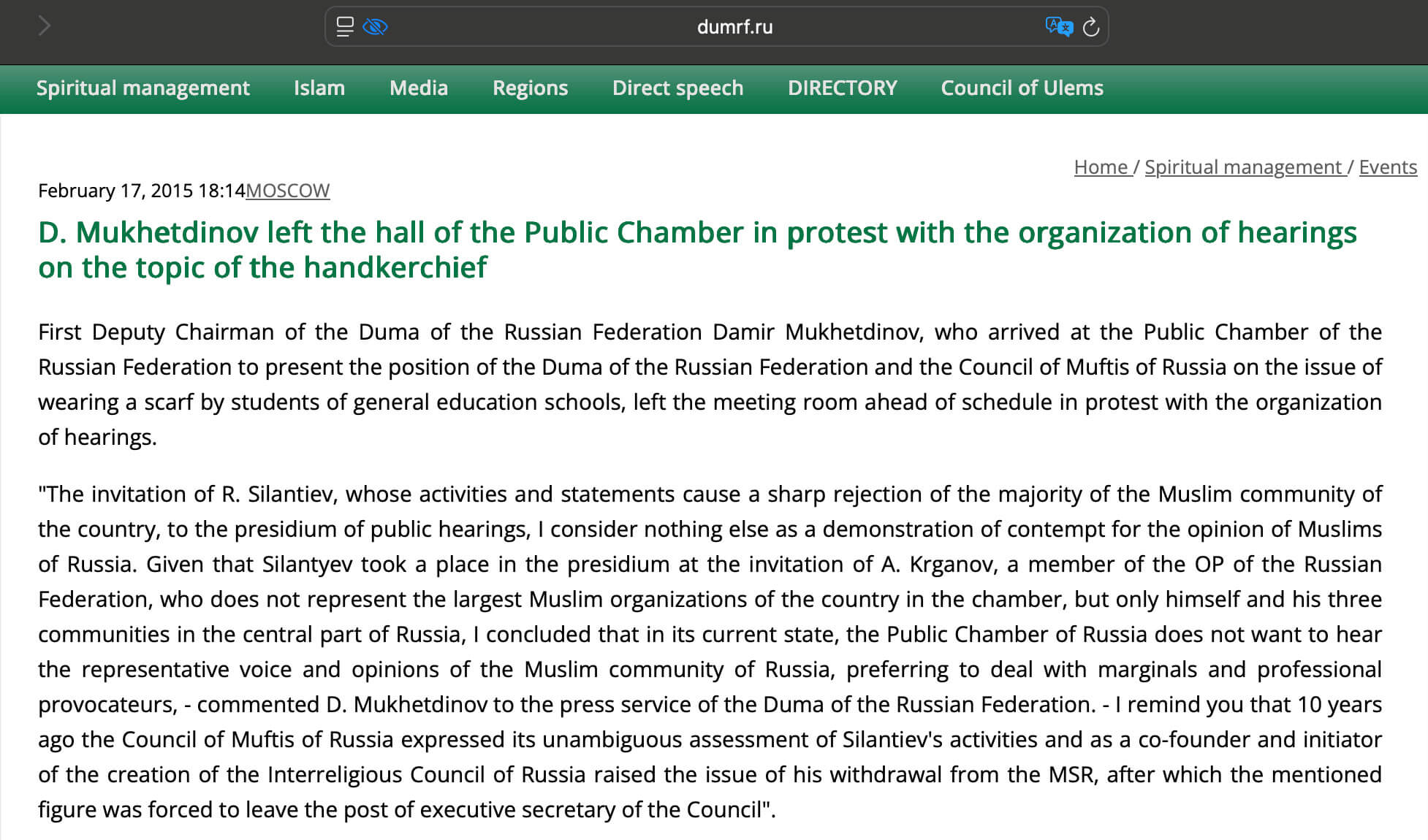
Silantyev’s figure causes such severe tension and protest in the Muslim community that his presence on official platforms frequently triggers demonstrative walkouts. For instance, during a meeting of the Civic Chamber of the Russian Federation, Damir Mukhetdinov — First Deputy Chairman of the SBM (Spiritual Board of Muslims – Author’s note) of Russia, who had arrived to present the stance of the SBM of the Russian Federation and the Council of Muftis of Russia on the wearing of headscarves by female students in general education schools — walked out of the meeting early as a gesture of protest against the organization of the hearings.
“I view the invitation of R. Silantyev — whose activities and statements provoke sharp rejection from the vast majority of the country’s Muslim public—to the presidium of the public hearings as nothing less than a demonstration of disregard for the opinion of Russia’s Muslims. Given that Silantyev took his seat in the presidium at the invitation of A. Krganov, a member of the Civic Chamber of the Russian Federation (CC RF – Author’s note) who represents not the country’s largest Muslim organizations but only himself and his three communities in central Russia, I concluded that in its current state, the Civic Chamber of Russia does not wish to hear the representative voice and opinion of Russia’s Muslim community, preferring instead to deal with pariahs and professional provocateurs,” commented Damir Mukhetdinov to the SBM RF press service regarding his action. — Let me remind you that ten years ago, the Council of Muftis of Russia expressed its unambiguous assessment of Silantyev’s activities. As a co-founder and initiator of the Interreligious Council of Russia, it raised the issue of its withdrawal from the ICR (Interreligious Council of Russia – Author’s note), after which the figure in question was forced to leave the post of Executive Secretary of the Council.” 10
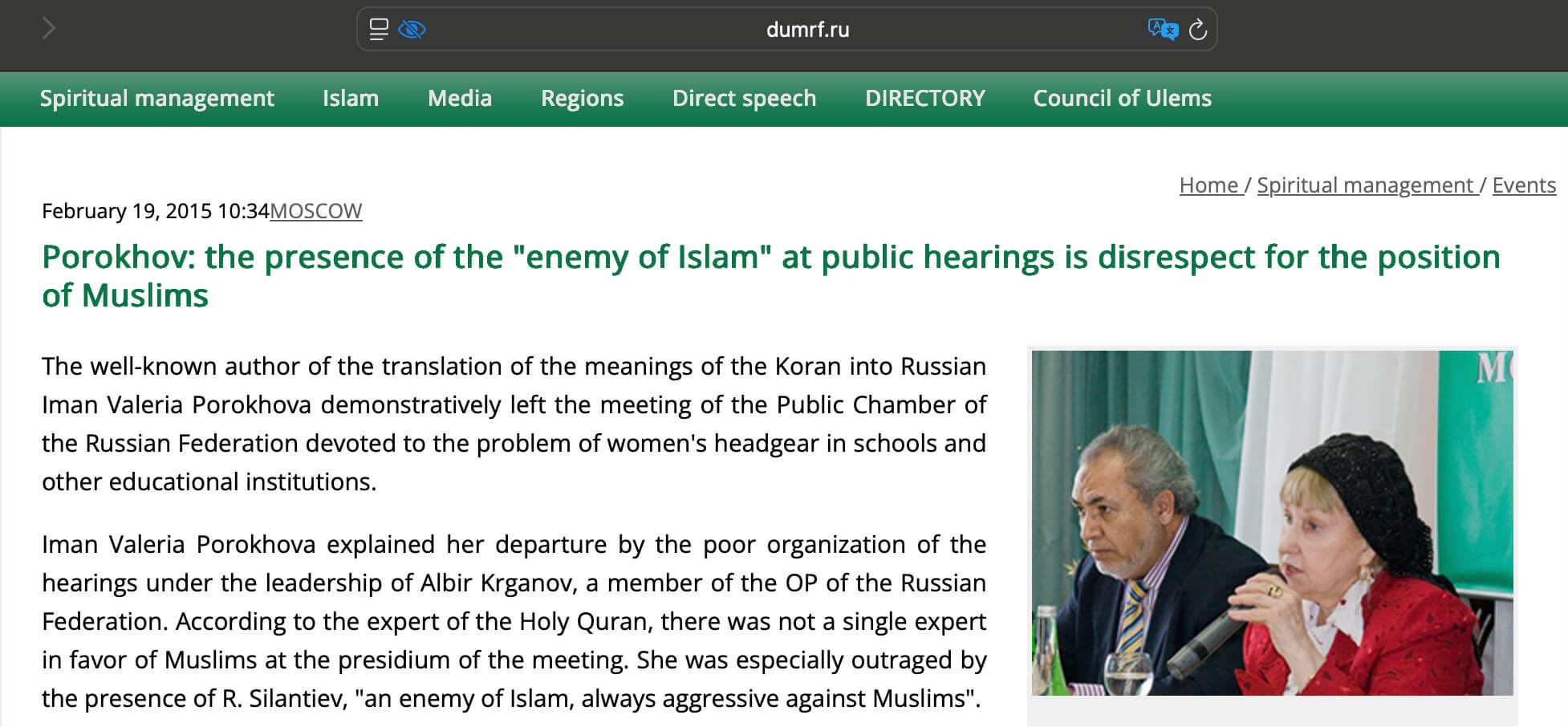
Just like the First Deputy Chairman of the SBM RF, the well-known author of the translation of the meanings of the Quran into Russian, Iman Valeria Porokhova, also demonstratively walked out of the meeting:
“Iman Valeria Porokhova explained her departure by pointing to the poor organization of the hearings under the leadership of CC RF member Albir Krganov. According to the scholar of the Holy Quran, there was not a single expert on the presidium of the meeting who spoke in favor of Muslims. She was particularly outraged by the presence of R. Silantyev — ‘an enemy of Islam who is always aggressively disposed against Muslims.’” 11
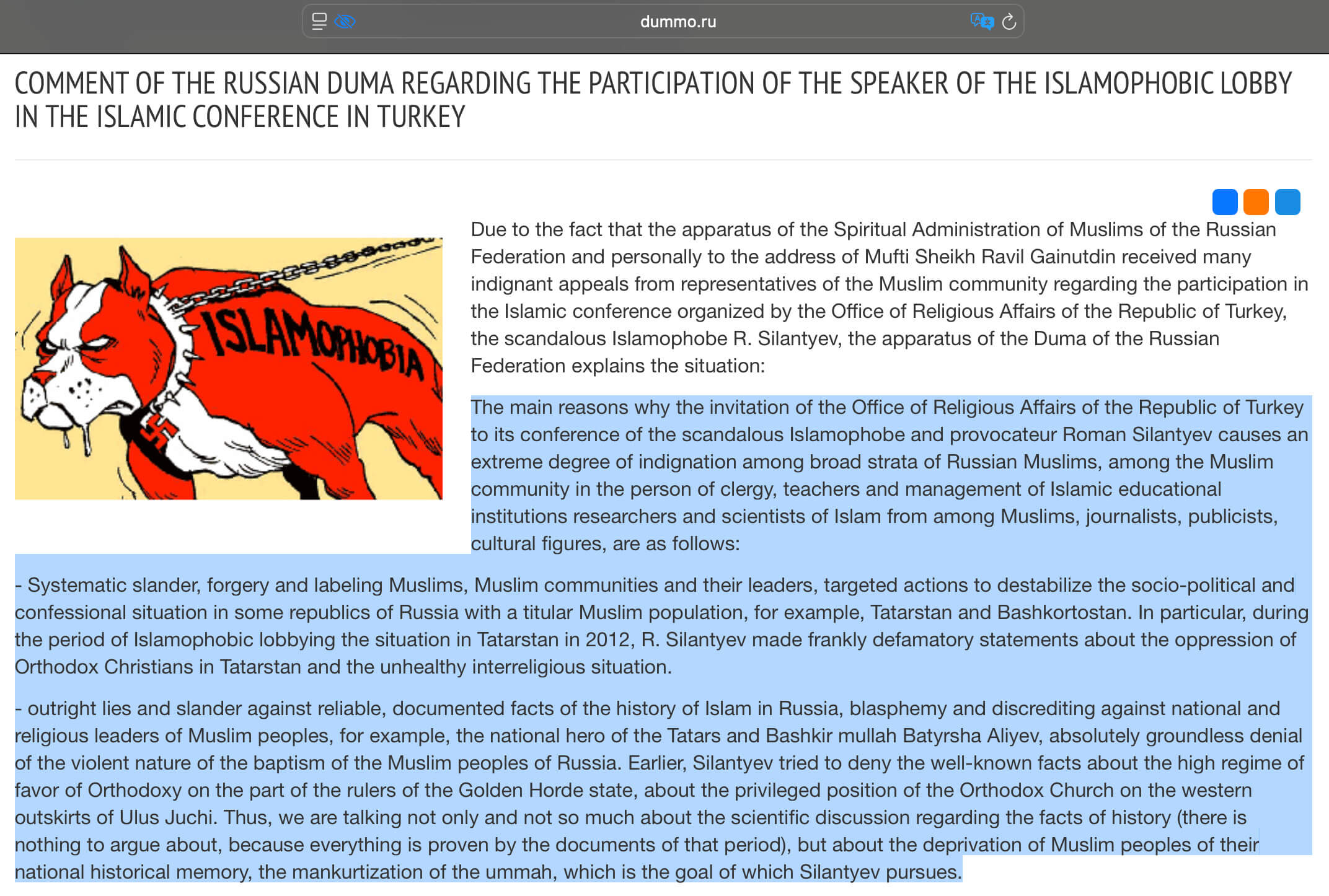
Another example of this persistent trend is the harsh and revealing assessment of the so-called Islamic scholar Silantyev, issued by the Spiritual Board of Muslims of Russia in connection with his participation in an Islamic conference in Turkey. Here, he is explicitly identified as a spokesperson for Russia’s Islamophobic lobby. 12
“The main reasons why the invitation extended by the Directorate of Religious Affairs of the Republic of Turkey to the notoriously controversial Islamophobe and provocateur Roman Silantyev to attend its conference provokes an extreme degree of indignation among broad strata of Russian Muslims, the Muslim public represented by the clergy, teachers and administrators of Islamic educational institutions, researchers and scholars of Islam from among Muslims, journalists, publicists, and cultural figures, are as follows:
– Systematic slander, defamation, and labeling of Muslims, Muslim communities, and their leaders, as well as deliberate actions to destabilize the socio-political and denominational situation in certain republics of Russia with titular Muslim populations, such as Tatarstan and Bashkortostan. Specifically, during the period in 2012 when the Islamophobic lobby was destabilizing the situation in Tatarstan, R. Silantyev made overtly slanderous claims regarding the oppression of Orthodox Christians in Tatarstan and an unhealthy interreligious environment.
– Outright lies and slander concerning well-established, documented facts of the history of Islam in Russia; blasphemy and discredit directed at national and religious leaders of Muslim peoples, such as the national hero of Tatars and Bashkirs, Mullah Batyrsha Aliev; and an absolutely groundless denial of the forced conversion of Russia’s Muslim peoples. Previously, Silantyev attempted to deny well-known facts regarding the highly favorable treatment of Orthodoxy by the rulers of the Golden Horde, and the privileged position of the Orthodox Church in the western reaches of the Ulus of Jochi. Thus, this is not merely, nor even primarily, a scholarly debate over historical facts (there is nothing to debate, as everything is proven by documents of that era), but an attempt to strip Muslim peoples of their national historical memory — to ‘mankurtize’ the Ummah, which is precisely the goal Silantyev pursues.”
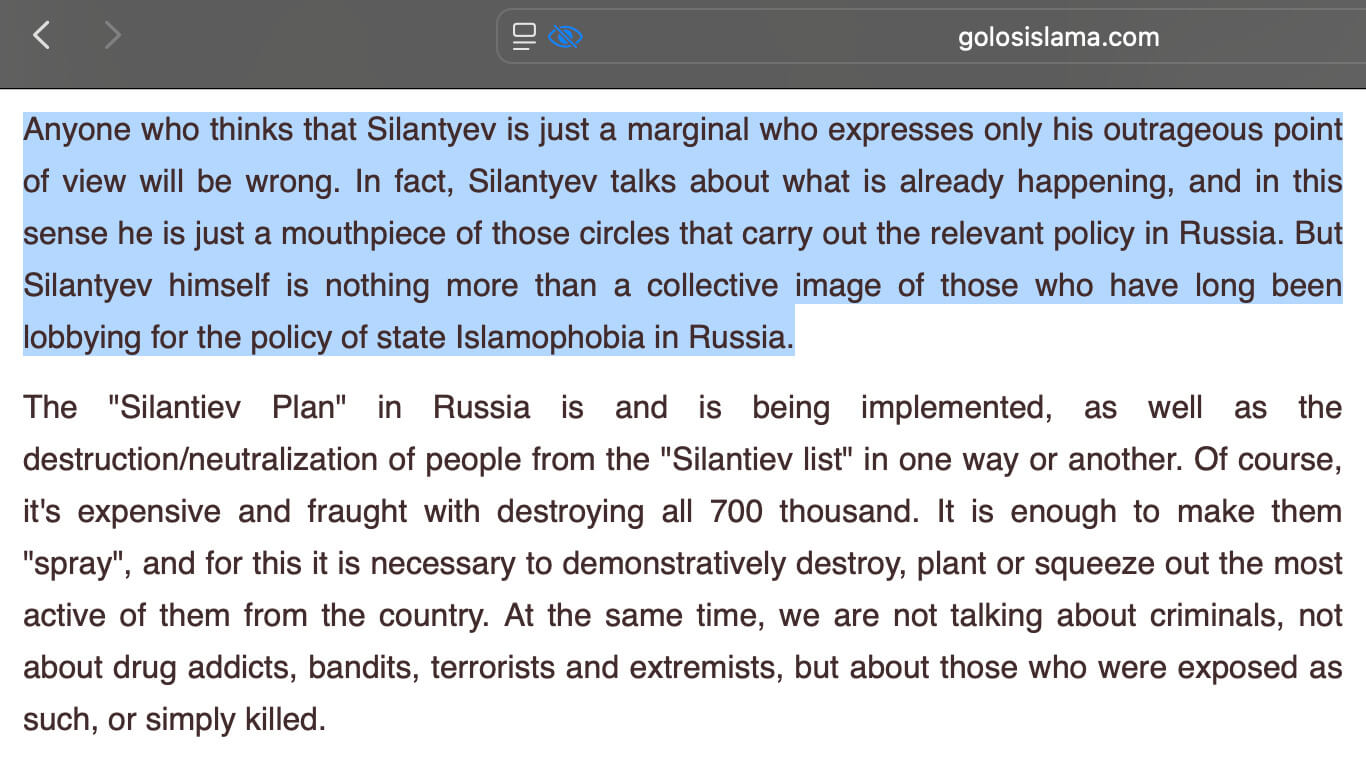
A characteristic and extremely harsh assessment of Roman Silantyev’s persona is provided by the authors of the article “The Silantyev List,” published on the Golos Islama (Voice of Islam) portal. In the introductory section of the piece, they articulate the following position:
“Anyone who thinks Silantyev is just a marginal figure expressing nothing more than his own provocative viewpoint would be mistaken. In reality, Silantyev speaks about what is already happening, and in this sense, he is merely a mouthpiece for those circles carrying out this respective policy in Russia. Yet Silantyev himself is nothing more than a collective image of those who have long lobbied for a policy of state Islamophobia in Russia.” 13
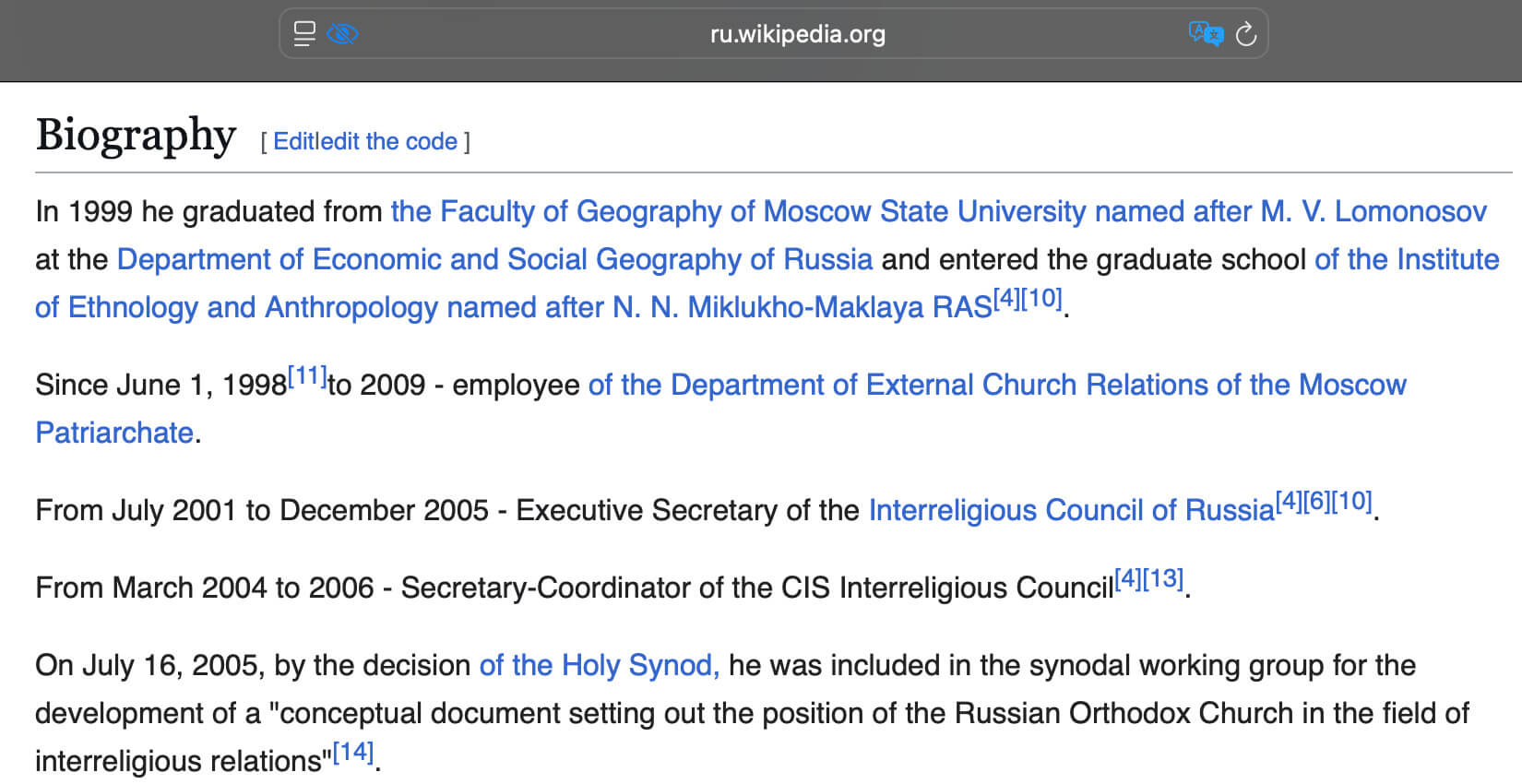
Moreover, as previously noted, Silantyev has strong ties to the Russian Orthodox Church (ROC) and its affiliated structures. It is remarkable that, despite having no specialized degree in religious studies and being enrolled at the Faculty of Geography of Moscow State University, he ended up in the Department for External Church Relations of the Moscow Patriarchate in 1998, even before graduating. This department is one of the most closed and strategically significant divisions of the ROC. It is often referred to as the “church MFA” (MFA – Ministry of Foreign Affairs – Author’s note), since it is through this body that the Russian Orthodox Church establishes its external contacts, international ties, and other sensitive communications.
Neither in open sources nor in available biographical materials can one find any clear explanation of what specific achievements, professional background, or works served as the basis for such a rapid advancement of a then-20-year-old youth — Roman Silantyev — to responsible positions within the structures of the ROC.
Here, a question naturally arises regarding the objectivity of such evaluations: is it possible in principle to speak of an expert’s neutrality if their professional development and activities are linked to the institutional environment of the Russian Orthodox Church? This is an organization that a number of sources, including publications on our portal, characterize as seeking to expand its influence within Russia and beyond, and consequently shaping a specific framework of values and meanings for its representatives — one that is far from neutral toward the phenomena they analyze.
If we are to take the question of objectivity seriously, it is inevitably followed by another, far harsher and more concrete question: what consequences in practice does such a “frame of reference” lead to, where some religious figures are labeled while others receive a tacit right to determine who is “acceptable” and who is to be pushed out?
We are now speaking about the very tangible results of the logic, practice, and model of interaction that has been shaped in Russia over the years — where representatives of a single dominant pro-religious structure, the Russian Association of Centers for Religious and Sectarian Studies (RACIRS), have effectively been given the opportunity to act as arbiters defining the boundaries of “the norm” and “deviation” on behalf of the state.
It is to these consequences that we now turn — to the facts that allow us to see what this system actually translates to in reality.
Below are just a few of the most high-profile cases. The full list 14 is significantly broader; it is a chronicle of tragedies that allows one to fully grasp the scale of what is happening. Below we present selected stories of people whose religious and public activities made them prominent figures, and whose deaths are an indicator of the level of influence the anticult movement exerts over law enforcement officers, who stand ready to eliminate anyone Silantyev points to.
Murdered Imams, Muslim Preachers, and Public Figures
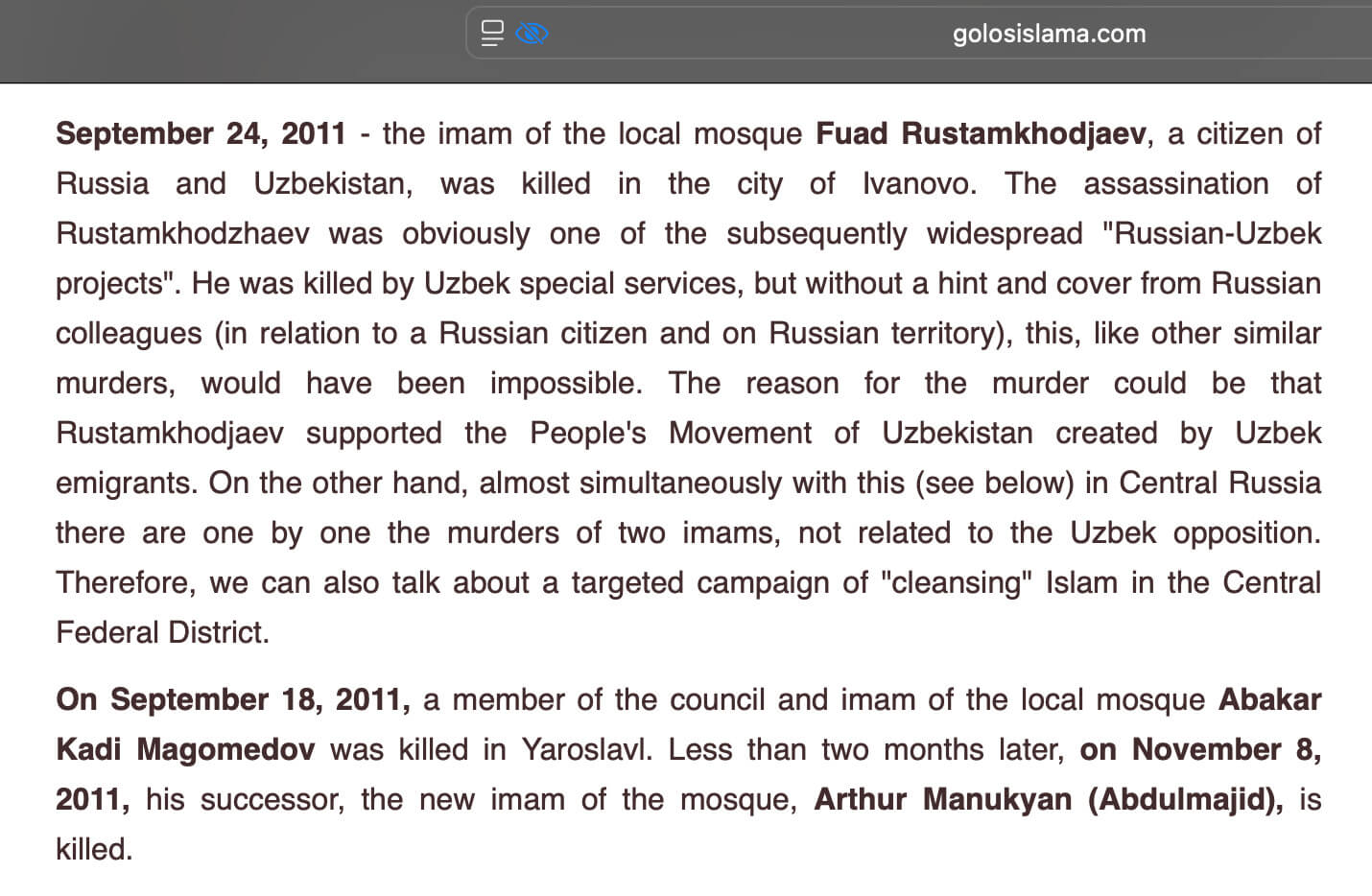
“Let us begin with those who were indeed successfully killed, just as Silantyev proposed. Below we list the names of the most prominent imams, preachers, and journalists who were assassinated specifically by death squads operating in Russia. We have chosen not to include in this list individuals whose deaths, with a high degree of probability, could have been motivated by criminal or domestic disputes, or resulted from intra-Muslim feuds.
August 31, 2008 — Magomed Evloev, a public figure who raised the issues of extrajudicial executions and kidnappings of Muslims, was killed by security forces in Ingushetia. Prior to this, in 2007, a criminal case was opened against Evloev for publications on his website, Ingushetia.Ru. In the summer of 2008, the website was banned, and shortly before Evloev’s murder—in early August—the site’s editor-in-chief, Roza Malsagova, requested political asylum in France due to persecution in Russia. Following Evloev’s murder, Maksharip Aushev became the owner of the website, which covered the terror of the security services against Muslims in Ingushetia. He was killed just a year later—on October 25, 2009. Shortly before that, on September 15, an attempt was made to kidnap him in front of numerous witnesses.
April 19, 2009 — Musa Esmurziev, a popular imam and preacher, was killed in Ingushetia. The victim was a representative of the Sufi Qadiriyya Tariqa, and because of this, his murder was initially blamed on the local armed underground holding Salafi views in an attempt to provoke a conflict between Salafis and Sufis. However, representatives of the underground and Salafi groups categorically distanced themselves from the murder, stating that despite religious differences, they had no grievances against Esmurziev, who had criticized the authorities in his sermons. At the same time, the identity of Esmurziev’s killers is pointed to by the fact that, according to a forensic analysis conducted by the Ministry of Internal Affairs of Ingushetia, he was shot with the same automatic rifle used in the killings of two victims during an FSB’s special operation in Plievo.
May 1, 2009 — Said Ibragim Kalimatov (Said-Khasan Saidibrahim), an imam and Hafiz of the Quran, was killed in Ingushetia.
June 14, 2009 — Imam Abdurakhman Kartoev, who was kidnapped in early June, was found murdered in Ingushetia.”
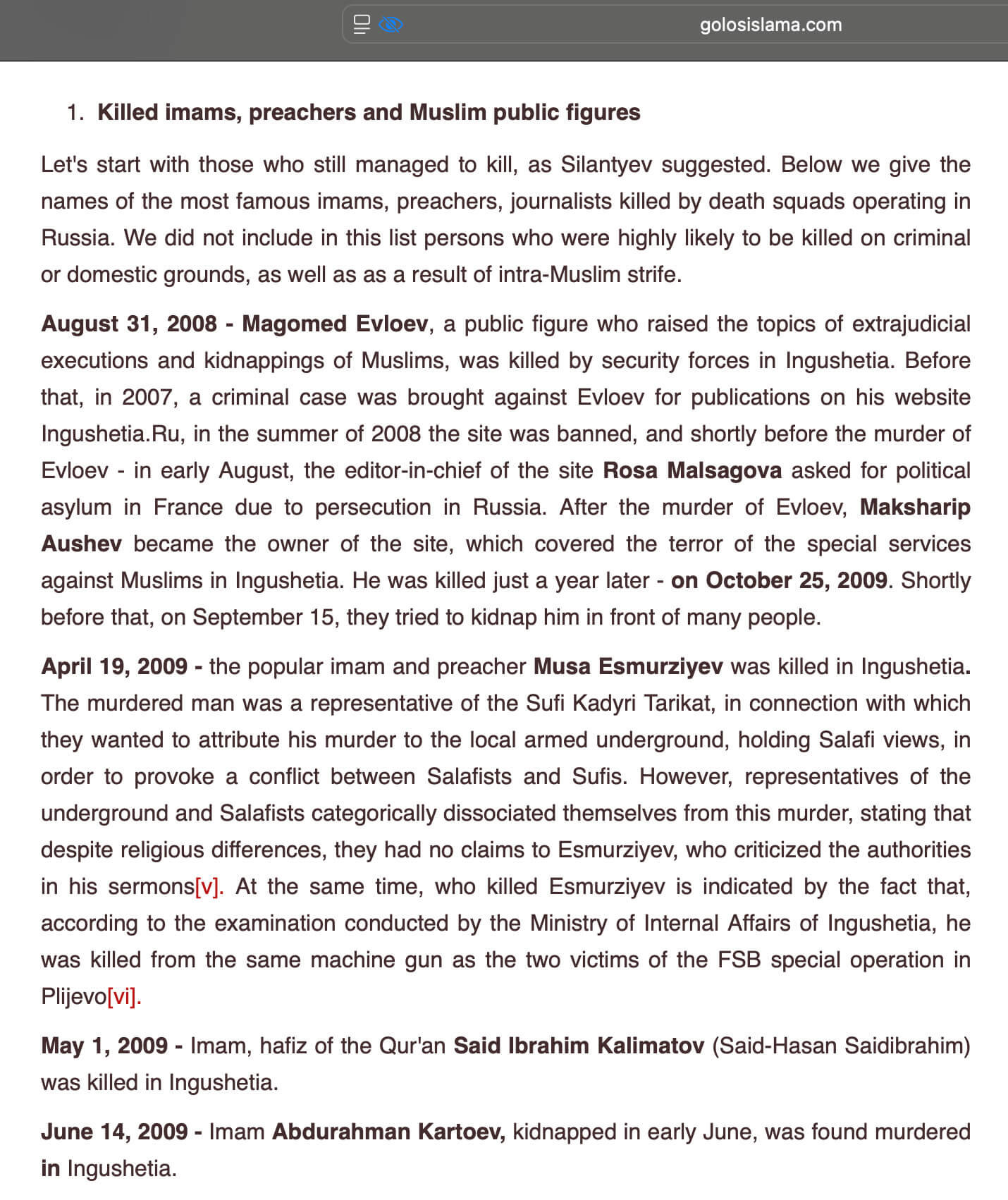
“October 3, 2009 — Murtazali Magomedov, a prominent Salafi preacher and teacher, and the only person in the former USSR holding a doctoral degree in Sharia sciences, was shot dead in Dagestan. He received his theological education in Syria and returned to Dagestan in 2007, where he began active teaching and educational activities that caused irritation to the official muftiate and local law enforcement.
October 10, 2010 — Isomitdin Akbarov, the imam of the ‘Nur Islam’ mosque in Novy Urengoy, was murdered in Tyumen. This assassination is indicative of a broader trend, being one of the first killings of Islamic preachers outside of the North Caucasus — where such acts were “informally” justified by the necessity of countering the armed underground, including the elimination of religious figures sharing a common theological, if not political, platform with it.
In this instance, however, a man was killed who was in no way connected to the Caucasian armed underground, thousands of kilometers away from the territory of its operations. Thus, we can speak of one of the first cases of murder driven purely by Islamophobic motives. Over the 13 years of the murdered imam’s activity, the community he built grew from 7 people to approximately 1,000, partly due to people embracing Islam through his preaching. Because of this, he was a thorn in the side of Islamophobes. In 2009, the authorities decided to demolish the Nur Islam mosque. Given the murdered imam’s constructive relations with the leadership of the city of New Urengoy, it was obvious that this decision came ‘from above.’ Systematic demonization of the community and its imam in the media began about a year before the murder, serving as what proved to be information ‘artillery preparation’ for the subsequent assassination. After the imam’s murder, the security forces attempted to legally dismantle the ‘Nur Islam’ community through the courts but failed to do so at the time, after which extra-legal pressure began to be exerted on its members. In the end, the community was officially liquidated anyway, and the mosque, where thousands of local Muslims had prayed for many years, was demolished.
October 14, 2010 — Ismail Gadzhiev, who practiced Islamic medical healing and built a mosque for Salafis in the village of Uchkent, was killed in Dagestan. As a result of his activities, he had fallen out of favor with the official muftiate and security forces. State-aligned propaganda media covered the murder as follows: ‘A “jinn-exorcising” healer who helped Wahhabis was killed in Dagestan.’”
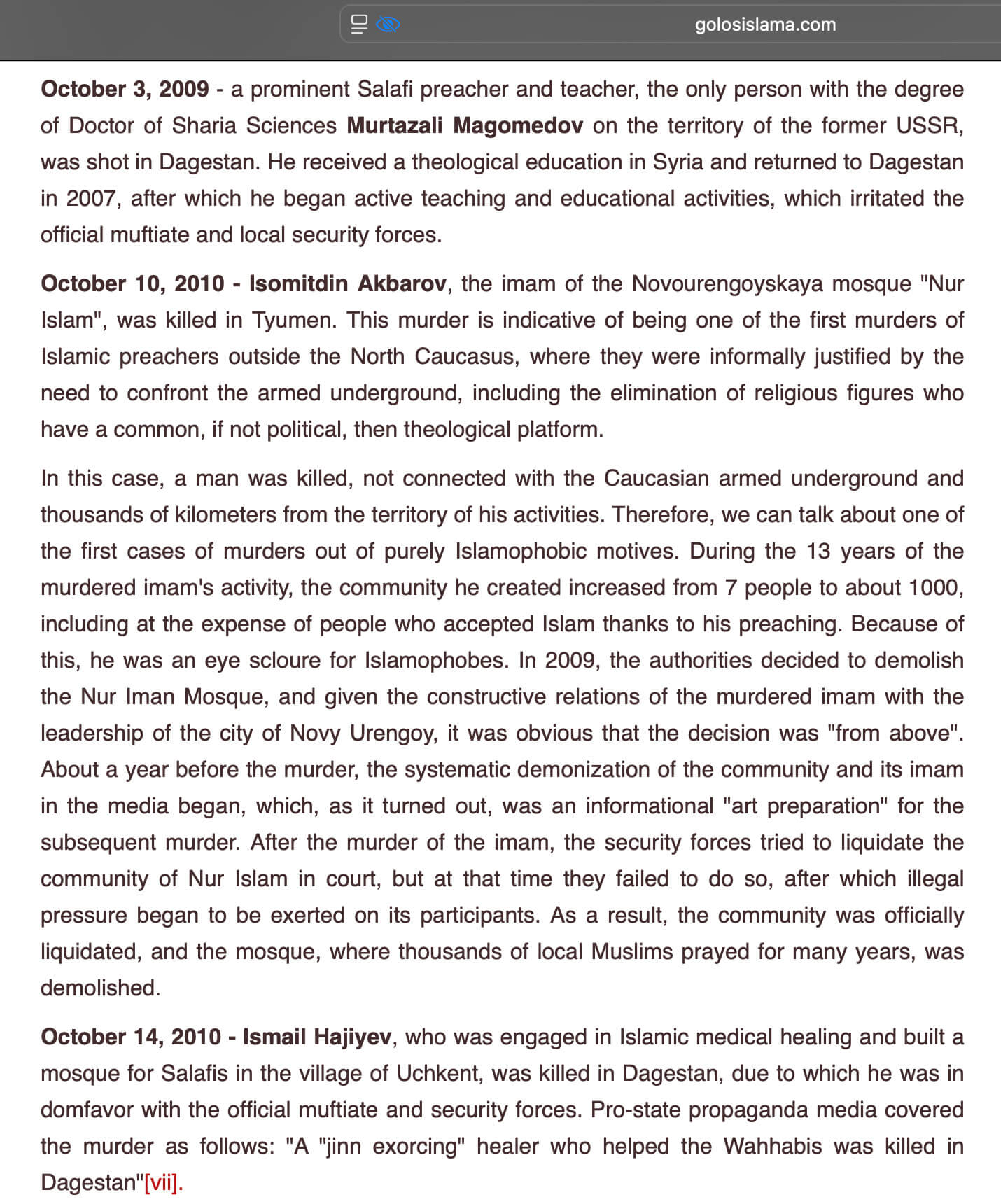
“September 24, 2011 — Fuad Rustamkhodzhaev, the imam of the local mosque and a citizen of Russia and Uzbekistan, was murdered in the city of Ivanovo. Rustamkhodzhaev’s murder clearly became one of what later evolved into common ‘Russian-Uzbek projects.’ He was killed by Uzbek security services, but without a tip-off and cover from their Russian counterparts (targeting a Russian citizen on Russian territory), this, like other similar murders, would have been impossible. The reason for his murder may have been that Rustamkhodzhaev supported the People’s Movement of Uzbekistan, founded by Uzbek emigrants. On the other hand, almost simultaneously with this (see below), the murders of two imams who were completely unconnected to the Uzbek opposition occurred one after another in Central Russia. Therefore, we may also be looking at a targeted campaign to ‘purge’ Islam in the Central Federal District.
September 18, 2011 — Abakar Kadi Magomedov, a council member and imam of the local mosque, was killed in Yaroslavl. Less than two months later, on November 8, 2011, his successor, the new imam of the mosque, Artur Manukyan (Abdulmadzhid), was murdered.”
We have presented only a few episodes from the extensive body of evidence published on the Golos Islama website — and they alone leave a heavy, even grim, impression. At the same time, the question of the true scale of what is happening remains open: it cannot be ruled out that a significant portion of similar cases simply did not receive publicity and did not make it onto available lists.
It is particularly obvious that this is not the pattern of behavior typical of law enforcement and security structures. Their objective is to investigate, identify networks, prevent threats, and dismantle entire criminal rings. Here, however, we see something else — people are being deprived of their lives without trial or investigation, with no subsequent exposure of any organizations or prevented crimes. All of this may point not to a systematic approach to ensuring security, but rather to a practice of intimidation and coercion — the very same policy of harsh repression that, according to the analysis, was clearly evident in Silantyev’s rhetoric.
In studying this list, one cannot help but draw a parallel to the Waco siege — a tragedy in which the peaceful Branch Davidian community was destroyed amid allegations that subsequently raised numerous questions and doubts. The similarity is visible not only in the events themselves but also in the mechanisms used: stigmatization, the cultivation of a perceived “threat,” and the creation of public pressure.
And this inevitably leads to a broader and more troubling question: what specific mechanisms of influence do representatives of the anticult movement possess, if their “expert” assessments and rhetoric are capable of shaping decisions in which state structures — in different countries and under different circumstances — resort to the murder of their own citizens?
The answer to this question, as well as a key to understanding the ultimate goal of Silantyev’s actions, can be found in the groundbreaking documentary The Impact. The film revealed for the first time that the anticult movement—of which Silantyev is indeed one of the key proponents, as indicated by the facts—is aimed at creating conditions for a civilizational conflict: an armed confrontation between Christians and Muslims.
This is precisely why the activities of anticult structures are concentrated in the North Caucasus — a region of Russia where such a scenario could unfold most rapidly and with irreversible force. It is here that, in the relatively recent past, the First Chechen War and the Second Chechen War took place. The consequences of these conflicts have still not been fully resolved, and social and interdenominational frictions remain highly sensitive issues.
Against this backdrop, one gets the impression that Russian security and law enforcement agencies — whether consciously or unwittingly — are acting under Silantyev’s dictation to foster conditions where a minimal pretext, a single spark, would suffice to trigger a massive escalation. Alarming signals coming out of Russia suggest that the activities of Silantyev and his allies are gradually laying the groundwork for a major new conflict in the North Caucasus, which in its internal logic and ramifications could evolve into a Third Chechen Conflict.
As emphasized in The Impact documentary, the activities of anticult structures in various nations are consistently accompanied by undermining the public trust in their own governments and essentially constitute acts of terrorism. On one hand, prompted by figures like Silantyev, the public sphere is flooded with the rhetoric of threat; on the other hand, they themselves foster conditions in which tensions escalate, radical sentiments rise, and public dissatisfaction with state actions grows. It seems very likely that, under the guise of combating terrorism, Silantyev along with Dvorkin’s entire anticult movement act as beneficiaries and objective accomplices, whose activities contribute to propagation of the very threats they claim to be combating.
Earlier, we presented the position of Muslim religious figures who pointed directly to the destructive nature of Silantyev’s activities. Even then, they effectively accused him of carrying out a targeted purge of traditional Islam’s religious landscape — so that the vacated space would be filled by radical elements capable of destabilizing the situation and provoking a conflict in the North Caucasus. Against this backdrop, the following assessment is particularly telling:
“The assumption that Silantyev, in such a manner, made an inadequate decision to fight the threat of ‘radical Islamists’ in Russia is untenable, because the public pillorying and insulting of the leaders of almost all centers of traditional Islam in Russia and their subordinate organizations is nothing less than direct assistance to the Wahhabis and incitement to radical actions for anyone wishing to replace the supposedly ‘scandal-ridden’ traditional Islamic clergy — the muftis — with armed ‘amirs’ of extremist jamaats.” 15
Everything indicates that Silantyev is likely not only systematically stoking tension, but also consistently purging the religious landscape, weakening the traditional clergy, and clearing the way for more radical, controllable figures. This points to a long-term, deliberate operation in which he acts as a mouthpiece for hidden forces operating with a long-term perspective and holding a vested interest in destabilizing the region.
It is telling that the authors of the previously mentioned article, “The Silantyev List,” published on the Golos Islama website, reach the same conclusions. In closing, they identify this force as the “hawkish security forces” — actors operating from the shadows who use public spokespeople as conduits for their agenda:
“Thus, obviously, the ‘Silantyev plan’ to destroy active Russian Muslims who are not ready to be unconditionally loyal to the state (meaning the ruling regime) and the Russian Orthodox Church, and to fight against their co-religionists for this reason, is being implemented rapidly. Indeed, it has been underway for a long time — long before it was ever articulated by Silantyev himself.
Therefore, we repeat and once again draw attention to the fact that Silantyev is merely a herald of those forces that actually and behind the scenes formulate and implement the policy of state-Islamic relations in Russia. Meanwhile, officials or experts holding official positions, who pour out sweet speeches about Islam in Russia at various conferences, are merely a screen behind which this policy is carried out.
The real architects and arbiters of the Russian state’s policy toward Islam are the hawkish security forces operating in the shadows, relying on death squads, a repressive apparatus, and a propaganda media machine, taking advantage of the absence of independent courts, civil society, and political competition in Russia.
Overall, it must be understood that with the rise to power in Russia of Vladimir Putin, a former KGB officer, a creeping unconstitutional coup occurred over several years — not a military one, but one led by the intelligence services and mafia. Today, Russia is ruled by a faction of security forces who operate with no regard for law and ethics—in other words, bandits who have returned the country to a one-party dictatorship and state ideology, contrary to the constitution that exists on paper.
For these circles, any dissent and civic resistance as a whole constitute a threat, the carriers of which must be eliminated, as they have repeatedly done with opposition politicians, independent journalists, human rights defenders, and so on. The Islamic segment of civil society, which is capable of relying on its own values and self-organization mechanisms, is perceived by these circles as one of the main threats to their policy of enforcing neo-totalitarianism, as it possesses the potential to neutralize these plans for many millions of Muslims in the Russian Federation. For this reason, it has been ordered to be destroyed — a directive voiced by the mouthpiece of these circles, Roman Silantyev.” 16
It is also noteworthy that even back then, the authors pointed to a trajectory toward a neo-totalitarian model — and based on current events in Russia, it is obvious that the path they described can be considered fully implemented.
Since the plans of this hidden force are systematically being brought to fruition, there is an increasingly alarming feeling that the world is approaching a dangerous line. Given Silantyev’s prolonged and active operations in the North Caucasus, one can assume that it is precisely here that the conditions are being laid to ignite a civilizational conflict between Christians and Muslims.
Following this material, another piece of evidence will be presented, suggesting that Silantyev acts as an outright accomplice to terrorist forces on Russian territory, effectively serving their interests. Furthermore, we will demonstrate how, from his official positions, he exerts influence on Russia’s foreign policy agenda.
Special attention will be dedicated to his involvement in the topic of school shootings — a disturbing phenomenon increasingly recorded in Russia in recent years that poses a real threat to society. We will analyze how, by positioning himself as a researcher of this phenomenon, he actually shapes an informational environment that can act as a trigger for such crimes.
Sources:
1 https://golosislama.com/news.php?id=29871
2 https://ru.wikipedia.org/wiki/Деструктология?utm_source=chatgpt.com#Применение_в_судебной_экспертизе
3 https://www.ng.ru/ng_religii/2011-02-02/1_islam.html
4 https://www.ng.ru/ng_religii/2011-02-02/1_islam.html
5 https://regnum.ru/news/1553525
6 https://novayagazeta.ru/articles/2023/05/06/tsaritsa-nauk-media
7 https://www.interfax-religion.ru/print.php?act=news&id=8221
8 https://www.interfax-religion.ru/islam/print.php?act=documents&id=281
9 http://ansar.ru/analytics/2011/4/03/13511?print
10 https://dumrf.ru/common/event/9009
11 https://www.dumrf.ru/common/event/9017
12 https://dummo.ru/home/news/3314-kommentarij-dum-rf-otnositelno-uchastiya-spikera-islamofobskogo-lobbi-na-islamskoj-konferentsii-v-turtsii
13 https://golosislama.com/news.php?id=31080#_edn1
14 https://golosislama.com/news.php?id=31080#_edn1
15 https://www.interfax-religion.ru/islam/print.php?act=documents&id=281
16 https://golosislama.com/news.php?id=31080#_edn1