While the world was watching the nuclear arms race, satellite launches, and spy scandals, a far more dangerous battle was unfolding within secret departments of the Soviet KGB – a battle for control over the human mind, with the capability for remote influence. A few surviving references indicate the scale of those Soviet developments.
The 1991 Soviet budget mentioned that half a billion rubles from the national security budget had been spent on “psychological warfare technologies” over an unspecified period of time. In 1995, journalist Yuri Vorobyevsky, who had spent three years investigating the classified program 1, shared this information with The Moscow Times. The media outlet concluded that “there’s strong evidence that some sort of psychotronic warfare program existed during the Soviet era, and this technology could have fallen into the wrong hands.”
Who would have thought that during the 1990s close cooperation was taking root between Russian intelligence agencies and an established international network of players and organizations which ultimately became a convenient tool in the hands of the FSB – the modern-day successor to the KGB? Let’s examine this step by step.
KGB’s Fifth Directorate Under the Leadership of Yuri Andropov
Before investigating the symbiosis between intelligence agencies and the said international network of agents, we need to go back decades, to 1967, when KGB Chairman Yuri Andropov established the KGB’s Fifth Directorate for counterintelligence efforts against the adversary’s ideological subversion.
From Andropov’s letter (July 3, 1967):
“To establish an independent (Fifth) Directorate within the Committee for State Security under the USSR Council of Ministers for counterintelligence efforts against the adversary’s ideological subversion. In KGBs of the republics and KGB Directorates for the territories [krais] and regions [oblasts], to respectively have Fifth Directorates, Divisions, or Units. To instruct the State Security Committee (…) to review and approve the structure and staff of the aforementioned units.” 2
The KGB’s Fifth Department was responsible, among other things, for political surveillance. Andropov’s memo to the CPSU Central Committee, dated April 17, 1968, contained the following:
“Unlike previously existing units within the state security bodies (the Secret-Political Department, the Fourth Directorate, etc.), which primarily dealt with combatting hostile elements in the ideological field within the country, the newly established fifth units are tasked with combatting ideological subversion inspired by our adversaries from abroad.” 3
The KGB in general, and under Andropov in particular, was interested in methods of influencing the human mind, including hypnosis, psychotropic substances, as well as psychotronic remote influence and psychological operations. However, before 1967, the work involving consciousness and the fight against dissent had been diffused across various KGB subdivisions. Immediately after Yuri Andropov was appointed the KGB chairman, he initiated the establishment of a separate Fifth Directorate in order to concentrate the previously scattered efforts and improve the methods. This was a key instrument of the KGB’s new strategy under Andropov – the transition from crude methods of repression to systemic, preventive, and psychological methods of control and influence.
From publicly available documented facts, it follows that the Fifth Directorate was engaged in preventing dissent, combating “ideological subversion,” and surveilling ethnic and religious groups, as well as so-called “sects” and “cults.” It is also known that the Fifth Directorate employed punitive psychiatry and other psychological methods of suppression, control, and influence.
The KGB showed an interest in achievements of neuropsychology, psychophysiology, psycholinguistics, the theory of verbal influence, and social psychology, and it engaged in development of informational and psychological influence and propaganda. Furthermore, the KGB had access to scientific institutes and results of relevant research, which it used in its activities.
An interesting mention is found in the archive of digitized articles of The New York Times from June 19, 1977, under the headline “Emigre Tells of Research in Soviet In Parapsychology for Military Use.” 4
The article discusses an emigre physicist, August Stern, who claimed that secret parapsychology research was carried out in the Soviet Union, presumably for military and police purposes. The laboratory where Stern worked was located in the Novosibirsk Akademgorodok, a complex belonging to the Siberian Branch of the USSR Academy of Sciences. It was called “Special Department No. 8” and officially considered a branch of the Institute of Automation and Electrometry.
The facility was housed in a separate building, access to which was granted only through a door that could be opened via a combination lock: the code was changed every week. The laboratory was launched in 1966. Its director was a navy officer, Vitaly Perov. In early days of the facility operation, Vitaly Perov was visited by KGB officers, as Stern believed. The laboratory scientists were provided with virtually unlimited funds for sophisticated equipment. “It cost many millions,” Mr. Stern said.
Of particular interest is the fact that the laboratory was abruptly shut down in 1969. In Stern’s opinion, this decision wasn’t related to a lack of results or a poor quality of research, which was the official reason, but rather to a shift in attitudes or the balance of power within the Kremlin.
Upon returning to Moscow, August Stern learned from his colleagues that similar research in parapsychology was being continued by military specialists in Leningrad. However, the project was also short-lived. His friends told him that the work conducted in Novosibirsk and subsequently planned for Leningrad had been consolidated in Moscow within a new, even more secretive laboratory that operated under the KGB’s direct and full control. By 1974, according to Stern, all public research in parapsychology had been shut down, with the exception of classified research carried out by the Committee for State Security. Rumors circulated that the KGB had managed to discover something “important and very dangerous,” although Stern himself was skeptical of such claims.
This example clearly illustrates the overarching trend of those years: scattered research previously conducted across various centers was consolidated and transferred under the full control of the KGB, which made it possible to significantly increase the level of secrecy and to join and concentrate efforts on perfecting methods that were of interest to intelligence agencies.
Within the structure of KGB’s Fifth Directorate, there were several specialized departments: initially, there were six known ones, and later their number grew to 12–15. Each of them focused on its own operational area and had a clearly defined scope of tasks. A strict principle of compartmentalization (division of information) operated within the directorate: employees of one department typically didn’t know details of the work of other departments. Many operational areas and methods remained known only to a narrow circle of leadership. This made it possible to maintain secrecy even within the unit itself. Thus, although the Fifth Directorate was generally responsible for prevention of dissent, ideological control, and methods of psychological manipulation and propaganda, by no means were all of its internal operations, developments, and methods known to even the majority of its employees.
One of the secret departments within this Fifth Directorate established by Andropov actually researched methods of psychological influence and controlling mass behavior. A portion of these methods and studies conceptually overlapped with what would later become known in the US as neuro-linguistic programming (NLP). In the eyes of the public, that department remained a secret, allegedly non-existent unit of the KGB.
However, this supposedly non-existent department had a direct connection to real developments in the field of psychological and psycholinguistic manipulation and neuroprogramming, and it was behind a number of operations. For the sake of clarity, further in this article we will refer to it as the neuro-linguistic programming department.
In the 1970s and 80s, the KGB’s secret neuro-linguistic programming department demonstrated the power of neuropsychological manipulations. This kind of demonstration took place in the USSR several times. It’s important to clarify that those several demonstrations simply couldn’t have occurred on Soviet territory, had the KGB not been involved in them. In this case, the KGB wasn’t just involved, but those demonstrations actually took place under the personal supervision of Yuri Andropov who was the head of not only the entire KGB intelligence apparatus and the KGB’s Fifth Directorate, but also of this very secret department that today is considered non-existent.
These events, known in detail only to a very limited circle of people, formed the basis of a psychological warfare — specific technologies for influencing people which subsequently spawned such phenomena as school shootings, mass shootings, and shootings of politicians. Any further mentions and details of the said demonstrations of influence by the secret KGB department were classified.
Notably, it was no coincidence that, within the framework of its departments’ operations, the KGB’s Fifth Directorate combined such areas as development of neuro-linguistic programming and methods of psychotronic remote influence and manipulation, alongside working with religious organizations and carrying out direct anticult activities. Studying methods of suggestion, persuasion, propaganda and group behavior, and surveillance of religious movements, including from within the organizations themselves*, was a key source of empirical material for the KGB.
*The study of religious groups from the inside took place through infiltration of KGB agents into religious entities under the guise of clergy, or by recruiting active clergymen for undercover work. Today, it’s no longer a secret that there were many KGB agents among the clergy of the Protestant Church, Catholics, and Greek Catholics, while the Russian Orthodox Church (ROC) almost entirely consisted of an overwhelming majority of KGB officers (see below).
Within the KGB’s Fifth Directorate, religious anticult operations were handled by the 4th Department. Among the most well-known publicly documented activities in this area, researchers point to counterintelligence operations that included overseeing official churches, infiltrating agents, controlling personnel appointments and foreign travels, monitoring and targeting “reactionary clergy and sectarians” with ultraconservative views, who were regarded as potential opponents of the regime, and public suppression of “hostile activities” of religious groups as a whole.
However, beyond the public suppression of religious organizations and their transformation into entities fully controlled by the KGB, activities of the Fifth Directorate’s 4th Department also involved in-depth studies and manipulation of the minds, moods, and behavior of believers through religious structures, as well as the study of religious psychology. Based on standard intelligence practices, we can conclude that it would be impossible to conduct anti-religious operations solely through undercover work, preventative measures, recruitment, and disinformation without simultaneously investigating the underlying motivations, beliefs, psychological traits, and mechanisms of influence.
USSR historians repeatedly noted that, within the Soviet system, religion was viewed not only as a matter of faith, but also as a potential conduit for external influence and alternative loyalty. The government sought to maintain a monopoly on ideology. Therefore, the KGB primarily needed to engage in ideological work, mass manipulation, and propaganda in order to maintain a unified mindset among the population and a single approved national course – a natural phenomenon in the context of geopolitical rivalry between the USSR and the United States as well as the need to defend national interests. The US was engaged in similar developments. Cold War fears drove the need to study methods of manipulation and influence over the conscious and subconscious human mind, including from a neuropsychological perspective.
However, even in its religious and anticult work, the KGB’s primary objective was political targeting, and the KGB’s Fifth Directorate under Andropov essentially functioned as an intelligence agency dedicated to political surveillance. On the one hand, the directorate’s political wing played a strategic role, while on the other hand, as mentioned above, there was the work with religions and “cults” done by the anticult wing. Those were two wings of the same “bird.”
Thus, as early as the late 1960s, a system of well-organized and highly classified work was developed to create new methods and mechanisms for influencing the human conscious and subconscious minds, as well as tools for solving external and internal problems at the national level without resorting to coercive force. Subsequent evolution of these developments gave rise to a new type of psychological weapon, and its application across various countries in Europe and the Americas became possible due to formation of an international intelligence network operating through various non-governmental organizations. Those NGOs appeared to be independent and unconnected, but in reality, they acted as agents of influence for the KGB’s Fifth Directorate. The idea of establishing various NGOs actually originated within the KGB in the early 1970s. Successors to the KGB’s Fifth Directorate returned to these plans when the USSR had collapsed.
Part of the agents within the established international network belonged to the political wing of this “bird,” while others belonged to the anticult wing, though there were also those who transitioned from one wing to the other as needed (see below).
However, despite their success in developing psychological weapons and new technologies for cognitive warfare, which were supposed to bring about a swift Soviet victory in the Cold War, the USSR collapsed. The secret KGB department responsible for development of neuro-linguistic programming, psychological manipulation, and remote influence considered itself the elite and the very foundation of the USSR. Yet, despite successfully developing new methods of influence for the fight against the States, it suffered a defeat.
The Cold War ended, followed by official dissolution of the USSR, which marked a geopolitical victory for the West and the end of the bipolar system. One might think that the USSR collapse would have led to termination of all classified KGB programs, including developments in psychotronic influence, neuro-linguistic programming, and methods for manipulating the conscious and subconscious human minds. Yet, as general Ion Mihai Pacepa, the highest-ranking defector from the Soviet bloc, accurately concluded in his book “Disinformation: Former Spy Chief Reveals Secret Strategies for Undermining Freedom, Attacking Religion, and Promoting Terrorism” 5, “The Cold War was over, but unlike other wars, its end did not mean that the defeated enemy had laid down its weapons.”
Next, we will examine several processes that began right after the USSR collapse and unfolded simultaneously. The first process directly relates to the key events of the August 1991 coup and the involvement of certain high-ranking ROC clergymen, or more precisely, agents of KGB’s Fifth Directorate, who had been infiltrated into the church back in the Soviet era.
After that, we will explore how a free Russia in the 1990s, which was on the verge of becoming part of the Western world, ultimately failed to do so, as well as the roles played in this process by Alexander Dvorkin, Vladimir Putin, and the old-school KGB.
Finally, we will look at the parallel process of migration and integration of Soviet psychotronic technologies into the West, and the key role played in those events by Igor Smirnov, the father of psychotronic weapons.
The USSR Collapse. Russia in the 1990s
In 1991, the Soviet Union stood on the brink of collapse. Mikhail Gorbachev was implementing reforms (this period is currently known as perestroika) which gradually weakened the USSR’s central power. In August 1991, there were plans to sign a new Union Treaty that provided for the transfer of significant powers from the central Soviet government to individual republics and actually transformed the USSR into a very weak confederation. Many officials in the country’s leadership saw this as an end of the joint Union.
On the eve of the Union Treaty signing, on August 19, a group of high-ranking conservatives – Vice President Gennady Yanayev, Defense Minister Dmitry Yazov, KGB Chief Vladimir Kryuchkov, Minister of Internal Affairs Boris Pugo, and others — announced the establishment of the GKChP (State Committee on the State of Emergency). Boris Pugo was part of this group of top USSR officials who tried to prevent the USSR collapse. They wanted to declare a state of emergency, halt reforms, and preserve centralized power and a joint Union. Therefore, they isolated the USSR President Mikhail Gorbachev at his dacha in Crimea and tried to seize power in order to “save the country from collapse.” In their view, they were acting with the best of intentions.
As Minister of Internal Affairs in charge of militia and internal troops, Boris Pugo was one of the key organizers and signatories of all the main GKChP documents. It was he who provided armed support for the coup (putsch) within the country. Before that, on the night of August 19, Gennady Yanayev officially signed documents establishing the committee that included Boris Pugo. The committee leading the coup consisted of eight members.
Three days later, the coup organized by the GKChP failed. Boris Yeltsin, the future President of Russia, and his supporters rose up in opposition, and the troops under Pugo’s command refused to storm the White House in Moscow. On August 21, the GKChP surrendered.
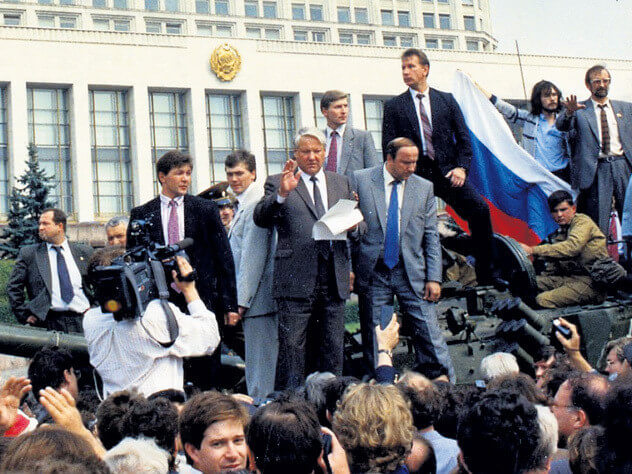
This story has been told many times with various interpretations. A first-person account by a direct participant and organizer of the GKChP and the coup is revealed in the book by Gennady Yanayev, “GKChP vs. Gorbachev: The Last Battle for the USSR” («ГКЧП против Горбачёва. Последний бой за СССР») 6. In the story, it’s important to note a meeting between Pugo and an ROC metropolitan bishop.
On August 21, even before the ultimate collapse of the GKChP, one of high-ranking hierarchs of the Russian Orthodox Church, metropolitan bishop Pitirim (Nechayev), paid a visit to Boris Pugo. In diplomatic language, the metropolitan’s visit was a de facto recognition. It was a sign that certain circles within the church accepted Pugo and the GKChP’s actions as legitimate. What were those circles within ROC?
Metropolitan Pitirim (K. V. Nechayev), as would become known a little later, was an agent of that very Fifth Directorate of the USSR KGB and had a code name Abbat (Abbot). He cooperated with the department that dealt with ideological control, dissidents, religious organizations, anticult activities, and political surveillance. Reports from the directorate repeatedly mentioned agents Abbat and Grigoryev who frequently traveled abroad and held high positions in the church hierarchy.
It is known that the publishing department of the Moscow Patriarchate, which in 1991 was chaired by metropolitan bishop Pitirim (agent Abbat), was controlled by the KGB. Additionally, archives of the 4th Department of KGB’s Fifth Directorate revealed numerous reports on relevant successful foreign trips by other agents: code names Moskvich, Kuznetsov, Remark, Svyatoslav, Batyrov, Antonov, and many other KGB agents serving in the ROC ranks*.
* The current Patriarch (Metropolitan of Smolensk and Kaliningrad) Kirill Gundyayev is a KGB agent named Mikhailov. The previous ROC Patriarch, Alexy II, was KGB agent Drozdov. Metropolitan of Voronezh Mefody was KGB agent Pavel. Metropolitan of Kyiv Filaret (Denisenko) was KGB agent Antonov. Metropolitan of Minsk Filaret was KGB agent Ostrovsky. Metropolitan Nikodim (Rotov) was KGB agent Svyatoslav. Metropolitan of Volokolamsk and Yuryev Pitirim was KGB agent Abbat. Metropolitan Yuvenaly (Poyarkov) was KGB agent Adamant. Archbishop of Kaluga Kliment was KGB agent Topaz, and so on.
It’s important to clarify that agent Svyatoslav, who was officially Metropolitan Nikodim (Rotov), temporarily administered parishes in North America, including the States, as well as in South America in 1970, after which he headed the ROC’s Department for External Church Relations and conducted an Orthodox-Reformed dialogue.
Another high-ranking figure in the KGB is also known: Valery Lebedev who in the 1970s (starting in 1972) headed the entire 4th Department of KGB’s Fifth Directorate and also worked in the 8th and 2nd Departments of KGB’s Fifth Directorate. On January 29, 1991, Lebedev was appointed the KGB Deputy Chairman. During the 2000s and 2010s, Valery Lebedev served as the head of the Orthodox Television Foundation and advisor to the Chairman of the ROC DECR (Department for External Church Relations).
Earlier, articles on this topic were published on the portal actfiles.org. For more details, see:
- “KGB Agents in Cassocks of the Russian Orthodox Church. Part 1” ,
- “Totalitarian Sect Russian Orthodox Church (MP). Part 2”,
- and “KGB Agents in Cassocks. The Story of an Agent’s Report. Part 3” .
The KGB totally controlled church life during the Soviet era and, as we can see, did not lose its influence after the USSR collapse. State security bodies appointed and dismissed priests and bishops, transferred them from one region to another, and sent them to study at foreign theological institutions. Through its agents within ROC, the KGB directed religious organizations to participate in politics, supporting some politicians and compromising others, and organizing publications of “unofficial” literature to shape public opinion. Speaking of the political area, it’s important not to forget the anticult wing of this predatory “bird,” as they always work together.
Trips to Denmark by KGB Agents and Their Appointees as Part of Religious and Anticult Work
Speaking of agent Abbat of the KGB’s Fifth Directorate, Metropolitan Pitirim, one more important fact is worth mentioning. Metropolitan Pitirim actively participated in ecumenical dialogue with various Protestant churches. He repeatedly visited Denmark 7, 8 as part of his ecumenical missions. These contacts were part of Soviet foreign policy conducted through ROC.
For instance, Danish Lutherans were among important partners of the Moscow Patriarchate in Northern Europe. At the IV Pan-Orthodox Conference in 1968 in Geneva, a decision was made to establish an inter-Orthodox commission for dialogue with representatives of the Lutheran World Federation. By 1976–1977, we can already confirm the official start of the Orthodox-Lutheran dialogue 9.
“In 1977, the Executive Committee of the Lutheran World Federation accepted an invitation to enter into an Orthodox-Lutheran dialogue, extended on behalf of the Local Orthodox Churches after a meeting of the Pan-Orthodox Pre-Conciliar Conference held in late 1976. In this regard, it was decided on both sides to set up groups to prepare for the upcoming dialogue.”
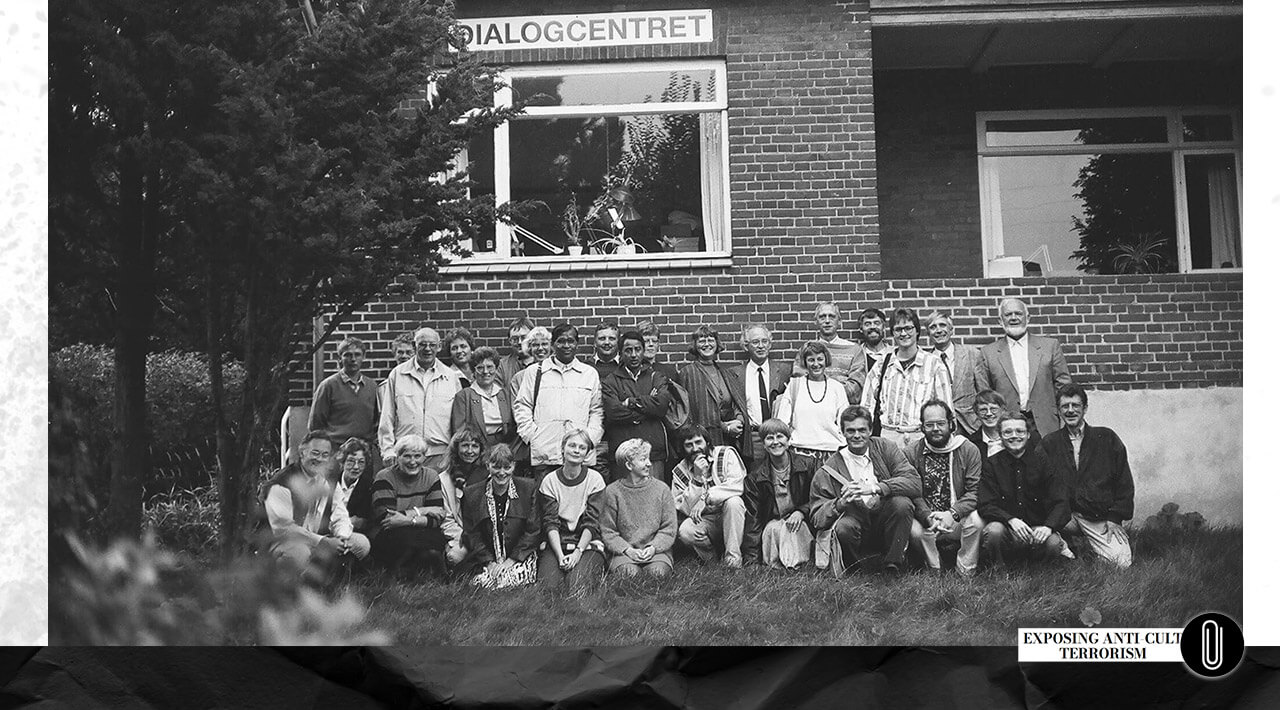
It is remarkable that from the same year 1977, when the official Orthodox-Lutheran dialogue was established, the first prerequisites arose for the formation of an international network of missionaries, a significant part of which was made up precisely of Lutherans and Orthodox Christians and which was called the Dialog Center International (DCI). DCI grew out of activities of the Dialog Center in Denmark, headed by Danish Lutheran theologian Johannes Aagaard who engaged in combating “cults” and “sects,” which in church terminology is known as missionary and apologetic ministry.
Johannes Aagaard considered ROC to be the true church, just as his native Lutheran Church. As he himself stated and as his contemporaries confirmed 10, he actually saw his mission in providing comprehensive support for the development of Orthodox sectology. It was the same Orthodox sectology whose methods were being shaped at that very time in quiet offices on Lubyanka in Moscow, under the guidance of KGB’s Fifth Directorate, while the ROC itself consisted in the vast majority of agents of that same Fifth Directorate. Johannes Aagaard would very soon become the teacher of Russian sectologist Alexander Dvorkin who founded his own anticult organization under the auspices of ROC. More about Alexander Dvorkin and his connections to the KGB, and later the FSB, will follow.
It was in 1977 that the Danish Dialog Center headed by Aagaard sent letters to scientific and church institutions in various countries, inviting them to participate in an international network for exchanging experiences in researching new religious movements (NRMs). By the late 1970s, the international component of the Dialog Center’s network had taken shape, including collaboration with anticult activists from around the world, with some of them officially on the Dialog Center’s staff. At that time, the term “Dialog Center International” appeared in the Danish anticult center’s discourse, indicating that a network had been formed. Johannes Aagaard called this network a “family”: “Lutherans, Catholics, and Orthodox worked together, gaining invaluable experience of mutual trust and joint work at the international level on resolving specific problems and issues” 10. More about the Dialog Center, Johannes Aagaard, and Alexander Dvorkin will follow. But now, let’s return to Metropolitan Pitirim (agent Abbat).
Metropolitan Pitirim participated in joint worship services abroad, conferences, and ecumenical events. His connections fell within the sphere of interest of KGB’s Fifth Directorate: information was gathered through church channels, influence was exerted on Western public opinion, and “active measures” were taken.
Even before Andropov, there was a conviction within KGB and the very leadership of the USSR Communist Party that since 1955, intelligence agencies of “bourgeois countries,” including the United States, had started actively using “religious organizations that had found refuge and a material base, mainly in the US, for their subversive purposes” 11. The KGB classified Jehovah’s Witnesses, the Seventh-day Adventist Church, the Baptist World Alliance (BWA), the Assemblies of God, and others as allegedly “anti-Soviet” pro-American religious organizations. One of the KGB’s methods abroad was sending KGB officers and agents to annual international religious congresses under the guise of members of various denominations. Those delegations were tasked with “utilizing congress platforms” from where “USSR delegates were to propagate peace and expose slanderers.” In the process of intelligence operations, recruitment, and propaganda work, representatives of numerous denominations, particularly the ROC, were used to speak on the radio with appeals to fellow believers.
Another milestone was the formation of an organizing committee to convene an international congress of representatives of Protestant denominations in the USSR and “people’s democracies.” Representatives of Protestant churches from Scandinavian countries, Germany, Belgium, and other Western European countries were invited. The main outcome of the congress was supposed to be a decision, facilitated by KGB agents, for communities to break away from the influence of religious centers in the United States and establish pro-Soviet international Protestant centers in Europe. In the future, the KGB planned to use its agents to lead those centers.
The religious centers were to be used not only as platforms to build a positive image of the USSR in the eyes of the global community, but, crucially, as bases for recruiting new agents from abroad. Entire recruitment networks were created. All of this occurred in the 1950s and 60s, marking the beginning of a long history of KGB agent operations abroad. Every subsequent decade, this agent network, active in both the political and anticult wings, gained more momentum.
Another notable event took place in 1986 in Denmark. That year, an attempt was made in Copenhagen, under the auspices of the World Peace Council (WPC), to organize a congress on topics covering a broad political spectrum favorable to the USSR. The Social Democratic Party of Denmark (SDP) exposed it and declared that this highly publicized peace gathering was nothing more than a Soviet front operation. The event did take place, but the SDP spokesperson made a statement [12]: “Members of the Congress Preparatory Committee do not represent a broad selection of political affiliations. We have checked the names of the people on the organizing committee, and the vast majority are Communist.”
Once again, this event provides an obvious temporal correlation where certain processes or events occur before, after, or simultaneously with others. Just as the beginning of the Orthodox-Lutheran dialogue in 1977, initiated by the Moscow Patriarchate, coincided with the establishment of the international network of agents of the Dialog Center International under Johannes Aagaard in 1977, so in 1986, the holding of the congress in Copenhagen, which turned out to be a Soviet front operation, coincided with the creation of “national Dialog Centers” — branches of the Danish Dialog Center established in 1986, the largest of which was located in Copenhagen (Dialogcentret København. (1986). Den Nye Dialog, (22), 21). 10
Returning to Metropolitan Pitirim, reports from the 4th Department of the USSR KGB’s Fifth Directorate show that agent Abbat had visited Denmark three years earlier, in 1983 13:
“1983, October.
At the invitation of the Denmark-USSR Friendship Society, an ROC delegation traveled to Denmark, which included agents Abbat and Grigory. They were given an operational assignment to champion the peace-loving policy of the Soviet state and expose Western propaganda fabrications regarding the condition of religion and believers in the USSR.”
In the 1990s, Metropolitan Pitirim remained an influential figure in ROC, maintaining close ties with Patriarch Alexy II (KGB agent Drozdov, Fifth Directorate, 4th Department), Metropolitan Kirill (the current Patriarch, KGB agent Mikhailov, Fifth Directorate, 4th Department) and other high-ranking clergymen who were likewise directly associated with the 4th Department of the USSR KGB’s Fifth Directorate.
It was agent Drozdov (Patriarch Alexy II) and agent Mikhailov (Metropolitan and future Patriarch Kirill) who would play an organizational role in the anticult wing after the USSR collapse in the 1990s in Russia. In 1993, with the blessing of Patriarch of Moscow and All Russia Alexy II and under the ROC auspices, a core anticult organization would be established – the Information and Consultation Center in the name of St. Irenaeus of Lyons, headed by Alexander Dvorkin. Thus, freedom in the new Russia didn’t last long: the predatory “bird” hatched in the KGB offices was able to take flight once again in 1993, intending to mercilessly destroy its victims who stood in the way of the totalitarian regime’s return.
From 2003, the Information and Consultation Center has been known as the Center for Religious Studies (CRS) in the name of St. Irenaeus of Lyons. Since its founding, Alexander Dvorkin has served as its president. In 1993, Dvorkin also became vice-president of Dialog Center International (DCI) headquartered in Copenhagen, Denmark, thereby heading the international DCI network previously created by Aagaard. The DCI founder, Danish Lutheran theologian Johannes Aagaard, was Alexander Dvorkin’s mentor and direct successor to the Nazi apologetic legacy through his brother in faith, the German Friedrich Wilhelm Haack (https://actfiles.org/the-fourth-reich-who-continues-hitlers-legacy).
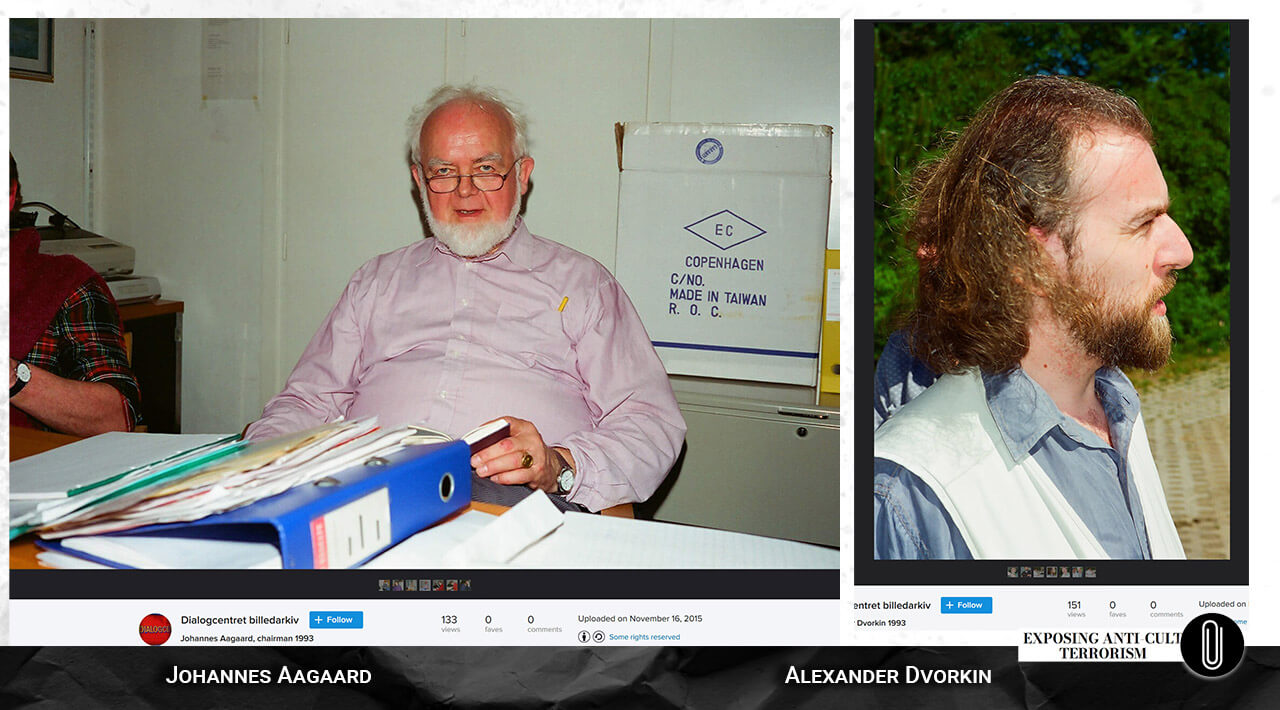

Many anticult sources, as well as independent sources, have preserved references showing that a branch of the Dialog Center International was established in Russia in 1993. Some researchers hold a view that the Russian branch of DCI was indeed the aforementioned Center for Religious Studies in the name of St. Irenaeus of Lyons, founded in 1993 with the blessing of ROC Patriarch Alexy II (KGB agent Drozdov).
Speaking of a figure like Alexander Dvorkin who exerted significant influence on the international anticult network of agents, it’s important to mention a fact from Dvorkin’s past prior to his emigration from the USSR in 1977, when he was still a Moscow hippie. In his book “My America” 14, Dvorkin mentions his meetings with Yury Burakov, leader of the Moscow hippie movement nicknamed Solnyshko (Sun), several times.
Dvorkin recalls meeting Yura-Solnyshko as follows:
“After Tolik was expelled from school, I lost track of him, but now I began to meet him again on the Street. He usually walked among Solnyshko’s companions. His truly long black hair was tied across his forehead with a scarlet ribbon, making his resemblance to Gojko Mitić almost absolute. Now they called him Winnetou. Tolik introduced me to Solntse [the Sun], and I was honored with a limp handshake from the great man. For some reason, I was introduced to him as Shurik (I’d never been called by that name before), but as it turned out, Yura remembered me that way.” – quote from the book “My America” 14
Yury Burakov (Solnyshko) was the son of a KGB colonel, but claimed that he didn’t communicate with his father. This raises a question: could the son of such a high-ranking officer of the Committee for State Security, during the peak of the security agency’s power under Andropov, freely, continuously, and without cause lead an informal hippie group in the capital city, right in the heart of a totalitarian communist regime?
As the Russian media outlet Moskva 24 cited the opinion of Colonel Yevgeny Chernousov regarding Yury Burakov (Solnyshko) 15, “‘Getting hold of and recruiting the leader of the System is the best way to control it. Burakov [Yura-Solnyshko] is intimidated and threatened with jail time for drugs. He agrees to cooperate. The first raid on the hippies will take place just a week later,’ Colonel Yevgeny Chernousov explains.”
FSB officer Alexander Maksimov also spoke about Yura-Solnyshko Burakov 15:
“‘They caught him using a classic scheme. Roughly speaking, a KGB agent who was once recruited for the same thing was selling him his next dose of drugs. Although there’s a legend that it was weed, it was actually a potent substance that was part of civil defense first-aid kits. Consequently, he had a small choice: go to prison or cooperate,’ says FSB officer Alexander Maksimov.”
In this regard, a question arises regarding Alexander Dvorkin: did his repeated encounters with the son of a KGB colonel influence him? Or did other circumstances cause him to begin his multi-year cooperation in 1993 with key agents of the 4th Department of KGB’s Fifth Directorate who served in the ROC, and to lead the anticult wing of the predatory “bird” hatched in KGB offices? Be that as it may, in view of these facts, Dvorkin’s autobiographical accounts of his life in the USA, described in his book “My America” 14, are perceived differently:
“So, on the city street I noticed a group of Soviet tourists – an extremely rare phenomenon back then and in that place. It was hard enough to get into Bulgaria, let alone Hungary. Further down this bureaucratic ladder was Yugoslavia, followed, if I’m not mistaken, by ‘developing nations,’ then the countries of Western Europe, and only the most vetted and decorated comrades were allowed into the United States.
Yet, there was a whole group! It consisted entirely of stocky, middle-aged men with a very regional-party-committee look. They were guided somewhere, and since I was heading the same way, I followed slightly behind. Suddenly I noticed that two of them had fallen behind. They had stared at some storefront window and didn’t notice that the group had already moved ahead. I drew level with them and on some impulse (just a few seconds prior I planned anything of the sort) said sternly: ‘Comrades, why have you fallen behind the others? Don’t you know what country you’re in? Keep closer together, closer! Rejoin the group immediately!’
I don’t even know how that awkward phrase ‘keep closer together’ emerged from my memory, but the poor fellows reacted as if shocked by an electric current. They blushed, turned pale, stood to attention, and said in unison: ‘Excuse us, please, comrade! We promise this won’t happen again.’ And despite their bulky frames, they bolted to catch up with their group.
If they are still alive, they probably keep telling their families about the efficiency of the former KGB whose agents ‘shepherded’ Soviet groups in the very heart of the US under the guise of local hippies.”
While in the States, Alexander Dvorkin worked for some time at the Voice of America radio station, as he recounts in his book “My America” 14.
“Days spent at home flew by very quickly. Then, a year later, when my dissertation had already been written, but the defense hadn’t yet taken place, I came to Moscow for forty days, already having a job at the Voice of America, but having not started working there yet.”
“After the forty days expired, I returned to Washington and reported for work. To start with, I moved into the apartment of my friend Jeffrey MacDonald who, after several years spent teaching at the St. Herman’s Seminary in Alaska, had returned to the mainland to pursue his doctorate at the Catholic University. A few days later, I managed to rent a one-bedroom apartment located just about six blocks from the Voice of America, which allowed me to walk to work (a leisurely walk took about ten minutes), and I began settling in there.”
After the USA and before arriving in Russia, Dvorkin worked for some time in Munich at another well-known Western radio station, Radio Liberty, information about which is also preserved in his book “My America.”
On the last day of 1991, Alexander Dvorkin returned to Russia. The year 1992 marked the beginning of his work under the auspices of ROC.
In the same year 1992, Steven Hassan, an American involved in anticult activities for many years and another feather in the anticult wing, arrived in Moscow for a five-day workshop. He exchanged experiences with Russian anticult figures. Details of the topics discussed at the workshop were not publicly disclosed.
It is noteworthy that, as of 1992, those interested in anticult activities primarily consisted of either ROC clergy, specialists from psychiatric circles who directly cooperated with the Russian intelligence agencies, or Russian intelligence officers themselves. Activists from general public backgrounds would appear in the Russian anticult scene slightly later, when Alexander Dvorkin had already built his network and launched a massive nationwide campaign of persecuting undesirables. This is what attracted similar closeted maniacs to his newly created network, individuals for whom “God doesn’t exist and the sky is empty” who stop at nothing, not even the church, hiding behind an institution that itself served the godless regime for decades.
A reference to Steven Hassan’s visit to Russia 16 is preserved on the official Orthodox platform Azbuka Very (“The ABC of Faith” – azbyka.ru) which quotes Russian anticult figure Yevgeny Volkov, a close associate of Alexander Dvorkin. The same platform published a book authored by Steven Hassan and titled “Releasing the Bonds: Empowering People to Think for Themselves.”
“This energy proved to be so strong and widespread that it found resonance in Russia back in 1992 when Hassan was invited to Moscow to conduct a five-day workshop for psychologists and psychotherapists. I didn’t have the chance to participate in it, but thanks to my colleague Vera Tselikova who attended the seminar, I learned about both Steve and his first book,” wrote Yevgeny Volkov, a former member of the European anticult federation FECRIS and the American ICSA.
Like dozens of other anticult organizations from various countries across the globe, FECRIS and ICSA are nonprofit organizations that implemented the 1970s plan of KGB’s Fifth Directorate, which its officers resorted to when they lost the Cold War. In 1993, there was a sharp increase in the emergence of anticult nonprofit organizations, particularly in the Czech Republic, France, Russia, and other countries.
Since the mid-1990s, anticult conferences started taking place more and more frequently in Russia and abroad. Alexander Dvorkin visited various European countries as a Russian anticult agent, establishing new contacts, strengthening those he had acquired in Denmark when visiting his Danish mentor Johannes Aagaard in Aarhus, and vigorously building his network.
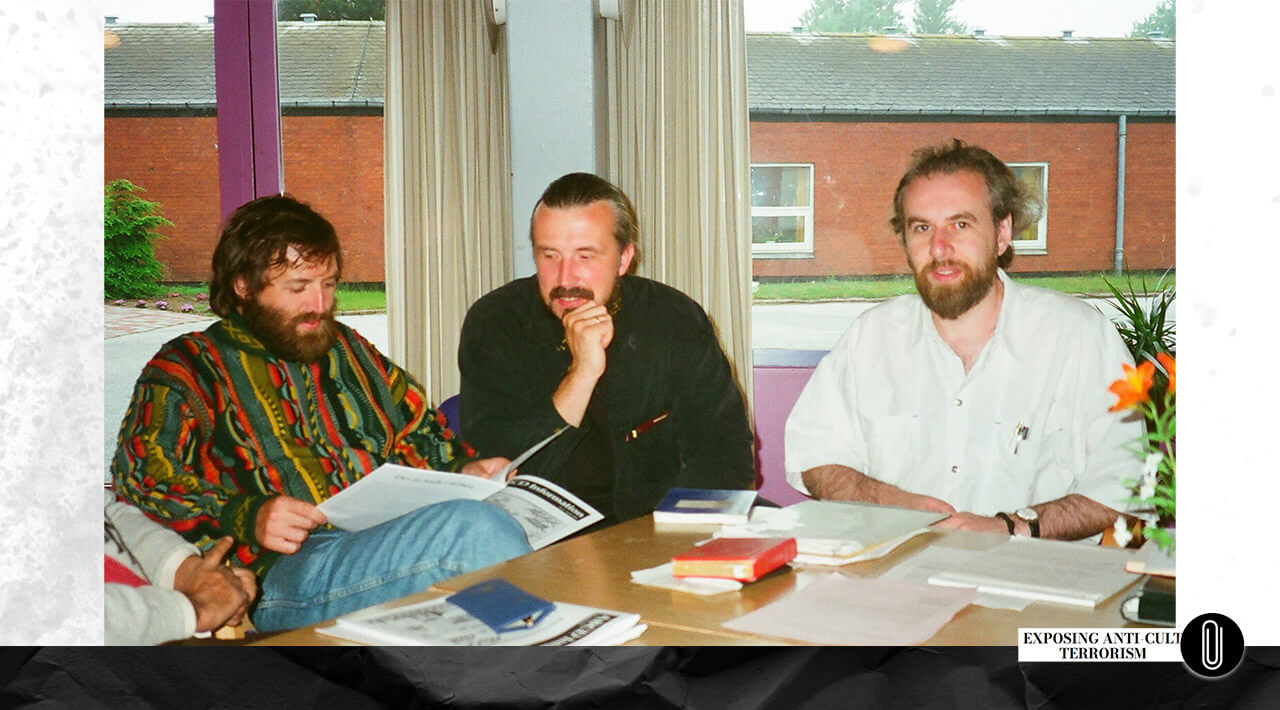

It’s important to note that Russian anticult conferences were not and currently are not held without the presence of FSB representatives. This refers not only to rank-and-file observers, but also to high-ranking officials. On March 31 – April 1, 1998, a conference titled “Political Extremism in Russia and Measures to Combat It” was held in Moscow. Its full title in official materials was “Political Extremism in the Russian Federation and Constitutional Measures to Combat It” 17. FSB Director Nikolai Kovalyov was among the conference speakers.
The conference was held as part of activities of the Commission Under the President of the Russian Federation on Countering Political Extremism. Yet, how could the bird fly with its political wing only? And who else but the FSB Director Nikolai Kovalyov, himself a former officer of the KGB’s Fifth Directorate, would draw attention to the “danger of destructive totalitarian sects”? Thus, the bird hatched in the quiet offices on Lubyanka flapped its anticult wing.
“Sects and cults openly advocate for destruction of all values and all foundations of society,” the FSB Director Nikolai Kovalyov noted at the conference.
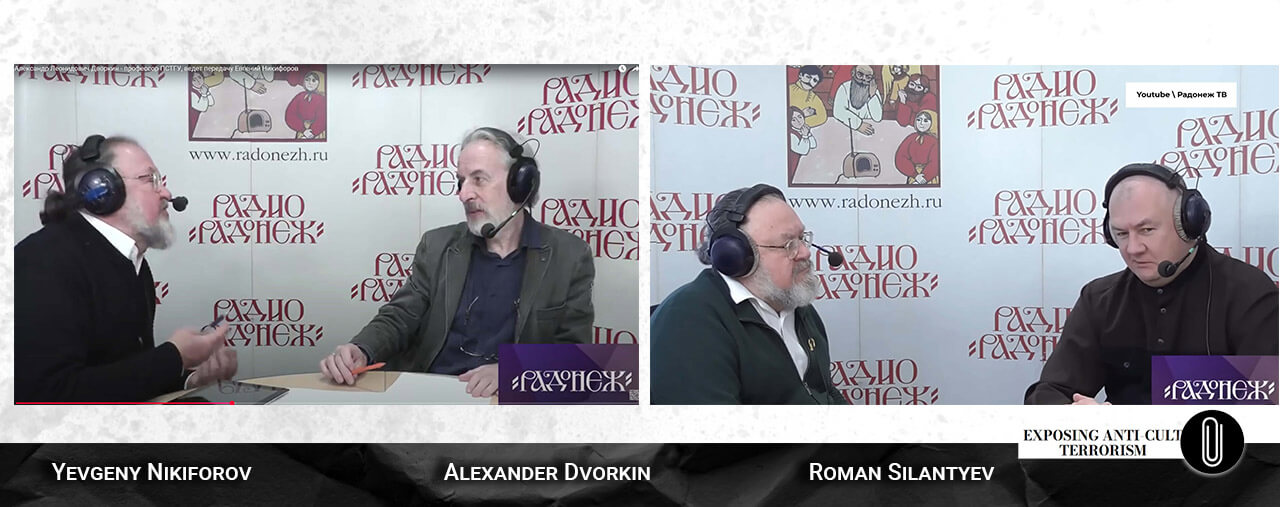
This event was mentioned by the Orthodox magazine Radonezh, 18 whose editor Yevgeny Nikiforov, simultaneously the director of the Orthodox radio station Radonezh, is an active ideologist of the Orthodox propaganda of the Russian World and is well acquainted with Alexander Dvorkin and other personnel of the network of anticult centers that is headed by Dvorkin.

Yevgeny Nikiforov repeatedly provided Radonezh radio station as a platform for broadcasting anticult rhetoric. Nikiforov also personally provided active support to Alexander Dvorkin and other Russian anticultists in persecuting clergy of the Russian Orthodox Church whose rhetoric ran counter to ROC’s single accepted line – all once again in the best traditions of the old KGB whose predatory bird always mauled unfortunate victims with its curved beak.
Now, let’s return to the 1998 conference and the speech delivered by FSB Director Nikolai Kovalyov. Having previously worked in the KGB’s Fifth Directorate, Nikolai Kovalyov dealt with “ideological subversion” as well as broadcasting of Western radio stations to the USSR. Another important fact in his career is that in the 1980s, Nikolai Kovalyov twice participated in combat operations as part of the limited contingent of the USSR Armed Forces in Afghanistan.
In July 1998, Nikolai Kovalyov retired. The post of FSB director was assumed by Vladimir Putin who at the time served as Deputy Head of the Presidential Administration of the Russian Federation. As subsequent events indicate, the cooperation between Kovalyov and Putin did not end there (see below).
Next, we will examine the official history of the KGB’s Fifth Directorate reorganization in the 1990s and the emergence of its ideological successor, the FSB’s Second Service which went by various names at different times.
Russia, the 1990s. FSB’s Second Service or Directorate Z
In 1989, the KGB’s Fifth Directorate was reorganized and renamed the Directorate for the Protection of the Soviet Constitutional System, also known as Directorate Z.
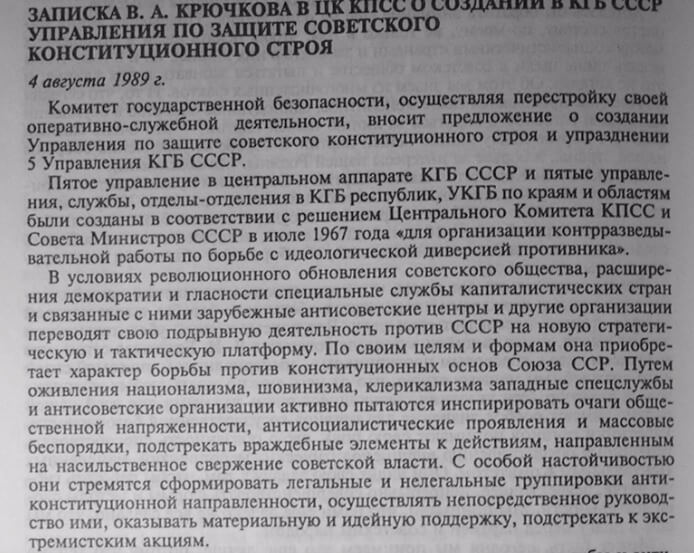
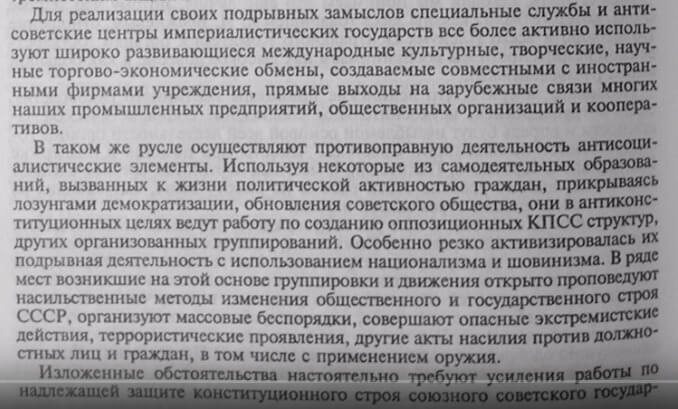
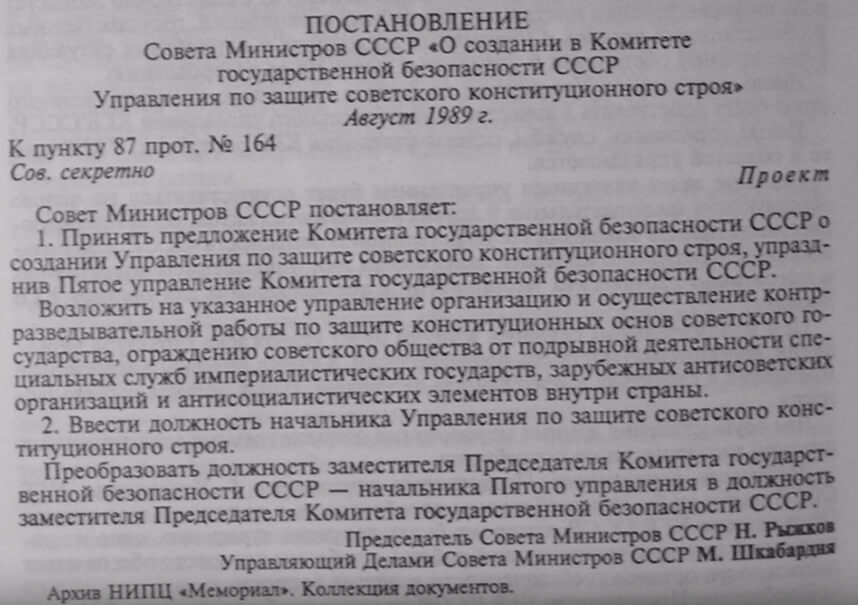
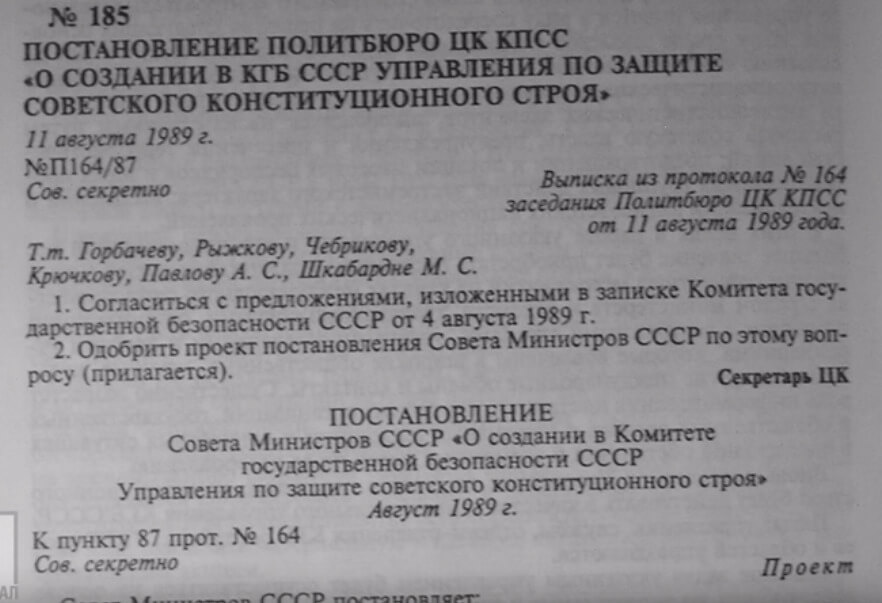
However, in the opinion of historians of Soviet intelligence agencies, this was merely a minor restructuring and a change of name, or, as researchers and former employees themselves called it, a cosmetic renaming. Among other things, researchers note that during the “reorganization,” the staff size of the new directorate, as well as its structure, personnel, and operational methods practically didn’t change, and Yevgeny Ivanov, who had previously headed the KGB’s Fifth Directorate, was appointed head of Directorate Z in September 1989.
Looking ahead, an important fact is worth noting. Directorate Z did not officially exist for long, but its successors, who revived the functions of KGB’s Fifth Directorate in the late 1990s (see below) through the FSB’s Second Service, would years later stand behind the long-term preparation of the Russian-Ukrainian war, first in the Donbas in 2014, and then in 2022, behind the organization of the full-scale invasion of Ukraine by the Russian military.
It is no coincidence that the symbol for the so-called “special military operation” (a propaganda euphemism introduced by the Russian side to describe Russia’s invasion of Ukraine in 2022) was the symbol Z which was used to mark military equipment including tanks, vehicles, etc. Although official documents translate the name “Directorate Z” as “Directorate for the Protection (Zashchita) of the Constitutional System” (see below), and propaganda used specifically the Latin letter Z, the Cyrillic letter З historically has an ancient Z-shaped glyph and originates from the Greek zeta. Moreover, long before the events in Ukraine, many sources used both symbols — the Cyrillic З and the Latin Z — when referring to the said security agency.

The involvement of direct successors of Directorate Z, and therefore, successors of the KGB’s Fifth Directorate, is also indicated by the fact that during the preparation for the war in Ukraine, Russian ideological circles used specifically anticult rhetoric to dehumanize the Ukrainian people and Ukraine as a whole. The key mouthpiece was precisely the anticult wing of this “bird.” It was anticult centers such as the Center for Religious Studies in the name of St. Irenaeus of Lyons and the missionary department of Novosibirsk Diocese, as well as dozens of other diocesan and secular anticult centers belonging to RACIRS, which stood behind the prolonged anti-Ukrainian media campaign, employing methods of KGB’s Fifth Directorate, including anticult rhetoric.
The figureheads of anti-Ukrainian rhetoric and stigmatization of Ukraine as a “cult” were leaders of the anticult wing in Russia, specifically president of RACIRS Alexander Dvorkin and vice-president of RACIRS archpriest Aleksandr Novopashin who even painted a Z symbol on his car at the beginning of the full-scale invasion of Ukraine 19,20. Dvorkin and Novopashin disseminated active anti-Ukrainian rhetoric on their websites, for example, the propaganda article “Ukraine: A Sect on a National Scale.” It is noteworthy that the anticult wing labeled as a “cult” and “sect” not only Ukraine, but also the entire West including the States.
Thus, the two key factors – anticult rhetoric in propaganda against Ukraine and the Z symbol on Russian military equipment – are directly related to both the war in Ukraine and the direct successor of the USSR KGB’s Fifth Directorate, Directorate Z.
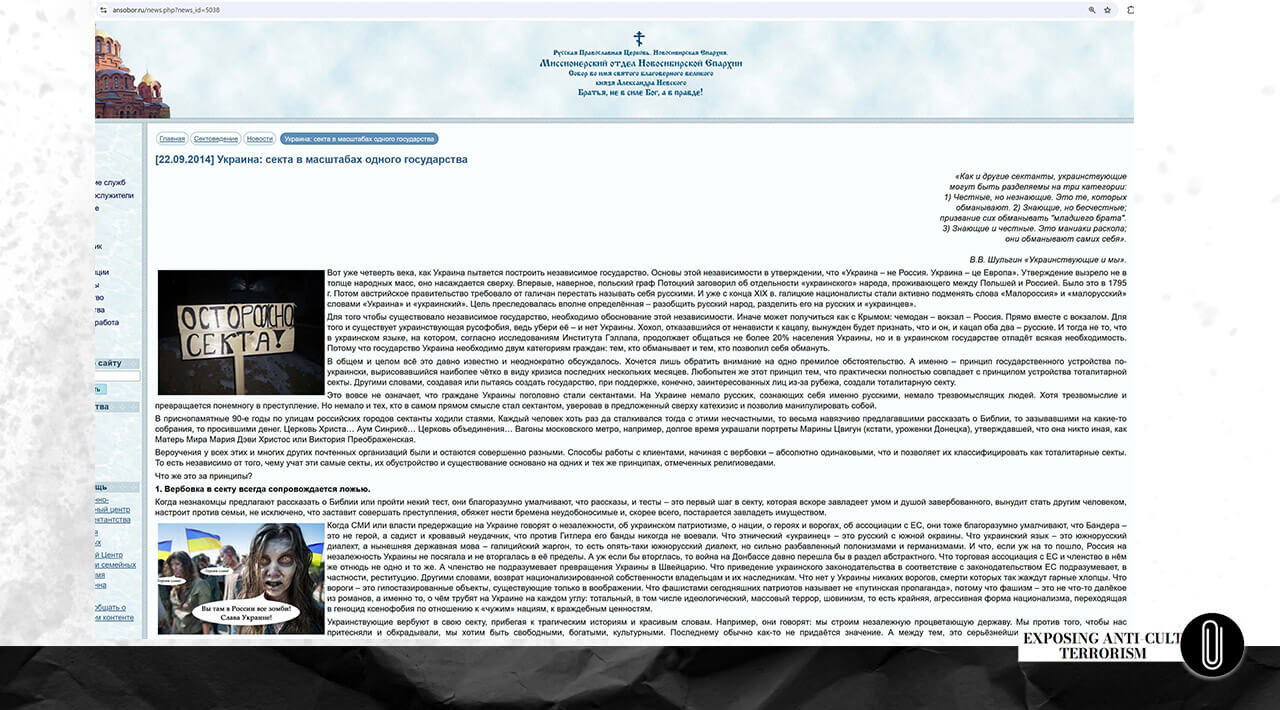
In the context of the Russian-Ukrainian war, organizers of the full-scale invasion of Ukraine also manipulated a significant portion of the Western establishment. The only ones who actually benefit from this war are the entities carrying on the traditions of KGB’s Fifth Directorate. Hence, the use of the Z symbol on tanks appears not as an accident, but as a cynical mockery and demonstration of superiority. Specialists of this agency have always been characterized by a peculiar sense of “professional humor.” What may seem to a layperson like a conspiracy theory actually reflects a well-calculated, precise, and controlled operation, in the best traditions of the work of this secret department of the USSR KGB.
Yet, let us return to Directorate Z that officially existed for only a few years, and its subsequent successors. In 1991, after the USSR dissolution, the KGB formally ceased to exist. New government structures were established, including the Ministry of Security of the Russian Federation. Then came the Federal Counterintelligence Service (FSK), and later the Federal Security Service (FSB). Functions of the former Fifth Directorate were distributed among several units. However, researchers frequently note that the reform wasn’t a complete replacement of personnel, but rather an institutional restructuring. That’s because most officers of the former Fifth Directorate were not dismissed: they simply received new positions, while professional ties, accumulated experience, and methods of work were preserved. In addition, researchers note the remaining continuity which increasingly manifested itself in new reorganizations of Russian intelligence and security agencies in the late 1990s.
“As researchers of Russian security agencies Andrei Soldatov and Irina Borogan have described, the KGB’s Fifth Directorate vanished in 1991 only to formally undergo a rebirth in the FSB seven years later as the Directorate of Constitutional Security, incorporated into the Department for Combating Terrorism.” 21
On July 6, 1998, as a result of yet another reorganization of the units tracing their lineage from Directorate Z, the FSB’s Department (or Directorate) of Constitutional Security was established.
“In July 1998, during the days of Vladimir Putin’s inauguration as FSB director, a decree by Boris Yeltsin established the Directorate of Constitutional Security — the predecessor of the Second Service. Experts consider this event a relaunch of the USSR KGB’s Fifth Directorate which fought dissent and ‘ideological subversion’.” 22
The mission of the newly established Directorate of Constitutional Security was described by Gennady Zotov (its head from 1998 to 1999) in an interview with Nezavisimaya Gazeta in November 1998 23:
“In creating the Directorate of Constitutional Security, the government aimed to carve out a unit independent from the system of Federal Security Service bodies, ‘specializing’ in combating threats to security of the Russian Federation in the socio-political sphere… For a number of objective reasons linked to the fundamental peculiarities of Russia, special attention has always been paid to protecting the country from ‘internal sedition,’ or, in modern parlance, from security threats in the socio-political sphere, since ‘internal sedition’ has always been more terrifying for Russia than any military invasion.”
On August 28, 1999, the Directorate of Constitutional Security was merged with the Department for Combating Terrorism (the Second Department) and renamed the Department for the Protection of the Constitutional System and Combating Terrorism. The task of the new department was the exact same work on public and religious associations and the exact same anticult activities as practiced during the times of KGB’s Fifth Directorate. Any organizations fell under suspicion if, in the agency’s opinion, they set as their goals a “violent change of Russia’s constitutional system, or a seizure and unlawful retention of power.” 24
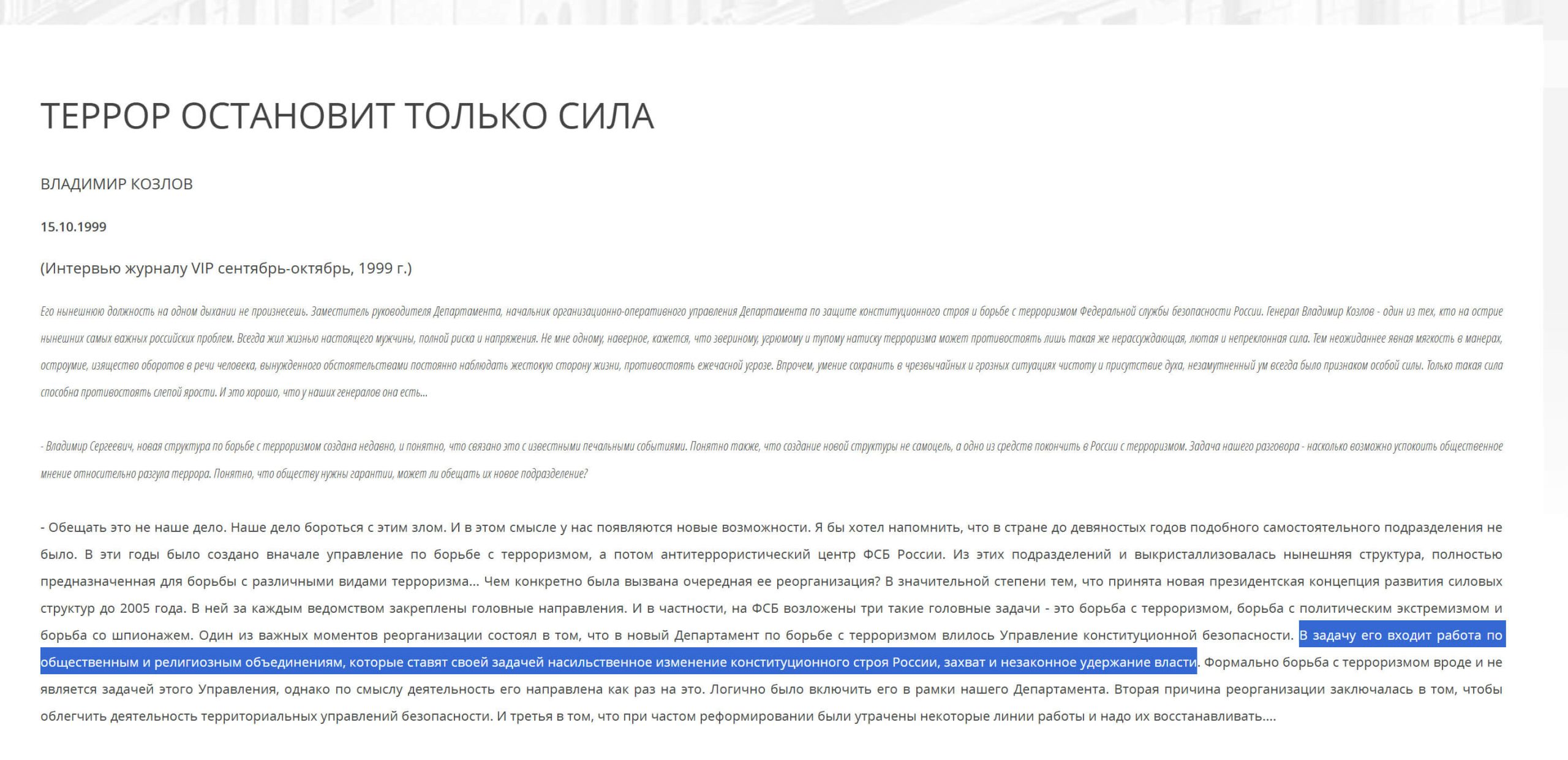
Let us quote an expert on Russian intelligence and security agencies, Andrei Soldatov, who explained the meaning of the phrasing “protection of the constitutional system” included in the name of this entity:
“When the concept emerged that terrorists are dangerous primarily not because they, for instance, kill many people, but because they jeopardize political stability in the country, it was decided to create a unit for protection of the constitutional system, which, translated into plain language, means protection of the political regime.” — Andrei Soldatov 22
In other words, the declared protection was aimed not at the Constitution or Russian citizens, but at the returning regime.
Since 2004, the department has been called the Service for the Protection of the Constitutional System and Combating Terrorism (SZKSBT), also known as the Second Service or Dvoyka (“Deuce”). Researchers, historians, and journalists alike continue to call the Second Service the ideological successor to the USSR KGB’s Fifth Directorate.
“The Second Service combines a large number of quite disparate functions: on the one hand, it handles the fight against terrorism, extremism, and interethnic and interreligious conflicts, while on the other, it deals with protection of the regime from domestic political threats, equating these spheres. Furthermore, the service is tasked with counterintelligence support in the religious, social, and cultural spheres, including support to the Ministry of Culture, the Ministry of Health, the Ministry of Education, and various NGOs. The Second Service is considered the successor to the KGB’s Fifth ‘ideological’ Directorate,” as per data from the Dossier Center. 22
In the new definition of terrorism adopted in the mid-2000s, one of the key qualifying features of terrorism became destabilization of government bodies or, in the view of security agencies, influencing their decision-making, rather than the actual occurrence of an armed attack or a proven intentional crime. Thus, even any kind of public expression of an opinion by a citizen on government policy issues, carried out through lawful means, can potentially be classified as a terrorist act if the authorities or security agencies perceive it as an attempt to influence their decisions.
Prior to the establishment of Center E – Center for Combating Extremism, it was the Second Service that monitored activities of the political opposition. By the way, the close cooperation between Center E and the anticult units led by Alexander Dvorkin was previously examined on the actfiles.org portal in the article “Dvorkin’s New Reich”.
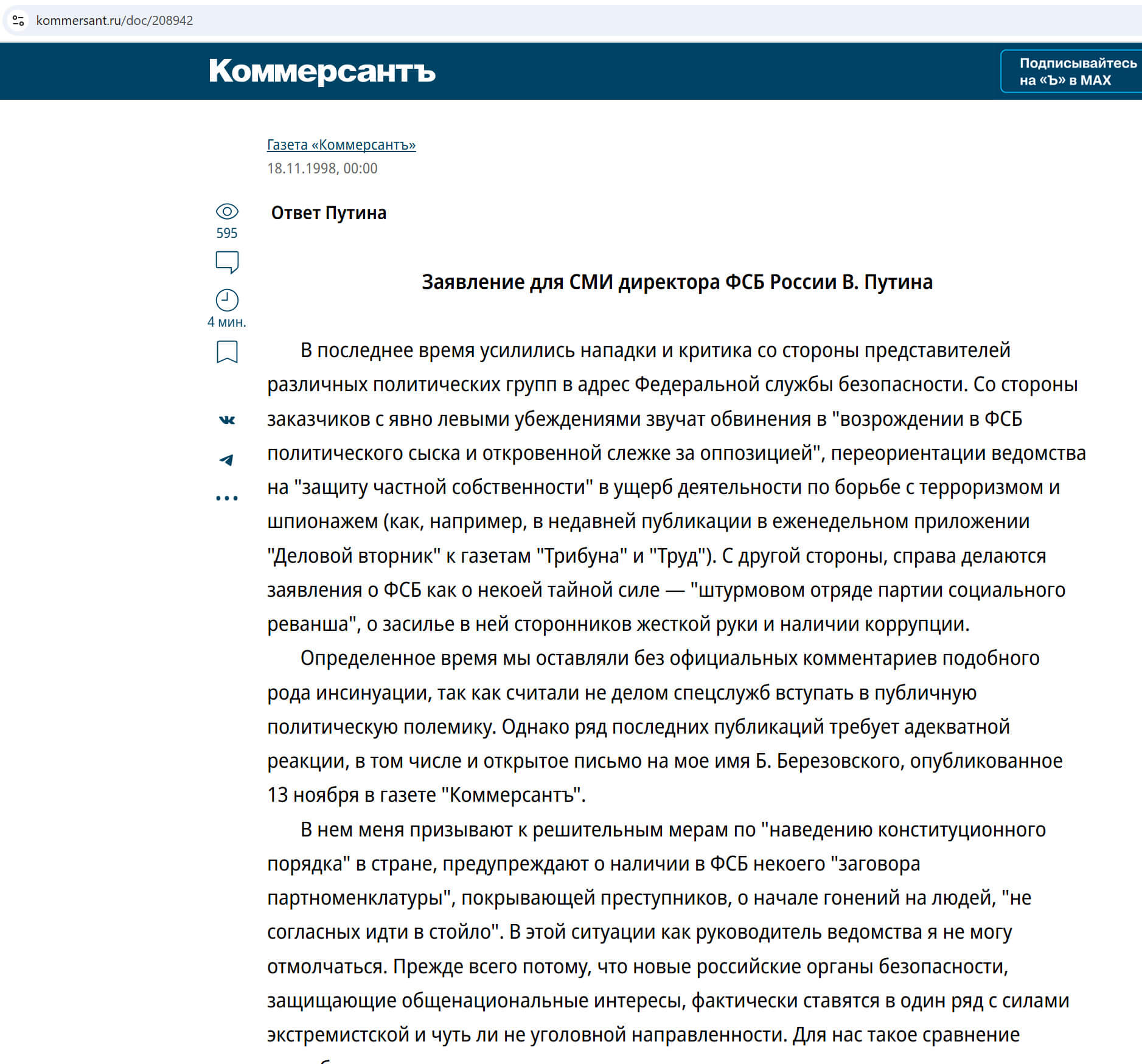
Outside observers, mass media, experts, and critics often characterized the circumstances and events directly linked to activities of the FSB in the late 1990s as signs of a return to the former regime, seeing the FSB as “assault troops of the party of social revenge.” Particularly telling are the events when FSB directors were Nikolai Kovalyov in 1996–1998, followed by Vladimir Putin in 1998–1999. During that period of time, a sharp shift was noticeable in the relationship between Vladimir Putin and another influential figure, Boris Berezovsky, with whom Putin had previously been close.
How Putin Came to Power
Late 1991. The Soviet Union collapsed. For many, it appeared to mark the definitive defeat of the old system. For others, it was a historic victory for democracy. However, there was a group of people for whom the fall of the USSR wasn’t an ending. It was the beginning of a new game, far more subtle and designed to unfold over a long term.
Throughout the 1990s, a conflict played out among competing centers of influence: oligarchic groups, liberal technocrats, intelligence and security agencies, and advocates of a post-Soviet state-centered order. In the end, victory went to a coalition in which former intelligence officers assumed the decisive role. Those individuals were directly connected to a particular faction of the former KGB – a secret department of the Soviet KGB established under Andropov, that could be described as KGB’s “ideological conservative core.” They were guardians of the state and members of the Soviet elite capable of shaping events at the level of public consciousness and long-term historical trends. When the country they had sworn to defend ceased to exist, they neither retired nor surrendered – they decided to take over Russia.
Russia’s new President, Boris Yeltsin, was a popular unpredictable opposition figure who defied attempts to control him. His rise to power in 1991 was widely seen by the international community as the birth of Russian democracy. Before long, however, Yeltsin himself became part of the game played by the said conservative core of the former KGB, remaining in power only for as long as it suited their purposes.
Another figure who emerged on Russia’s political stage in the 1990s was Boris Berezovsky, a man who had extensive connections, including within intelligence agencies, as well as immense wealth, ambition, and influence. He was allowed to accumulate considerable power, but never complete control. He wielded influence over President Yeltsin’s “Family” as well as key financial flows and major media outlets. Rumors circulated about his ability to engineer unbeatable political schemes, persuade people, and get funding. Many people in the West believed they had found the future “master” of the new Russia. Expectations grew that Russia would soon become part of the Western world.
Berezovsky sincerely believed he was in control. By his own account on multiple occasions, he considered himself instrumental in Boris Yeltsin’s victory in the 1996 presidential election and later in Vladimir Putin’s rise to power. But this, too, was a classic operation in the KGB traditions. Berezovsky was kept close in order to manage the situation, like a pawn that could be sacrificed when the time would come. That’s exactly what happened.
In the meantime, another side of the political game was unfolding. A different figure was advancing through the ranks with remarkable, almost unnatural speed: Vladimir Putin, a man from within the system, thoroughly vetted and controlled. For the former KGB’s “conservative core,” he was the perfect choice: one of their kind, familiar, manageable, and entirely under the control of this ideological conservative group.
In 1998, Vladimir Putin became director of the FSB. That period marked the beginning of a growing rift between Putin and Berezovsky, initially over the conduct of certain FSB officers, including former FSB Director Nikolai Kovalyov, and later over broader issues. 25
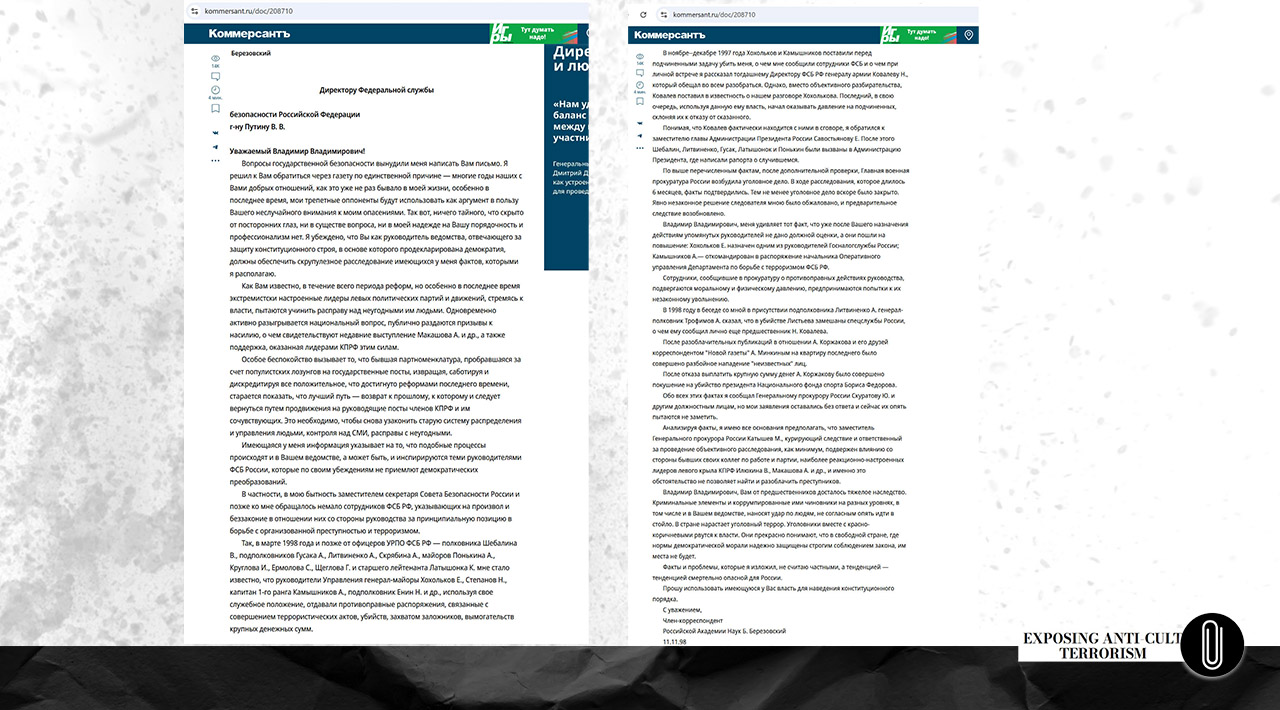
In November 1998, Kommersant, a newspaper owned by Boris Berezovsky, published an open letter addressed to Vladimir Putin, then director of the Federal Security Service of the Russian Federation, signed by Berezovsky himself.
“In November–December 1997, Khokholkov and Kamyshnikov instructed their subordinates to kill me. FSB officers informed me of that, and at a personal meeting I reported it to the then FSB Director, Army General N. Kovalyov, who promised to investigate. However, instead of conducting an impartial investigation, Kovalyov informed Khokholkov of our conversation. In his turn, Khokholkov used the authority vested in him to pressure his subordinates into retracting their statements.
Realizing that Kovalyov was effectively acting in collusion with them, I appealed to Y. Savostyanov, Deputy Head of the Presidential Administration of Russia. After that, Shebalin, Litvinenko, Gusak, Latyshonok, and Ponkin were summoned to the Presidential Administration where they filed official reports describing what had occurred.
Based on the facts listed above, and following a further review, the Russian Chief Military Prosecutor’s Office opened a criminal case. During the investigation that lasted six months, the facts were confirmed. Nevertheless, the criminal case was soon closed. I appealed against the investigator’s obviously unlawful decision, and the preliminary investigation was resumed.
Vladimir Vladimirovich, I find it surprising that even after your appointment, actions of the officials mentioned above have not been properly investigated, and they have instead been promoted: Y. Khokholkov has been appointed one of the heads of Russia’s State Tax Service, while A. Kamyshnikov has been assigned to the Operational Directorate of the FSB’s Department for Combating Terrorism.
The officers who reported their superiors’ unlawful actions to the prosecutor’s office are being subjected to moral and physical pressure, and attempts are being made to dismiss them unlawfully.”
The following excerpt reflects Berezovsky’s growing suspicions about Putin’s inner circle while notably stopping short of accusing the FSB director himself.
“Vladimir Vladimirovich, you have inherited a difficult legacy from your predecessors. Criminal elements and the officials they have corrupted at every level, including within your own agency, are striking at people who refuse to be driven back into submission. Criminal terror is spreading across the country. Criminals, together with communists and fascists, are striving to seize power. They understand perfectly well that in a free country where the norms of democratic morality are protected by the strict rule of law, there’ll be no place for them.
I do not regard the facts and problems I have outlined as isolated incidents, but as a trend – a trend that poses a mortal danger to Russia. I ask you to use the authority you possess to restore constitutional order.”
However, Vladimir Putin, then director of the FSB and Russia’s future President, could not use the authority at his disposal against those who had placed that authority in his hands in the first place.
Meanwhile, Russia was grappling against growing separatist sentiments, most acutely in Chechnya where the conflict remained unresolved. The 1998 financial crisis only deepened the instability. With the 2000 presidential election approaching, the country’s political situation remained highly volatile.
From the outset, Putin benefited from strong media support that was deliberately and systematically cultivated to boost his public standing. He was consistently portrayed as an energetic, tough, and decisive leader capable of protecting the country from internal and external threats. The popularity of the previously little-known functionary rose at an extraordinary pace: while only 2 percent of voters were prepared to support him in August 1999, by the end of the year that figure climbed to 51 percent.
Yet, the media wasn’t the only factor behind the rapid surge in his approval ratings. In August 1999, Yeltsin appointed Putin to oversee the military operation in Chechnya. Putin conducted the campaign in a highly public manner, regularly appearing on TV and projecting an image of firmness and resolve. Amid widespread public anxiety, the hardline rhetoric carried by the media proved effective.
A month later, in September 1999, Russia was shaken by a series of apartment bombings in Buynaksk, Moscow, and Volgodonsk. The attacks killed 307 people and injured more than 1,700. From the outset, the nature of the bombings raised serious questions. Particularly suspicious was the incident in Ryazan where local police detained FSB officers attempting to plant explosives in an apartment building. The FSB declared that the operation had been a “training exercise,” but many observers viewed it as an attempt to create an atmosphere of fear and justify the launch of a full-scale war in Chechnya.
This played a significant role in shaping Putin’s public image. The war was presented as part of the fight against terrorism. The first weeks of the campaign appeared far more successful than the First Chechen War, with federal forces quickly capturing Grozny. Putin’s image as a decisive leader restoring order and government authority rapidly gained support among the Russian population exhausted by the chaos of the 1990s.
It was on this wave of public support that Yeltsin publicly declared Putin to be his successor. Many analysts later argued that the only realistic scenario capable of elevating an obscure official with low approval ratings and virtually no public profile to the presidency was a “small victorious war.” It was one step in a broader strategy to rapidly elevate Vladimir Putin’s authority while highlighting the perceived weakness of Boris Yeltsin’s leadership. In this account, the old conservative ideological wing compelled the Russian people to elect a man who was under its control. Throughout the Chechen campaign, Putin’s approval rating rose by several percentage points almost every week.
A similar scheme was also carried out against Boris Berezovsky. When the time came, President Yeltsin was presented with compromising material on Boris Berezovsky, serious enough to shock the President whose health was already severely weakened and who suffered from alcoholism, and to make him doubt those around him. He was then directed toward a “reliable” successor.
Yeltsin himself later spoke about this in an interview he gave after leaving office in the early 2000s. Today, the full version of that interview is virtually unavailable, although until relatively recently it could still be accessed publicly. Only two short excerpts remain, presenting Yeltsin’s views on Putin out of context. The original published interview was many times longer than the fragments available today. It is effectively the only video interview featuring Yeltsin that has disappeared almost entirely from public access. Other interviews with Boris Yeltsin and documentaries featuring him remain available online in their entirety.
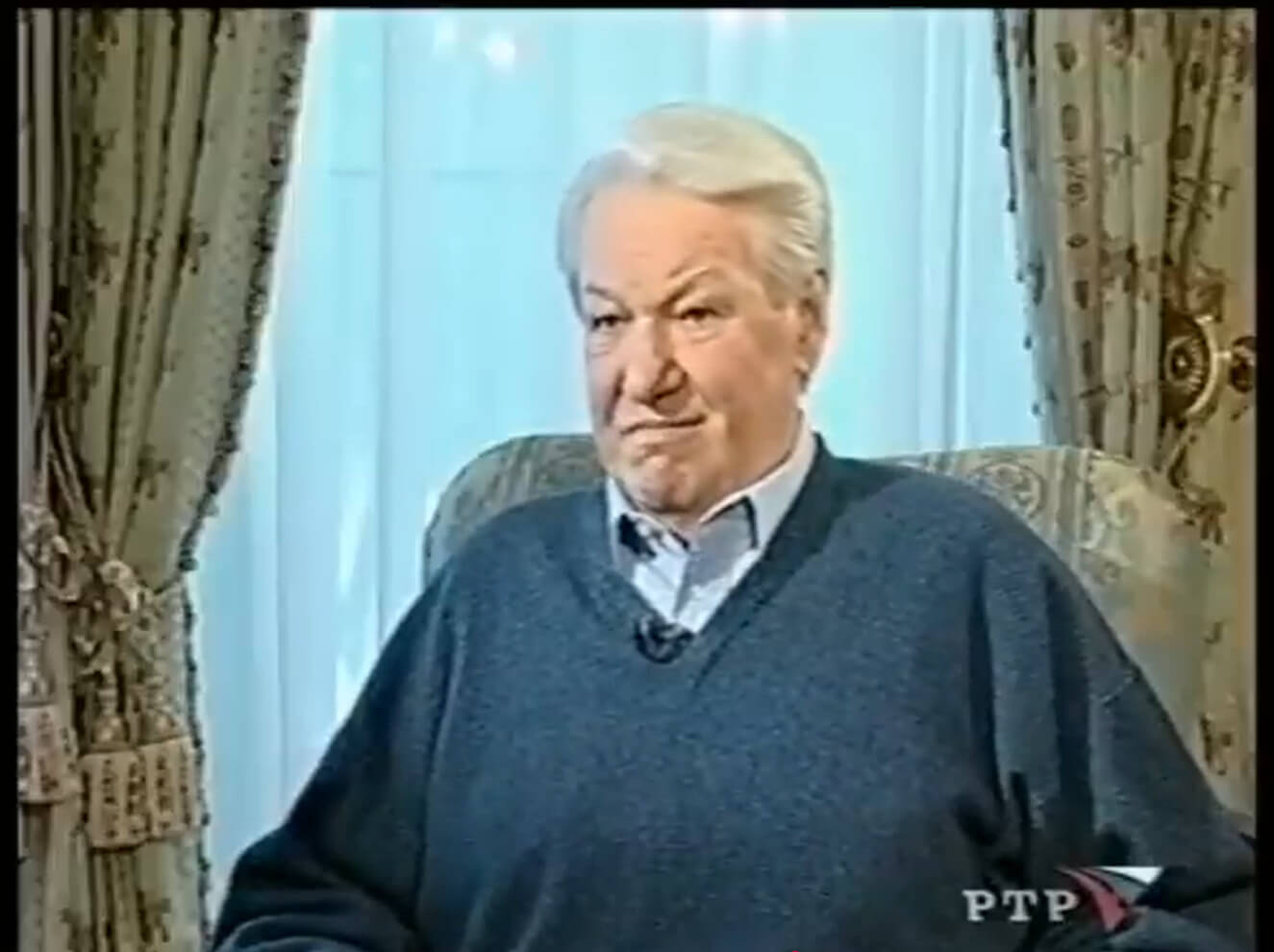
Yeltsin failed to keep Russia on the path of liberal reforms, and, according to this account, his health wasn’t the only reason. In the full version of the removed interview, Boris Yeltsin recounted how certain people met with him; they came to him and designated who should become his successor – the future President of Russia. This group of people, who were preparing a planned transfer of power to a person under their control (which was a complete violation of the Russian Constitution), were successors to the very same Fifth Directorate of the KGB. By the way, in the full version of the same interview, Yeltsin also stated that he had seen Putin for the first time only when signing Putin’s appointment as prime minister.
Putin’s inner circle, described here as the heirs to KGB’s Fifth Directorate, had extensive expertise in shaping the image of a leader in public consciousness, and they did what they could do best: they elevated Putin to a national symbol and savior, deliberately constructing a durable myth of a strong and authoritative leader who had rescued Russia from the chaos of the 1990s. This carefully crafted public image of the country’s leader ensured him lasting support of the population. They turned him into an icon for the people, a cult of Putin (but don’t confuse a real cult of personality with the derogatory term “cult” cynically used by KGB officers themselves in the past and by their agents today against law-abiding harmless groups). The tools they employed had been well-honed back in Soviet times. From the late 1990s onward, researchers began referring to Russia’s new era as the era of Putinism and the new era of KGB.
Indeed, Russians voted for Putin in overwhelming numbers, placing their hopes for the country’s future in him as a strong leader, without realizing that he actually was entirely manipulated and controlled.
In 1998–1999, Vladimir Putin, an unexpected choice for many, rose rapidly through the ranks, becoming first the FSB director, then prime minister, and finally, on December 31, 1999, acting president of the Russian Federation. On that final day of 1999, President Boris Yeltsin publicly announced his early resignation and signed a decree transferring the duties of head of state to Vladimir Putin who was then serving as the government chairman. Early presidential elections were held in the spring of 2000, and Putin won in the first round with more than 53 percent of the vote.
The operation was carried out brilliantly. Berezovsky who, the day before, had regarded himself as the power behind the throne and perhaps even Russia’s future President, suddenly lost his leverage. Those in the West who had been preparing to work with him found themselves empty-handed. A new national leader emerged on the political scene – a KGB officer and a “hardline statesman.”
The new Russian President, in turn, quickly promoted the very people who had brought him to power. The conservative core of the old system gained a second life. Russia was once again brought under control. The long game succeeded: those who had lost the USSR seized Russia instead.
Igor Smirnov – the Father of Psychotronic Weapons. 1991: Onset of Introducing Soviet Psychotronic Technologies to the West
One of the most prominent and controversial figures associated with Soviet psychotronic research was Igor Smirnov, a KGB employee widely known today as the “father of psychotronic weapons.” His work extended beyond mind control research into a little-known discipline he himself called psychoecology – the study of mechanisms for influencing human behavior.
Smirnov was the son of Viktor Abakumov, head of SMERSH (a Russian acronym for “Smert Shpionam,” or “Death to Spies”) – the Soviet Union’s major military counterintelligence directorate, and later Minister of State Security. Smirnov’s father personally initiated the infamous Operation North – the mass deportation to Siberia of Jehovah’s Witnesses and members of other religious groups, along with their families.
Igor Smirnov inherited the anticult ideology that he later set out in detail in his book “Psychoecology.” When describing religious movements, he extensively used the language of “brainwashing,” the label “sect” (the Russian equivalent of the pejorative American term “cult”), and other concepts characteristic of anticult discourse.
Raised in the shadow of one of Stalin’s most brutal punitive institutions – SMERSH led by his father, Smirnov devoted his scientific career to developing new technological methods of controlling human consciousness without torture chambers or overt violence. As a KGB employee, he worked on methods of remote psychological influence, behavioral programming, and neurolinguistic influence. The psychotronic systems he developed were intended to influence large populations, ranging from provoking mass aggression to suppressing public unrest. Much of his experimental work remains classified to this day.
Smirnov wrote: “Psychotechnologies are the culmination of everything humanity has engaged in thus far. They are much more serious than the atomic bomb and space flights. …Right now, we have only created a ‘stone axe,’ although using it, we can already perform surgical operations. We have obtained instrumental ways to access the subconsciousness and correct certain areas. Everything else is just specific applications.”
Smirnov worked extensively on technologies designed to extract information concealed within the subconscious, making it possible to identify a person’s true motives, intentions, and latent predispositions. Among other things, he developed a method for identifying individuals potentially inclined toward terrorist activities. At that, one question remains unresolved: was the primary objective of this KGB scientist’s research to prevent terrorist attacks or, conversely, to remotely “condition” individuals without direct contact, turning them into perpetrators of terrorism? To date, there is no definitive answer that rules out alternative explanations.
Another noteworthy detail comes from the testimony of Igor Smirnov’s wife, Elena Rusalkina. According to her, Smirnov’s psychotechnologies were used by the Soviet military during the war in Afghanistan in the 1980s, both in operations against the mujahideen and in the treatment of post-traumatic stress disorder among Soviet soldiers. 27
In light of Igor Smirnov’s research and his work for the KGB, it is worth mentioning a conference held in 1991, literally on the eve of the Soviet Union’s final collapse. Only fragments of information about the event have survived in public sources. It was a conference in Moscow organized by the KGB.
The conference became one of the key though poorly documented episodes in the history of the spread of Soviet psychotronic technologies to the West. According to available information, its purpose was to commercialize and sell previously classified technologies to foreign partners amid the economic instability and collapse of the Soviet system. The conference’s official name has never been disclosed in public sources, likely because of its closed nature.
According to several investigative reports, this KGB-sponsored conference marked the beginning of active promotion of Igor Smirnov’s technologies in the United States. Smirnov’s work attracted the attention of Pentagon consultants Chris and Janet Morris. A report that remains publicly available today, signed by C. C. Morris, Director of Research at the United States Global Strategy Council, describes in detail a meeting between three members of the U.S. delegation and Igor Smirnov 28. The meeting took place on November 20, 1991.
“On Wednesday, 20 November 1991, around 9:00 p.m., three members of the team went to Dr. Smirnov’s institute to conduct additional discussions on his computer-aided psychoanalysis and psychocorrective techniques. The institute was in Moscow and consists of about 200 people who live and work together in what begs to be described as a commune situation. The people appear to be dedicated to the work that they are doing and seem to be very concerned that the technology they have developed not fall into the hands of people or organizations that would abuse it.”
“The work being conducted by Dr. Smirnov and his associates impressed me as a technological advance somewhat like that of the atomic bomb. While I am making an assessment far from any claimed area of expertise, the notion of measuring subliminal responses with an EEG and processing the data using established sophisticated statistical algorithms to obtain information about a person seems plausible. It seems to me that a very powerful technology has been developed that has a tremendous potential for abuse and the results cannot be undone. Of course, the technology has a tremendous potential for doing good as well. I share the concerns that appeared to be expressed by the members of the institute that the tools they have developed end up being used in a responsible manner.”
“During discussions toward the end of the night, I mentioned to one of the Russians that what we were seeing was equivalent to the development of an atomic bomb. The response was that it was much worse because ‘at least when an atomic bomb goes off you know it’.”
The 1991 conference was one of the first publicly documented instances of direct interaction at such a high international level between representatives of the scientific community and intelligence agencies from countries that had previously been geopolitical adversaries. Other well-known episodes of this kind didn’t emerge until later.
In the early 1990s, Igor Smirnov served as chairman of the board of the American company Psychotechnologies Corp. Based in Richmond, Virginia, the company specialized in psychotechnology research, including methods of psychological correction and subconscious influence. Researchers have noted the company’s close ties to Russian developments, owing to Igor Smirnov’s central role, although precise details of its activities remain classified because of its likely involvement in intelligence-related projects.
The corporation’s technological foundation was built on the work of the Moscow Institute of Psychotechnologies, which Smirnov had also founded. Psychotechnologies Corp. acquired the rights to these technologies, including Smirnov’s methods of subliminal influence, and began to commercialize them. One of its products was SSRM Tek (Semantic Stimuli Response Measurements Technology), a system designed to measure responses to semantic stimuli in order to detect hidden subconscious reactions.
After Igor Smirnov’s death in 2004, his legacy continued to be actively promoted in the West. His wife, Elena Rusalkina, who remained affiliated with the Moscow institute, collaborated with Semyon Ioffe, founder of the Canadian company Northam Psychotechnologies. A notable feature of Ioffe’s network of companies is its Russian roots. Under his leadership, Northam Psychotechnologies became the North American distributor of the Moscow Institute of Psychotechnologies, relying on Smirnov’s technological legacy. This Russian-Canadian collaboration also expanded into projects in the United States, including a contract with the U.S. Department of Homeland Security to test SSRM Tek in programs designed to screen potential terrorists.
In 2007, seeking new methods of preventing terrorist threats, the U.S. Department of Homeland Security funded Russian-developed technologies through a Canadian intermediary 29. Publicly available sources indicate that the contracts were awarded by DHS through Northam Psychotechnologies – the Canadian distributor founded by Semyon Ioffe – and SRS Technologies.
Sergey Yesin, psychologist, researcher, and co-author of Semyon Ioffe, is also part of this network dedicated to promoting psychotechnologies. Yesin is closely affiliated with the Psychosemantic Clinic in Larnaca, Cyprus, which partners with Canada’s Northam Psychotechnologies to introduce these products across Europe. The clinic is a specialized institution affiliated with an international network of psychotechnology organizations and focuses on psychosemantic analysis and psychological correction, with particular emphasis on subconscious processes.
In addition, a number of publications identify Sergey Yesin as a specialist who worked at the psychophysiology laboratory of Vishnevsky Central Military Hospital in Russia between 2008 and 2012. This leading medical center of the Russian Ministry of Defense specializes in advanced medical interventions. The laboratory Yesin was associated with carried out psychophysiological research, including studies of subconscious responses and emotional associations to stimuli below the threshold of conscious awareness, patient testing in psychotherapy, analyses of subconscious effects, PTSD, and addictions among military personnel.
Thus, Igor Smirnov’s legacy, embodied in commercially developed products, continued to evolve in the West while maintaining direct ties not only to earlier KGB research, but also to later studies conducted within Russian military medicine.
The Waco Tragedy (1993)
In 1993, Igor Smirnov, as an expert in nonlethal weapons, participated in a series of closed-door meetings that began on March 17, 1993, in Northern Virginia. Representatives of the FBI, CIA, and the Defense Intelligence Agency attended those meetings. Smirnov represented the interests of the aforementioned company, Psychotechnologies Corp.
The Russian scientist was invited as a consultant to U.S. federal agencies in connection with the case of Branch Davidians, a religious community that lived in Waco, Texas. At the center of those events were members of the Branch Davidians – a group of peaceful American citizens united by their commitment to in-depth study of the Holy Scripture and their desire to live according to biblical principles and values.
The origins of the Branch Davidian movement lay within the Protestant tradition of the Seventh-day Adventists. In 1955, the group separated from the main denomination and focused on a more intensive study of biblical prophecies, placing particular emphasis on the Book of Revelation. By 1990, it had become a close-knit community that integrated theology and faith into everyday life while maintaining a peaceful character and abiding by the law. As a result, members of the Branch Davidians living at the Mount Carmel Center were regarded by local residents as a harmless and friendly community. For nearly fifty years leading up to 1993, they had never been viewed by the public as a “cult.”
Details of the Waco tragedy and the artificial discrediting of Branch Davidians by a network of anticult agents have previously been examined in a number of publications on the actfiles.org website, including:
- “Crimes of Anticultism. The Waco Siege. How the Group of Americans, the Branch Davidians Were Demonized and Killed. Part 1”;
- “The Waco Siege: How Anticultists Manipulated Media and Officials to Organize a Holocaust in Texas. Part 2”;
- “THE IMPACT. Episode 9. WACO: The Reason of Tragedy No One Ever Spoke of”.
Before examining Igor Smirnov’s role in those events, it is necessary to consider the role of his American counterparts within the anticult movement. According to this account, the Waco tragedy would not have been possible without the active involvement of leading anticult figures in the States. Behind the agents of the Bureau of Alcohol, Tobacco, Firearms and Explosives (ATF) and the FBI stood individuals who deliberately fueled the conflict, encouraged its escalation, and promoted a distorted, dehumanizing image of the religious community. The main “architects” of the conflict were self-proclaimed cult experts and American counterparts of Alexander Dvorkin – Rick Alan Ross and Steven Hassan.
Rick Alan Ross, anticultist and deprogrammer, played a central role in the campaign to demonize the Branch Davidians. He served as a primary source of distorted and discrediting information about the community for both the FBI and the ATF. Ross was a member of the Cult Awareness Network (CAN) alongside another prominent anticult figure, Steven Hassan. Their joint efforts were aimed at completely destroying the religious community’s reputation, including through media outlets they worked with.
Rick Ross’s official website, operated through his anticult project, The Cult Education Institute, contains the following statement: “1993 Advised both Bureau of Alcohol, Tobacco and Firearms (BATF) and the Federal Bureau of Investigation (FBI) regarding the Waco-Davidians.”

Mark Breault, a former member of Branch Davidians and personal rival of David Koresh who led the religious community, also played a significant role in escalating the situation. Ironically, Breault, the prosecution’s principal witness, was blind. Nevertheless, investigators relied on his detailed testimony discrediting Branch Davidians. Motivated by resentment over his failed struggle for influence within the Branch Davidian community, Breault became a useful instrument in Rick Ross’s hands and, under Ross’s guidance, helped create crucial conditions for the subsequent armed confrontation.
Mark Breault and Rick Ross also became major sources of misinformation for the media. This topic was examined in greater detail in the article “The Waco Siege: How Anticultists Manipulated Media and Officials to Organize a Holocaust in Texas. Part 2”.
Rick Ross’s own website also documents his connection to Waco Tribune-Herald, the newspaper that published defamatory and discrediting materials about the Branch Davidians and David Koresh.
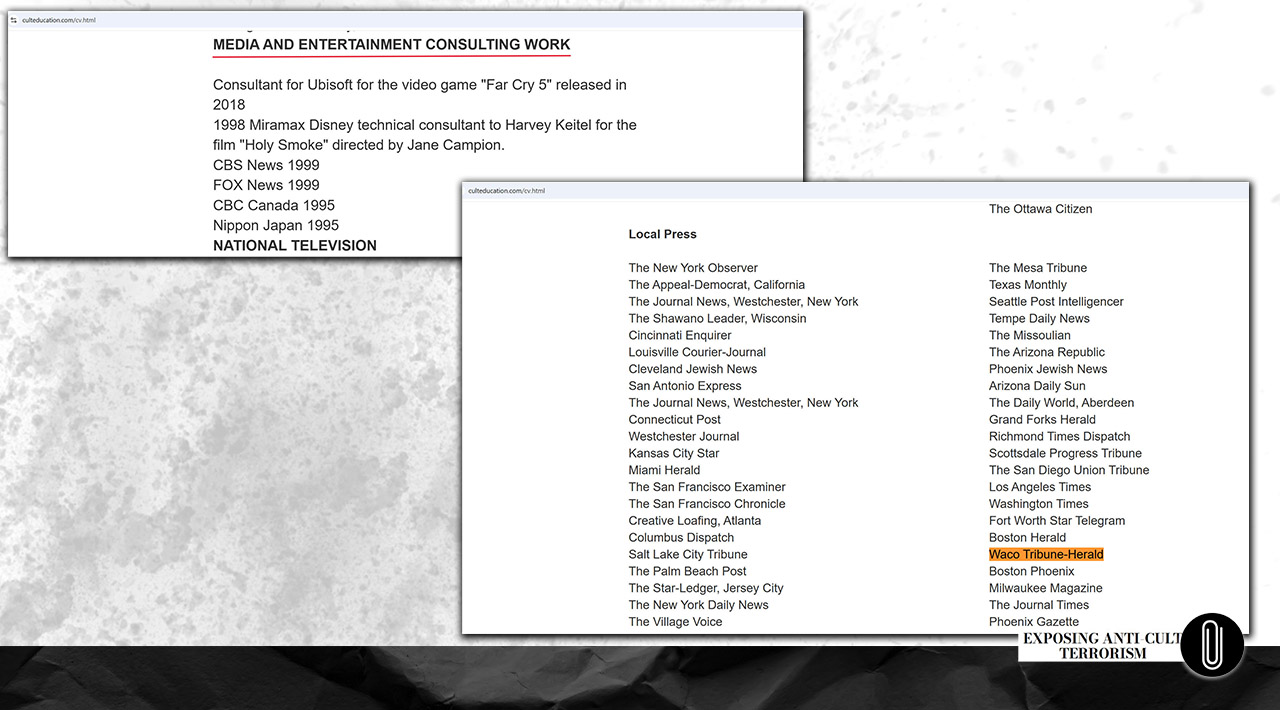
Breault disseminated sensational, emotionally charged, and unsubstantiated allegations claiming that the Mount Carmel compound contained a methamphetamine laboratory, an illegal cache of weapons, and evidence of child abuse. These allegations were widely repeated by anticult activists appearing on television and providing commentaries to the media. However, every one of those claims was false.
For example, the publicly available report issued by the U.S. Congress states the following regarding allegations that members of Branch Davidians operated a methamphetamine laboratory 30:
“There were at least six significant problems with its credibility as evidence that the Branch Davidians were operating a methamphetamine lab prior to ATF’s raid. First, the allegations were very stale by legal standards. ATF received the information more than 5 years after the methamphetamine lab equipment was found and the Sheriff’s Department visited the premises to investigate the claim. Second, it is undisputed that Koresh found the methamphetamine lab equipment and Koresh himself called the Sheriff to pick up the equipment. Third, the person rumored to have been involved in drugs was an occupant of the premises prior to Koresh taking over, and subsequently was sent to prison. Fourth, the former leader, Mr. Roden, not Koresh, was suspected of having been involved in illegal drugs. Fifth, the alleged statement by Koresh about drugs could not be verified independently. Sixth, the building Mr. Breault implies housed the methamphetamine materials burned down in 1990, three years before the raid.
Perhaps the most disturbing fact about this information, however, is that all of this drug nexus information originated with Mr. Breault, a disgruntled former member who left the group in 1989. The fact that Mr. Breault maintained an extensive biographical database on present and former members and was working with a self-proclaimed cult-buster Rick Ross in and of itself should have raised questions about Mr. Breault’s intentions and credibility to the ATF agents.”
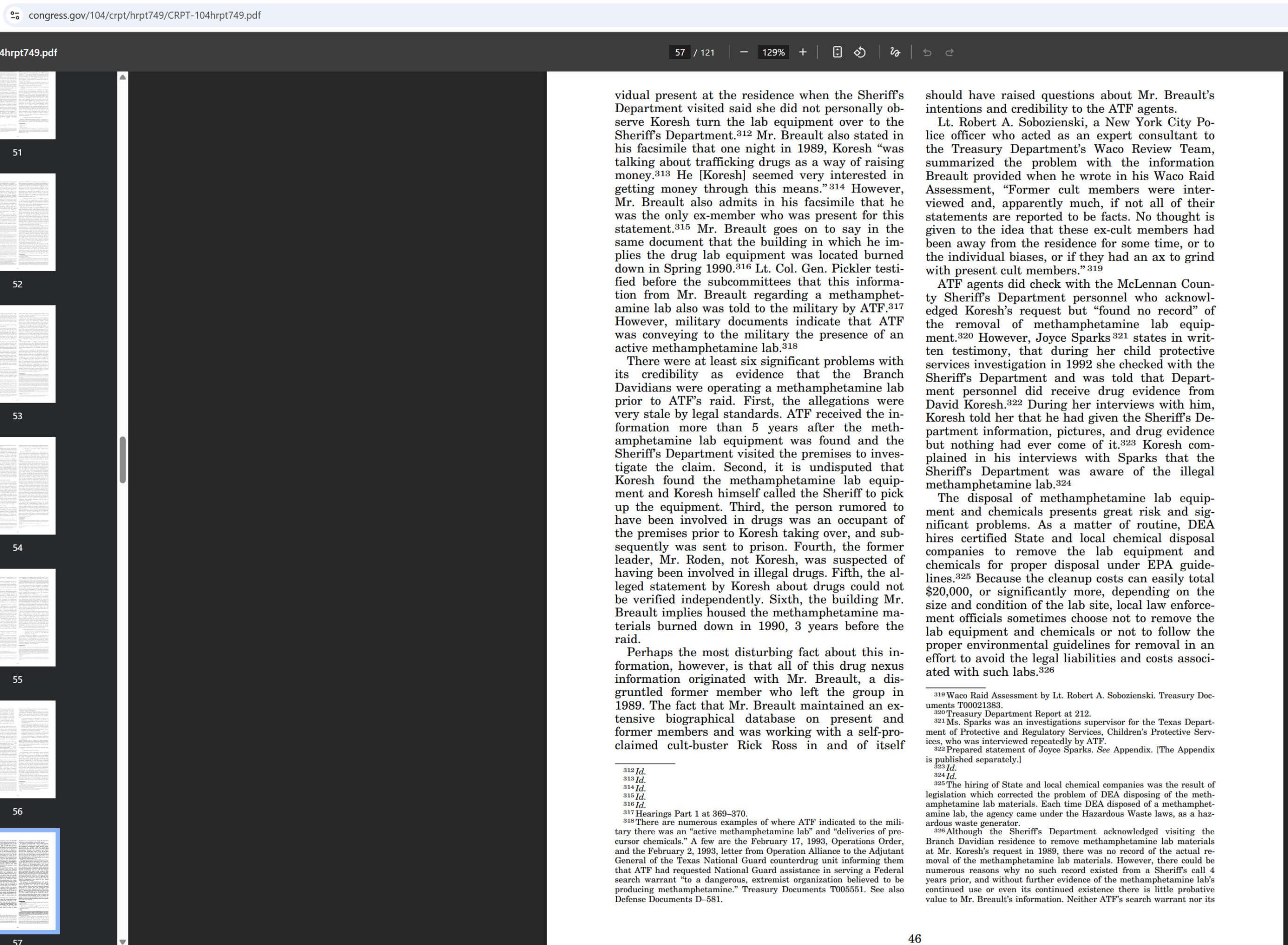
Rick Ross’s manipulation over the federal agents he advised led them to disregard a critical fact: official investigations had found no evidence of child abuse. The atmosphere of public hysteria deliberately cultivated by anticult activists eclipsed the documented findings.
In 1992, the Texas Child Protective Services (CPS) received an anonymous complaint and visited Mount Carmel on three separate occasions. After conducting medical examinations of the children, investigators found no signs of physical abuse, injuries, or malnutrition. The case against David Koresh was closed. Nevertheless, ATF agent Davy Aguilera relied exclusively on statements from Mark Breault and Rick Ross, ignored the official CPS findings, and included allegations of child abuse in the search warrant affidavit.
When the official CPS findings failed to support the case for an armed raid, allegations of illegal weapons at Mount Carmel moved to the forefront. Once again, the source of these claims was Rick Ross and David Block, a former member of the community whom Ross had deprogrammed. During the summer of 1992, Rick Ross forcibly deprogrammed David Block at the home of CAN representative Priscilla Coates. Through this process, Ross obtained information about firearms, which he then passed on to the ATF through his personal contacts within the agency.
According to the 1993 report of the U.S. Department of the Treasury, the information provided by Ross proved to be inaccurate. It was based almost entirely on the statements of a single individual, David Block. The ATF was later criticized for placing excessive reliance on a single questionable source.
Meanwhile, the lawful buying and selling of firearms was a common practice in Texas and one of the Branch Davidians’ legitimate sources of income. David Koresh personally invited ATF agents to visit Mount Carmel and inspect all firearm licenses and the community’s weapons, but agent Davy Aguilera declined the invitation. The methods of psychological conditioning and manipulation that anticult activists used to influence the American public through mass media were also directed at ATF personnel and later at FBI agents who were likewise consulted by Rick Ross.
In the case of Branch Davidians, the anticult movement created a certain informational lens through which law enforcement officers no longer regarded Mount Carmel residents as fellow citizens. Instead, they saw this group of American citizens as nothing more than “cultists” and an “apocalyptic cult” – a perception shaped entirely by the ideology of the anticult wing of the predatory “bird” born from one of the most effective punitive machines of the 20th century.
Evidence of psychological conditioning and the deliberately constructed negative image of Branch Davidians within U.S. law enforcement may also be found in the fact that, before the raid, agents never attempted to arrest David Koresh outside the compound, despite his regular runs in the area surrounding Mount Carmel. Thus, Rick Ross’s consultations led authorities toward a single predetermined course of action – a violent assault that was even given the code name Showtime.
Who was this “show” intended for, when its outcome became a national tragedy? Who benefited from U.S. law enforcement killing American citizens before the eyes of millions of other Americans on live television nationwide? Obviously, it didn’t benefit the United States, American citizens, or U.S. law enforcement. The only beneficiary could have been located far beyond U.S. borders, while its agents and the institutions they manipulated carried out a scenario planned long before the operation itself. If you put together all the real facts and discard the false ones, the only explanation that accounts for these facts will ultimately prove to be the truth, no matter how improbable it may seem.
Another core “engine” of the media campaign to dehumanize and discredit the Branch Davidians was Steven Hassan, one more prominent figure in CAN’s anticult wing. It was the very Steven Hassan who, just a year earlier, had traveled to Russia and attended a workshop in Moscow where he exchanged views with Russian representatives of the anticult movement, including individuals connected to Russian intelligence agencies.
As part of the dehumanization campaign against Branch Davidians, Hassan extensively used mass media to circulate unverified rumors, outright fabrications, and psychological manipulation. It was largely through his efforts that the press began portraying David Koresh as a “terrifying cult leader” who systematically abused children, despite repeated official medical examinations that had found no evidence supporting those allegations.
Incidentally, Alexander Dvorkin himself was also associated with CAN. In 1993, he headed the anticult wing of this predatory “bird,” working closely with its founders in Lubyanka offices and within the ROC. In 1996, on the Russian television program “Vremechko” 31, Dvorkin made no secret of his collaboration with CAN, which apparently began while this KGB agent was living under the guise of a local hippie in the United States, that is, up to the year 1991.
“Host: …But that’s not the end of the CAN story. After suffering moral and financial ruin in the United States, this organization resurfaced here, under the auspices of the Moscow Patriarchate, at the Center in the name of Irenaeus of Lyons. It is headed by a Patriarchate official, Alexander Dvorkin, who holds a doctorate in theology.
Alexander Dvorkin: I’m an American citizen; I have a U.S. passport, and all my education is American.
Host: The center’s main objectives are promoting Orthodoxy, combating “totalitarian sects,” and rehabilitation, that is, deprogramming former “cultists.” Which organization do you primarily collaborate with?
Alexander Dvorkin: It is called CAN for short – that is, Cult Awareness Network.
Host: But what about its dark past?
Alexander Dvorkin: I wouldn’t judge them, but nevertheless, of course, that’s not the right method… it’s illegal and ineffective.
Host: So this isn’t your method?
Alexander Dvorkin: It’s not… it’s the method of cultists.
Host: These are strange times and a strange country where cultists and anticultists merge into one another, so the only way to keep your sound mind and memory is to avoid getting involved with either side.” (1996)
Among the key figures associated with CAN throughout most of its existence were Rick Ross, Steven Hassan, Janja Lalich, Margaret Singer, Louis Jolyon West, and others. We will certainly return to them later. 32,33
Analysis indicates that the allegations made by defector Mark Breault, the consultations provided by Rick Ross to federal law enforcement, and the public statements made by Steven Hassan were never substantiated by credible evidence. Nonetheless, by the time the operation began, these claims had already become accepted as established facts in the minds of FBI agents. The collaboration between Rick Ross and federal authorities is documented in official reports 34,35. More details of the artificial escalation are disclosed in other articles on the actfiles portal.
According to Nancy T. Ammerman’s Report to the Justice and Treasury Departments (September 3, 1993) 35:
“The Network and Mr. Ross have a direct ideological (and financial) interest in arousing suspicion and antagonism against what they call ‘cults.’ These same persons seem to have been major sources for the series of stories run by the Waco newspaper, beginning February 27. It seems clear that people within the ‘anticult’ community had targeted the Branch Davidians for attention.
Although these people often call themselves ‘cult experts,’ they are certainly not recognized as such by the academic community. The activities of the CAN are seen by the National Council of Churches (among others) as a danger to religious liberty, and deprogramming tactics have been increasingly found to fall outside the law. At the very least, Mr. Ross and any ex-members he was associated with should have been seen as questionable sources of information. Having no access to information from the larger social science community, however, BATF had no way to put in perspective what they may have heard from angry ex-members and eager deprogrammers.”
“2. The interview transcripts document that Mr. Rick Ross was, in fact, closely involved with both the ATF and the FBI. He supplied ATF with ‘all information he had regarding the Branch Davidian cult,’ including the name of an ex-member he believed would have important strategic information. He also supplied information to the Waco newspaper and talked with the FBI both in early March and in late March. He clearly had the most extensive access to both agencies of any person on the ‘cult expert’ list, and he was apparently listened to more attentively. The ATF interviewed the persons he directed them to and evidently used information from those interviews in planning their February 28 raid. In late March, Ross recommended that agents attempt to publicly humiliate Koresh, hoping to drive a wedge between him and his followers. While Ross’s suggestions may not have been followed to the letter, such embarrassment tactics were indeed tried.
“The FBI interview report includes the note that Ross ‘has a personal hatred for all religious cults’ and would willingly aid law enforcement in an attempt to ‘destroy a cult.’ The FBI report does not include any mention of the numerous legal challenges to the tactics employed by Mr. Ross in extricating members from the groups he hates.
Both the seriousness with which agents treated Ross and the lack of seriousness with which they treated various theologians demonstrate again the inability of agents on the scene to make informed judgements about the information to which they had access and their inability to seek out better information. It also demonstrates the preference given to anticult psychological tactics over strategies that would meet the group on grounds that took faith seriously.”
Now, let’s examine Igor Smirnov’s role in the tragedy.
During the prolonged siege of Mount Carmel, closed-door meetings were held between experts from the FBI’s Counterterrorism Center and Igor Smirnov. They discussed the possibility of using the Russian scientist’s technologies to “reprogram” the believers’ minds or induce them to surrender by bypassing conscious resistance and voluntary decision-making. Among proposals considered was the use of acoustic and subliminal signals intended to influence subconscious minds of the Mount Carmel residents and suppress their will.
According to a plan proposed by Igor Smirnov at one of the meetings, messages from relatives of the Davidians would be broadcast during negotiations, using a specially designed coding method. The purpose of those signals was to bypass the Davidians’ critical faculties and act directly on their subconscious, persuading them to follow specific instructions – most notably, to “leave the building” or “return to their families.” For David Koresh specifically, the plan was to use a special voice that imitated the voice of God to convince the community leader to surrender voluntarily.
However, when federal agents asked about possible consequences if the technology would fail, Smirnov warned that it could provoke mass violence or even cause the group members to kill one another, to the point of cutting each other’s throats. According to the official account, the FBI declined Smirnov’s proposal after learning of such risks. Nevertheless, the bureau’s subsequent actions contradict the claim that Smirnov’s suggestions were rejected.
Despite an agreement between the FBI and Branch Davidians for a peaceful departure of Mount Carmel residents, as was publicly announced by an FBI spokesperson during a press conference, David Koresh unexpectedly reversed his decision. He said that he had heard the voice of God instructing him to stay and wait. This episode bears a striking resemblance to one of the key elements of Smirnov’s proposal, except that the outcome was exactly the opposite.
Smirnov also proposed influencing the Davidians by embedding hidden commands in audios recorded on tape and modified through technical processing that were designed to bypass critical thinking and penetrate directly into the subconscious. A person would be convinced that they were acting on their own decision. According to Smirnov, to an untrained listener, such recordings would sound like indistinct squeals of animals, similar to the squealing of pigs.
Returning to the Waco siege, it is worth noting that, following consultations with Smirnov, the FBI really subjected people inside the compound to intense psychological pressure, including acoustic assaults. As per official reports and eyewitness testimonies, powerful loudspeakers broadcast sounds resembling those of an animal slaughterhouse, including agonized screams of dying rabbits. The sounds closely resembled the “squealing of pigs” described by Smirnov.
What was the true purpose of such a plan proposed to U.S. law enforcement by a man employed by the KGB? What hidden directives were embedded in those processed sounds, and who was their intended target? Officially, the target was the Branch Davidians. At the same time, the law enforcement personnel participating in the siege of Mount Carmel were also exposed to the acoustic attacks.
The tragic conclusion on April 19, 1993, when the assault involving armored vehicles and CS gas resulted in a fire that killed dozens of law-abiding American citizens including many children, became a direct consequence of the psychological methods employed by the anticult network. Tanks demolished portions of the building, causing walls to collapse, which, according to forensic findings, resulted in the deaths of some residents. Moreover, while demolishing the building, the tank repeatedly drove over the bodies of Branch Davidians, dismembering them.
Soon afterwards, fires broke out simultaneously in three separate locations within the compound. Those who didn’t die after exposure to the CS gas used by the FBI burned to death in the fire. The official explanation supported by opinions from anticult agents maintains that Branch Davidians set the fire themselves on Koresh’s order. However, all of the available evidence points to the probability that the gas ignited during the assault.
* CS gas is prohibited for use in warfare under the 1997 Chemical Weapons Convention that bans the use of chemical weapons, including chlorobenzylidenemalononitrile (CS gas), in armed conflicts.
In light of the above, a question arises: Whose experiment was it, and who was it conducted on? Furthermore, what technologies were demonstrated that time, and to whom?
The Branch Davidians were destroyed as a result of coordinated external actions by associates of Alexander Dvorkin, one of whom, Steven Hassan, had visited Russia the year before, while another, Rick Ross, was already actively advising U.S. law enforcement during the Branch Davidian investigation. As a result of this tragedy, a total of 86 people lost their lives, including 25 children – among them infants and kids under the age of 3. To this day, the tragedy that unfolded at the Mount Carmel compound near Waco serves as a model for an international network of agents from the anticult wing of the “bird” hatched in the quiet offices of Lubyanka.
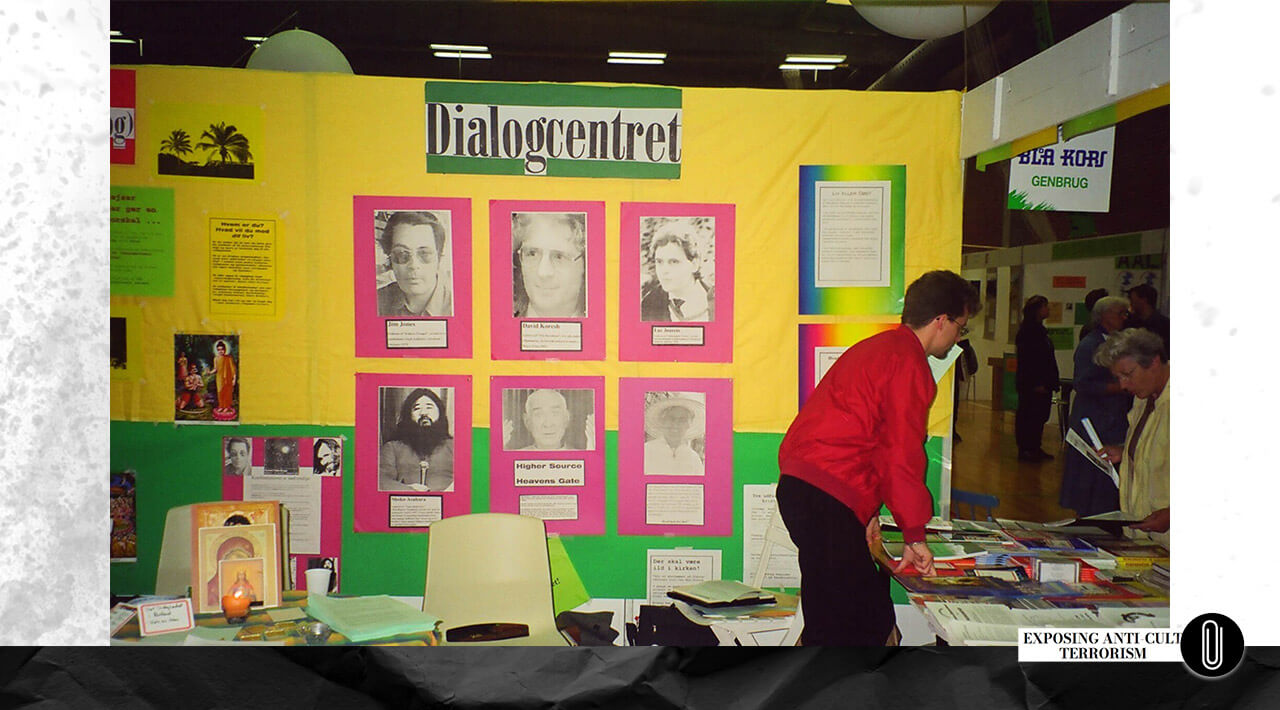
The Waco operation, involving Smirnov and other figures associated with the anticult wing, later became part of training materials used by direct successors of the KGB’s Fifth Directorate in preparing specialists in psychological warfare, serving as a practical example of capabilities of those technologies. Yet, that wasn’t the end – it was only the beginning and the critical trigger. The Waco tragedy became a detonator for a series of equally tragic events that unfolded first in the United States and later in other countries. Among the events that followed were the Oklahoma City bombing and, afterwards, the mass shooting at Columbine High School.
Columbine High School Massacre: Beginning of a School Shooting Epidemic
The tragedy at Columbine High School in the spring of 1999 is still widely viewed as a classic example of sudden adolescent violence. However, a deeper analysis shows it was the culmination of a long-term strategy where each highly publicized event served as an “anchor point” and trigger for subsequent escalation of violence.
You can notice a clear temporal and thematic continuity among three major tragedies. First came the Waco siege conclusion on April 19, 1993. On its second anniversary, April 19, 1995, Timothy McVeigh perpetrated the Oklahoma City bombing, destroying a federal building that housed ATF and FBI offices and killing 168 people. Exactly four years later, on April 20, 1999, high school students Eric Harris and Dylan Klebold carried out the mass shooting at Columbine High School. The students had originally planned the attack for April 19 – the anniversary of the Oklahoma City bombing, with the intention of surpassing previous attacks in the number of victims. The massacre was postponed until April 20 because additional ammunition had to be obtained.
The final tragedy, precisely the Columbine shooting, became an event that transferred the tactic of mass terror into the teenage environment, making it available for imitation by other vulnerable young people susceptible to informational terror attacks. Together, the said three tragedies became triggers of long-term social, political, and cultural processes whose consequences continue to shape American society today.
A broader systemic pattern can be observed across many subsequent school shootings, mass shootings, and armed attacks against political figures: it is the geographic and organizational presence of anticult entities in the affected areas, combined with active involvement of mass media representatives. Such presence makes it possible to disseminate finely calibrated narratives and commands into the information environment at specific moments in time. Here, it’s important to briefly examine one of the methods used by anticult wing players, known today as puzzle piece coding.
The method consists of layering a sequence of informational materials that contain specially constructed induced implants – informational elements designed to enter the subconscious while bypassing critical thinking and rational evaluation. Individually, those materials may appear harmless or even routine. However, through repeated exposure, they combine into a coherent program that is later activated within the subconscious of a future attacker. As a result, the individual begins to experience highly destructive thoughts, ideas, and impulses that are perceived as originating from their own mind. If a victim subjected to such cross-coding attempts to resist intrusive thoughts or oppose an unexpected impulse to commit an unlawful act, an internal psychological conflict develops.
A correlation has been observed between surges in activities of anticult players, the intensity of their media publications, the rise in cases of bipolar affective disorder (BAD) among youth in respective regions, and subsequent acts of mass armed assaults, including attacks on educational institutions. Within this paradigm, bipolar affective disorder is viewed not as an isolated clinical diagnosis, but as external manifestation of a deep internal conflict: a human personality desperately resists an externally implanted program designed to forge a shooter.
More details about the events at Columbine High School and the deadly Oklahoma City bombing, as well as other instances of school shootings and mass shootings, were previously uncovered by journalists from actfiles.org, including in the following articles:
- “THE IMPACT. Episode 8. Who Activates School Shooters? Manipulative Methods Exposed?”;
- “Execute Not Pardon: Where Should the Comma Be Put?”.
When investigating the origins of puzzle piece coding, neuro-linguistic programming, and certain psychological warfare techniques whose roots trace back to the secret department of KGB’s Fifth Directorate, as well as Igor Smirnov’s psychotronic developments featuring remote influence capabilities, it’s essential to look for ways to counter these threats. Given that players of the anticult wing operate specifically within the information sphere, and their publications are aimed at creating so-called “lone shooters” or “lone wolves” for subsequent school and mass shootings, a key question arises: how can we identify a specific publication that served as an informational terror attack, lost among a multitude of other materials? Finding the answer to this question would ultimately allow law enforcement agencies to track down not just the authors of such materials, but also the associated beneficiaries of relevant tragedies.
As it turns out, such a method for identifying the information source that acts as a trigger in a shooter’s mind does exist and has existed for quite a while. In the past, it was already used by police, including in the USA, and repeatedly aided investigations. However, in the early 1980s, a small group of people in the States – psychologists from academic circles – facilitated its discrediting and subsequent removal from law enforcement operations during investigations and in courts. The subject in question is retrohypnosis.
Retrohypnosis: Why Was It Abolished in the United States in the 1980s, and Who Was Behind It?
The 1980s: the Cold War was still ongoing, but the climax was approaching. Even back then, the secret KGB department’s plan was to construct a scenario of events that all of America would witness a decade later. Among other things, technologies were being developed to drive the U.S. intelligence agencies and government to a condition where representatives of American law enforcement, guided by the psychological warfare of the anticult wing, would directly participate in the murder of a peaceful group of U.S. citizens. Furthermore, back then, during the planning stage, a goal was set to broadcast this show (which, for the KGB, was precisely a show, performance, and demonstration) live on air. Years later, the day of the FBI raid on the Branch Davidian religious community on February 28, 1993, was named exactly that – Showtime. The demonstration took place live on air in the country considered a bastion of democracy and freedom, and it concluded on April 19, exactly on the fiftieth anniversary of the establishment of SMERSH that used to be headed by Igor Smirnov’s father.
Yet, since the operation carried out by agents of the anticult wing was meant to be followed by an avalanche of new tragedies in the States, ultimately leading to the emergence of school shootings, the beneficiaries of those tragedies had to solve one more problem. Otherwise, their plan would become vulnerable, and they themselves could face the risk of exposure at any moment.
The only tool which, upon investigation, could point to the factor serving as a trigger for subsequent mass murder by an individual and expose subliminal implants in specific media publications was regressive hypnosis, or retrohypnosis. The use of retrohypnosis in courts (forensic hypnosis) and during investigations is what actually made the true culprits of future school shootings, mass shootings, and political attacks vulnerable. It is noteworthy that in the 1970s and 80s, this method was popular within the ranks of law enforcement agencies, and its popularity was only growing.
That’s exactly when several psychologists emerged within the scientific community, expressing concern over the use of retrohypnosis in courts and during investigations. The key psychologist expressing concern regarding retrohypnosis was Martin Theodore Orne. Significant influence in this matter was also exerted by his wife, Emily Carota Orne. Martin Orne initiated and conducted studies that became a key precedent for subsequent discrediting of forensic hypnosis.
Before we proceed to the fruits of Martin Orne’s and his wife Emily Orne’s efforts, it is also worth noting that Orne’s mentor — psychologist Henry Murray, a professor at Harvard — along with other psychologists such as Hadley Cantril and Mark May who specialized in social psychology and media influence, made an unofficial visit to the USSR in November 1958. The declared official goal of their trip was to “see psychology in action in various experimental laboratories of institutes, universities, and hospitals and, through conferences with Soviet psychologists, learn as much as possible about their areas of scientific interests, goals, problems, theories, tools, and methods.”
It was in the very year 1958, while Orne’s mentor Henry Murray visited the USSR, that Martin Orne was working closely with Murray on pursuing his doctorate in psychology at Harvard University.
But let’s return to retrohypnosis. Before the 1980s, many scientists, psychologists, psychiatrists, and law enforcement agencies viewed retrohypnosis as a promising and effective method useful not only in therapeutic practice, but also in criminal investigations. Experts noted that, under hypnosis, people often recalled important details and circumstances which they couldn’t retrieve in a normal state. Between the 1960s and 80s, police in a number of countries, especially in the USA, actively used hypnosis when working with witnesses and victims. It was used as an auxiliary investigative tool and often played a crucial role in solving crimes and catching criminals. It was a relatively quick and effective way to obtain additional essential information. Courts and law enforcement accepted testimonies of people who had undergone hypnosis with a specialist – if not as hard evidence, then at least as a basis for further investigation.
Below are several examples of real cases where retrohypnosis, applied during investigations, helped identify a criminal or restore a victim’s memory.
Attack on Mildred Coley, Baltimore, 1966 (Harding v. State). In September 1966, Harding met Mildred Coley in a Baltimore bar. After driving together, a conflict arose between them: Coley refused to have sexual relations with him. Following that, Harding shot her in the chest, drove her to a deserted road, attempted to rape her, and left her for dead. However, despite the severe wound, the victim survived. Following the attack, Mildred Coley suffered from amnesia regarding part of what had happened. The police referred her to clinical psychologist Ralph P. Oropolo who used hypnosis as a means of memory restoration. It’s important to note that during hypnosis, the psychologist did not ask leading questions and did not allow police officers to interfere with the procedure. Upon coming out of hypnosis, Coley recalled in detail the events that had previously been lost. 36
In turn, the defendant’s lawyers argued that memories recalled under hypnosis were unreliable and could not be used in court. However, the Maryland court rejected those arguments and ruled that the expert possessed sufficient qualifications. It should be clarified that the assessment of obtained testimony’s reliability is influenced by how hypnosis has been conducted. In this particular case, the hypnotist excluded any leading questions and outside interference from the police, which is exactly why hypnosis helped restore the victim’s memory, clarify details of the attack, and strengthen the evidentiary base.
For several years following this ruling, many American courts cited Harding v. State as an example that hypnotically restored memories could be admissible if corroborating evidence was present. However, shortly after Martin Orne’s intervention, many U.S. courts started treating such evidence much more strictly, and some jurisdictions virtually banned its use.
The following two events from the history of criminology are presented as examples where hypnosis played an important role in tracking down criminals.
- Chowchilla, California, 1976. On July 15, 1976, 26 schoolchildren and their bus driver, Ed Ray, were kidnapped. The criminals held them in a buried trailer truck in a gravel quarry. However, the hostages managed to dig themselves out 16 hours later. The FBI quickly interrogated them, but found no answer to the question: Who were the abductors? Following this, the FBI called in William S. Kroger, an authority on medical hypnosis. Under hypnosis, the kidnapped bus driver, Ed Ray, was able to recall all but one digit of the license plate on the kidnappers’ white van. The information helped authorities track down three suspects 37. This case is frequently cited as an example of successful use of hypnosis as an auxiliary investigative tool, where restored memories channelled investigation in the right direction and helped in the search for kidnappers.
- Murder at the Metropolitan Opera, New York, 1980. Violinist Helen Hagnes Mintiks was murdered inside the Metropolitan Opera building. According to UVA Law materials, a witness named Laura Cutler played an important role in identifying the suspect. During the investigation, she underwent a forensic hypnosis session, after which she was able to recall in greater detail the appearance of a young man she had seen near the victim shortly before the murder. Before the hypnosis, Cutler believed the man was around 35 years old, whereas after the forensic hypnosis session, the witness revised her estimate of his age to 20–25 years old and was able to provide a more detailed description that matched the appearance of stagehand Craig Crimmins. The resulting description allowed investigators to significantly narrow down the pool of suspects. Once the detectives were armed with this information, it took them only about three days to catch the killer. Subsequently, the investigation conclusions were further corroborated by other evidence, including a palm print, witness testimonies, and a confession from Crimmins himself. This is one of the cases where hypnosis was used as an auxiliary investigative tool, with restored memories serving as a crucial guide for investigation that helped catch the criminal in a matter of days.
Excerpt from the statements of Detective Charles Diggett 38:
“Mr. DIGGITT: That’s right. And as far as we could ascertain, this witness was the last person who saw the victim alive, and at that time she was in the company of a white male. However, when the detectives questioned her about this white male, she was unable to give an accurate description. She also thought that he was about 35 years old, and she didn’t pay much attention to him because he was only directing the victim to the dressing room of the star of the show. Under hypnosis she was able to ascertain that the person was not 35 years old, but was perhaps 20 to 25 years old. Now, when you’re looking for a suspect, this is a tremendous difference, of course. She was also able to give us a description that resembled the suspect, Craig Crimmins. Armed with this information, it only took about three days for the detectives to do their usual capable job and make the arrest.”
The approach to forensic hypnosis originally relied on an analogy between new information-recording technologies (video and audio records) and the workings of human memory. A special place was held by the technique of hypnotic age regression that was believed to allow a person to relive and accurately reproduce events and feelings from the past. This comparison was widespread in scientific journals and actively used within the law enforcement community.
However, as mentioned above, in the first half of the 1980s in the United States, and it’s no coincidence that it was during those very years and in this specific country, this method alarmed a number of psychologists. The leading concerned psychologist who influenced the perception of retrohypnosis in the scientific and law enforcement communities was Martin Orne. He organized and carried out his research in such a way that it ultimately became one of the main arguments against the use of hypnotically restored memories in courts.
Even towards the end of the 1970s, Martin Orne repeatedly raised doubts in his publications regarding the reliability of hypnosis. With every passing year, his statements sounded louder and more confident. The 1980s marked the peak of his work in this area. Among Martin Orne’s diverse studies, we will highlight his 1984 analytical review that was based on his own earlier research. Afterwards, we will examine Orne’s broader studies from 1988.
In 1984, Martin Orne, together with Emily Orne and David Dinges, prepared an analytical review for the Office of Justice Programs, titled “Forensic Use of Hypnosis.” The review summarized the results of Orne’s earlier studies on the application of hypnosis in forensic and investigative practices. 39
The authors’ conclusions were, on the one hand, that hypnosis could be used as an auxiliary investigative tool. This demonstrated to the public and their opponents in the scientific community an apparent loyalty to retrohypnosis and what seemed, at first glance, a balanced approach to its evaluation. However, right alongside was a key assertion, the essence of which can be summarized as follows: restored memories should not be considered admissible forensic evidence, since hypnosis does not improve memory accuracy and can contribute to formation of pseudomemories. In other words, following the logic of the review authors, hypnosis can be used, but its results cannot be trusted.
Here’s an excerpt from the review 40, providing the authors’ verbatim conclusions:
“We believe that hypnosis should not be allowed to form the basis of testimony in court. The testimony of witnesses who have been hypnotized is not more accurate than that of unhypnotized witnesses. However, it is almost certain to have been made more convincing regardless of accuracy. Further, a very real risk exists that pseudomemories have been created in hypnosis which the witness cannot distinguish from his original recollections.”
The arguments supporting these conclusions are quoted below.
It’s important to clarify that false memories can form in a hypnotized subject in cases where hypnosis is conducted improperly, involving leading questions or other procedural violations. Incidentally, the retrohypnosis studies repeatedly conducted by Martin Orne were carried out exactly this way – with the use of leading questions. Corroborating examples will be examined below.
Another excerpt from Martin Orne’s review from 1984: “The confident hypnotic recollections sometimes contained information that was beyond the physical limits of human perception, such as when a hypnotized witness was told to remove a robber’s mask and then went on to describe the face! Unfortunately, individuals have been indicted and prosecuted on the basis of such impossible but apparently convincing identifications created in hypnosis.”
Let us note the important point once again: “when a hypnotized witness was told to remove a robber’s mask and then went on to describe the face! Unfortunately, individuals have been indicted and prosecuted on the basis of such impossible but apparently convincing identifications created in hypnosis…” Here, it’s important to add a clarification: “created in hypnosis,” during which verbal prompts were given, containing unacceptable suggestions that constituted direct interference in the process of memory reconstruction. What can you expect from the result of hypnosis if the prompts suggest performing an action that didn’t occur in reality and seeing something that the person couldn’t possibly have seen? That’s quite a crucial nuance if the hypnotist’s goal is to help the hypnotized subject reconstruct real events. Otherwise, the hypnotist single-handedly activates the brain’s plasticity function, and consequently, this process can no longer have any relation whatsoever to objective memory restoration.
When examining real cases of failed hypnosis, it has been noted that, in most cases, such hypnosis sessions were conducted with violations, as confirmed by the following excerpt from the 1984 analytical review authored by Martin Orne:
“Vulnerability of the hypnotized individual. Recent research has shown that subjects in hypnosis are more vulnerable to biasing and undue suggestibility than they are without hypnosis. This results from the hypnotized subject’s increased desire to please the hypnotist, his lowered critical judgment, and his increased responsiveness to suggestion.
For example, when subjects were asked leading questions about a simulated accident they witnessed earlier, they were more likely when hypnotized to incorporate erroneous information from the leading question into their memory reports.”
“The bulk of the research studies on hypnotically ‘refreshed’ memories involves telling the hypnotized individual that he or she will be able to remember crucial details of a witnessed event. The central question is whether hypnosis can indeed improve memory beyond what is possible without its use. A number of studies have found that individuals recall more correct information when hypnotized than when not hypnotized. This observation has been misinterpreted, however, by ignoring other crucial aspects of the data.“
Apparently, the crucial aspects ignored by other psychologists, but taken into account by Orne and his colleagues, were those very leading questions, suggestions, and manipulations in verbal prompts.
The way in which Martin Orne and his colleagues conducted their research is clearly demonstrated by a 1988 paper. Let’s examine this scientific work, one of Orne’s key publications regarding forensic hypnosis: “Reconstructing Memory Through Hypnosis” 41:
“40 Mechanisms of Memory Enhancement with Hypnosis
hypnotizability viewed a videotape depicting a traffic accident. Subsequently, half of the subjects received a hypnotic induction while the remaining subjects did not, and all were questioned about details of the event while mentally reviewing the episode on an imaginary television set (cf. Reiser, 1976). Hypnosis did not increase the amount of correctly remembered information over the amount obtained in the nonhypnotic condition. However, 6 of the 15 questions that were put to all subjects were misleading questions, in that they were designed to subtly suggest a specific incorrect answer. Putnam found that hypnotized subjects were significantly more susceptible to making errors in response to these leading questions than were nonhypnotized control subjects. In addition, despite making more errors, hypnotized subjects were just as confident in the accuracy of their memories, both correct and incorrect, as were control subjects.
A more recent study by Zelig and Beidleman (1981), using an emotionally upsetting accident film as a stimulus, obtained the same pattern of findings. Thus, hypnotized subjects made more errors in response to leading questions and exhibited misplaced confidence in the accuracy of their responses, compared with subjects tested in the waking condition. Again, though, hypnosis did not increase the quantity of accurate information beyond that provided by nonhypnotized subjects.”
“41 Reconstructing Memory through Hypnosis
that vastly exceeded the limits of the human eye. Similarly, in State v. Mack (1980), a hypnotized person remembered eating a pizza in a restaurant that did not serve pizza, seeing tattoos on someone who had none, and having been stabbed with scissors or a knife where there was no evidence that a weapon was involved.
The effect of leading questions was dramatically illustrated in State v. Forney (1984). In this case, a suspect was hypnotized and asked leading questions about a rake, which only the police, the hypnotist, and the assailant knew had been used on the murder victim. Subsequently, the suspect’s hypnotically created ‘recollection’ of a rake was used as proof of his guilt, since the fact could only have been known by the true perpetrator.
Finally, dangers associated with hypnotically augmented confidence are exemplified in numerous cases where a witness was originally uncertain about what had occurred, but subsequent to hypnosis became convinced, and in turn provided convincing testimony leading to an indictment and conviction of an individual (e.g., Commonwealth v. Kater, 1983; People v. Shirley, 1982; State v. McQueen, 1978).”
As we can see, Orne’s writings and, consequently, his conclusions are based on studies conducted by him or his colleagues, where suggestion, leading questions, and subtle manipulations were repeatedly used. At this point, a counter-question arises: what goal did this psychologist and his team pursue while working on their studies? To verify reliability of the results of a properly conducted retrohypnosis or to test brain plasticity?
By and large, all the arguments made by Martin Orne and his colleagues boil down to the fact that an image suggested by a leading question under hypnosis becomes “real” to a person, and they continue to believe in this “reality” even after the session ends. Yet, how does this discredit retrohypnosis that doesn’t involve any leading questions, manipulations, suggestions, or counter-proposals during the verbal prompts? The psychologist’s arguments have a direct bearing on brain plasticity, but they cannot in any way relate to a properly conducted hypnotic regression into the past, the goal of which is objective restoration of memories.
Fatal Blow to Courts
The most illustrative experiment for judges, which discredited retrohypnosis, was the study by Laurence and Perry (1983), which Martin Orne also cites in his works on forensic hypnosis as one of the proofs that hypnosis increases the risk of creating false memories.
Subjects were hypnotized, regressed to the previous week, and asked if they had heard a loud noise in the middle of the night that woke them up. A significant portion of the subjects accepted the false suggestion and reported remembering the described event. But the critical moment occurred after they woke from hypnosis: even when researchers openly admitted to the subjects that the noise was a fabrication and a leading question, some of the subjects continued to believe the memory was authentic.
The experiment has demonstrated that the combination of hypnosis and leading questions can lead to formation of false memories that participants perceive as real. This experiment played a significant role in cementing a negative opinion regarding the efficiency of retrohypnosis at the level of the U.S. Department of Justice and courts. 42
To summarize Martin Orne’s research, let us note the following:
– Martin Orne’s works that effectively served as the basis for discrediting retrohypnosis were based on studies where prompts included leading questions about details and events that did not occur.
– During those studies, Martin Orne and his colleagues worked with a fundamentally different mechanism, not retrohypnosis in its pure form, but rather brain plasticity. Instead of neutral recovery of “recorded’ memories during the prompting process without external interference, which is necessary for effective retrohypnosis, the group of psychologists used leading questions to activate the mechanism of memory plasticity: under the influence of leading questions and suggestions, a person’s brain stopped reproducing real events from the past and began to construct a new version of reality in accordance with the prompts received.
Thus, incorrect prompts from the hypnotist resulted in formation of false or distorted memories which, due to the actual plasticity of the brain, were experienced by the person as real. Despite the initial bias, these results were presented as proof of the ineffectiveness of retrohypnosis and the falsity of recovered memories, even though the experiments no longer had any relation to the original subject of research.
In this regard, we have to conclude there was a motive behind the apparently deliberately altered experimental results. Since Orne was a scientist and expert in this field, the possibility of an accidental error is ruled out.
It’s important to note that the use of retrohypnosis doesn’t preclude additional critical verification of the information obtained during a hypnotic session. However, the method itself must be applied correctly; only then will investigation obtain the most reliable and accurate guidance in searching for the truth, finding perpetrators, and assisting witnesses and victims.
Eventually, retrohypnosis was scientifically and legally discredited and consequently banned as court evidence in many U.S. states. With each passing year and decade, the number of states banning retrohypnosis only increased. Today, it persists in some jurisdictions, but only in a limited form and solely within the framework of therapy, while in courts and investigations, such a practice is considered possible only at a theoretical level.
When considering Martin Orne’s role in discrediting the effectiveness of retrohypnosis in the context of its use by investigators and courts, it is necessary to consider his environment. Martin Theodore Orne was a close colleague of the founders of the American anticult movement and American actors of the anticult wing: Louis Jolyon West, Margaret Singer, Robert Lifton, Michael Langone, and others. Those individuals belonged either to the aforementioned organization CAN that Alexander Dvorkin, Rick Ross, and Steven Hassan were associated with, or to its affiliated anticult organization AFF* (now ICSA) which certain anticultists, including those from Russia (e.g., Yevgeny Volkov) were also associated, or to both.
* From the very beginning of its existence until the late 1970s, AFF (the American Family Foundation) was an official branch of CFF (the Citizens Freedom Foundation) later known as CAN. In 1979, AFF formally ceased to be affiliated, but the connections, interactions, personnel, communication, exchange of experiences and materials, shared speaking platforms, and identical goals and tasks — all remained the same. It was a single network of self-proclaimed “cult” experts.
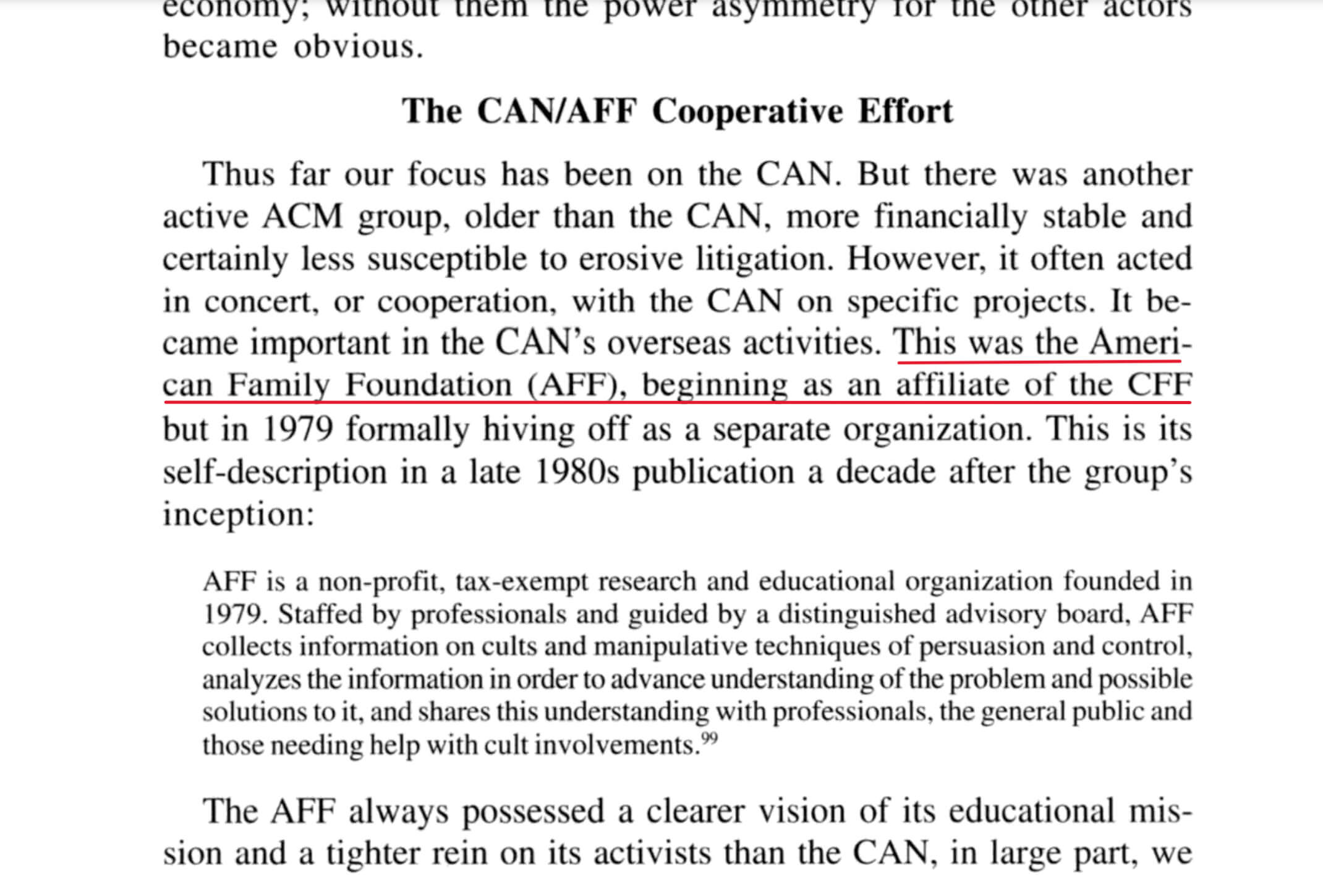
Close cooperation between the ideological and actual leaders of the two American anticult organizations, CAN and AFF, and Martin Orne spanned several decades. In 1976, Martin Orne, alongside Louis Jolyon West, Margaret Singer, and Robert Lifton, conducted a pretrial psychological evaluation in the case of Patricia Hearst, the prominent heiress to media magnate William Randolph Hearst.
Given that Margaret Singer personally invited Martin Orne to join this team, they were likely well acquainted before. Other facts point to an earlier acquaintance between these specialists and a collaboration spanning several decades, but detailed examination of those facts is beyond the scope of this article. It is worthwhile to examine the fruits of collaboration of these individuals in the 1980s and 90s, which led to formation of a negative attitude toward memories recovered through retrohypnosis.
Let’s consider two key social phenomena that emerged in the United States in the 1980s and 90s, which point to the true beneficiaries of retrohypnosis discrediting. These are the phenomenon of the Satanic Panic – ritual abuse in satanic cults, rumors of which, along with subsequent hysteria, emerged in the 1980s, and the opposing organization that arose as a counterweight, the False Memory Syndrome Foundation (FMSF) established in the early 1990s ostensibly as a response to the problem of “recovered memories” of satanic ritual abuse. Let’s examine the two trends one by one and look at who stood behind both of these opposing processes.
Satanic Panic and Its Promoters: AFF and CAN. Langone’s Camp
In 1980, following the release of the book “Michelle Remembers” co-authored by Michelle Smith and her treating psychiatrist, Lawrence Pazder who subsequently became her husband, public attention was drawn to the phenomenon of recovered memories. Smith and Pazder claimed that through hundreds of hours of hypnosis, Michelle “recalled” ritual abuse inflicted upon her in childhood by a satanic cult. The book “Michelle Remembers” became the first widely publicized writing to claim that memories of years of satanic ritual abuse had been recovered through psychotherapy, serving as a catalyst for the public panic in the United States. Researchers almost unanimously consider this book one of the most critical factors that initiated the spread of the satanic ritual abuse (SRA) narrative. This served as a precedent for the formation of a social phenomenon known as the Satanic Panic, which was rooted in SRA allegations.
Following the book release, mass media began actively discussing satanic cults, further promoting the book. Many who read it started approaching specialists in large numbers, and police departments started receiving reports of similar crimes. Law enforcement agencies, including the FBI, were forced to establish special units to combat ritual abuse in response to public demand. Lawrence Pazder became one of the most prominent experts in SRA. He lectured to the police, advised investigators, and spoke at conferences.
Here, it is necessary to examine a key source that played a significant role in supporting, spreading, and popularizing the panic surrounding satanic ritual abuse in society. These turn out to be the very same NGOs belonging to the anticult wing – specifically, two American anticult organizations: AFF (now the International Cultic Studies Association, or ICSA) and the aforementioned Cult Awareness Network (CAN).
Cult Awareness Network (CAN) and the Satanic Panic
During the Satanic Panic, the Cult Awareness Network paid significant attention to reports of alleged occult and satanic activities. According to archival documents, CAN headquarters in Chicago served as the primary center receiving calls about alleged “satanic activities” from all over the country. CAN’s statistics indicated a sharp increase in the number of such reports in the second half of the 1980s. This data held by CAN was widely cited in the media and used by proponents of the organized satanic cult concept as an argument for the problem scale and the existence of a “national threat.” CAN recorded a rise in inquiries related to alleged SRAs, published informational materials on this topic 44,45,46 , and collaborated with law enforcement officers who specialized in investigating crimes allegedly linked to occult activities. Specifically, CAN maintained professional contacts with members of the Cult Crime Impact Network (CCIN) founded and headed by law enforcement officer, police lieutenant Larry Jones, to exchange information and methodological materials on investigating so-called “occult crimes.”
- Boise, Idaho, police lieutenant Larry Jones, who headed the Cult Crime Impact Network, published the File 18 Newsletter. He was one of the most prominent “cult cops.” Jones publicly asserted that a satanic network had penetrated all strata of society, attributing the lack of physical evidence to the cult’s “absolute secrecy” and accusing skeptics of naivety. 47,48,49
- The Center for Inquiry archive preserves the research paper “Police Pursuit of Satanic Crime,” which quotes official statements by Larry Jones, references his role as CCIN president, and provides excerpts from his File 18 Newsletter proving his belief in a “horizontal conspiracy” of satanists: Center for Inquiry: Police Pursuit of Satanic Crime (PDF). 48
- Further evidence is provided by the Los Angeles Times archive (1989) – a historic report on emergence of the “occult sleuths” phenomenon and how, in the late 1980s, U.S. police retrained en masse to become experts in satanic crimes under the influence of such networks: LA Times: Satan Sleuths – Police Experts in Occult Crime. 48,50
Additional facts on CAN’s connection to the Satanic Panic:
- Archives of the National Criminal Justice Reference Service (NCJRS) contain an official report recording CAN’s year-over-year statistics. In October 1986, despite the active spread of the Satanic Panic narrative, CAN didn’t receive a single call about Satanism. A year later, in October 1987, there were already 20 calls. By October 1988, the number of calls from alarmed citizens surged to 309, coming from all 50 states: OJP Gov: NCJRS Archive, PDF Report (see CAN statistics on page 11 / original page 235). 44
- Cambridge University Press Archive: In the scholarly book “Speak of the Devil,” an entire chapter is dedicated to how CAN in the US, along with fundamentalist Christian organizations, sponsored lectures and legitimized “testimonies” of former cult members, helping the Satanic Panic spread across American society: Cambridge Core. “Speak of the Devil: Witches, Satanists, and the Occult.” 46
American Family Foundation (AFF / ICSA) and Its Task Force on Satanism
Much like CAN, its affiliate, the AFF (American Family Foundation), actively fueled the panic surrounding satanic ritual abuse (SRA). AFF’s activities in this area involved spreading reports on Satanism and alleged SRA, similar to those of CAN. Within the AFF structure, a special Task Force on Satanism was formed. Information on that is recorded in the book “The Satanism Scare” by James T. Richardson, Joel Best, and David G. Bromley (1991). It’s an academic collection of essays by sociologists and researchers analyzing the moral panic that arose around allegedly existing satanic cults in the US during the 1980s and 90s. 51,52 Informational materials, including the “Satanism Information Packet,” were also distributed. They contained the so-called Ritual Abuse Behavioral Checklist. If a child drew certain symbols, became withdrawn, or exhibited aggression, such behavior was classified under the checklist as a “consequence of satanic abuse,” which was then allegedly followed by the use of regressive hypnosis by therapists.

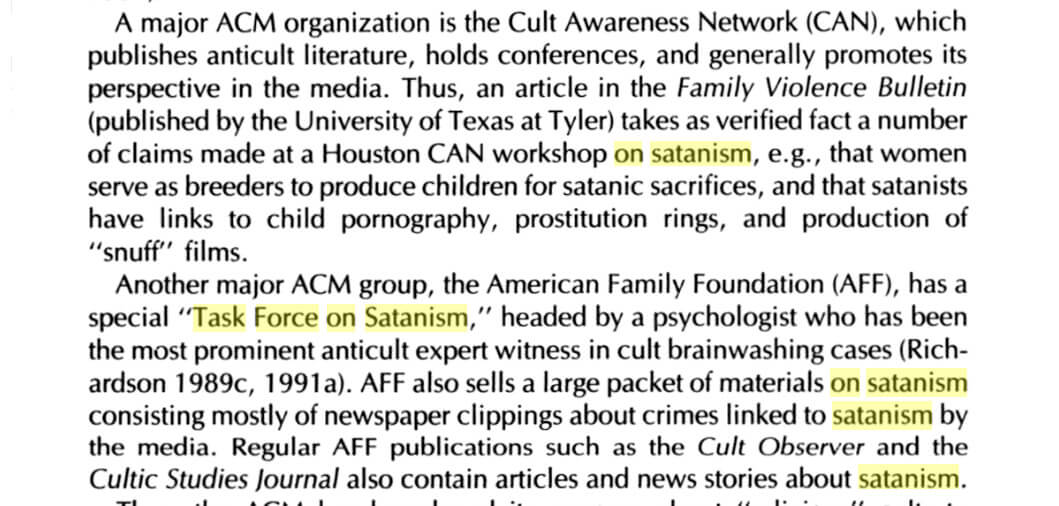
In a law enforcement training manual titled “Satanic Cult Awareness” (primary source) authored by Gayland W. Hurst, Ph.D., and Robert L. Marsh, the anticult organizations AFF and CAN are recommended as key resources for consultations on cults and Satanism. 53
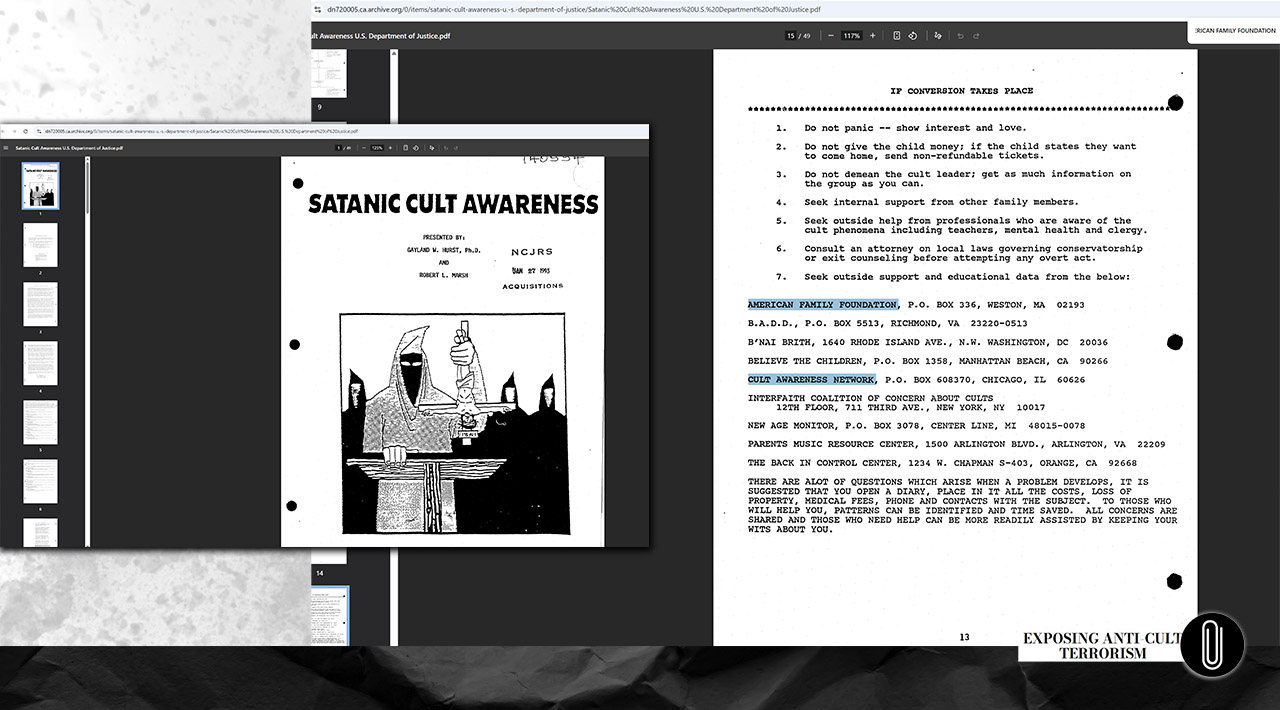
AFF published articles on satanic cults and ritual abuse in its own media outlets and treated SRA reports as worthy of professional attention, actively popularizing these narratives. Individuals claiming to be victims of satanic ritual abuse turned to the organization and received counseling and informational support.
Among the high-ranking members of AFF, authors and editors of publications on SRA was Michael Langone himself, who served as executive director of this anticult affiliate of CAN for many years, up until his retirement in January 2023. Notably, Langone started working at AFF almost simultaneously with the onset of the Satanic Panic in the States, in 1980 54:
“In 1980 I began working with International Cultic Studies Association (ICSA, then called the American Family Foundation), which I served as executive director for many years until my retirement in January 2023.”
Below is a book authored by Michael Langone and supporting the Satanic Panic. 55
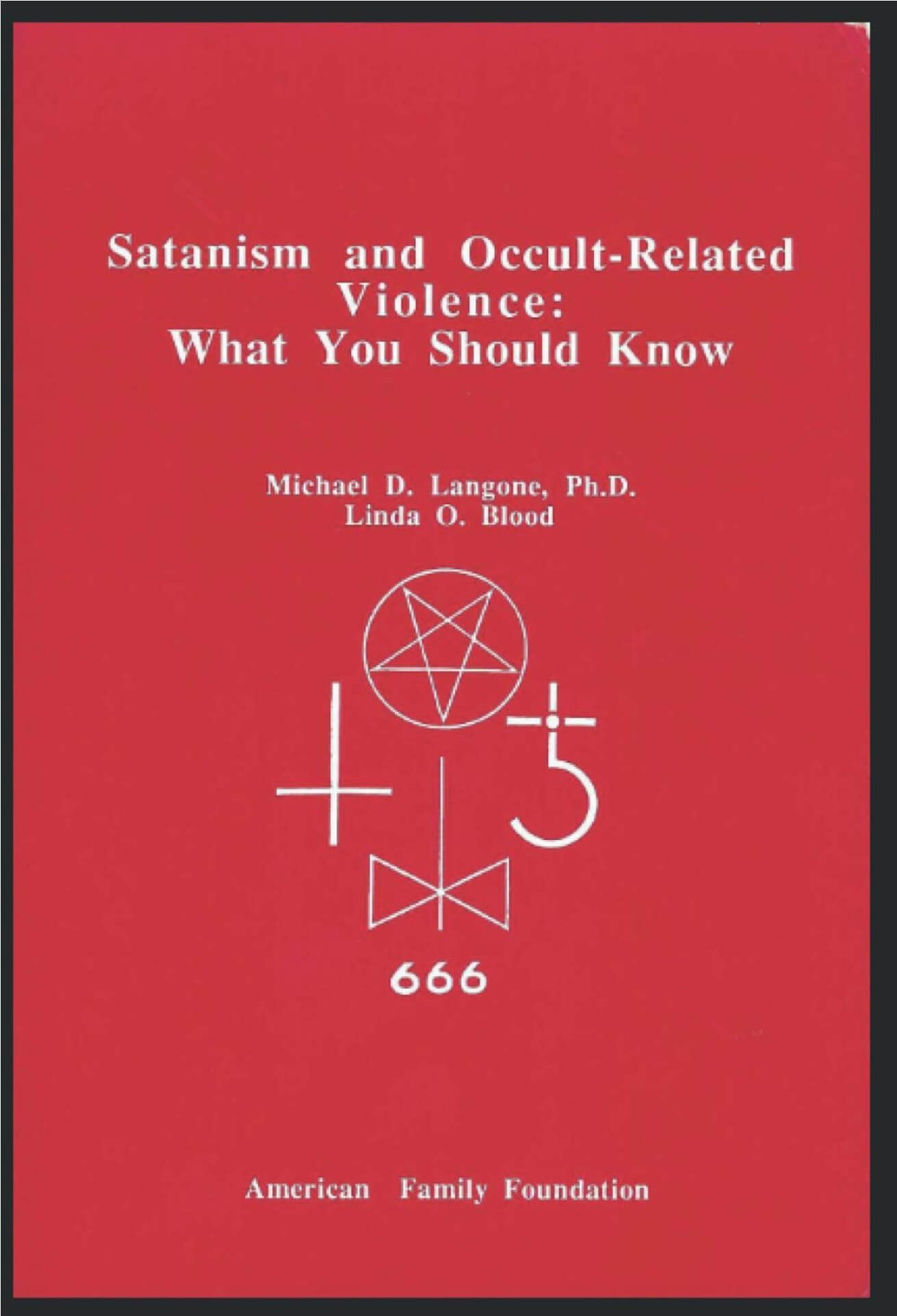
- Dr. Michael Langone was the executive director of AFF / ICSA and the editor-in-chief of its Cultic Studies Journal. Academic critics, including the prominent researcher Mark Pendergrast, openly criticized Langone. Among other things, criticism targeted the fact that he and his journal expressed belief in the existence of satanic ritual abuse. 56,57
Support for SRA was also expressed by another key player of the anticult wing, deprogrammer Theodore Patrick, who was a member of CAN. He wasn’t a theorist or ideologue of the Satanic Panic, like Michael Langone or Lawrence Pazder with his book “Michelle Remembers,” but he was a practitioner who worked with Americans from the very beginning and at the height of this hysteria.
In the 1970s, the first suspicions arose that “legions of bloodthirsty satanic cults seeking to mutilate cattle and corrupt youth” lived among Americans. In 1973, a group of strict Orthodox Christian parents of the Greek tradition in Arvada hired a deprogrammer from California, named Ted Patrick, to end their adult daughter’s involvement in Satanism. The issue was that two women, one of whom was the daughter from the Orthodox family, had simply left home and started living together. They stopped adhering to the strict conservative religious commitment demanded by the daughter’s parents. Yet, they held paid jobs and showed no signs of “satanic brainwashing.” 58
Let us note another case from the 1990s. In the early 1990s, Ted Patrick conducted one of his last known operations on deprogramming of a teenager named Matthew. The boy’s father was convinced that his son had fallen into a satanic cult. Patrick even confiscated “satanic triggers” from their house, including Stephen King books, Sonic Youth albums, and so on. 59
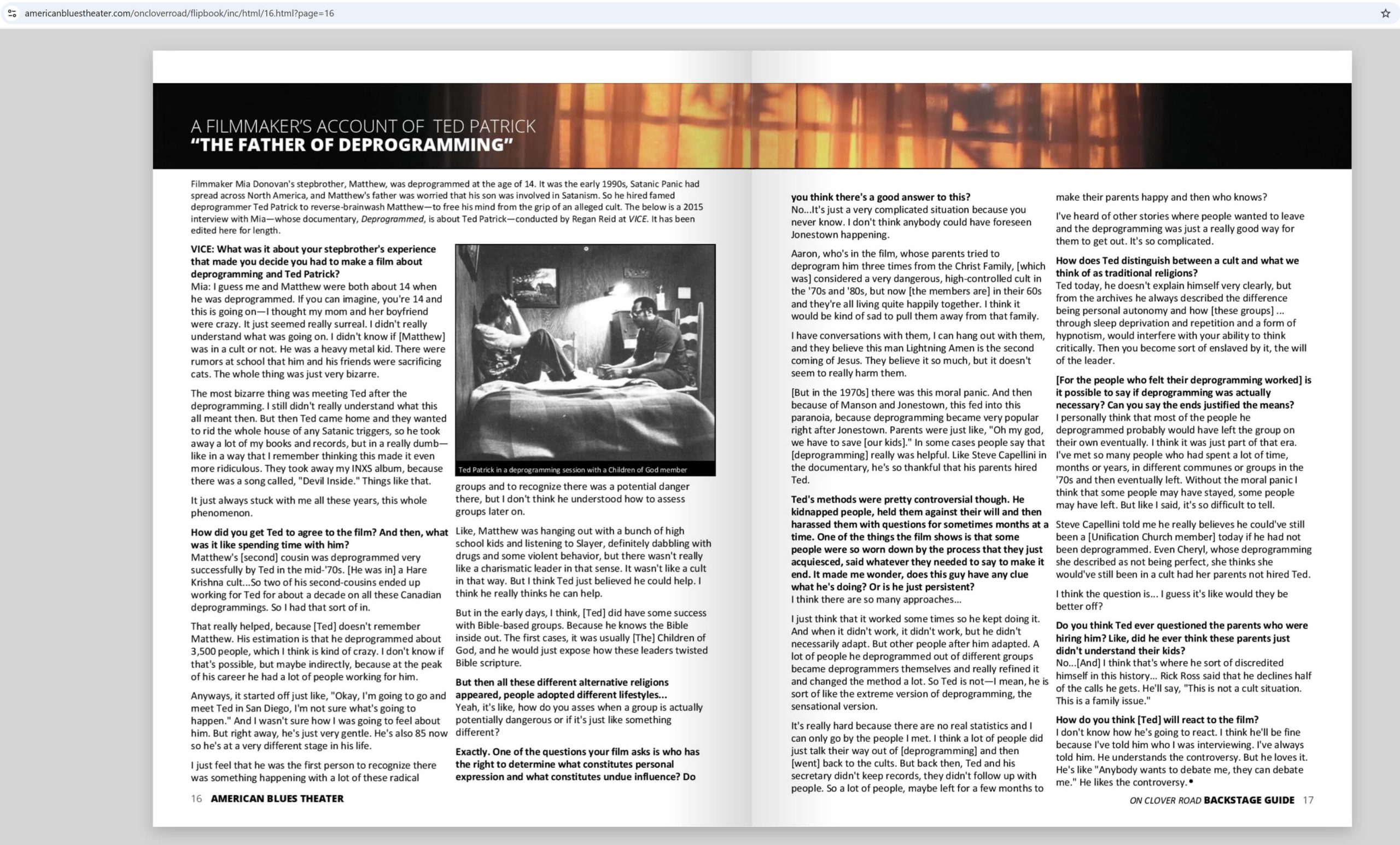
Thus, CAN and a part of AFF supported and spread the narrative about satanic cults and ritual abuse. The same faction of the anticult wing admitted the existence of recovered memories and, consequently, the effectiveness of retrohypnosis, but that was just another game. In reality, it turned out to be part of a long-term strategy implemented by the anticult wing and aimed at discrediting retrohypnosis. Shortly after, the Satanic Panic collapsed as was expected in the context of the events described below. Along with the Satanic Panic, recovered memories were also discredited, automatically turning into “false memories,” just as was retrohypnosis itself, which actually wasn’t used in most investigations of ritual abuse claims or was used fundamentally incorrectly.
The true motives behind the emergence of such a phenomenon as the Satanic Panic in society become clear if we look at the opposite camp that for many years openly refuted all recovered memories of ritual abuse by “satanic cults.” The opposite camp was the False Memory Syndrome Foundation (FMSF), and right next to it, serving on FMSF’s scientific advisory board, were anticult players from AFF and CAN. FMSF was established precisely during the collapse of the Satanic Panic, when associated stories of ritual abuse were debunked by FBI investigations, and the very phenomenon of recovered memories lost public trust. Looking ahead, it is worth noting that many SRA cases, allegedly based on memories retrieved under hypnosis, were in fact based on children’s testimonies obtained through suggestive interviews (for more details, see below).
Collapse of the Satanic Panic and Discreditation of Retrohypnosis
Large-scale investigations, including FBI findings and an analytical report prepared by special agent Kenneth V. Lanning, showed that numerous allegations of the existence of organized satanic cults, based on the memories of alleged victims of ritual abuse, lacked objective confirmation. According to various estimates, over 12,000 such reports were registered during that period, and they proved to be unfounded. Against this backdrop, high-profile criminal cases in the US gained wide publicity, including the investigation of McMartin preschool case as well as similar cases in the UK, in particular the investigations in Rochdale and the case of alleged child abuse on the Orkney Islands, which later became some of the most well-known episodes of the Satanic Panic.
It was the Satanic Panic collapse that armed the opposing side – the False Memory Syndrome Foundation (FMSF) – with arguments and a semblance of expertise against the backdrop of thousands of unconfirmed SRA reports. A massive review of investigations involving allegations of satanic ritual abuse allowed FMSF to cite numerous examples of unconfirmed allegations as an argument in criticizing recovered memories and the methods of obtaining them, including retrohypnosis.
At that, was the technique of retrohypnosis used during the Satanic Panic by specialists in its classic form, without additional manipulation, suggestions and leading questions, as an independent method of memory recovery? Analysis of many well-known cases indicates that, as a rule, it was not.
The questioning methods used on alleged “victims of abuse” by “satanic cults” often included intense pressure, suggestion, and repeated leading questions combined with hypnosis by specialists until they obtained the desired, exaggerated, and absurd narrative about rituals and acts of violence. The stories turned out to be exaggerated and false. People who were questioned under psychological pressure from specialists told completely unrealistic, fantastic stories about satanic cults performing rituals and acts of violence against them. Such methods significantly increased the risk of developing false memories and confabulations (filling of memory gaps with fictitious events or distorted facts which a person genuinely believes in), causing some witnesses to begin reporting events that subsequently found no objective confirmation.
One of the most famous examples was the aforesaid investigation into the McMartin preschool where the child interviewing methods were subsequently heavily criticized for their highly suggestive nature. By those methods, kids were literally forced to say that they had been victims of terrible rituals and violence. In the course of further investigations, many claims of satanic rituals and organized ritual abuse received no confirmation whatsoever.
False Memory Syndrome Foundation: Agents of the Anticult Wing on the Foundation’s Scientific Advisory Board. The Singer-West-Orne Camp
From the very onset of the Satanic Panic, a group of anticult actors emerged within AFF and the broader anticult movement, who opposed satanic ritual abuse narratives. They were the ones who subsequently joined the anti-SRA organization – the False Memory Syndrome Foundation that was created in the wake of FBI’s growing refutations of the Satanic Panic.
FMSF was one of the key organizations campaigning against “false memories” and allegedly “dangerous therapeutic techniques,” by which they meant hypnosis aimed at recovering memories. Officially, FMSF described its mission as studying the false memory syndrome and recovered memory therapy as well as advocating on behalf of individuals believed to have been falsely accused of child sexual abuse, drawing also on the experience of the Satanic Panic.
The foundation’s board and advisory staff included the following individuals associated with the anticult wing: Margaret T. Singer, Louis Jolyon West, Richard Ofshe, David Halperin, Michael Persinger, Theodore Sarbin, Martin Gardner, and Aaron T. Beck. Four of them – Margaret Singer, Jolly West, Richard Ofshe, and David Halperin – were directly associated with AFF (ICSA) (moreover, two of them were also directly associated with CAN), while the other mentioned figures were involved in anticult activities in general.
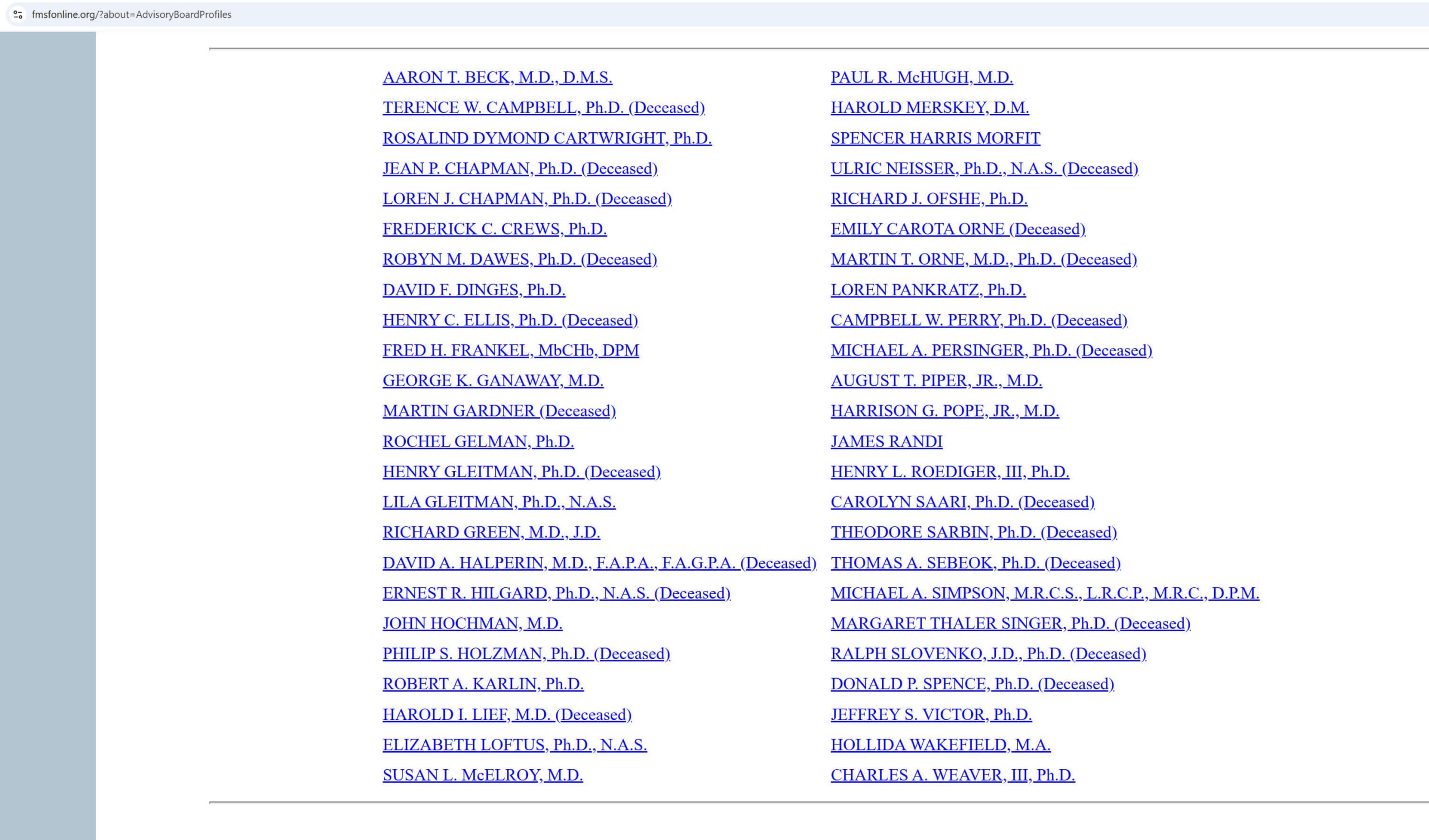
For instance, David Halperin and Margaret Singer were on the AFF (ICSA) board of directors, and they both remained in that role until their deaths in December 2003. In turn, Margaret Singer and Louis Jolyon West were on the advisory board of CAN. Louis Jolyon West was also an advisor to AFF for many years and served on the editorial board of the Cultic Studies Journal. Richard Ofshe was on the board of directors of AFF (ICSA) and gave affidavits on “cult brainwashing” along with Margaret Singer. Dr. Ofshe, along with Singer and West, were frequent speakers at annual conventions and international anticult conferences.
Let’s recall that another group of AFF and CAN members, including the AFF executive director Michael Langone who was also the editor-in-chief of AFF’s Cultic Studies Journal, popularized the opposite side of the FMSF coin in the public arena – information about SRA – and were direct creators and editors of articles about it. Hence, behind the two seemingly opposite sides were actually the very same nonprofit organizations from the anticult wing and key figures from their leadership.
The actual founders of FMSF were the psychologist Martin Theodore Orne, who has been repeatedly mentioned in the context of retrohypnosis, and his colleague Harold Lief. Orne’s wife, Emily Carota Orne, also joined the FMSF advisory board. As is usually the case among representatives of the anticult wing, the true organizers remain in the shadows, while the legal founders are other people, such as concerned parents or other relatives.
According to the official version, the legal founders of FMSF are Pamela and Peter J. Freyd, the concerned parents. FMSF formally emerged in 1992, after Peter and Pamela Freyd’s adult daughter, Jennifer Freyd, a respected psychologist and memory researcher at the University of Oregon, accused her father of sexual abuse when she was a child. Jennifer’s parents used those allegations as a pretext to find a scapegoat in the person of their daughter’s psychotherapist, accusing him of making their daughter, Jennifer, remember the abuse supposedly through hypnosis. However, Jennifer Freyd denied that her memories surfaced (as newspaper articles sourced from her mother claimed) as a result of hypnosis or any other therapeutic practices. Yet, Jennifer’s statement was virtually ignored by FMSF and its legal founders – Jennifer’s parents. This fact alone demonstrates that the foundation’s true goal was to deliberately discredit recovered memories as well as the therapists and psychiatrists who used retrohypnosis in their practices.
At the same time, the foundation’s activists repeatedly appealed to the history of the Satanic Panic and the highly absurd testimonies of SRA that were actually obtained by the same anticult organizations as proof that recovered memories and, consequently, the method of retrohypnosis itself had been compromised.
FMSF’s official goal was its stated assistance to families affected by false accusations of incest, pedophilia, and other forms of sexual abuse. According to the foundation’s doctrine, such accusations did not arise on real ground, but as a result of so-called “recovered memory” induced by “unscrupulous psychotherapists” during hypnosis sessions.
It is worth noting that FMSF engaged in discrediting memories and retrohypnosis to such an extent that it repeatedly defended not just the accused, but actual proven pedophiles, murderers, and serial killers. Furthermore, the membership list of this organization included both representatives of the anticult wing and individuals who openly supported pedophilia, including the spouses Underwager and Wakefield, and were connected to pedophile networks. However, this is not the subject of our current study. Perhaps, these facts will be examined in the future.
Thus, in the final analysis of this two-sided game – with SRA on one side and FMSF on the other – and the exact same anticult organizations standing behind both opposing camps, the set goal was achieved: discreditation of recovered memories that were allegedly the result of using retrohypnosis.
This brings us to the beneficiaries of this long campaign to discredit retrohypnosis. The sole beneficiaries were the very same actors who, very soon (in 1993, a year after the establishment of FMSF), would deploy psychological warfare on American soil in Waco, Texas. In the 1993 Waco tragedy, the same nonprofit organizations from the anticult wing of KGB’s predatory “bird” would once again be involved, with the only difference being that this time they would be joined by a Russian scientist directly working for the KGB – the father of psychotronic weapons, Igor Smirnov.
In mentioning the two affiliated organizations, CAN and AFF, it’s important to provide a screenshot showing their staff connections, or rather, the visible part of them.
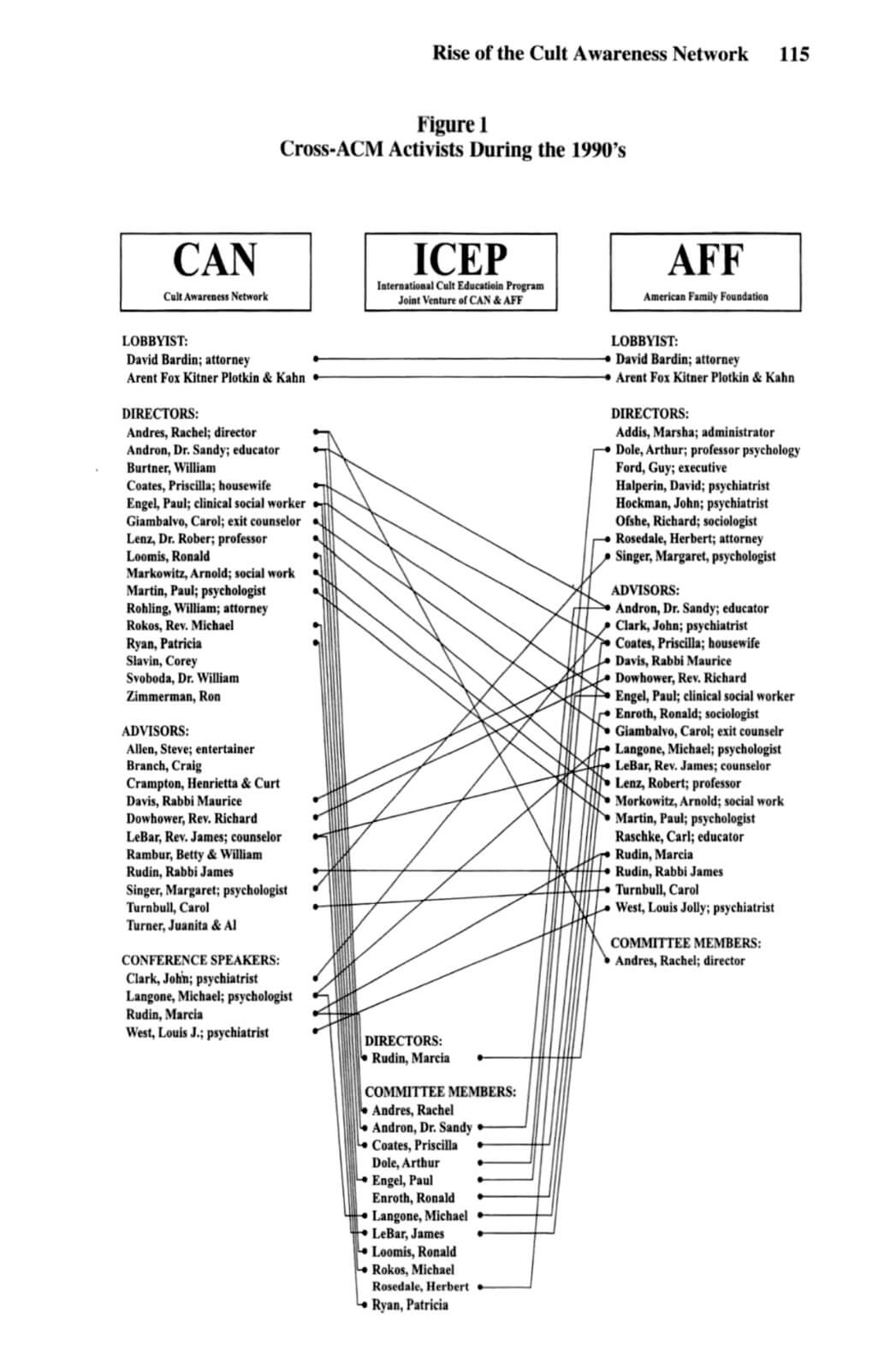
The establishment of FMSF a year before the Waco tragedy, coupled with the prior multi-year discreditation of retrohypnosis, only proves why such a massive effort was made from various angles to discredit this method. The reason is because the use of retrohypnosis was the only vulnerability of KGB’s predatory “bird.” It was the sole tool capable of exposing the source behind deployment of psychological weapons used later to orchestrate school shootings, mass shootings, and political attacks.
Therefore, it can be concluded that this “bird” has a terrorist orientation and is nothing other than a psi-weapon developed by the USSR KGB and actively used for many years and up to the present day by direct successors of this security agency in both the political and anticult wings.
NLP and Its Criticism by the Anticult Wing
At the beginning of this study, in describing the development of psychological warfare technologies employed by the secret department of KGB’s Fifth Directorate under Andropov, it was noted that some of the methods and research by this department directly overlapped with the developments of neuro-linguistic programming (NLP).
Similar to retrohypnosis, neuro-linguistic programming has also been noticeably criticized. What’s telling in this case is not the fact of criticism itself, but rather the very same last and first names behind the discrediting of certain techniques. Although, unlike retrohypnosis, the goals of this discrediting campaign were different.
In the United States, the main critics of NLP were the same team of actors from the anticult wing, including Margaret Singer, Rick Ross, Janja Lalich, and others. Margaret Singer and Janja Lalich argued against the admissibility of applying the word “science” to neuro-linguistic programming. Rick Ross claimed that NLP techniques are used in “cults” to convert people and control them by these organizations. Meanwhile, in Russia, one of the most consistent and prominent critics of NLP is the Russian Orthodox Church and the anticult organizations operating under its auspices.
What can be the reason for discrediting a tool that allows for manipulation of and influence on human consciousness? The answer is very simple: the need to remain unnoticed. Otherwise, the potential study of NLP would entail not so much manipulation of others, but rather an understanding of manipulative techniques used in society by certain circles of the anticult and political wings. The more people around see how they are manipulated and influenced, and the more people can recognize neuro-linguistic programming, the harder it is to use this tool and remain unnoticed and, therefore, unpunished.
The discrediting of NLP by the anticult wing only proves that activists of the anticult network themselves use techniques of influence, manipulation, and neuro-linguistic programming, and utilize prompting with specific suggestions, including the aforementioned puzzle piece coding method as yet another technology of psychological warfare.
At the same time, anticult actors often appeal to a poorly educated audience, lowering their cognitive abilities and critical thinking barriers even further. This opens up an opportunity for anticult agents to infiltrate the subconscious of a large number of people.
Janja Lalich and Alexandra Stein: From the Political Wing to the Anticult Wing – 10 Years in Marxist-Leninist Parties
Starting from the late 1970s, Janja Lalich, a close colleague of Margaret Singer* and Alexander Dvorkin, spent about ten years as a member of the radical Marxist-Leninist Democratic Workers Party. After a decade in this party, Lalich engaged in anticult activities, joining Margaret Singer.
* Margaret Singer and Janja Lalich co-authored a book “Cults in Our Midst: The Hidden Menace in Our Everyday Lives.” The foreword to it was written by Robert Jay Lifton, a close colleague of Singer since at least 1953 through their work on deprogramming Korean War prisoners of war at the Valley Forge Military Academy.
In turn, Lalich’s close colleague Alexandra Stein, a British anticultist and close friend of Steven Hassan and Alexander Dvorkin for over 30 years, used to be a member of an underground Marxist-Leninist political group for 10 years, known as “the O” (short for “the Organization”, also known as the CO or Coop Organization). It was an American radical political organization that existed in the cities of Minneapolis and St. Paul. After leaving this Marxist-Leninist political group, Alexandra Stein also joined the anticult wing.
Both Marxist-Leninist parties emerged from a larger New Left political movement that arose from the 1960s counterculture and continued into the 1970s. It is worth recalling that the KGB traditionally viewed Western left-wing, student, and youth movements precisely as a promising channel for influence and recruitment of new cadres. Those were young, ideologically motivated individuals, often ready for radical action. The recruited students did not necessarily have to become KGB spies; for the Soviet intelligence bodies, agents of influence played a key role, through whom promotion of necessary narratives, organization of protests, and infiltration of the media, universities, trade unions, and various NGOs were carried out.
By inserting its agents of influence into various countries, including the USA, the USSR KGB – or more precisely, the KGB’s Fifth Directorate – specifically created outwardly decentralized units, supposedly unrelated to each other. Special networks were formed to maximize the effective use of psychological weapons on Western territory, including the US and Europe. But the main target for this force, both in the early years starting from 1970 and nowadays, remains the US. The scheme of establishing nonprofit organizations subsequently formed a basis for Alexander Dvorkin’s creation of his anticult network, with active units in various countries worldwide.
The decentralized structure made it significantly more difficult to identify KGB-recruited agents of influence in democratic countries. At the same time, the KGB itself had special units working with the “progressive public” in the West. This part of KGB’s strategy and its priority goals, including demoralization of the States through various center-left movements, as in the case of the New Left, have been repeatedly confirmed by Soviet defectors and former KGB officers who emigrated to the West.
After ten years in Marxist-Leninist parties, Alexandra Stein and Janja Lalich moved from the political to the anticult wing: they were transferred from the left wing to the right wing of the very same bird. In the meantime, they publicly applied the derogatory term “cult” to their previous political parties, and there is nothing contradictory in that. The need for mimicry to ensure subsequent successful operations of KGB agents of influence and their deployment of psychological weapons in the USA and UK has never been canceled. Ideologically, they remained loyal to the goals of KGB’s Fifth Directorate, as demonstrated by their active multi-year anticult activities, use of anticult terminology, and close cooperation with Alexander Dvorkin.
The information presented in this study may initially seem to a layperson like a conspiracy theory. However, the study provides real facts and only those that can be made public. The above information is also supported by the facts that will be presented below.

International Network of Agents of Influence Deploying Psychological Warfare in Democratic Countries
Earlier, the actfiles portal published investigations into the activities of an international network whose agents are active in both the political and anticult wings and provided real, documented proof of its anti-democratic, pro-Russian activities in various countries. Let us briefly review some facts in the context of the topic under study.
Jean-Pierre Brard, a former Communist MP with long-standing ties to the USSR (his party received funding from the CPSU), actively promoted the anticult agenda after 1995, served on the leadership of the Interministerial Mission for Monitoring and Combating Cultic Deviances (MIVILUDES), and remained an influential figure until the 2020s.
Rudy Salles, a member of the key 1995 parliamentary commission, simultaneously served on the France-Russia friendship group precisely during the period of his appointment to the MIVILUDES anticult council (in 2012).
Thierry Mariani, another participant in the 1995–1997 parliamentary commission on “sects” and a long-time member of working groups on “sects”, regularly used anticult rhetoric in subsequent years, citing MIVILUDES reports. His further political career clearly outlined a steady pro-Russian vector. In 2019, Mariani led a delegation to the French Parliament, which included former MIVILUDES President Georges Fenech. The trip to occupied Crimea was organized and funded by Russian ideological and political entities. The delegation was hosted by Leonid Slutsky. Mariani also visited Crimea in 2015 and 2016 alongside Jacques Myard, his colleague from the 1995 parliamentary commission on “sects.” A crucial role in funding those trips was played by the Orthodox oligarch Konstantin Malofeev. Thierry Mariani’s ties extended from Malofeev to Sergey Naryshkin.
Sergey Naryshkin, in turn, had close ties with Latvian MP Tatjana Ždanoka who in 2024 was accused of working for Russian intelligence for many years under the supervision of officers from the FSB’s 5th Service. Ždanoka personally maintained contact with Alexander Dvorkin, and her party, the Latvian Russian Union, became a platform for key figures of the Latvian anticult network – a branch of FECRIS.
Also working actively in the same party was Andrejs Mamikins (Andrey Mamykin), one of the key participants of the Latvian anticult branch. In 2018, Mamikins opened a major FECRIS anticult conference in Riga, which gathered activists from Russia, France, Italy, Serbia, USA, and other countries. Today, Mamikins is on an international wanted list for justifying Russian war crimes in Ukraine, hiding in Russia, and continuing active pro-Russian propaganda, including through his own YouTube channel.
Serbian anticultists, closely associated with the Serbian Orthodox Church (SOC), have direct ties with Momčilo Gajić, one of the organizers of a sabotage group that operated in 2025 in Germany and France. The second organizer and a friend of Gajić, known by the nickname “Hunter,” is presumably fighting on the Russian side in Donbas.
The same Serbian Orthodox and anticult circles are intertwined with Ukrainian anticult agents. The closest colleagues of archbishop Iona and Pavlo Broide (UAC) – Metropolitan Luka (Kovalenko) and Kyiv Theological Academy lecturer Ilya Bey – visited Serbia, specifically Novi Sad, where Gajić operated, and maintained contacts with local Cossack leaders who fought in the Donbas.
The examples given above clearly confirm the close cooperation between the political and anticult wings in European countries. In every country where a fighter against “cults” or “sects” appears, a thorough examination of his or her connections and channels ultimately leads to the quiet offices on Lubyanka.
Fight Against the First Amendment
Agents of the anticult wing also actively manifest themselves in an outright fight against the fundamental principles of democracy, specifically against its key element, the First Amendment to the U.S. Constitution.
Notably, key figures of the international anticult movement have repeatedly spoken out with sharp criticism of the First Amendment, considering it the main obstacle in combating “cults.” The aforementioned Danish theologian Johannes Aagaard, founder of Dialog Center International (DCI), characterized this crucial provision of U.S. law as “the First Amendment neurosis.” This kind of attitude was actively promoted on the official websites of anticult organizations and is still present on the ICSA website 60. Aagaard stated:
“‘Under the cover of religious freedom a deadly permissiveness has crept in. This is especially so in the United States, where the First Amendment is used to support all manner of evil exploitation in the name of religion. Anyone who pretends to be religious or runs something even faintly related to religion is considered virtually outside the law. The worst aspects of Medieval ecclesiastical policy in Europe has, for all practical purposes, come back to the United States: the contention that religions are exempted from the claims of law.”
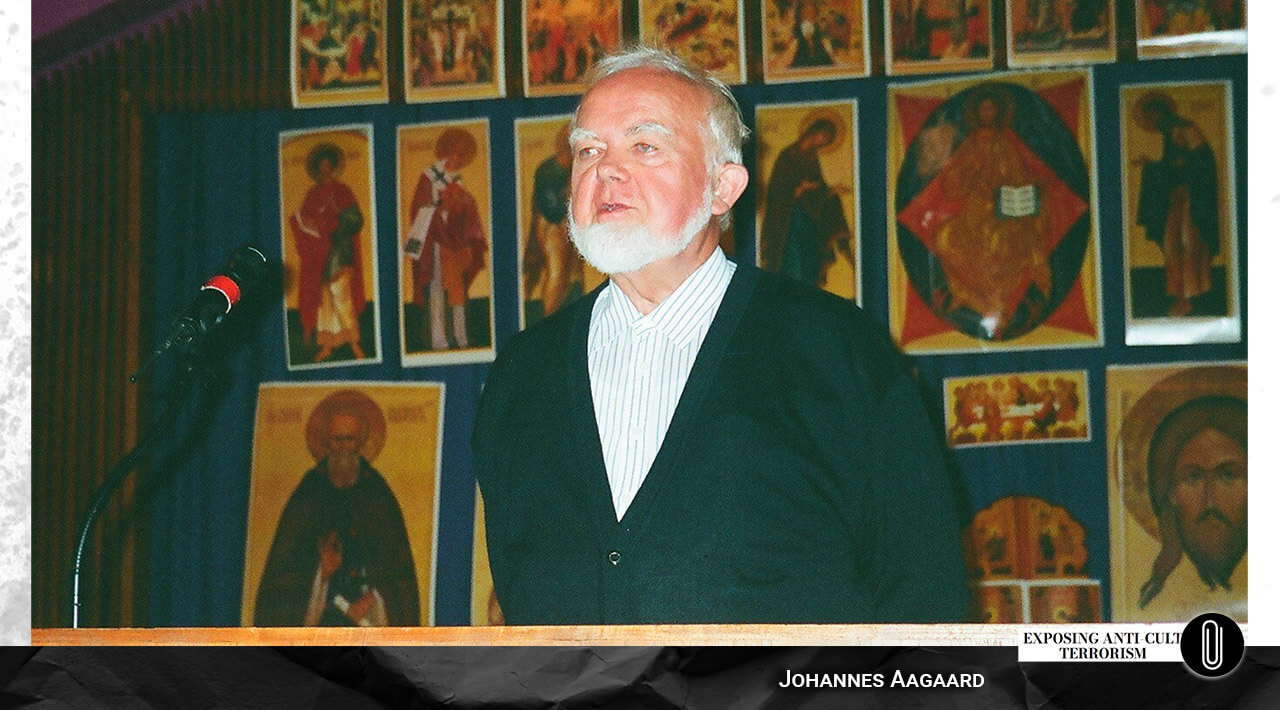
Aagaard’s German apologetics colleague, Friedrich Wilhelm Haack, rejected the Universal Declaration of Human Rights as an unnecessary document, considering it an obstacle to the effective fight against “sects” and “cults.”
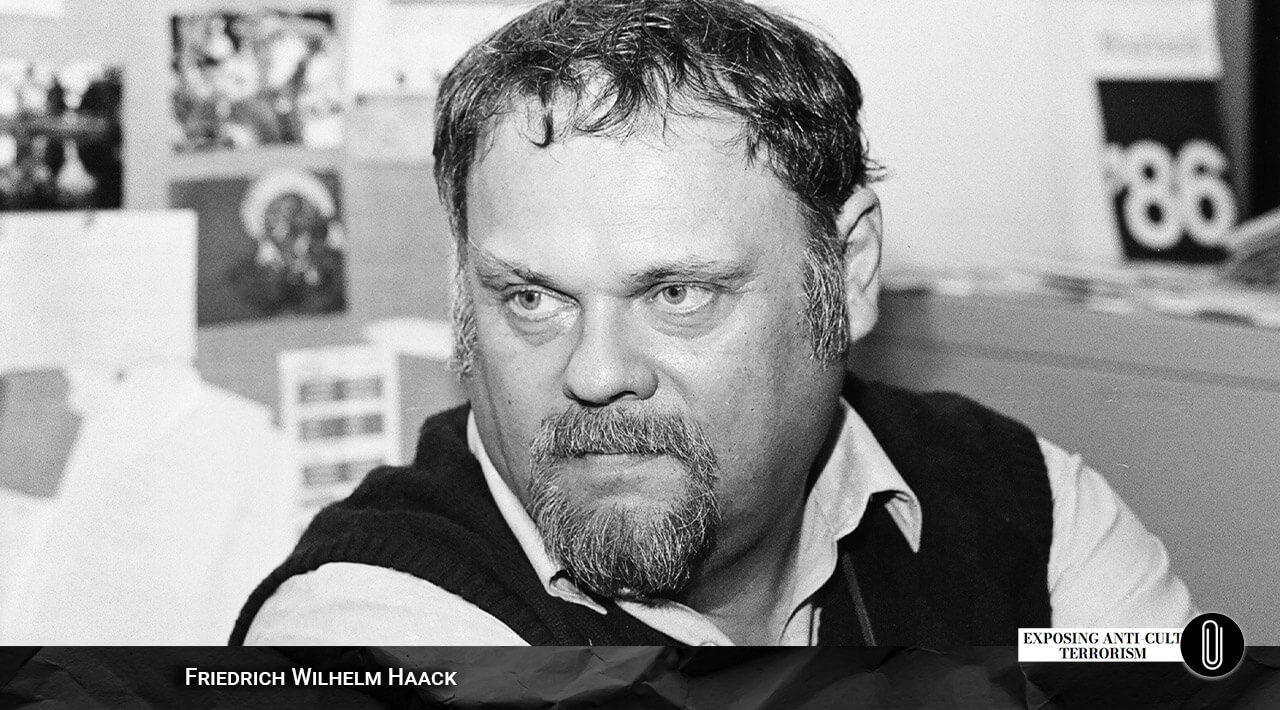
American deprogrammer Ted Patrick went even further. He didn’t just criticize the First Amendment, but openly advocated for its repeal. On August 24, 1974, at a hearing in the California Senate, Patrick stated 61: “‘There are over five thousand cults in the United States, and there are over two million people who are caught up in these cults.’ The solution will require repeal of the First Amendment to the Constitution: ‘Freedom of religion, this part of the Constitution is nothing but a license to kill, lie and steal… this part of the Constitution should be changed.’”
His colleague in the anticult wing, Alan Scheflin, director of ICSA since 2004, expressed a similar idea in a joint presentation with Steven Hassan 62: “The First Amendment to the United States Constitution protects freedom of expression. But such protection is meaningless, indeed, it is a cruel hoax, if a mind is not free to express its own thoughts.”
Thus, the fight against the First Amendment became one of the most important directions of the anticult wing’s activities, demonstrating its fundamentally anti-democratic essence which benefits only the predatory “bird” hatched in the secret department of the KGB.
Collapse of Democracy. An Independent View on the Effectiveness of Agents of the KGB’s Fifth Directorate Today
Let’s look at the America of the 1990s and the America of today. Over the past three decades, the country – once the undisputed global leader – has experienced profound internal weakening: societal polarization, a crisis of trust in institutions, degradation of political culture, and a sharp decline in the quality of government administration. This phenomenon is corroborated by various studies from recent years 63,64,65,66,67.
Today, mass dissatisfaction with the authorities, political elites, and democracy itself has reached high levels. According to Pew Research Center studies for 2025–2026, between 62 and 69 % of citizens in the US are dissatisfied with the way democracy is functioning 68,69, while trust in the federal government hovers at merely 17–33 % 70. On average, across two dozen Western democracies (24 countries), more than half the population (a median of 54–59 %) expresses dissatisfaction with the performance of their democratic institutions 71. This discontent is systemic and long-lasting in nature, manifesting in the rise of populism, political instability, and a deep crisis of trust in legally elected representatives.
As a matter of fact, this decline observed in recent years is the result of the long-term work of influence networks directly connected to the successors of the very Fifth Directorate of KGB. The development of a methodology for influencing politics traces its roots back to the 1970s in a secret department of the Soviet KGB under the leadership of Yuri Andropov. The psychological weapons developed by the KGB’s Fifth Directorate did not vanish after the collapse of the Soviet Union. They were inherited and refined by its direct successors, specifically the entities associated with Directorate Z and their brainchildren: the anticult and political wings.
The main principle of this psychological warfare is highly effective and safe for those who deploy it: there’s no need for direct control or overt recruitment. Systemic weakening of nations occurs through other methods that remain invisible to the public. This psychological warfare technology makes it possible to influence elections in democratic countries by promoting ambitious but weak, populist, and incompetent politicians into power. Those are people for whom personal ratings, media image, and short-term business interests matter more than long-term national goals. Those are politicians who turn politics from the art of governance into a show and manipulation of public opinion. Those are politicians for whom personal approval ratings and self-enrichment are more important than the national interests of their country and people. And this process, too, is the handiwork of the KGB Fifth Directorate’s successors.
The anticult movement became one of the most crucial tools of this strategy. Under the guise of fighting “cults” and “sects,” it spent years sowing division, dehumanizing independent politicians, destroying public consensus, and undermining fundamental democratic values. The very same entities that branded entire countries and nations with the label “cult” actively participated in the information warfare, including preparation and justification of the armed aggression against Ukraine. Moreover, the same entities are directly connected to the war in Syria. It is noteworthy that among the supporters of former Syrian President Bashar al-Assad, an authoritarian regime leader, was an agent of the political wing and the handler of the anticult wing in Latvia, a friend of Alexander Dvorkin, the Latvian politician Tatjana Ždanoka (https://actfiles.org/ways-of-fsb-agents-infiltration-in-europe), who since 2024 has been accused of working for the FSB for many years. The Latvian political party led by Ždanoka included key Latvian anticult players who are members of FECRIS.

One of the most cynical outcomes of destabilization of democratic countries, including the USA, by means of KGB’s psychological weapons has been the deliberate moral decay of society. In order to discredit democracy in the eyes of the world and thereby destroy trust in it, agents of the KGB’s Fifth Directorate — developers of remote influence and neuro-linguistic programming techniques — did not need to bomb it. It was enough to artificially create precedents where freedom turned into total permissiveness, while an open democratic society turned into a morally degrading one.
What looks particularly cynical is that the strategy developed within the KGB’s Fifth Directorate against the United States and the West became a mirror image of the Dulles’ Plan. While the Dulles’ Plan envisioned moral degradation of Soviet society, subversion of traditional values, introduction of nihilism and corruption, and destruction of the USSR’s ideological foundation from within, the KGB and later its successors in the FSB applied a virtually identical technology against their main adversary: against America itself. Controlled channels of influence systematically promoted ideas and practices that were considered absolutely unacceptable. Those included corruption, depravity, extreme sexual permissiveness, destruction of basic biological and social norms, and even normalization of pedophilia* — in other words, an immoral and godless society.
* By the way, specific members of the aforementioned False Memory Syndrome Foundation (FMSF), namely Ralph Underwager and Hollida Wakefield 72,73 – colleagues of the anticult wing’s agents – were engaged in the normalization of pedophilia.
All of this was done for a reason. The objective was to evoke in ordinary people a natural revulsion towards freedom and a rejection of democracy, which in their eyes had turned into moral madness. While in reality, the process of societal decay is the handiwork of the very same KGB “bird.”
When a segment of society, shocked by such extremes, was ready to refuse this kind of freedom, other agents of influence would step onto the stage and offer a “solution”: traditional values, a strong hand, strict order, and an authoritarian model of the government. Instigated first by the KGB’s Fifth Directorate and later by its successors, through their agents, democracy was presented to the public as a source of chaos, depravity, destruction, and decline, whereas totalitarian and authoritarian regimes were cast as supposed bastions of tradition, stability, and morality. Eventually, society fractured over issues of morality, conservative views, traditional values, and liberal innovations.
The next tool employed by successors of the KGB’s Fifth Directorate is migration. Migration as an artificially orchestrated phenomenon and an instrument of hybrid warfare has long been documented by various researchers. In the chaos of large, poorly controlled migrant flows, successors of the KGB’s Fifth Directorate saw an opportunity to turn migration into a tool for political pressure. Years later, this phenomenon came to be known as coercive engineered migration.
After analyzing dozens of historical cases, researcher Kelly Greenhill has demonstrated how intelligence agencies deliberately used migrant flows to destabilize entire regions. Take, for example, the 2015–16 European migrant crisis provoked by Russian bombings in Syria that created new waves of refugees, followed by logistical support for their artificial relocation.
Another example: in 2021–22, Russian and pro-Russian forces deliberately organized transportation of migrants from the Middle East and Africa to the borders of Poland, Lithuania, Latvia, Finland, and Norway. The underlying goal was to overwhelm asylum systems, sow chaos, and weaken the unity of the EU and NATO. These facts have been documented at the level of the U.S. Congress, NATO, European governments, and leading think tanks, from the FDD and CSIS to the Henry Jackson Society and Chatham House. Russian forces integrated this tactic into the concept of “new generation warfare” (NGW), turning migration into an effective weapon of hybrid war.
However, this concept isn’t new: it was also developed long ago and is part of the methods of KGB’s Fifth Directorate. Migration is always followed by overwhelmed social systems, growing societal polarization, plummeting trust in authorities, and the strengthening of right-wing populist sentiments, all of which serve to weaken countries from within. At the same time, it’s important to understand that the vast majority of migrants are genuine refugees or people seeking a better life. Yet, under conditions of massive, poorly controlled flows, it is significantly easier for certain actors to infiltrate criminal, intelligence, or radicalized elements and even entire groups into large-scale migrant streams.
The results of deploying psychological warfare are far more effective even compared to armed conflicts. With relatively few resources, through the use of KGB’s psychological weapons, its current agents manage to achieve what decades of direct confrontation could not: a deep fracture of Western societies, a crisis of trust in democratic institutions, a rise of populists to power, and weakening of the government apparatus. Politics is increasingly turning into a battle of images rather than ideas and competencies. Diplomacy is degrading. Society is splintering into warring camps. That’s exactly the modern equivalent of the Dulles’ Plan, only directed in reverse – against the West. The illusion of freedom of choice remains, but it’s merely an illusion. People continue to vote in elections, but increasingly for candidates whose rise was paved by the prolonged psychological conditioning of public opinion.
Since retrohypnosis was discredited by agents of the anticult network several decades ago, today the only truly dangerous factor for them is the human factor — the operators managing psychological warfare, those who directly applied or currently apply these technologies. Therefore, it is quite telling how fiercely these networks defend their agents. Even when individual figures find themselves envolved in massive, severe scandals, including child trafficking and pedophilia, the cover-up system kicks in with high efficiency and relative speed. This kind of protection of individual agents actually serves as a demonstration to the rest: “We don’t abandon those who are ours.”
Conclusions
Today, we are witnessing the culmination of a cognitive warfare that has been going on for many decades. The world has become noticeably less stable, democracies more fragile, and societies more divided and confrontational. Researchers have repeatedly predicted the imminence of a civil war in the United States. All of this is happening not as a result of an armed attack or an open war, but as an outcome of a quiet, protracted, and highly effective special operation by a secret department of the Soviet KGB, with an updated strategy that was launched at full capacity by former leaders of the KGB’s Fifth Department in January 1992, under the code name Phoenix. It is specifically for this “bird” that they have mobilized their entire well-prepared intelligence network established back during the Soviet era.
This is not a conspiracy theory. This is merely a small fraction of the multitude of verifiable facts and patterns that can be publicly stated and cross-checked through open sources regarding the USSR KGB’s Fifth Directorate and its agents who have operated for many decades in Western countries, systematically and relentlessly dismantling democracy.
Sources:
1. https://www.themoscowtimes.com/archive/report-soviets-used-top-secret-psychotronic-weapons
2. https://www.svoboda.org/a/24644056.html
3. http://www.index.org.ru/journal/26/sobo26.html
4. https://www.nytimes.com/1977/06/19/archives/emigre-tells-of-research-in-soviet-in-parapsychology-for-military.html
5. https://cdn.img-gorod.ru/nomenclature/25/094/2509496.pdf
6. https://books.google.ru/books?id=0_9QAgAAQBAJ&printsec=frontcover&dq#v=onepage&q&f=false
7. https://www.synod.com/synod/engdocuments/enart_rsocorstudies_copenhagen.html
8. https://cyberleninka.ru/article/n/pitirim-nechaev-kak-prepodavatel-moskovskoy-duhovnoy-akademii-1951-1992-gg
9. http://www.btrudy.ru/resources/BT175/35-95.pdf
10. https://scientific-journals-spbda.ru/f/tkb-03-11-2021.pdf
11. https://digitalcommons.georgefox.edu/cgi/viewcontent.cgi?article=2484&context=ree
12. https://www.govinfo.gov/content/pkg/GOVPUB-D301-PURL-LPS46803/pdf/GOVPUB-D301-PURL-LPS46803.pdf
13. https://blogs.korrespondent.net/blog/world/3780221/
14. https://azbyka.ru/fiction/moya-amerika-aleksandr-dvorkin/
15. https://www.m24.ru/articles/04062014/46485?utm_source=CopyBuf?utm_source=CopyBuf
16. https://azbyka.ru/otechnik/sekty/osvobozhdenie-ot-psihologicheskogo-nasilija/
17. https://www.socnp.ru/index.php/snsp/article/view/2957
18. https://radonezh.ru/sites/default/files/field/pdf/71.pdf
19. https://www.nsk.kp.ru/daily/27409/4608079/
20. https://radonezh.ru/2022/06/27/protoierey-aleksandr-novopashin-civilizacionnoy-voyny-ne-izbezhat
21. https://www.svoboda.org/a/28705258.html
22. https://fsb.dossier.center/2s/
23. https://web.archive.org/web/20010915212418/http://www.agentura.ru/text/press/1998/cons1.txt
24. http://www.fsb.ru/fsb/smi/interview/single.htm%21id%3D10342740%40fsbSmi.html
25. https://www.kommersant.ru/doc/208710
26. https://www.kommersant.ru/doc/208942
27. http://web.archive.org/web/20091016065942/https://www.wired.com/politics/security/news/2007/09/mind_reading?currentPage=all
28. https://www.cia.gov/readingroom/docs/CIA-RDP96-00792R000500560004-8.pdf
29. https://www.wired.com/2007/09/mind-reading/
30. https://www.congress.gov/104/crpt/hrpt749/CRPT-104hrpt749.pdf
31. https://www.youtube.com/watch?v=zNPUNO2gOTY
32. https://en.wikipedia.org/wiki/Cult_Awareness_Network
33. https://justapedia.org/wiki/Academic_study_of_new_religious_movements
34. https://www.congress.gov/104/crpt/hrpt749/CRPT-104hrpt749.pdf
35. https://open.bu.edu/server/api/core/bitstreams/e8babe28-610f-438e-8b2d-7537d3a4a56c/content
36. https://law.justia.com/cases/maryland/court-of-special-appeals/1968/367-september-term-1967-0.html?utm_source=chatgpt.com
37. https://time.com/archive/6848335/the-law-the-svengali-squad/
38. https://americanarchive.org/catalog/cpb-aacip_507-4746q1t426
39. https://www.ojp.gov/library/publications/forensic-use-hypnosis
40. https://www.ojp.gov/pdffiles1/Digitization/96336NCJRS.pdf
41. https://www.sas.upenn.edu/psych/history/orne/orneetal1988inpettinatibc.html
42. https://www.ojp.gov/library/publications/forensic-use-hypnosis#:~:text=but%20hypnotically%20refreshed%20testimony%20should%20not%20be%20admissible%20in%20court
43. https://www.google.sk/books/edition/Agents_of_Discord/miRBDwAAQBAJ?hl=en&gbpv=1&dq=Satanism+information+packets+AFF&pg=PA111&printsec=frontcover
44. https://www.ojp.gov/pdffiles1/Digitization/124094NCJRS.pdf
45. https://www.christianitytoday.com/1989/02/editorials-214/
46. https://www.cambridge.org/core/books/abs/speak-of-the-devil/witches-satanists-and-the-occult/C0E02C64B9F30CB59D6B5A26F1AFFF2E
47. https://dokumen.pub/qdownload/the-satanism-scare-1351474669-9781351474665.html
48. https://cdn.centerforinquiry.org/wp-content/uploads/sites/29/1990/04/22165231/p64.pdf
49. https://wol.jw.org/en/wol/d/r1/lp-e/101994682
50. https://www.latimes.com/archives/la-xpm-1989-05-25-vw-676-story.html
51. https://books.google.sk/books?id=MY7sQuT0MnMC&printsec=frontcover&hl=ru&source=gbs_ge_summary_r&cad=0#v=onepage&q=Task%20Force%20on%20Satanism&f=false
52. https://dokumen.pub/the-satanism-scare-1351474669-9781351474665.html
53. https://dn720005.ca.archive.org/0/items/satanic-cult-awareness-u.-s.-department-of-justice/Satanic%20Cult%20Awareness%20U.S.%20Department%20of%20Justice.pdf
54. https://sites.google.com/site/michaellangonephd
55. https://ru.scribd.com/document/190426034/Satanism-and-Occult-Related-Violence
56. https://www.cambridge.org/core/journals/the-british-journal-of-psychiatry/article/abs/cults-and-how-to-get-out-of-them-recovery-from-cults-is-published-by-w-w-norton-new-york-london-1993-410-pp-2750-hb-the-editor-is-michael-d-langone-michael-langone-is-executive-director-of-the-american-family-foundation-and-editor-of-its-cultic-studies-journal-from-1984-to-1987-he-served-on-the-american-psychological-association-task-force-on-deceptive-and-indirect-techniques-of-persuasion-and-control/CDE51784052F3151545788691EA90B37
57. https://en.wikipedia.org/wiki/Michael_Langone#cite_ref-11
58. https://history.denverlibrary.org/news/satanic-panic-colorado
59. https://americanbluestheater.com/oncloverroad/flipbook/inc/html/16.html?page=16
60. https://articles1.icsahome.com/articles/conversion-religious-change-challenge-of-nrm-csj-8-2
61. https://archive.org/details/mindmanipulators0000sche
62. https://www.youtube.com/watch?v=7e-d3mFS0qA
63. https://freedomhouse.org/report/special-report/2021/crisis-reform-call-strengthen-americas-battered-democracy
64. https://www.brookings.edu/articles/understanding-democratic-decline-in-the-united-states/
65. https://www.journalofdemocracy.org/articles/democracys-arc-from-resurgent-to-imperiled/
66. https://www.pewresearch.org/politics/2014/06/12/political-polarization-in-the-american-public/
67. https://www.eiu.com/n/democracy-index-2024/
68. https://www.pewresearch.org/short-reads/2026/06/10/americans-are-more-dissatisfied-with-how-their-democracy-is-working-than-people-in-other-high-income-countries/
69. https://www.pewresearch.org/short-reads/2026/04/15/multiple-indicators-show-a-decline-in-the-health-of-americas-democracy-in-2025/
70. https://www.pewresearch.org/politics/2025/12/04/public-trust-in-government-1958-2025/
71. https://www.pewresearch.org/global/2024/02/28/satisfaction-with-democracy-and-ratings-for-political-leaders-parties/
72. http://www.nostatusquo.com/ACLU/NudistHallofShame/Underwager2.html
73. http://www.nostatusquo.com/ACLU/NudistHallofShame/Underwager3.html